
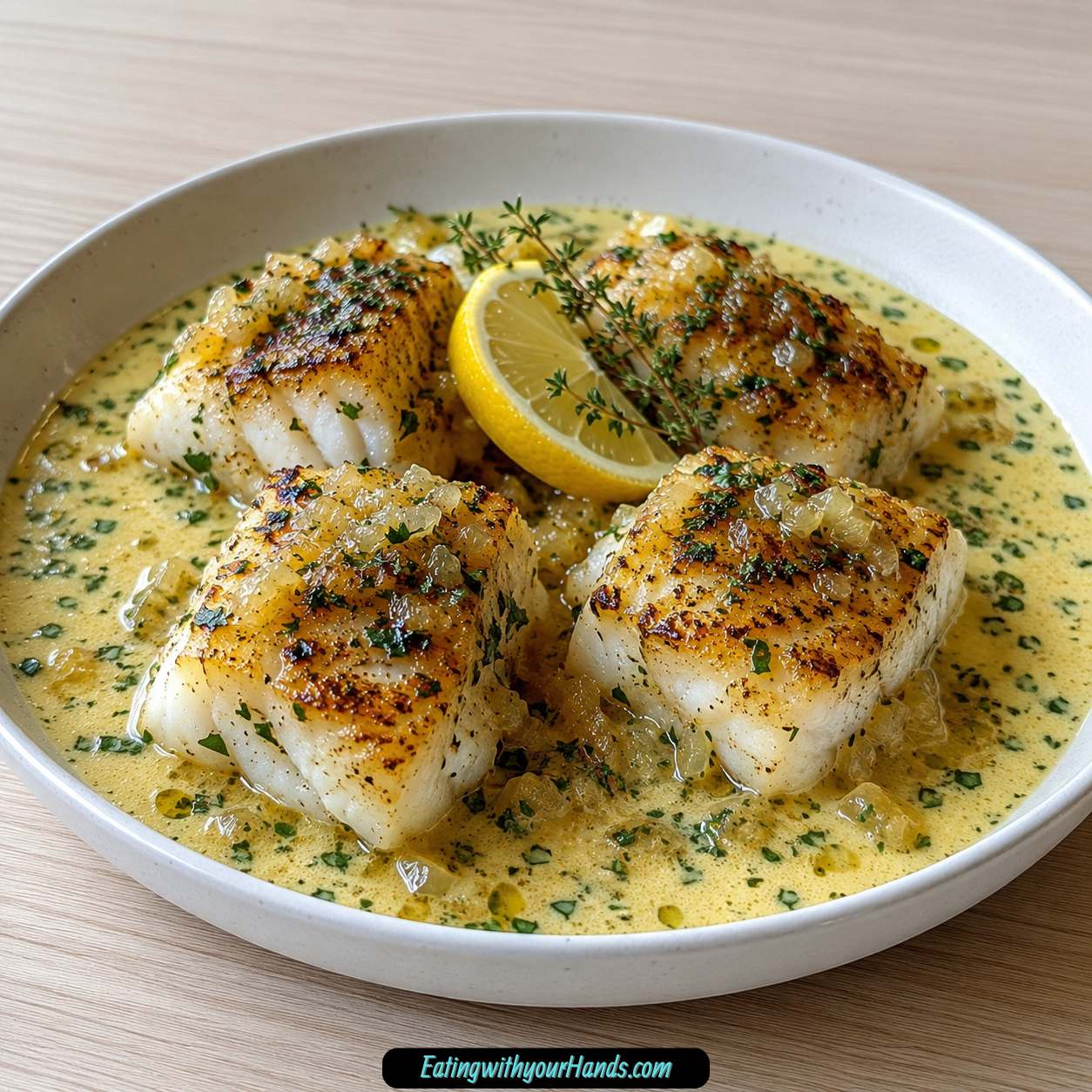
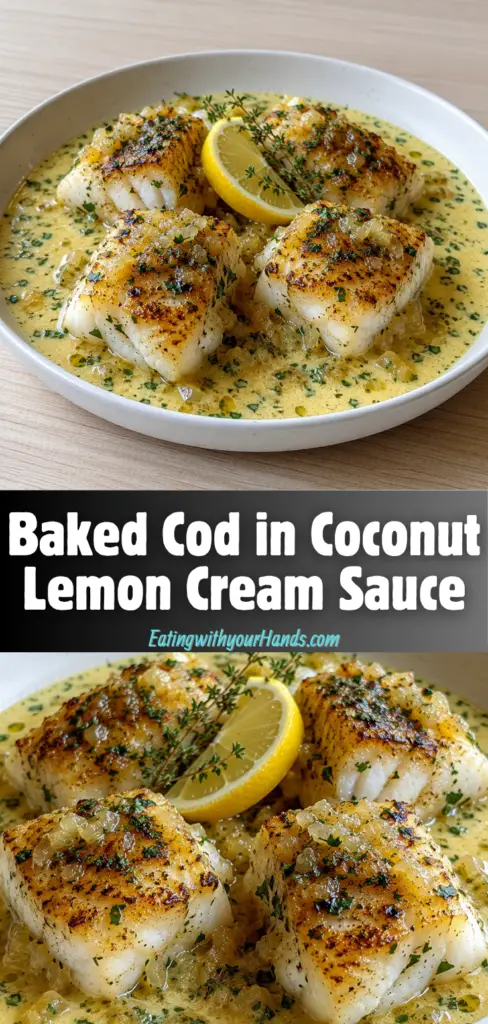
Some dinners feel light and comforting at the same time, and that is exactly what makes Baked Cod in Coconut Lemon Cream Sauce so special. It is delicate enough for spring and summer, yet creamy and satisfying enough to bring warmth to the table any night of the year.
This dish brings together thick cod fillets, a silky coconut milk sauce, fresh lemon juice, lemon zest, onion, garlic, ginger, and olive oil. The cod bakes gently in the sauce until it turns tender, flaky, and full of bright, creamy flavor.
I love recipes that feel elegant without being difficult. This baked cod has that quality because the sauce tastes rich and fragrant, but the process is simple enough for a busy weeknight.
There is something so inviting about coconut milk simmering with onion, garlic, ginger, and lemon. The aroma feels fresh, warm, and comforting all at once.
The cod itself is mild and tender, which makes it perfect for soaking up the sauce. Each bite has creamy coconut, citrus brightness, gentle ginger warmth, and the clean flavor of flaky fish.
Baked Cod in Coconut Lemon Cream Sauce is perfect when you want dinner to feel special without spending hours in the kitchen. Serve it with jasmine rice, quinoa, or a fresh salad, and you have a complete meal that feels balanced, colorful, and deeply satisfying.
Table of Contents
- What Is Baked Cod in Coconut Lemon Cream Sauce?
- Why You’ll Love This Baked Cod in Coconut Lemon Cream Sauce
- Recipe Details
- Ingredients You’ll Need
- A Closer Look at the Ingredients
- The Flavor Behind This Coconut Lemon Cod
- Directions
- Step 1: Gather Your Ingredients
- Step 2: Preheat the Oven
- Step 3: Prepare the Baking Dish
- Step 4: Pat the Cod Dry
- Step 5: Season the Cod
- Step 6: Place the Cod in the Baking Dish
- Step 7: Chop the Onion
- Step 8: Mince the Garlic
- Step 9: Grate the Ginger
- Step 10: Heat the Olive Oil
- Step 11: Sauté the Onion
- Step 12: Add the Garlic
- Step 13: Add the Ginger
- Step 14: Add the Coconut Milk
- Step 15: Add the Lemon Juice
- Step 16: Add the Lemon Zest
- Step 17: Simmer the Sauce
- Step 18: Taste the Sauce
- Step 19: Pour the Sauce Over the Cod
- Step 20: Bake the Cod
- Step 21: Check for Doneness
- Step 22: Let the Dish Rest Briefly
- Step 23: Add Optional Fresh Herbs
- Step 24: Add Extra Lemon If Desired
- Step 25: Serve Hot
- Helpful Tips for the Best Baked Cod
- Variations
- Serving Suggestions
- Storage Tips
- Freezing Instructions
- Make-Ahead Notes
- Frequently Asked Questions
- Final Thoughts
- Baked Cod in Coconut Lemon Cream Sauce
What Is Baked Cod in Coconut Lemon Cream Sauce?
Baked Cod in Coconut Lemon Cream Sauce is a simple baked fish dish made with thick cod fillets and a creamy sauce of full-fat coconut milk, lemon juice, lemon zest, onion, garlic, ginger, and olive oil. The sauce is briefly simmered on the stovetop, poured over the seasoned cod, and baked until the fish flakes easily.
The recipe uses just a few ingredients but delivers a lot of flavor. Coconut milk gives the sauce a silky texture, while lemon juice and zest keep it bright.
Garlic, onion, and ginger create the aromatic base. They make the sauce taste layered without requiring complicated preparation.
This recipe is especially lovely in spring and summer because it feels light, fresh, and citrusy. At the same time, the creamy coconut sauce makes it comforting enough for any season.
Why You’ll Love This Baked Cod in Coconut Lemon Cream Sauce
This dish has a quick prep time of just 15 minutes. That makes it perfect for evenings when you want something homemade without a long cooking session.
The ingredient list is simple and focused. Cod, salt, pepper, olive oil, onion, garlic, ginger, coconut milk, lemon juice, and lemon zest come together into a beautiful meal.
It is family-friendly and easy to enjoy. The cod is mild, tender, and flaky, while the sauce is creamy but still bright.
The coconut lemon sauce is rich and satisfying without feeling too heavy. It gives the dish a silky finish while the lemon keeps everything fresh.
Leftovers store well in the refrigerator for up to 3 days. You can gently reheat them with a splash of coconut milk if needed to keep the sauce creamy.
It is versatile enough to pair with rice, quinoa, or a fresh salad. You can also add spinach, kale, cherry tomatoes, or a little extra lemon right before serving.
Recipe Details
- Recipe name: Baked Cod in Coconut Lemon Cream Sauce
- Prep time: About 15 minutes
- Oven temperature: 375°F (190°C)
- Bake time: About 25 minutes
- Main protein: Thick cod fillets
- Sauce base: Full-fat coconut milk
- Main flavors: Lemon, coconut, garlic, onion, and ginger
- Best doneness sign: Cod flakes easily with a fork and appears opaque throughout
- Internal temperature: 145°F (63°C), if using a thermometer
- Best served: Hot
- Storage: Airtight container in the refrigerator for up to 3 days
- Freezing note: Freezing the full dish is not recommended because the texture may change
- Serving ideas: Jasmine rice, quinoa, fresh salad, cilantro, parsley, or extra lemon juice
Ingredients You’ll Need
For the Cod
- 4 thick cod fillets
- 1 teaspoon salt
- 1 teaspoon pepper
For the Coconut Lemon Cream Sauce
- 2 tablespoon olive oil
- 1 medium onion, chopped
- 2 cloves garlic, minced
- 1 tablespoon ginger, grated
- 1 can full-fat coconut milk
- 3 tablespoon fresh lemon juice
- 1 teaspoon lemon zest
A Closer Look at the Ingredients
Thick cod fillets are the center of this recipe. Cod is tender, flaky, and mild, which makes it a wonderful match for a creamy lemon coconut sauce.
Salt enhances the natural flavor of the fish. It helps the cod taste seasoned instead of plain under the sauce.
Pepper adds subtle warmth. It gives the cod a little extra flavor without overpowering the delicate fish.
Olive oil is used to sauté the onion, garlic, and ginger. Extra virgin olive oil adds richness and flavor without making the sauce heavy.
Chopped onion gives the sauce sweetness and depth. Yellow onions work beautifully because they soften well and blend into the sauce.
Minced garlic creates an aromatic base. You can add more garlic if you enjoy a stronger garlic flavor.
Grated ginger adds warmth and a gentle spice. Fresh ginger is best, but ground ginger can work in a pinch using about ¼ teaspoon.
Full-fat coconut milk creates the creamy texture of the sauce. It gives the dish a silky body and a lightly tropical flavor.
Fresh lemon juice brightens the sauce and balances the richness of the coconut milk. Freshly squeezed lemon juice gives the best flavor.
Lemon zest strengthens the citrus note and adds freshness. Be sure to zest only the yellow part of the lemon, not the bitter white pith.
The Flavor Behind This Coconut Lemon Cod
The beauty of this baked cod is the way the sauce balances richness and brightness. Coconut milk makes the sauce creamy, while lemon juice keeps it lively.
The onion, garlic, and ginger make the sauce feel warm and fragrant. They build a savory base before the coconut milk is added.
The lemon zest gives the dish an extra lift. It adds a fresh citrus aroma that makes the sauce taste lighter.
Cod is mild enough to let the sauce shine. As it bakes, the fish absorbs some of the coconut lemon flavor and becomes tender and flaky.
The finished dish tastes creamy, zesty, and gently aromatic. It feels comforting without being heavy, which makes it easy to enjoy in any season.
Directions
Step 1: Gather Your Ingredients
Start by gathering the cod fillets, salt, pepper, olive oil, onion, garlic, ginger, full-fat coconut milk, lemon juice, and lemon zest. Having everything ready makes the cooking process smooth.
This recipe has two main parts: preparing the cod and making the sauce. Once both are ready, the oven does the rest.
If you plan to serve the dish with rice, quinoa, or salad, prepare those sides as well. The cod bakes quickly once the sauce is ready.
Step 2: Preheat the Oven
Preheat your oven to 375°F (190°C). This ensures the cod cooks evenly once it goes into the baking dish.
Fish benefits from steady heat. A properly preheated oven helps the fillets bake gently and become flaky without drying out.
Let the oven warm while you prepare the cod and sauce. By the time the sauce is finished, the oven should be ready.
Step 3: Prepare the Baking Dish
Choose a baking dish large enough to hold the 4 cod fillets with a little space between them. The fillets should not be packed tightly together.
Spacing helps the fish cook evenly. It also allows the sauce to surround each piece.
Set the baking dish near your work surface. You will place the seasoned cod inside before adding the sauce.
Step 4: Pat the Cod Dry
Take the thick cod fillets and pat them dry with a paper towel. Removing surface moisture helps the seasoning stick better.
This small step also helps the fish bake with a better texture. Excess water can thin the sauce and make the fish less flavorful.
Handle the cod gently because it can be delicate. Pat both sides until the surface looks dry.
Step 5: Season the Cod
Season both sides of the cod fillets with 1 teaspoon salt and 1 teaspoon pepper. Spread the seasoning evenly.
Do not leave the seasoning only on the top. The fish needs flavor throughout.
Salt brings out the clean flavor of the cod, while pepper adds a subtle savory note. This simple seasoning prepares the fish for the creamy sauce.
Step 6: Place the Cod in the Baking Dish
Carefully place the seasoned cod fillets in the baking dish. Keep them spaced apart so they bake evenly.
Try to arrange the fillets in a single layer. This allows the coconut lemon sauce to cover them properly.
Set the baking dish aside while you make the sauce. The cod will be ready when the sauce is finished simmering.
Step 7: Chop the Onion
Chop 1 medium onion into small pieces. A smaller chop helps the onion soften faster in the skillet.
Onion gives the sauce sweetness and depth. When sautéed, it becomes mild and flavorful.
Set the chopped onion near the stove. It will be the first aromatic added to the oil.
Step 8: Mince the Garlic
Mince 2 cloves garlic. Fresh garlic gives the sauce a warm, savory aroma.
If you love garlic, you can add a little more. The recipe allows room for that preference.
Keep the garlic ready, but do not add it to the skillet too early. Garlic cooks faster than onion and can burn if left too long.
Step 9: Grate the Ginger
Grate 1 tablespoon ginger. Fresh ginger gives the sauce warmth and a hint of spice.
If fresh ginger is not available, ground ginger can work in a pinch. Use about ¼ teaspoon if substituting.
Ginger gives the coconut milk more character. It keeps the creamy sauce from tasting too plain.
Step 10: Heat the Olive Oil
Place a skillet over medium heat and add 2 tablespoon olive oil. Let the oil warm until it looks slightly glossy.
The oil should be warm enough to gently cook the onion. It should not be smoking.
Olive oil adds richness to the sauce base. It also helps soften the aromatics evenly.
Step 11: Sauté the Onion
Add the chopped onion to the skillet. Sauté for about 5 minutes, or until the onion becomes translucent and starts to soften.
Stir occasionally so the onion cooks evenly. The goal is softness, not deep browning.
As the onion cooks, it creates the first layer of flavor for the sauce. This step helps the sauce taste more rounded.
Step 12: Add the Garlic
Add the minced garlic to the skillet. Stir it into the softened onion.
Cook carefully so the garlic becomes fragrant without burning. Garlic usually needs only a short time.
The aroma should become stronger and more savory. This is when the sauce base begins to feel complete.
Step 13: Add the Ginger
Add the grated ginger to the skillet with the onion and garlic. Stir well.
Cook the garlic and ginger for about 2 minutes, stirring frequently. This allows their flavors to bloom in the oil.
Keep the heat at medium and watch closely. Garlic and ginger can burn if left unstirred.
Step 14: Add the Coconut Milk
Pour in 1 can full-fat coconut milk. Stir it into the onion, garlic, and ginger.
The coconut milk should turn the skillet mixture creamy and smooth. It creates the main body of the sauce.
Use full-fat coconut milk for the richest texture. Coconut cream can also be used for an even thicker dairy-free version.
Step 15: Add the Lemon Juice
Add 3 tablespoon fresh lemon juice to the skillet. Stir until it blends into the coconut milk.
The lemon juice brightens the sauce and balances the coconut richness. It keeps the dish from feeling too heavy.
Freshly squeezed lemon juice gives the best flavor. Bottled lemon juice will not taste as vibrant.
Step 16: Add the Lemon Zest
Add 1 teaspoon lemon zest. Stir it gently into the sauce.
Lemon zest strengthens the citrus aroma. It gives the sauce a fresh finish that pairs beautifully with cod.
Make sure you zest only the yellow part of the lemon. The white pith can taste bitter.
Step 17: Simmer the Sauce
Let the sauce simmer for about 5 minutes. Stir occasionally while it cooks.
This gives the coconut milk, lemon, onion, garlic, and ginger time to blend. The sauce should smell creamy, bright, and fragrant.
Do not boil the sauce aggressively. A gentle simmer is enough to bring the flavors together.
Step 18: Taste the Sauce
Taste the sauce before pouring it over the fish. Adjust gently if needed.
If you want more brightness, you can add a little extra lemon juice when serving. If you want more savory depth, the helpful notes mention adding fish sauce or soy sauce.
Keep in mind that the cod has already been seasoned. The sauce should be flavorful but not overly salty.
Step 19: Pour the Sauce Over the Cod
Pour the coconut lemon cream sauce evenly over the cod fillets in the baking dish. Make sure each fillet gets a nice coating.
The sauce should surround the fish and cover the tops lightly. This helps the cod bake gently and absorb flavor.
Use a spoon to spread the sauce if needed. Every piece should have contact with the creamy mixture.
Step 20: Bake the Cod
Slide the baking dish into the preheated oven. Bake for about 25 minutes.
The cod is done when it flakes easily with a fork. It should also appear opaque all the way through.
The kitchen should smell fragrant and fresh as the fish bakes. The coconut lemon sauce will warm around the fillets and become even more flavorful.
Step 21: Check for Doneness
After 25 minutes, check the cod gently with a fork. It should flake apart easily.
If using a thermometer, the internal temperature should reach 145°F (63°C). This is a helpful way to confirm doneness.
Avoid overbaking the cod. Fish can become dry if cooked too long, so check carefully.
Step 22: Let the Dish Rest Briefly
Remove the baking dish from the oven and let it rest for a few minutes. This gives the sauce and fish a moment to settle.
The cod will be delicate, so resting makes it easier to serve. It also allows the sauce to cool slightly before spooning.
Do not let it sit too long. This dish is best served hot.
Step 23: Add Optional Fresh Herbs
Garnish with fresh cilantro or parsley if desired. These herbs add color and freshness.
A little green garnish makes the creamy sauce look brighter. It also adds a fresh contrast to the coconut and lemon.
Use whichever herb you prefer. Both cilantro and parsley work well.
Step 24: Add Extra Lemon If Desired
Right before serving, squeeze a little extra lemon juice over the top if you want more brightness. This gives the dish a zesty kick.
A small amount is enough. The sauce already contains lemon juice and zest.
Serve extra lemon on the side if your family likes a stronger citrus flavor. This lets everyone adjust their own plate.
Step 25: Serve Hot
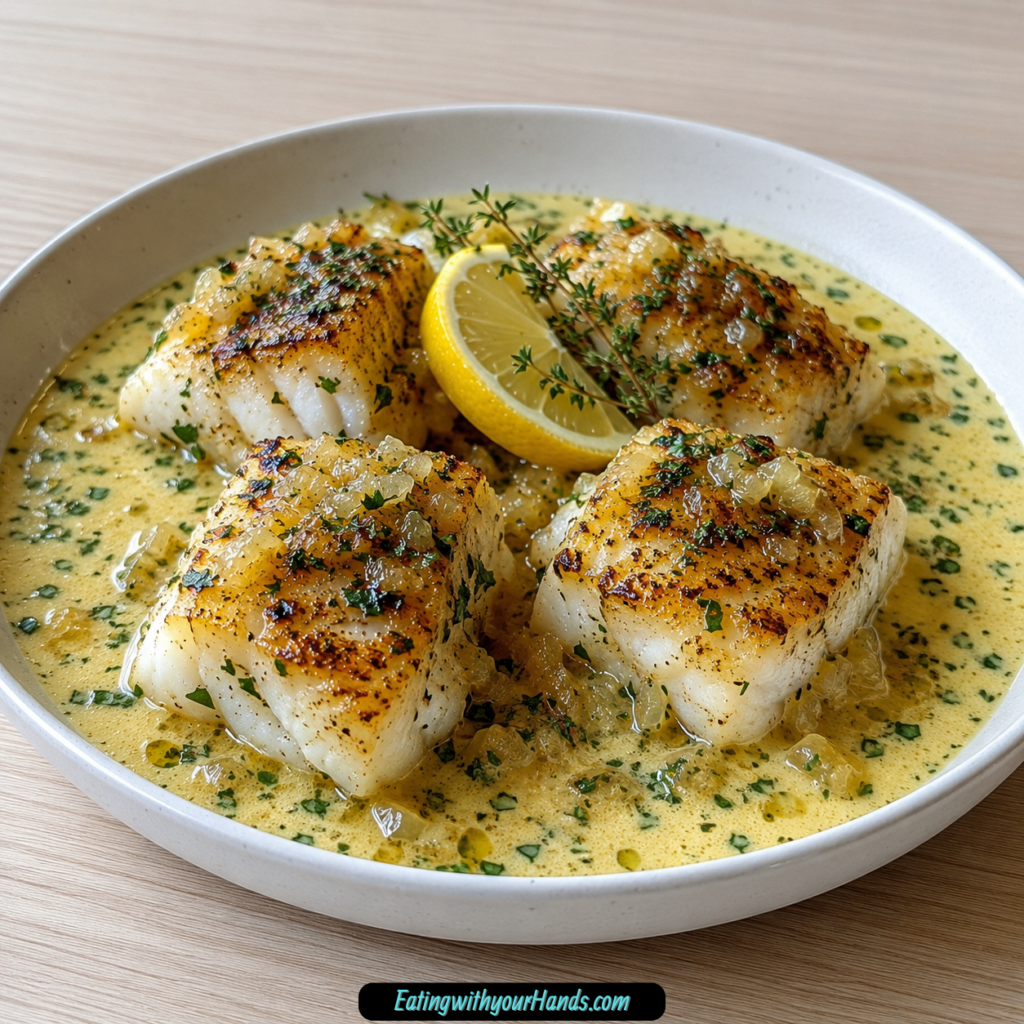
Serve the baked cod hot with plenty of coconut lemon cream sauce spooned over each fillet. The sauce is one of the best parts of the dish.
Pair it with fluffy jasmine rice, quinoa, or a light salad. These sides help balance the richness of the sauce.
Enjoy it while the fish is tender and flaky. This is the moment when the creamy sauce, lemon, ginger, and cod all come together beautifully.
Helpful Tips for the Best Baked Cod
Use thick cod fillets so they bake evenly and stay tender. Thin fillets may cook faster, so watch them closely.
Pat the cod dry before seasoning. This helps salt and pepper stick to the fish.
Do not skip the lemon zest. It adds a fresh citrus aroma that lemon juice alone cannot fully provide.
Use full-fat coconut milk for the creamiest sauce. Almond milk can be used as a lighter substitute, but the texture and flavor will be different.
If using ground ginger instead of fresh ginger, use about ¼ teaspoon. Fresh ginger gives the best flavor, but ground works in a pinch.
Add baby spinach or kale to the sauce if you want extra nutrients. Stir it in before pouring the sauce over the cod or let it soften in the warm sauce.
Variations
Add 1 teaspoon red pepper flakes or a splash of sriracha to the sauce for a spicy kick. This adds heat to balance the creamy coconut.
Swap the cod for salmon or tilapia for a different flavor profile. Adjust the cooking time as needed based on thickness.
Add seasonal vegetables like spinach or cherry tomatoes to the sauce. They bring color, flavor, and extra nutrition.
Use coconut cream instead of full-fat coconut milk if you want a richer dairy-free sauce. It will make the sauce thicker.
Try grilling the cod instead of baking for a smoky flavor. Serve it with the coconut lemon sauce.
Add a splash of fish sauce or soy sauce for an umami boost. Use low-sodium soy sauce if you are watching sodium.
Add a handful of baby spinach or kale for a nutritious green addition. This also makes the dish more colorful.
Serving Suggestions
Serve Baked Cod in Coconut Lemon Cream Sauce hot. Spoon extra sauce over each fillet so the fish stays moist and flavorful.
Fluffy jasmine rice is a beautiful pairing. It soaks up the creamy coconut lemon sauce.
Quinoa also works well if you want a different base. It makes the meal feel light but filling.
A fresh salad balances the richness of the sauce. The crispness works nicely with the tender fish.
Fresh cilantro or parsley adds a pop of color. Use either one as a garnish before serving.
A little extra lemon juice right before serving gives the dish a fresh finish. It is especially nice if you love bright citrus flavor.
Storage Tips
Store leftovers in an airtight container in the refrigerator for up to 3 days. Let the dish cool before sealing.
To reheat, warm gently in the microwave or in a skillet over low heat. Fish is delicate, so gentle reheating works best.
Add a splash of coconut milk if needed to keep the sauce creamy. This helps restore the texture.
Avoid overheating the cod. Too much heat can make the fish dry or break apart.
Leftovers can make a lovely lunch the next day. Serve with rice, quinoa, or salad.
Freezing Instructions
Freezing the full dish is not recommended because the texture may change after thawing. The cod and creamy sauce may not return to the same consistency.
However, you can freeze the sauce separately. Store it in an airtight container and use it within 1 month for the best flavor.
Thaw the sauce gently before using. Stir well as it reheats.
Freshly baked cod will give the best texture. If possible, make the fish fresh and use frozen sauce as a shortcut.
This approach keeps the flavor convenient while protecting the delicate texture of the fish.
Make-Ahead Notes
You can prepare the sauce ahead of time and refrigerate it. Reheat gently before pouring it over the cod and baking.
You can also chop the onion, mince the garlic, grate the ginger, and zest the lemon in advance. This makes dinner faster.
For the best texture, season and bake the cod close to serving time. Fish is best when freshly cooked.
If using frozen sauce, thaw it before baking with the fish. Make sure it is smooth and creamy before pouring it over the fillets.
Frequently Asked Questions
Can I Freeze Baked Cod in Coconut Lemon Cream Sauce?
Freezing the full dish is not recommended because the texture may change after thawing. Cod can become less delicate, and the creamy sauce may separate.
You can freeze the sauce separately in an airtight container. Use it within 1 month for the best flavor.
What Can I Substitute for Coconut Milk?
If you do not have coconut milk, you can use heavy cream for a rich texture. Almond milk can be used for a lighter option.
Keep in mind that the flavor will be different. Coconut milk gives the dish its signature creamy tropical note.
How Do I Know When the Cod Is Done?
The cod is done when it flakes easily with a fork and appears opaque all the way through. This is the easiest visual check.
If you have a thermometer, the internal temperature should reach 145°F (63°C). Use whichever method feels most comfortable.
Can I Use Ground Ginger Instead of Fresh Ginger?
Yes, ground ginger can work in a pinch. Use about ¼ teaspoon.
Fresh ginger gives the best flavor and aroma, but ground ginger can still add warmth to the sauce.
Can I Add Vegetables to the Sauce?
Yes, spinach, kale, or cherry tomatoes can be added. They bring extra color and nutrition.
Baby spinach or kale can be stirred into the sauce until softened. Cherry tomatoes add brightness and a little sweetness.
Can I Make This Dish Spicy?
Yes, add 1 teaspoon red pepper flakes or a splash of sriracha to the sauce. This gives the creamy sauce a spicy kick.
Start with a small amount if you are unsure. You can always add more heat next time.
What Should I Serve with This Cod?
Jasmine rice, quinoa, or a fresh salad all pair beautifully with this dish. The rice and quinoa soak up the sauce, while salad keeps the meal light.
Fresh herbs like cilantro or parsley also make a nice garnish. Extra lemon juice adds brightness before serving.
Can I Use Another Fish?
Yes, salmon or tilapia can be used for a different flavor profile. Adjust the baking time depending on the thickness of the fish.
Cod is mild and flaky, but these alternatives can also work well with the coconut lemon sauce.
Final Thoughts
Baked Cod in Coconut Lemon Cream Sauce is the kind of meal that feels gentle, bright, and comforting all at once. The cod bakes until flaky, while the coconut milk, lemon, onion, garlic, and ginger create a sauce that tastes creamy without feeling too heavy.
It is easy enough for weeknights and lovely enough for a relaxed dinner with family. With only 15 minutes of prep and a simple baking method, it brings big flavor without a complicated process.
The sauce is what makes the dish memorable. It is silky from the coconut milk, lively from the lemon, warm from the ginger, and savory from the onion and garlic.
Serve it with jasmine rice, quinoa, or a fresh salad, and you have a meal that feels complete, fresh, and full of comfort. It is a beautiful way to bring a little sunshine to the table, no matter the season.
Baked Cod in Coconut Lemon Cream Sauce

This Baked Cod in Coconut Lemon Cream Sauce is a light, creamy seafood dinner made with tender cod fillets, coconut milk, fresh lemon juice, lemon zest, garlic, ginger, and onion. The cod bakes gently in the sauce until flaky, while the coconut milk gives the dish a silky texture without feeling too heavy. The lemon adds brightness, the ginger brings warmth, and the mild cod absorbs the sauce beautifully. It is an easy dinner option that works well with rice, vegetables, or simple fresh sides.
Recipe Details
- Prep Time: 15 minutes
- Cook Time: 25 minutes
- Total Time: 40 minutes
- Course: Dinner
- Cuisine: Seafood
- Servings: 4 people
- Calories: 350 kcal
Equipment
- Baking dish
- Skillet
Ingredients
For the Coconut Lemon Cream Sauce
- 1 teaspoon lemon zest enhances the citrus flavor and adds freshness.
- 2 tablespoon olive oil for sautéing and adding richness without heaviness.
- 1 can full-fat coconut milk creates a silky, creamy texture with a tropical touch.
- 1 tablespoon ginger, grated adds warmth and a hint of spice.
- 2 cloves garlic, minced aromatic base that complements the fish.
- 3 tablespoon fresh lemon juice brightens the dish and balances the richness.
- 1 medium onion, chopped provides sweetness and depth when sautéed.
For the Cod
- 1 teaspoon pepper adds subtle seasoning.
- 4 fillets thick cod tender, flaky, and mild-flavored, perfect for absorbing the creamy sauce.
- 1 teaspoon salt enhances the natural flavor of the fish.
Instructions
Step 1: Preheat the Oven
Preheat your oven to 375°F (190°C).
Step 2: Season the Cod
Season the cod fillets with salt and pepper.
Place the seasoned fillets in a baking dish in an even layer.
Step 3: Sauté the Onion
Heat the olive oil in a skillet over medium heat.
Add the chopped onion and sauté for about 5 minutes, or until translucent and softened.
Step 4: Add the Garlic and Ginger
Stir in the minced garlic and grated ginger.
Cook for an additional 2 minutes, stirring often so the aromatics do not burn.
Step 5: Make the Coconut Lemon Sauce
Pour in the full-fat coconut milk.
Add the fresh lemon juice and lemon zest.
Stir well, then simmer the sauce for 5 minutes so the flavors can blend.
Step 6: Cover the Cod with Sauce
Pour the coconut lemon cream sauce over the cod fillets in the baking dish.
Make sure the fish is evenly covered with the sauce.
Step 7: Bake the Cod
Bake for 25 minutes, or until the cod flakes easily with a fork.
Step 8: Serve
Serve warm with the creamy coconut lemon sauce spooned over the top.
Notes
You can serve this dish with rice or vegetables for a complete meal.
Serving Suggestions
This baked cod in coconut lemon cream sauce pairs well with:
- Steamed jasmine rice
- Coconut rice
- Roasted asparagus
- Sautéed spinach
- Steamed broccoli
- Cauliflower rice
- Green beans
- A simple cucumber salad
Storage
How to Store
Store leftover cod and sauce in an airtight container in the refrigerator.
How to Reheat
Reheat gently in the oven or in a skillet over low heat until warmed through. Avoid overheating so the cod stays tender and does not dry out.

Fernando is the creator and writer behind the food blog Eating with your Hands. Living and working in cities like Paris, Barcelona, and Berlin, and being married to a Canadian foodie, has given Fernando a passion and interest in food and inspired him to run EWYH.