
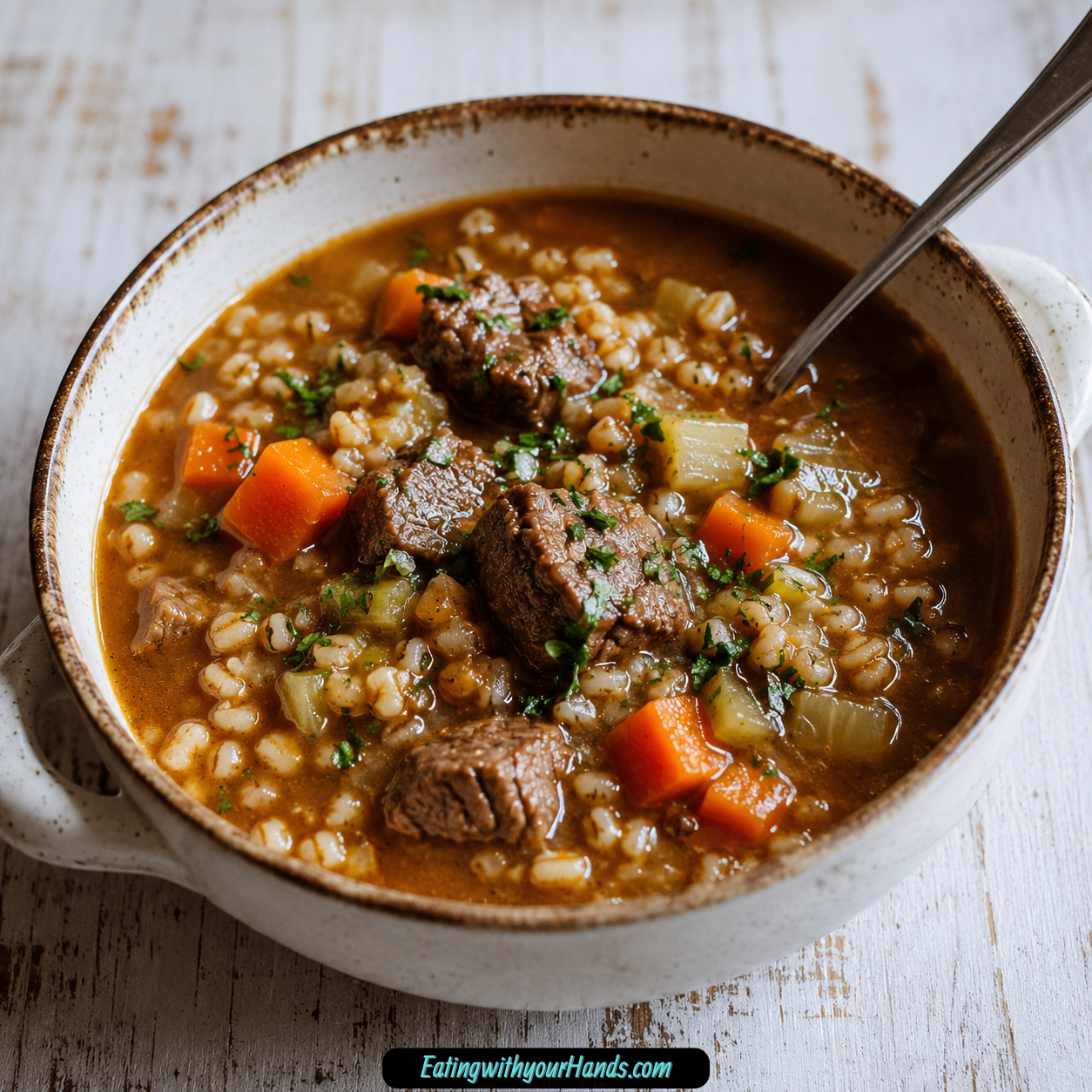
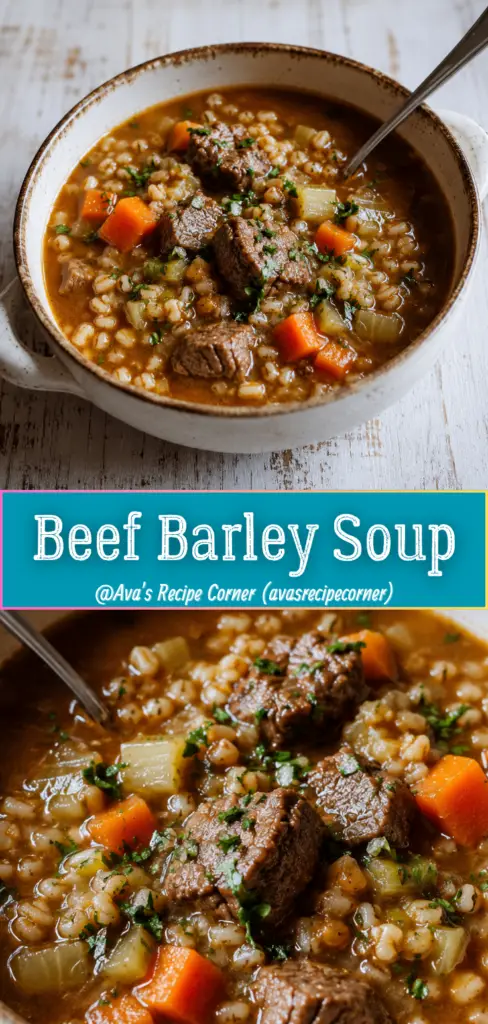
Beef Barley Soup is the kind of cold-weather meal that seems to slow the whole house down in the best way. A big pot of beef, vegetables, pearl barley, tomato paste, garlic, and rich broth simmering on the stove has a way of pulling everyone closer to the kitchen before dinner is even ready.
This soup feels like something made for chilly Sunday afternoons, crisp autumn evenings, and winter nights when the air outside makes you want a deep bowl of something warm. It is hearty, simple, and deeply comforting, with tender beef, soft vegetables, and barley that turns the broth into a satisfying meal.
There is something especially memorable about a soup that takes its time. The prep is only about 15 minutes, but once everything is in the pot, the magic happens slowly as the beef becomes tender and the barley cooks through.
The ingredients are straightforward, but they create a soup that tastes full and generous. Chuck roast, onion, carrots, celery, garlic, tomato paste, beef broth, and pearl barley come together in one pot with salt, pepper, oil, and parsley for freshness at the end.
This is the kind of recipe that makes leftovers feel like a gift. It stores well in the refrigerator for up to 4 days and freezes beautifully for up to 3 months, which means one pot can bring comfort more than once.
Beef Barley Soup is family-friendly, freezer-friendly, and easy to adapt with seasonal vegetables, different cuts of beef, extra herbs, or a slow cooker approach. Serve it hot with crusty bread, buttery rolls, a side salad, or roasted vegetables, and let the bowl do what good soup does best.
Table of Contents
- Why You’ll Love This Beef Barley Soup
- Recipe Details
- Ingredients
- Ingredient Notes
- Optional Swaps, Variations, Add-Ins, and Serving Ideas
- Why This Recipe Works
- Directions
- Step 1: Prepare the Beef
- Step 2: Season the Beef
- Step 3: Heat the Pot
- Step 4: Add the Oil
- Step 5: Add the Beef
- Step 6: Brown the Beef
- Step 7: Add the Onion
- Step 8: Add the Carrots
- Step 9: Add the Celery
- Step 10: Add the Garlic
- Step 11: Add the Tomato Paste
- Step 12: Cook the Garlic and Tomato Paste
- Step 13: Pour in the Beef Broth
- Step 14: Rinse the Barley
- Step 15: Add the Barley
- Step 16: Bring the Soup to a Gentle Boil
- Step 17: Reduce the Heat
- Step 18: Cover the Pot
- Step 19: Simmer the Soup
- Step 20: Check the Beef
- Step 21: Check the Barley
- Step 22: Stir the Soup
- Step 23: Taste and Adjust
- Step 24: Add a Thickener If Desired
- Step 25: Prepare the Garnish
- Step 26: Serve Hot
- Step 27: Garnish and Finish
- Serving Ideas
- Storage
- Reheating
- Freezing
- Make-Ahead
- Helpful Notes for Best Results
- Variations
- Troubleshooting
- Frequently Asked Questions
- Why This Recipe Works So Well
- Final Thoughts
- Beef Barley Soup
Why You’ll Love This Beef Barley Soup
This Beef Barley Soup is a one-pot wonder, which makes cleanup much easier. Everything builds in the same pot, from browning the beef to simmering the broth, vegetables, and barley.
It is hearty and satisfying, especially on chilly evenings. Tender beef, pearl barley, and vegetables make it feel like a full meal in a bowl.
The recipe uses minimal ingredients, so you do not need a long shopping list. Beef, broth, vegetables, barley, tomato paste, garlic, seasonings, oil, and parsley are enough to create a deeply comforting soup.
It is family-friendly and full of rich flavor. Even picky eaters can enjoy the tender bites of beef and the warm, savory broth.
The soup freezes beautifully, which makes leftovers easy to save. Freeze it in airtight containers for up to 3 months and thaw overnight before reheating.
The prep time is just 15 minutes. After that, the soup simmers mostly on its own for about 2 hours while the beef softens and the barley cooks.
Recipe Details
Beef Barley Soup is made in a large pot over the stovetop. The beef is browned first, the vegetables are sautéed, then the broth and barley are added before the soup simmers low and slow.
The recipe begins with 2 pounds chuck roast cut into 1-inch cubes. Chuck roast is simmered until tender, and the pieces should be browned before the broth goes in.
The soup uses 9 cups beef broth, which is 72 ounces. Low-sodium beef broth is preferred for better control of salt.
The vegetables include 1 large yellow onion, 3 medium carrots, 2 ribs celery, and minced garlic. Tomato paste adds depth and should not be skipped.
Pearl barley is rinsed under cold water before being stirred into the broth. It cooks as the soup simmers and helps make the soup hearty.
The soup simmers for about 2 hours over low heat with the pot covered. If the beef is not tender after 2 hours, it can simmer a bit longer.
The soup is served hot in bowls and garnished with chopped parsley. The parsley adds freshness and color.
Leftovers can be stored in the refrigerator for up to 4 days. For longer storage, freeze the soup in airtight containers for up to 3 months.
Ingredients
For the Beef and Broth
- 2 pounds chuck roast, cut into 1-inch cubes
- 9 cups beef broth (72 ounces, low-sodium preferred for better control of salt)
- 2 tablespoons vegetable oil (can substitute with olive oil)
- ½ teaspoon kosher salt (adjust to taste)
- ½ teaspoon ground black pepper (freshly ground is best)
For the Vegetables and Barley
- 1 large yellow onion, diced (about 1 ½ cups)
- 3 medium carrots, cut into rounds (about ½ cup)
- 2 ribs celery, diced (about ½ cup)
- 3 teaspoons garlic, minced (fresh garlic works wonders!)
- 3 tablespoons tomato paste (adds depth, so don’t skip it!)
- 1 cup pearl barley (200 g, rinsed under cold water)
For Garnish
- Chopped parsley for garnish (adds freshness and color)
Ingredient Notes
Chuck roast is the main beef used in this soup. It should be cut into 1-inch cubes so it browns well and becomes tender during the long simmer.
Kosher salt seasons the beef and broth. The amount can be adjusted to taste, especially if using a broth with more salt.
Ground black pepper adds warmth. Freshly ground black pepper is best for flavor.
Vegetable oil is used to brown the beef. Olive oil can be substituted if preferred.
Beef broth creates the soup base. Low-sodium beef broth is preferred because it gives better control over saltiness.
Yellow onion adds a savory sweetness as it cooks. Dicing it helps it soften into the soup.
Carrots bring color and gentle sweetness. Cutting them into rounds gives the soup hearty vegetable pieces.
Celery adds classic savory depth. Dicing it helps it blend into the broth with the onion and carrots.
Fresh minced garlic brings flavor and aroma. It cooks briefly with the tomato paste before the broth is added.
Tomato paste adds depth and should not be skipped. It gives the broth a richer background flavor.
Pearl barley makes the soup filling and satisfying. It should be rinsed under cold water before being stirred into the pot.
Chopped parsley is used as a garnish. It adds freshness and color right before serving.
Optional Swaps, Variations, Add-Ins, and Serving Ideas
Olive Oil Option
Vegetable oil can be substituted with olive oil. This gives you flexibility based on what you have.
The oil is mainly used to brown the beef. Either option helps the beef sear in the pot.
Red Wine Beef Barley Soup
A splash of red wine can be added for depth and richness. This gives the broth a deeper flavor.
Use this variation when you want the soup to feel a little more layered. The red wine is an optional addition.
Pea and Green Bean Variation
Seasonal vegetables like peas can be incorporated for a pop of color. They make the soup look brighter.
Green beans can also be added. This gives the soup another vegetable texture.
Lighter Beef Barley Soup
Leaner cuts of beef can be used for a lighter version. This changes the richness of the soup.
Turkey can also be used as a substitute. It gives the soup a different protein option while keeping the same cozy idea.
Herb-Boosted Soup
Thyme can be added for extra flavor. It gives the broth a more herby taste.
Bay leaves can also be used. They bring another layer of savory depth.
Slow Cooker Method
A slow cooker method can be used for an easy, hands-off approach. This is helpful when you want the soup to cook with less attention.
The same comforting ingredients can work in a slower cooking style. Follow the spirit of simmering until the beef is tender and the barley is cooked.
Gluten-Free Direction
For a gluten-free option, swap pearl barley with quinoa or rice. Barley is part of the original soup, but quinoa or rice can replace it when gluten-free needs matter.
This changes the texture and character of the soup. It still keeps the idea of a hearty beef and vegetable soup.
Leftover Roast Beef Option
Leftover roast beef can be used to save time. This makes the soup easier when you already have cooked beef.
Since leftover roast beef is already cooked, handle it in a way that keeps it tender. The broth, vegetables, and barley still create the soup base.
Thicker Soup Option
If you prefer a thicker soup, add a cornstarch slurry before serving. This helps give the broth more body.
Use this when you want the soup to feel less brothy. Add it near the end so the texture can thicken before serving.
Worcestershire Flavor Boost
A dash of Worcestershire sauce can add depth. This gives the broth a stronger savory note.
Use it as an optional flavor boost. Adjust seasoning to taste.
Dairy-Free Direction
This soup can be made dairy-free by ensuring all ingredients are free from dairy products. The main recipe does not call for milk, cream, cheese, or butter.
Check packaged ingredients if needed. Broth and other prepared items should fit your needs.
Alternative Beef Cuts
Sirloin can be used if you do not have chuck roast. Cut it into similar-sized cubes for even cooking.
Brisket can also be used as an alternative. The same size guidance helps the beef cook evenly.
Why This Recipe Works
Beef Barley Soup works because the flavor is built in layers. The beef is browned first, the vegetables cook in the same pot, and the tomato paste and garlic deepen the base before the broth is added.
Browning the beef matters because it gives the soup more flavor. The golden edges on the beef help the broth taste richer once everything simmers together.
Onion, carrots, and celery create a classic vegetable foundation. They bring sweetness, aroma, color, and body to the soup.
Tomato paste adds depth and helps the broth taste more complete. Cooking it briefly with the garlic and vegetables lets the flavor open up.
Pearl barley makes the soup filling. As it cooks, it turns the broth into something more satisfying and spoonable.
The long simmer gives the beef time to become tender. About 2 hours over low heat lets the soup develop a warm, slow-cooked flavor.
Directions
Step 1: Prepare the Beef
Cut 2 pounds chuck roast into 1-inch cubes. Try to keep the pieces similar in size.
Even pieces brown more consistently and cook more evenly. This helps every bite become tender during the long simmer.
Step 2: Season the Beef
Season the cubed beef with ½ teaspoon kosher salt and ½ teaspoon ground black pepper. Adjust to taste if needed.
Freshly ground black pepper is best. The salt and pepper give the beef its first layer of flavor.
Step 3: Heat the Pot
Place a large pot over medium-high heat. Let it warm before adding the oil.
A hot pot helps the beef brown instead of steam. This step builds flavor right from the start.
Step 4: Add the Oil
Add 2 tablespoons vegetable oil to the pot. Olive oil can be used instead if preferred.
Let the oil heat until it is ready for searing. The beef should sizzle when it touches the pot.
Step 5: Add the Beef
Add the cubed chuck roast to the pot. Do not overcrowd the pieces.
If the pot is too crowded, the beef will not brown properly. Give the pieces room so they can sear nicely.
Step 6: Brown the Beef
Let the beef sear for about 5 to 7 minutes. Turn the pieces occasionally.
The beef should become golden brown on all sides. This color gives the soup a deeper flavor later.
Step 7: Add the Onion
Add the diced yellow onion to the pot with the beef. Stir it into the browned pieces.
Cook for about 3 minutes. The onion should become translucent.
Step 8: Add the Carrots
Add the carrots cut into rounds. Stir them through the beef and onion.
The carrots begin softening and releasing sweetness. They also bring color to the soup.
Step 9: Add the Celery
Add the diced celery to the pot. Stir everything together again.
Cook the carrots and celery with the onion for another 3 to 4 minutes. The vegetables should start to soften.
Step 10: Add the Garlic
Add 3 teaspoons minced garlic to the pot. Stir well.
Fresh garlic adds a wonderful aroma. Let it cook with the vegetables, but do not let it burn.
Step 11: Add the Tomato Paste
Add 3 tablespoons tomato paste. Stir it into the beef and vegetables.
Tomato paste adds depth, so do not skip it. It should coat the ingredients and warm through.
Step 12: Cook the Garlic and Tomato Paste
Let the garlic and tomato paste cook for an additional 2 minutes. Stir as they cook.
This helps the flavors meld together. The pot should smell rich and savory.
Step 13: Pour in the Beef Broth
Pour in 9 cups beef broth, which is 72 ounces. Low-sodium broth is preferred for better control of salt.
As the broth goes in, scrape any flavorful bits off the bottom of the pot. Those browned bits add flavor to the soup.
Step 14: Rinse the Barley
Rinse 1 cup pearl barley, or 200 g, under cold water. Drain it well.
Rinsing helps prepare the barley before it goes into the soup. It will cook in the broth as the soup simmers.
Step 15: Add the Barley
Stir the rinsed pearl barley into the pot. Give everything a good mix to combine.
The barley will absorb flavor as it cooks. It also helps make the soup hearty.
Step 16: Bring the Soup to a Gentle Boil
Increase the heat enough to bring the soup to a gentle boil. Watch the pot as it begins bubbling.
A gentle boil prepares the soup for simmering. Once bubbling, reduce the heat.
Step 17: Reduce the Heat
Reduce the heat to low. The soup should simmer gently, not boil hard.
A low simmer helps the beef become tender. It also lets the barley cook without the broth reducing too aggressively.
Step 18: Cover the Pot
Cover the pot with a lid. Leave it to simmer.
The lid helps keep moisture in the pot. It also helps the soup cook evenly over time.
Step 19: Simmer the Soup
Let the soup simmer for about 2 hours. Check occasionally to make sure it is not boiling too hard.
The beef should slowly become tender. The barley should cook through in the rich broth.
Step 20: Check the Beef
After 2 hours, check the beef. It should be tender.
If the beef needs more time, let the soup simmer a bit longer. The recipe allows extra time if needed.
Step 21: Check the Barley
Make sure the barley is cooked through. It should be tender and pleasantly chewy.
If the barley needs more time, continue simmering gently. Keep the heat low.
Step 22: Stir the Soup
Once the beef and barley are ready, give the soup a good stir. This redistributes the vegetables, beef, and barley.
The broth should look rich and hearty. The soup should smell savory and comforting.
Step 23: Taste and Adjust
Taste the soup before serving. Adjust the seasoning if needed.
Add more salt or pepper based on your preference. If using optional Worcestershire sauce, add a dash for depth.
Step 24: Add a Thickener If Desired
If you prefer a thicker soup, add a cornstarch slurry before serving. Stir it into the hot soup.
Let the soup warm briefly so it thickens. This step is optional.
Step 25: Prepare the Garnish
Chop parsley for garnish. The parsley adds freshness and color.
Keep it ready to sprinkle over each bowl. It brightens the finished soup.
Step 26: Serve Hot
Ladle the Beef Barley Soup into deep bowls. Serve it hot.
Make sure each bowl gets beef, barley, vegetables, and broth. This gives every serving a little of everything.
Step 27: Garnish and Finish
Sprinkle chopped parsley over the top. This adds a fresh touch.
Serve with crusty bread, buttery rolls, a side salad, or roasted vegetables if desired. The soup is hearty enough on its own but also pairs beautifully with simple sides.
Serving Ideas
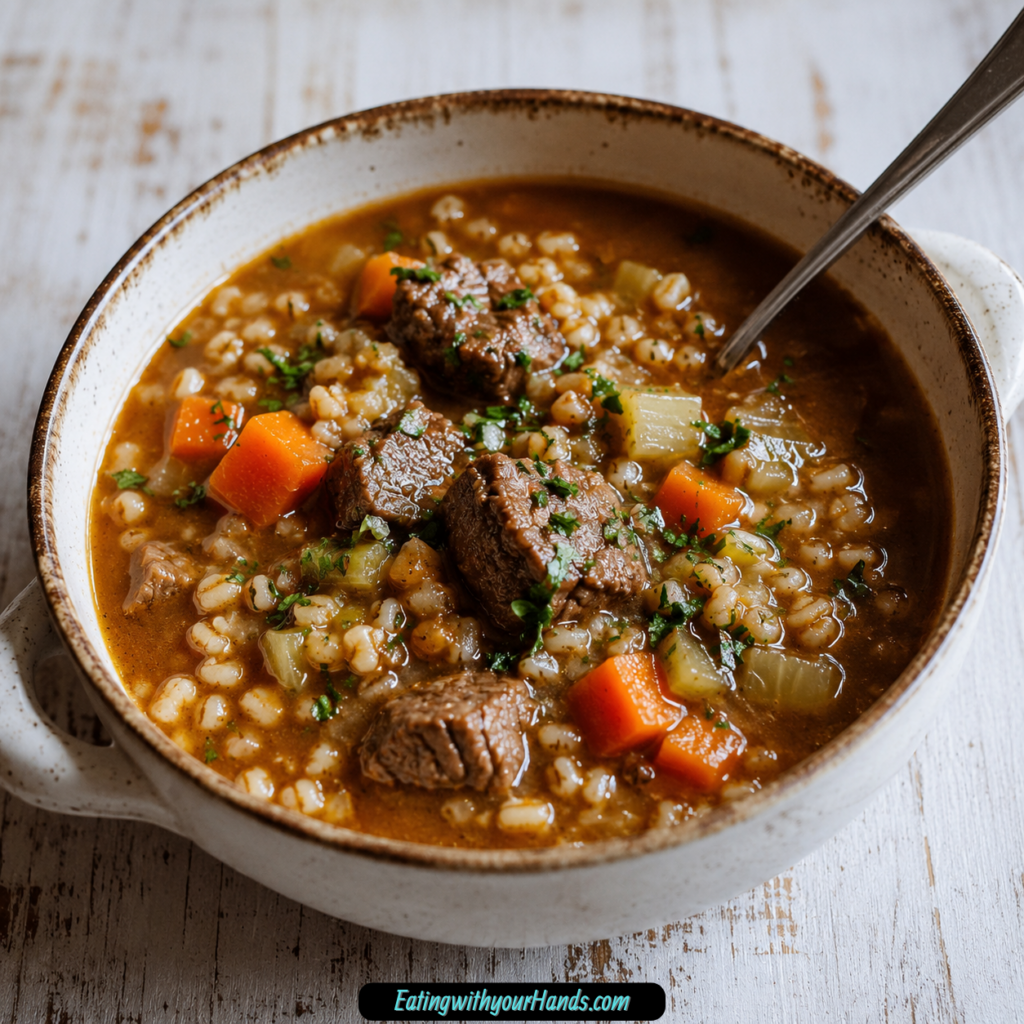
Serve Beef Barley Soup hot in deep bowls. This is the kind of soup that feels best when it is steaming, hearty, and full of tender beef and barley.
Crusty bread is a wonderful side for dipping. It catches the rich broth and makes the meal feel even cozier.
Buttery rolls are another comforting option. They pair well with the savory soup and make the bowl feel more complete.
A sprinkle of freshly chopped parsley on top adds a lovely touch. It brightens the flavor and adds color.
A side salad can bring freshness to the meal. It balances the richness of the beef and broth.
Roasted vegetables also pair well for extra warmth. They turn the soup into a larger cold-weather dinner.
Storage
Beef Barley Soup can be stored in the refrigerator for up to 4 days. Let it cool before placing it in airtight containers.
The barley may continue to absorb liquid as the soup sits. This can make the soup thicker after storage.
Reheating
To reheat, thaw overnight in the refrigerator if frozen. Warm the soup on the stove until heated through.
Stir gently as it reheats. If the soup has thickened, add a little more broth or liquid as needed based on your preference.
Freezing
For longer storage, freeze Beef Barley Soup in airtight containers for up to 3 months. Let the soup cool completely before freezing.
Thaw overnight in the refrigerator before reheating. Warm on the stove until hot.
Make-Ahead
Beef Barley Soup is a wonderful make-ahead meal because it stores and freezes well. You can make a large pot and enjoy it over several days.
For refrigerator storage, keep leftovers in airtight containers for up to 4 days. For longer planning, freeze portions for up to 3 months.
This soup also works well when you want meals ready for chilly nights. Thaw overnight, reheat on the stove, and serve with bread or salad.
Helpful Notes for Best Results
Do not overcrowd the beef when browning. The cubes need room to sear and develop golden color.
Use low-sodium beef broth if you want better control over salt. Taste and adjust the seasoning near the end.
Do not skip the tomato paste. It adds depth and helps make the broth richer.
Rinse the pearl barley under cold water before adding it. This prepares it for simmering in the soup.
Keep the soup at a gentle simmer rather than a hard boil. Low simmering helps the beef become tender.
If the beef is not tender after 2 hours, let it simmer a bit longer. The recipe allows extra time if needed.
Use leftover roast beef to save time if desired. Sirloin or brisket can also be used instead of chuck roast.
For a thicker soup, add a cornstarch slurry before serving. For gluten-free needs, replace barley with quinoa or rice.
Variations
Red Wine Beef Barley Soup
Add a splash of red wine for depth and richness. It gives the broth another layer of flavor.
This variation makes the soup feel slightly more robust. It is optional but useful for extra depth.
Pea Beef Barley Soup
Add peas for a seasonal vegetable variation. They bring a pop of color.
Peas make the soup look brighter. They also add a sweet vegetable note.
Green Bean Beef Barley Soup
Green beans can be added for extra vegetable texture. They give the soup another color and shape.
This option works well when you want more vegetables in the pot. Add them according to the texture you prefer.
Lighter Beef Barley Soup
Use leaner cuts of beef for a lighter version. This reduces some richness while keeping the soup hearty.
The broth, vegetables, and barley still make it satisfying. Adjust cooking time as needed.
Turkey Barley-Style Soup
Turkey can be used instead of beef for a lighter protein option. This changes the flavor of the soup.
The same vegetables and broth-style structure can still make it comforting. It becomes a different but related variation.
Thyme Beef Barley Soup
Add thyme for extra flavor. It gives the soup a more herby note.
Thyme works well with beef and vegetables. It adds warmth to the broth.
Bay Leaf Beef Barley Soup
Bay leaves can be added for depth. They give the soup a classic simmered flavor.
Remove them before serving if used. They are meant to flavor the broth.
Slow Cooker Beef Barley Soup
Try a slow cooker method for an easy, hands-off approach. This is helpful when you want the soup to cook while you do other things.
The important goal is tender beef and cooked barley. The soup should still become hearty and flavorful.
Gluten-Free Beef Soup
Swap pearl barley with quinoa or rice for a gluten-free option. This changes the texture because barley is part of the original soup.
Quinoa or rice keeps the soup hearty. Use this adjustment when gluten-free needs are important.
Leftover Roast Beef Soup
Use leftover roast beef to save time. This is a practical way to turn leftovers into a new meal.
Since the beef is already cooked, handle it gently. The soup still gets flavor from broth, vegetables, tomato paste, and seasoning.
Worcestershire Beef Soup
Add a dash of Worcestershire sauce for extra depth. This gives the broth a more savory flavor.
Use it near the end and adjust to taste. It is a small optional boost.
Thicker Beef Barley Soup
Add a cornstarch slurry before serving if you prefer a thicker soup. This gives the broth more body.
Let it warm through after adding the slurry. The soup should become thicker but still spoonable.
Troubleshooting
The Beef Is Tough
Let the soup simmer longer. The recipe notes that if the beef needs more time, you can let it simmer a bit longer.
Keep the heat low. A gentle simmer helps the beef become tender.
The Soup Is Boiling Too Hard
Reduce the heat to low after the soup reaches a gentle boil. Check occasionally while it simmers.
A hard boil can make the soup reduce too much and may affect the texture of the beef. The goal is a steady, gentle simmer.
The Soup Tastes Flat
Taste and adjust the seasoning before serving. Add more salt or pepper if needed.
Tomato paste adds depth, and a dash of Worcestershire sauce can also help. Optional herbs like thyme or bay leaves can add more flavor.
The Soup Is Too Thin
Add a cornstarch slurry before serving if you prefer a thicker soup. Stir it into the hot soup.
Let the soup warm briefly so the slurry can thicken the broth. This is optional.
The Soup Gets Too Thick After Storage
Barley can absorb liquid as it sits. This may make leftovers thicker.
When reheating, warm gently and adjust the texture as needed. Add a little broth or liquid if you want it looser.
The Barley Is Not Cooked Through
Continue simmering the soup gently. The barley should be cooked through before serving.
Keep the pot covered and the heat low. Check again after a little more time.
The Recipe Needs to Be Gluten-Free
Pearl barley should be replaced with quinoa or rice for a gluten-free option. This is the suggested swap.
Also check any broth or packaged ingredients if needed. Use ingredients that fit your dietary needs.
The Soup Needs to Be Dairy-Free
Make sure all ingredients are free from dairy products. The listed soup ingredients do not require dairy.
Check packaged broth and any add-ins. This keeps the soup aligned for dairy-free needs.
Frequently Asked Questions
Can I freeze Beef Barley Soup?
Yes, Beef Barley Soup can be frozen. Allow it to cool completely before transferring it to airtight containers.
It will keep well in the freezer for up to 3 months. Thaw overnight in the refrigerator before reheating.
What can I use instead of chuck roast?
Sirloin can be used if you do not have chuck roast. Brisket is another alternative.
Cut the beef into similar-sized cubes for even cooking. This helps the pieces cook at the same pace.
How long does Beef Barley Soup last in the fridge?
Beef Barley Soup lasts in the refrigerator for up to 4 days. Store it in an airtight container to keep it fresh.
The soup may thicken as it sits. Reheat it gently on the stove until heated through.
Can I make this soup gluten-free?
Yes, swap the pearl barley with quinoa or rice. This makes the soup fit gluten-free needs better.
The texture will be different from barley. The soup will still be hearty.
Can I use leftover roast beef?
Yes, leftover roast beef can be used to save time. It is a practical shortcut.
Add it in a way that warms it without overcooking. The vegetables, broth, tomato paste, and barley still create the soup.
Can I add more vegetables?
Yes, peas or green beans can be added for a pop of color. These seasonal vegetables make the soup more colorful.
A side of roasted vegetables can also be served with the soup. That makes the meal even heartier.
How can I make the soup thicker?
Add a cornstarch slurry before serving. Stir it into the hot soup and let it thicken.
This is optional. Use it if you prefer a thicker broth.
What should I serve with Beef Barley Soup?
Serve it with crusty bread or buttery rolls for dipping. A side salad or roasted vegetables also pairs well.
Chopped parsley on top adds freshness and color. Serve the soup hot in deep bowls.
Why This Recipe Works So Well
Beef Barley Soup works so well because it starts with browning the beef. That first sear creates flavor that carries through the whole pot.
The vegetables add sweetness, color, and depth. Onion, carrots, celery, and garlic create the familiar base that makes the soup feel homemade.
Tomato paste gives the broth more richness. It helps the soup taste deeper than broth alone.
Pearl barley makes the bowl filling and comforting. It absorbs the broth as it cooks and gives the soup a hearty texture.
The two-hour simmer lets the beef become tender and the flavors come together. This is the slow, steady part that makes the soup feel like something made with care.
The recipe is also practical because it stores well. Refrigerator leftovers last up to 4 days, and freezer portions last up to 3 months.
Final Thoughts
Beef Barley Soup is a warm, hearty pot of chuck roast, pearl barley, carrots, celery, onion, garlic, tomato paste, and rich beef broth simmered until everything tastes cozy and complete. It is simple, filling, and perfect for the kind of evening when only a deep bowl of soup feels right.
Serve it hot with chopped parsley, crusty bread, buttery rolls, salad, or roasted vegetables, and let it bring that old-fashioned comfort to the table. With tender beef, savory broth, and freezer-friendly leftovers, this is the kind of soup worth keeping in rotation all through the cold season.
Beef Barley Soup
Hearty, savory, and deeply comforting, this Beef Barley Soup is filled with tender chuck roast, vegetables, pearl barley, and rich beef broth. The tomato paste, garlic, onion, carrots, celery, and parsley garnish give it classic American soup flavor that works beautifully for cozy dinners or make-ahead meals.
Recipe Details
- Prep Time: 15 minutes
- Cook Time: 2 hours
- Total Time: 2 hours 15 minutes
- Course: Dinner, Soup
- Cuisine: American
- Servings: 6 people
- Calories: 400 kcal
Equipment
- large pot
- Cutting board
Ingredients
For Garnish
- parsley chopped for garnish
For the Soup
- 2 pounds chuck roast cut into 1-inch cubes
- 9 cups beef broth (72 ounces)
- 1 cup pearl barley (200 g)
- 1 large yellow onion diced (about 1 ½ cups)
- 3 medium carrots cut into rounds (about ½ cup)
- 2 ribs celery diced (about ½ cup)
- 3 teaspoons garlic minced
- 3 tablespoons tomato paste
- 2 tablespoons vegetable oil
- ½ teaspoon kosher salt
- ½ teaspoon ground black pepper
Instructions
Step 1: Brown the Beef
In a large pot, heat the vegetable oil over medium-high heat. Add the cubed chuck roast, season with salt and pepper, and brown on all sides.
Step 2: Add the Vegetables and Tomato Paste
Add the diced onion, carrots, celery, minced garlic, and tomato paste. Stir and cook for a few minutes until the vegetables begin to soften.
Step 3: Add the Broth and Barley
Pour in the beef broth and bring to a boil. Stir in the pearl barley so it mixes evenly into the soup.
Step 4: Simmer Until Tender
Reduce the heat, cover, and simmer for about 2 hours until the beef is tender and the barley is cooked.
Step 5: Garnish and Serve
Serve hot, garnished with chopped parsley.
Notes
- This soup can be made in advance and stored in the refrigerator.
- It also freezes well.
Serving Suggestions
Serve this Beef Barley Soup hot, with chopped parsley scattered over each bowl. The tender beef, cooked barley, vegetables, and rich broth make it filling enough for a comforting dinner.
This soup is a good choice when you want something warm and hearty that can also be prepared ahead. Since it stores in the refrigerator and freezes well, it works nicely for planned meals.
Storage
How to Store
This soup can be made in advance and stored in the refrigerator. The recipe does not provide a specific refrigerator storage duration, so no exact storage time is added here.
Freezing Tip
This soup freezes well. No exact freezer duration is provided, so no specific freezing time is added here.
Best Texture Tip
Simmer the soup for about 2 hours until the beef is tender and the barley is cooked. This gives the soup its hearty texture and rich, comforting finish.
Serving Tip
Serve hot with chopped parsley for garnish. The parsley adds a fresh final touch without changing the soup.

Fernando is the creator and writer behind the food blog Eating with your Hands. Living and working in cities like Paris, Barcelona, and Berlin, and being married to a Canadian foodie, has given Fernando a passion and interest in food and inspired him to run EWYH.