
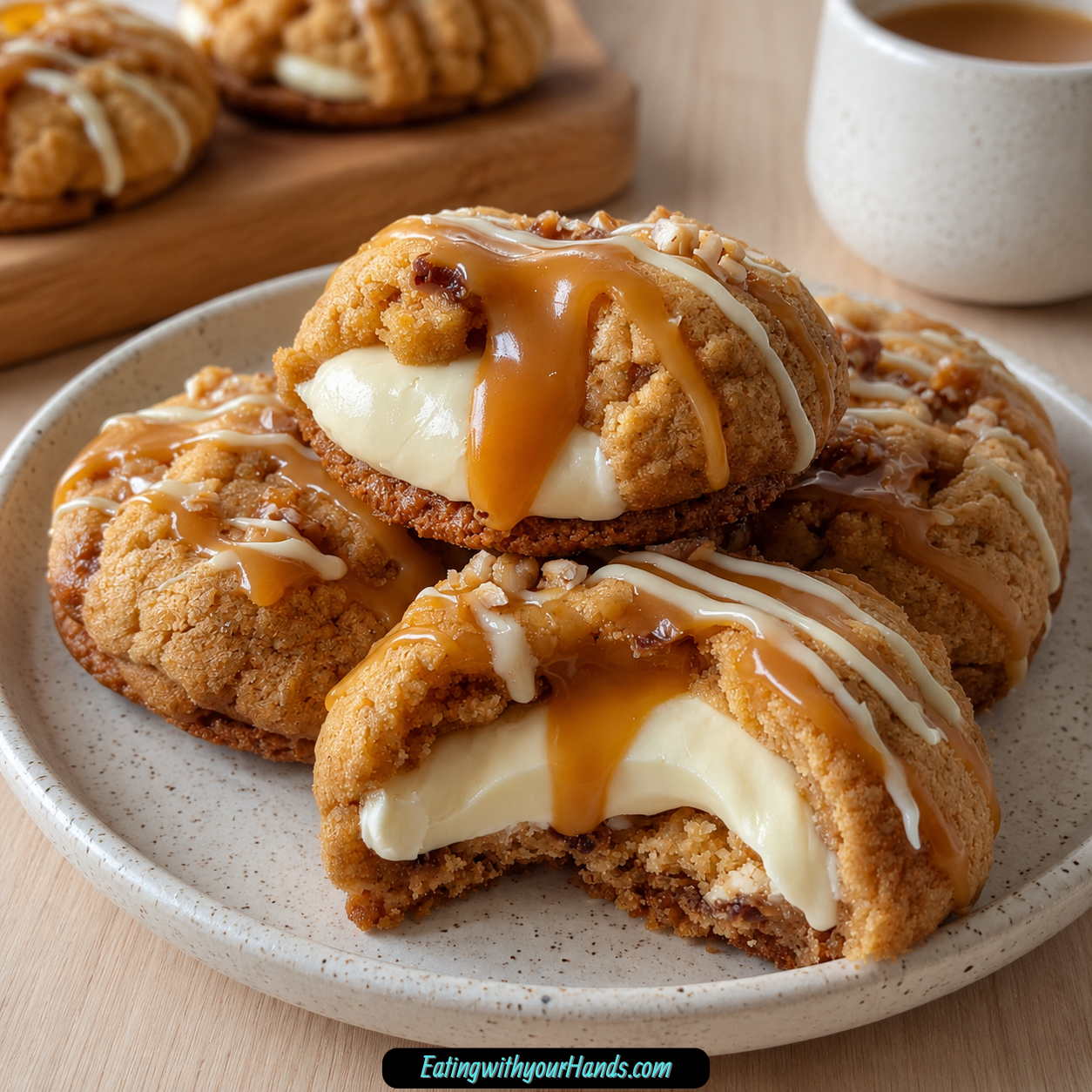
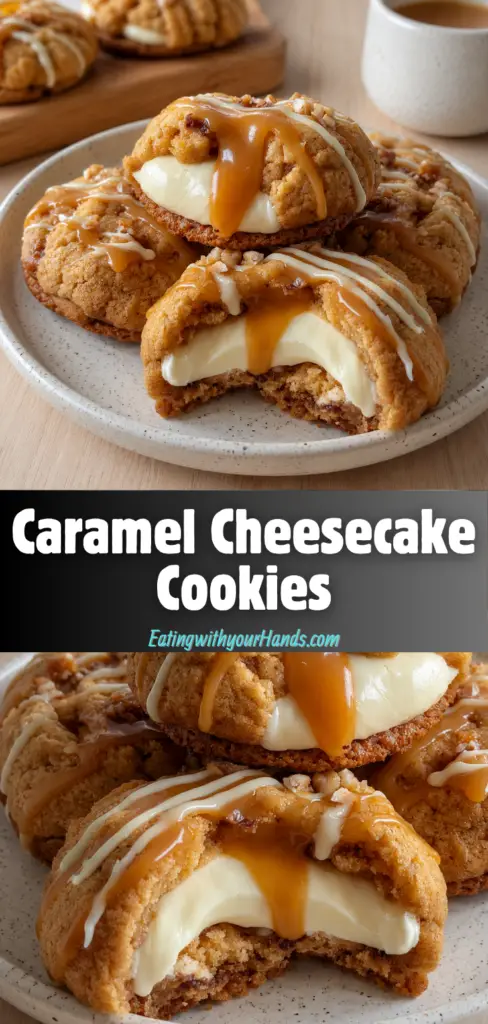
Caramel Cheesecake Cookies have the kind of sweetness that feels tied to memory before you even take the first bite. They remind me of standing in a warm kitchen as a child, watching something special come together while the smell of butter, sugar, vanilla, and baking cookies filled the room.
There is something deeply comforting about a cookie that feels a little more special than an everyday treat. These cookies bring together soft cookie dough, creamy cheesecake filling, and warm caramel sauce in a way that feels indulgent, nostalgic, and perfect for sharing.
I always think of recipes like this as more than dessert. They are the little moments we carry forward, the treats made for family gatherings, cozy weekends, holiday tables, bake sales, or those regular days that need a little sweetness.
These Caramel Cheesecake Cookies feel like a small celebration in your hand. The cookie dough is rich with softened butter, brown sugar, granulated sugar, egg, and vanilla, while the cream cheese filling adds a soft, creamy center.
Then comes the caramel drizzle, warm and glossy over the top. It turns each cookie into something that feels bakery-worthy while still being homemade and full of heart.
Once you make them, it is easy to understand why they become the kind of cookie people ask for again. They are sweet, creamy, gooey, soft around the edges, and made for creating those little kitchen memories that last.
Table of Contents
- Why You’ll Love These Caramel Cheesecake Cookies
- Recipe Details
- Ingredients
- Optional Swaps, Variations, Add-Ins, and Serving Ideas
- Why This Recipe Works
- Directions
- Step 1: Preheat the Oven
- Step 2: Prepare the Baking Sheet
- Step 3: Begin the Cookie Dough
- Step 4: Cream the Butter and Sugars
- Step 5: Add the Egg
- Step 6: Add the Vanilla Extract
- Step 7: Whisk the Dry Ingredients
- Step 8: Add Dry Ingredients to Wet Ingredients
- Step 9: Avoid Overworking the Dough
- Step 10: Prepare the Cheesecake Filling Bowl
- Step 11: Add Sugar and Vanilla to the Filling
- Step 12: Mix the Cheesecake Filling
- Step 13: Portion the Cookie Dough
- Step 14: Flatten the Dough
- Step 15: Add the Cheesecake Filling
- Step 16: Wrap the Dough Around the Filling
- Step 17: Roll the Filled Dough into a Ball
- Step 18: Space the Cookie Balls
- Step 19: Bake the Cookies
- Step 20: Cool the Cookies Slightly
- Step 21: Warm the Caramel Sauce
- Step 22: Drizzle the Caramel
- Step 23: Serve the Cookies
- Serving Ideas
- Storage
- Reheating
- Freezing
- Make-Ahead
- Helpful Notes for Best Results
- Variations
- Troubleshooting
- Frequently Asked Questions
- Why This Recipe Works So Well
- Final Thoughts
- Caramel Cheesecake Cookies
Why You’ll Love These Caramel Cheesecake Cookies
These Caramel Cheesecake Cookies have a quick prep time of just 20 minutes. That makes them perfect for last-minute gatherings, weekend baking, or any moment when you want something homemade without spending all day in the kitchen.
They use minimal ingredients, most of them familiar pantry staples. Butter, sugars, egg, vanilla, flour, baking soda, salt, cream cheese, and caramel sauce create a cookie that feels special without needing a long shopping list.
The flavor is family-friendly and easy to love. Kids and adults alike can enjoy the sweet combination of caramel and cheesecake tucked into a soft cookie.
They are freezer-friendly, which makes them useful for planning ahead. You can bake a batch and freeze some for later, then thaw them when the craving hits.
These cookies are perfect for sharing. They work well for parties, bake sales, neighbors, holiday trays, or a simple plate passed around after dinner.
They also feel flexible enough to make your own. You can add cinnamon, use a different filling, stir in crunchy pieces, or change the topping while still keeping the heart of the cookie intact.
Recipe Details
Caramel Cheesecake Cookies are soft filled cookies made with a buttery cookie dough, a cream cheese filling, and a caramel sauce drizzle. The cookies are baked at 350°F, or 175°C, for 10 to 12 minutes.
The prep time is just 20 minutes. The cookie dough is made first, then the cheesecake filling is mixed separately before the cookies are assembled and baked.
The dough is flattened in your palm, filled with a small dollop of cheesecake filling, wrapped around the filling, and rolled into a ball. The cookies are then baked until lightly golden around the edges.
After baking, the cookies cool slightly before warm caramel sauce is drizzled over the top. This final caramel touch gives them that gooey, sweet finish.
The cookies can be stored in an airtight container at room temperature for up to a week. They can also be frozen for up to three months and thawed at room temperature when you are ready to enjoy them.
Ingredients
For the Cookie Dough
- ¾ cup unsalted butter, softened (I love using European-style butter for that creamy taste!)
- ¾ cup brown sugar, packed
- ¼ cup granulated sugar
- 1 large egg
- 2 teaspoon vanilla extract (real vanilla extract makes all the difference!)
- 2 cups all-purpose flour
- ½ teaspoon baking soda
- ¼ teaspoon salt
For the Cheesecake Filling
- 4 oz cream cheese, softened (Make sure it’s at room temperature for easy mixing!)
- 2 tablespoon granulated sugar
- ½ teaspoon vanilla extract
For the Caramel
- ¼ cup caramel sauce (store-bought or homemade; I usually grab the jar from the store to save time!)
Ingredient Notes
Softened unsalted butter gives the cookie dough its rich base. European-style butter is mentioned for its creamy taste, but the key is that the butter should be softened so it can cream smoothly with the sugars.
Packed brown sugar gives the cookies deeper sweetness and helps make the dough feel cozy. Granulated sugar adds another layer of sweetness and supports the cookie texture.
The egg helps bring the cookie dough together. Vanilla extract adds that warm bakery aroma, and real vanilla extract is especially loved here.
All-purpose flour forms the structure of the cookie dough. Baking soda helps the cookies bake properly, while salt balances the sweetness.
Softened cream cheese is the base of the cheesecake filling. It should be at room temperature so it mixes easily with granulated sugar and vanilla extract.
Caramel sauce is the finishing touch. Store-bought or homemade caramel sauce can be used, with store-bought being a helpful time-saver.
Optional Swaps, Variations, Add-Ins, and Serving Ideas
Warm Cinnamon Flavor
A pinch of cinnamon can be added to the cookie dough for a warm, cozy flavor. This makes the cookies feel even more suited for cool weather, holidays, or slow weekend baking.
The cinnamon does not replace the caramel or cheesecake flavor. It simply adds a soft warmth behind the sweetness.
Different Filling Ideas
Peanut butter can be used instead of cream cheese for a different filling. This turns the cookie into a richer, nutty treat.
Nutella can also be used instead of cream cheese. It gives the cookies a chocolate-hazelnut style filling while keeping the same filled-cookie idea.
Gluten-Free Version
Gluten-free flour can be substituted for a gluten-free version of these cookies. This allows the recipe to be adjusted for gluten-free needs while keeping the same caramel cheesecake cookie style.
Because the main cookie dough uses all-purpose flour, the gluten-free flour option is a direct variation. It keeps the structure of the recipe familiar.
Crunchy Add-Ins
Crushed nuts can be incorporated into the cookie dough for added crunch. They bring extra texture to the soft cookie and creamy filling.
Toffee bits are another option for crunch and flavor. They match the caramel topping beautifully and make the cookies feel even more indulgent.
Chocolate Twist
Chocolate ganache can be used instead of caramel sauce for a decadent twist. This changes the topping while keeping the cookie dough and filling idea intact.
Chocolate chips can also be added to the cookie dough for extra flavor and texture. They bring little pockets of chocolate into each bite.
Extra Caramel Texture
Caramel bits can be added to the cookie dough for more caramel flavor and texture. This makes the cookie even more focused on that sweet caramel personality.
The caramel sauce drizzle still stays as the finishing touch. The bits simply add another caramel element inside the dough.
Nut-Free Direction
For a nut-free version, skip any nuts. If using peanut butter as a filling variation, sunflower seed butter can be used in place of peanut butter.
This keeps the cookie flexible for different needs. The main caramel cheesecake version already does not require nuts.
Dairy-Free Filling Direction
If you need a dairy-free option, try using a dairy-free cream cheese alternative. This gives you a way to keep the cheesecake-style filling while changing the dairy ingredient.
The main recipe uses regular cream cheese. The dairy-free cream cheese alternative is a substitution mentioned for those who need it.
Why This Recipe Works
Caramel Cheesecake Cookies work because they bring three dessert feelings into one bite. You get the comfort of a homemade cookie, the creamy center of cheesecake, and the gooey sweetness of caramel sauce.
The cookie dough is sturdy enough to wrap around the filling but soft enough to bake into a tender cookie. Breadcrumbs are not needed here because the flour, egg, butter, sugars, baking soda, and salt create the dough structure.
The cheesecake filling is simple, which lets the cookie dough and caramel shine. Softened cream cheese, granulated sugar, and vanilla extract create a creamy center without overcomplicating the recipe.
The caramel drizzle is added after baking, which gives the cookies their beautiful finish. Letting the cookies cool slightly first helps the warm caramel settle over the tops instead of disappearing completely.
Directions
Step 1: Preheat the Oven
Preheat your oven to 350°F, or 175°C. This temperature is used to bake the cookies until they are lightly golden around the edges.
Starting with the oven properly heated helps the cookies bake evenly. While the oven warms, you can prepare the baking sheet and cookie dough.
Step 2: Prepare the Baking Sheet
Line a baking sheet with parchment paper. This helps keep the cookies from sticking and makes cleanup easier.
The parchment paper also gives the cookie balls a clean surface for baking. Once the dough is assembled, the prepared sheet will be ready.
Step 3: Begin the Cookie Dough
Place ¾ cup softened unsalted butter in a mixing bowl. Add ¾ cup packed brown sugar and ¼ cup granulated sugar.
The butter should be soft enough to blend smoothly with the sugars. This creates the creamy base of the cookie dough.
Step 4: Cream the Butter and Sugars
Cream the softened butter, brown sugar, and granulated sugar together until the mixture is smooth and fluffy. This step helps the dough begin with a soft, even texture.
Take your time so the butter and sugars blend well. A smooth mixture makes the rest of the dough easier to combine.
Step 5: Add the Egg
Beat 1 large egg into the butter and sugar mixture. Mix until it is well combined.
The egg helps bind the cookie dough. It also helps the dough come together before the dry ingredients are added.
Step 6: Add the Vanilla Extract
Add 2 teaspoon vanilla extract to the wet mixture. Real vanilla extract is loved here because it adds a warm, rich aroma.
Mix until the vanilla is evenly blended. At this stage, the dough base should smell sweet and inviting.
Step 7: Whisk the Dry Ingredients
In another bowl, add 2 cups all-purpose flour, ½ teaspoon baking soda, and ¼ teaspoon salt. Whisk them together until evenly combined.
Mixing the dry ingredients separately helps distribute the baking soda and salt. This keeps the dough more consistent once everything is combined.
Step 8: Add Dry Ingredients to Wet Ingredients
Gradually add the dry mixture to the wet ingredients. Mix until just combined.
Do not worry if the dough looks a little crumbly at first. It will come together as you continue gently mixing.
Step 9: Avoid Overworking the Dough
Stop mixing once the dough is combined. The goal is to bring the ingredients together without making the cookie dough feel heavy.
A gentle finish helps the cookies bake with a pleasant texture. The dough should be ready to shape around the filling.
Step 10: Prepare the Cheesecake Filling Bowl
In a separate bowl, add 4 oz softened cream cheese. Make sure the cream cheese is at room temperature for easy mixing.
This separate bowl keeps the filling smooth and distinct from the cookie dough. The filling should be creamy enough to place in the center of each cookie.
Step 11: Add Sugar and Vanilla to the Filling
Add 2 tablespoon granulated sugar to the softened cream cheese. Then add ½ teaspoon vanilla extract.
These two ingredients sweeten and flavor the cheesecake filling. The filling stays simple but gives the cookies their creamy center.
Step 12: Mix the Cheesecake Filling
Mix the cream cheese, granulated sugar, and vanilla extract until smooth and creamy. This is where the filling becomes soft, sweet, and ready for the cookies.
Make sure there are no large lumps. A smooth filling is easier to spoon into the dough.
Step 13: Portion the Cookie Dough
Take a spoonful of cookie dough. Hold it in your palm so you can shape it around the filling.
Each spoonful will become one stuffed cookie. The amount does not need to be perfect, but each cookie should have enough dough to wrap around the cheesecake center.
Step 14: Flatten the Dough
Flatten the spoonful of cookie dough in your palm. Make a space in the center for the cheesecake filling.
Do not press it so thin that it tears. The dough needs enough thickness to hold the filling inside.
Step 15: Add the Cheesecake Filling
Place a small dollop of cheesecake filling in the center of the flattened dough. Keep the filling toward the middle so it can be enclosed.
The dollop should be small enough for the dough to wrap around it. This helps prevent too much filling from spilling out during baking.
Step 16: Wrap the Dough Around the Filling
Bring the edges of the dough up and around the cheesecake filling. Gently seal the dough so the filling is tucked inside.
Do not worry if the shape is not perfect. The cookies will still taste amazing even if each one looks a little different.
Step 17: Roll the Filled Dough into a Ball
Roll the filled dough gently into a ball. This helps smooth the outside and keeps the filling enclosed.
Repeat the process with the remaining dough and cheesecake filling. Place each cookie ball on the prepared baking sheet.
Step 18: Space the Cookie Balls
Arrange the cookie balls on the parchment-lined baking sheet with enough room between them. This gives the cookies space to bake properly.
Spacing helps them bake evenly and prevents them from touching as they spread. A little space makes the finished cookies neater.
Step 19: Bake the Cookies
Place the baking sheet in the preheated oven. Bake the cookies for 10 to 12 minutes.
The cookies are ready when they are lightly golden around the edges. The centers should look baked but still soft.
Step 20: Cool the Cookies Slightly
Once baked, remove the cookies from the oven. Allow them to cool slightly before adding the caramel.
This short cooling time helps the cookies settle. It also prepares the surface for the warm caramel drizzle.
Step 21: Warm the Caramel Sauce
Use ¼ cup caramel sauce for the topping. The caramel should be warm enough to drizzle smoothly over the cookies.
Store-bought or homemade caramel sauce can be used. Store-bought caramel is a helpful time-saver.
Step 22: Drizzle the Caramel
Drizzle the warm caramel sauce over the slightly cooled cookies. This is the finishing touch that takes them to another level.
Let the caramel fall over the tops in a generous but controlled way. The cookies should look sweet, glossy, and ready to share.
Step 23: Serve the Cookies
Serve the cookies after the caramel has been added. They are especially delightful warm.
These cookies pair beautifully with coffee or milk. For an extra treat, serve them with a scoop of vanilla ice cream.
Serving Ideas
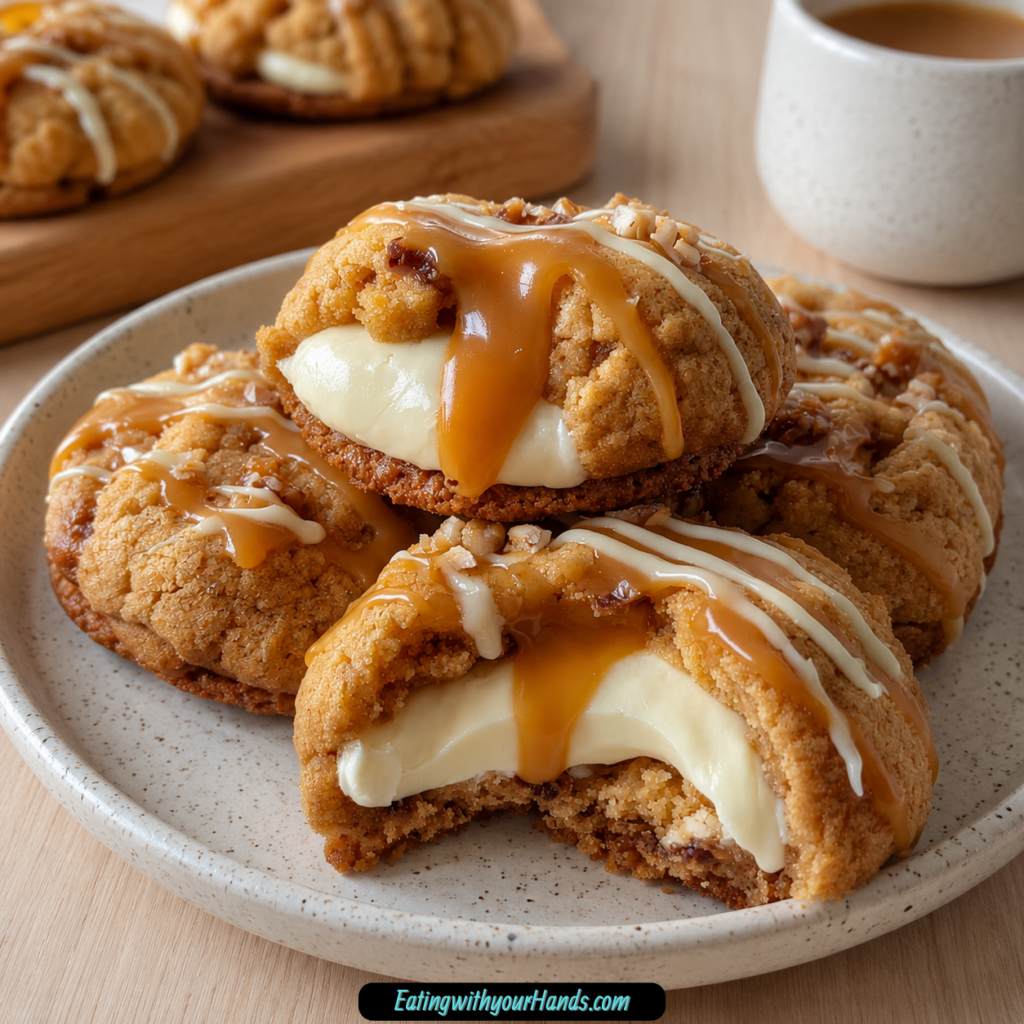
Caramel Cheesecake Cookies are delightful served warm. The cookie is soft, the filling feels creamy, and the caramel drizzle gives each bite that gooey finish.
A cup of coffee pairs beautifully with these cookies. The richness of the cookie works well beside the warmth of the drink.
Milk is another classic pairing. It keeps the serving simple, family-friendly, and perfect for a cozy kitchen moment.
For an extra treat, pair the cookies with a scoop of vanilla ice cream. The ice cream makes the dessert feel even more indulgent.
These cookies are perfect for parties, bake sales, neighbors, family gatherings, or cozy weekends. They are sweet enough to feel special but simple enough to make again and again.
Storage
Store the cookies in an airtight container at room temperature for up to a week. Keeping them covered helps them stay enjoyable for several days.
These cookies are best enjoyed fresh. If you have leftovers, reheating them for a few seconds in the microwave makes them taste like they just came out of the oven.
Reheating
If you want that fresh-baked feeling again, reheat leftover cookies for a few seconds in the microwave. This brings back some of the warmth and softness.
The caramel and cheesecake filling will feel more indulgent when warmed briefly. Be gentle so the cookies do not become overheated.
Freezing
You can freeze Caramel Cheesecake Cookies for up to three months. Let them cool completely before freezing.
Place the cookies in an airtight container or a resealable freezer bag. When you are ready to enjoy them, thaw them at room temperature for a bit.
The cookies thaw beautifully and can taste just like fresh-baked cookies. This makes them helpful for planning ahead or saving extras for later.
Make-Ahead
These cookies are freezer-friendly, so you can bake a batch and freeze some for later. That makes them especially useful for parties, bake sales, or moments when you want dessert ready ahead of time.
After baking and cooling completely, store them in an airtight container or resealable freezer bag. Thaw at room temperature when you are ready to serve.
You can also keep baked cookies at room temperature for up to a week. This makes them easy to prepare before a gathering.
Helpful Notes for Best Results
Make sure the cream cheese is softened and at room temperature. This helps the cheesecake filling mix smoothly and makes assembly easier.
The butter should also be softened for the cookie dough. Soft butter creams better with the brown sugar and granulated sugar.
If the dough looks a little crumbly after adding the dry ingredients, do not worry. It will come together.
If you are out of cream cheese, mascarpone cheese works beautifully as a substitute. It gives a similar creamy texture.
For a nut-free version, skip any nuts. If using peanut butter as a variation, sunflower seed butter can be used in place of peanut butter.
Chocolate chips or caramel bits can be added to the cookie dough for extra flavor and texture. These additions make the cookies even more fun.
Variations
Cinnamon Caramel Cheesecake Cookies
Add a pinch of cinnamon to the cookie dough for a warm, cozy flavor. This variation gives the cookies a softer spice note.
It works especially well for chilly days or holiday trays. The cinnamon supports the caramel without taking over.
Peanut Butter-Filled Cookies
Try using peanut butter instead of cream cheese for a different filling. This creates a richer, nutty cookie.
If you need a nut-free direction, sunflower seed butter can be used in place of peanut butter. That keeps the filled-cookie idea while avoiding nuts.
Nutella-Filled Cookies
Nutella can be used instead of cream cheese for another filling option. This gives the cookies a chocolatey, creamy center.
It changes the flavor completely while keeping the same assembly method. The caramel drizzle can still make the cookies feel indulgent.
Gluten-Free Caramel Cheesecake Cookies
Substitute gluten-free flour for a gluten-free version of these cookies. This allows the cookie dough to fit gluten-free needs.
The rest of the cookie can remain focused on the cheesecake filling and caramel drizzle. Always choose the ingredients that work for your needs.
Crunchy Cookie Dough
Crushed nuts can be added to the cookie dough for crunch. Toffee bits are another option for added texture.
These additions make the cookies feel more layered. They bring contrast to the soft dough and creamy filling.
Chocolate Ganache Cookies
Swap the caramel sauce for chocolate ganache for a decadent twist. This makes the cookies more chocolate-forward.
The cheesecake filling still gives the creamy center. The topping simply changes from caramel to chocolate.
Extra Chocolate or Caramel Cookies
Add chocolate chips to the cookie dough for extra flavor and texture. They bring little bursts of chocolate into the cookie.
Caramel bits can also be added for even more caramel flavor. This makes the cookie taste extra sweet and indulgent.
Dairy-Free Cheesecake Cookies
Use a dairy-free cream cheese alternative if you need a dairy-free option. This keeps the cheesecake-style filling while changing the cream cheese ingredient.
The rest of the recipe should be adjusted with your chosen dairy-free ingredients as needed. The main idea remains a filled cookie with a sweet topping.
Troubleshooting
The Cookie Dough Looks Crumbly
Do not worry if the dough looks a little crumbly after the dry ingredients are added. The instructions note that it will come together.
Keep mixing gently until the dough forms enough to shape. Avoid overworking it once it is combined.
The Dough Feels Too Soft or Wet
If the dough feels difficult to shape, make sure the ingredients are just combined and not overly worked. The recipe does not add extra flour beyond what is listed.
Handle the dough gently when flattening and wrapping it around the filling. The shape does not need to be perfect.
The Cheesecake Filling Is Lumpy
Make sure the cream cheese is softened before mixing the filling. Room temperature cream cheese is much easier to blend smoothly.
Mix it well with the granulated sugar and vanilla extract. The filling should be smooth and creamy before assembly.
The Filling Leaks Out
Use a small dollop of cheesecake filling in the center of the flattened dough. Then wrap the dough around the filling carefully.
Do not worry if the cookies are not perfect. They will still taste wonderful even if a little filling shows.
The Cookies Are Overbaked
Bake the cookies for 10 to 12 minutes. They should be lightly golden around the edges.
The cookies will continue to settle slightly after they come out of the oven. Removing them when the edges are lightly golden helps keep them soft.
The Caramel Is Hard to Drizzle
Warm the caramel sauce before drizzling it over the cookies. It should be loose enough to fall over the tops smoothly.
Store-bought or homemade caramel sauce can be used. The important thing is that it is warm enough to drizzle.
The Cookies Taste Too Different After a Substitution
If you replace brown sugar with granulated sugar, the flavor will be slightly different. This is mentioned as an easy swap, but it does change the taste.
Substitutions can be helpful, but each one brings its own flavor. Mascarpone, peanut butter, Nutella, gluten-free flour, or dairy-free cream cheese alternatives will each shift the final cookie in a different way.
Frequently Asked Questions
Can I freeze Caramel Cheesecake Cookies?
Yes, you can freeze these cookies for up to three months. Let them cool completely before freezing.
Place the cookies in an airtight container or a resealable freezer bag. When you are ready to enjoy them, thaw them at room temperature for a bit.
How do I substitute ingredients?
You can easily swap ingredients based on what you have. If you are out of brown sugar, you can use granulated sugar instead, but the flavor will be slightly different.
For the cream cheese, mascarpone cheese is a fantastic substitute. If you need a dairy-free option, try using a dairy-free cream cheese alternative.
What variations can I try?
There are many fun ways to change these cookies. You can add a pinch of cinnamon for warmth, use peanut butter instead of cream cheese, or add chocolate chips or nuts to the cookie dough for extra texture.
You can also use Nutella as a filling, add toffee bits, or swap the caramel sauce for chocolate ganache. The cookies are flexible while still staying sweet and indulgent.
Yes, skip any nuts for a nut-free version. If you are using the peanut butter variation, sunflower seed butter can be used in place of peanut butter.
The main Caramel Cheesecake Cookies do not require nuts. Nuts are only mentioned as an optional crunchy add-in.
Serve them warm with a cup of coffee or milk. They are also lovely with a scoop of vanilla ice cream.
These cookies work well for sharing at parties, bake sales, family gatherings, or with neighbors. They bring a sweet, homemade feeling to almost any occasion.
The cookies can be stored in an airtight container at room temperature for up to a week. They can also be frozen for up to three months.
If you have leftovers, reheating them for a few seconds in the microwave makes them taste like they just came out of the oven. That little warm-up brings back their cozy texture.
Why This Recipe Works So Well
Caramel Cheesecake Cookies work so well because they feel familiar and exciting at the same time. They begin with a soft cookie dough, then surprise you with creamy cheesecake filling and a caramel finish.
The brown sugar, butter, vanilla, and caramel bring warmth and sweetness. The cream cheese filling adds richness and turns the cookie into something more special than a plain batch.
The recipe is also practical for real life. It has a quick 20-minute prep time, uses minimal ingredients, freezes well, and can be served at everything from bake sales to cozy weekends.
The variations make it easy to personalize. Cinnamon, peanut butter, Nutella, gluten-free flour, toffee bits, chocolate ganache, mascarpone, dairy-free cream cheese, and chocolate chips all give you different directions to explore.
Most importantly, these cookies feel like memory-making food. They are the kind of treat that fills the kitchen with sweetness and makes people linger a little longer around the plate.
Final Thoughts
Caramel Cheesecake Cookies are a beautiful reminder that dessert does not have to be complicated to feel meaningful. With soft cookie dough, a creamy cheesecake center, and a warm caramel drizzle, they bring comfort, indulgence, and sweetness into every bite.
I hope these cookies become the kind of treat your family asks for again and again. Bake them for a special occasion, share them with neighbors, tuck some away in the freezer, or enjoy them warm with coffee, milk, or vanilla ice cream.
Caramel Cheesecake Cookies
Soft, sweet, and filled with creamy cheesecake centers, these Caramel Cheesecake Cookies are a cozy dessert with rich caramel drizzled over the top. Each cookie has a tender brown sugar dough, a smooth cream cheese filling, and a lightly golden finish that makes them perfect for parties, holidays, or everyday treats.
Recipe Details
- Prep Time: 20 minutes
- Cook Time: 12 minutes
- Total Time: 32 minutes
- Course: Dessert
- Cuisine: American
- Servings: 12 cookies
- Calories: 150 kcal
Equipment
- Mixing bowl
- Baking sheet
Ingredients
For the Cookie Dough
- ¾ cup unsalted butter softened
- 2 cups all-purpose flour
- ¾ cup brown sugar
- ¼ teaspoon salt
- 1 large egg
- ½ teaspoon baking soda
- 2 teaspoon vanilla extract
- ¼ cup granulated sugar
For the Cheesecake Filling
- 4 oz cream cheese softened
- ½ teaspoon vanilla extract
- 2 tablespoon granulated sugar
For the Caramel
- ¼ cup caramel sauce store-bought or homemade
Instructions
Step 1: Prepare the Oven and Baking Sheet
Preheat your oven to 350°F (175°C). Line a baking sheet with parchment paper.
Step 2: Cream the Butter and Sugars
In a mixing bowl, cream together the softened butter, brown sugar, and granulated sugar until smooth. Beat in the egg and vanilla extract.
Step 3: Mix the Dry Ingredients
In another bowl, whisk together the flour, baking soda, and salt. Gradually add this dry mixture to the wet ingredients until combined.
Step 4: Make the Cheesecake Filling
For the cheesecake filling, mix the cream cheese, granulated sugar, and vanilla extract until smooth.
Step 5: Fill and Shape the Cookies
Take a spoonful of cookie dough and flatten it. Place a small amount of cheesecake filling in the center, then wrap the dough around the filling and roll it into a ball.
Step 6: Bake Until Lightly Golden
Place the cookie balls on the prepared baking sheet. Bake for 10-12 minutes, until lightly golden.
Step 7: Cool and Add Caramel
Once baked, allow the cookies to cool slightly. Drizzle caramel sauce over the top before serving.
Notes
- Store the cookies in an airtight container.
- You can also add nuts or chocolate chips to the cookie dough for extra flavor.
Serving Suggestions
Serve these Caramel Cheesecake Cookies after the caramel sauce has been drizzled over the top. The soft cookie dough, creamy cheesecake filling, and sweet caramel make each cookie feel rich and dessert-worthy.
They work well for parties, dessert trays, holiday baking, or a simple sweet treat. You can also add nuts or chocolate chips to the cookie dough for extra flavor, exactly as noted.
Storage
How to Store
Store the cookies in an airtight container. The recipe does not provide a specific storage duration, so no exact storage time is added here.
Best Texture Tip
Allow the cookies to cool slightly before adding the caramel sauce. This helps the drizzle sit nicely on top without changing the soft cookie texture too much.
Flavor Tip
For extra flavor, you can add nuts or chocolate chips to the cookie dough as noted. No specific quantity is provided, so no amount is added here.
Serving Tip
Serve the cookies once the caramel has been drizzled over the top. This gives each cookie its finished caramel cheesecake flavor.

Fernando is the creator and writer behind the food blog Eating with your Hands. Living and working in cities like Paris, Barcelona, and Berlin, and being married to a Canadian foodie, has given Fernando a passion and interest in food and inspired him to run EWYH.