
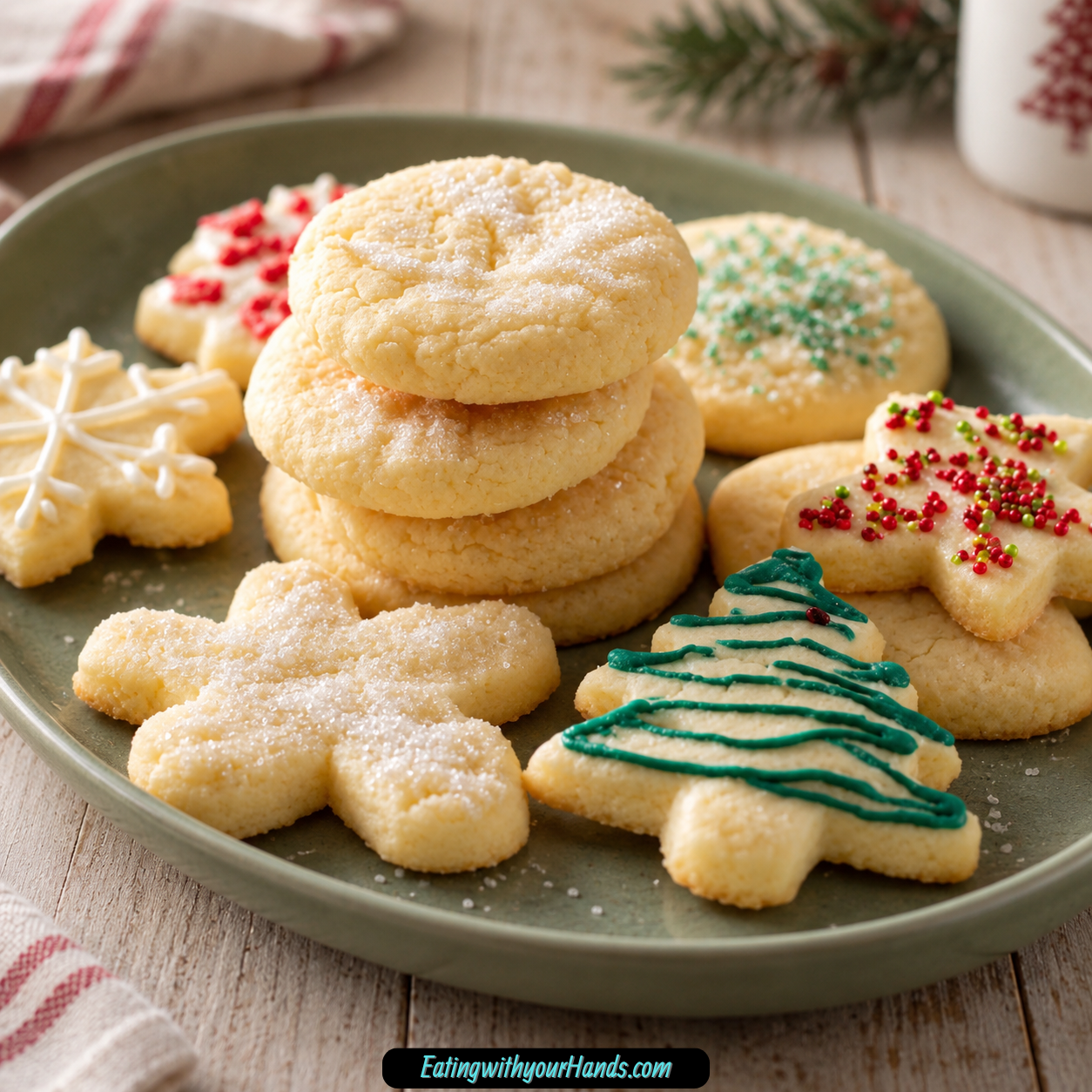

Christmas Sugar Cookies That Stay Soft are the kind of holiday cookies that feel simple, familiar, and deeply comforting. They are buttery, tender, easy to cut into festive shapes, and made for the kind of decorating moments that turn an ordinary kitchen into a holiday memory.
These cookies are not complicated or flashy. Their charm comes from the soft texture, the classic vanilla flavor, and the way they stay tender for days when stored properly.
Every holiday season needs a dependable sugar cookie recipe. This is the kind you can roll, cut, bake, decorate, share, stack into cookie boxes, or enjoy plain with a glass of milk.
The dough starts with softened unsalted butter and granulated sugar beaten together until light, fluffy, and pale. That creaming step matters because it helps create a cookie that stays soft instead of turning dry or crumbly.
The eggs add moisture and structure, while vanilla extract brings that classic sugar cookie warmth. Flour, baking powder, and salt create a dough that is sturdy enough for cut-outs but still tender after baking.
Chilling is one of the most important parts of this recipe. The dough rests in the refrigerator for at least 1 hour, helping the cookies keep their shape and stay thick enough for a soft bite.
The dough is rolled to about ¼-inch thickness before cutting. Thicker dough helps create softer cookies, especially when the cookies are baked gently and removed before the centers become golden.
These Christmas Sugar Cookies That Stay Soft are perfect for kids, holiday parties, cookie exchanges, gift boxes, and cozy afternoons with icing bowls and sprinkles on the counter. They are classic, dependable, and made to come back to year after year.
Table of Contents
- Why You’ll Love These Christmas Sugar Cookies That Stay Soft
- Recipe Details
- Ingredients
- For the Sugar Cookie Dough
- Optional Decorating and Serving Ideas
- Optional Flavor Variations
- Ingredient Notes
- Optional Decorating Ideas, Flavor Twists, and Serving Suggestions
- Classic Plain Sugar Cookies
- Royal Icing Cookies
- Buttercream Sugar Cookies
- Powdered Sugar Glaze Cookies
- Sprinkle Sugar Cookies
- Almond Sugar Cookies
- Lemon Sugar Cookies
- Nutmeg Sugar Cookies
- Hot Cocoa Pairing
- Coffee Pairing
- Cold Milk Pairing
- Holiday Cookie Platter
- Cookie Box Gifts
- Why This Recipe Works
- Directions
- Step 1: Preheat the Oven
- Step 2: Prepare the Baking Sheets
- Step 3: Whisk the Dry Ingredients
- Step 4: Soften the Butter Properly
- Step 5: Cream the Butter and Sugar
- Step 6: Add the Eggs One at a Time
- Step 7: Add the Vanilla
- Step 8: Add the Dry Ingredients Gradually
- Step 9: Divide and Shape the Dough
- Step 10: Wrap and Chill
- Step 11: Prepare the Rolling Surface
- Step 12: Roll the Dough
- Step 13: Cut the Shapes
- Step 14: Bake Gently
- Step 15: Cool on the Baking Sheet
- Step 16: Transfer to a Wire Rack
- Step 17: Decorate If Desired
- Step 18: Store for Softness
- Serving Ideas
- Storage
- Freezing
- Make-Ahead
- Helpful Notes for Best Results
- Variations
- Troubleshooting
- Frequently Asked Questions
- Why This Recipe Works So Well
- Final Thoughts
- Christmas Sugar Cookies That Stay Soft
Why You’ll Love These Christmas Sugar Cookies That Stay Soft
These cookies stay consistently soft and tender, even days after baking. They are made for anyone who loves sugar cookies that do not turn dry too quickly.
They are perfect for rolling and cutting into festive shapes. The dough chills well, rolls smoothly, and holds clean edges.
They use simple pantry ingredients. Flour, baking powder, salt, sugar, butter, eggs, and vanilla are all you need for the cookie base.
They are ideal for decorating. Royal icing, buttercream, powdered sugar glaze, and sprinkles all work beautifully.
The dough is make-ahead friendly. You can refrigerate it for up to 3 days or freeze it for later use.
They are a crowd-pleasing classic. Kids and adults both love soft sugar cookies during the holidays.
Recipe Details
Christmas Sugar Cookies That Stay Soft bake at 350°F (175°C). The baking time is 8 to 10 minutes.
The cookies should be baked gently. The edges should barely begin to turn golden, while the centers should still look pale.
The dough uses 3 ¾ cups all-purpose flour. This gives the cookies enough structure for rolling and cutting.
The recipe also includes 1 teaspoon baking powder. It gives the cookies a gentle lift without drying them out.
The dough uses ½ teaspoon salt. Salt balances the sweetness and enhances the flavor.
The sweetness comes from 1 ½ cups granulated sugar. It gives the cookies their classic sugar cookie taste.
The fat is 1 cup unsalted butter, softened. Softened butter is important for rich flavor and tender texture.
The dough includes 2 large eggs. They add moisture and help bind the dough.
The flavor comes from 2 teaspoons vanilla extract. Vanilla gives the cookies warmth and classic bakery-style sweetness.
The dough should be divided in half, flattened into discs, wrapped tightly in plastic wrap, and refrigerated for at least 1 hour. Chilling prevents spreading and helps lock in softness.
The chilled dough should be rolled on a lightly floured surface to about ¼-inch thickness. Thicker dough creates softer cookies.
The cookies are cut with holiday cookie cutters and placed on parchment-lined baking sheets. After baking, they rest on the baking sheet for 5 minutes before being moved to a wire rack.
Ingredients
For the Sugar Cookie Dough
- 3 ¾ cups all-purpose flour
- 1 teaspoon baking powder
- ½ teaspoon salt
- 1 ½ cups granulated sugar
- 1 cup unsalted butter, softened
- 2 large eggs
- 2 teaspoons vanilla extract
Optional Decorating and Serving Ideas
- Royal icing
- Buttercream
- Powdered sugar glaze
- Sprinkles
- Hot cocoa
- Coffee
- Cold milk
Optional Flavor Variations
- Almond extract
- Lemon zest
- Hint of nutmeg
Ingredient Notes
All-purpose flour gives these cookies structure. It helps the dough stay sturdy enough for cut-outs while still baking soft.
Baking powder gives the cookies gentle lift. It helps them stay tender without making them dry.
Salt balances the sugar. It also makes the butter and vanilla taste fuller.
Granulated sugar sweetens the dough and helps create the classic sugar cookie flavor. It blends with softened butter to form the base of the cookie.
Unsalted butter is key for rich flavor and tender texture. It should be softened, not melted.
Softened butter creams properly with sugar. Melted butter can cause spreading and may make the cookies greasy.
Large eggs add moisture. They also help bind the dough together so it rolls and cuts cleanly.
Vanilla extract gives the cookies their warm, classic flavor. Two teaspoons bring enough vanilla to shine without overpowering the butter.
Decorating is optional but fun. Royal icing, buttercream, powdered sugar glaze, and sprinkles all make these cookies festive.
Optional Decorating Ideas, Flavor Twists, and Serving Suggestions
Classic Plain Sugar Cookies
Serve the cookies plain if you love simple buttery flavor. They do not need icing to taste special.
The soft texture and vanilla sweetness make them satisfying on their own. This is the easiest way to enjoy them.
Royal Icing Cookies
Decorate cooled cookies with royal icing. This gives them a polished holiday look.
Use this option for cookie boxes, parties, or festive shapes. Let the icing set before stacking.
Buttercream Sugar Cookies
Spread buttercream over cooled cookies. This creates a softer, richer decorating style.
Buttercream makes the cookies feel extra festive. Add sprinkles while the frosting is still soft.
Powdered Sugar Glaze Cookies
Use powdered sugar glaze for a simple sweet finish. It gives the cookies a smooth, pretty top.
This is a nice option when you want decoration without heavy frosting. Let the glaze set before storing.
Sprinkle Sugar Cookies
Decorate with sprinkles for color and fun. Sprinkles are especially great when baking with kids.
They make the cookies feel cheerful and holiday-ready. Add them with icing, glaze, or before baking if desired.
Almond Sugar Cookies
Add almond extract for a different flavor twist. Almond gives the cookies a festive bakery-style note.
Use it when you want something beyond classic vanilla. Keep the flavor gentle so it does not overpower.
Lemon Sugar Cookies
Add lemon zest for a bright variation. Lemon gives the buttery dough a fresh, cheerful flavor.
This version still works beautifully for holidays. It is especially nice with a simple glaze.
Nutmeg Sugar Cookies
Add a hint of nutmeg for a warm festive twist. Nutmeg gives the dough a cozy holiday aroma.
Use only a hint. The cookies should still taste like classic sugar cookies.
Hot Cocoa Pairing
Serve these cookies with hot cocoa. The soft vanilla cookie and warm drink feel perfect together.
This is a cozy holiday pairing. It works especially well after decorating cookies with kids.
Coffee Pairing
Pair the cookies with coffee for a simple adult-friendly treat. The buttery sweetness works nicely with a warm cup.
Serve plain cookies or lightly glazed cookies with coffee. Both are delicious.
Cold Milk Pairing
Serve with a glass of cold milk. This is the classic sugar cookie pairing.
It is simple, nostalgic, and loved by kids and adults. Warm cookies and cold milk always feel right.
Holiday Cookie Platter
Arrange these cookies on holiday platters with gingerbread, shortbread, or chocolate cookies. Their soft texture adds variety to the tray.
Decorated sugar cookies also bring color. They are often the first cookies people notice.
Cookie Box Gifts
Pack cooled, decorated cookies into cookie boxes for friends and family. Make sure icing or glaze has set before stacking.
These cookies are dependable for gifting because they stay soft. Add parchment between layers if needed.
Why This Recipe Works
Christmas Sugar Cookies That Stay Soft work because each step protects the texture. The dough is simple, but the method matters.
Softened butter and sugar are creamed together until light, fluffy, and pale. This step traps air and helps create tenderness.
The eggs add moisture and bind the dough. Vanilla gives the cookies their classic flavor.
The dry ingredients are mixed separately so the flour, baking powder, and salt distribute evenly. This helps the cookies bake consistently.
The dough is mixed just until a soft dough forms. Overmixing can make cookies tougher or denser.
Chilling the dough is essential. It helps prevent spreading and keeps the cookies thick enough to stay soft.
Rolling the dough to ¼-inch thickness also matters. Thicker cookies stay softer than very thin ones.
The baking time is short and gentle. Pulling the cookies when the edges barely begin to turn golden keeps the centers tender.
Cooling the cookies on the baking sheet for 5 minutes helps them set without drying out. Then they finish cooling on a wire rack.
The recipe also stores well. An airtight container and a slice of bread can help keep the cookies soft after baking.
Directions
Step 1: Preheat the Oven
Preheat your oven to 350°F (175°C). Let the oven heat fully before baking.
A steady oven temperature helps the cookies bake evenly. This is important for soft centers and clean edges.
Step 2: Prepare the Baking Sheets
Line baking sheets with parchment paper. Set them aside while you make and roll the dough.
Parchment helps prevent sticking. It also makes it easier to lift the cookies after baking.
Step 3: Whisk the Dry Ingredients
In a medium bowl, whisk together 3 ¾ cups all-purpose flour, 1 teaspoon baking powder, and ½ teaspoon salt. Whisk until everything is evenly combined.
This step helps distribute the baking powder and salt through the flour. Even mixing gives the cookies consistent texture and flavor.
Step 4: Soften the Butter Properly
Use 1 cup unsalted butter that has been softened. The butter should be soft enough to beat smoothly, but it should not be melted.
Softened butter is one of the keys to tender cookies. Melted butter can make the dough spread and may create a greasy texture.
Step 5: Cream the Butter and Sugar
In a large bowl, beat the softened butter with 1 ½ cups granulated sugar. Continue mixing until the mixture looks light, fluffy, and pale.
This step helps trap air in the dough. That air supports the soft texture of the finished cookies.
Step 6: Add the Eggs One at a Time
Beat in 2 large eggs, adding one egg at a time. Mix well after each addition.
Adding the eggs gradually helps the dough stay smooth. It also makes sure the moisture is evenly blended.
Step 7: Add the Vanilla
Mix in 2 teaspoons vanilla extract. Stir until fully incorporated.
Vanilla gives the cookies their warm classic flavor. It makes the dough smell sweet and familiar.
Step 8: Add the Dry Ingredients Gradually
Gradually add the flour mixture to the butter mixture. Mix slowly until a soft dough forms.
Do not overmix. Stop as soon as the dough comes together and no dry flour remains.
Step 9: Divide and Shape the Dough
Divide the dough in half. Flatten each half into a disc.
Flattening the dough makes it easier to roll later. It also helps the dough chill more evenly.
Step 10: Wrap and Chill
Wrap each dough disc tightly in plastic wrap. Refrigerate for at least 1 hour.
Chilling is essential for keeping the cookies thick and soft. It also helps the cut-out shapes hold their edges.
Step 11: Prepare the Rolling Surface
Lightly flour your work surface. Unwrap one chilled dough disc and place it on the floured surface.
Use enough flour to prevent sticking, but do not add too much. Extra flour can make cookies dry.
Step 12: Roll the Dough
Roll the chilled dough to about ¼-inch thickness. Try to keep the thickness even from edge to edge.
Thicker dough creates softer cookies. Very thin cookies bake faster and can become dry.
Step 13: Cut the Shapes
Use your favorite holiday cookie cutters to cut shapes from the dough. Lift each cookie carefully and place it on the parchment-lined baking sheet.
Arrange the cookies with a little space between them. Chilled dough helps them keep clean edges.
Step 14: Bake Gently
Bake the cookies for 8 to 10 minutes. The edges should barely begin to turn golden.
The centers should look pale. This is the key to cookies that stay soft.
Step 15: Cool on the Baking Sheet
Let the cookies rest on the baking sheet for 5 minutes after baking. Do not move them right away.
This cooling time helps them set without drying out. The cookies will become easier to transfer.
Step 16: Transfer to a Wire Rack
Move the cookies to a wire rack to cool completely. Let them cool fully before decorating or storing.
Cooling on a rack helps the texture settle. It also keeps the cookies from steaming too long on the pan.
Step 17: Decorate If Desired
Decorate the cooled cookies with royal icing, buttercream, powdered sugar glaze, or sprinkles. Let any icing or glaze set before stacking.
You can also leave the cookies plain. Their soft buttery flavor is delicious without decoration.
Step 18: Store for Softness
Store the cookies in an airtight container for up to 5 days. Add a slice of bread to the container to help retain moisture.
Baked undecorated cookies can be frozen for up to 3 months. The dough can be refrigerated for up to 3 days or frozen for later use.
Serving Ideas
Christmas Sugar Cookies That Stay Soft are wonderful served plain. Their buttery vanilla flavor and tender texture are enough on their own.
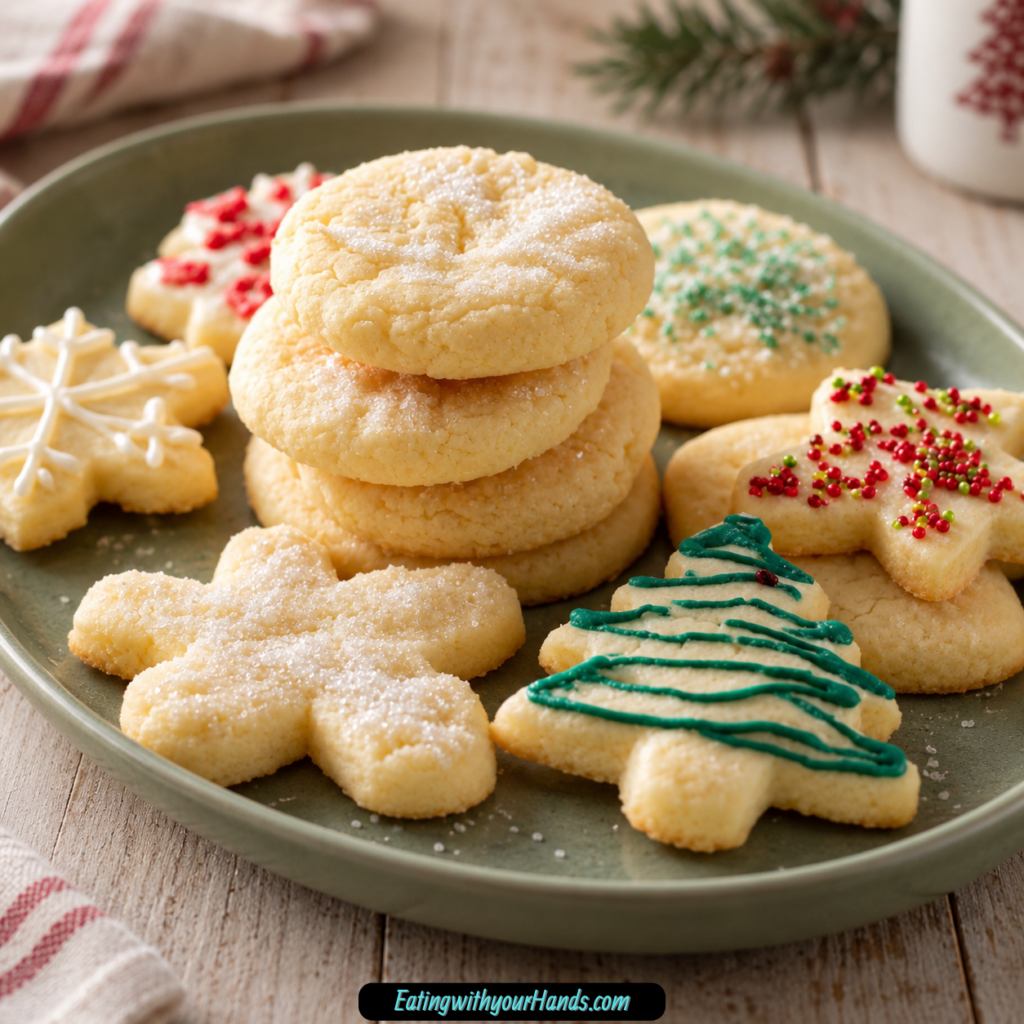
For a festive look, decorate them with royal icing. This works beautifully for trees, stars, snowflakes, stockings, and other holiday shapes.
Buttercream gives the cookies a softer, richer finish. Add sprinkles while the buttercream is fresh so they stick well.
Powdered sugar glaze is another simple option. It gives the cookies a sweet top without making them feel too heavy.
Serve these cookies with hot cocoa for a cozy winter treat. The soft cookie and warm drink make a classic holiday pairing.
Coffee also works well, especially with plain or lightly glazed cookies. The sweetness balances the warmth of the drink.
A glass of cold milk is always right with sugar cookies. It keeps the serving simple and nostalgic.
Arrange the cookies on holiday platters with gingerbread, shortbread, or chocolate cookies. They add softness, color, and classic flavor to any cookie spread.
Storage
Store the cookies in an airtight container at room temperature for up to 5 days. Keeping air away from the cookies helps preserve their soft texture.
Let the cookies cool completely before storing. Warm cookies can create moisture inside the container.
To help keep the cookies soft, place a slice of bread in the container. The cookies can draw moisture from the bread and stay tender longer.
If the cookies are decorated, make sure the icing or glaze is fully set before stacking. This keeps the tops neat.
Use parchment paper between layers if needed. This is especially helpful for decorated cookies.
Keep the container sealed between servings. The less air the cookies meet, the softer they stay.
Freezing
Baked cookies can be frozen for up to 3 months. Freeze them undecorated for the best results.
Let the cookies cool completely before freezing. Place them in a freezer-safe container or bag.
Use parchment between layers if stacking. This helps keep the cookies from sticking together.
Thaw the cookies at room temperature before decorating or serving. Let them soften fully before adding icing or glaze.
The dough can also be frozen for later use. Wrap it tightly so it stays protected.
Freezing is helpful during the holiday season. You can prepare ahead and decorate closer to serving time.
Make-Ahead
The dough can be refrigerated for up to 3 days. Keep it wrapped tightly in plastic wrap so it does not dry out.
Chilling is already part of the recipe, so making the dough ahead fits naturally. When ready to bake, roll it out on a lightly floured surface.
If the dough is very firm after longer chilling, let it sit briefly before rolling. It should be cool but workable.
Baked undecorated cookies can also be made ahead and frozen. This is useful for holiday trays and cookie boxes.
Decorate after thawing for the freshest look. Icing and sprinkles look best when added closer to serving or gifting.
Make-ahead dough makes holiday baking less stressful. You can mix one day, roll and bake another day, and decorate when you have time.
Helpful Notes for Best Results
Do not overbake the cookies. The biggest secret to soft sugar cookies is pulling them out while the centers still look pale.
Use softened butter, not melted butter. Melted butter can cause spreading and can make cookies greasy.
Measure flour carefully. Too much flour can make the cookies dry.
Spoon and level the flour for better accuracy. Avoid packing flour tightly into the measuring cup.
Roll the dough slightly thicker for extra softness. About ¼-inch thickness is ideal.
Avoid re-rolling scraps too many times. Too much handling can make the dough less tender.
Chill the dough for at least 1 hour. This helps prevent spreading and keeps the cookies soft.
Let cookies cool on the baking sheet for 5 minutes. This helps them set without becoming dry.
Variations
Classic Christmas Sugar Cookies That Stay Soft
Make the cookies with flour, baking powder, salt, granulated sugar, softened butter, eggs, and vanilla. This creates a soft, buttery cookie that holds its shape.
Bake until the edges barely begin to turn golden. Keep the centers pale for the softest texture.
Royal Icing Sugar Cookies
Decorate cooled cookies with royal icing. This gives them a neat, festive finish.
Let the icing set completely before stacking. These are beautiful for cookie boxes.
Buttercream Sugar Cookies
Spread buttercream over cooled cookies. This gives the cookies a soft, creamy topping.
Add sprinkles while the buttercream is still fresh. This makes decorating simple and fun.
Powdered Sugar Glaze Cookies
Use powdered sugar glaze for a lighter decorated finish. It gives the cookies sweetness and shine.
Let the glaze dry before storing. This keeps the cookies neat.
Sprinkle Sugar Cookies
Add sprinkles for festive color. They make the cookies fun for kids and holiday trays.
Use sprinkles with icing or glaze. Decorate after the cookies are cool.
Almond Sugar Cookies
Add almond extract for a festive flavor twist. It changes the flavor while keeping the cookie soft.
Use it alongside or in place of some vanilla if desired. Keep the flavor balanced.
Lemon Sugar Cookies
Add lemon zest for brightness. Lemon gives the cookies a fresh lift.
This variation works well with powdered sugar glaze. It is cheerful and fragrant.
Nutmeg Sugar Cookies
Add a hint of nutmeg for a warm holiday note. Nutmeg gives the cookies a cozy spice background.
Use only a small amount. The cookie should still taste like a classic sugar cookie.
Thick Soft Sugar Cookies
Roll the dough slightly thicker than ¼-inch if you want extra softness. Thicker cookies stay more tender.
Watch the baking time carefully. The centers should remain pale.
Make-Ahead Sugar Cookies
Refrigerate the dough for up to 3 days. This helps with planning and gives you flexibility.
Wrap it tightly so it stays fresh. Roll and bake when ready.
Frozen Sugar Cookies
Freeze baked undecorated cookies for up to 3 months. Thaw before decorating.
This is useful for holiday cookie trays. It lets you prepare ahead without rushing.
Holiday Platter Cookies
Arrange decorated cookies on a platter with gingerbread, shortbread, or chocolate cookies. This creates a classic holiday spread.
The sugar cookies add soft texture and festive shapes. They are always crowd-friendly.
Troubleshooting
The Cookies Turned Out Hard
They were most likely overbaked or had too much flour. Remove them when the edges barely begin to turn golden.
The centers should look pale when they come out of the oven. They will finish setting as they cool.
The Cookies Spread Too Much
The dough may not have chilled long enough. Refrigerate the dough for at least 1 hour before rolling and baking.
Melted butter can also cause spreading. Use softened butter, not melted butter.
The Dough Is Too Sticky
The dough may need more chilling time. Wrap it and refrigerate until it is easier to handle.
Use a lightly floured surface when rolling. Do not add too much flour, or the cookies may become dry.
The Dough Is Too Firm to Roll
The dough may be very cold. Let it sit briefly at room temperature until it becomes workable.
Do not let it get too warm. Cool dough helps the cookies hold their shape.
The Cookies Are Dry
Too much flour can cause dryness. Spoon and level the flour instead of packing it.
Overbaking can also dry them out. Pull the cookies early for the softest texture.
The Shapes Lost Their Edges
The dough may have been too warm. Chill the dough before rolling and baking.
Transfer cut shapes carefully to the baking sheet. Clean edges begin with cold dough.
The Cookies Broke When Moved
They may have been moved too soon. Let them rest on the baking sheet for 5 minutes.
After that, transfer them gently to a wire rack. They will be stronger once slightly cooled.
The Icing Smudged in Storage
The icing may not have been fully set. Let decorated cookies dry completely before stacking.
Use parchment between layers. Store carefully in an airtight container.
The Cookies Did Not Stay Soft
They may have been stored uncovered. Keep them in an airtight container.
Add a slice of bread to help retain moisture. This helps keep the cookies tender for days.
The Dough Was Overworked
Re-rolling scraps too many times can make cookies less tender. Try to cut shapes close together the first time.
Use gentle pressure when rolling. Handle the dough just enough to shape the cookies.
Frequently Asked Questions
Most often, sugar cookies turn hard because they were overbaked or made with too much flour. Bake only until the edges barely begin to turn golden.
The centers should still look pale. They will set as they cool.
Can I skip chilling the dough?
Chilling is essential for keeping the cookies thick and soft. It also helps the cookies maintain clean edges.
Refrigerate the dough for at least 1 hour. This step is worth the wait.
Yes, these cookies are perfect for decorating. They hold their shape well and work with icing or sprinkles.
Use royal icing, buttercream, or powdered sugar glaze. Decorate only after the cookies cool completely.
No, the dough should not spread too much when chilled properly. Chilling helps the shapes keep clean edges.
Use parchment-lined baking sheets and avoid warm dough. This helps the cookies bake neatly.
Store them in an airtight container. Add a slice of bread to help retain moisture.
Do not leave them uncovered for long. Air can dry them out.
Yes, baked undecorated cookies can be frozen for up to 3 months. Let them cool completely first.
Thaw at room temperature before decorating or serving. Freeze them carefully with parchment between layers if needed.
Can I make the dough ahead?
Yes, the dough can be refrigerated for up to 3 days. Wrap it tightly in plastic wrap.
You can also freeze the dough for later use. Thaw or soften as needed before rolling.
What thickness should I roll the dough?
Roll the dough to about ¼-inch thickness. This helps the cookies stay soft.
Thicker dough gives softer cookies. Thin dough can bake faster and become crisp.
Why This Recipe Works So Well
Christmas Sugar Cookies That Stay Soft work so well because the recipe protects tenderness at every stage. The dough has enough flour to hold shapes but enough butter, sugar, eggs, and vanilla to stay soft.
The softened butter is important. It creams with the sugar to create a light, fluffy base.
Granulated sugar sweetens the dough and helps create the classic sugar cookie flavor. The cookies stay simple and buttery.
Eggs add moisture and structure. They help the dough roll, cut, and bake properly.
Vanilla extract gives the cookies warmth. It makes the flavor feel familiar and festive.
Flour gives the dough strength for cut-outs. Baking powder gives gentle lift, and salt balances sweetness.
Chilling the dough keeps the cookies from spreading too much. It also makes the dough easier to roll and cut.
Rolling to ¼-inch thickness keeps the cookies soft. Thin cookies can dry out faster.
The short 8 to 10 minute baking time keeps the centers tender. The edges should barely begin to color, while the centers remain pale.
Cooling on the sheet for 5 minutes helps the cookies set. Then the wire rack lets them cool fully without drying.
The recipe is also flexible. Royal icing, buttercream, powdered sugar glaze, sprinkles, almond extract, lemon zest, nutmeg, hot cocoa, coffee, milk, freezing, and make-ahead dough all make the cookies fit different holiday plans.
Most of all, these cookies work because they are dependable. They are soft, buttery, sturdy enough for decorating, easy to make ahead, and perfect for the kind of holiday baking that brings people into the kitchen.
Final Thoughts
Christmas Sugar Cookies That Stay Soft are classic cut-out sugar cookies made with all-purpose flour, baking powder, salt, granulated sugar, softened unsalted butter, eggs, and vanilla extract. The dough is chilled, rolled to about ¼-inch thickness, cut into festive shapes, baked gently until the edges barely turn golden, and cooled carefully so the cookies stay tender.
Serve them plain, decorated with royal icing, topped with buttercream, finished with powdered sugar glaze, or sprinkled with festive color. With their make-ahead dough, soft texture that lasts for days, freezer-friendly storage, simple pantry ingredients, and holiday-ready shape, these cookies are a dependable Christmas classic made for decorating, gifting, and sharing with the people who make the season feel special.
Christmas Sugar Cookies That Stay Soft

Buttery, tender, pale, and easy to decorate, these Christmas Sugar Cookies That Stay Soft are made for rolling, cutting, and turning into festive holiday shapes. The dough chills before rolling, bakes briefly until the edges barely begin to color, and creates soft cut-out cookies that work beautifully with royal icing, buttercream, or a simple glaze.
Recipe Details
- Prep Time: 20 minutes
- Cook Time: 10 minutes
- Chill Time: 1 hour
- Total Time: 1 hour 30 minutes
- Servings: 24 cookies
- Calories: 180 kcal
Ingredients
For the Soft Christmas Sugar Cookies
- 2 teaspoons vanilla extract
- 2 large eggs
- 1 cup unsalted butter softened
- 1 ½ cups granulated sugar
- ½ teaspoon salt
- 1 teaspoon baking powder
- 3 ¾ cups all-purpose flour
Instructions
Step 1: Heat the Oven
Set the oven to 350°F (175°C). Let it preheat while you begin preparing the cookie dough.
Step 2: Prepare the Flour Mixture
In a medium bowl, whisk the all-purpose flour with the baking powder and salt. Stir until the dry ingredients look evenly combined, then set the bowl aside.
Step 3: Cream the Butter and Sugar
Place the softened unsalted butter and granulated sugar in a large bowl. Beat them together until the mixture turns light, creamy, and fluffy.
This step helps create the soft base of the cookie dough. The butter should be softened so it blends smoothly with the sugar.
Step 4: Add the Eggs and Vanilla
Add the eggs and vanilla extract to the butter mixture. Beat until everything is fully combined and the dough base looks smooth.
Make sure the eggs are worked in before adding the flour mixture. This keeps the dough more even as it comes together.
Step 5: Make the Dough
Add the dry ingredients gradually to the wet mixture. Mix until a dough forms and the flour is fully incorporated.
Stop mixing once the dough comes together. Overworking the dough is not needed for these soft cut-out cookies.
Step 6: Chill the Dough
Divide the dough in half. Wrap each half in plastic wrap and refrigerate for at least 1 hour.
This chilling step is essential for soft cookies and clean edges. It also makes the dough easier to roll and cut into shapes.
Step 7: Roll and Cut
Roll the chilled dough on a lightly floured surface to about ¼-inch thickness. Cut the dough into shapes using your preferred cutters.
Place the cut cookies on parchment-lined baking sheets. Keep the shapes spaced so they bake cleanly without touching.
Step 8: Bake Until Barely Golden
Bake for 8-10 minutes, or until the edges are just starting to turn golden. The cookies should stay pale for the softest texture.
Do not overbake them. They will continue to settle as they cool, so pull them before they become deeply colored.
Step 9: Cool Completely
Let the cookies rest on the baking sheet for 5 minutes after baking. Transfer them to a wire rack and allow them to cool completely before decorating or storing.
Notes
- Chilling the dough is important for soft cookies and neat cut-out edges.
- Avoid overbaking; the cookies should stay pale for the best softness.
- Store cookies in an airtight container with a slice of bread to help retain moisture.
- Dough can be made ahead and refrigerated for up to 3 days or frozen for later use.
- These cookies are a perfect base for royal icing, buttercream, or simple glaze decorating.
Serving Suggestions
Serve these Christmas Sugar Cookies That Stay Soft once they have cooled completely and are ready for decorating. Their buttery flavor, tender centers, and pale tops make them a dependable holiday cookie for cut-outs, cookie exchanges, festive gatherings, and decorated dessert trays.
Use them as a base for royal icing, buttercream, or a simple glaze. The cookies are especially useful when you want shapes that stay neat but still taste soft and tender after baking.
For the best texture, keep the cookies pale and remove them when the edges are only beginning to turn golden. Let them cool fully before adding any decoration so the icing or glaze sits cleanly on the surface.
Storage
How to Store
Store the cookies in an airtight container with a slice of bread to help retain moisture. This keeps the cookies soft after baking.
Make-Ahead Dough Tip
The dough can be made ahead and refrigerated for up to 3 days. It can also be frozen for later use.
Chill Tip
Refrigerate the wrapped dough for at least 1 hour before rolling. Chilled dough is easier to cut and helps the cookies hold cleaner edges.
Rolling Tip
Roll the dough on a lightly floured surface to about ¼-inch thickness. This gives the cut-out cookies a soft, even texture after baking.
Baking Tip
Bake at 350°F (175°C) for 8-10 minutes. The cookies should remain pale, with edges that are only just starting to turn golden.
Decorating Tip
Let the cookies cool completely before decorating. Use royal icing, buttercream, or a simple glaze as listed.

Fernando is the creator and writer behind the food blog Eating with your Hands. Living and working in cities like Paris, Barcelona, and Berlin, and being married to a Canadian foodie, has given Fernando a passion and interest in food and inspired him to run EWYH.