
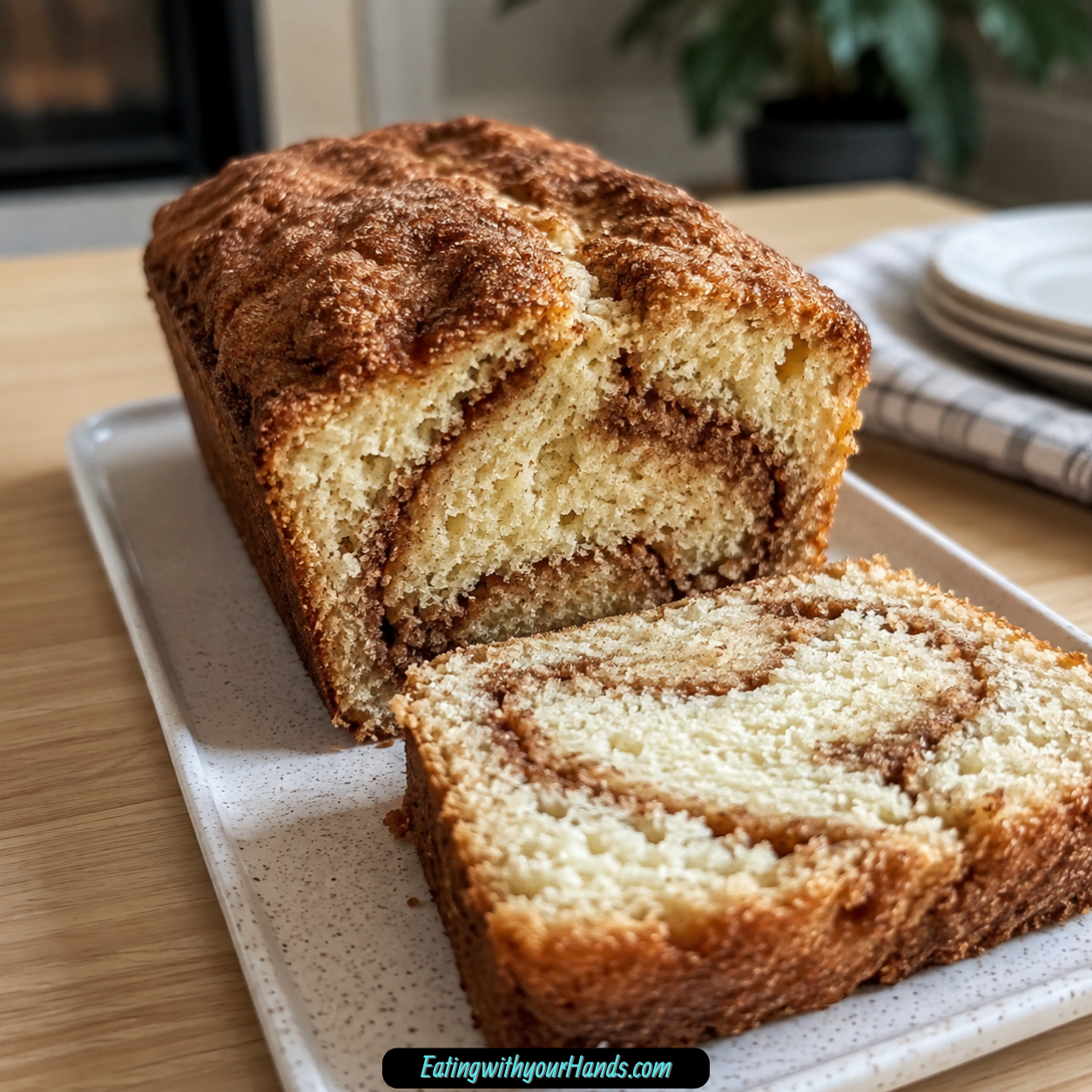
Cinnamon Sugar Bread is the kind of simple homemade loaf that makes the kitchen feel like a bakery without asking much from the baker. It is soft, sweet, buttery, and filled with a warm cinnamon sugar swirl that melts into the bread as it bakes.
This recipe feels like a cross between a tender quick bread and the cozy middle of a cinnamon roll. It has the comfort of cinnamon, the softness of cake-like bread, and the ease of a batter you can mix, layer, swirl, and bake.
There is no yeast, no kneading, no rising time, and no complicated shaping. You cream butter and sugar, add the wet ingredients, mix in the dry ingredients, layer the batter with cinnamon sugar, give it a gentle swirl, and let the oven do the rest.
The loaf is perfect for sleepy weekend mornings, last-minute guests, afternoon coffee, brunch trays, midnight snacks, or a cozy dessert with vanilla ice cream. It is simple enough for beginners, but it tastes special enough that people will think it took much more effort.
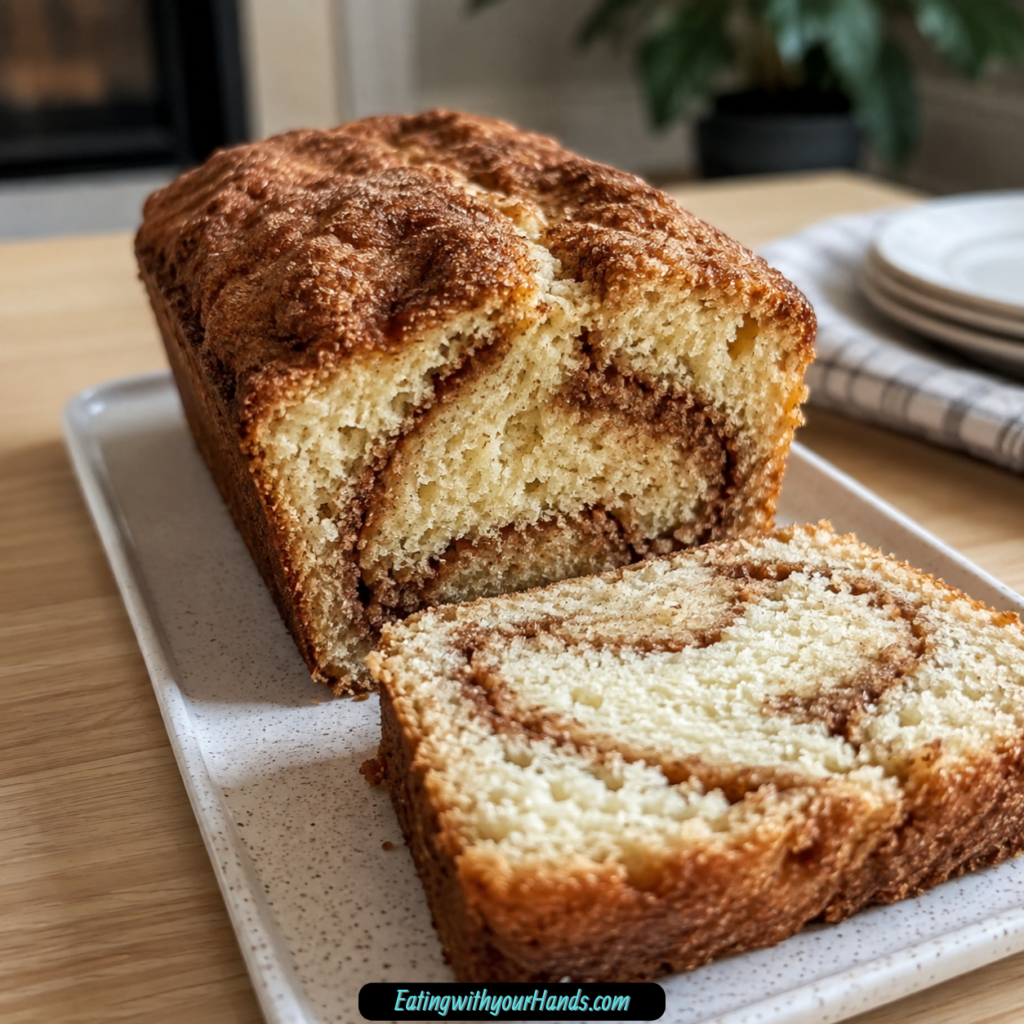
The best part is the swirl. Each slice has ribbons of cinnamon sugar running through soft vanilla bread, with just enough sweetness to make it feel comforting but not fussy.
Table of Contents
- Why You’ll Love Cinnamon Sugar Bread
- Recipe Details
- Ingredients
- Optional Variations and Swaps
- The Cozy Charm of Cinnamon Sugar Bread
- Why the Cinnamon Swirl Matters
- Why Butter Temperature Matters
- Directions
- Step 1: Preheat the Oven
- Step 2: Prepare the Loaf Pan
- Step 3: Measure the Flour Correctly
- Step 4: Whisk the Dry Ingredients
- Step 5: Check the Baking Powder
- Step 6: Soften the Butter
- Step 7: Cream the Butter and Sugar
- Step 8: Add the Egg
- Step 9: Add the Milk, Vanilla, and Oil
- Step 10: Combine Wet and Dry Ingredients
- Step 11: Make the Cinnamon Sugar Swirl
- Step 12: Add the First Batter Layer
- Step 13: Add the First Cinnamon Sugar Layer
- Step 14: Add the Second Batter Layer
- Step 15: Add the Remaining Cinnamon Sugar
- Step 16: Swirl the Batter
- Step 17: Bake the Bread
- Step 18: Cool in the Pan
- Step 19: Remove From the Pan
- Step 20: Slice and Serve
- 8×8-Inch Pan Option
- Serving Ideas
- French Toast Idea
- Storage
- Freezing
- Helpful Notes for Best Results
- Variations
- Troubleshooting
- Frequently Asked Questions
- Why This Bread Is Perfect for Everyday Baking
- Why This Recipe Works So Well
- Final Thoughts
- Cinnamon Sugar Bread
Why You’ll Love Cinnamon Sugar Bread
This bread is easy to make. There are no complicated bread-making steps, and the batter comes together with basic pantry ingredients.
It smells wonderful while baking. Cinnamon, butter, sugar, and vanilla create a warm aroma that makes the whole kitchen feel cozy.
It works for breakfast or dessert. Toast a slice with butter in the morning, or warm it with vanilla ice cream and caramel sauce after dinner.
It is family-friendly. Kids, friends, guests, and picky relatives all tend to love sweet cinnamon bread.
It is forgiving. Butter can be softened quickly, milk can be swapped in a pinch, and the recipe has several easy variation options.
It freezes well. Wrapped slices can be frozen for up to 3 months and toasted straight from frozen.
Recipe Details
- Recipe name: Cinnamon Sugar Bread
- Oven temperature: 350°F (175°C)
- Main pan size: 9×5-inch loaf pan
- Baking time for loaf: 45 minutes
- Extra baking time if needed: 5 more minutes
- Cooling time in pan: 10 minutes
- Alternate pan: 8×8-inch square pan
- Baking time for 8×8-inch pan: 30 to 35 minutes
- Room temperature storage: About 3 days
- Freezer storage: Up to 3 months
- Quick softening tip for dry slices: Microwave for 10 seconds
- Main flavor: Vanilla quick bread with cinnamon sugar swirl
Ingredients
For the Bread
- 2 cups all-purpose flour
- 1 teaspoon baking powder
- ½ teaspoon salt
- ½ cup unsalted butter, softened
- 1 cup granulated sugar
- 1 large egg
- 1 cup milk
- 1 teaspoon vanilla extract
- 2 tablespoons vegetable oil
For the Swirl
- ¼ cup granulated sugar
- 1 ½ teaspoons ground cinnamon
Optional Variations and Swaps
- Whole milk
- Any kind of milk
- Yogurt as a milk swap in a pinch
- Melted coconut oil instead of vegetable oil
- Canola oil instead of vegetable oil
- Applesauce instead of vegetable oil for a lighter version
- Salted butter, with salt reduced to ¼ teaspoon
- ½ cup chopped pecans
- ½ cup chopped walnuts
- ⅓ cup raisins
- ⅓ cup dried cranberries
- 1 cup finely diced peeled apples
- ¼ cup chocolate chips
- 1 tablespoon orange zest
- Simple powdered sugar glaze
- Butter for serving
- Vanilla ice cream
- Caramel sauce
- Coffee
- Tea
- Chai latte
- Cold milk
- Spiced apple cider
- Whipped cream
- Egg-milk mixture for French toast
- Maple syrup for French toast
The Cozy Charm of Cinnamon Sugar Bread
Cinnamon Sugar Bread has that rare ability to feel both humble and special. It is made from simple ingredients, but the swirl gives every slice a beautiful ribbon of warmth.
The bread itself is soft and lightly sweet. Butter gives it richness, milk makes the crumb tender, and vanilla adds a comforting flavor.
The cinnamon sugar mixture is the heart of the loaf. It is layered through the batter and gently swirled so the bread bakes with pockets of sweet spice.
Unlike cinnamon rolls, this bread does not need yeast or rolling. It gives you cinnamon comfort without a long process.
Unlike cake, it feels casual enough for breakfast. You can toast it, butter it, or eat it plain with coffee.
It is the kind of loaf that disappears slice by slice. One piece becomes breakfast, another becomes an afternoon snack, and suddenly the pan is nearly empty.
Why the Cinnamon Swirl Matters
The swirl is made with just ¼ cup granulated sugar and 1 ½ teaspoons ground cinnamon. It is simple, but it gives the bread its signature flavor.
The sugar melts slightly as the loaf bakes. The cinnamon becomes warm and fragrant, spreading through the bread in thin ribbons.
Layering the batter is important. Half the batter goes into the pan first, then half the cinnamon sugar, then the remaining batter, then the rest of the cinnamon sugar.
A knife or toothpick is used to swirl the layers only once or twice. This keeps the ribbons visible instead of blending everything into one uniform batter.
If you swirl too much, the cinnamon sugar can disappear into the loaf. A light hand gives the prettiest slices.
The swirl should feel natural and a little imperfect. That is part of the charm.
Why Butter Temperature Matters
Softened butter is important for the texture of this bread. It should be soft enough to dent when pressed, but not melted.
When softened butter is beaten with sugar, it becomes light and fluffy. This helps create a softer crumb.
Butter that is too cold will not cream properly. The mixture can stay lumpy and uneven.
Butter that is melted can make the bread greasy or heavy. It changes the way the batter comes together.
If you need to soften cold butter quickly, microwave it in 5-second bursts. Stop before it melts.
The goal is butter that blends smoothly into the sugar. That small detail makes the loaf much better.
Directions
Step 1: Preheat the Oven
Preheat your oven to 350°F (175°C). Let it fully heat before the bread goes in.
A properly heated oven helps the loaf rise correctly. If the oven is too cool, the bread can turn out flatter than expected.
Place the oven rack in the center position. This helps the loaf bake evenly from top to bottom.
Step 2: Prepare the Loaf Pan
Grease a 9×5-inch loaf pan with butter or nonstick spray. Coat the bottom, corners, and sides well.
For extra insurance, line the bottom with parchment paper. This helps the bread lift out cleanly after baking.
Set the prepared pan aside. Having the pan ready makes the layering step easier.
Step 3: Measure the Flour Correctly
Measure 2 cups all-purpose flour using the spoon-and-level method. Spoon the flour into the measuring cup and level off the top.
Do not scoop directly from the bag. Scooping can pack too much flour into the cup and make the bread dry.
Accurate flour measuring helps keep the loaf soft. This is one of the simplest ways to protect the texture.
Step 4: Whisk the Dry Ingredients
In a medium bowl, whisk together the flour, 1 teaspoon baking powder, and ½ teaspoon salt. Mix until evenly combined.
Baking powder gives the bread its lift. Salt balances the sweetness and keeps the flavor from tasting flat.
Set the dry mixture aside. It will be added to the wet ingredients later.
Step 5: Check the Baking Powder
Use fresh baking powder for the best rise. If it has been sitting in the pantry for years, test it first.
Mix ½ teaspoon baking powder with ¼ cup hot water. If it bubbles, it is still active.
If it does not bubble, replace it. Old baking powder can make the loaf dense.
Step 6: Soften the Butter
Use ½ cup unsalted butter, softened. It should dent easily when pressed.
If the butter is cold, microwave it in 5-second bursts. Do not let it melt.
If using salted butter, reduce the added salt in the recipe to ¼ teaspoon. This keeps the flavor balanced.
Step 7: Cream the Butter and Sugar
In a large bowl, beat the softened butter with 1 cup granulated sugar. Mix until light and fluffy.
This usually takes about 2 minutes with a hand mixer. If mixing by hand, stir vigorously until the mixture looks pale and creamy.
Creaming helps build a softer texture. Take your time with this step.
Step 8: Add the Egg
Add 1 large egg to the butter and sugar mixture. Mix until combined.
Crack the egg into a separate bowl first if you want to avoid shell pieces. Then add it to the batter.
The egg helps bind the bread and gives the loaf structure. Mix until it disappears into the butter mixture.
Step 9: Add the Milk, Vanilla, and Oil
Pour in 1 cup milk, 1 teaspoon vanilla extract, and 2 tablespoons vegetable oil. Mix until just combined.
The mixture may look a little curdled at first. That is normal.
The milk keeps the bread tender, vanilla adds warmth, and oil helps keep the loaf moist. Stir until the wet ingredients are blended.
Step 10: Combine Wet and Dry Ingredients
Gradually add the dry ingredients to the wet mixture. Mix gently as you go.
Stop once the batter looks smooth enough and the flour disappears. A few tiny lumps are fine.
Do not overmix. Overmixing can make the bread tough instead of soft.
Step 11: Make the Cinnamon Sugar Swirl
In a small bowl, stir together ¼ cup granulated sugar and 1 ½ teaspoons ground cinnamon. Mix until the cinnamon is evenly distributed.
Fresh, fragrant cinnamon gives the best flavor. If the cinnamon smells dull or dusty, the bread will taste less vibrant.
Set the cinnamon sugar near the prepared loaf pan. You will use it in two layers.
Step 12: Add the First Batter Layer
Pour half of the batter into the greased 9×5-inch loaf pan. The batter will be thick.
Use a spatula to spread it gently into an even layer. Do not press too hard.
This first layer creates the base for the cinnamon sugar ribbon. Try to cover the bottom of the pan evenly.
Step 13: Add the First Cinnamon Sugar Layer
Sprinkle half of the cinnamon sugar over the first layer of batter. Spread it evenly across the surface.
Avoid dumping it all in one spot. Even sprinkling creates better ribbons in the finished loaf.
If you have had trouble with the swirl sinking, dust this first cinnamon sugar layer with a tiny bit of flour before adding the second batter layer. This can help anchor it.
Step 14: Add the Second Batter Layer
Add the remaining batter on top of the cinnamon sugar. Spread it carefully with a spatula.
Try not to drag too much of the cinnamon sugar upward as you spread. Gentle movement keeps the layers more defined.
The batter should cover the cinnamon layer as evenly as possible. It does not have to be perfect.
Step 15: Add the Remaining Cinnamon Sugar
Sprinkle the rest of the cinnamon sugar over the top of the batter. Cover the surface evenly.
This top layer will bake into a sweet, fragrant finish. It also helps create the swirl when you drag a knife through the batter.
Keep the topping light and even. A balanced layer gives better flavor in every slice.
Step 16: Swirl the Batter
Use a knife or toothpick to swirl through the batter once or twice. Move gently through the layers.
Do not swirl too much. Too much swirling blends the cinnamon sugar into the batter and removes the ribbon effect.
A few simple passes are enough. The goal is marbled magic, not a fully mixed batter.
Step 17: Bake the Bread
Place the loaf pan in the oven and bake at 350°F (175°C) for 45 minutes. If your oven has hot spots, rotate the pan halfway through.
The bread is done when a toothpick inserted into the center comes out clean or with just a crumb or two. If the toothpick comes out wet, bake for 5 more minutes.
Every oven is a little different. If yours runs hot, start checking around 40 minutes, and if it runs slow, it may need closer to 50 minutes.
Step 18: Cool in the Pan
Let the bread cool in the pan for 10 minutes. This helps it firm up before removal.
If you remove it too soon, it may crumble or break. The short rest helps the loaf hold together.
The smell will make waiting hard, but the texture will be better. Set the pan on a wire rack while it rests.
Step 19: Remove From the Pan
Run a knife around the edges of the loaf if needed. Carefully transfer the bread to a wire rack.
If you used parchment paper, lift gently. Support the loaf so it does not crack.
Let the bread cool completely for the neatest slices. Warm slicing is allowed for quality control, but cooled bread cuts cleaner.
Step 20: Slice and Serve
Once cooled enough to handle, slice the bread with a sharp knife. Each slice should show a cinnamon sugar ribbon.
Serve plain, toasted, buttered, or warmed for dessert. The bread is soft, sweet, and fragrant either way.
If serving warm, be gentle when slicing. The crumb is softer before it fully cools.
8×8-Inch Pan Option
Step 1: Prepare the Square Pan
If you do not have a loaf pan, use an 8×8-inch square pan. Grease it well or line it with parchment.
The square pan creates more edges. This is a delicious option if you love the outer pieces.
Layer the batter and cinnamon sugar the same way. Spread each layer evenly across the wider pan.
Step 2: Bake the Square Version
Bake the 8×8-inch version at 350°F (175°C) for 30 to 35 minutes. Start checking near 30 minutes.
The bread is done when a toothpick comes out clean or with a few crumbs. Do not overbake.
Cool before slicing into squares. This version is easy to serve for brunch or gatherings.
Serving Ideas
For breakfast, toast a slice and spread it with butter. The warmth brings out the cinnamon sugar flavor.
Pair it with coffee or tea for a simple morning treat. It is sweet enough to feel special without needing anything else.
For dessert, warm a slice and add vanilla ice cream. A drizzle of caramel sauce makes it even more indulgent.
For brunch, slice the loaf thick and arrange it on a platter. It looks simple but inviting.
This bread also pairs well with chai latte, cold milk, spiced apple cider, or whipped cream. It can be cozy, casual, or dessert-like depending on how you serve it.
French Toast Idea
Thick slices of Cinnamon Sugar Bread can be turned into French toast. Dip the slices in an egg-milk mixture.
Cook them in a pan until golden. The cinnamon swirl becomes even warmer and more fragrant.
Top with maple syrup. This turns leftover bread into a completely new breakfast.
Use slightly older slices if possible. They hold together better for French toast.
Storage
Let the bread cool completely before storing. Warm bread can trap steam and become damp.
Wrap it tightly in plastic wrap or aluminum foil, or place it in an airtight container. Store at room temperature for about 3 days.
Keep it sealed well so it stays soft. Air will dry it out faster.
If the bread feels a little dry after a day or two, microwave a slice for 10 seconds. It will become soft and warm again.
Freezing
Cinnamon Sugar Bread freezes well. Wrap individual cooled slices tightly in plastic wrap, then place them in a freezer-safe bag.
Freeze for up to 3 months. Individual slices make it easy to take out only what you need.
You can thaw slices at room temperature. You can also warm them in the oven or toaster.
Toasting straight from frozen works too. This makes the bread convenient for busy mornings.
Helpful Notes for Best Results
Do not overmix the batter once the dry ingredients are added. Stir only until the flour disappears.
A few small lumps are fine. They will bake out, and the bread will stay softer.
Measure flour carefully by spooning and leveling. Too much flour can make the loaf dry.
Use softened butter, not melted butter. Melted butter can make the bread greasy.
Reduce the swirl sugar to 3 tablespoons if you want a less sweet loaf. The full ¼ cup gives the classic sweet swirl.
If the top cracks, do not worry. A crack is normal and gives the loaf character.
Variations
Nutty Cinnamon Sugar Bread
Fold ½ cup chopped pecans or walnuts into the batter. Toast them first for extra flavor.
The nuts add crunch and warmth. They make the bread feel heartier.
Fold them in gently after the batter comes together. Do not overmix.
Raisin Cinnamon Sugar Bread
Add ⅓ cup raisins to the batter. Soak them in warm water for 10 minutes first.
Soaking plumps the raisins and keeps them from feeling dry. Drain them before adding.
This variation gives the loaf an old-fashioned cinnamon-raisin feeling. It is especially good toasted.
Dried Cranberry Cinnamon Bread
Use ⅓ cup dried cranberries instead of raisins. Soak them in warm water for 10 minutes before adding.
Dried cranberries bring a tart contrast to the sweet cinnamon swirl. They also add color.
This version feels festive enough for holiday mornings. Serve it with coffee or tea.
Apple Cinnamon Sugar Bread
Add 1 cup finely diced peeled apples to the batter. The apples add moisture and tender fruit bites.
Keep the pieces small so the loaf slices cleanly. Large apple chunks may make the bread too wet.
This variation makes the bread even softer. It leans into classic apple-cinnamon flavor.
Chocolate Cinnamon Bread
Swap half the cinnamon sugar for ¼ cup chocolate chips. Chocolate adds little sweet pockets.
This variation is rich and fun. It works especially well as dessert.
Fold or layer carefully so the chocolate stays distributed. Do not overmix the batter.
Orange Cinnamon Bread
Mix 1 tablespoon orange zest into the batter. The citrus brightens the cinnamon flavor.
This version feels fragrant and slightly fresh. It is a nice change from the classic loaf.
Use only the zest, not extra juice. Too much liquid can change the batter.
Powdered Sugar Glaze Version
Drizzle the cooled loaf with a simple powdered sugar glaze. This makes it look more finished.
The glaze should go on after the bread cools. Warm bread may melt it too quickly.
This variation is lovely for brunch or gifting. It adds sweetness and a pretty finish.
Coconut Oil Version
Use melted coconut oil instead of vegetable oil. Keep the amount at 2 tablespoons.
Let the coconut oil cool slightly before adding it. It should not be hot.
This adds a subtle flavor change. It works well if you enjoy coconut.
Applesauce Version
Use applesauce instead of vegetable oil for a lighter version. Keep the amount at 2 tablespoons.
The texture may be slightly different. Oil gives the moistest result, while applesauce makes it lighter.
This swap is easy when you want to use what you have. The bread will still taste cozy.
Double Batch Version
Double the recipe and divide the batter between two loaf pans. This is helpful for gifting or serving a group.
The baking time may increase by 5 to 10 minutes. Watch closely and use the toothpick test.
Do not overfill the pans. Split the batter evenly so both loaves bake properly.
Troubleshooting
Why Is My Bread Dry?
Too much flour may have been added. Spoon and level the flour instead of scooping from the bag.
The bread may also have been overbaked. Start checking early if your oven runs hot.
A slice can be softened with 10 seconds in the microwave. This helps revive it after a day or two.
Why Is My Bread Tough?
The batter may have been overmixed. Stop stirring once the flour disappears.
Overmixing can make quick bread dense and tough. A few tiny lumps are fine.
Use a gentle hand when combining wet and dry ingredients. Soft bread comes from careful mixing.
Why Did My Swirl Sink?
The cinnamon sugar layer may have been too heavy in one spot. Sprinkle it evenly instead of piling it.
Next time, dust the first cinnamon sugar layer with a tiny bit of flour before adding the second batter layer. This helps anchor the swirl.
Swirl only once or twice. Too much swirling can also move the sugar downward.
Why Did My Bread Not Rise?
The baking powder may be old. Test it with hot water before baking if you are unsure.
The oven may not have been fully preheated. A cold oven start can affect rise.
Make sure you use baking powder, not baking soda. They are not the same in this recipe.
Why Is My Bread Greasy?
The butter may have been melted instead of softened. Melted butter changes the batter texture.
Measure the oil correctly. The recipe uses 2 tablespoons.
Cream the butter and sugar until light and fluffy before adding the wet ingredients. This helps the fat blend properly.
Why Did My Bread Stick to the Pan?
The pan may not have been greased well enough. Use butter or nonstick spray generously.
Parchment paper on the bottom gives extra protection. It helps the loaf release cleanly.
Let the bread cool for 10 minutes in the pan before removing. This helps it firm up.
Frequently Asked Questions
Can I Use Salted Butter Instead of Unsalted?
Yes, salted butter can be used. Reduce the added salt in the recipe to ¼ teaspoon.
This keeps the bread from tasting too salty. The swap works well in a pinch.
What If I Don’t Have Vegetable Oil?
Use melted coconut oil, canola oil, or applesauce. Keep the amount at 2 tablespoons.
Coconut oil adds a slight flavor, canola oil stays neutral, and applesauce makes the bread a bit lighter. The texture may vary slightly.
Can I Freeze This Bread?
Yes, freeze cooled slices tightly wrapped in plastic wrap and placed in a freezer bag. They will keep for 3 months.
Toast straight from frozen if desired. No thawing is needed.
Can I Double the Recipe?
Yes, double all ingredients and divide the batter between two loaf pans. Bake time may increase by 5 to 10 minutes.
Check with a toothpick. Each loaf is done when the center comes out clean or with a few crumbs.
Why Did My Swirl Sink to the Bottom?
The swirl may have been too concentrated or too heavily stirred. Sprinkle it evenly and swirl only once or twice.
Dusting the first cinnamon sugar layer with a tiny bit of flour can help anchor it. This is useful if the problem happens often.
Can I Use an 8×8-Inch Pan?
Yes, use an 8×8-inch square pan. Bake at 350°F (175°C) for 30 to 35 minutes.
This gives more edge pieces. It is a great option if you do not have a loaf pan.
Can I Add Apples?
Yes, add 1 cup finely diced peeled apples to the batter. The apples make the loaf even more tender.
Use small pieces so the bread slices well. Large pieces can add too much moisture.
Can I Turn This Into French Toast?
Yes, thick slices make excellent French toast. Dip them in an egg-milk mixture, cook until golden, and top with maple syrup.
Slightly older slices work especially well. They hold their shape better.
Why This Bread Is Perfect for Everyday Baking
Cinnamon Sugar Bread is perfect for everyday baking because it is simple, quick, and comforting. It does not need yeast, special equipment, or a long ingredient list.
It is also flexible enough for many moments. Breakfast, brunch, dessert, gifting, and snacking all work.
The flavor is familiar and crowd-pleasing. Cinnamon sugar has a way of making almost everyone happy.
The loaf also stores well. You can enjoy it for a few days or freeze slices for later.
Most importantly, it feels homemade in the best way. It gives you the smell and warmth of baking without a stressful process.
Why This Recipe Works So Well
This recipe works because the bread batter balances richness, moisture, and structure. Butter and sugar are creamed for softness, while milk and oil help keep the crumb tender.
The egg binds the batter. Flour and baking powder give the loaf structure and lift.
Vanilla adds warmth, and salt balances sweetness. The cinnamon sugar swirl brings the signature flavor.
Layering the batter creates ribbons instead of simply mixing cinnamon into the dough. Gentle swirling keeps those ribbons visible.
Baking at 350°F (175°C) gives the loaf time to rise and set. Cooling in the pan for 10 minutes helps it hold together before slicing.
Final Thoughts
Cinnamon Sugar Bread is a soft, sweet quick bread with a warm cinnamon swirl running through every slice. With flour, baking powder, salt, softened butter, sugar, egg, milk, vanilla, vegetable oil, cinnamon, and a prepared loaf pan, it turns simple pantry ingredients into something cozy and memorable.
The method is easy to follow. Cream the butter and sugar, add the egg, milk, vanilla, and oil, gently mix in the dry ingredients, layer the batter with cinnamon sugar, swirl once or twice, and bake at 350°F (175°C) for about 45 minutes.
Let the bread cool in the pan for 10 minutes, then transfer it to a wire rack. Slice it plain, toast it with butter, warm it with vanilla ice cream, drizzle it with caramel, or turn thick slices into French toast.
Store it at room temperature for about 3 days, freeze individual slices for up to 3 months, and microwave slices for 10 seconds if they need softening. However you serve it, this cinnamon sugar bread brings bakery-style aroma, tender crumb, and sweet cinnamon comfort to every bite.
Cinnamon Sugar Bread
This cinnamon sugar bread is soft, sweet, and warmly spiced with a simple cinnamon swirl running through the loaf. The tender bread base has a buttery vanilla flavor, while the cinnamon sugar adds a cozy, dessert-like finish. It is easy enough for breakfast, brunch, afternoon snacking, or a simple homemade dessert, and each slice pairs beautifully with coffee, tea, or a glass of milk.
Recipe Details
- Prep Time: 15 minutes
- Cook Time: 45 minutes
- Total Time: 1 hour
- Course: Breakfast, Dessert
- Cuisine: American
- Servings: 8 slices
Ingredients
For the Swirl
- ¼ cup granulated sugar for swirl
- 1 ½ teaspoon ground cinnamon for swirl
For the Bread
- 2 cups all-purpose flour
- 1 teaspoon baking powder
- ½ teaspoon salt
- ½ cup unsalted butter softened
- 1 cup granulated sugar
- 1 large egg
- 1 cup milk
- 1 teaspoon vanilla extract
- 2 tablespoon vegetable oil
Instructions
Step 1: Prepare the Oven and Loaf Pan
Preheat your oven to 350°F (175°C). Grease a loaf pan.
Step 2: Mix the Dry Ingredients
In a bowl, whisk together the all-purpose flour, baking powder, and salt until evenly combined.
Step 3: Cream the Butter and Sugar
In another bowl, cream the softened unsalted butter and granulated sugar until the mixture is light and fluffy.
Step 4: Add the Wet Ingredients
Beat in the egg, milk, vanilla extract, and vegetable oil until the wet mixture is smooth and combined.
Step 5: Make the Batter
Gradually mix the dry ingredients into the wet ingredients.
Stir only until just combined.
Step 6: Prepare the Cinnamon Sugar Swirl
In a small bowl, mix the granulated sugar for swirl and ground cinnamon for swirl until evenly blended.
Step 7: Layer the Batter and Swirl
Pour half of the batter into the prepared loaf pan.
Sprinkle half of the cinnamon sugar mixture over the batter, then add the remaining batter on top.
Finish with the rest of the cinnamon sugar mixture.
Step 8: Bake the Bread
Bake for 45 minutes, or until a toothpick inserted into the center comes out clean.
Step 9: Cool Before Slicing
Let the bread cool in the pan for 10 minutes.
Transfer it to a wire rack and allow it to cool completely before slicing.
Notes
For extra flavor, add chopped nuts or raisins to the batter.
Serving Suggestions
- Serve with hot coffee or tea.
- Enjoy as a sweet breakfast slice.
- Pair with a glass of cold milk.
- Serve with fresh berries for a simple dessert.
- Add to a brunch table with fruit and yogurt.
Storage
How to Store
Keep the cooled cinnamon sugar bread in an airtight container at room temperature.
How to Reheat
Warm individual slices briefly before serving if you prefer a softer, fresh-baked texture.
How to Freeze
Wrap the cooled loaf or individual slices securely and place them in a freezer-safe container. Thaw before serving.
Best Texture Tip
Mix the batter only until the dry ingredients are incorporated. Overmixing can make the bread less tender after baking.

Fernando is the creator and writer behind the food blog Eating with your Hands. Living and working in cities like Paris, Barcelona, and Berlin, and being married to a Canadian foodie, has given Fernando a passion and interest in food and inspired him to run EWYH.