
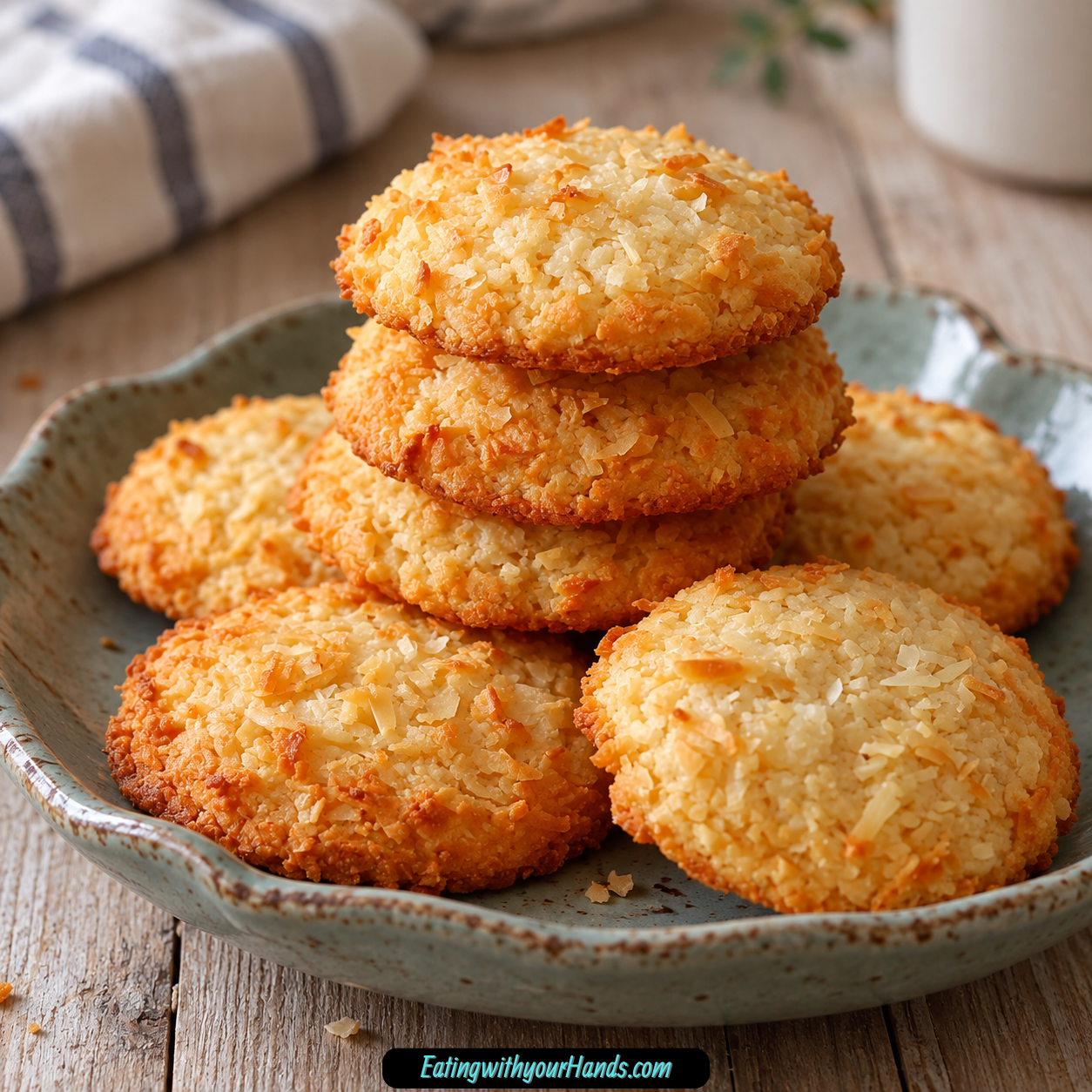
Coconut Cookies are the kind of simple homemade treat that can make a quiet kitchen feel warm and familiar in minutes. They bake with a buttery aroma, a soft center, lightly crisp edges, and that unmistakable coconut flavor that feels both nostalgic and comforting.
These cookies are easy enough for an everyday snack but special enough for holiday trays, bake sales, lunchboxes, and homemade gifts. They have that lovely old-fashioned feeling: not fussy, not overly decorated, just sweet, tender, and full of coconut in every bite.
The dough is made with unsalted butter, granulated sugar, powdered sugar, egg, vanilla, flour, baking powder, salt, and desiccated coconut. The ingredient list is straightforward, but the texture is what makes the cookies memorable.
Granulated sugar gives structure and sweetness. Powdered sugar softens the crumb and helps the cookies feel lighter.
Desiccated coconut gives the cookies their signature chew and flavor. Unsweetened works best because it lets the buttery cookie base shine without becoming too sweet.
These cookies are rolled into small balls, gently flattened, and baked until the edges turn lightly golden while the centers stay soft. They do not spread a lot, so the gentle flattening step helps them bake evenly.
What I love most about this recipe is that it feels dependable. It is the kind of cookie you can make for kids after school, tuck into a gift tin, serve beside tea or coffee, or freeze for later when you want a little homemade sweetness ready to go.
Coconut Cookies are also flexible. Add white chocolate chips, chopped almonds, lime zest, cinnamon, or toasted coconut if you want to change the flavor while keeping the same cozy base.
They are crisp on the outside, soft inside, freezer-friendly, kid-friendly, and quick enough to make in about 30 minutes. They are the kind of cookie that reminds you how comforting a simple recipe can be.
Table of Contents
- Why You’ll Love These Coconut Cookies
- Recipe Details
- Ingredients
- Ingredient Notes
- Optional Swaps, Variations, Add-Ins, and Serving Ideas
- Classic Coconut Cookies
- Crispier Coconut Cookies
- Thicker Softer Coconut Cookies
- White Chocolate Coconut Cookies
- Almond Coconut Cookies
- Lime Coconut Cookies
- Cinnamon Coconut Cookies
- Toasted Coconut Cookies
- Gluten-Free Coconut Cookies
- Dairy-Free Coconut Cookies
- Egg-Free Coconut Cookies
- Reduced-Sugar Coconut Cookies
- Ice Cream Crumble Cookies
- Gift Tin Coconut Cookies
- Why This Recipe Works
- Directions
- Step 1: Preheat the Oven
- Step 2: Prepare the Baking Sheets
- Step 3: Cream the Butter and Sugars
- Step 4: Add the Egg and Vanilla
- Step 5: Whisk the Dry Ingredients
- Step 6: Combine Wet and Dry Mixtures
- Step 7: Fold in the Coconut
- Step 8: Check the Dough Texture
- Step 9: Shape the Dough Balls
- Step 10: Leave Space Between Cookies
- Step 11: Flatten Gently
- Step 12: Bake the Cookies
- Step 13: Cool on the Baking Sheet
- Step 14: Transfer to a Wire Rack
- Step 15: Serve Warm or Cooled
- Step 16: Store the Cookies
- Step 17: Freeze Baked Cookies
- Step 18: Freeze Dough Balls
- Serving Ideas
- Storage
- Freezing
- Make-Ahead
- Helpful Notes for Best Results
- Variations
- Classic Coconut Cookies
- Crispier Coconut Cookies
- Thicker Soft Coconut Cookies
- White Chocolate Coconut Cookies
- Almond Coconut Cookies
- Lime Coconut Cookies
- Cinnamon Coconut Cookies
- Toasted Coconut Cookies
- Gluten-Free Coconut Cookies
- Dairy-Free Coconut Cookies
- Finely Shredded Coconut Cookies
- Egg-Free Coconut Cookies
- Reduced-Sugar Coconut Cookies
- Troubleshooting
- Frequently Asked Questions
- Why This Recipe Works So Well
- Final Thoughts
- Coconut Cookies
Why You’ll Love These Coconut Cookies
These cookies have a wonderful texture. The outside is lightly crisp, while the inside stays soft and tender.
They use simple pantry ingredients. You do not need anything complicated or difficult to find.
They are quick to make. The total time is about 30 minutes from mixing to finished cookies.
They are great for gifting. Once cooled, they pack well in tins or clear gift bags tied with ribbon.
They are easy to customize. White chocolate chips, chopped almonds, lime zest, cinnamon, or toasted coconut all work beautifully.
They are freezer-friendly. Both baked cookies and raw dough balls can be frozen for later.
Recipe Details
This recipe bakes at 350°F (175°C). Line two baking sheets with parchment paper before shaping the cookies.
The prep time is 15 minutes. The cooking time is 15 minutes, for a total time of 30 minutes.
The recipe makes 24 cookies. Each cookie is about 190 calories.
The dough starts with 1 cup, or 226g, unsalted butter, softened. Softened butter creates a tender, melt-in-your-mouth texture.
For crispier cookies, cold butter can be used instead of softened butter. Flatten the dough balls a bit thinner if you want more crispness.
The sugars are ¾ cup, or 150g, granulated sugar and ½ cup, or 65g, powdered sugar. Granulated sugar adds structure, while powdered sugar gives a softer crumb.
The dough uses 1 large egg and 1 teaspoon vanilla extract. The egg binds the dough, and vanilla adds warm flavor.
The dry ingredients are 2 cups, or 250g, all-purpose flour, 1 teaspoon baking powder, and ½ teaspoon salt. Spoon and level the flour to avoid dense cookies.
The coconut amount is 1 ½ cups, or 120g, desiccated coconut. Unsweetened coconut works best.
The cookies bake for 12 to 15 minutes. They are ready when the edges are lightly golden and the tops look set.
Ingredients
For the Coconut Cookies
- 1 cup (226g) unsalted butter, softened
- ¾ cup (150g) granulated sugar
- ½ cup (65g) powdered sugar
- 1 large egg
- 1 teaspoon vanilla extract
- 2 cups (250g) all-purpose flour
- 1 teaspoon baking powder
- ½ teaspoon salt
- 1 ½ cups (120g) desiccated coconut
Optional Swaps, Add-Ins, and Serving Ideas
- Cold butter
- White chocolate chips
- Chopped almonds
- Lime zest
- Cinnamon
- Toasted coconut
- 1:1 gluten-free baking flour blend
- Vegan butter, firm stick variety
- 1 to 2 teaspoons milk
- Finely shredded unsweetened coconut
- 3 tablespoons milk
- ¼ cup applesauce
- Tea
- Coffee
- Cold milk
- Ice cream
Ingredient Notes
Unsalted butter gives the cookies their rich, buttery flavor. Softened butter creates a tender cookie with a melt-in-your-mouth texture.
Cold butter can be used if you prefer crispier cookies. When using cold butter, flatten the dough a bit thinner before baking.
Granulated sugar adds sweetness and structure. It helps the cookies bake with lightly crisp edges.
Powdered sugar creates a softer crumb. It also gives the cookies a lighter texture than granulated sugar alone.
The egg binds the dough together. It also adds richness and helps the cookies hold their shape.
Vanilla extract adds warmth. It supports the coconut flavor without overpowering it.
All-purpose flour gives the cookies structure. Spoon and level the flour so the dough does not become too dense.
Baking powder helps the cookies rise slightly. It keeps the texture from feeling heavy.
Salt balances the sweetness and enhances the coconut flavor. Even a small amount makes the cookies taste more complete.
Desiccated coconut is the main flavor. Unsweetened works best because the dough already has enough sweetness.
Finely shredded unsweetened coconut can be used if you do not have desiccated coconut. Avoid large flakes unless you pulse them briefly in a food processor.
Optional Swaps, Variations, Add-Ins, and Serving Ideas
Classic Coconut Cookies
Make the cookies with softened butter, both sugars, egg, vanilla, flour, baking powder, salt, and desiccated coconut. This gives the classic soft-inside, lightly crisp-outside version.
Bake until the edges are lightly golden. Let them cool on the baking sheet before moving them to a rack.
Crispier Coconut Cookies
Use cold butter instead of softened butter. Flatten the dough balls a little thinner before baking.
This creates a crisper texture. Watch the edges so they do not overbrown.
Thicker Softer Coconut Cookies
Chill the dough for 30 minutes before baking. This helps the cookies hold a thicker shape.
The centers stay soft and tender. This is a great option if your kitchen is warm.
White Chocolate Coconut Cookies
Add white chocolate chips to the dough. The creamy sweetness pairs nicely with coconut.
Use a moderate amount so the coconut remains the main flavor. These cookies feel extra dessert-like.
Almond Coconut Cookies
Add chopped almonds to the dough. The almonds bring crunch and a nutty flavor.
This variation is especially good for gifting. The texture becomes more interesting.
Lime Coconut Cookies
Add lime zest for a bright flavor twist. Lime and coconut work beautifully together.
Use only the zest, not juice, so the dough does not become too wet. The cookie stays buttery and tender.
Cinnamon Coconut Cookies
Add cinnamon for a warm variation. The spice gives the cookies a cozier flavor.
This version works well for fall and holiday trays. Keep the coconut amount the same.
Toasted Coconut Cookies
Add toasted coconut for a deeper coconut flavor. It makes the cookies taste nuttier.
Let toasted coconut cool before folding it into the dough. Warm coconut can soften the butter too much.
Gluten-Free Coconut Cookies
Use a 1:1 gluten-free baking flour blend. The texture may vary slightly by blend.
Bake until the edges are lightly golden and the tops are set. Cool fully before storing.
Dairy-Free Coconut Cookies
Use vegan butter instead of regular butter. Choose a firm stick variety for the best texture.
Soft spread-style vegan butter may change the dough. Chill if the dough feels too soft.
Egg-Free Coconut Cookies
Replace the egg with 3 tablespoons milk or ¼ cup applesauce. The texture will be a little different but still tasty.
Use whichever option works best for your needs. The dough should still hold together.
Reduced-Sugar Coconut Cookies
Reduce both sugars by up to ¼ cup. This can be done without major texture issues.
The cookies will taste less sweet. They should still bake properly.
Ice Cream Crumble Cookies
Crumble cooled cookies over ice cream. This adds buttery coconut crunch.
This is a simple dessert idea. It works especially well when the cookies are fully cooled.
Gift Tin Coconut Cookies
Pack cooled cookies in a tin or clear gift bag tied with ribbon. They make a sweet homemade present.
Let cookies cool completely before packaging. This prevents steam from softening them.
Why This Recipe Works
This recipe works because it balances soft crumb, gentle crispness, and coconut chew. The butter and sugars create the base, while the coconut adds texture and flavor.
Using both granulated sugar and powdered sugar gives the cookies a better texture. Granulated sugar supports structure, while powdered sugar softens the crumb.
The egg binds the dough so the cookies hold together. Vanilla adds warmth and rounds out the flavor.
Baking powder gives the cookies a slight lift. The cookies stay tender instead of dense.
Desiccated coconut absorbs into the dough while still adding chew. It also spreads coconut flavor throughout every bite.
Flattening the dough balls helps them bake evenly. These cookies do not spread much on their own.
The 12 to 15 minute bake time gives lightly golden edges while keeping the centers soft. Pulling them when the tops look set helps prevent dryness.
The recipe also works well for storage. The cookies stay fresh in an airtight container and freeze beautifully.
Directions
Step 1: Preheat the Oven
Preheat the oven to 350°F (175°C). Let the oven fully heat before baking.
A steady oven temperature helps the cookies bake evenly. This also helps the edges turn lightly golden.
Step 2: Prepare the Baking Sheets
Line two baking sheets with parchment paper. This prevents sticking and makes cleanup easier.
If your kitchen runs warm, place the prepared sheets in the refrigerator while mixing the dough. Cool sheets can help the cookies hold their shape.
Step 3: Cream the Butter and Sugars
In a large bowl, beat 1 cup softened unsalted butter with ¾ cup granulated sugar and ½ cup powdered sugar. Mix until light, pale, and fluffy.
This should take about 2 to 3 minutes. If the mixture looks slightly grainy at first, keep beating until it becomes smoother.
Step 4: Add the Egg and Vanilla
Add 1 large egg and 1 teaspoon vanilla extract. Mix until the dough base looks silky and well combined.
Scrape down the sides of the bowl. This helps everything blend evenly.
Step 5: Whisk the Dry Ingredients
In a separate bowl, whisk together 2 cups all-purpose flour, 1 teaspoon baking powder, and ½ teaspoon salt. Whisk until evenly combined.
This distributes the baking powder and salt through the flour. It helps the cookies bake consistently.
Step 6: Combine Wet and Dry Mixtures
Gradually add the flour mixture to the butter mixture. Mix just until combined.
Do not overmix. Overmixing can make the cookies less tender.
Step 7: Fold in the Coconut
Add 1 ½ cups desiccated coconut to the dough. Use a spatula or spoon to fold it in evenly.
The dough will be slightly thick. That is exactly what you want for cookies that hold their shape.
Step 8: Check the Dough Texture
The dough should be thick enough to roll into balls. If it feels sticky, chill it for 10 to 15 minutes before shaping.
If the dough feels too crumbly, add 1 to 2 teaspoons milk. Add only enough to bring it together.
Step 9: Shape the Dough Balls
Roll the dough into small balls about 1 inch in diameter. Try to keep them similar in size.
Even sizing helps the cookies bake evenly. Place the dough balls on the prepared baking sheets.
Step 10: Leave Space Between Cookies
Arrange the dough balls with space between each one. These cookies do not spread much, but they still need room for even baking.
Do not crowd the pan. Airflow helps the edges bake properly.
Step 11: Flatten Gently
Lightly press each dough ball with your palm or the bottom of a glass. Flatten gently, not too thin unless you want crispier cookies.
This step helps the cookies bake evenly. Without flattening, the centers may stay too thick.
Step 12: Bake the Cookies
Bake for 12 to 15 minutes. Look for lightly golden edges and tops that appear set.
The centers may seem soft when the cookies come out. They firm up as they cool.
Step 13: Cool on the Baking Sheet
Let the cookies rest on the baking sheet for 5 minutes. This helps them set without breaking.
Do not move them immediately. They are delicate while hot.
Step 14: Transfer to a Wire Rack
Move the cookies to a wire rack to cool completely. Let them finish cooling before serving or storing.
Cooling on a rack prevents the bottoms from steaming. It keeps the texture better.
Step 15: Serve Warm or Cooled
Serve the cookies warm if you love a softer bite. They are also delicious once fully cooled.
Pair them with tea, coffee, or cold milk. They also work well on cookie platters.
Step 16: Store the Cookies
Once cooled, place the cookies in an airtight container. Store at room temperature for up to 1 week.
Refrigeration is not necessary, but it can extend freshness by another few days. Keep the container sealed.
Step 17: Freeze Baked Cookies
Freeze baked cookies in a single layer first. Then move them to a freezer-safe bag.
Freeze for up to 3 months. Thaw at room temperature.
Step 18: Freeze Dough Balls
Roll raw dough into balls and freeze for future baking. Bake straight from the freezer.
Add 1 extra minute to the baking time. This gives you fresh coconut cookies whenever you want them.
Serving Ideas
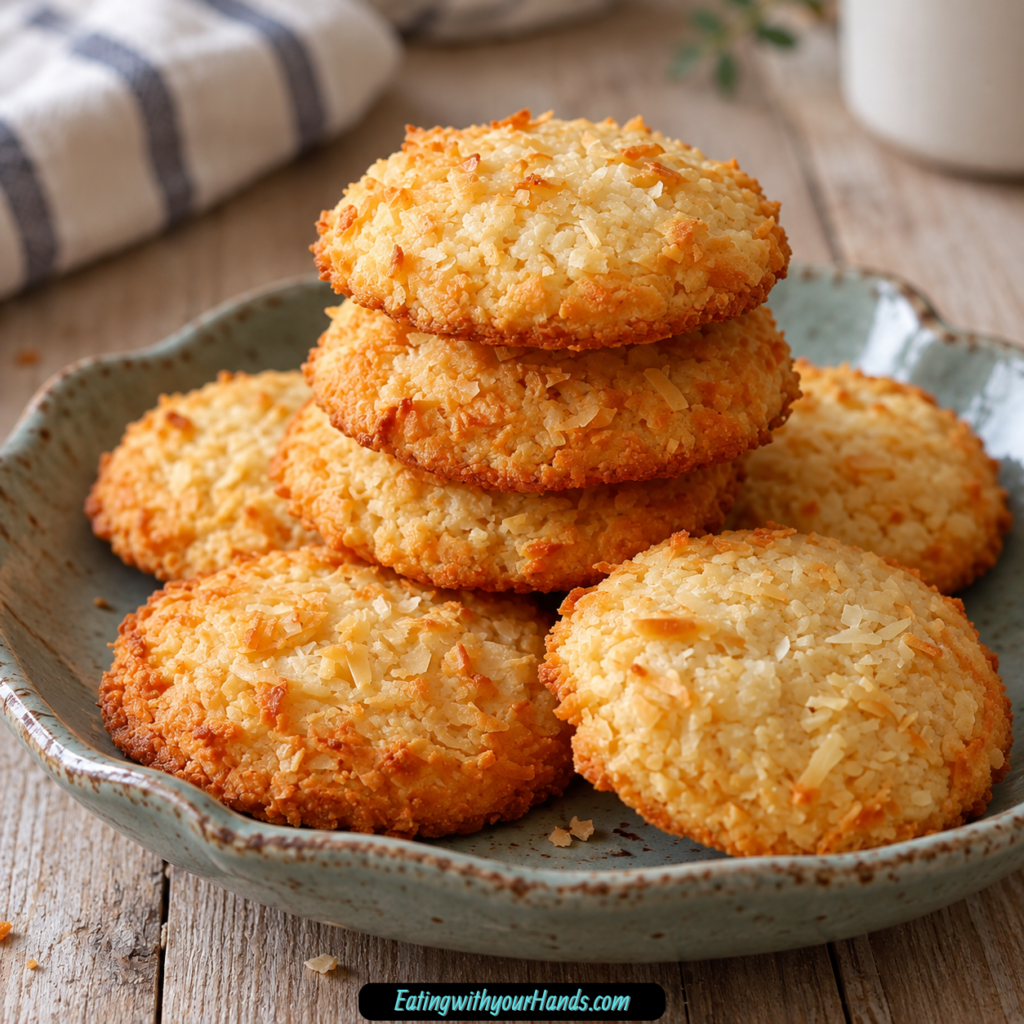
Serve Coconut Cookies warm after their brief cooling time. The centers will be soft, and the coconut flavor will feel extra cozy.
They are also delicious completely cooled. The edges become lightly crisp, and the crumb settles into a tender texture.
Pair them with tea for a simple afternoon treat. Coconut and tea make a gentle, comforting combination.
Serve with coffee if you want a sweet bite beside something warm. The buttery coconut flavor stands up nicely.
Cold milk is a classic choice. It works especially well for kids and after-school snacks.
Add the cookies to a holiday platter. Their simple look balances frosted cookies, chocolate treats, and colorful desserts.
Crumble a few over ice cream for texture. The coconut adds crunch and flavor.
Pack them in lunchboxes or clear gift bags. They are sturdy enough for simple gifting once fully cooled.
Storage
Store Coconut Cookies in an airtight container at room temperature. They stay fresh for up to 1 week.
Make sure the cookies are fully cool before storing. Warm cookies create steam and can soften the texture.
Refrigeration is not necessary. However, it can extend freshness by another few days.
If refrigerating, keep the cookies tightly covered. This prevents them from drying out.
Use parchment between layers if desired. This helps keep the cookies neat.
If the cookies become a little firm after storage, let them sit at room temperature before serving. The texture softens slightly.
Keep them away from strong-smelling foods. Coconut and butter can absorb odors if stored uncovered.
Freezing
Baked Coconut Cookies freeze well for up to 3 months. Freeze them in a single layer first.
Once firm, transfer the cookies to a freezer-safe bag. This keeps them from sticking together.
Thaw at room temperature before serving. They do not need to be reheated.
Raw dough can also be frozen. Roll the dough into balls before freezing.
Bake frozen dough balls straight from the freezer. Add 1 extra minute to the baking time.
Freezing dough is convenient for future baking. You can bake only a few cookies at a time.
If freezing dough, flatten after thawing slightly or press gently before baking if possible. The cookies bake more evenly when slightly flattened.
Make-Ahead
You can make the dough ahead and chill it before baking. Chilling for 30 minutes also creates thicker, softer cookies.
If the dough is too firm after chilling, let it sit briefly at room temperature. It should be easy to roll.
You can shape the dough balls ahead and freeze them. This makes future baking simple.
Baked cookies can be made ahead and stored at room temperature for up to 1 week. They are a good option for parties and gifts.
For gift boxes, bake and cool completely before packing. Use a tin or clear gift bag tied with ribbon.
If serving for a holiday platter, bake the cookies a day ahead. Store airtight until ready to arrange.
Add-ins can be prepared ahead as well. Chop almonds, zest lime, or measure chocolate chips before mixing.
Helpful Notes for Best Results
Use softened butter for tender, melt-in-your-mouth cookies. Use cold butter if you want crispier cookies.
Spoon and level the flour. Too much flour can make the cookies dense or crumbly.
Do not overmix after adding the flour. Mix only until the dough comes together.
Fold in the coconut gently. This keeps the dough tender.
Chill sticky dough for 10 to 15 minutes before shaping. This makes it easier to roll.
Chill the dough for 30 minutes if you want thicker, softer cookies. Chilling helps the cookies hold shape.
Flatten the dough balls gently before baking. These cookies do not spread much.
If the dough is too crumbly, add 1 to 2 teaspoons milk. Add gradually.
Variations
Classic Coconut Cookies
Use softened butter, granulated sugar, powdered sugar, egg, vanilla, flour, baking powder, salt, and desiccated coconut. This gives the original soft-inside, lightly crisp cookie.
Bake until the edges are lightly golden. Cool before storing.
Crispier Coconut Cookies
Use cold butter instead of softened butter. Flatten the dough balls a bit thinner.
This creates a crisper cookie. Watch the bake time closely.
Thicker Soft Coconut Cookies
Chill the dough for 30 minutes before baking. The cookies will hold shape better.
This variation gives thicker, softer centers. It is helpful in a warm kitchen.
White Chocolate Coconut Cookies
Add white chocolate chips to the dough. The sweet chips pair well with coconut.
This version is great for gifting. Keep the chips evenly distributed.
Almond Coconut Cookies
Add chopped almonds. They bring crunch and a nutty flavor.
Use small pieces so they mix evenly. This variation feels classic and cozy.
Lime Coconut Cookies
Add lime zest for a bright flavor. It gives the cookies a fresh twist.
Do not add lime juice unless you are adjusting the dough. Zest adds flavor without extra moisture.
Cinnamon Coconut Cookies
Add cinnamon to the dough. The flavor becomes warm and lightly spiced.
This is a nice variation for cooler months. The coconut still remains the main flavor.
Toasted Coconut Cookies
Add toasted coconut to deepen the flavor. Let it cool before mixing into the dough.
Toasted coconut gives a nuttier taste. It also adds texture.
Gluten-Free Coconut Cookies
Use a 1:1 gluten-free baking flour blend. The texture may change slightly.
Bake until the tops are set and the edges lightly golden. Cool fully before serving.
Dairy-Free Coconut Cookies
Substitute firm stick vegan butter for regular butter. A firm stick variety gives the best texture.
If the dough feels soft, chill before shaping. Bake as directed.
Finely Shredded Coconut Cookies
Use finely shredded unsweetened coconut if desiccated coconut is unavailable. It should be fine enough to blend through the dough.
Avoid large flakes unless you pulse them briefly in a food processor. Large flakes can change the texture.
Egg-Free Coconut Cookies
Replace the egg with 3 tablespoons milk or ¼ cup applesauce. The cookies will have a different texture but can still work.
Choose milk for a simpler flavor or applesauce for added moisture. Watch the dough texture.
Reduced-Sugar Coconut Cookies
Reduce both sugars by up to ¼ cup. The cookies will be less sweet.
The texture should still hold up without major issues. Bake as usual.
Troubleshooting
The Dough Is Too Crumbly
Add 1 to 2 teaspoons milk until the dough comes together. Add the milk slowly.
Do not add too much at once. The dough should be thick, not wet.
The Dough Is Too Sticky
Chill the dough for 10 to 15 minutes. This makes it easier to roll.
Sticky dough can happen in a warm kitchen. Chilling helps the butter firm up.
The Cookies Spread Too Much
The butter may have been too soft. Try chilling the dough before baking.
You can also place prepared baking sheets in the fridge if your kitchen is warm. Cool pans help the cookies hold shape.
The Cookies Are Too Dense
Too much flour may have been added. Spoon and level the flour instead of scooping.
Overmixing can also make cookies dense. Mix only until combined.
The Cookies Are Too Dry
They may have baked too long, or the flour may have been heavy. Bake until edges are lightly golden and tops are just set.
The centers may look soft at first. They firm as they cool.
The Cookies Did Not Spread Enough
These cookies do not spread much. Flatten the dough balls gently before baking.
Use your palm or the bottom of a glass. This helps them bake evenly.
The Cookies Are Not Crisp Enough
Use cold butter next time and flatten the dough thinner. Bake until the edges are lightly golden.
Let cookies cool fully. They firm more as they cool.
The Coconut Texture Is Too Coarse
Large coconut flakes may have been used. Pulse large flakes briefly in a food processor next time.
Desiccated or finely shredded unsweetened coconut gives the best texture. It blends more evenly.
The Cookies Taste Too Sweet
Use unsweetened coconut. You can also reduce both sugars by up to ¼ cup.
This keeps the flavor balanced. Coconut flavor becomes more noticeable.
The Cookies Broke When Moved
They may have been moved too soon. Let them rest on the baking sheet for 5 minutes.
Hot cookies are delicate. Transfer after they set slightly.
Frequently Asked Questions
Can I freeze Coconut Cookies?
Yes, both baked cookies and unbaked dough freeze very well for up to 3 months. Freeze baked cookies in a single layer, then move them to a freezer-safe bag.
Raw dough balls can also be frozen. Bake straight from the freezer and add 1 extra minute.
What if I do not have desiccated coconut?
Use finely shredded unsweetened coconut. Avoid large flakes unless you pulse them briefly in a food processor.
The finer texture helps the coconut blend into the dough. Large flakes can make the cookies less even.
The butter may have been too soft. Chill the dough before baking.
A warm kitchen can also soften the dough. Cool baking sheets help the cookies hold shape.
Can I reduce the sugar?
Yes, you can reduce both sugars by up to ¼ cup without major texture issues. The cookies will taste less sweet.
Do not remove too much sugar. Sugar affects both flavor and texture.
Yes, replace the egg with 3 tablespoons milk or ¼ cup applesauce. The texture will be slightly different.
Milk gives a simpler substitute, while applesauce adds moisture. Use what fits your needs.
How long do Coconut Cookies stay fresh?
Store them in an airtight container at room temperature for up to 1 week. Refrigeration can extend freshness by another few days.
Keep them tightly covered. This helps preserve texture.
Can I make them gluten-free?
Yes, use a 1:1 gluten-free baking flour blend. The texture may vary by blend.
Bake until the edges are lightly golden and the tops are set. Cool before storing.
Can I make them dairy-free?
Yes, use vegan butter. Choose a firm stick variety for the best texture.
If the dough feels soft, chill before shaping. Bake as directed.
Why This Recipe Works So Well
Coconut Cookies work because they balance a buttery dough with the chew and flavor of desiccated coconut. The result is soft in the center, lightly crisp at the edges, and full of coconut flavor.
The combination of granulated sugar and powdered sugar matters. Granulated sugar helps with structure, while powdered sugar gives a softer, lighter crumb.
The egg binds the dough and keeps the cookies from crumbling. Vanilla brings warmth and rounds out the coconut flavor.
Baking powder gives a little lift. It helps the cookies stay soft instead of heavy.
Salt keeps the sweetness balanced. It also makes the coconut taste more pronounced.
Flattening the dough balls helps them bake evenly. Since these cookies do not spread much, that small step is important.
Cooling on the baking sheet for 5 minutes lets the cookies set. Moving them too soon can break them.
The recipe also works because it is practical. It is quick, freezer-friendly, giftable, and easy to adapt with add-ins or dietary swaps.
Most of all, these cookies work because they are simple in a deeply satisfying way. They taste homemade, comforting, and familiar, with enough coconut flavor to make every bite feel special.
Final Thoughts
Coconut Cookies are made with softened butter, granulated sugar, powdered sugar, egg, vanilla, flour, baking powder, salt, and desiccated coconut. The dough is mixed, folded with coconut, rolled into 1-inch balls, gently flattened, baked at 350°F until lightly golden, and cooled into tender cookies with crisp edges and soft centers.
Serve them warm, cooled, with tea, coffee, cold milk, on cookie platters, in lunchboxes, or crumbled over ice cream. With their 30-minute timing, 24-cookie yield, 1-week room-temperature storage, 3-month freezer option, and flexible add-ins like white chocolate, almonds, lime zest, cinnamon, or toasted coconut, these cookies are a simple homemade treat worth making again and again.
Coconut Cookies

Soft, buttery, lightly golden, and packed with rich coconut flavor, these Coconut Cookies are simple treats made with desiccated coconut, butter, sugars, vanilla, and pantry baking staples. They bake into tender, melt-in-your-mouth cookies that work beautifully for everyday desserts, cookie trays, or any occasion that needs a sweet coconut bite.
Recipe Details
- Prep Time: 15 minutes
- Cook Time: 15 minutes
- Total Time: 30 minutes
- Servings: 24
- Calories: 190 kcal
Ingredients
For the Coconut Cookies
- 1½ cups 120g desiccated coconut
- ½ teaspoon salt
- 1 teaspoon baking powder
- 2 cups 250g all-purpose flour
- 1 teaspoon vanilla extract
- 1 large egg
- ½ cup 65g powdered sugar
- ¾ cup 150g granulated sugar
- 1 cup 226g unsalted butter, softened
Instructions
Step 1: Prepare the Oven and Baking Sheets
Preheat the oven to 350°F (175°C). Line baking sheets with parchment paper so the cookie dough has a prepared surface for baking.
Let the oven heat while you mix the dough. These cookies are shaped before baking, so having the baking sheets ready makes the process smoother.
Step 2: Cream the Butter and Sugars
Cream the softened unsalted butter, granulated sugar, and powdered sugar until light and fluffy. The mixture should look smooth, pale, and evenly blended.
This step creates the buttery base of the cookies. Make sure both sugars are fully mixed into the butter before adding the egg.
Step 3: Add the Egg and Vanilla
Beat in the large egg and vanilla extract until well combined. The mixture should turn creamy and smooth.
Mix just until the egg and vanilla are incorporated. Once the wet base is ready, you can move on to the dry ingredients.
Step 4: Combine the Dry Ingredients
In a separate bowl, whisk together the all-purpose flour, baking powder, and salt. Stir until the baking powder and salt are evenly distributed through the flour.
This helps the cookie dough mix more evenly later. Keep the dry mixture ready before adding it to the butter mixture.
Step 5: Finish the Dough
Gradually add the dry ingredients to the wet mixture. Mix until just combined.
Stop once the flour mixture disappears into the dough. Overmixing is not needed and can make the cookies less tender.
Step 6: Fold in the Coconut
Fold in the desiccated coconut evenly. Stir gently so the coconut is spread throughout the dough.
The coconut gives the cookies their rich flavor and texture. Make sure it is evenly distributed so every cookie has coconut in each bite.
Step 7: Shape the Cookies
Roll the dough into 1-inch balls and place them on the prepared baking sheets. Gently flatten each ball with your palm or the bottom of a glass.
Keep the cookies similar in size so they bake evenly. Flatten them gently without pressing them too thin.
Step 8: Bake Until Lightly Golden
Bake for 12-15 minutes, or until the edges turn lightly golden. Watch the cookies near the end of the baking time so they do not overbake.
The edges should be the main doneness cue. Remove the baking sheets from the oven once the cookies are lightly golden around the outside.
Step 9: Cool Completely
Cool the cookies on the baking sheet for 5 minutes. Then transfer them to a wire rack to cool completely.
The short rest on the baking sheet helps the cookies firm up before moving. Let them cool fully before storing or serving.
Notes
- Use cold butter for crispier cookies.
- Chill dough for 30 minutes for thicker, softer cookies.
- Add-ins: white chocolate chips, almonds, toasted coconut, or lime zest.
- Gluten-free version: use a 1:1 GF baking flour blend.
- Dough balls can be frozen for up to 3 months; bake from frozen with +1 minute.
Serving Suggestions
Serve Coconut Cookies once they have cooled completely and the edges have set. The buttery dough, vanilla, powdered sugar, granulated sugar, and desiccated coconut create a tender cookie with a rich coconut flavor.
These cookies are a good fit for dessert trays, afternoon snacks, holiday cookie boxes, or simple homemade treats. Since the recipe makes 24 cookies, they are easy to portion and share.
For extra variety, use the listed add-ins such as white chocolate chips, almonds, toasted coconut, or lime zest. Each option gives the cookies a slightly different flavor while keeping the same soft coconut base.
Storage
How to Store
The recipe does not provide a specific room-temperature storage duration, so no exact storage time is added here.
Freezer Tip
Dough balls can be frozen for up to 3 months. Bake from frozen with +1 minute added to the baking time.
Butter Tip
Use softened butter for the standard soft, buttery texture. Use cold butter if you want crispier cookies.
Dough Tip
Chill the dough for 30 minutes if you want thicker, softer cookies. This helps the dough hold its shape before baking.
Add-In Tip
White chocolate chips, almonds, toasted coconut, or lime zest can be added for variation. Fold them in gently with the coconut if using.
Gluten-Free Tip
For a gluten-free version, use a 1:1 GF baking flour blend.
Baking Tip
Bake at 350°F (175°C) for 12-15 minutes. The cookies are ready when the edges turn lightly golden.

Fernando is the creator and writer behind the food blog Eating with your Hands. Living and working in cities like Paris, Barcelona, and Berlin, and being married to a Canadian foodie, has given Fernando a passion and interest in food and inspired him to run EWYH.