
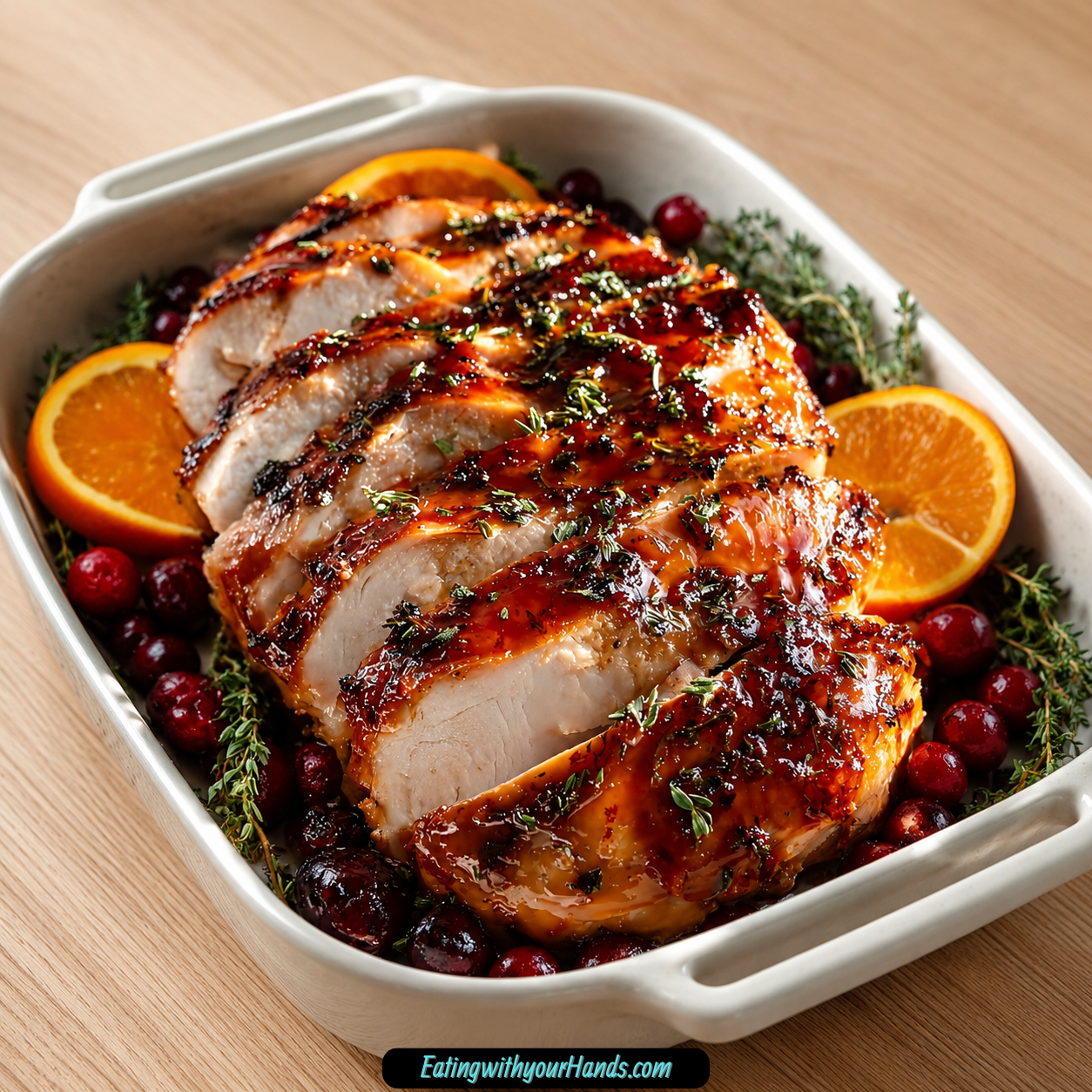
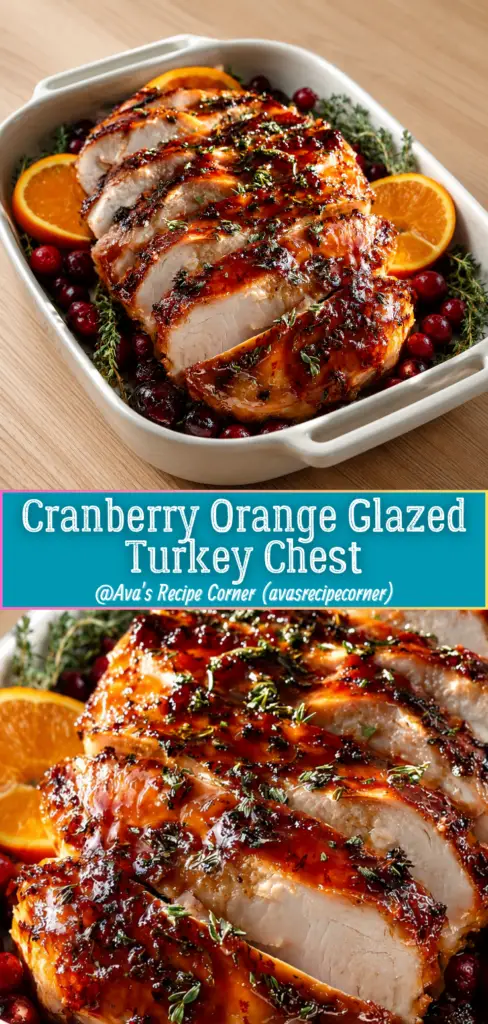
Cranberry Orange Glazed Turkey Chest is the kind of holiday-style main dish that makes the table feel bright before anyone takes the first bite. The turkey roasts until tender and golden, then gets covered in a glossy cranberry-orange glaze that looks festive, tastes sweet and tangy, and brings a warm seasonal feeling to the whole meal.
There is something deeply comforting about a turkey dish that carries both tradition and color. The aroma of roasting turkey, fresh herbs, garlic, citrus, and cranberries can make a kitchen feel like a gathering place long before dinner is served.
This recipe is especially fitting for Thanksgiving, holiday meals, autumn dinners, or a cozy Sunday dinner when you want something that feels special without being complicated. It uses a bone-in, skin-on turkey breast, fresh cranberries, orange juice, honey, orange zest, garlic, olive oil, rosemary, thyme, salt, and pepper.
The glaze is the heart of the dish. Fresh cranberries bring tartness, orange juice and zest bring brightness, honey adds sweetness, and herbs make the whole roast feel savory and balanced.
As the turkey cooks, the glaze settles over the skin and creates a beautiful shine. The foil-covered roasting time helps keep the turkey moist, while the uncovered finish lets the skin crisp and the glaze caramelize.
Cranberry Orange Glazed Turkey Chest serves 6, making it ideal for family dinners and holiday gatherings. Served warm with leftover glaze spooned over the top, it becomes the kind of centerpiece that brings everyone a little closer to the table.
Table of Contents
- Why You’ll Love This Cranberry Orange Glazed Turkey Chest
- Recipe Details
- Ingredients
- Ingredient Notes
- Optional Swaps, Variations, Add-Ins, and Serving Ideas
- Maple Cranberry Orange Turkey
- Agave Cranberry Orange Turkey
- Bourbon Cranberry Orange Turkey
- Lighter Cranberry Orange Turkey
- Pomegranate Glazed Turkey
- Peach Glazed Turkey
- Grilled Cranberry Orange Turkey
- Pecan Cranberry Orange Glaze
- Walnut Cranberry Orange Glaze
- Warm Spice Glaze
- Canned Cranberry Sauce Option
- Gluten-Free Turkey Dinner
- Leftover Turkey Salads
- Leftover Turkey Sandwiches
- Why This Recipe Works
- Directions
- Step 1: Preheat the Oven
- Step 2: Prepare the Roasting Pan
- Step 3: Place the Turkey in the Pan
- Step 4: Season the Turkey
- Step 5: Prepare the Cranberries
- Step 6: Add the Orange Juice
- Step 7: Add the Honey
- Step 8: Add the Orange Zest
- Step 9: Mix the First Glaze Ingredients
- Step 10: Add the Garlic
- Step 11: Add the Olive Oil
- Step 12: Add the Rosemary
- Step 13: Add the Thyme
- Step 14: Stir the Glaze Well
- Step 15: Pour the Glaze Over the Turkey
- Step 16: Check the Coating
- Step 17: Cover with Aluminum Foil
- Step 18: Roast Covered
- Step 19: Remove the Foil Carefully
- Step 20: Roast Uncovered
- Step 21: Check the Internal Temperature
- Step 22: Avoid Overcooking
- Step 23: Rest the Turkey
- Step 24: Prepare the Serving Platter
- Step 25: Slice Against the Grain
- Step 26: Arrange the Turkey
- Step 27: Drizzle the Leftover Glaze
- Step 28: Serve Warm
- Serving Ideas
- Storage
- Freezing
- Thawing and Reheating
- Make-Ahead
- Helpful Notes for Best Results
- Variations
- Bourbon Cranberry Orange Turkey
- Lighter Cranberry Orange Turkey
- Pomegranate Orange Turkey
- Grilled Cranberry Orange Turkey
- Pecan Cranberry Orange Turkey
- Walnut Cranberry Orange Turkey
- Cinnamon Cranberry Orange Turkey
- Nutmeg Cranberry Orange Turkey
- Maple Cranberry Orange Turkey
- Agave Cranberry Orange Turkey
- Peach Orange Turkey
- Canned Cranberry Sauce Turkey
- Troubleshooting
- Frequently Asked Questions
- Why This Recipe Works So Well
- Final Thoughts
- Cranberry Orange Glazed Turkey Chest
Why You’ll Love This Cranberry Orange Glazed Turkey Chest
This Cranberry Orange Glazed Turkey Chest has a quick prep time of just 15 minutes. That makes it practical for special meals when you want something impressive without spending all day preparing it.
It uses minimal ingredients, and many of them may already be in your pantry or refrigerator. Cranberries, orange juice, honey, garlic, herbs, olive oil, salt, and pepper build a flavorful glaze without a complicated ingredient list.
The sweet and tangy glaze makes the turkey family-friendly. Even pickier eaters can enjoy the balance of cranberry, orange, honey, and savory herbs.
It is perfect for gatherings because it serves 6. That makes it a good choice for holiday feasts, Sunday dinners, or family meals that need a beautiful main dish.
It is freezer-friendly, so leftovers can be saved for later enjoyment. Wrapped tightly, the turkey can be frozen for up to 3 months.
The presentation is impressive. A bone-in, skin-on turkey breast with a glossy cranberry-orange glaze looks like a showstopper on the platter.
Recipe Details
Cranberry Orange Glazed Turkey Chest is roasted at 350°F, or 175°C. The oven should be fully preheated before the turkey goes in.
The recipe uses 1 piece turkey breast, bone-in and skin-on, weighing 3 to 4 lb. A fresh turkey breast is recommended for the best flavor.
The prep time is 15 minutes. The turkey roasts covered with aluminum foil for 1 hour, then uncovered for an additional 30 minutes.
The internal temperature should reach 165°F, or 75°C, when done. A meat thermometer is the best way to check this.
After roasting, the turkey should rest for about 10 minutes. This rest is crucial for juicy slices.
The turkey should be sliced against the grain before serving. Any leftover glaze from the roasting pan can be drizzled over the top for extra flavor.
The recipe serves 6. It pairs beautifully with stuffing, mashed potatoes, roasted vegetables, and fresh cranberry sauce.
Leftovers can be stored in an airtight container in the refrigerator for up to 4 days. For longer storage, freeze the turkey wrapped tightly in plastic wrap and aluminum foil for up to 3 months.
Ingredients
For the Turkey and Glaze
- 1 piece turkey breast, bone-in and skin-on (3-4 lb) – Look for a fresh turkey breast for the best flavor.
- 2 cups fresh cranberries – If using frozen, thaw them first.
- 1 cup orange juice – Freshly squeezed is best, but store-bought works too.
- ½ cup honey – You can substitute with maple syrup for a different flavor.
- 2 tablespoons orange zest – Use a microplane for fine zesting.
- 2 cloves garlic, minced – Fresh garlic adds the best flavor, but garlic powder can work in a pinch.
- 2 tablespoons olive oil – Extra virgin olive oil will enhance the taste.
- 1 tablespoon fresh rosemary, chopped – Dried rosemary can be used, but use less since it’s more concentrated.
- 1 tablespoon fresh thyme leaves – Dried thyme is also an option here.
- Salt and pepper to taste – Don’t skip this step; seasoning is key!
Ingredient Notes
Bone-in, skin-on turkey breast gives this dish flavor and juiciness. A fresh turkey breast is recommended for the best flavor.
Fresh cranberries create the tart base of the glaze. If using frozen cranberries, thaw them first.
Orange juice adds sweetness and citrus brightness. Freshly squeezed is best, but store-bought orange juice works too.
Honey sweetens the glaze and helps it taste rounded. Maple syrup can be used instead for a different flavor, and agave nectar can also work in a pinch.
Orange zest gives the glaze a stronger citrus aroma. A microplane helps create fine zest that blends easily into the mixture.
Fresh minced garlic adds savory depth. Garlic powder can work in a pinch if fresh garlic is not available.
Olive oil helps the glaze coat the turkey. Extra virgin olive oil will enhance the taste.
Fresh rosemary adds an earthy herb flavor. Dried rosemary can be used, but less should be used because it is more concentrated.
Fresh thyme leaves add another savory layer. Dried thyme is also an option.
Salt and pepper are important for seasoning the turkey. Do not skip this step because seasoning is key to making the roast taste complete.
Optional Swaps, Variations, Add-Ins, and Serving Ideas
Maple Cranberry Orange Turkey
Maple syrup can be used instead of honey. It gives the glaze a different flavor while still pairing beautifully with cranberry and orange.
This version feels warm and slightly deeper. It is a good option when you want a sweet glaze without honey.
Agave Cranberry Orange Turkey
Agave nectar can also work in a pinch instead of honey. It gives the glaze sweetness with a slightly different character.
This option keeps the sweet and tangy balance. Use it when honey is not your preference.
Bourbon Cranberry Orange Turkey
Add a splash of bourbon to the glaze for a richer flavor. This gives the glaze more depth.
Bourbon works well with the sweet and tart elements. It can make the dish feel even more special for gatherings.
Lighter Cranberry Orange Turkey
Use a skinless turkey breast and reduce the honey for a lighter version. This changes the richness of the final dish.
The glaze will still bring cranberry-orange flavor. The presentation and texture will be a little different without the skin.
Pomegranate Glazed Turkey
Swap out cranberries for pomegranate arils for a festive touch. This changes the fruit flavor and appearance.
Pomegranate brings a bright seasonal feeling. Adjust the sweetness if the fruit is less tart.
Peach Glazed Turkey
Fresh peaches can be used for a different twist. This creates a sweeter fruit direction for the glaze.
Because peaches are different from cranberries, the sweetness may need adjustment. This variation gives the turkey a softer fruit flavor.
Grilled Cranberry Orange Turkey
Grill the turkey instead of roasting for a smoky flavor. This changes the cooking method and final aroma.
The cranberry-orange glaze still brings sweetness and brightness. The smoky note makes the dish feel different from the roasted version.
Pecan Cranberry Orange Glaze
Add chopped pecans to the glaze for a crunchy texture. Pecans bring nuttiness to the sweet and tart glaze.
This variation adds more texture to the finished turkey. It is a festive option for holiday meals.
Walnut Cranberry Orange Glaze
Chopped walnuts can also be added to the glaze. They create another crunchy variation.
Walnuts bring a slightly different flavor than pecans. They pair well with herbs and citrus.
Warm Spice Glaze
Add a pinch of cinnamon or nutmeg to the glaze for a warm, spicy kick. This makes the glaze feel even more autumn-inspired.
The spices should support the cranberry and orange flavors. They bring a cozy note to the dish.
Canned Cranberry Sauce Option
If fresh cranberries are not available, canned cranberry sauce can be used. This will change the texture.
The glaze will be smoother or softer depending on the sauce. It is a practical option when fresh cranberries cannot be found.
Gluten-Free Turkey Dinner
For a gluten-free option, make sure all ingredients are certified gluten-free. This includes any packaged ingredients or substitutions.
The turkey and glaze can fit a gluten-free meal when all labels are checked. Serve with gluten-free sides if needed.
Leftover Turkey Salads
Leftover turkey can be added to salads. The cranberry-orange flavor gives the leftovers a sweet and savory twist.
This is a useful way to enjoy the turkey after the main meal. Store leftovers properly before using them.
Leftover Turkey Sandwiches
Leftover turkey can also be used in sandwiches. The glaze adds flavor, so the slices do not taste plain.
This makes leftovers feel more exciting. It is a delicious way to stretch the meal.
Why This Recipe Works
Cranberry Orange Glazed Turkey Chest works because it balances savory roasted turkey with a bright fruit glaze. The turkey breast provides a hearty main dish, while the cranberry and orange bring sweetness, tartness, and color.
The bone-in, skin-on turkey breast helps create flavor and juiciness. The skin also gives the glaze something to cling to as it roasts.
The glaze is simple but layered. Cranberries are tart, orange juice is bright, honey is sweet, garlic is savory, olive oil helps carry the flavors, and rosemary and thyme make it taste like a holiday roast.
Covering the roasting pan tightly with aluminum foil for the first hour helps keep the turkey moist. This is important because turkey breast can dry out if it is not handled carefully.
Removing the foil for the final 30 minutes allows the skin to crisp. It also helps the glaze become glossy and caramelized.
Checking the internal temperature with a meat thermometer keeps the turkey from being undercooked or overcooked. The target is 165°F, or 75°C.
Resting the turkey for about 10 minutes before slicing helps keep the juices in the meat. Slicing against the grain makes the finished pieces easier to enjoy.
Directions
Step 1: Preheat the Oven
Preheat your oven to 350°F, or 175°C. This gives the oven time to become hot enough for even roasting.
A fully preheated oven helps the turkey cook properly. It also supports that lovely golden color as the turkey roasts.
Step 2: Prepare the Roasting Pan
Set out a roasting pan large enough to hold the turkey breast. The pan should give the turkey room to sit comfortably.
This will also catch the cranberry-orange glaze as it cooks. The glaze in the pan can be spooned over the turkey later.
Step 3: Place the Turkey in the Pan
Take the bone-in, skin-on turkey breast and place it in the roasting pan. The turkey should weigh 3 to 4 lb.
Make sure the turkey sits securely in the pan. A fresh turkey breast is recommended for the best flavor.
Step 4: Season the Turkey
Season the turkey generously with salt and pepper. Do not be shy with this step.
Salt and pepper help bring out the flavor of the meat. Seasoning is key before the glaze is added.
Step 5: Prepare the Cranberries
Measure 2 cups fresh cranberries. If using frozen cranberries, thaw them first.
The cranberries bring tartness and color to the glaze. Add them to a medium bowl.
Step 6: Add the Orange Juice
Pour 1 cup orange juice into the bowl with the cranberries. Freshly squeezed orange juice is best, but store-bought works too.
The orange juice adds brightness and sweetness. It helps create the citrus base of the glaze.
Step 7: Add the Honey
Add ½ cup honey to the bowl. This sweetens the glaze.
If you prefer, maple syrup can be used for a different flavor. Agave nectar can also work in a pinch.
Step 8: Add the Orange Zest
Add 2 tablespoons orange zest. Use a microplane for fine zesting.
Fine zest blends into the glaze more easily. It also gives the turkey a stronger orange aroma.
Step 9: Mix the First Glaze Ingredients
Use a whisk or fork to mix the cranberries, orange juice, honey, and orange zest. Stir until the mixture is well blended.
The mixture should look bright and glossy. The fruit and citrus will begin to come together.
Step 10: Add the Garlic
Add 2 cloves minced garlic. Fresh garlic adds the best flavor.
If needed, garlic powder can work in a pinch. Garlic gives the glaze a savory balance.
Step 11: Add the Olive Oil
Pour in 2 tablespoons olive oil. Extra virgin olive oil will enhance the taste.
The oil helps the glaze coat the turkey. It also carries the herb and garlic flavors.
Step 12: Add the Rosemary
Add 1 tablespoon fresh chopped rosemary. Rosemary gives the glaze a fragrant, savory note.
Dried rosemary can be used, but use less because it is more concentrated. Stir it into the bowl.
Step 13: Add the Thyme
Add 1 tablespoon fresh thyme leaves. Thyme adds another herb layer.
Dried thyme is also an option. Mix it in with the rest of the glaze ingredients.
Step 14: Stir the Glaze Well
Give the glaze another good stir. Make sure the garlic, olive oil, rosemary, and thyme are distributed evenly.
The glaze should smell sweet, citrusy, herbal, and savory. This mixture will flavor the turkey as it roasts.
Step 15: Pour the Glaze Over the Turkey
Pour the cranberry-orange mixture over the seasoned turkey breast. Try to coat the turkey evenly.
Use a spoon to scoop up any glaze that does not stick at first. Every bit of glaze belongs on or around the turkey.
Step 16: Check the Coating
Look over the turkey and make sure the glaze has reached the top and sides. The cranberries and herbs should be spread across the surface and pan.
Do not worry if some glaze slides into the pan. It will cook down and can be spooned over the turkey later.
Step 17: Cover with Aluminum Foil
Cover the roasting pan tightly with aluminum foil. This helps keep the turkey moist while it cooks.
Seal the foil around the edges of the pan. A tight cover traps steam and protects the turkey during the first roasting stage.
Step 18: Roast Covered
Place the roasting pan in the preheated oven. Roast the turkey covered for 1 hour.
During this time, the turkey begins cooking gently. The aroma of turkey, cranberry, orange, garlic, and herbs will start filling the kitchen.
Step 19: Remove the Foil Carefully
After 1 hour, carefully remove the aluminum foil. Be cautious of hot steam.
The turkey will not be finished yet. Removing the foil allows the skin to crisp and the glaze to caramelize.
Step 20: Roast Uncovered
Return the roasting pan to the oven uncovered. Roast for an additional 30 minutes.
This step helps develop the beautiful glossy finish. The skin can become more golden, and the glaze can concentrate.
Step 21: Check the Internal Temperature
Use a meat thermometer to check the thickest part of the turkey breast. It should read 165°F, or 75°C.
This is the best way to know the turkey is done. If it needs more time, return it to the oven for a few more minutes.
Step 22: Avoid Overcooking
Use the thermometer to avoid overcooking the turkey. Turkey breast can dry out if cooked too long.
Once it reaches 165°F, or 75°C, remove it from the oven. The goal is safe, juicy turkey.
Step 23: Rest the Turkey
Let the turkey rest for about 10 minutes after removing it from the oven. This step is crucial for juicy slices.
Do not slice immediately. Resting helps the juices settle back into the meat.
Step 24: Prepare the Serving Platter
While the turkey rests, set out a serving platter. Choose one large enough for sliced turkey.
The glaze makes the turkey look beautiful. A platter helps show off the glossy cranberry-orange finish.
Step 25: Slice Against the Grain
After resting, slice the turkey against the grain. This helps create better slices.
Use a sharp knife and work carefully. The slices should be tender and easy to serve.
Step 26: Arrange the Turkey
Arrange the sliced turkey on the serving platter. Keep the pieces slightly overlapping for a full presentation.
The color from the glaze should make the turkey look festive. Spoon some cranberries and glaze over the slices if desired.
Step 27: Drizzle the Leftover Glaze
Drizzle any leftover glaze from the roasting pan over the top. This adds extra flavor.
The pan glaze carries the cranberry, orange, garlic, herb, and turkey flavor. It is too good to leave behind.
Step 28: Serve Warm
Serve the Cranberry Orange Glazed Turkey Chest warm. Gather everyone around the table and bring it out as the centerpiece.
Pair it with stuffing, mashed potatoes, roasted vegetables, or fresh cranberry sauce. The sweet and tangy glaze works beautifully with classic sides.
Serving Ideas
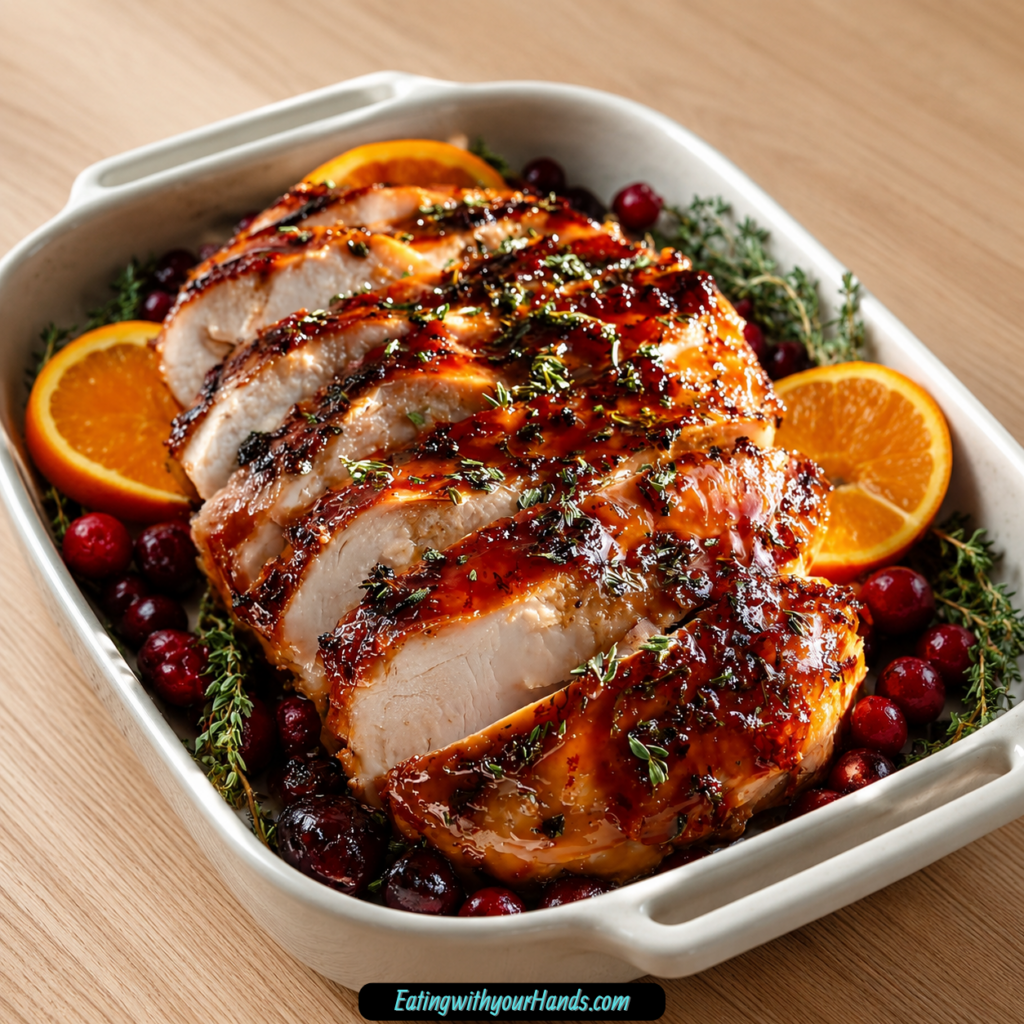
Serve Cranberry Orange Glazed Turkey Chest warm, drizzled with any remaining glaze. The glaze gives each slice more flavor and a beautiful finish.
Stuffing is a natural pairing. It fits the holiday feeling of the dish and works well with the cranberry-orange flavor.
Mashed potatoes also pair beautifully with this turkey. They create a comforting plate beside the sweet and tangy glaze.
Roasted vegetables make the meal feel complete. They add color and savory balance.
Fresh cranberry sauce on the side gives the dish extra zing. It reinforces the cranberry flavor already in the glaze.
This turkey is ideal for Thanksgiving, holiday meals, family dinners, cozy Sunday dinners, and seasonal gatherings. Its glossy presentation makes the meal feel special.
Storage
Store leftover turkey in an airtight container in the refrigerator for up to 4 days. Let the turkey cool before sealing it.
Keep any leftover glaze with the turkey if possible. It helps preserve flavor and gives the leftovers more moisture.
Freezing
For longer storage, wrap the turkey tightly in plastic wrap and aluminum foil. Freeze for up to 3 months.
Tight wrapping protects the turkey from freezer dryness. Label it if storing for later.
Thawing and Reheating
Thaw frozen turkey in the refrigerator before reheating. This gives the best result.
Reheat gently until warmed through. Add leftover glaze if available to bring back moisture and flavor.
Make-Ahead
Cranberry Orange Glazed Turkey Chest is freezer-friendly because leftovers can be stored for later. After cooking, cool the turkey, wrap it tightly, and freeze for up to 3 months.
Thaw in the refrigerator before reheating. This makes the leftovers easier to warm evenly.
Leftover turkey can be turned into salads or sandwiches. The cranberry-orange flavor gives those meals a delicious twist.
Helpful Notes for Best Results
Use a bone-in, skin-on turkey breast for maximum flavor and juiciness. The recipe calls for a 3 to 4 lb piece.
Season the turkey generously with salt and pepper. This step matters because the turkey itself needs seasoning beneath the glaze.
Use fresh cranberries if possible. If using frozen cranberries, thaw them first.
Freshly squeezed orange juice is best, but store-bought orange juice works too. Use what fits your kitchen.
Use a microplane for fine orange zest. Fine zest spreads through the glaze more evenly.
Fresh garlic gives the best flavor, but garlic powder can work in a pinch. Fresh rosemary and thyme are ideal, though dried versions can be used.
If using dried rosemary, use less because it is more concentrated. Dried thyme is also an option.
Consider using a meat thermometer to avoid overcooking the turkey. The internal temperature should reach 165°F, or 75°C.
If fresh cranberries are not available, canned cranberry sauce can be used, though it will change the texture. For a gluten-free option, make sure all ingredients are certified gluten-free.
Variations
Bourbon Cranberry Orange Turkey
Add a splash of bourbon to the glaze. This creates a richer flavor.
The bourbon deepens the sweet and tangy profile. It makes the dish feel especially festive.
Lighter Cranberry Orange Turkey
Use a skinless turkey breast and reduce the honey. This creates a lighter version.
The dish will still have cranberry-orange flavor. The texture and presentation will change without the skin.
Pomegranate Orange Turkey
Swap the cranberries for pomegranate arils. This gives the dish a festive touch.
The fruit flavor will be different. Adjust sweetness if the fruit is less tart.
Grilled Cranberry Orange Turkey
Grill the turkey instead of roasting. This creates a smoky flavor.
The glaze still brings brightness and sweetness. The cooking method changes the final character.
Pecan Cranberry Orange Turkey
Add chopped pecans to the glaze. They bring crunchy texture.
Pecans make the glaze feel more festive. They pair well with cranberry and orange.
Walnut Cranberry Orange Turkey
Add chopped walnuts to the glaze. This gives another crunchy option.
Walnuts bring a different nutty flavor. They add texture to the finished dish.
Cinnamon Cranberry Orange Turkey
Add a pinch of cinnamon to the glaze. This gives a warm, spicy kick.
Cinnamon works well with orange and cranberry. It makes the dish taste even more autumn-like.
Nutmeg Cranberry Orange Turkey
Add a pinch of nutmeg to the glaze. This creates another warm spice variation.
Nutmeg should support the main flavors. It gives the glaze a cozy background note.
Maple Cranberry Orange Turkey
Use maple syrup instead of honey. This gives the glaze a different sweetness.
Maple complements cranberry and orange beautifully. It is a simple substitution.
Agave Cranberry Orange Turkey
Use agave nectar in place of honey if needed. It can work in a pinch.
The glaze will still have sweetness. The flavor will be slightly different.
Peach Orange Turkey
Use fresh peaches as a different fruit twist. This changes the glaze direction.
Peaches are less tart than cranberries, so sweetness may need adjustment. This variation gives the turkey a softer fruit flavor.
Canned Cranberry Sauce Turkey
Use canned cranberry sauce if fresh cranberries are not available. This changes the texture.
The glaze may be smoother and less fruit-forward. It is still a useful option.
Troubleshooting
The Turkey Seems Dry
Use a bone-in, skin-on turkey breast for maximum flavor and juiciness. Covering the pan with foil for the first hour also helps keep moisture in.
Use a meat thermometer to avoid overcooking. Remove the turkey when it reaches 165°F, or 75°C.
The Skin Is Not Crisp
Make sure the foil is removed after the first hour. The additional 30 minutes uncovered helps the skin crisp.
The uncovered roasting time also helps the glaze caramelize. Do not skip this step.
The Glaze Slides Off the Turkey
Spoon the glaze back over the turkey after pouring. Some of it will naturally collect in the pan.
As it roasts, the glaze will continue flavoring the turkey. Leftover pan glaze can be drizzled over the sliced meat.
The Glaze Tastes Too Tart
Honey provides sweetness to balance the cranberries. Maple syrup or agave nectar can be used as alternatives.
If using a different fruit, adjust sweetness if the fruit is less tart. The balance depends on the fruit.
The Glaze Texture Changes
Canned cranberry sauce can be used if fresh cranberries are unavailable, but it will change the texture. Fresh cranberries give a different finish.
Frozen cranberries should be thawed before use. This helps them blend into the glaze more evenly.
The Herbs Taste Too Strong
Fresh rosemary and thyme are used in the recipe. If using dried rosemary, use less because it is more concentrated.
Dried thyme is also an option. Start carefully with dried herbs because their flavor can be stronger.
The Turkey Is Not Fully Cooked
Check the internal temperature with a meat thermometer. It should read 165°F, or 75°C, in the thickest part.
If it needs more time, return it to the oven for a few more minutes. Check again before serving.
The Turkey Is Hard to Slice
Let the turkey rest for about 10 minutes first. Resting is crucial for juicy slices.
Slice against the grain. This makes the turkey easier to serve and eat.
Frequently Asked Questions
Can I freeze Cranberry Orange Glazed Turkey Chest?
Yes, the turkey can be frozen. Wrap it tightly in plastic wrap and then in aluminum foil.
It will keep well in the freezer for up to 3 months. Thaw it in the refrigerator before reheating.
What can I use instead of honey?
Maple syrup is a great alternative to honey. It adds a lovely flavor that complements cranberry and orange.
Agave nectar can also work in a pinch. Both options change the sweetness slightly.
How do I know when the turkey is done?
Use a meat thermometer. Insert it into the thickest part of the breast.
The turkey is done when it reaches 165°F, or 75°C. This ensures it is safe to eat and still juicy.
Can I use a different fruit for the glaze?
Yes, pomegranate arils or fresh peaches can be used for a different twist. Cranberries and oranges are the classic combination here, but other fruit can work.
Adjust the sweetness if the fruit is less tart. Different fruit will change the flavor and texture.
Can I use frozen cranberries?
Yes, frozen cranberries can be used. Thaw them first.
Once thawed, use them in the glaze as directed. They still bring tart cranberry flavor.
Can I use canned cranberry sauce?
Yes, canned cranberry sauce can be used if fresh cranberries are not available. It will change the texture.
The glaze may not have the same fresh cranberry feel. It is a practical substitution.
What should I serve with this turkey?
Serve it with stuffing, mashed potatoes, or roasted vegetables. These sides make it feel like a complete meal.
Fresh cranberry sauce on the side adds extra zing. It works especially well with the glaze.
How long do leftovers last?
Leftovers can be stored in an airtight container in the refrigerator for up to 4 days. Keep them chilled.
For longer storage, freeze tightly wrapped turkey for up to 3 months. Thaw in the refrigerator before reheating.
Why This Recipe Works So Well
Cranberry Orange Glazed Turkey Chest works so well because it brings together bright fruit, savory herbs, and roasted turkey in one beautiful dish. The turkey breast is hearty enough for a holiday table, while the cranberry-orange glaze gives it color, shine, and seasonal flavor.
The sweet and tangy glaze makes the turkey feel special without requiring complicated steps. Cranberries, orange juice, honey, orange zest, garlic, olive oil, rosemary, thyme, salt, and pepper create a balanced coating.
The roasting method keeps the turkey moist first, then helps the skin finish beautifully. Covering with foil protects the turkey, while roasting uncovered at the end creates the glossy, caramelized look.
The thermometer step makes the recipe more reliable. Checking for 165°F, or 75°C, helps avoid both undercooking and overcooking.
The resting step is just as important as the roasting. A 10-minute rest helps the turkey slice more cleanly and stay juicy.
The recipe is also flexible for different occasions. Bourbon, skinless turkey breast, reduced honey, pomegranate arils, grilling, pecans, walnuts, cinnamon, nutmeg, maple syrup, agave nectar, canned cranberry sauce, fresh peaches, and gluten-free ingredient checks all give you ways to adapt it.
Final Thoughts
Cranberry Orange Glazed Turkey Chest is a festive roasted turkey dish made with a bone-in, skin-on turkey breast, fresh cranberries, orange juice, honey, orange zest, garlic, olive oil, rosemary, thyme, salt, and pepper. It roasts covered first for moisture, then uncovered for a crisp, glossy finish.
Serve it warm with stuffing, mashed potatoes, roasted vegetables, and fresh cranberry sauce, then save leftovers for salads or sandwiches. Whether it becomes part of Thanksgiving, a holiday gathering, or a cozy Sunday dinner, this turkey brings color, comfort, and sweet-tangy flavor to the table.
Cranberry Orange Glazed Turkey Chest
Juicy, savory, sweet, and bright with citrus flavor, this Cranberry Orange Glazed Turkey Chest is roasted with a cranberry-orange mixture, honey, garlic, rosemary, and thyme. It makes a flavorful American main course for holiday meals, family dinners, or any table that needs a tender turkey centerpiece with a colorful glaze.
Recipe Details
- Prep Time: 15 minutes
- Cook Time: 1 hour 30 minutes
- Total Time: 1 hour 45 minutes
- Course: Main Course
- Cuisine: American
- Servings: 6 people
- Calories: 350 kcal
Equipment
- oven
- Roasting pan
Ingredients
For the Glaze
- 2 cups fresh cranberries
- 1 cup orange juice
- ½ cup honey
- 2 tablespoons orange zest
- 2 tablespoons olive oil
- 2 cloves garlic, minced
- 1 tablespoon fresh rosemary, chopped
- 1 tablespoon fresh thyme leaves
- Salt and pepper to taste
For the Turkey
- 1 piece turkey breast, bone-in and skin-on 3-4 lb
Instructions
Step 1: Preheat the Oven
Preheat your oven to 350°F (175°C).
Step 2: Mix the Cranberry Orange Glaze
In a bowl, mix together the cranberries, orange juice, honey, orange zest, garlic, olive oil, rosemary, and thyme. Stir until the glaze ingredients are evenly combined.
Step 3: Season the Turkey
Place the turkey breast in a roasting pan and season with salt and pepper. Make sure it is positioned skin-side up before adding the glaze.
Step 4: Coat with the Glaze
Pour the cranberry-orange mixture over the turkey. Ensure the turkey is well coated before roasting.
Step 5: Roast Covered
Cover the turkey with foil and roast for 1 hour.
Step 6: Finish Roasting Uncovered
Remove the foil and roast for an additional 30 minutes, or until the turkey reaches an internal temperature of 165°F (75°C).
Step 7: Rest and Slice
Let the turkey rest for 10 minutes before slicing.
Notes
- This turkey pairs well with stuffing and roasted vegetables.
Serving Suggestions
Serve this Cranberry Orange Glazed Turkey Chest after it has rested for 10 minutes and been sliced. The cranberry-orange glaze, honey, herbs, garlic, and tender roasted turkey make it a strong main course for a special meal.
This turkey pairs well with stuffing and roasted vegetables, exactly as noted. Spoon some of the cranberry-orange mixture over the sliced turkey for extra flavor when serving.
Storage
How to Store
The recipe does not provide specific storage instructions or storage duration, so no exact storage time is added here.
Resting Tip
Let the turkey rest for 10 minutes before slicing. This helps the roasted turkey hold its texture when carved.
Roasting Tip
Roast the turkey covered with foil for 1 hour, then remove the foil and roast for an additional 30 minutes. The turkey should reach an internal temperature of 165°F (75°C).
Serving Tip
Serve with stuffing and roasted vegetables for a complete meal, exactly as suggested in the notes.

Fernando is the creator and writer behind the food blog Eating with your Hands. Living and working in cities like Paris, Barcelona, and Berlin, and being married to a Canadian foodie, has given Fernando a passion and interest in food and inspired him to run EWYH.