
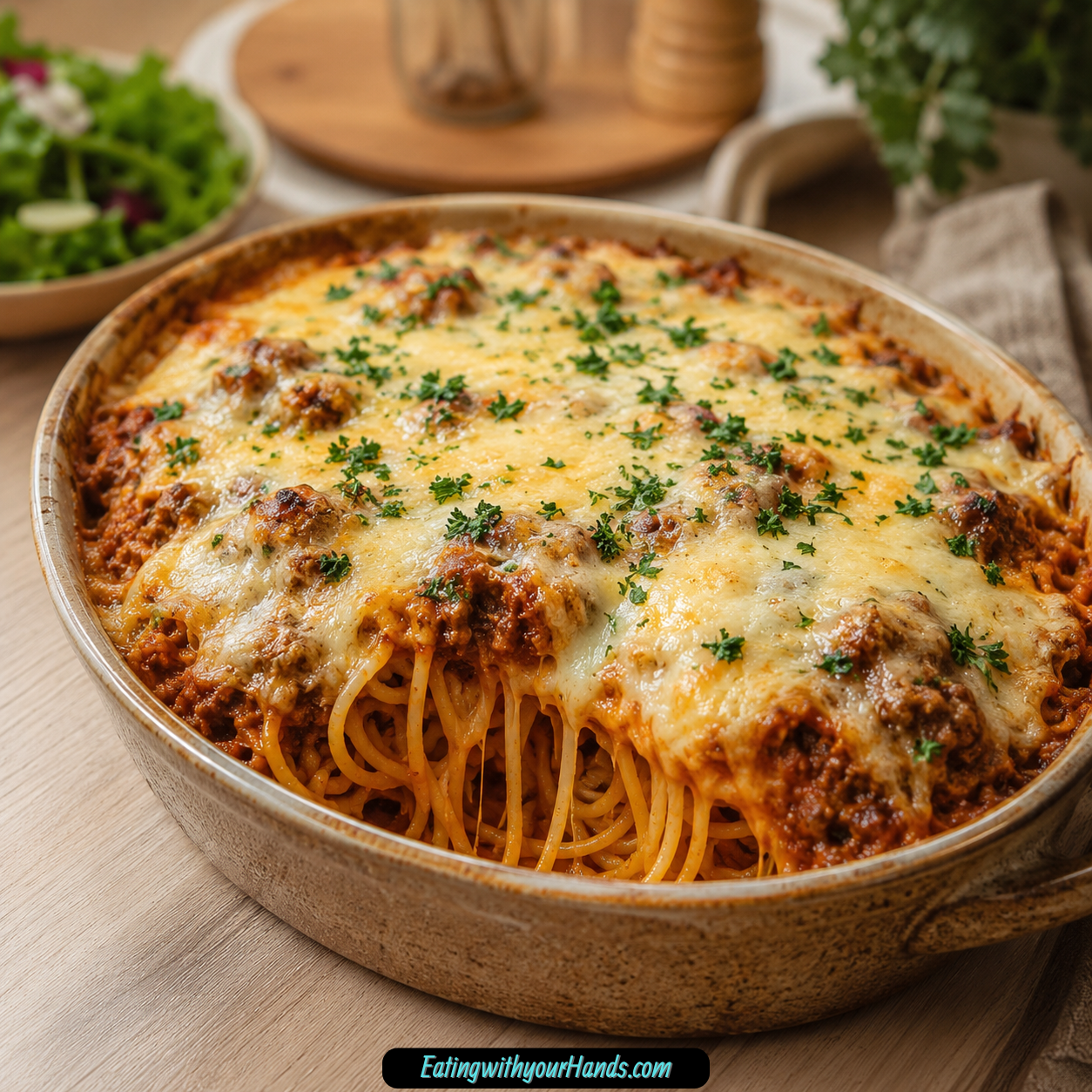
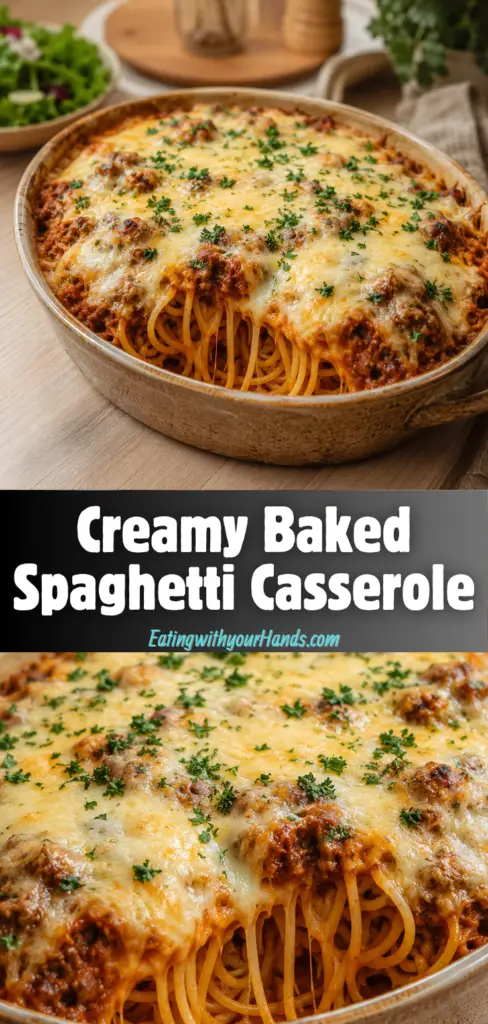
Creamy Baked Spaghetti Casserole is the kind of dinner that feels like comfort food made for real life. It has tender spaghetti, savory ground beef, marinara sauce, softened cream cheese, garlic, Italian seasoning, mozzarella, Parmesan, and a golden bubbly top that makes the whole dish feel warm and generous.
I love a casserole that can feed hungry people without making the kitchen feel chaotic. This one starts with familiar ingredients, comes together with simple steps, and bakes into a creamy, cheesy pasta dish that feels much more special than the effort it asks for.
There is something deeply comforting about spaghetti baked under a blanket of cheese. The noodles soak up the creamy meat sauce, the mozzarella melts over the top, and the Parmesan brings that salty finish that makes every bite feel complete.
This is the kind of recipe I would make for potlucks, cozy family dinners, meal prep, or those weeknights when homemade food sounds better than takeout but energy is running low. If you can boil pasta and brown ground beef, you already have the most important skills needed.
The cream cheese is the quiet magic here. It melts into the marinara and beef, turning a simple red sauce into something velvety, tangy, rich, and satisfying without needing a complicated homemade sauce.
Table of Contents
- Why You’ll Love This Creamy Baked Spaghetti Casserole
- Recipe Details
- Ingredients
- Optional Swaps, Variations, Add-Ins, and Serving Ideas
- Why This Baked Spaghetti Casserole Works
- Directions
- Step 1: Preheat the Oven
- Step 2: Grease the Baking Dish
- Step 3: Boil the Pasta Water
- Step 4: Cook the Spaghetti Al Dente
- Step 5: Drain the Pasta
- Step 6: Brown the Ground Beef
- Step 7: Drain Most of the Fat
- Step 8: Add Garlic and Italian Seasoning
- Step 9: Add the Marinara Sauce
- Step 10: Add the Softened Cream Cheese
- Step 11: Stir Until the Sauce Is Creamy
- Step 12: Combine Pasta and Sauce
- Step 13: Transfer to the Baking Dish
- Step 14: Add Mozzarella Cheese
- Step 15: Add Parmesan Cheese
- Step 16: Bake for 20–25 Minutes
- Step 17: Garnish With Parsley
- Step 18: Serve Hot
- Serving Ideas
- Storage
- Reheating
- Freezing
- Make-Ahead
- Helpful Notes for Best Results
- Variations
- Troubleshooting
- Frequently Asked Questions
- Why This Recipe Works So Well
- Final Thoughts
- Baked Cream Cheese Spaghetti Casserole
Why You’ll Love This Creamy Baked Spaghetti Casserole
This casserole has a creamy, dreamy texture. Softened cream cheese melts into marinara and savory beef, creating a sauce that coats every strand of spaghetti.
It is a weeknight hero. The whole dish can go from fridge to table in under an hour, which makes it practical for busy nights.
It reheats beautifully. Leftovers keep well, and the flavors have time to mingle overnight.
It is a crowd-pleaser. Kids, picky eaters, dinner guests, potluck crowds, and hungry families can all get behind a pan of cheesy baked spaghetti.
It uses simple ingredients. Spaghetti, cream cheese, marinara, ground beef, garlic, Italian seasoning, mozzarella, Parmesan, and parsley are familiar and easy to work with.
It is customizable. You can swap the meat, add vegetables, use different cheeses, make it spicy, or prepare it ahead.
Recipe Details
This casserole bakes at 350°F (175°C). A 9×13-inch baking dish should be greased before the pasta mixture is added.
The recipe uses 12 oz spaghetti noodles. The pasta is cooked in salted boiling water until al dente, usually about 8–10 minutes depending on the package directions.
The sauce is made with 1 lb ground beef, 2 minced garlic cloves, 1 teaspoon Italian seasoning, 1 jar of marinara or spaghetti sauce, and 8 oz softened cream cheese. The cream cheese should be softened so it melts smoothly into the sauce.
The casserole topping uses 2 cups shredded mozzarella cheese and ½ cup grated Parmesan cheese. Mozzarella gives the gooey melt, while Parmesan adds a salty, nutty finish.
The spaghetti is tossed with the creamy meat sauce before going into the baking dish. Then the cheese goes on top, and the casserole bakes for 20–25 minutes.
The casserole is done when the cheese is melted, golden, and bubbling around the edges. Fresh parsley can be added as an optional garnish before serving.
Ingredients
Pasta
12 oz spaghetti noodles
Salt for boiling water
Creamy Meat Sauce
1 lb ground beef
2 cloves garlic, minced
1 teaspoon Italian seasoning
1 jar marinara or spaghetti sauce, 24 oz
8 oz cream cheese, softened
Cheese Topping
2 cups shredded mozzarella cheese
½ cup grated Parmesan cheese
Optional Garnish
Fresh parsley
Ingredient Notes
Spaghetti noodles are the classic choice for this casserole. Other long pasta such as linguine, fettuccine, or bucatini can also work.
Salt for the boiling water matters because it seasons the pasta itself. About 1 tablespoon can be used in the pasta water.
Cream cheese gives the sauce its creamy texture. Full-fat cream cheese gives the richest result, and it should be softened before cooking.
Marinara or spaghetti sauce creates the red sauce base. A basic marinara works well, but a garlicky or herb-packed sauce can also be used.
Ground beef adds savory flavor and makes the casserole hearty. An 80/20 blend gives enough fat for flavor without making the dish too greasy.
Fresh minced garlic gives the sauce a stronger flavor. Jarred minced garlic can work in a pinch, using about 1 teaspoon.
Italian seasoning adds herby depth. If you do not have it, use ½ teaspoon dried oregano and ½ teaspoon dried basil.
Mozzarella gives the casserole its melty top. Pre-shredded cheese is fine, but shredding from a block can melt more smoothly.
Parmesan adds a salty, nutty kick. Freshly grated is ideal, though the green canister can still work.
Fresh parsley is optional. It adds color and makes the casserole look finished with almost no effort.
Optional Swaps, Variations, Add-Ins, and Serving Ideas
Vegetable-Packed Casserole
Sauté a diced onion with the ground beef for sweetness and depth. Sliced mushrooms can also be added while the meat browns.
Spinach is another easy addition. Thawed and drained frozen spinach can be stirred into the sauce.
Zucchini or bell peppers can also work in a vegetarian-style variation. These vegetables add color and freshness to the creamy pasta.
Italian Sausage Version
Swap the ground beef for Italian sausage with the casings removed. This gives the casserole a spicier, more seasoned flavor.
Brown the sausage the same way you would brown beef. Then continue with the garlic, seasoning, sauce, and cream cheese.
This version is especially good if you want a bolder casserole. The sausage brings extra flavor without extra effort.
Ground Turkey or Chicken Version
Ground turkey or ground chicken can be used instead of beef. Add a little more seasoning if needed.
These options make the casserole lighter while keeping it hearty. The cream cheese sauce still gives it richness.
Brown the meat fully before adding the garlic and sauce. Then proceed with the recipe as written.
Extra Cheesy Version
Stir 1 cup ricotta or cottage cheese into the sauce for more creaminess. This makes the casserole even richer.
You can also use half mozzarella and half provolone for the topping. Provolone adds a different melted cheese flavor.
If using ricotta instead of cream cheese, use the same amount, 8 oz. For extra creaminess, mix in an egg yolk first.
Spicy Baked Spaghetti
Add a pinch of red pepper flakes to the sauce. This brings gentle heat to the creamy marinara.
Pickled jalapeños can also be added on top before baking. They give the casserole a sharper spicy bite.
Use as much or as little heat as you like. This dish is easy to adjust for your table.
Shortcut Version
Use pre-cooked meat to make assembly faster. Leftover rotisserie chicken or taco-seasoned beef can be stirred into the sauce to warm through.
Chopped-up meatballs can also work in a pinch. The sauce is the main creamy element, so several proteins can fit.
This shortcut is helpful when you already have cooked protein in the fridge. It turns leftovers into a full casserole.
Meatless Version
Skip the beef and use cooked lentils for a meatless option. Mushrooms, zucchini, bell peppers, or white beans can also help make the dish satisfying.
Plant-based crumbles can be stirred into the sauce as another option. This keeps the casserole hearty without using beef.
The creamy sauce and cheese still make the casserole rich. Choose the meatless add-ins that fit your preference.
Gluten-Free Version
Swap regular spaghetti for your favorite gluten-free noodles. Corn-based gluten-free noodles are one option.
Check the cooking time carefully because gluten-free pasta often cooks faster than wheat pasta. Avoid overcooking so it does not become mushy in the oven.
Bake with the same visual cues. The cheese should be melted, golden, and bubbly.
Why This Baked Spaghetti Casserole Works
This casserole works because it takes simple pasta dinner ingredients and layers them into something richer. Spaghetti, meat sauce, cream cheese, mozzarella, and Parmesan bake together into a dish that feels cozy and complete.
The pasta is cooked al dente because it continues to soften in the oven. This helps prevent mushy noodles.
The ground beef gives the sauce a savory base. Garlic and Italian seasoning make it taste fuller without requiring a long simmer.
Cream cheese changes the texture of the sauce. It melts into the marinara and creates a smooth, tangy, creamy coating for the spaghetti.
The mozzarella and Parmesan topping makes the casserole feel finished. The top turns bubbly and golden while the inside stays creamy.
The recipe also works because it is flexible. You can add vegetables, change meats, make it spicy, use gluten-free noodles, or prepare it ahead without losing the comfort food feeling.
Directions
Step 1: Preheat the Oven
Preheat your oven to 350°F (175°C). This gives the casserole steady heat so the pasta warms through and the cheese melts evenly.
Let the oven fully preheat before baking. A consistent temperature helps the topping become golden without drying the pasta.
While the oven heats, prepare the baking dish and start the pasta water. This keeps the steps moving smoothly.
Step 2: Grease the Baking Dish
Grease a 9×13-inch baking dish with cooking oil spray or a swipe of butter. Coat the bottom and sides lightly.
This helps keep the spaghetti casserole from sticking. It also makes cleanup easier after the cheese bakes around the edges.
Set the prepared dish aside. You will add the coated spaghetti once the sauce is finished.
Step 3: Boil the Pasta Water
Fill a large pot with plenty of water. Pasta needs enough space to move while it cooks.
Add a generous sprinkle of salt, about 1 tablespoon. This is the best chance to season the spaghetti itself.
Bring the water to a rolling boil. Wait until it is fully boiling before adding the noodles.
Step 4: Cook the Spaghetti Al Dente
Add 12 oz spaghetti noodles to the boiling salted water. Cook according to package directions until al dente, usually about 8–10 minutes.
The pasta should be slightly firmer than you would normally eat it. It will continue cooking in the oven later.
Do not overcook it. Overcooked spaghetti can become too soft once baked with sauce.
Step 5: Drain the Pasta
Drain the cooked spaghetti in a colander. Give it a quick shake to remove excess water.
Do not rinse the pasta. The starch on the noodles helps the sauce cling.
If you want extra insurance for a thick sauce, save about ½ cup of starchy pasta water before draining. You can use a splash later if the sauce needs loosening.
Step 6: Brown the Ground Beef
While the pasta cooks, place a large skillet over medium heat. Add 1 lb ground beef.
Break the beef into small crumbles with a wooden spoon as it cooks. You want little pieces that can spread evenly through the sauce.
Cook until the beef is no longer pink, about 5–7 minutes. The meat should be browned and ready for the sauce.
Step 7: Drain Most of the Fat
Once the beef is cooked, drain off most of the fat. Leave just a small amount for flavor.
Too much fat can make the sauce greasy. A little bit helps keep the meat flavorful.
Return the skillet to the heat. Keep the heat at medium or slightly lower before adding the garlic.
Step 8: Add Garlic and Italian Seasoning
Add 2 minced garlic cloves and 1 teaspoon Italian seasoning to the cooked beef. Stir for about 30 seconds.
The garlic should become fragrant. Do not let it burn.
Italian seasoning helps the sauce taste herby and balanced. If needed, use ½ teaspoon dried oregano and ½ teaspoon dried basil instead.
Step 9: Add the Marinara Sauce
Pour in 1 jar, 24 oz, marinara or spaghetti sauce. Stir it into the beef, garlic, and seasoning.
The sauce should coat all the meat. Let it warm through in the skillet.
Use your favorite marinara or spaghetti sauce. A basic, garlicky, or herb-packed sauce can all work well.
Step 10: Add the Softened Cream Cheese
Add 8 oz softened cream cheese to the sauce in chunks. Stir as it begins to melt.
Softened cream cheese melts more smoothly. If yours is still cool, keep stirring over low heat until it becomes fully incorporated.
Do not panic if the sauce looks lumpy at first. A whisk can help smooth it out.
Step 11: Stir Until the Sauce Is Creamy
Continue stirring until the cream cheese melts completely into the marinara. The sauce should become creamy, smooth, and slightly tangy.
If the sauce seems thick, do not worry. It will loosen slightly as it bakes and coats the pasta.
If it feels too thick while mixing with the noodles, add a tablespoon or two of reserved pasta water. Extra marinara can also help keep it saucy.
Step 12: Combine Pasta and Sauce
Return the drained spaghetti to the pot or place it in a large mixing bowl. Pour the creamy meat sauce over the pasta.
Use tongs to toss the noodles until every strand is coated. Take your time so the sauce spreads evenly.
The mixture should look creamy and well combined. There should not be dry clumps of pasta.
Step 13: Transfer to the Baking Dish
Spread the sauced spaghetti into the greased 9×13-inch baking dish. Use the tongs or a spoon to distribute it evenly.
Smooth the top gently so the cheese topping will sit evenly. The casserole should reach into the corners of the dish.
Do not pack it down too tightly. A light, even layer helps it heat through well.
Step 14: Add Mozzarella Cheese
Sprinkle 2 cups shredded mozzarella cheese evenly over the top. Cover the surface as much as possible.
Mozzarella gives the casserole its gooey, melty topping. A block shredded by hand can melt especially smoothly.
Pre-shredded mozzarella is fine, too. Use what is convenient.
Step 15: Add Parmesan Cheese
Sprinkle ½ cup grated Parmesan cheese over the mozzarella. Spread it evenly.
Parmesan adds salty, nutty flavor. It also helps the top taste more savory.
The two cheeses together give the casserole a rich baked finish. Do not skimp on the topping if you want that classic gooey surface.
Step 16: Bake for 20–25 Minutes
Place the baking dish in the preheated oven. Bake for 20–25 minutes.
The casserole is ready when the cheese is melted, golden, and bubbly around the edges. The center should be hot.
If the cheese browns too quickly before the center is hot, tent the dish loosely with foil. This protects the top while the inside finishes warming.
Step 17: Garnish With Parsley
Remove the casserole from the oven. If desired, sprinkle fresh parsley over the top.
The parsley adds color and a little freshness. It makes the dish look brighter and more finished.
Let the casserole sit briefly before serving if you want cleaner slices. It will still be hot and gooey.
Step 18: Serve Hot
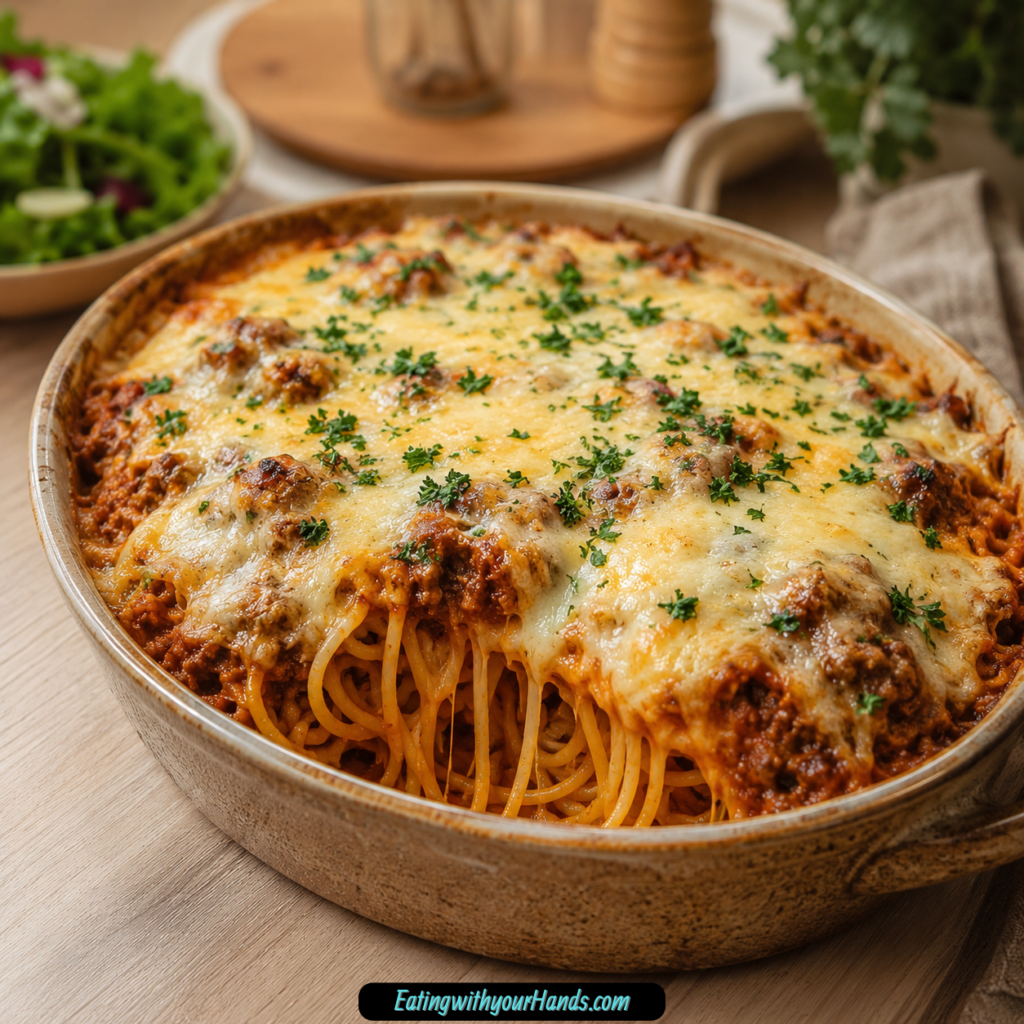
Serve the casserole hot, while the cheese is melted and the sauce is creamy. Use a spatula if cutting it into squares.
The edges may be slightly crisp, and the center should be rich and creamy. This is when the casserole is at its best.
Serve it with salad, garlic bread, or your favorite simple side. It is filling enough to be the main dish.
Serving Ideas
Serve Creamy Baked Spaghetti Casserole straight from the oven. The cheese should still be bubbling, and the edges should be just beginning to crisp.
A simple green salad with tangy vinaigrette is a great side. It cuts through the richness of the cheese and cream sauce.
Garlic bread is another perfect pairing. It turns the meal into full comfort-food mode and helps scoop up any extra sauce.
For a party or potluck, slice the casserole into squares and let people serve themselves with a spatula. It holds together surprisingly well once it rests briefly.
This dish is also excellent for family dinners. It is easy to portion, easy to love, and filling enough for hungry appetites.
Storage
Let the casserole cool to room temperature, about 1 hour. Then cover it tightly with foil or transfer portions to airtight containers.
Store in the refrigerator for 3–4 days. The casserole reheats well and makes a satisfying next-day lunch.
Keep it covered so the pasta does not dry out. The sauce may thicken as it chills.
If storing individual portions, airtight containers are practical. They make lunch or quick dinner reheating easy.
Reheating
For the best reheated texture, cover the casserole with foil and warm it in a 350°F oven for 15–20 minutes. Heat until warmed through.
A toaster oven can also work for smaller portions. Cover at first, then uncover to crisp the cheese.
The microwave works too, about 2 minutes per serving. Sprinkle with a little water first to help keep the pasta from drying out.
The cheese may not stay quite as creamy in the microwave. The oven method gives the best texture.
Freezing
This casserole freezes well. Wrap the whole dish or individual portions in foil, then slide into a freezer bag.
Freeze for up to 3 months. Thaw overnight in the refrigerator before reheating.
You can also bake it straight from frozen. Add 10–15 extra minutes and cover loosely with foil to prevent over-browning.
For the best texture, freeze before adding the cheese topping. Then sprinkle the cheese on fresh when reheating.
Make-Ahead
This casserole can be assembled up to 1 day ahead without the cheese topping. Cover and refrigerate it until ready to bake.
When ready, add the mozzarella and Parmesan. Bake as directed, adding 5–10 extra minutes to the cooking time.
Make-ahead assembly is helpful for busy nights and potlucks. The casserole can be ready to slide into the oven when you need it.
Keep it covered in the refrigerator until baking. Add the cheese topping fresh for the best melt.
Helpful Notes for Best Results
Cream cheese texture is important. If it is cold, keep stirring over low heat until it melts completely.
A whisk can help smooth lumpy sauce. Softening the cream cheese first makes this easier.
Save about ½ cup pasta water before draining. If the sauce seems too thick when mixing, add a tablespoon or two to loosen it.
Do not overcook the noodles. Al dente pasta is key because it will continue to bake in the casserole.
If the cheese browns too fast, tent the dish loosely with foil. This prevents burnt cheese while the center heats.
For gluten-free pasta, use your favorite gluten-free noodles and watch the cooking time. They often cook faster than wheat pasta.
Do not stress if the casserole is not perfect. It is meant to be easy, forgiving, and comforting.
Variations
Onion and Mushroom Baked Spaghetti
Sauté diced onion with the ground beef. Add sliced mushrooms while browning the meat.
This gives the sauce more sweetness and depth. The vegetables blend well with the creamy marinara.
Spinach Cream Cheese Spaghetti
Stir thawed and drained frozen spinach into the sauce. It adds color and a little extra vegetable goodness.
Make sure the spinach is well drained. Extra moisture can loosen the sauce too much.
Italian Sausage Spaghetti Casserole
Use Italian sausage with the casings removed instead of ground beef. This gives the casserole a spicier kick.
Brown the sausage first, then continue with the sauce. The cream cheese balances the savory sausage flavor.
Turkey or Chicken Spaghetti Casserole
Use ground turkey or ground chicken instead of beef. Increase the seasoning a little if needed.
This variation is lighter but still creamy and filling. The cheese topping keeps it comforting.
Ricotta Creamy Spaghetti Casserole
Use 8 oz ricotta instead of cream cheese. It gives the casserole a lighter, grainier texture.
For extra creaminess, mix in an egg yolk first. Stir it into the sauce the same way.
Extra Cheesy Provolone Casserole
Use half mozzarella and half provolone for the topping. This creates a different melted cheese flavor.
This variation is good when you want a more layered cheese taste. Parmesan still adds the salty finish.
Spicy Baked Spaghetti
Add red pepper flakes to the sauce. Top with pickled jalapeños before baking if you want more heat.
The creamy sauce helps mellow the spice. Add heat gradually so it stays enjoyable.
Meatball Spaghetti Casserole
Use chopped-up meatballs in place of ground beef. Stir them into the sauce to warm through.
This is a good shortcut when you have leftover meatballs. It keeps the casserole hearty.
Lentil Meatless Spaghetti Casserole
Use cooked lentils instead of ground beef. They add body and make the casserole meatless.
Mushrooms, zucchini, bell peppers, white beans, or plant-based crumbles can also make it satisfying. The creamy sauce keeps the dish rich.
Troubleshooting
Why Is My Sauce Lumpy?
The cream cheese may have been too cold. Keep stirring over low heat until it melts.
A whisk can help smooth it out. Next time, soften the cream cheese fully before adding it.
Why Is My Pasta Dry?
The noodles may have been overcooked or the sauce may have been too thick. Cook the spaghetti al dente.
If the sauce seems thick after mixing, add pasta water or extra marinara. This keeps the casserole saucy.
Why Is My Cheese Browning Too Fast?
The top may be browning before the center is hot. Tent the casserole loosely with foil.
Continue baking until the center is heated through. Remove the foil near the end if you want more color.
Why Is My Casserole Watery?
Some add-ins, like spinach or vegetables, may have brought extra moisture. Drain thawed spinach very well.
If using watery vegetables, sauté them first. This helps remove excess liquid.
Why Is My Pasta Mushy?
The spaghetti may have been cooked too long before baking. Cook it al dente or slightly firm.
It continues cooking in the oven. This is why the first pasta cook should not go too far.
Frequently Asked Questions
Can I Use Ricotta Instead of Cream Cheese?
Yes, ricotta can be used instead of cream cheese. Use the same amount, 8 oz.
Ricotta gives a lighter, grainier texture. For extra creaminess, mix in an egg yolk first.
How Do I Prevent the Pasta From Drying Out?
Do not overcook the noodles. Al dente pasta is best because it absorbs sauce while baking.
If the sauce seems thick after mixing, add a splash of pasta water or extra marinara. This keeps the casserole saucy.
Can I Make This Vegetarian?
Yes, skip the beef and sauté mushrooms, zucchini, or bell peppers instead. For protein, stir in drained white beans or plant-based crumbles with the sauce.
Cooked lentils are another option. They help make the casserole hearty without meat.
Why Is My Sauce Lumpy?
The cream cheese was likely too cold. Keep stirring over low heat until it smooths out.
A whisk helps, too. Next time, soften the cream cheese fully before adding it to the sauce.
What Is the Best Way to Reheat Leftovers?
Use the oven or toaster oven at 350°F for 15–20 minutes. Cover at first, then uncover to crisp the cheese.
Microwaving works, but it can make the pasta a bit mushy. Sprinkle with water first to help keep it from drying out.
Can I Freeze This Casserole?
Yes, it freezes well for up to 3 months. Wrap the whole dish or portions in foil, then place in a freezer bag.
Thaw overnight in the refrigerator before reheating. You can also bake from frozen with 10–15 extra minutes.
Can I Use a Different Pasta?
Yes, other long pasta such as linguine, fettuccine, or bucatini can work. Cook it al dente.
The sauce coats long noodles well. Keep the same baking instructions.
Why This Recipe Works So Well
Creamy Baked Spaghetti Casserole works because it combines the comfort of spaghetti with the richness of a baked pasta dish. The noodles, meat sauce, cream cheese, mozzarella, and Parmesan all create layers of flavor and texture.
The cream cheese is the secret to the velvety sauce. It turns marinara into something creamy and tangy without making the steps difficult.
The beef makes the dish hearty. Garlic and Italian seasoning deepen the sauce quickly.
The cheese topping gives the casserole its baked comfort. Mozzarella melts, Parmesan seasons, and the oven makes the edges bubbly and golden.
The pasta absorbs some of the sauce as it bakes. That makes each bite taste creamy and savory all the way through.
The recipe also works because it is flexible. It can become meatless, spicy, extra cheesy, gluten-free, make-ahead, freezer-friendly, or shortcut-friendly depending on what you need.
Final Thoughts
Creamy Baked Spaghetti Casserole is the kind of dinner that makes a simple night feel warmer. It is cheesy, creamy, savory, hearty, and easy enough to make when you want comfort without a long cooking project.
I love how a few everyday ingredients become something that feels generous enough for guests and familiar enough for family dinner. Spaghetti, ground beef, marinara, cream cheese, garlic, Italian seasoning, mozzarella, Parmesan, and parsley all come together in one bubbling pan.
Make it for a potluck, a cozy weeknight, a crowd of hungry friends, or meal prep for the days ahead. However you serve it, this casserole delivers creamy pasta comfort in every hot, cheesy bite.
Baked Cream Cheese Spaghetti Casserole
This Baked Cream Cheese Spaghetti Casserole is creamy, cheesy, savory, and comforting with tender spaghetti, seasoned ground beef, marinara sauce, softened cream cheese, and a bubbly mozzarella-Parmesan topping. It is an easy baked pasta dinner for busy weeknights, family meals, potlucks, or any time you want a cozy casserole with rich flavor and simple ingredients.
Recipe Details
- Prep Time: 15 minutes
- Cook Time: 30 minutes
- Total Time: 45 minutes
- Course: Casserole, Dinner
- Cuisine: American
- Servings: 6 people
Equipment
- large pot
- Skillet
- 9×13-inch baking dish
Ingredients
For the Pasta
- salt for boiling water
- 12 oz spaghetti noodles
For the Sauce
- 8 oz cream cheese softened
- 1 jar (24 oz) marinara or spaghetti sauce
- 2 cloves garlic minced
- 1 teaspoon Italian seasoning
- 1 lb ground beef
For the Topping
- ½ cup grated Parmesan cheese
- 2 cups shredded mozzarella cheese
- fresh parsley for garnish optional
Instructions
Step 1: Prepare the Baking Dish
Preheat the oven to 350°F (175°C). Lightly grease a 9×13 inch baking dish.
Step 2: Cook the Spaghetti
Cook the spaghetti noodles in salted boiling water according to package instructions. Drain the noodles and set them aside.
Step 3: Brown the Ground Beef
In a skillet, brown the ground beef over medium heat. Drain the excess fat.
Step 4: Build the Creamy Meat Sauce
Add the minced garlic and Italian seasoning to the skillet. Stir in the marinara or spaghetti sauce and softened cream cheese until everything is combined.
Step 5: Combine the Pasta and Sauce
Mix the cooked spaghetti with the creamy meat sauce until the noodles are evenly coated.
Step 6: Fill the Baking Dish
Transfer the spaghetti mixture to the prepared 9×13-inch baking dish and spread it evenly.
Step 7: Add the Cheese Topping
Sprinkle the shredded mozzarella cheese and grated Parmesan cheese over the top.
Step 8: Bake Until Bubbly
Bake for 20-25 minutes, or until the cheese is melted and bubbly.
Step 9: Garnish and Serve
Garnish with fresh parsley if desired, then serve warm.
Notes
For extra flavor, add sautéed onions or mushrooms to the ground beef mixture.
Serving Suggestions
- Serve warm with garlic bread or dinner rolls.
- Pair with a simple green salad for a balanced pasta dinner.
- Add roasted vegetables on the side for extra color and texture.
- Serve as a family-style casserole for weeknight meals or potlucks.
- Sprinkle with fresh parsley right before serving for a simple fresh finish.
Storage
How to Store
Let the casserole cool, then cover the baking dish tightly or transfer leftovers to an airtight container. Refrigerate until ready to reheat.
How to Reheat
Reheat individual portions until hot and creamy again. For a larger portion, warm the casserole in the oven until heated through and the cheese is melty.
Best Texture Tip
Bake just until the cheese is melted and bubbly so the spaghetti stays creamy and the topping stays soft and cheesy.
Make-Ahead Tip
You can cook the spaghetti and prepare the cream cheese meat sauce ahead of time, then assemble and bake when ready to serve.

Fernando is the creator and writer behind the food blog Eating with your Hands. Living and working in cities like Paris, Barcelona, and Berlin, and being married to a Canadian foodie, has given Fernando a passion and interest in food and inspired him to run EWYH.