
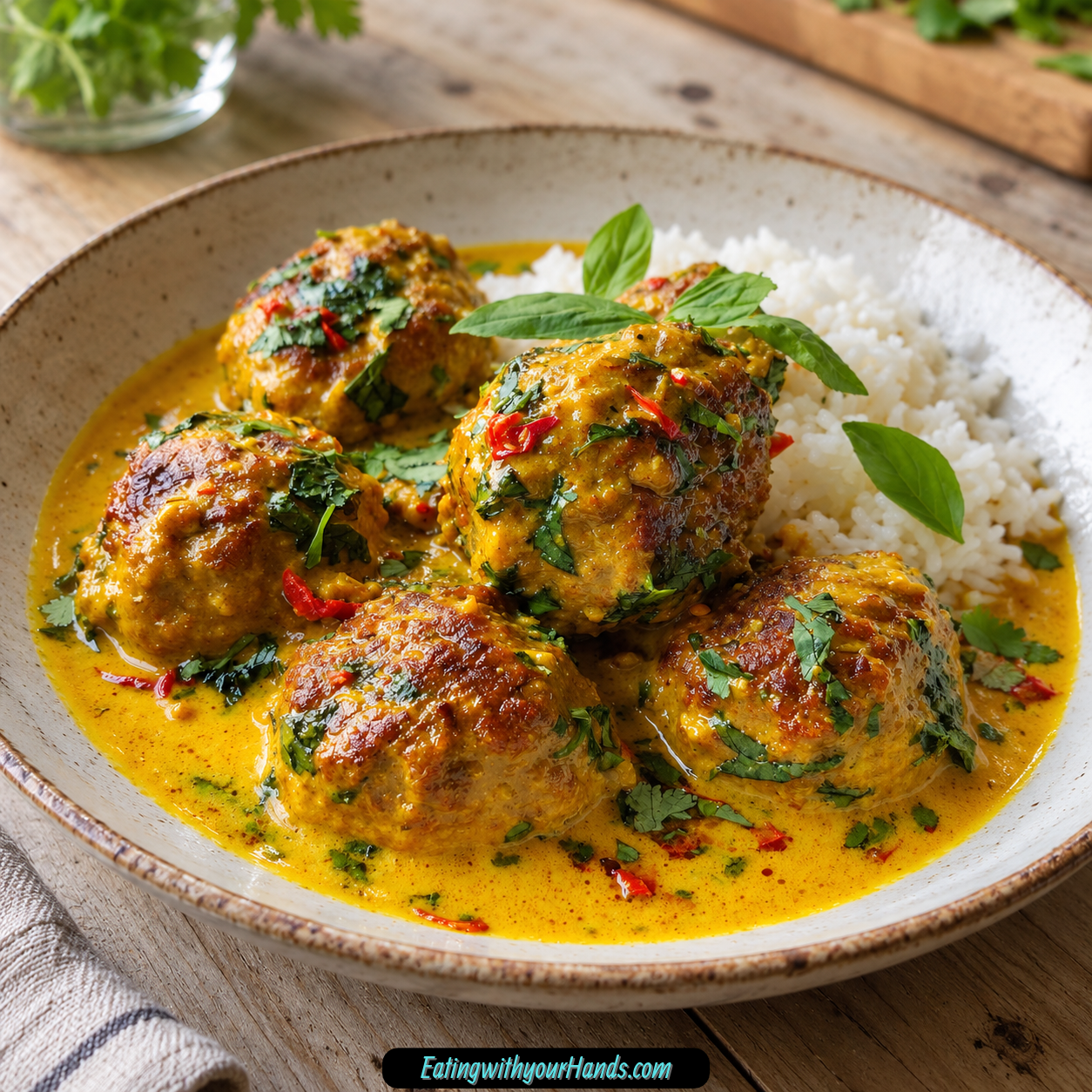

There are weeknight dinners I make because they are practical, and then there are dinners that happen to be practical while tasting like something I would happily order at a favorite restaurant. These Creamy Coconut Curry Meatballs fall firmly into the second category, combining juicy meatballs with a velvety coconut curry sauce that feels deeply comforting without turning dinner into an all-night project.
I still remember the first time I cooked them and how quickly the kitchen filled with the warm smell of ginger, garlic, curry paste, and coconut. By the time the meatballs were simmering in that glossy sauce, the whole room reminded me of the kind of Thai restaurant aroma that makes you hungry before the food reaches the table.
The first bite made the recipe an immediate keeper for me. The meatballs were tender inside, the sauce was creamy without feeling flat, and every spoonful carried a little heat, citrus, savory depth, and coconut richness.
What makes the combination especially satisfying is the contrast between the meatballs and sauce. Panko and Parmesan help the meatballs stay moist and flavorful, while red curry paste, coconut milk, broth, ginger, garlic, and optional fish sauce create layers around them.
I also love how efficiently the cooking comes together. The meatballs bake while the curry sauce develops on the stovetop, so those two major parts move forward at the same time instead of turning into separate cooking projects.
Once everything meets in the skillet, the remaining work is wonderfully simple. The baked meatballs simmer briefly in the sauce, spinach can be folded in for color, lime brightens the whole pan, and fresh basil finishes the dish.
This is the kind of dinner that looks and tastes like it required far more effort than it actually did. I can serve it over rice or quinoa, spoon plenty of sauce around the edges, and bring a bowl to the table that feels generous enough for a relaxed family dinner or guests.
Table of Contents
- Why You’ll Love These Creamy Coconut Curry Meatballs
- Ingredients for the Meatballs
- Ingredients for the Coconut Curry Sauce
- For Serving
- Why Panko and Parmesan Work So Well Together
- The Flavor Base: Garlic, Ginger, Cumin, and Coriander
- Why Red Curry Paste Matters
- How to Make Creamy Coconut Curry Meatballs
- Step 1: Preheat the Oven and Prepare the Pan
- Step 2: Mix the Meatball Mixture Gently
- Step 3: Shape the Meatballs
- Step 4: Bake Until Golden and Fully Cooked
- Step 5: Begin the Coconut Curry Sauce
- Step 6: Add Garlic, Ginger, and Curry Paste
- Step 7: Build and Simmer the Sauce
- Step 8: Add the Meatballs to the Curry
- Step 9: Finish With Spinach and Lime
- Step 10: Garnish and Serve
- How to Keep Chicken Meatballs Tender
- Controlling the Spice Level
- Making the Curry Spicier
- How to Fix a Thin Curry Sauce
- How to Thin a Sauce That Gets Too Thick
- Searing the Baked Meatballs for Extra Flavor
- Ground Turkey Variation
- Beef and Pork Variation
- Panko Substitutions
- Gluten-Free Meatball Options
- Fresh Ginger Substitution
- Fish Sauce Substitution
- Heavy Cream Variation
- Baby Spinach Is Optional
- Serving With Jasmine Rice
- Serving With Quinoa
- Warm Naan for Scooping
- Side Dish Ideas
- Leftover Pita Lunch
- Make-Ahead Method
- Storage
- How to Reheat on the Stovetop
- Microwave Reheating
- Freezing Creamy Coconut Curry Meatballs
- Frequently Asked Questions
- Nutritional Information
- The Weeknight Curry I Never Get Tired Of
- Creamy Coconut Curry Meatballs
- Recipe Details
- Ingredients
- Instructions
- Step 1: Prepare the Oven and Baking Sheet
- Step 2: Make the Meatball Mixture
- Step 3: Shape the Meatballs
- Step 4: Bake the Meatballs
- Step 5: Start the Curry Base
- Step 6: Add the Curry Paste
- Step 7: Build the Coconut Sauce
- Step 8: Add Lime and Optional Fish Sauce
- Step 9: Simmer the Meatballs in the Sauce
- Step 10: Add the Optional Spinach
- Step 11: Garnish and Serve
- Notes
- Serving Suggestions
- Storage
Why You’ll Love These Creamy Coconut Curry Meatballs
The meatballs themselves are flavorful enough to stand on their own. Ground chicken or turkey gets seasoned with garlic, ginger, cumin, coriander, chili powder, cilantro, Parmesan, and panko before being baked until golden.
Then there is the coconut curry sauce. Full-fat coconut milk gives it that luxurious creamy texture, while red curry paste and ginger keep the richness from becoming one-dimensional.
The recipe also has a useful balance between savory and bright flavors. Fish sauce can add extra depth, but fresh lime juice at the end gives the finished sauce enough freshness to keep every bite lively.
It is also easy to adapt according to what you have. Ground turkey, regular breadcrumbs, crushed crackers, soy sauce, heavy cream, and several other substitutions can all keep dinner moving when the exact ingredient list is not available.
The sauce is especially good for serving over something that can catch every drop. Jasmine rice is a favorite, but quinoa and warm naan are equally useful when you want nothing left behind in the bowl.
And perhaps best of all, the dish holds up beautifully as leftovers. The flavors can deepen overnight, making the next-day portion feel like something to look forward to rather than something you are simply trying to finish.
Ingredients for the Meatballs
The meatballs combine lean ground meat with enough moisture, binding ingredients, herbs, and spices to keep every bite flavorful. Mix them gently so the finished texture stays tender rather than compact.
- 1 lb (450g) ground chicken or turkey
- ½ cup panko breadcrumbs
- ¼ cup freshly grated Parmesan
- 1 large egg, lightly beaten
- 2 cloves garlic, minced
- 1 teaspoon fresh ginger, grated
- 1 teaspoon ground cumin
- 1 teaspoon ground coriander
- ½ teaspoon chili powder
- Salt and pepper, to taste
- 2 tablespoons fresh cilantro, chopped
Ground chicken is especially good when you want very tender meatballs. Ground turkey works beautifully too and can be used without changing the basic preparation.
The egg should be lightly beaten before it goes into the bowl. Room-temperature egg blends especially smoothly with the other ingredients.
Ingredients for the Coconut Curry Sauce
The sauce is where the dish becomes especially comforting. Coconut milk provides body, while onion, garlic, ginger, curry paste, broth, and lime build the flavor in stages.
- 1 tablespoon coconut oil
- 1 medium onion, finely chopped
- 2 cloves garlic, minced
- 1 inch fresh ginger, grated
- 1 tablespoon red curry paste
- 1 can (13.5 oz) full-fat coconut milk, shaken well
- 1 cup vegetable or chicken broth
- 1 tablespoon fish sauce, optional
- Juice of 1 lime
- 1 cup baby spinach, optional
- Fresh basil leaves, for garnish
Coconut oil is especially natural in this sauce, but olive oil works when necessary. The coconut milk should be shaken well before opening so the richer portion and thinner liquid are properly recombined.
Fish sauce is optional but adds extra savory depth. Used in the given amount, it blends into the curry rather than making the finished dish taste strongly fishy.
For Serving
Cooked rice or quinoa both work as a base for these meatballs. Jasmine rice is especially good at soaking up the creamy curry sauce.
Warm naan can also be served alongside the meal. Its main job is simple and important: catching whatever sauce remains after the meatballs are gone.
Why Panko and Parmesan Work So Well Together
The meatballs stay especially moist because the mixture contains both panko and Parmesan. Panko provides structure without requiring the mixture to become dense, while Parmesan brings savory flavor throughout the meat.
This combination also helps the meatballs hold together during baking and later simmering. The goal is a meatball that remains intact in the curry while still feeling tender when you cut into it.
Freshly grated Parmesan is preferable for a smoother texture and stronger flavor. Once mixed with the egg, herbs, garlic, ginger, and spices, it becomes part of the meatball rather than sitting as a separate cheesy element.
The Flavor Base: Garlic, Ginger, Cumin, and Coriander
The meatballs already contain a full layer of seasoning before they ever meet the sauce. Garlic and ginger bring warmth, while cumin and coriander add the deeper spice notes that make the meat itself taste complete.
Chili powder controls another part of the flavor. The standard amount is ½ teaspoon, but that can be increased when you want more heat.
Fresh cilantro adds a brighter herbal note. Chop both leaves and tender stems so the flavor is distributed throughout the mixture.
Why Red Curry Paste Matters
The sauce gets much of its personality from 1 tablespoon red curry paste. Cooking it briefly in the skillet before adding liquid wakes up the flavor and prevents it from tasting like something that was merely stirred into coconut milk at the end.
The curry paste should cook for about 1 full minute. That short time is enough to become fragrant without requiring a long sauté.
Different brands can vary in heat. Taste thoughtfully if you are sensitive to spice, especially before deciding to add extra chili powder or more curry paste.
How to Make Creamy Coconut Curry Meatballs
The most efficient method is to bake the meatballs while building the sauce on the stovetop. By the time the curry has thickened slightly, the meatballs should be close to ready for their final simmer.
Step 1: Preheat the Oven and Prepare the Pan
Preheat the oven to 375°F (190°C). Line a baking sheet with parchment paper so the meatballs release easily and cleanup stays simple.
Set the prepared pan near your mixing area before handling the meat. Having the surface ready means each shaped meatball can go directly onto the sheet without interrupting the process.
Step 2: Mix the Meatball Mixture Gently
Add the ground chicken or turkey, panko, Parmesan, beaten egg, 2 minced garlic cloves, 1 teaspoon grated ginger, cumin, coriander, chili powder, salt, pepper, and chopped cilantro to a large mixing bowl. Use your hands to combine everything gently until the ingredients are evenly distributed.
Stop mixing once the mixture holds together when pinched. Overworking the meat can make the finished meatballs firmer than the tender texture you want.
Step 3: Shape the Meatballs
Scoop portions of the mixture and roll them into balls about 1 inch in diameter. The full mixture should make approximately 24 meatballs.
Arrange them evenly across the parchment-lined baking sheet with a little space between each one. Keeping the size consistent helps them bake at the same pace.
Step 4: Bake Until Golden and Fully Cooked
Transfer the baking sheet to the 375°F oven and bake for 18–20 minutes. Rotate the pan halfway through the baking time to encourage more even browning.
The meatballs should look golden and reach an internal temperature of 165°F (74°C). Once cooked, leave them on the pan only until the sauce is ready to receive them.
Step 5: Begin the Coconut Curry Sauce
While the meatballs bake, heat 1 tablespoon coconut oil in a large skillet over medium heat. Add the finely chopped onion and cook for about 3 minutes, until it softens and becomes translucent.
Stir occasionally so the onion cooks evenly rather than browning too aggressively. This softened onion becomes the background of the curry sauce and gives the garlic and ginger something to build on.
Step 6: Add Garlic, Ginger, and Curry Paste
Add the 2 minced garlic cloves and 1 inch grated ginger to the softened onion. Stir constantly for about 30 seconds, just until the mixture becomes fragrant.
Add 1 tablespoon red curry paste and continue cooking for 1 minute. Stir it into the onion mixture so the paste heats evenly and becomes aromatic before any liquid is added.
Step 7: Build and Simmer the Sauce
Slowly pour in the shaken 13.5-ounce can full-fat coconut milk and 1 cup vegetable or chicken broth. Stir constantly while adding the liquid so the curry paste incorporates smoothly rather than staying in concentrated streaks.
Bring the sauce to a gentle simmer and cook for about 5 minutes. It should thicken slightly and begin coating the back of a spoon.
Add the optional 1 tablespoon fish sauce during this stage if you are using it. Stir well so its savory flavor disperses throughout the coconut curry.
Step 8: Add the Meatballs to the Curry
Carefully transfer the cooked meatballs from the baking sheet into the simmering sauce. Tongs or a slotted spoon make the transfer easier without splashing hot curry.
Gently turn the meatballs so they become coated. Let them simmer in the sauce for another 5–10 minutes, giving them time to absorb some of the coconut curry flavor.
Keep the simmer gentle rather than boiling hard. This protects the creamy texture of the sauce and helps the meatballs stay intact.
Step 9: Finish With Spinach and Lime
If using baby spinach, stir in 1 cup right before serving. The leaves wilt quickly from the heat of the sauce, so they only need a brief stir.
Squeeze in the juice of 1 lime and gently mix again. Taste the sauce after adding the lime so you can appreciate how much brighter the final flavor becomes.
Step 10: Garnish and Serve
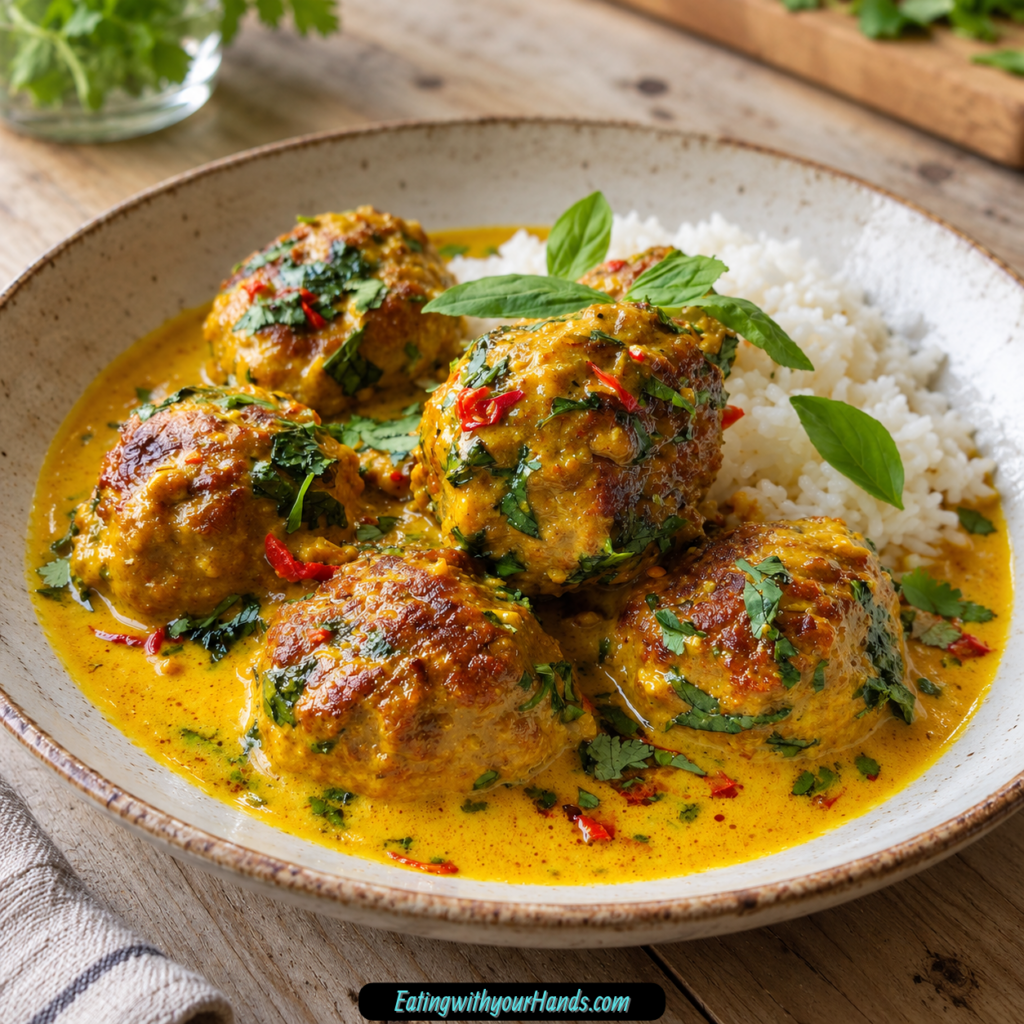
Spoon cooked rice or quinoa into serving bowls and arrange the curry meatballs over the top. Ladle extra sauce generously around the meatballs so the base can absorb it.
Finish with fresh basil leaves and extra cilantro if desired. Serve warm while the sauce is still creamy and the meatballs are tender.
How to Keep Chicken Meatballs Tender
The first rule is not to overmix. Once the meatball mixture is evenly combined and holds together, there is no benefit to continuing to squeeze and knead it.
The second rule is accurate baking. Pull the meatballs once they have reached 165°F internally rather than leaving them in the oven well beyond the 18–20 minute range.
The final simmer in curry should remain gentle too. They only need enough time to absorb the sauce, not another aggressive cooking session.
Controlling the Spice Level
The ½ teaspoon chili powder in the meatballs is a starting point. Increase it if you like a stronger spicy flavor.
For a milder version with extra depth rather than heat, smoked paprika can replace the chili powder. This changes the character slightly while keeping the meatballs warmly seasoned.
The curry paste also contributes heat, and brands can differ noticeably. Taste and adjust thoughtfully rather than assuming every tablespoon will behave exactly the same way.
Making the Curry Spicier
If you want a significantly hotter dish, double the chili powder in the meatball mixture. Another option is adding a minced Thai chili directly to the meatball mix.
The sauce can also carry more heat. Stir in an additional teaspoon red curry paste and taste before deciding whether it needs anything further.
Making small increases is useful because heat builds from more than one ingredient here. Chili powder, curry paste, and Thai chili can quickly add up.
How to Fix a Thin Curry Sauce
If the sauce remains thinner than you prefer after simmering, mix 1 teaspoon cornstarch with 1 tablespoon cold water. Stir until completely smooth before adding it to the skillet.
Pour the slurry into the simmering sauce while stirring. Let it cook for about 2 minutes so the sauce can thicken.
Do not add dry cornstarch straight to the skillet. Mixing with cold water first helps prevent lumps.
How to Thin a Sauce That Gets Too Thick
A sauce that has reduced too far can be loosened easily. Add a splash of broth and stir until the consistency becomes creamy and pourable again.
Work gradually because only a small amount may be needed. You can always add more broth, but removing excess liquid requires more simmering.
This same trick is useful when reheating leftovers. Coconut curry often thickens as it sits in the refrigerator.
Searing the Baked Meatballs for Extra Flavor
The standard method sends the baked meatballs directly into the curry sauce. For more browned flavor, quickly sear them in the skillet before adding the sauce.
This extra step creates crisp browned spots on the outside. Those bits also contribute additional savory flavor to whatever sauce eventually touches the pan.
Keep the sear brief because the meatballs are already cooked. The goal is additional color, not another full cooking stage.
Ground Turkey Variation
Ground turkey can replace chicken directly. It works especially well when that is what you already have available.
Turkey thighs provide more moisture if you want especially juicy meatballs. Keep the remaining ingredients and method aligned with the chicken version.
The spices, coconut curry, lime, and herbs work equally well with turkey. The overall dish stays very close in character.
Beef and Pork Variation
For a richer meatball, use a 50/50 blend of beef and pork. This creates a noticeably different version while still working with the coconut curry sauce.
The flavor will be deeper and richer than chicken or turkey. Keep the curry preparation the same so the creamy sauce still provides the main contrast.
This option is particularly useful for people who prefer a heartier meatball. Expect the finished dish to feel less light than the poultry versions.
Panko Substitutions
Regular breadcrumbs can replace panko. Use them as the binder while keeping the rest of the meatball mixture unchanged.
Crushed crackers are another workable option when breadcrumbs are unavailable. Break them down finely enough to distribute evenly through the ground meat.
Rolled oats can also be used. The texture will vary somewhat depending on which substitution you choose.
Gluten-Free Meatball Options
Cornstarch can be used as a gluten-free binder in place of breadcrumbs. This provides one route when standard panko is unsuitable.
Another option is almond flour. When using almond flour, an extra egg can be added to help bind the meatballs.
These approaches create different textures. Choose the version that best matches the ingredients you have and your dietary needs.
Fresh Ginger Substitution
Fresh ginger appears in both the meatballs and sauce, giving the dish a warm aromatic thread from beginning to end. When fresh ginger is unavailable, ¼ teaspoon ground ginger can be used as a substitute.
Ground ginger has a different character from freshly grated ginger. It still gives the dish warmth and allows dinner to continue without a special trip to the store.
Use the substitution thoughtfully in place of fresh ginger. Keep the remaining spices and aromatics unchanged.
Fish Sauce Substitution
The fish sauce is optional, so it can simply be left out if necessary. A splash of soy sauce is another way to add similar savory depth.
Start modestly because soy sauce contributes salt. Taste before adding more seasoning elsewhere in the curry.
The finished sauce will taste slightly different. Coconut milk, red curry paste, lime, garlic, and ginger still provide plenty of flavor.
Heavy Cream Variation
Heavy cream can replace coconut milk when coconut is not your preference. This creates a rich sauce but removes much of the tropical character.
Keep the curry paste, garlic, ginger, broth, and lime so the sauce still carries the same general savory-spiced direction. The dairy version will naturally taste different from the full-fat coconut milk version.
This substitution is useful when cream is already in the refrigerator. It turns the dish into a different kind of creamy curry while preserving the meatball format.
Baby Spinach Is Optional
Baby spinach adds color and a soft green element to the finished curry. Because it wilts almost immediately, it does not require a separate cooking stage.
Add it at the end instead of early in the simmer. This helps the leaves retain more of their color and prevents them from disappearing completely into the sauce.
The recipe still works beautifully without spinach. Its role is complementary rather than essential to the curry itself.
Serving With Jasmine Rice
Jasmine rice is my favorite base because it catches the coconut curry sauce so well. The grains give the sauce somewhere to settle instead of leaving all that flavor at the bottom of the bowl.
Spoon the rice in first and place the meatballs over it. Then add enough sauce that some reaches all the way through to the bottom.
Fresh basil on top gives the bowl a final fragrant note. Thai basil is especially nice when available.
Serving With Quinoa
Quinoa makes another satisfying base. Its texture gives the creamy curry a slightly different contrast from soft rice.
Pile the meatballs and sauce over a warm serving of quinoa. The grains absorb enough curry to make each bite feel connected.
This is an easy way to change the meal without changing the actual meatball recipe. Keep the sauce generous because quinoa benefits from plenty of moisture.
Warm Naan for Scooping
Warm naan is perfect for catching the remaining sauce around the edges of the bowl. It turns the curry into the kind of meal where almost nothing is left behind.
Serve it on the side rather than underneath the meatballs. Tear off pieces and use them to scoop sauce as you eat.
This is especially good when you have made extra curry sauce. The bread gives that sauce one more reason not to go to waste.
Side Dish Ideas
Quick-pickled cucumbers bring a refreshing crunch beside the creamy curry. Their cool, sharp character creates an especially good contrast with the rich coconut sauce.
Roasted cauliflower tossed with curry powder can make the meal feel more substantial. It continues the warm spice theme without duplicating the creamy texture.
A simple green salad with lime vinaigrette is another option. The fresh acidity keeps the plate from feeling overly rich.
Leftover Pita Lunch
Leftover meatballs can become a completely different lunch the next day. Tuck them into pita pockets with extra sauce and fresh vegetables.
The creamy curry works almost like a dressing inside the pita. Fresh vegetables provide contrast against the soft meatballs.
This is an especially useful way to use leftovers when you do not want another bowl of rice. The flavor stays familiar while the format changes completely.
Make-Ahead Method
The dish is well suited to advance preparation because the sauce can taste even better the following day. Prepare the recipe through the point where the cooked meatballs are combined with the sauce.
Cool everything properly and refrigerate. When you are ready to serve, warm the curry gently on the stovetop while preparing the rice or quinoa.
The sauce may thicken during storage. Add a splash of water or broth as it reheats until the creamy consistency returns.
Storage
Transfer cooled leftovers to an airtight container and refrigerate for up to 3 days. Keeping the meatballs in the sauce allows the flavors to continue blending overnight.
The curry may become thicker in the refrigerator because of the coconut milk. This is normal and can be corrected easily while reheating.
Store the rice or quinoa separately when possible. This prevents the grain base from absorbing all the sauce before you are ready to eat.
How to Reheat on the Stovetop
Place the meatballs and sauce in a pan over low heat. Add a splash of water or broth if the curry has become very thick.
Warm gently while stirring occasionally. Low heat helps preserve the creamy texture and keeps the meatballs from being overcooked.
Once heated through, add fresh lime or herbs if desired. Serve immediately over warm rice or quinoa.
Microwave Reheating
The microwave can be used when speed matters. Heat the leftovers in short intervals and stir every 30 seconds.
Frequent stirring reduces hot spots and helps the sauce warm more evenly. Add a little liquid first if the curry has become thick.
Stop as soon as everything is properly heated. Repeated long heating can affect both the sauce texture and the tenderness of the meatballs.
Freezing Creamy Coconut Curry Meatballs
Cool the meatballs completely in their sauce before freezing. Transfer them to freezer-safe bags and store for up to 2 months.
Freezing the meatballs in sauce protects them from drying and makes reheating simpler. Portion them before freezing if you want to thaw only part of the batch at a time.
Thaw overnight in the refrigerator. Reheat gently on the stovetop with a splash of broth until the sauce becomes creamy again.
Frequently Asked Questions
Can I Freeze These Meatballs?
Yes. Cool them fully in the curry sauce and transfer to freezer-safe bags.
Freeze for up to 2 months. Thaw overnight in the refrigerator and warm gently with a splash of broth.
How Can I Make Them Spicier?
Double the chili powder or add a minced Thai chili to the meatball mixture. Either option increases the heat before the meatballs even reach the sauce.
You can also add an extra teaspoon red curry paste to the curry. Taste as you go so the spice level stays where you want it.
What Can I Use Instead of Panko?
Regular breadcrumbs, crushed crackers, or rolled oats can all work. Each creates a slightly different texture.
For a gluten-free version, almond flour is another option and can be paired with an extra egg for binding. Cornstarch is also given as a gluten-free binder alternative.
Can I Make This Ahead for a Party?
Yes. Prepare the dish through the point where the cooked meatballs are combined with the sauce.
Refrigerate, then reheat gently on the stovetop when guests arrive. Prepare the rice or other serving base separately so everything is fresh at serving time.
Can I Use Ground Turkey?
Yes. Ground turkey can replace ground chicken.
Turkey thighs are especially useful when you want more moisture. Keep the remaining meatball ingredients the same.
Can I Leave Out Fish Sauce?
Yes. It is optional.
A splash of soy sauce can provide similar savory depth. Adjust other salt carefully if you use that substitution.
Can I Use Something Other Than Coconut Milk?
Heavy cream can be used. The sauce will become rich but less tropical.
Keep the curry paste, broth, garlic, ginger, and lime. Expect the final flavor to differ from the coconut version.
Nutritional Information
Exact calories, protein, carbohydrates, fat, fiber, sugar, sodium, and other numerical values are not specified. The finished nutritional profile will vary depending on whether you use chicken or turkey, the type of ground meat, the coconut milk, Parmesan, broth, fish sauce, serving base, and the amount of curry sauce in each portion.
Ground chicken breast creates a leaner meatball than chicken thighs. Using full-fat coconut milk keeps the sauce especially rich, while replacing some coconut milk with broth can make the overall dish lighter.
Rice, quinoa, naan, pita, and any side dishes will change the nutrition of the complete meal. Optional spinach and other variations also affect the final composition.
For precise tracking, calculate with the exact ingredients and portions used in your kitchen. This recipe is flexible enough that two bowls can vary significantly depending on how much sauce and serving base they contain.
The Weeknight Curry I Never Get Tired Of
What keeps this recipe in my regular rotation is the way it makes an ordinary evening smell like something much more exciting is happening. Once onion, garlic, ginger, and red curry paste begin cooking together, the kitchen already feels transformed.
Then the coconut milk hits the pan and everything softens into that creamy orange sauce. By the time the meatballs are ready to leave the oven, the curry is waiting for them.
I love that the two parts come together almost perfectly in timing. The oven handles the meatballs while I focus on the sauce, and neither stage asks me to stand over the stove for an unreasonable amount of time.
The final simmer is where the dish becomes more than meatballs plus curry. The meatballs soak up the sauce, while their seasonings begin blending back into the coconut mixture around them.
Lime at the end changes the mood of the entire skillet. What tasted rich and warm suddenly feels brighter without losing any of its comforting character.
Sometimes I add spinach, sometimes I leave it out, and sometimes the garnish is basil with a little extra cilantro. The core combination of juicy meatballs and coconut curry is strong enough to work in every version.
Jasmine rice is still my favorite way to serve it. There is something deeply satisfying about watching the sauce disappear into the rice while extra curry pools around the meatballs.
But quinoa, naan, and even next-day pita pockets have all earned their place too. This is one of those dinners that does not become boring just because there happen to be leftovers.
Perhaps that is what I love most about it. The recipe feels cozy enough to satisfy a comfort-food craving, but the ginger, lime, herbs, and curry keep it from feeling heavy or predictable.
Creamy Coconut Curry Meatballs have become one of my favorite weeknight lifesavers for exactly that reason. They are warm, rich, aromatic, flexible, and simple enough to make when the temptation to order takeout is at its strongest.
Creamy Coconut Curry Meatballs

Tender chicken or turkey meatballs simmered in a creamy coconut curry sauce make this comforting Asian Fusion main course rich, savory, and full of warm spice. Red curry paste, coconut milk, ginger, garlic, lime, and fresh herbs bring the sauce together beautifully, while rice or quinoa makes an easy base for serving.
Recipe Details
- Prep Time: 20 minutes
- Cook Time: 30 minutes
- Total Time: 50 minutes
- Course: Main Course
- Cuisine: Asian Fusion
- Servings: 4 servings
- Calories: 420 kcal
Ingredients
For the Meatballs
- 2 tablespoon fresh cilantro chopped plus extra for garnish
- Salt and pepper to taste
- ½ teaspoon chili powder adjust for spice preference
- 1 teaspoon ground coriander
- 1 teaspoon ground cumin
- 1 teaspoon ginger grated
- 2 cloves garlic minced
- 1 egg lightly beaten
- ¼ cup grated Parmesan cheese
- ½ cup breadcrumbs preferably panko
- 1 lb 450g ground chicken or turkey
For the Coconut Curry Sauce
- 1 cup baby spinach optional
- Juice of 1 lime
- 1 tablespoon fish sauce optional, for depth
- 1 cup vegetable or chicken broth
- 1 can 13.5 oz coconut milk
- 1 tablespoon red curry paste
- 1 inch ginger grated
- 2 cloves garlic minced
- 1 onion finely chopped
- 1 tablespoon coconut oil or olive oil
For Serving and Garnish
- Fresh basil leaves for garnish
- Fresh cilantro for garnish
- Cooked rice or quinoa for serving
Instructions
Step 1: Prepare the Oven and Baking Sheet
Preheat the oven to 375°F (190°C).
Line a baking sheet with parchment paper and set it aside while you prepare the meatball mixture.
Step 2: Make the Meatball Mixture
In a bowl, combine the ground chicken or turkey, breadcrumbs, grated Parmesan, lightly beaten egg, minced garlic, grated ginger, ground cumin, ground coriander, chili powder, salt, black pepper, and chopped cilantro.
Mix until the ingredients are evenly distributed throughout the meat.
Step 3: Shape the Meatballs
Form the mixture into 1-inch meatballs.
Arrange them on the prepared baking sheet, leaving enough room between each one for even cooking.
Step 4: Bake the Meatballs
Bake for 18–20 minutes, until the meatballs are cooked through.
Remove them from the oven and keep them ready while you prepare the coconut curry sauce.
Step 5: Start the Curry Base
Heat the coconut oil or olive oil in a large skillet over medium heat.
Add the finely chopped onion, minced garlic, and grated ginger, then sauté until softened.
Step 6: Add the Curry Paste
Stir the red curry paste into the softened onion mixture.
Cook for 1 minute so the curry paste blends into the garlic, ginger, and oil.
Step 7: Build the Coconut Sauce
Pour in the coconut milk and vegetable or chicken broth.
Stir well until the curry paste is evenly incorporated into the creamy liquid.
Step 8: Add Lime and Optional Fish Sauce
Bring the sauce to a simmer.
Stir in the fish sauce if using, then add the juice of 1 lime.
Step 9: Simmer the Meatballs in the Sauce
Add the baked meatballs to the simmering coconut curry sauce.
Let them simmer for 5–10 minutes so they become coated in the creamy sauce and absorb the curry flavor.
Step 10: Add the Optional Spinach
Stir in the baby spinach just before serving if using.
Mix gently until the spinach is distributed throughout the sauce.
Step 11: Garnish and Serve
Finish with fresh cilantro and basil leaves.
Serve the creamy coconut curry meatballs over cooked rice or quinoa.
Notes
- Adjust chili powder for desired spice level.
- Use ground turkey if preferred.
- Fish sauce adds depth but can be omitted.
- Spinach is optional but adds freshness.
Serving Suggestions
Serve Creamy Coconut Curry Meatballs hot over cooked rice or quinoa. The creamy coconut sauce, tender meatballs, curry paste, ginger, garlic, lime, and fresh herbs create a rich main dish with both warmth and brightness.
This recipe makes 4 servings and can be prepared with either ground chicken or ground turkey. Vegetable broth or chicken broth both work in the curry sauce, while optional fish sauce adds another savory layer.
For a fresher finish, stir in baby spinach just before serving and garnish with cilantro and basil. Adjust the chili powder to make the meatballs milder or spicier according to your preference.
Storage
Keep leftover meatballs together with the coconut curry sauce so they stay coated and flavorful.
Meatball Tip
Use 1 lb 450g ground chicken or turkey.
Combine it with breadcrumbs, Parmesan, egg, garlic, ginger, cumin, coriander, chili powder, salt, pepper, and cilantro before shaping.
Breadcrumb Tip
Use ½ cup breadcrumbs, preferably panko.
Garlic Tip
Use 2 minced garlic cloves in the meatballs and a separate 2 minced garlic cloves in the curry sauce.
Ginger Tip
Use 1 teaspoon grated ginger in the meatballs and 1 inch grated ginger in the sauce.
Curry Tip
Use 1 tablespoon red curry paste and cook it for 1 minute before adding the coconut milk and broth.
Coconut Milk Tip
Use one 13.5 oz can coconut milk for the creamy curry base.
Broth Tip
Use 1 cup vegetable or chicken broth.
Either option blends into the coconut milk and curry paste.
Fish Sauce Tip
Add 1 tablespoon fish sauce if desired for extra depth.
It can be omitted.
Spinach Tip
Add 1 cup baby spinach just before serving if desired.
Simmering Tip
After adding the baked meatballs to the curry sauce, simmer for 5–10 minutes.
Serving Tip
Serve over cooked rice or quinoa and finish with fresh cilantro and basil.

Fernando is the creator and writer behind the food blog Eating with your Hands. Living and working in cities like Paris, Barcelona, and Berlin, and being married to a Canadian foodie, has given Fernando a passion and interest in food and inspired him to run EWYH.