
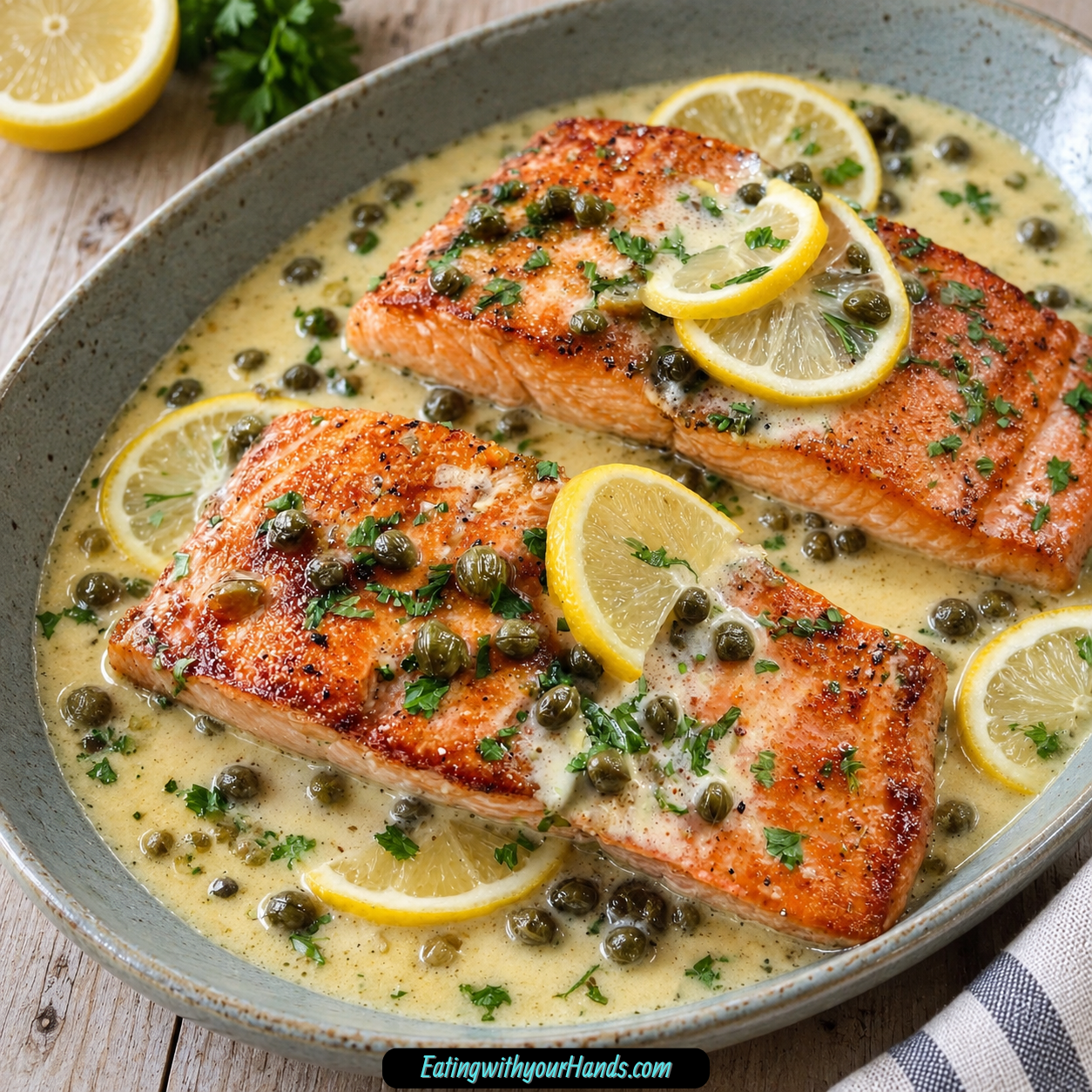
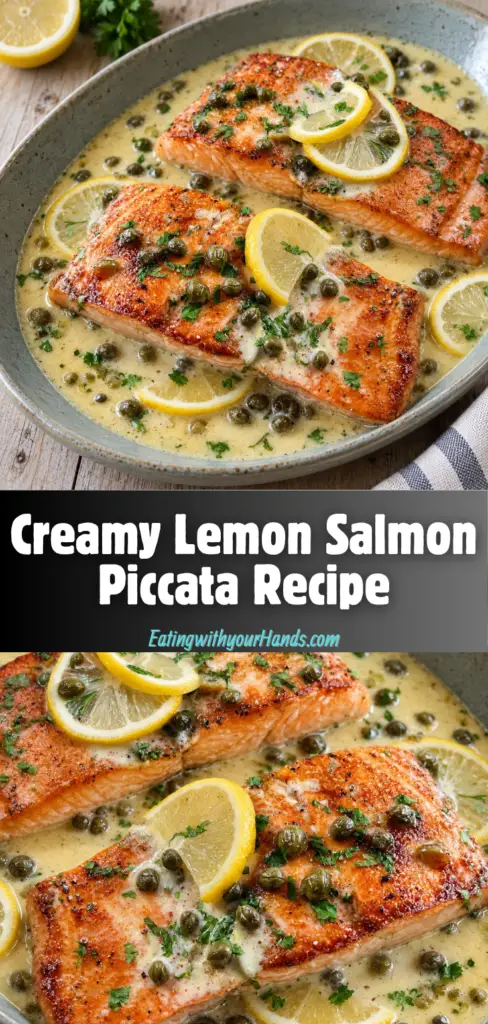
Creamy Lemon Salmon Piccata Recipe is the kind of dinner that makes an ordinary weeknight feel just a little more graceful. It has tender salmon, a silky lemon cream sauce, briny capers, garlic, white wine, chicken broth, and a bright finish that tastes special without taking hours to make.
This is one of those meals that feels restaurant-worthy but still belongs in a home kitchen. It comes together in under 30 minutes, which makes it perfect for the nights when you want something elegant but do not want a sink full of dishes or a long evening at the stove.
The salmon is seasoned simply with salt and pepper, then optionally dredged in flour for a light golden crust. That first sear gives the fillets color, texture, and a beautiful base for the creamy lemon piccata sauce.
The sauce is where the dish becomes memorable. Butter melts into the same skillet, garlic blooms quickly, white wine loosens the browned bits, chicken broth adds savory depth, cornstarch gives the sauce body, and cream turns everything smooth and luxurious.
Fresh lemon juice brings the brightness that makes piccata so inviting. Capers add little salty pops that cut through the richness and keep each bite lively.
The finished dish feels balanced. The cream is rich, the lemon is tangy, the capers are briny, and the salmon stays tender when it is returned gently to the sauce.
This Creamy Lemon Salmon Piccata Recipe can be dressed up or kept casual. Serve it over angel hair pasta or creamy mashed potatoes for a cozy dinner, or plate it with roasted asparagus or a simple arugula salad for something lighter.
It is also a practical recipe for leftovers when handled gently. The sauce can taste even more flavorful after resting, and a splash of broth helps loosen it when reheating.
Table of Contents
- Why You’ll Love This Creamy Lemon Salmon Piccata Recipe
- Recipe Details
- Ingredients
- For the Salmon
- For the Creamy Lemon Piccata Sauce
- For Garnish
- Optional Swaps and Serving Ideas
- Ingredient Notes
- Optional Swaps, Variations, Add-Ins, and Serving Ideas
- Classic Creamy Lemon Salmon Piccata
- No-Wine Salmon Piccata
- Heavy Cream Salmon Piccata
- Dairy-Free Salmon Piccata
- Gluten-Free Salmon Piccata
- Chicken Piccata Version
- Spinach Salmon Piccata
- Mushroom Salmon Piccata
- Dill Salmon Piccata
- Basil Salmon Piccata
- Extra Lemon Piccata
- Spicy Lemon Salmon
- Angel Hair Pasta Serving
- Mashed Potato Serving
- Rice Serving
- Roasted Asparagus Serving
- Arugula Salad Serving
- Crusty Bread Serving
- Why This Recipe Works
- Directions
- Step 1: Dry the Salmon
- Step 2: Season the Fillets
- Step 3: Decide Whether to Use Flour
- Step 4: Heat the Skillet
- Step 5: Sear the Salmon
- Step 6: Rest the Salmon
- Step 7: Keep the Same Skillet
- Step 8: Melt the Butter
- Step 9: Sauté the Garlic
- Step 10: Add the White Wine
- Step 11: Add the Chicken Broth
- Step 12: Thicken with Cornstarch
- Step 13: Add the Cream Gently
- Step 14: Add Lemon and Capers
- Step 15: Return the Salmon
- Step 16: Adjust the Sauce
- Step 17: Garnish the Skillet
- Step 18: Serve Warm
- Serving Ideas
- Storage
- Freezing
- Make-Ahead
- Helpful Notes for Best Results
- Variations
- Classic Creamy Lemon Salmon Piccata
- No-Wine Creamy Salmon Piccata
- Heavy Cream Salmon Piccata
- Reduced-Fat Cream Salmon Piccata
- Dairy-Free Coconut Salmon Piccata
- Chicken Piccata Variation
- Spinach Salmon Piccata
- Mushroom Salmon Piccata
- Dill Salmon Piccata
- Basil Salmon Piccata
- Extra Lemon Salmon Piccata
- Spicy Salmon Piccata
- Pasta Salmon Piccata
- Mashed Potato Salmon Piccata
- Rice Salmon Piccata
- Light Vegetable Plate
- Troubleshooting
- Frequently Asked Questions
- Why This Recipe Works So Well
- Final Thoughts
- Creamy Lemon Salmon Piccata
Why You’ll Love This Creamy Lemon Salmon Piccata Recipe
This dish tastes like something you would order at a cozy Italian-style dinner spot. The creamy lemon-caper sauce and golden salmon make it feel special without complicated steps.
It comes together in under 30 minutes. That makes it an excellent choice for busy weeknights when you want a nicer dinner fast.
The flavor is beautifully balanced. Lemon cuts through the cream, while capers add salty brightness.
It can feel fancy or casual depending on how you serve it. Pasta, rice, mashed potatoes, asparagus, salad, and crusty bread all work with the sauce.
The ingredients are simple and approachable. Aside from salmon and fresh lemon, many of the sauce ingredients are pantry or refrigerator staples.
Leftovers can be delicious when reheated gently. A little broth helps keep the sauce smooth and the salmon tender.
Recipe Details
This Creamy Lemon Salmon Piccata Recipe takes under 30 minutes. The salmon cooks quickly, and the sauce is made in the same skillet.
The recipe uses 4 skinless salmon fillets. Each fillet should be about 170g, or 6 oz.
The salmon is seasoned with salt and pepper to taste. It can also be lightly dredged in ¼ cup flour for a golden crust.
The flour is optional. Gluten-free flour can be used if needed.
The salmon is cooked in 1 tablespoon olive oil over medium-high heat. It cooks for 3 to 4 minutes per side until just opaque and slightly firm to the touch.
After searing, the salmon is transferred to a plate and loosely covered with foil. It will return to the sauce later.
The sauce starts in the same skillet. The browned bits left from the salmon add flavor.
The sauce uses 2 tablespoons unsalted butter, 4 medium minced garlic cloves, ⅓ cup dry white wine, 1 cup low-sodium chicken stock or broth, 1 to 2 teaspoons cornstarch, 3 to 4 tablespoons fresh lemon juice, 4 tablespoons rinsed and drained capers, and ½ cup reduced-fat cream.
Heavy cream can be used for a richer version. Chicken broth can replace the white wine if preferred.
The cornstarch is mixed with 1 tablespoon cold water until smooth before it is whisked into the sauce. This helps the sauce thicken to a velvety texture.
The cream should be added over low heat. The sauce should not boil hard after the cream goes in.
The salmon returns to the skillet and warms gently for 2 to 3 minutes. The sauce is spooned over the fillets before serving.
The garnish includes 2 to 4 tablespoons coarsely chopped parsley and lemon slices. Fresh parsley is ideal, though dried parsley can work in a pinch.
Ingredients
For the Salmon
- 4 skinless salmon fillets, 170g or 6 oz each
- Salt and pepper, to taste
- ¼ cup flour, optional
- 1 tablespoon olive oil
For the Creamy Lemon Piccata Sauce
- 2 tablespoons unsalted butter
- 4 medium garlic cloves, minced
- ⅓ cup dry white wine
- 1 cup low-sodium chicken stock or broth
- 1-2 teaspoons cornstarch
- 3-4 tablespoons fresh lemon juice
- 4 tablespoons capers, rinsed and drained
- ½ cup reduced-fat cream
For Garnish
- 2-4 tablespoons coarsely chopped parsley
- Lemon slices
Optional Swaps and Serving Ideas
- Gluten-free flour
- Chicken broth instead of white wine
- Heavy cream
- Full-fat coconut milk
- Baby spinach
- Mushrooms
- Fresh dill
- Fresh basil
- Lemon zest
- Red pepper flakes
- Angel hair pasta
- Creamy mashed potatoes
- Rice
- Roasted asparagus
- Arugula salad
- Crusty bread
Ingredient Notes
Skinless salmon fillets work best for this creamy piccata-style dish. The sauce is the focus, so skinless fillets make serving smooth and easy.
Salt and pepper season the salmon simply. Salmon can handle good seasoning, so make sure both sides get flavor.
Flour is optional, but it gives the salmon a nice golden crust. Gluten-free flour can also work if needed.
Olive oil helps sear the salmon. It gives the fillets color before the sauce is made.
Unsalted butter starts the sauce. Salted butter can work in a pinch, but use less added salt if you choose it.
Fresh minced garlic gives the sauce a strong aromatic base. Jarred garlic is not ideal here because the sauce is delicate and quick.
Dry white wine adds flavor and helps lift the browned bits from the skillet. Pinot Grigio or Sauvignon Blanc are good options, while chicken broth can be used instead.
Low-sodium chicken stock or broth gives the sauce savory body. Fat-free broth can be used if you want more control over the richness.
Cornstarch thickens the sauce. Mix it with cold water before adding so it blends smoothly.
Fresh lemon juice gives the sauce its bright piccata flavor. Start with 3 tablespoons, then add more to taste.
Capers are important for the piccata character. Rinse and drain them so they bring briny flavor without too much sharpness.
Reduced-fat cream makes the sauce creamy without feeling overly heavy. Heavy cream can be used for a richer version.
Parsley adds freshness at the end. Lemon slices make the finished skillet look bright and polished.
Optional Swaps, Variations, Add-Ins, and Serving Ideas
Classic Creamy Lemon Salmon Piccata
Make the dish with salmon, salt, pepper, optional flour, olive oil, butter, garlic, white wine, chicken broth, cornstarch, lemon juice, capers, cream, parsley, and lemon slices. This gives the recipe its bright, creamy, savory flavor.
Serve the salmon warm with sauce spooned over each fillet. This is the main version with the best balance of lemon, cream, and capers.
No-Wine Salmon Piccata
Use chicken broth instead of white wine. Add a splash of white wine vinegar or lemon juice if you want a brighter flavor.
The sauce will taste slightly different but still delicious. This is a helpful option when you prefer not to cook with wine.
Heavy Cream Salmon Piccata
Use heavy cream instead of reduced-fat cream. This creates a richer and more indulgent sauce.
Keep the heat low after adding the cream. Do not let the sauce boil hard.
Dairy-Free Salmon Piccata
Use full-fat coconut milk instead of cream. Choose the kind from a can, not the carton.
It adds a subtle tropical note that works with lemon. Keep the heat gentle so the sauce stays smooth.
Gluten-Free Salmon Piccata
Use gluten-free flour for dredging the salmon. You can also skip the flour completely.
The sauce can still be thickened with cornstarch. Check other ingredients as needed for your gluten-free needs.
Chicken Piccata Version
Swap the salmon for boneless, skinless chicken breasts. Pound them to even thickness first.
Cook the chicken for 5 to 6 minutes per side, then proceed with the sauce as written. You get the same lemony sauce with a different protein.
Spinach Salmon Piccata
Add a couple handfuls of baby spinach right before returning the salmon to the skillet. The spinach wilts into the sauce.
This adds color and a little freshness. It also makes the dish feel more complete.
Mushroom Salmon Piccata
Sauté mushrooms with the garlic. They add an earthy flavor to the sauce.
This variation makes the dish a little heartier. It works well with mashed potatoes or pasta.
Dill Salmon Piccata
Use fresh dill instead of parsley. Dill gives the dish a different fresh herb flavor.
It pairs well with salmon and lemon. Add it at the end so the flavor stays fresh.
Basil Salmon Piccata
Use fresh basil as another herb option. It brings a sweet, fresh note to the creamy sauce.
Skip dried herbs for this delicate sauce. Fresh herbs work best here.
Extra Lemon Piccata
Add 1 teaspoon lemon zest to the sauce. This gives the dish an extra citrus punch.
You can also use the full 4 tablespoons lemon juice if you like a more puckery sauce. Taste before adding more.
Spicy Lemon Salmon
Add a pinch of red pepper flakes. This gives the sauce a little kick.
Use a small amount so the heat does not overpower the lemon and capers. It should add warmth, not take over.
Angel Hair Pasta Serving
Serve the salmon and sauce over angel hair pasta. The thin pasta catches the creamy lemon sauce beautifully.
This makes the dish feel like a date-night dinner. Spoon extra sauce over the top.
Mashed Potato Serving
Serve the salmon over creamy mashed potatoes. The potatoes soak up the lemon Parmesan-style creaminess of the sauce.
This is a cozy, comforting option. It makes the meal feel hearty.
Rice Serving
Serve the salmon with rice for a simple weeknight dinner. Rice absorbs the sauce well.
This is a practical option when you want something easy. Add parsley and lemon slices before serving.
Roasted Asparagus Serving
Pair the salmon with roasted asparagus for a lighter meal. The vegetable works well with lemon.
This keeps the plate fresh and bright. Spoon a little sauce over everything if desired.
Arugula Salad Serving
Serve the salmon with a simple arugula salad. The greens balance the creamy sauce.
This makes the dinner feel lighter. It is a good choice when you want a fresh side.
Crusty Bread Serving
Serve with crusty bread for mopping up the sauce. The sauce is too good to leave behind.
This is a simple but satisfying side. It makes the meal feel relaxed and cozy.
Why This Recipe Works
Creamy Lemon Salmon Piccata works because it balances richness, brightness, and briny flavor. The salmon gives the dish a tender base, while the sauce brings everything together.
Patting the salmon dry helps it sear instead of steam. This creates a better surface and a prettier golden color.
The optional flour gives the salmon a light crust. It also helps the exterior brown nicely.
Using the same skillet for the sauce keeps the flavor. The browned bits from the salmon become part of the sauce.
Garlic cooks quickly in butter, giving the sauce aroma. White wine loosens the browned bits and adds flavor.
Chicken broth gives the sauce savory depth. Cornstarch thickens it without making it heavy.
Cream makes the sauce smooth and rich. Lemon juice keeps it bright, while capers add salty little bursts.
Returning the salmon gently prevents overcooking. Low heat keeps the sauce from splitting and helps the salmon stay tender.
Directions
Step 1: Dry the Salmon
Pat the 4 skinless salmon fillets very dry with paper towels. Removing surface moisture helps the salmon sear instead of steam.
This step may seem small, but it makes a big difference. Dry salmon develops better color in the skillet.
Step 2: Season the Fillets
Season both sides of the salmon with salt and pepper to taste. Be generous enough for the flavor to reach the fish.
Simple seasoning works well because the sauce has lemon, garlic, capers, wine, broth, and cream. The salmon should taste good before the sauce is added.
Step 3: Decide Whether to Use Flour
If you want a light golden crust, dredge the salmon lightly in ¼ cup flour. Shake off any excess.
The flour is optional. You can skip it for a lighter version, or use gluten-free flour if needed.
Step 4: Heat the Skillet
Place a large skillet over medium-high heat and add 1 tablespoon olive oil. Let the oil heat until it shimmers.
A properly heated skillet helps the salmon sear. If the oil is not hot enough, the salmon may steam instead of browning.
Step 5: Sear the Salmon
Add the salmon fillets to the hot skillet. Cook for 3 to 4 minutes per side.
The salmon should be just opaque and slightly firm to the touch. Do not overcook it, because it will warm again in the sauce later.
Step 6: Rest the Salmon
Transfer the salmon to a plate. Cover it loosely with foil.
This keeps the fillets warm while you make the sauce. The salmon should not be sealed tightly or it may steam too much.
Step 7: Keep the Same Skillet
Do not wash the skillet. The browned bits left behind are full of flavor.
Those bits help build the sauce. They are one reason the dish tastes richer than the short cooking time suggests.
Step 8: Melt the Butter
Reduce the heat to medium and add 2 tablespoons unsalted butter to the skillet. Let it melt until it just begins to foam.
Keep the heat controlled. The butter should melt gently and create the base for the garlic.
Step 9: Sauté the Garlic
Add 4 medium minced garlic cloves to the melted butter. Sauté for about 30 seconds, just until fragrant.
Do not let the garlic brown too much. Burnt garlic can make the sauce taste bitter.
Step 10: Add the White Wine
Pour in ⅓ cup dry white wine. It may sizzle as it hits the pan.
Use a wooden spoon to scrape up the browned bits from the bottom of the skillet. Let the wine simmer for about 2 minutes.
Step 11: Add the Chicken Broth
Whisk in 1 cup low-sodium chicken stock or broth. Bring the sauce to a gentle bubble.
The broth gives the sauce savory flavor. It also creates the liquid base for the lemon cream sauce.
Step 12: Thicken with Cornstarch
Mix 1 to 2 teaspoons cornstarch with 1 tablespoon cold water until smooth. Whisk this mixture into the sauce.
Let the sauce simmer for about 2 more minutes. It should thicken enough to coat the back of a spoon.
Step 13: Add the Cream Gently
Reduce the heat to low and stir in ½ cup reduced-fat cream. Keep the sauce gentle.
Do not let the sauce boil hard after the cream is added. Gentle heat helps prevent separating or graininess.
Step 14: Add Lemon and Capers
Stir in 3 tablespoons fresh lemon juice and 4 tablespoons rinsed and drained capers. Taste the sauce.
Add up to 1 more tablespoon lemon juice if you want it brighter. The capers give the sauce its briny piccata flavor.
Step 15: Return the Salmon
Nestle the salmon fillets back into the skillet. Spoon the sauce over each piece.
Let the salmon warm through over low heat for 2 to 3 minutes. Keep the heat low so the fish stays tender and the sauce stays creamy.
Step 16: Adjust the Sauce
Taste the sauce and adjust as needed. Add salt if it needs more seasoning, more lemon for brightness, or a splash of broth if it is too thick.
If the sauce seems too thin, mix another ½ teaspoon cornstarch with cold water and whisk it in. Let it gently thicken.
Step 17: Garnish the Skillet
Sprinkle 2 to 4 tablespoons coarsely chopped parsley over the salmon. Add lemon slices for a bright finish.
Fresh parsley is ideal, though dried parsley can work in a pinch. The garnish makes the dish look fresh and ready to serve.
Step 18: Serve Warm
Serve the salmon warm with plenty of creamy lemon caper sauce. Spoon extra sauce over each fillet.
Pair with angel hair pasta, creamy mashed potatoes, rice, roasted asparagus, arugula salad, or crusty bread. Serve right away for the best texture.
Serving Ideas
Creamy Lemon Salmon Piccata is wonderful over angel hair pasta. The thin strands catch the silky sauce and make the meal feel elegant.
Creamy mashed potatoes are another cozy option. They soak up the lemon-caper sauce and make the plate feel rich and comforting.
Rice works well for a simple weeknight dinner. It keeps the meal easy and lets the sauce shine.
For a lighter option, serve the salmon with roasted asparagus. The lemon sauce and asparagus make a bright pairing.
A simple arugula salad also fits the dish beautifully. It adds freshness beside the creamy sauce.
Crusty bread belongs on the table if you love every drop of sauce. It is perfect for mopping up the skillet.
This dish can feel like date-night dinner or a Tuesday night meal. The serving style decides how fancy it feels.
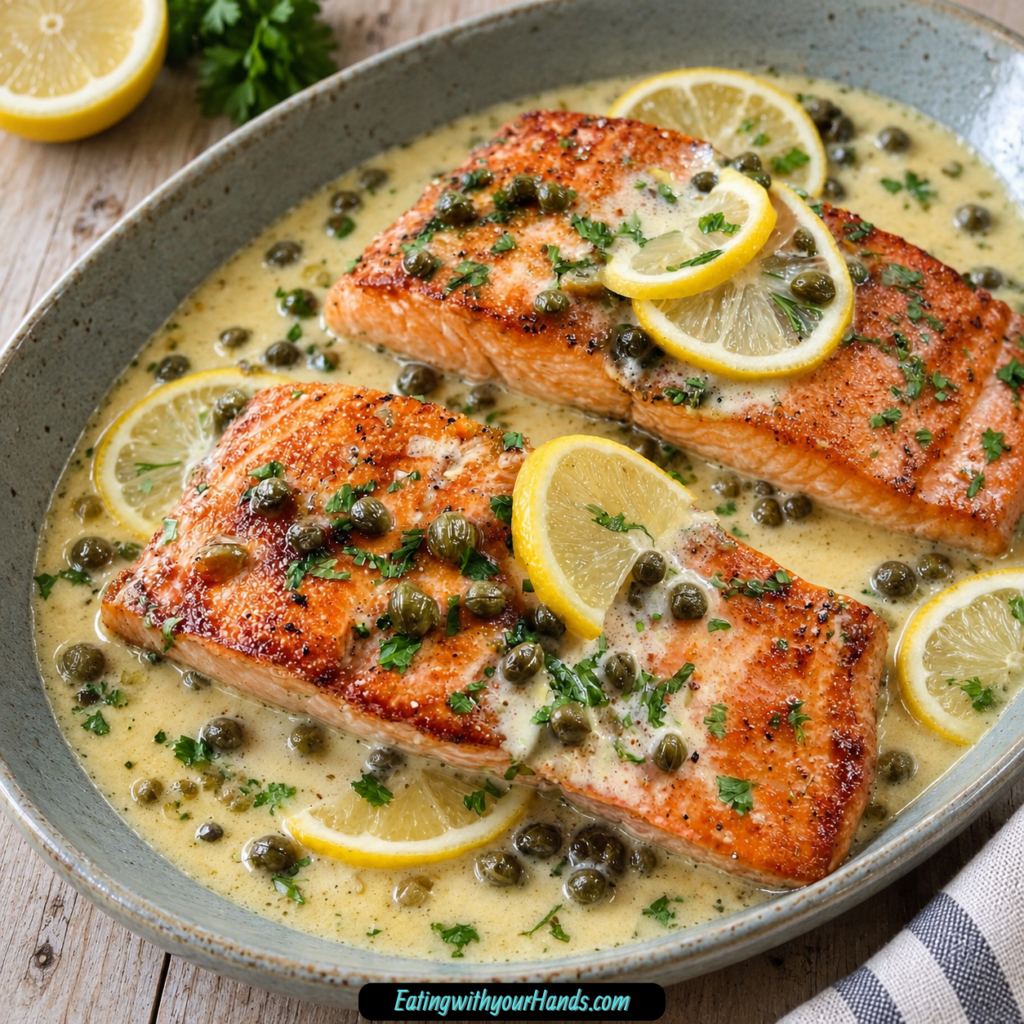
Finish each plate with parsley and lemon slices if desired. The garnish makes the salmon look fresh and inviting.
Storage
Store leftovers in an airtight container in the refrigerator for up to 3 days. Let the salmon cool before sealing it.
The sauce can become more flavorful overnight. The capers and lemon continue to season the cream sauce as it rests.
Reheat gently in a skillet over low heat. Add a splash of broth to loosen the sauce if needed.
Avoid high heat when reheating. Cream sauces can separate if boiled hard.
The microwave can work in a pinch. Use 30-second bursts and stir between each one.
Be gentle so the salmon does not dry out. Add a little broth if the sauce seems too thick.
Capers can soften over time. Add a few fresh ones during reheating if you want a brighter briny bite.
Freezing
This dish is best enjoyed fresh or refrigerated for short-term leftovers. The cream sauce is delicate and should be reheated gently.
If storing leftovers, refrigeration for up to 3 days is the main storage method. Reheat with a splash of broth over low heat.
Because the salmon and sauce are both tender, gentle handling matters. Avoid boiling the sauce after storage.
If you need to prepare ahead, cook the salmon and sauce separately. Then combine gently when reheating.
The sauce may improve after a short rest. Add broth as needed to bring it back to a smooth texture.
Make-Ahead
Creamy Lemon Salmon Piccata can be made ahead for company. Cook the salmon and sauce separately, then combine gently when reheating.
The sauce can rest for about 30 minutes and may become even more flavorful. Add a splash of broth when warming it again.
Reheat over low heat so the cream stays smooth. Do not let the sauce boil hard.
Add the salmon back only long enough to warm through. This keeps it tender.
Finish with parsley, lemon slices, and any extra capers close to serving. This keeps the dish bright and fresh.
Helpful Notes for Best Results
Start with 3 tablespoons fresh lemon juice, then taste after the sauce comes together. Add the fourth tablespoon only if you want more brightness.
The sauce mellows as it cooks. A little lemon zest can add more citrus flavor without needing much extra juice.
Do not overcook the salmon. Take it out when it is just opaque, because it will keep cooking slightly when returned to the sauce.
If the salmon flakes apart easily when poked, it may be overdone. The sauce will still help keep the dish delicious.
Keep the heat low after adding cream. This helps prevent the sauce from separating.
If the sauce separates, remove it from the heat immediately. Whisk in a teaspoon of cold butter or cream to help bring it back together.
If the sauce is too thin, mix another ½ teaspoon cornstarch with cold water and whisk it in. If it is too thick, loosen it with broth or water.
Cooking this dish is about tasting and adjusting. Lemon, salt, broth, and thickness can all be fine-tuned before serving.
Variations
Classic Creamy Lemon Salmon Piccata
Use salmon, optional flour, olive oil, butter, garlic, white wine, chicken broth, cornstarch, lemon juice, capers, cream, parsley, and lemon slices. This gives the dish its signature creamy lemon-caper flavor.
Serve it warm with extra sauce spooned over the top. This is the main restaurant-style version.
No-Wine Creamy Salmon Piccata
Replace the white wine with chicken broth. Add a splash of white wine vinegar or lemon juice if you want more brightness.
This version keeps the sauce flavorful without wine. The final taste will be slightly different.
Heavy Cream Salmon Piccata
Use heavy cream instead of reduced-fat cream. This makes the sauce richer and more indulgent.
Keep the heat gentle after adding the cream. Do not boil hard.
Reduced-Fat Cream Salmon Piccata
Use reduced-fat cream for a lighter sauce. It keeps the dish creamy without making it too heavy.
Be careful with heat. Reduced-fat cream can become grainy if boiled hard.
Dairy-Free Coconut Salmon Piccata
Use full-fat canned coconut milk instead of cream. This creates a dairy-free version with a subtle tropical note.
Do not let it boil hard. Gentle heat keeps the sauce smooth.
Chicken Piccata Variation
Use boneless, skinless chicken breasts instead of salmon. Pound them to even thickness first.
Cook them for 5 to 6 minutes per side, then make the sauce as written. This keeps the lemon-caper flavor with a different protein.
Spinach Salmon Piccata
Add a couple handfuls of baby spinach before returning the salmon to the skillet. Let it wilt into the sauce.
This adds color and freshness. It also makes the dish feel more complete.
Mushroom Salmon Piccata
Sauté mushrooms with the garlic. They add flavor and texture to the sauce.
This variation is hearty and savory. It works especially well with pasta or mashed potatoes.
Dill Salmon Piccata
Use fresh dill instead of parsley. Dill brings a fresh herb flavor that pairs well with salmon.
Add it at the end. Fresh herbs keep the sauce bright.
Basil Salmon Piccata
Use fresh basil in place of parsley. Basil gives the dish a softer herb flavor.
Avoid dried herbs in this delicate sauce. Fresh herbs taste better here.
Extra Lemon Salmon Piccata
Add 1 teaspoon lemon zest for a stronger citrus punch. This gives the sauce more lemon aroma.
You can also use the full 4 tablespoons lemon juice. Taste as you go.
Spicy Salmon Piccata
Add a pinch of red pepper flakes. This gives the creamy sauce a little heat.
Keep the spice balanced. The lemon and capers should still shine.
Pasta Salmon Piccata
Serve the salmon over angel hair pasta. The pasta catches the sauce and makes the meal feel elegant.
Spoon extra sauce over the pasta before adding the salmon. Garnish with parsley.
Mashed Potato Salmon Piccata
Serve the salmon over creamy mashed potatoes. The potatoes soak up the sauce beautifully.
This is a comforting, cozy way to enjoy the dish. Add lemon slices before serving.
Rice Salmon Piccata
Serve over rice for an easy dinner. Rice absorbs the creamy lemon sauce well.
This makes the meal simple and satisfying. Add a few capers over the top for extra brightness.
Light Vegetable Plate
Serve the salmon with roasted asparagus or a simple arugula salad. This keeps the meal fresh and lighter.
The creamy sauce still makes the plate feel satisfying. Add crusty bread if desired.
Troubleshooting
The Salmon Is Steaming Instead of Searing
The salmon may not have been dried well enough. Pat the fillets very dry with paper towels before seasoning.
The skillet also needs to be hot. Heat the oil until it shimmers before adding the fish.
The Salmon Is Overcooked
The salmon may have stayed in the pan too long. Cook it for 3 to 4 minutes per side until just opaque and slightly firm.
Remember that it warms again in the sauce. Remove it before it becomes dry.
The Salmon Fell Apart
The fillets may have been handled too much or cooked too long. Turn them only once if possible.
Even if a fillet breaks, it will still taste good with the sauce. Spoon the sauce over gently.
The Garlic Burned
The heat may have been too high, or the garlic cooked too long. Garlic only needs about 30 seconds.
Burnt garlic can taste bitter. Add the wine before it browns too much.
The Sauce Is Too Thin
Mix another ½ teaspoon cornstarch with cold water and whisk it into the sauce. Let it simmer gently until thicker.
Do not add dry cornstarch directly to the sauce. A smooth slurry blends better.
The Sauce Is Too Thick
Add a splash of broth or water. Whisk gently until the sauce loosens.
Add liquid slowly. The sauce should coat the back of a spoon but still be pourable.
The Sauce Split
The cream may have boiled too hard. Remove the pan from the heat immediately.
Whisk in a teaspoon of cold butter or cream. Keep the heat low when warming it again.
The Sauce Tastes Too Tart
Use less lemon juice next time, starting with 3 tablespoons. You can always add more at the end.
A splash of broth or cream can soften the tartness. Taste before serving.
The Sauce Needs More Brightness
Add more lemon juice or 1 teaspoon lemon zest. This gives the sauce extra citrus flavor.
Capers also help brighten the dish. Add a few more when serving if desired.
The Leftovers Seem Dry
Reheat gently with a splash of broth. Use low heat and avoid boiling.
The salmon should be warmed carefully. This keeps it tender.
Frequently Asked Questions
Can I use frozen salmon?
Yes, frozen salmon can be used. Thaw it completely in the refrigerator overnight.
Pat it extra dry before cooking to remove excess moisture. Frozen fillets may cook slightly faster, so keep an eye on them.
What can I use instead of white wine?
Use an equal amount of chicken broth if you do not want to use white wine. Add a splash of white wine vinegar or lemon juice for brightness.
Non-alcoholic wine can also work if you have it. The flavor will be slightly different but still delicious.
How do I prevent the sauce from splitting?
Keep the heat low when adding the cream. Do not let the sauce boil hard.
If the sauce starts looking grainy, remove it from the heat and whisk in a cold pat of butter. This can help bring it back together.
Can I make this ahead for company?
Yes, cook the salmon and sauce separately. Then combine them gently when reheating.
The sauce can improve after about 30 minutes of resting. Add a splash of broth when rewarming.
Can I use chicken instead of salmon?
Yes, boneless, skinless chicken breasts can be used. Pound them to even thickness first.
Cook for 5 to 6 minutes per side. Then make the sauce as written.
Is the flour required?
No, the flour is optional. It gives the salmon a nice golden crust, but the recipe still works without it.
Gluten-free flour can be used if needed. Lightly dredge and shake off excess.
What should I serve with Creamy Lemon Salmon Piccata?
Serve it over angel hair pasta, creamy mashed potatoes, or rice. These options catch the sauce well.
For a lighter plate, serve with roasted asparagus or arugula salad. Crusty bread is great for soaking up the sauce.
How long do leftovers last?
Leftovers keep in an airtight container in the refrigerator for up to 3 days. Reheat gently.
Use low heat and add a splash of broth if the sauce is too thick. Avoid overheating the salmon.
Why This Recipe Works So Well
Creamy Lemon Salmon Piccata works so well because it delivers bright, rich, savory flavor quickly. It feels elegant, but the method is simple and practical.
The salmon cooks fast, which keeps the meal under 30 minutes. Patting it dry and seasoning it well gives it a better sear.
The optional flour helps create a golden crust. It gives the salmon a slightly more polished texture.
The sauce is made in the same skillet, so none of the flavor is lost. The browned bits from the salmon become part of the sauce.
Butter and garlic create the first layer of flavor. White wine adds depth and helps lift the browned bits from the pan.
Chicken broth builds the savory body of the sauce. Cornstarch thickens it into a smooth, velvety texture.
Cream gives richness. Lemon juice brings brightness, and capers add briny contrast.
Keeping the heat low after adding cream protects the sauce. It stays smooth and luxurious instead of separating.
The salmon returns only briefly. This warms it through without drying it out.
The recipe is flexible too. Chicken broth, white wine vinegar, lemon juice, non-alcoholic wine, heavy cream, reduced-fat cream, coconut milk, spinach, mushrooms, dill, basil, lemon zest, red pepper flakes, pasta, mashed potatoes, rice, asparagus, salad, and bread all give the dish different ways to fit your table.
Most of all, this dish works because it turns a regular evening into something that feels cared for. It is creamy, lemony, briny, tender, quick, and beautiful enough to make dinner feel like a small celebration.
Final Thoughts
Creamy Lemon Salmon Piccata Recipe is a quick skillet dinner made with skinless salmon fillets, salt, pepper, optional flour, olive oil, butter, garlic, dry white wine, low-sodium chicken stock or broth, cornstarch, fresh lemon juice, capers, reduced-fat cream, parsley, and lemon slices. The salmon is seared until just opaque, the sauce is built in the same skillet, and the fillets are gently warmed in the creamy lemon-caper sauce before serving.
Serve it over angel hair pasta, creamy mashed potatoes, rice, roasted asparagus, arugula salad, or with crusty bread for soaking up the sauce. With its under-30-minute timing, bright lemon flavor, creamy sauce, briny capers, simple skillet method, leftover-friendly storage, and flexible variations, this salmon piccata is the kind of dinner that feels fancy without the fuss.
Creamy Lemon Salmon Piccata
Bright, creamy, buttery, and full of lemon-caper flavor, this Creamy Lemon Salmon Piccata brings together skinless salmon fillets, garlic, white wine, chicken stock, fresh lemon juice, capers, cream, and parsley. The result is a rich but lively dinner with tender salmon and a silky Italian-style sauce that feels elegant while still staying simple.
Recipe Details
- Course: Dinner
- Cuisine: Italian
- Servings: 4 servings
Ingredients
For Garnish
- Lemon slices to serve
- 2-4 tablespoons coarsely chopped parsley to serve
For the Sauce
- ½ cup reduced fat cream or heavy cream
- 4 tablespoons capers rinsed and drained
- 3-4 tablespoons fresh lemon juice adjust to your tastes
- 1-2 teaspoon cornstarch or corn flour
- 1 cup low-sodium chicken stock/broth fat free if you can find it
- ⅓ cup dry white wine
- 4 medium garlic cloves minced
- 1 tablespoon olive oil
- 2 tablespoons unsalted butter
For the Salmon
- ¼ cup flour OPTIONAL
- to taste Salt and pepper
- 4 170g | 6 oz skinless salmon fillets
Instructions
Step 1: Prepare the Salmon
Pat the skinless salmon fillets dry before cooking. Season the salmon with salt and pepper to taste.
If using the optional flour, lightly coat the salmon fillets with it. Keep the coating thin so the salmon can brown while still staying delicate.
Step 2: Start the Pan Base
Warm the olive oil and unsalted butter in a pan over heat. Let the butter melt into the oil before adding the salmon.
This creates the rich base for the fish and gives the sauce a buttery start. Once the fat is hot enough for cooking, place the salmon in the pan.
Step 3: Cook the Salmon
Cook the salmon until the outside is lightly browned and the fillets are cooked through. Turn carefully so the pieces stay intact.
Once the salmon is done, move it out of the pan and keep it nearby. The pan will still hold flavor from the butter, oil, and salmon.
Step 4: Add the Garlic
Add the minced garlic to the same pan. Stir it into the buttery base until fragrant.
Keep the garlic moving so it blends into the pan without burning. This step gives the sauce its savory foundation.
Step 5: Build the Lemon Piccata Sauce
Pour in the dry white wine, then add the low-sodium chicken stock/broth. Stir the liquid through the pan so it picks up the flavor from the garlic and butter.
Add the fresh lemon juice and rinsed, drained capers. Use 3-4 tablespoons lemon juice, adjusting to your tastes as written.
Step 6: Thicken the Sauce
Add the cornstarch or corn flour to help the sauce thicken. Use 1-2 teaspoon, depending on how much body you want in the sauce.
Stir until the sauce becomes smooth and slightly thickened. The sauce should still be creamy enough to spoon over the salmon.
Step 7: Add the Cream
Stir in the reduced fat cream or heavy cream. Let it blend into the lemon, caper, wine, garlic, and broth mixture.
The sauce should turn creamy while keeping its bright lemon flavor. Taste and adjust with salt and pepper only as needed.
Step 8: Return the Salmon
Place the cooked salmon back into the pan with the creamy lemon sauce. Spoon the sauce over the fillets so each piece is coated.
Let the salmon sit in the sauce briefly so the flavors come together. Keep the fillets gentle and avoid breaking them apart.
Step 9: Garnish and Serve
Serve the salmon with the creamy lemon caper sauce spooned over the top. Finish with coarsely chopped parsley and lemon slices.
Serving Suggestions
Serve this Creamy Lemon Salmon Piccata warm, with plenty of the sauce spooned over each salmon fillet. The creamy sauce, fresh lemon juice, capers, garlic, butter, wine, and chicken stock create a rich dinner with a bright finish.
Use the parsley and lemon slices as the final garnish. The parsley adds a fresh look, while the lemon slices keep the dish visually connected to the lemon flavor in the sauce.
This dish is written as a dinner for 4 servings. Each serving can include one 170g | 6 oz salmon fillet with a generous spoonful of the creamy piccata sauce.
Storage
How to Store
The recipe does not provide specific storage instructions or storage duration, so no exact storage time is added here.
Salmon Tip
Season the salmon with salt and pepper to taste before cooking. If using the optional flour, coat the fillets lightly rather than heavily.
Sauce Tip
Use the fresh lemon juice amount according to your taste, as written. The recipe lists 3-4 tablespoons fresh lemon juice, so the brightness can be adjusted within that range.
Cream Tip
Use reduced fat cream or heavy cream. Either option is listed for the sauce.
Thickening Tip
Use 1-2 teaspoon cornstarch or corn flour to help thicken the sauce. Stir well so it blends smoothly into the liquid.
Garnish Tip
Finish with 2-4 tablespoons coarsely chopped parsley and lemon slices to serve. Add them at the end so the dish looks fresh when served.

Fernando is the creator and writer behind the food blog Eating with your Hands. Living and working in cities like Paris, Barcelona, and Berlin, and being married to a Canadian foodie, has given Fernando a passion and interest in food and inspired him to run EWYH.