
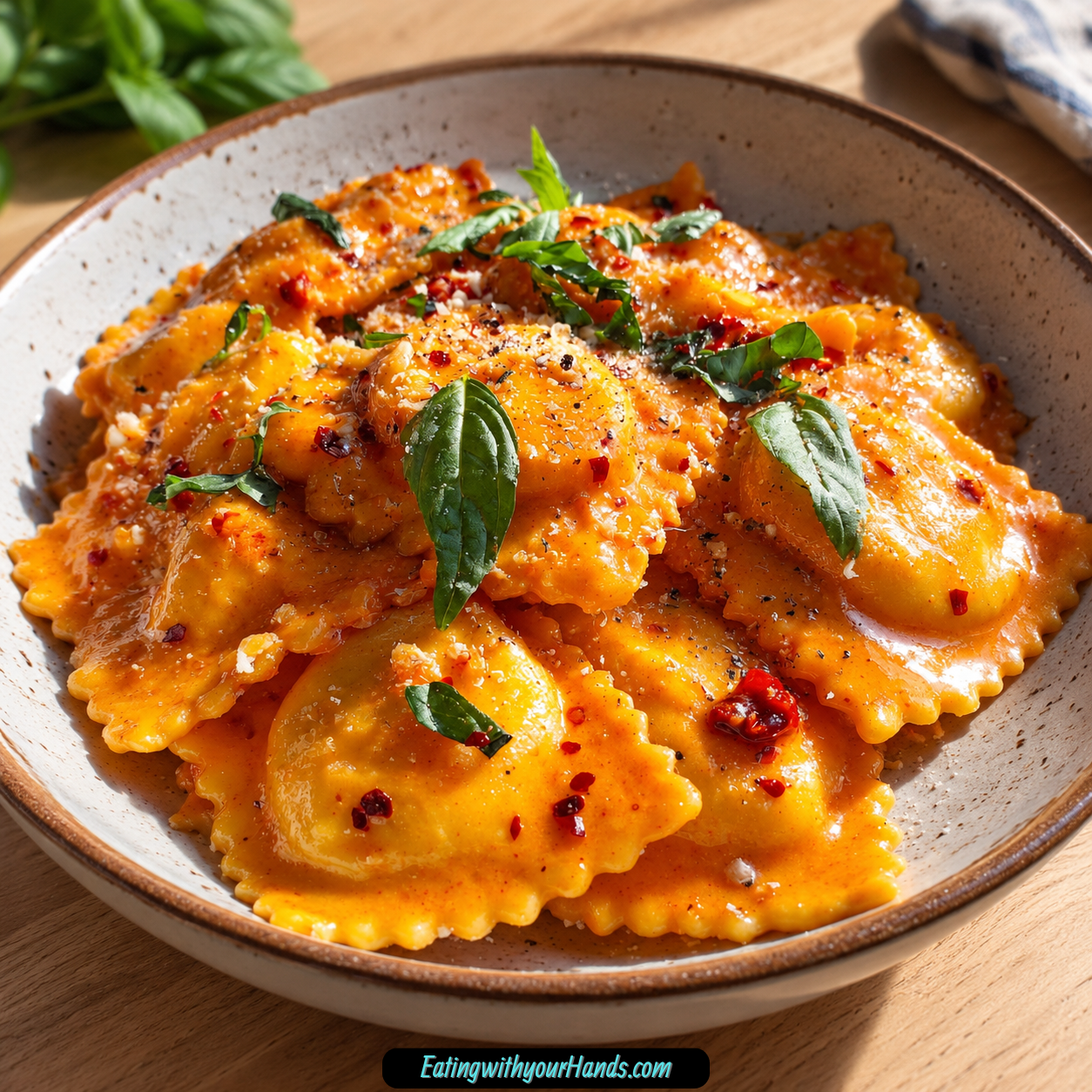

There are nights when I want dinner to feel special, but I absolutely do not want the kind of recipe that keeps me standing over the stove for an hour. That is exactly where this Creamy Ravioli Sauce has earned a permanent place in my kitchen.
It is rich without requiring a long ingredient list, creamy without becoming complicated, and bold enough to make even a package of store-bought ravioli feel like something I planned far more carefully than I actually did. Garlic, tomato paste, cream, Parmigiano Reggiano, red pepper flakes, and fresh basil come together in a sauce that feels comforting from the first spoonful.
I have been making some version of this sauce for years. Each batch taught me something small about when to add the garlic, how gently to handle the cream, and why freshly grated cheese makes such a noticeable difference.
Eventually, the recipe settled into the version I rely on now. It takes about 15 minutes, which means the sauce can come together in roughly the same window that I am dealing with the ravioli.
That speed is part of the appeal, but it is not the only reason I love it. The real magic is how much flavor comes from such a short cooking process.
Tomato paste gives the sauce depth without turning it into a full tomato sauce. Heavy cream softens the tomato and chili, while Parmigiano Reggiano adds salty richness that makes the whole pan taste more complete.
Then there is the garlic. Three freshly minced cloves give the sauce the kind of aroma that makes everyone suddenly appear in the kitchen asking what is for dinner.
A small amount of red pepper flakes keeps the cream from tasting flat. It is enough to add warmth, but the heat can easily be increased a pinch at a time when I want something bolder.
And right at the end, fresh basil brings in a completely different note. Tearing the leaves just before serving keeps that final layer tasting fresh against all the richness underneath.
Table of Contents
- Why This Creamy Ravioli Sauce Is a Weeknight Favorite
- Ingredients for Creamy Ravioli Sauce
- Butter Creates the Foundation
- Why Fresh Garlic Matters
- Tomato Paste Brings Depth
- Red Pepper Flakes Add Gentle Warmth
- Chicken Broth Loosens the Base
- Heavy Cream Makes the Sauce Velvety
- Why Parmigiano Reggiano Should Be Freshly Grated
- Fresh Basil for the Final Touch
- How to Make Creamy Ravioli Sauce
- Step 1: Prepare the Ingredients Before Heating the Pan
- Step 2: Start the Ravioli
- Step 3: Melt the Butter Gently
- Step 4: Add the Fresh Garlic
- Step 5: Add the Tomato Paste
- Step 6: Add the Red Pepper Flakes
- Step 7: Cook the Sauce Base Briefly
- Step 8: Pour in the Chicken Broth
- Step 9: Simmer the Broth Mixture
- Step 10: Lower the Heat Before the Cream
- Step 11: Pour in the Heavy Cream
- Step 12: Let the Creamy Base Come Together
- Step 13: Reduce the Heat to Low
- Step 14: Add the Parmigiano Reggiano Gradually
- Step 15: Watch for the Correct Consistency
- Step 16: Taste Before Adding Salt
- Step 17: Adjust the Heat if Desired
- Step 18: Add Dried Basil Now if Using It
- Step 19: Bring the Ravioli and Sauce Together
- Step 20: Finish With Fresh Basil
- The Most Important Rule: Do Not Burn the Garlic
- Why Heat Control Matters After Adding Cream
- How to Tell When the Sauce Is Ready
- Can You Use Milk Instead of Heavy Cream?
- Fresh Basil vs. Dried Basil
- Vegetarian Ravioli Sauce
- Adding Mushrooms
- Making the Sauce Spicier
- Making the Sauce Slightly Lighter
- Serving Creamy Ravioli Sauce
- Serve With Garlic Bread
- Add an Arugula Salad
- Use Leftover Sauce With Roasted Vegetables
- How to Store Creamy Ravioli Sauce
- How to Reheat Ravioli Sauce
- Can the Sauce Be Made Ahead?
- Tips for the Best Creamy Ravioli Sauce
- Frequently Asked Questions
- Can I use milk instead of heavy cream?
- What if I do not have fresh basil?
- Can I make Creamy Ravioli Sauce ahead?
- Can I make a vegetarian version?
- How can I make the sauce spicier?
- Why should I lower the heat before adding Parmesan?
- Why is my sauce too thick after refrigeration?
- Can I use vegetable broth even if I am not making it vegetarian?
- What type of ravioli should I use?
- When should I add fresh basil?
- Nutritional Information
- The 15-Minute Sauce I Keep Coming Back To
- Creamy Ravioli Sauce Recipe
Why This Creamy Ravioli Sauce Is a Weeknight Favorite
Some sauces are delicious because they cook for hours. This one is delicious because every ingredient gets a clear job and the sauce never asks for more time than it needs.
Butter creates the rich starting point. Garlic perfumes it almost immediately, and tomato paste plus red pepper flakes transform that simple base into something much deeper.
Chicken broth loosens everything and lifts the flavorful bits from the pan. Heavy cream then changes the texture entirely, turning the sauce from brothy and concentrated into smooth and velvety.
Parmigiano Reggiano finishes the transformation. Added slowly over lower heat, it melts into the cream and gives the sauce the body that helps it cling to every ravioli pocket.
That is what I want in a ravioli sauce. I do not want all of it pooling at the bottom of the bowl while the pasta stays mostly bare.
I want a coating that follows the curves of the ravioli and settles into every edge. This sauce does exactly that when it reaches the right consistency.
The recipe is also flexible without losing its identity. More red pepper flakes can make it spicier, vegetable broth can replace chicken broth, and dried basil can step in when fresh basil is unavailable.
Even the cream has a possible substitute. Half-and-half will not give exactly the same luxurious texture, but it is a better fallback than regular milk when heavy cream is not available.
Ingredients for Creamy Ravioli Sauce
The ingredient list is short enough for a weeknight but still creates a sauce with plenty of depth.
- 2 tablespoons butter
- 3 cloves garlic, finely minced
- 1 tablespoon tomato paste
- ½ teaspoon red pepper flakes
- ½ cup chicken broth
- ½ cup heavy cream
- ½ cup Parmigiano Reggiano, freshly grated
- 5 leaves fresh basil
- Sea salt, to taste
- Black pepper, to taste
- 1 (20 ounce) package ravioli
Any ravioli filling you enjoy can be used.
That is part of what makes this sauce so useful. The creamy tomato-and-cheese base is flavorful enough to make the ravioli feel special without demanding one specific filling.
Butter Creates the Foundation
Use 2 tablespoons butter.
The butter is melted gently over medium heat before the garlic goes in.
You do not need aggressive heat at this stage. In fact, gentler heat is preferable because the garlic will follow almost immediately, and garlic can move from fragrant to burnt remarkably quickly.
The butter gives the sauce richness from the beginning. It also creates the cooking medium that carries the garlic, red pepper flakes, and tomato paste.
Why Fresh Garlic Matters
The sauce uses 3 cloves fresh garlic, finely minced.
Fresh garlic is strongly preferred here rather than jarred minced garlic. Because the sauce cooks so quickly, there is nowhere for dull garlic flavor to hide.
Finely mincing the cloves also matters. Small pieces distribute through the butter more evenly and give you garlic flavor throughout the sauce rather than in a few concentrated bites.
Garlic only needs about 30 seconds in the pan.
The exact moment to move on is when it smells intensely fragrant while the pieces are still pale yellow to lightly golden.
Do not wait for dark brown garlic. Burnt garlic can become bitter and change the whole sauce.
Tomato Paste Brings Depth
Only 1 tablespoon tomato paste goes into the sauce, but it makes a surprisingly large difference.
The goal is not to turn the dish into tomato ravioli with a little cream. Instead, the tomato paste adds concentration and richness underneath the dairy.
Once it meets the garlicky butter and red pepper flakes, the mixture becomes a deep ruby-colored paste.
That brief stage is one of my favorite parts of the recipe. The sauce suddenly smells more developed even though only a few minutes have passed.
Red Pepper Flakes Add Gentle Warmth
Use ½ teaspoon red pepper flakes for the standard sauce.
That amount brings warmth without necessarily making the dish aggressively spicy.
If you want more heat, add additional flakes a pinch at a time. Tasting gradually is much easier than trying to rescue a sauce that became hotter than intended.
The red pepper also balances the cream nicely. A little spice keeps the finished sauce from tasting overly rich.
Chicken Broth Loosens the Base
After the tomato paste and spices have cooked briefly in the butter, add ½ cup chicken broth.
As it goes into the pan, scrape up any flavorful bits stuck to the surface.
The broth loosens the tomato paste and gives the sauce enough liquid to simmer before the cream arrives.
Let it cook for about 1 minute.
You should begin seeing a slight thickening around the edges.
That is the cue to move into the creamy stage.
Heavy Cream Makes the Sauce Velvety
Use ½ cup heavy cream.
Pour it in while stirring so it blends smoothly with the broth and tomato base.
This is where the appearance changes dramatically. The deep tomato mixture becomes lighter, softer in color, and much more luxurious.
Once the cream goes in, heat control becomes even more important.
Medium-low to low heat helps protect the sauce from separating or curdling.
There is no reason to aggressively boil a cream sauce. Gentle heat is enough to bring the ingredients together.
Why Parmigiano Reggiano Should Be Freshly Grated
Use ½ cup freshly grated Parmigiano Reggiano.
Freshly grated cheese melts more smoothly and gives the sauce a richer flavor than pre-grated cheese from a shelf-stable container.
Add the cheese gradually rather than dropping all of it into the pan at once.
This gives each addition a chance to melt into the cream.
Keep stirring as you add it.
The finished sauce should look smooth, not clumpy.
Remember that the cheese also adds saltiness. Taste before becoming too generous with additional sea salt.
Fresh Basil for the Final Touch
Use 5 fresh basil leaves.
Tear them shortly before serving.
Fresh basil adds aroma and brightness at the exact moment the sauce might otherwise feel very rich.
I like the contrast between the warm cream, tomato, cheese, garlic, and those torn green leaves.
If fresh basil is unavailable, about 1 teaspoon dried basil can be used instead.
The timing changes with dried basil.
Rather than adding it at the very end, put it in earlier while you are building the sauce base so it has enough time to release its flavor.
How to Make Creamy Ravioli Sauce
The sauce comes together quickly, so having everything measured and ready before you start makes the process much easier. Prepare the ravioli alongside the sauce according to the instructions appropriate for the ravioli you are using, then bring the two together while everything is warm.
Step 1: Prepare the Ingredients Before Heating the Pan
Finely mince 3 cloves garlic.
Measure 1 tablespoon tomato paste, ½ teaspoon red pepper flakes, ½ cup chicken broth, ½ cup heavy cream, and ½ cup freshly grated Parmigiano Reggiano.
Have the sea salt and black pepper nearby.
Keep the basil leaves for the finishing stage.
Because garlic cooks in only about 30 seconds, this is not a recipe where you want to stop midway and start searching for the broth.
Step 2: Start the Ravioli
Prepare the 20-ounce package ravioli while you make the sauce.
Use any filling you enjoy.
The sauce is designed to come together quickly enough that the ravioli and sauce can finish in a convenient rhythm.
Do not invent additional cooking time beyond what your particular ravioli requires.
Keep the cooked ravioli ready for the sauce once both components are finished.
Step 3: Melt the Butter Gently
Place 2 tablespoons butter in a skillet or saucepan over medium heat.
Let it melt completely.
Watch for the butter to begin bubbling lightly.
You do not want it smoking or browning aggressively.
The next ingredient is garlic, so a controlled temperature matters.
Step 4: Add the Fresh Garlic
Add the 3 finely minced garlic cloves.
Stir constantly.
Cook for about 30 seconds.
Trust the aroma as much as the clock.
Once the garlic smells fragrant and looks pale yellow to lightly golden, it is ready for the next step.
Do not keep cooking until the garlic turns dark.
Step 5: Add the Tomato Paste
Stir in 1 tablespoon tomato paste.
Work it through the butter and garlic.
The color will deepen almost immediately.
Make sure there are no large untouched lumps of tomato paste remaining.
The base should begin resembling a concentrated reddish paste.
Step 6: Add the Red Pepper Flakes
Sprinkle in ½ teaspoon red pepper flakes.
Stir them through the tomato-garlic mixture.
This distributes the warmth evenly through the sauce base.
If you prefer more spice, resist adding a large extra amount immediately.
You can always adjust later after tasting.
Step 7: Cook the Sauce Base Briefly
Continue stirring the tomato paste, garlic, butter, and red pepper flakes together.
This short cooking step helps build the deeper flavor described in the finished sauce.
Keep the heat controlled.
The garlic is still in the pan and should not burn.
Once everything looks evenly combined, move on to the broth.
Step 8: Pour in the Chicken Broth
Add ½ cup chicken broth.
Pour slowly enough that you can stir at the same time.
The broth will loosen the concentrated tomato mixture.
Use your spoon to scrape the bottom of the pan.
Any flavorful bits there should become part of the sauce rather than stay stuck to the cookware.
Step 9: Simmer the Broth Mixture
Let the sauce simmer for about 1 minute.
You should begin noticing slight thickening around the edges.
This is not meant to become a very thick reduction.
You simply want the broth, tomato paste, garlic, and spices to become a unified base.
Once that happens, the cream can go in.
Step 10: Lower the Heat Before the Cream
Reduce the heat toward medium-low.
This is an important transition.
The earlier stages benefit from enough heat to sauté and simmer, but the cream needs gentler treatment.
Keeping the temperature controlled reduces the chance of separation.
Step 11: Pour in the Heavy Cream
Add ½ cup heavy cream while stirring.
Watch the sauce change from a deeper tomato color to a softer creamy shade.
Continue stirring until there are no streaks of plain cream left.
The texture should already begin feeling richer.
Do not turn the heat back up just because the sauce looks thinner at first.
Step 12: Let the Creamy Base Come Together
Continue cooking gently.
Keep stirring enough to prevent the sauce from catching on the bottom.
You are looking for smoothness rather than vigorous bubbling.
This is the point where the sauce begins to feel luxurious rather than brothy.
Once it looks cohesive, lower the heat further before adding cheese.
Step 13: Reduce the Heat to Low
Turn the heat to low.
Cheese melts best here when it is not being attacked by excessive heat.
This small temperature adjustment is one of the most important steps for keeping the finished sauce smooth.
Have the grated Parmigiano Reggiano ready.
Step 14: Add the Parmigiano Reggiano Gradually
Sprinkle in some of the ½ cup grated Parmigiano Reggiano.
Stir until it melts.
Add more.
Continue this gradual process until all the cheese has been incorporated.
Avoid dumping the full amount into one spot.
Slow addition makes it easier to keep the sauce velvety.
Step 15: Watch for the Correct Consistency
Dip a spoon into the sauce.
It should coat the spoon and leave a creamy trail when you move through it.
The sauce should feel thick enough to cling to ravioli but still loose enough to flow.
Do not continue reducing it unnecessarily once that texture is reached.
The cheese and cream have already given it the body it needs.
Step 16: Taste Before Adding Salt
Taste the sauce.
Parmigiano Reggiano brings its own saltiness, so wait until this point before deciding how much additional sea salt is necessary.
Add sea salt and black pepper to taste.
Stir, then taste again.
This final seasoning step should make the sauce feel balanced rather than simply salty.
Step 17: Adjust the Heat if Desired
Taste for spice as well.
If you want a stronger kick, add more red pepper flakes a pinch at a time.
Stir each addition through the sauce before adding more.
This gives you much better control over the final heat level.
Step 18: Add Dried Basil Now if Using It
If you are substituting dried basil for fresh, use about 1 teaspoon.
It should be added during the sauce-building stage rather than sprinkled over the finished dish.
Stir it into the warm sauce so the flavor has time to bloom.
If you have fresh basil, skip this step and save those leaves for serving.
Step 19: Bring the Ravioli and Sauce Together
Once the ravioli is ready, combine it carefully with the finished sauce.
Handle the pasta gently so the ravioli stays intact.
You want the creamy sauce to coat the outside of each piece.
Do not aggressively stir or crush the ravioli.
A gentle coating is enough.
Step 20: Finish With Fresh Basil
Tear the 5 fresh basil leaves shortly before serving.
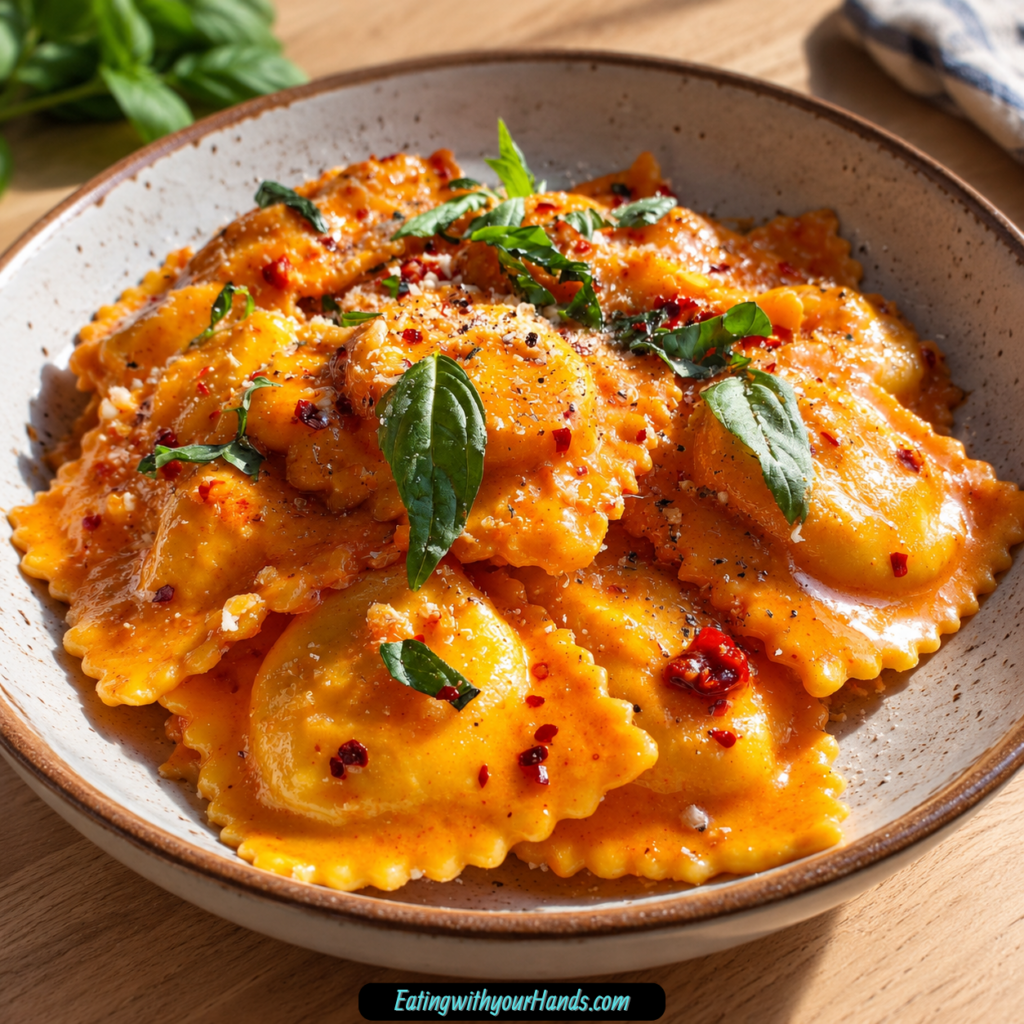
Scatter them over the sauced ravioli.
The warmth releases their aroma immediately.
Add extra grated Parmigiano Reggiano on top if desired.
Serve while the sauce is warm and creamy.
The Most Important Rule: Do Not Burn the Garlic
Garlic is the fastest-moving part of this recipe.
Thirty seconds can be enough.
The difference between fragrant garlic and bitter garlic happens quickly, especially once the butter is hot.
Watch the color carefully.
Pale yellow to lightly golden is enough.
If the garlic turns dark brown, the sauce can inherit that bitterness.
For me, this is the one stage where I would rather move forward a few seconds early than wait too long.
Why Heat Control Matters After Adding Cream
Cream sauce does not need aggressive heat.
Once the heavy cream is in the pan, medium-low is enough.
Before adding the cheese, low heat is even better.
This protects the sauce from curdling and gives the Parmigiano Reggiano time to melt smoothly.
If you see the sauce boiling hard, reduce the temperature.
The goal is gentle thickening, not a rolling boil.
How to Tell When the Sauce Is Ready
A spoon is the easiest test.
Dip it into the sauce and lift it.
The sauce should cling to the back rather than sliding off like broth.
When you move the spoon through the pan, it should leave a creamy trail.
That is the point where the sauce has enough body for ravioli.
Remember that the cheese contributes to thickening, so do not over-reduce the broth-and-cream mixture before the Parmigiano goes in.
Can You Use Milk Instead of Heavy Cream?
Regular milk can work in a pinch, but it changes the texture.
The sauce will be thinner and less luxurious.
Half-and-half is the preferred substitution when heavy cream is unavailable.
For additional thickness, an extra sprinkle of cheese can be added.
The important thing is understanding that the lighter dairy choice will not give exactly the same velvety result as heavy cream.
Fresh Basil vs. Dried Basil
Fresh basil is the preferred finish.
The standard recipe uses 5 leaves, torn immediately before serving.
That preserves the fresh aroma.
Dried basil works when fresh is unavailable.
Use about 1 teaspoon.
Add the dried basil earlier in the sauce-building process so it has time to release its flavor.
The two forms should not be treated identically because they behave differently in the sauce.
Vegetarian Ravioli Sauce
Replace the ½ cup chicken broth with vegetable broth.
The rest of the listed sauce ingredients can stay the same.
The flavor difference is described as minimal.
This gives you an easy broth substitution without rebuilding the recipe.
Mushrooms sautéed with the garlic are also suggested as an optional addition for this variation.
No exact quantity is given, so add according to preference rather than creating a new measurement.
Adding Mushrooms
Mushrooms can be sautéed along with the garlic.
They make an especially appealing addition when using vegetable broth.
Keep them as an optional variation rather than a requirement for the standard sauce.
No specific amount is provided.
The original creamy garlic-tomato-cheese balance should still remain recognizable.
Making the Sauce Spicier
Start with the standard ½ teaspoon red pepper flakes.
Taste the finished sauce.
If you want more warmth, add additional flakes pinch by pinch.
This is one of those adjustments where patience is useful.
Cream and cheese can mellow the perceived heat, so tasting after everything comes together gives you a better sense of the final balance.
Making the Sauce Slightly Lighter
If heavy cream feels too rich, half-and-half can be substituted.
Expect a thinner finished sauce.
An extra sprinkle of cheese can help build back some body.
Regular milk is also possible in a pinch, but it creates an even lighter and less velvety result.
There is no need to pretend all three choices produce exactly the same sauce.
They do not.
The heavy cream version is the richest.
Serving Creamy Ravioli Sauce
My favorite way to serve this sauce is generously coating cheese-filled ravioli.
Then I add more grated Parmigiano Reggiano and torn basil over the top.
That keeps the plate simple while reinforcing the two ingredients that make the sauce feel especially finished.
A little additional black pepper also works well when you like a stronger peppery finish.
Serve With Garlic Bread
Crusty garlic bread is an easy side.
The sauce is rich enough that any little bit left in the bowl deserves to be scooped up.
Bread gives you a way to make sure none of the creamy tomato-cheese sauce goes to waste.
It also turns a simple ravioli dinner into something more complete without adding another complicated recipe.
Add an Arugula Salad
A simple arugula salad with lemon provides contrast.
The ravioli sauce is creamy, cheesy, and rich.
Fresh greens and lemon bring something lighter beside it.
That balance is especially useful when the ravioli itself has a rich cheese filling.
Use Leftover Sauce With Roasted Vegetables
Leftover sauce does not have to go back onto pasta.
It can be drizzled over roasted vegetables.
The same creamy garlic, tomato, and cheese flavor gives vegetables a richer finish.
This is particularly useful when you have a small amount of sauce left that is not enough for another entire ravioli meal.
How to Store Creamy Ravioli Sauce
Transfer leftover sauce to an airtight container.
Refrigerate for up to 3 days.
The sauce can also be made ahead and stored for that same period.
As it sits, the garlic flavor may deepen.
Expect the sauce to become thicker in the refrigerator.
That is normal for a cream-and-cheese-based sauce.
How to Reheat Ravioli Sauce
Reheat gently.
Use low heat and stir frequently.
Do not rush with high heat.
Gentle warming gives the cream and cheese a better chance of staying smooth.
If the sauce becomes too thick, add a splash of broth or cream.
Whisk or stir until the texture loosens again.
Add only as much liquid as needed.
Can the Sauce Be Made Ahead?
Yes.
Make the sauce and refrigerate it in an airtight container for up to 3 days.
When you are ready to serve, warm it slowly.
Add a splash of broth or cream if the chilled sauce is too thick.
The sauce is described as developing even deeper garlic flavor overnight.
That makes advance preparation especially useful when you want an even faster dinner later.
Tips for the Best Creamy Ravioli Sauce
A few small details consistently make the sauce better.
Use Fresh Garlic
Freshly minced garlic is worth the few extra moments of preparation.
With such a short sauce, its flavor stays prominent.
Jarred garlic will not give the same result.
Grate the Cheese Fresh
Fresh Parmigiano Reggiano melts more smoothly.
It also brings a richer flavor than shelf-stable grated cheese.
Add it gradually over low heat.
Control the Heat
Medium heat is useful at the beginning.
After the cream goes in, move toward medium-low.
Before adding the cheese, reduce the heat to low.
That progression protects the sauce texture.
Season at the End
Parmigiano Reggiano is salty.
Do not decide the final salt level before the cheese is incorporated.
Taste after the cheese melts, then add sea salt and black pepper.
Adjust Spice Slowly
Extra red pepper flakes can always be added.
Remove them? Not so easy.
Increase the heat pinch by pinch.
Frequently Asked Questions
Can I use milk instead of heavy cream?
Yes, but the sauce will be thinner and less velvety.
Half-and-half is the better substitute when available.
If you use a lighter dairy option, an extra sprinkle of cheese can help thicken the sauce.
The finished result still will not be quite as luxurious as the heavy cream version.
What if I do not have fresh basil?
Use about 1 teaspoon dried basil.
Add it earlier while building the sauce so the herb has time to release its flavor.
Fresh basil is still preferred for the brightest finish.
Can I make Creamy Ravioli Sauce ahead?
Yes.
Store it in an airtight container in the refrigerator for up to 3 days.
Reheat gently.
Add a splash of cream or broth if it has thickened too much.
Can I make a vegetarian version?
Yes.
Replace chicken broth with vegetable broth.
The remaining listed sauce ingredients stay the same.
Mushrooms sautéed with the garlic are also suggested as an optional addition.
How can I make the sauce spicier?
Add extra red pepper flakes.
Begin with a small pinch.
Taste after stirring them through the finished sauce.
Add more only if needed.
Why should I lower the heat before adding Parmesan?
Lower heat helps the cheese melt smoothly into the cream.
Too much heat can make creamy cheese sauces less smooth.
Keep the sauce gentle while the cheese is incorporated.
Why is my sauce too thick after refrigeration?
Cream and cheese thicken as the sauce chills.
Warm the sauce slowly.
Add a splash of broth or cream and stir until the original creamy consistency returns.
Can I use vegetable broth even if I am not making it vegetarian?
Yes.
Vegetable broth is an allowed substitute for chicken broth.
The sauce will still keep its creamy garlic-tomato character.
What type of ravioli should I use?
Any filling you enjoy works with this sauce.
The recipe does not require one specific ravioli variety.
Use one 20-ounce package.
When should I add fresh basil?
At the end.
Tear the 5 leaves shortly before serving.
This keeps their aroma fresh against the warm sauce.
Nutritional Information
Specific calorie, fat, carbohydrate, protein, or other nutritional values are not listed for this recipe.
The final nutrition will vary according to the ravioli filling, exact dairy products, broth, Parmigiano Reggiano, portion size, and any optional additions.
This is a rich sauce made with butter, heavy cream, and cheese, so it is intended as an indulgent, creamy pasta dish.
The 15-Minute Sauce I Keep Coming Back To
I think the reason I have kept this Creamy Ravioli Sauce in my regular rotation is that it solves a very specific dinner problem. It gives me the feeling of making something special without demanding the time usually associated with a special meal.
A package of ravioli on its own can feel like the fastest possible dinner solution. But once the garlic starts sizzling in butter and tomato paste turns that butter a deep red, the meal already feels completely different.
Then the broth goes in and loosens everything from the pan. A minute later, cream transforms the whole mixture, and freshly grated Parmigiano Reggiano turns it into the kind of sauce that clings to the pasta instead of disappearing underneath it.
That sequence never stops being satisfying to me.
It happens quickly enough that I do not have time to get impatient, but each stage changes the sauce so clearly that cooking still feels like cooking rather than simply opening a jar.
I also like how forgiving the final flavor can be.
Some nights I leave the red pepper exactly where it is.
Other nights I add another pinch because I want more heat.
Sometimes the basil goes on generously, and sometimes a little extra cheese is what the bowl really needs.
If chicken broth is not the right choice, vegetable broth steps in easily.
If fresh basil is missing, dried can still keep the herb flavor alive.
And if I want to take the vegetarian version in a different direction, sautéed mushrooms fit naturally beside the garlic.
But the version I return to most often stays wonderfully simple: butter, fresh garlic, tomato paste, red pepper flakes, broth, cream, Parmigiano Reggiano, basil, salt, and black pepper wrapped around tender ravioli.
It is rich, cozy, slightly spicy, and exactly the kind of dinner that makes a regular weeknight feel more cared for.
That is the real reason I stopped reaching automatically for jarred sauce.
When 15 minutes can create something this creamy, fragrant, and satisfying, making the sauce myself feels less like extra work and more like the easiest way to turn a package of ravioli into the dinner I was hoping for all along.
Creamy Ravioli Sauce Recipe

Rich, silky, and full of savory garlic flavor, this Creamy Ravioli Sauce combines butter, tomato paste, chicken broth, heavy cream, Parmigiano Reggiano, and fresh basil into an easy Italian-style sauce. Tossed with refrigerated ravioli, it creates a comforting dish that comes together in just 15 minutes.
Recipe Details
- Prep Time: 5 minutes
- Cook Time: 10 minutes
- Total Time: 15 minutes
- Course: Sauce
- Cuisine: Italian
- Servings: 4 servings
- Calories: 320 kcal
Ingredients
For the Creamy Sauce
- sea salt and black pepper to taste
- 5 leaves fresh basil chopped
- ½ cup parmigiano reggiano or to taste
- ½ cup heavy cream or to taste
- ½ cup chicken broth
- ½ teaspoon red pepper flakes
- 1 tablespoon tomato paste
- 3 cloves garlic finely minced
- 2 tablespoons butter
For Serving
- 1 20 ounce package refrigerated ravioli prepared according to package directions
Instructions
Step 1: Melt the Butter
Place the butter in a pan over medium heat.
Let it melt completely before adding the garlic.
Step 2: Cook the Garlic
Add the finely minced garlic to the melted butter.
Cook until fragrant, stirring so it does not sit in one spot.
Step 3: Add Tomato Paste and Red Pepper Flakes
Stir in the tomato paste and red pepper flakes.
Mix until the tomato paste blends evenly with the butter and garlic.
Step 4: Add the Broth
Pour in the chicken broth.
Stir well and bring the mixture to a simmer.
Step 5: Make the Sauce Creamy
Add the heavy cream and stir until fully incorporated.
Use ½ cup as listed, adjusting to taste if desired.
Step 6: Add the Cheese
Stir in the Parmigiano Reggiano.
Continue mixing until the cheese melts into the sauce and the texture becomes smooth and creamy.
Step 7: Season the Sauce
Season with sea salt and black pepper to taste.
Adjust the cream and cheese according to preference, as noted.
Step 8: Add the Ravioli
Prepare the refrigerated ravioli according to the package directions.
Add the cooked ravioli to the sauce and gently toss until evenly coated.
Step 9: Finish with Basil
Sprinkle the chopped fresh basil over the sauced ravioli.
Use fresh basil for the best flavor, as noted.
Step 10: Serve
Serve immediately while the ravioli and creamy sauce are hot.
Divide into 4 servings.
Notes
- Adjust cream and cheese to your liking.
- Use fresh basil for best flavor.
- Substitute vegetable broth for a vegetarian version.
Serving Suggestions
Serve Creamy Ravioli Sauce Recipe immediately after tossing it with the prepared ravioli. The combination of garlic, tomato paste, cream, Parmigiano Reggiano, red pepper flakes, and fresh basil creates a rich sauce with savory flavor and a gentle touch of heat.
This recipe makes 4 servings and is designed for one 20 ounce package of refrigerated ravioli prepared according to its package directions.
For a vegetarian variation, replace the chicken broth with vegetable broth. You can also adjust the heavy cream and Parmigiano Reggiano to your preferred richness.
Storage
How to Store
The recipe does not provide a specific storage method or storage duration, so no exact storage time is added here.
Garlic Tip
Use 3 cloves garlic, finely minced.
Cook them in the melted butter until fragrant before adding the tomato paste.
Tomato Paste Tip
Use 1 tablespoon tomato paste and stir it into the butter and garlic with the red pepper flakes.
Broth Tip
Use ½ cup chicken broth.
Vegetable broth can be substituted for a vegetarian version.
Cream Tip
Use ½ cup heavy cream or adjust to taste.
Stir it into the simmering broth mixture before adding the cheese.
Cheese Tip
Use ½ cup Parmigiano Reggiano or adjust to taste.
Mix until completely melted into the sauce.
Ravioli Tip
Use one 20 ounce package refrigerated ravioli.
Prepare it according to the package directions before tossing it with the sauce.
Basil Tip
Use 5 leaves fresh basil, chopped, and add them as the final garnish.
Serving Tip
Serve immediately after coating the cooked ravioli with the creamy sauce.

Fernando is the creator and writer behind the food blog Eating with your Hands. Living and working in cities like Paris, Barcelona, and Berlin, and being married to a Canadian foodie, has given Fernando a passion and interest in food and inspired him to run EWYH.