
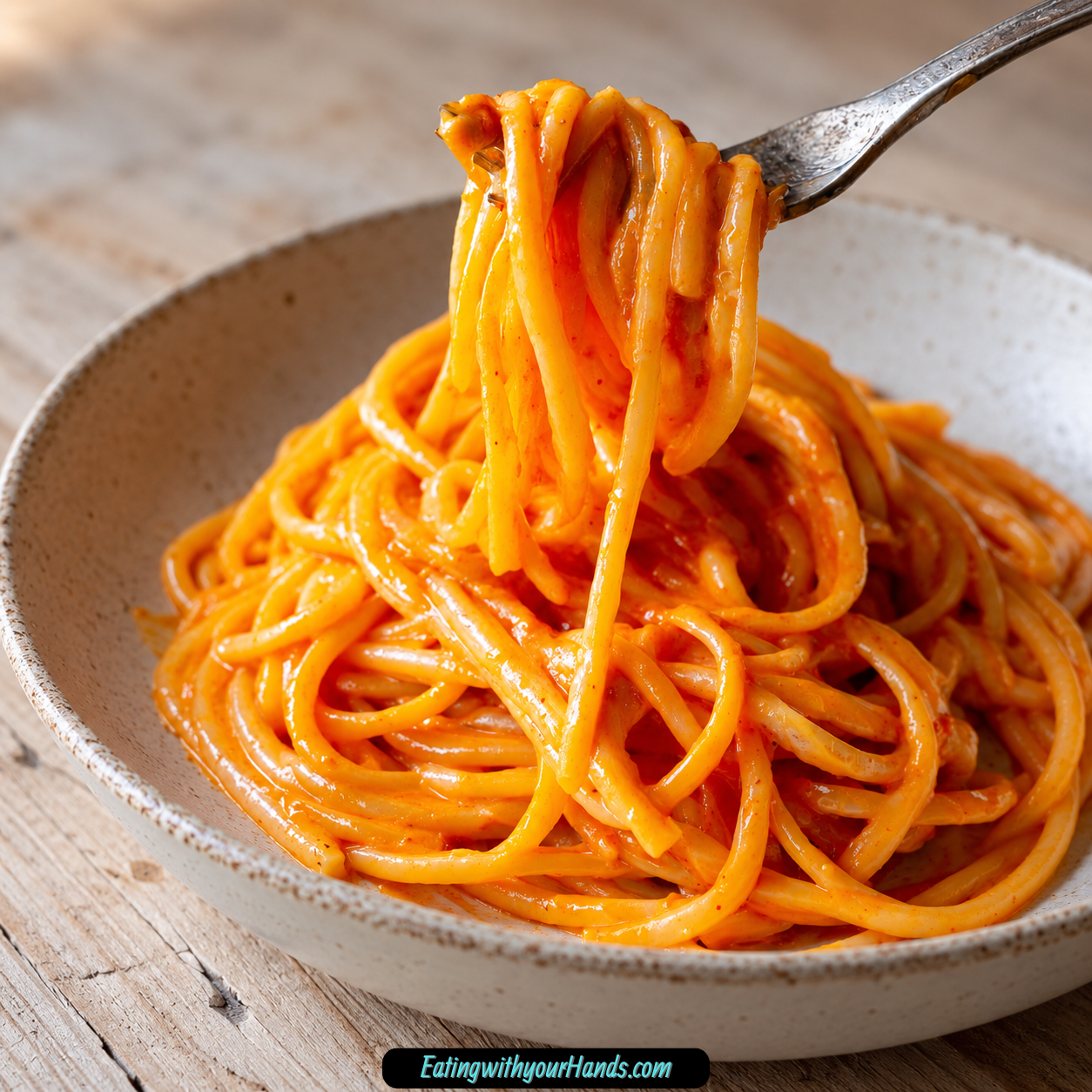
Some of my favorite dinners have come from carefully planned grocery lists, but others have happened because I opened the refrigerator, realized my usual plan was impossible, and had to improvise. This Creamy Red Pepper Alfredo Pasta belongs completely to that second category.
The first time I made it, I had run out of the ingredients I normally relied on for Alfredo, and one red bell pepper was sitting in the refrigerator waiting to be used. I blended it into a creamy sauce almost as an experiment, and the result surprised me enough that the dish quickly became part of my regular rotation.
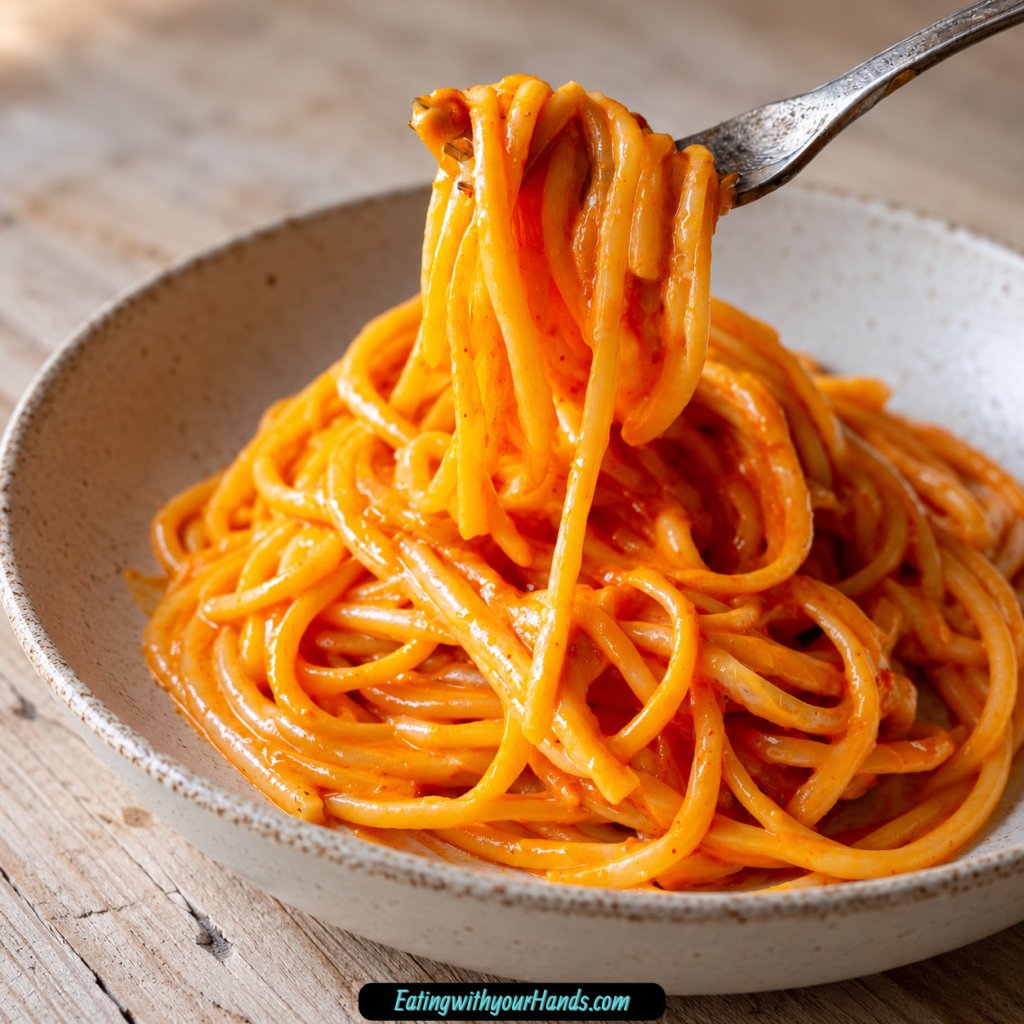
The color was the first thing that caught my attention. Instead of the pale sauce I had expected from an Alfredo-style pasta, the red pepper created a warm sunset-orange shade that instantly made an ordinary bowl of noodles look far more interesting.
Then came the texture. Cashews blended with the pepper and seasonings gave the sauce a silky, rich consistency without turning it excessively heavy.
The flavor was equally satisfying. Red pepper brought a gentle sweetness, nutritional yeast or Parmesan added a savory cheesy note, onion powder balanced the pepper, and a small amount of turmeric deepened the color without taking over the taste.
That combination made the pasta feel comforting while still being different from traditional Alfredo. It was creamy enough to satisfy the craving for a rich pasta dinner, but bright enough that the sauce never felt one-dimensional.
Over time, I started treating the recipe less like a strict formula and more like a dependable base. Sometimes I roast the pepper for more depth, while other nights I use it raw because I want the fresh brightness and I am trying to get dinner on the table quickly.
I have made the sauce with cashews and with other nuts, used nutritional yeast when I wanted it dairy-free, and reached for Parmesan when I wanted a richer version. I have added vegetables, proteins, fresh herbs, and sometimes nothing at all beyond the pasta and sauce.
That flexibility is a large part of why I keep coming back to it. It is quick enough for a busy weeknight, comforting enough for a lazy Sunday, and easy to change according to whatever happens to be in the kitchen.
Table of Contents
- Why Creamy Red Pepper Alfredo Pasta Is Such a Reliable Dinner
- Ingredients for Creamy Red Pepper Alfredo Pasta
- Choosing Between Roasted and Raw Red Pepper
- Nuts, Seeds, and Creaminess
- Nutritional Yeast or Parmesan
- Why the Seasonings Matter
- Equipment You’ll Need
- How to Make Creamy Red Pepper Alfredo Pasta
- Step 1: Decide How You Want to Prepare the Red Pepper
- Step 2: Prepare the Nuts if Necessary
- Step 3: Measure the Sauce Ingredients
- Step 4: Blend the Sauce
- Step 5: Check for Graininess
- Step 6: Bring the Pasta Water to a Boil
- Step 7: Cook the Pasta Until Al Dente
- Step 8: Reserve Pasta Water
- Step 9: Drain the Pasta
- Step 10: Pour in the Red Pepper Alfredo Sauce
- Step 11: Adjust the Consistency
- Step 12: Taste and Adjust
- Step 13: Add Optional Vegetables or Protein
- Step 14: Serve Immediately
- How to Roast the Red Pepper for More Flavor
- The Secret to a Smooth Sauce
- What to Do if the Sauce Is Too Thick
- Red Pepper Alfredo Variations
- Using the Sauce for Pizza
- Pasta Options
- Nut-Free Red Pepper Alfredo
- Serving Suggestions
- Storage
- Freezing
- Reheating on the Stovetop
- Reheating in the Microwave
- Reviving Leftover Flavor
- Frequently Asked Questions
- Can I use jarred roasted red peppers?
- How do I make the sauce nut-free?
- Why is my sauce grainy?
- Can I make the sauce ahead?
- What pasta works best?
- Can I use nutritional yeast instead of Parmesan?
- What if I do not have onion powder?
- Do I have to use turmeric?
- Can I make the sauce brighter or less sweet?
- Can I add more savory flavor?
- Nutritional Information
- The Kitchen Accident That Became a Favorite
- Creamy Red Pepper Alfredo Pasta Recipe in Just 20 Minutes
Why Creamy Red Pepper Alfredo Pasta Is Such a Reliable Dinner
The first advantage is speed. The sauce can be blended while the pasta cooks, which means much of the work happens at the same time rather than in separate stages.
That makes it possible to have the meal on the table quickly. In the fastest version, the entire process can be around 20 minutes, and it comfortably fits within the under-30-minute dinner category.
The sauce is also forgiving. If the consistency is too thick, reserved pasta water can loosen it one tablespoon at a time until it coats the noodles properly.
If you do not have roasted pepper ready, raw red bell pepper works. If cashews are unavailable, macadamia nuts, blanched almonds, sunflower seeds, or one of the other listed variations can move the sauce in a different direction.
The recipe can also be dairy-free without losing its creamy character. Nutritional yeast replaces Parmesan in that version, while the nuts provide much of the body.
And perhaps most importantly, the sauce does not depend on one exact pasta shape. Fettuccine is a favorite because its wide ribbons hold onto the creamy sauce well, but shells, penne, angel hair, rice pasta, vegetable noodles, and even spaghetti squash can all be used.
Ingredients for Creamy Red Pepper Alfredo Pasta
The main sauce uses a short ingredient list, but each component contributes to the final balance.
- 1 red bell pepper, roasted for deeper flavor or raw for brightness
- ½ cup water, plus extra if needed for thinning
- ½ cup raw cashews or macadamia nuts
- ¼ cup nutritional yeast or Parmesan cheese
- 1 teaspoon salt
- 2 teaspoons onion powder
- ½ teaspoon ground turmeric
- ⅛ teaspoon ground nutmeg, optional
- 10 oz pasta
- Optional toppings: grilled vegetables, white beans, crispy chickpeas, or fresh basil
If your blender is not especially powerful, soak the cashews or macadamia nuts for at least 2 hours first. This gives them a softer texture that blends more easily into a smooth sauce.
The red pepper can be prepared two ways. Roasting brings out a deeper flavor, while using it raw creates a fresher, brighter sauce.
Choosing Between Roasted and Raw Red Pepper
Both versions work, but they give the pasta a slightly different personality.
A roasted pepper creates a richer, more developed flavor. The charred exterior and softened flesh blend into a sauce that feels especially cozy.
A raw red pepper keeps more brightness. This is the quickest route because there is no roasting step to wait for before blending.
The choice can simply depend on the kind of dinner you want. On a slow evening, roasting the pepper adds another layer; on a busy one, raw pepper keeps the whole recipe moving quickly.
Jarred roasted red peppers are another convenient option. Use about ½ cup drained pepper when substituting.
If the peppers are packed in brine, drain them well and give them a quick rinse because the brine can be too salty for the sauce. The jarred version may taste slightly smokier than a freshly prepared pepper, but it still works very well.
Nuts, Seeds, and Creaminess
The main recipe uses ½ cup raw cashews or macadamia nuts. They blend with the pepper and water to create the smooth body of the sauce.
Cashews are especially useful when you want that creamy Alfredo-like texture without relying on heavy dairy. Macadamia nuts are another option when you want a similarly rich result.
If neither is available, blanched almonds can be used. Sunflower seeds are the suggested nut-free alternative.
Walnuts are specifically not recommended because they can become bitter in this sauce. Their flavor does not blend as smoothly with the red pepper base.
For another nut-free variation, the FAQ suggests using ⅓ cup cooked white beans, with cannellini or great northern beans preferred, plus an extra 1 tablespoon nutritional yeast for richness. The texture will be somewhat different, but the sauce can still stay creamy and satisfying.
Nutritional Yeast or Parmesan
Use ¼ cup nutritional yeast when you want the sauce to stay dairy-free. It adds a nutty, cheesy-style flavor that works naturally with red pepper and cashews.
Parmesan can be used instead when you want a richer, more traditional cheesy finish. Both options work with the same basic blending method.
There is no need to combine the two unless you specifically want to. Either one can provide the savory element the sauce needs.
Nutritional yeast also appears later as a possible flavor booster if the sauce needs more umami. A small extra amount can be added according to taste.
Why the Seasonings Matter
The recipe uses 2 teaspoons onion powder, which may look generous at first glance. That amount is intentional because it helps balance the sweetness of the red pepper.
Salt is included at 1 teaspoon, with the recommendation to taste and adjust after blending.
Ground turmeric is used mainly for color. At ½ teaspoon, it deepens the sauce into a warmer golden-orange tone without becoming the primary flavor.
The optional ⅛ teaspoon nutmeg adds a softer background note. It is not required, but it gives the sauce a little extra warmth.
If onion powder is unavailable, ¼ teaspoon garlic powder is the suggested substitute.
Equipment You’ll Need
The equipment list is simple:
- Blender
- Medium pot
- Colander
- Measuring cups and spoons
A high-speed blender gives the smoothest result, especially when using nuts. A standard blender can still work, and an immersion blender has also been used in a pinch.
If you choose to roast the pepper in the oven, you will also need a baking sheet.
Another option is charring the pepper directly over a gas burner using tongs. The recipe allows room for this kind of kitchen improvisation.
How to Make Creamy Red Pepper Alfredo Pasta
The process is easiest when the sauce and pasta are prepared at the same time. That keeps the total cooking window short and ensures the sauce is ready when the noodles are drained.
Step 1: Decide How You Want to Prepare the Red Pepper
Start by choosing whether you want the deeper flavor of roasted red pepper or the brighter flavor of raw pepper.
If using it raw, remove the parts you do not want in the sauce and prepare it for blending.
If roasting, char the pepper under the broiler or over a gas flame until the skin is blackened. Then place it in a bowl and cover the bowl with plastic wrap so the pepper can steam.
Once it has steamed, the skin should slip away more easily. Use the softened roasted pepper in the sauce.
Step 2: Prepare the Nuts if Necessary
If you do not have a high-speed blender, soak the ½ cup raw cashews or macadamia nuts for at least 2 hours.
This softens them and makes it easier for a standard blender to create a creamy texture.
If your blender is powerful enough to handle raw nuts smoothly, you can skip the soaking step.
Keep the nuts ready near the blender along with the remaining sauce ingredients.
Step 3: Measure the Sauce Ingredients
Add the prepared red bell pepper to the blender.
Measure ½ cup water, ½ cup raw cashews or macadamia nuts, ¼ cup nutritional yeast or Parmesan, 1 teaspoon salt, 2 teaspoons onion powder, ½ teaspoon turmeric, and the optional ⅛ teaspoon nutmeg.
Having everything measured before blending keeps the sauce balanced. Nut-based sauces can become noticeably different when ingredients are estimated too loosely.
Step 4: Blend the Sauce
Blend the red pepper, water, nuts, nutritional yeast or Parmesan, salt, onion powder, turmeric, and nutmeg on high.
Continue blending for 1–2 minutes, or until the sauce is extremely smooth.
There should not be noticeable gritty bits from the nuts. The texture should be creamy enough to coat the back of a spoon.
If your blender struggles, add water 1 tablespoon at a time. Avoid pouring in a large amount all at once because it is much easier to thin a sauce than to rebuild one that has become too watery.
Step 5: Check for Graininess
Stop the blender and look closely at the texture.
Drag a finger through a little sauce on the back of a spoon. The mixture should feel smooth rather than grainy.
If nut particles are still noticeable, continue blending. In a lower-powered blender, the full blending time may need to be longer.
The FAQ suggests blending for as long as 3 minutes when necessary.
Step 6: Bring the Pasta Water to a Boil
While the sauce is blending or immediately afterward, bring a medium pot of salted water to a boil.
Use enough space for the 10 oz pasta to cook without being packed tightly together.
Fettuccine is a favorite choice, but another pasta shape can be used.
Have your colander ready because you will need to reserve some of the cooking water before draining.
Step 7: Cook the Pasta Until Al Dente
Add the 10 oz pasta to the boiling salted water.
Cook until al dente.
A useful guideline is to stop about 1 minute before the package timing would normally suggest. The noodles will continue softening slightly after they are coated with the sauce.
Avoid cooking until very soft. The pasta keeps absorbing liquid once the sauce is added, so a firmer starting point gives the finished dish better texture.
Step 8: Reserve Pasta Water
Before draining, scoop out ½ cup pasta water and set it aside.
This water is useful for adjusting the consistency of the sauce after it meets the noodles.
You may not need the entire ½ cup. Keep it nearby and add only as necessary.
The sauce should cling to the pasta without becoming paste-like.
Step 9: Drain the Pasta
Drain the cooked pasta in a colander.
Do not rinse it.
Once drained, return the pasta to the cooking pot.
Turn the heat off before combining the pasta with the sauce. The mixture does not need aggressive heat at this stage.
Step 10: Pour in the Red Pepper Alfredo Sauce
Pour the blended sauce over the drained pasta.
Use tongs or another gentle utensil to toss the noodles until they are evenly coated.
Work from the bottom of the pot so sauce does not collect underneath while the pasta on top remains dry.
The entire batch should take on the warm orange-red color of the pepper sauce.
Step 11: Adjust the Consistency
If the sauce seems too thick, add reserved pasta water 1 tablespoon at a time.
Toss after each addition before deciding whether more is needed.
Continue until the sauce moves easily around the noodles and coats them without feeling stiff.
This gradual method gives you much more control than pouring in a large amount of water at once.
Step 12: Taste and Adjust
Taste the pasta before serving.
If the sauce tastes too sweet from the pepper, a squeeze of lemon is one suggested adjustment.
If it needs more savory depth, add extra nutritional yeast or a dash of soy sauce.
These are taste adjustments rather than mandatory ingredients, so use them only when the finished sauce needs them.
Step 13: Add Optional Vegetables or Protein
At this stage, the pasta can remain simple or become a base for additional ingredients.
Grilled vegetables, white beans, crispy chickpeas, fresh basil, grilled chicken, shrimp, tofu, roasted broccoli, sautéed mushrooms, cherry tomatoes, or another listed addition can be incorporated.
Keep the additions appropriate to the version you want to serve.
The sauce itself should remain the main coating rather than disappearing under too many extras.
Step 14: Serve Immediately
Dish the pasta while the sauce is still loose and creamy.
The noodles continue absorbing liquid as they sit, so this is one of those meals that looks its best right after tossing.
Top with extra pepper strips, herbs, Parmesan, goat cheese, toasted pine nuts, breadcrumbs, or another listed garnish if desired.
Serve while the sauce still flows smoothly around the noodles.
How to Roast the Red Pepper for More Flavor
Roasting is optional, but it changes the sauce noticeably.
Char the pepper under the broiler or over a gas flame until the exterior blackens.
Then place it in a bowl and cover with plastic wrap. The trapped steam helps loosen the skin.
After steaming, peel away the skin and use the soft pepper in the blender.
This version creates a deeper flavor than the raw-pepper method.
There is no exact roasting time given, so rely on the visual cue of a blackened exterior and softened pepper rather than inventing a fixed timer.
The Secret to a Smooth Sauce
The nuts are the main reason a sauce like this can turn grainy.
A high-speed blender makes the process easier, but soaking the nuts for at least 2 hours gives a standard blender a much better chance.
Liquid matters too. If the blender keeps struggling, add water one tablespoon at a time.
Do not boil the sauce after blending. Excessive heat can cause nut-based sauces to tighten or become grainy.
If the sauce still refuses to become smooth, strain it through a fine mesh sieve.
What to Do if the Sauce Is Too Thick
A thick sauce is easy to correct.
Hot pasta water is the preferred adjustment because it loosens the mixture without simply washing away the flavor.
Add 1 tablespoon, stir, and check again.
Repeat until the sauce ribbons nicely and clings to the noodles.
If the sauce became unusually thick because the red pepper was small, the same method applies.
Red Pepper Alfredo Variations
The sauce is designed to adapt without losing its basic identity.
Add Grilled Chicken
Grilled chicken can turn the pasta into a heartier meal.
Slice it and serve it over the finished pasta, or fold it into the sauce-coated noodles.
Add Shrimp
Shrimp is another protein option.
Use it as a topping when you want a seafood variation without changing the sauce itself.
Add Crispy Tofu
Crispy tofu works well with the dairy-free version.
Its firmer texture contrasts with the creamy pasta.
Add White Beans or Chickpeas
White beans can be used as a topping for extra substance.
Crispy chickpeas are another option when you want more texture.
Add Roasted Broccoli
Roasted broccoli can be stirred through just before serving.
The firmer vegetable pieces provide contrast against the silky sauce.
Add Sautéed Mushrooms
Sautéed mushrooms are another suggested vegetable addition.
Fold them in at the end rather than blending them into the sauce.
Add Spinach
Spinach can be stirred through when you want greens in the meal.
No exact amount is specified, so use according to preference.
Add Sun-Dried Tomatoes
Sun-dried tomatoes can add another concentrated flavor to the pasta.
Again, no fixed amount is supplied.
Using the Sauce for Pizza
The red pepper Alfredo sauce can also be used beyond pasta.
It has been used as a pizza sauce when a creamy alternative to a more familiar topping is desired.
Keep the sauce texture thick enough that it stays manageable on the pizza rather than thinning it excessively.
No separate pizza method or baking instructions are provided, so the recipe information here only supports using the sauce itself in that role.
Pasta Options
Fettuccine is the favorite choice because the broad noodles carry the creamy sauce well.
Shells are useful when you want little pockets of sauce in each bite.
Penne works particularly well with chunkier additions.
Angel hair is useful when speed matters because it cooks quickly.
Rice pasta can be used for a gluten-free version. Cook it al dente because it will continue softening once sauced.
Zucchini noodles are another lighter option. The FAQ suggests tossing them with sauce raw for a no-cook variation.
Spaghetti squash or other vegetables can also replace traditional pasta for a lower-carb approach.
Nut-Free Red Pepper Alfredo
Raw sunflower seeds can replace cashews when you need a nut-free version.
Blend them using the same general method, soaking first if necessary for your blender.
Another nut-free option is ⅓ cup cooked white beans.
Cannellini or great northern beans are the suggested choices. Add an extra 1 tablespoon nutritional yeast for richness.
The texture will not be identical to the cashew version, but the sauce can still remain creamy.
Serving Suggestions
Garlic bread is one of the easiest pairings.
Its crisp crust is especially useful for scooping up leftover sauce from the plate.
A simple green salad with lemon vinaigrette gives the meal a fresher contrast.
For protein, grilled chicken, shrimp, crispy tofu, or crumbled Italian sausage can be served with the pasta.
Roasted broccoli, sautéed mushrooms, cherry tomatoes, and basil all work when you want more vegetables.
Extra Parmesan or crumbled goat cheese can be added for a richer finish.
Toasted pine nuts or breadcrumbs provide crunch against the creamy noodles.
For a dinner party, serving the pasta family-style with toppings in separate bowls allows everyone to customize their own plate.
Storage
Store leftovers in an airtight container in the refrigerator for up to 3 days.
The sauce thickens as it chills.
That is completely normal.
When reheating, use a splash of water or non-dairy milk to loosen it.
The pasta continues absorbing liquid in storage, so expect leftovers to be noticeably thicker than the freshly made dish.
Freezing
Portions can be frozen in zip-top bags laid flat.
Freeze for up to 1 month.
Thaw overnight in the refrigerator before reheating.
Microwaving directly from frozen is not recommended because it can make the sauce grainy.
For the best texture, the FAQ suggests freezing the sauce separately from the pasta when possible.
Reheating on the Stovetop
A skillet over low heat is the preferred reheating method.
Add a drizzle of olive oil and stir often while the pasta warms.
A splash of water or non-dairy milk can loosen the sauce if needed.
Do not let the sauce boil.
Gentle heat gives it a better chance of staying smooth.
Reheating in the Microwave
The microwave can also be used.
Heat in 1-minute bursts at 50% power.
Stir between each interval.
Again, avoid letting the sauce become extremely hot or boil.
The goal is slow, even reheating rather than aggressive cooking.
Reviving Leftover Flavor
If the reheated sauce seems dull, 1 teaspoon fresh lemon juice can brighten it.
A pinch of nutritional yeast is another suggested option.
These are small finishing adjustments rather than a new sauce recipe.
Interestingly, the leftovers can also be eaten cold. The thicker pasta works almost like a creamy pasta salad straight from the refrigerator.
Frequently Asked Questions
Can I use jarred roasted red peppers?
Yes.
Drain them well and use about ½ cup.
If they are packed in brine, give them a quick rinse because the liquid can be very salty.
The flavor may be slightly smokier than freshly roasted pepper.
How do I make the sauce nut-free?
Use raw sunflower seeds instead of cashews.
Another option is ⅓ cup cooked white beans, preferably cannellini or great northern beans, plus an extra 1 tablespoon nutritional yeast.
The texture will be somewhat different but still creamy.
Why is my sauce grainy?
The nuts or seeds may not have blended fully.
Soak them for at least 2 hours if your blender is not powerful.
You can also blend for up to 3 minutes.
If more liquid is needed, add water 1 tablespoon at a time.
Do not overheat or boil the sauce because the nuts can seize.
If necessary, strain the sauce through a fine mesh sieve.
Can I make the sauce ahead?
Yes.
The sauce keeps for 3 days in the refrigerator or 1 month frozen.
For the best texture, store it separately from the cooked pasta.
When ready to serve, warm it slowly with a splash of water while preparing fresh noodles.
What pasta works best?
Fettuccine is the favorite choice.
Shells, penne, angel hair, rice pasta, zucchini noodles, and other pasta shapes can also work.
Choose according to the texture and additions you want.
Can I use nutritional yeast instead of Parmesan?
Yes.
The recipe specifically allows either ¼ cup nutritional yeast or Parmesan cheese.
Nutritional yeast keeps the sauce dairy-free and gives it a nutty, savory quality.
What if I do not have onion powder?
Use ¼ teaspoon garlic powder instead.
Keep the other seasonings the same.
Do I have to use turmeric?
No.
The turmeric is included mainly for color.
Leave it out if needed.
Can I make the sauce brighter or less sweet?
A squeeze of lemon is suggested when the sauce tastes too sweet.
Use it as a final taste adjustment.
Can I add more savory flavor?
Extra nutritional yeast can help.
A dash of soy sauce is another suggested way to bring more umami.
Nutritional Information
The nutritional information is approximate and described per serving, with one serving being about ½ the recipe.
Per serving:
- Calories: roughly 450
- Fiber: about 6g
- Plant-based protein: about 15g when using cashews
The red pepper also contributes vitamin C.
The sauce itself can be dairy-free when nutritional yeast is used instead of Parmesan.
The entire dish can be made gluten-free by using an appropriate gluten-free pasta.
Exact values will change according to the nuts or cheese used, the pasta variety, toppings, ingredient brands, and serving size.
The Kitchen Accident That Became a Favorite
It still makes me laugh that this recipe began because dinner did not go according to plan. I was missing the ingredients I normally associated with Alfredo and had one red pepper waiting in the refrigerator.
Blending it into sauce felt more like improvisation than a real recipe at the time. But once that bright orange sauce coated the pasta, I knew I had stumbled into something worth making again.
Years later, I still love the same things about it. The color makes the bowl feel cheerful, the nuts give the sauce that creamy texture, and the red pepper provides enough sweetness to make it taste different from an ordinary cheese sauce.
I also appreciate how little pressure the recipe creates. Roast the pepper if you have time, use it raw if you do not, choose Parmesan or nutritional yeast, add grilled chicken or vegetables, or keep the whole bowl completely simple.
That freedom is probably why I have made it so often. It can fit a busy evening without feeling like emergency food, and it can also become something more elaborate when I have time to set out toppings and let everyone build their own bowl.
Some nights it gets roasted broccoli and basil. Other nights there is garlic bread beside it, or chicken on top, or nothing except glossy fettuccine covered in that smooth sunset-colored sauce.
Either way, the heart of the dish stays the same: red pepper blended into something unexpectedly creamy, tossed with pasta while everything is still warm, and served before the noodles have time to absorb all that beautiful sauce.
For a dinner that started with one lonely pepper and a missing Alfredo plan, it has become one of the most dependable bowls of comfort food in my kitchen.
Creamy Red Pepper Alfredo Pasta Recipe in Just 20 Minutes
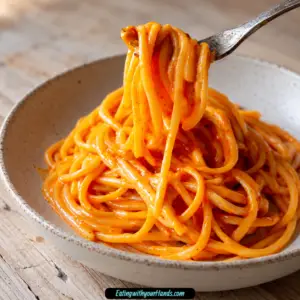
Smooth, creamy, and full of savory red pepper flavor, this Creamy Red Pepper Alfredo Pasta blends bell pepper with cashews or macadamia nuts, nutritional yeast or Parmesan, and warm spices into a rich sauce. Serve it with pasta, spaghetti squash, or vegetables for a flexible Italian-inspired main dish that comes together with minimal prep.
Recipe Details
- Prep Time: 10 minutes
- Cook Time: 15 minutes
- Total Time: 25 minutes
- Course: Main Dish
- Cuisine: Italian-Inspired
- Servings: 2 servings
- Calories: 450 kcal
Ingredients
For the Red Pepper Alfredo Sauce
- ⅛ teaspoon ground nutmeg optional
- ½ teaspoon ground turmeric
- 2 teaspoon onion powder
- 1 teaspoon salt
- ¼ cup nutritional yeast or Parmesan cheese
- ½ cup raw cashews or macadamia nuts
- ½ cup water
- 1 red bell pepper raw or roasted
For Serving
- 10 oz pasta or spaghetti squash or vegetables
- optional grilled or roasted veggies beans, etc.
Instructions
Step 1: Prepare the Red Pepper Sauce
Add the red bell pepper, water, raw cashews or macadamia nuts, nutritional yeast or Parmesan cheese, salt, onion powder, ground turmeric, and optional ground nutmeg to a blender.
Blend until the mixture becomes completely smooth and creamy.
Step 2: Prepare the Pasta or Alternative
Cook the pasta, or prepare the spaghetti squash or vegetables according to your chosen option.
The recipe does not provide a specific cooking method or cooking time for these choices, so follow the preparation appropriate for the option you are using.
Step 3: Combine with the Sauce
Add the prepared pasta, spaghetti squash, or vegetables to the red pepper Alfredo sauce.
Toss or stir until everything is evenly coated in the creamy sauce.
Step 4: Add Optional Toppings
Top with grilled or roasted veggies, beans, or other listed optional additions if desired.
Keep the toppings simple or add them according to preference.
Step 5: Serve
Divide into 2 servings and serve while the sauce is creamy and the pasta or vegetables are warm.
Notes
- For a richer taste, roast the red bell pepper before blending.
- Adjust salt and spices to your preference.
Serving Suggestions
Serve Creamy Red Pepper Alfredo Pasta with your choice of pasta, spaghetti squash, or vegetables. The creamy red pepper sauce brings together nutty richness, savory seasoning, and a hint of warmth from turmeric and optional nutmeg.
This recipe makes 2 servings and can be customized with the ingredient alternatives already included in the recipe. Use raw cashews or macadamia nuts for the creamy base, then choose nutritional yeast or Parmesan cheese depending on your preference.
For extra flavor, roast the red bell pepper before blending. Optional grilled or roasted vegetables or beans can also be added on top before serving.
Storage
How to Store
The recipe does not provide a specific storage method or storage duration, so no exact storage time is added here.
Red Pepper Tip
Use 1 red bell pepper, either raw or roasted.
Roasting the pepper first can give the sauce a richer flavor, as noted.
Nut Tip
Use ½ cup raw cashews or macadamia nuts.
Either option is blended into the sauce with the bell pepper and water.
Cheese Alternative Tip
Use ¼ cup nutritional yeast or Parmesan cheese.
Choose one of these options for the creamy Alfredo-style sauce.
Seasoning Tip
Use 1 teaspoon salt, 2 teaspoon onion powder, ½ teaspoon ground turmeric, and ⅛ teaspoon ground nutmeg if desired.
Adjust the salt and spices to your preference.
Pasta Tip
Use 10 oz pasta, spaghetti squash, or vegetables.
No specific preparation time or cooking instructions are provided for these alternatives.
Topping Tip
Add optional grilled or roasted veggies, beans, or other listed additions if desired.

Fernando is the creator and writer behind the food blog Eating with your Hands. Living and working in cities like Paris, Barcelona, and Berlin, and being married to a Canadian foodie, has given Fernando a passion and interest in food and inspired him to run EWYH.