
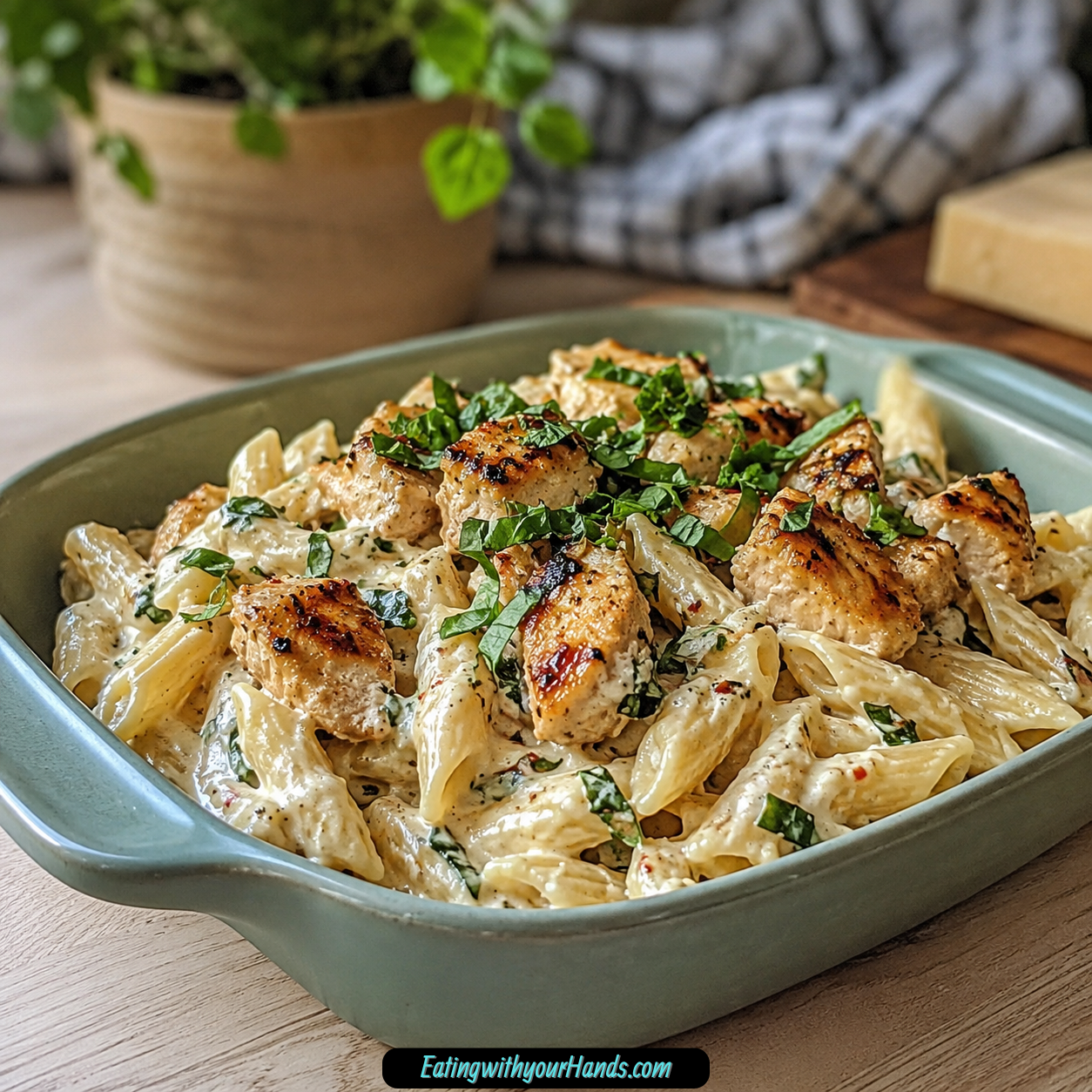
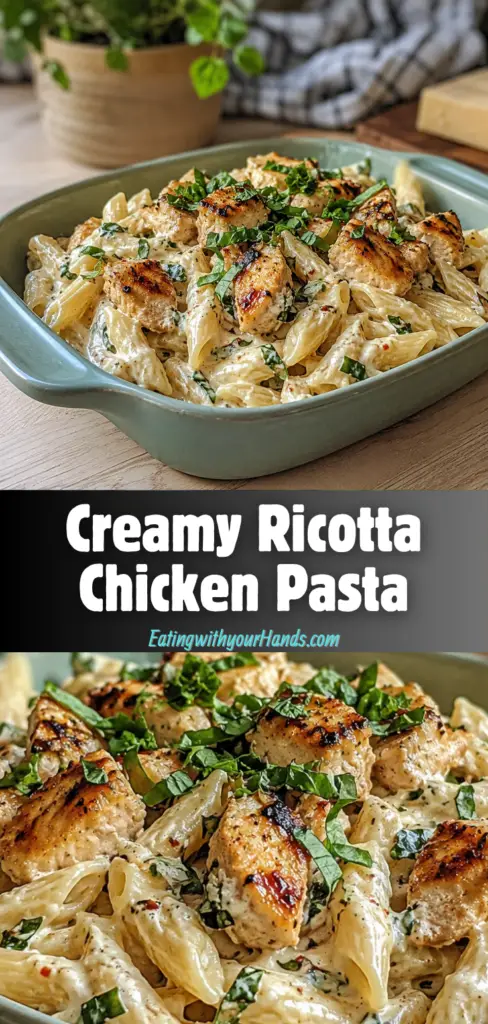
Creamy Ricotta Chicken Pasta is the kind of dinner that feels gentle, warm, and deeply comforting without asking for hours in the kitchen. It brings together tender chicken breast, short pasta, creamy ricotta, Parmesan, garlic, fresh basil, fresh parsley, olive oil, chicken broth or reserved pasta water, salt, and black pepper in one rich, cozy bowl.
I love recipes that begin with simple ingredients and somehow become the meal everyone remembers. This pasta has that feeling, the kind that fills the kitchen with garlic, herbs, and the soft promise of something creamy waiting at the table.
There is nothing complicated here, and that is part of what makes it so dependable. Thinly sliced chicken cooks quickly, short pasta catches the sauce beautifully, and ricotta turns everything silky without making the dish feel heavy.
This is a wonderful recipe for busy weeknights, quiet family dinners, or even a casual gathering with friends. It feels comforting enough for a chilly evening but easy enough to make when the day has already been long.
The best part is how flexible it can be. You can add seasonal vegetables, use leftover or rotisserie chicken, try whole wheat or gluten-free pasta, or finish it with extra basil and Parmesan for a bright, fresh touch.
Table of Contents
- Why You’ll Love This Creamy Ricotta Chicken Pasta
- Recipe Details
- Ingredients
- Optional Swaps, Variations, Add-Ins, and Serving Ideas
- Spinach Ricotta Chicken Pasta
- Cherry Tomato Ricotta Pasta
- Grilled Chicken Version
- Whole Wheat Pasta Version
- Cottage Cheese Option
- Dairy-Free Ricotta Pasta
- Herb Variation
- Extra Creamy Version
- Rotisserie Chicken Shortcut
- Spicy Ricotta Chicken Pasta
- Vegetable-Packed Pasta
- Mushroom or Roasted Vegetable Version
- Turkey or Shrimp Variation
- Why This Creamy Ricotta Chicken Pasta Works
- Directions
- Step 1: Prepare the Pasta Pot
- Step 2: Cook the Pasta Until Al Dente
- Step 3: Save Pasta Water Before Draining
- Step 4: Slice the Chicken Thin
- Step 5: Heat the Olive Oil
- Step 6: Add the Chicken to the Pan
- Step 7: Brown the Chicken
- Step 8: Add the Garlic
- Step 9: Lower the Heat Slightly
- Step 10: Add the Ricotta
- Step 11: Add the Parmesan
- Step 12: Add Chicken Broth or Reserved Pasta Water
- Step 13: Stir Until Creamy
- Step 14: Add the Cooked Pasta
- Step 15: Add the Fresh Basil
- Step 16: Add the Fresh Parsley
- Step 17: Season With Salt and Black Pepper
- Step 18: Heat Through Briefly
- Step 19: Check the Sauce Texture
- Step 20: Serve Warm
- Serving Ideas
- Storage
- Reheating
- Freezing
- Make-Ahead
- Helpful Notes for Best Results
- Variations
- Troubleshooting
- Frequently Asked Questions
- Why This Recipe Works So Well
- Final Thoughts
- Creamy Ricotta Chicken Pasta
Why You’ll Love This Creamy Ricotta Chicken Pasta
This recipe is quick and easy. It takes just 35 minutes from start to finish, making it a practical choice for busy weeknights.
It uses minimal ingredients. Chicken, pasta, ricotta, Parmesan, garlic, herbs, olive oil, broth or pasta water, salt, and pepper create a full meal without a complicated list.
It is family-friendly. The creamy texture and mild, savory flavor make it appealing to both kids and adults.
It is versatile. You can serve it with a green salad or garlic bread for a complete meal.
It is leftover-friendly. The pasta is great for lunch the next day when reheated gently.
It is customizable. Seasonal vegetables, different herbs, lighter swaps, and other proteins can all give the dish a new personality.
Recipe Details
This Creamy Ricotta Chicken Pasta takes 35 minutes from start to finish. It is designed to be quick enough for a weeknight while still tasting creamy and satisfying.
The pasta is cooked according to package instructions until al dente. The pasta water should be salted because it makes a big difference in the flavor.
The recipe uses 8 ounces short pasta. Penne, rigatoni, or farfalle are all good choices because they hold the creamy sauce well.
The chicken portion uses 2 chicken breasts sliced thin for quick cooking. The chicken cooks in olive oil over medium heat until browned and cooked through, about 5–7 minutes.
The sauce uses 1 cup ricotta cheese, ½ cup grated Parmesan cheese, and ¼ cup chicken broth or reserved pasta water. Extra broth or pasta water can be added as needed for creaminess.
Fresh basil and parsley are stirred in with the cooked pasta. Salt and black pepper are added to taste.
Leftovers can be stored in an airtight container in the refrigerator for up to 3 days. The pasta can also be frozen for up to 2 months and reheated gently with a splash of water or chicken broth if needed.
Ingredients
Chicken and Pasta
2 pieces chicken breasts, sliced thin
8 oz short pasta, such as penne, rigatoni, or farfalle
Creamy Cheese Sauce
1 cup ricotta cheese
½ cup grated Parmesan cheese
¼ cup chicken broth or reserved pasta water, plus extra as needed
Aromatics and Herbs
3 cloves garlic, minced
¼ cup fresh basil, chopped
¼ cup fresh parsley, chopped
Oil and Seasoning
2 tablespoons olive oil
Salt, to taste
Black pepper, to taste
Ingredient Notes
Chicken breasts should be sliced thin so they cook quickly. Thin pieces brown faster and make the pasta easier to eat.
Short pasta works beautifully in this recipe. Penne, rigatoni, and farfalle all catch the creamy ricotta sauce in their ridges, folds, and openings.
Ricotta cheese gives the dish its creamy texture. It makes the sauce rich without needing a complicated base.
Parmesan cheese adds a savory kick. It balances the softness of the ricotta and gives the pasta more depth.
Garlic is an important flavor builder. Fresh minced garlic gives the best aromatic flavor as it cooks briefly with the browned chicken.
Fresh basil gives the pasta a bright, fragrant finish. It brings freshness to the creamy sauce.
Fresh parsley brightens the dish. It adds color and keeps the pasta from tasting too heavy.
Olive oil is used for sautéing and flavor. It helps the chicken brown and carries the garlic through the dish.
Chicken broth or reserved pasta water loosens the ricotta into a creamy sauce. Extra can be added as needed if the pasta needs more creaminess.
Salt and black pepper should be adjusted to taste. The Parmesan and broth may already add seasoning, so taste before adding too much.
Optional Swaps, Variations, Add-Ins, and Serving Ideas
Spinach Ricotta Chicken Pasta
Add spinach for extra color and nutrition. Spinach works well with chicken, garlic, ricotta, and Parmesan.
It can be stirred into the warm pasta so it softens into the sauce. This gives the dish a fresh green finish.
Cherry Tomato Ricotta Pasta
Add cherry tomatoes for brightness and color. They bring a juicy contrast to the creamy ricotta sauce.
This variation makes the dish feel a little fresher. It is especially nice when you want more seasonal flavor.
Grilled Chicken Version
Use grilled chicken for a lighter version. It gives the pasta a slightly different flavor and texture.
Slice or shred the grilled chicken and toss it with the sauce and pasta. This is helpful if you already have cooked chicken ready.
Whole Wheat Pasta Version
Use whole wheat pasta for a lighter-style twist. The flavor will be a little heartier.
Penne, rigatoni, or farfalle shapes still work well. Cook according to package instructions until al dente.
Cottage Cheese Option
Swap ricotta for cottage cheese for a lower-fat option. The texture will be different but still creamy.
Taste and adjust seasoning as needed. Cottage cheese can vary in saltiness and texture.
Dairy-Free Ricotta Pasta
Use vegan ricotta or cashew cream for a dairy-free direction. This changes the flavor and texture but keeps the creamy idea.
A vegan ricotta made from blended cashews or tofu can also work. Adjust seasoning as needed because flavor can vary.
Herb Variation
Try thyme or oregano for a unique flavor profile. These herbs give the pasta a different aromatic direction.
Use them when you want the dish to feel less basil-forward. Keep the creamy ricotta base the same.
Extra Creamy Version
Add more ricotta for extra creaminess. A splash of heavy cream can also make the sauce richer.
This variation is useful when you want a more indulgent texture. Add liquid as needed so the sauce stays smooth.
Rotisserie Chicken Shortcut
Use rotisserie chicken when you are short on time. It works great as a quick substitute.
Since the chicken is already cooked, it only needs to warm through in the sauce. This makes the recipe even faster.
Spicy Ricotta Chicken Pasta
Add a pinch of red pepper flakes for a spicy kick. The heat balances the creamy sauce.
Use a small amount at first. You can always add more based on your taste.
Vegetable-Packed Pasta
Stir in frozen peas or broccoli for added nutrition and color. These vegetables fit nicely with chicken and ricotta.
They make the dish more filling and colorful. Add them in a way that lets them heat through without overcooking.
Mushroom or Roasted Vegetable Version
For a vegetarian option, use sautéed mushrooms or roasted vegetables in place of the chicken. This keeps the dish hearty.
The ricotta, Parmesan, garlic, basil, and parsley still create a creamy pasta base. The vegetables bring their own flavor and texture.
Turkey or Shrimp Variation
Chicken can be swapped for turkey. Shrimp can also be used if you prefer seafood.
Each option brings a different flavor. Adjust the cooking carefully based on the protein used.
Why This Creamy Ricotta Chicken Pasta Works
This pasta works because the sauce is simple and built directly around creamy ricotta. The ricotta melts into the warm pasta with Parmesan and broth or pasta water, creating a smooth coating without a complicated sauce.
The chicken cooks quickly because it is sliced thin. This keeps the recipe weeknight-friendly and helps the chicken stay tender.
The garlic is added after the chicken browns. That short cooking time lets the garlic become fragrant without turning harsh.
The pasta is cooked al dente, which helps it hold up when tossed with the sauce. Short pasta shapes also carry the creamy mixture well.
Reserved pasta water is valuable because it helps loosen the sauce. Chicken broth does the same while adding savory flavor.
Fresh basil and parsley finish the dish with color and brightness. They make the creamy pasta taste fresh instead of flat.
Directions
Step 1: Prepare the Pasta Pot
Fill a pot with water for the pasta and bring it to a boil. Salt the water before adding the pasta because seasoning the water makes a huge difference.
The pasta absorbs some of that seasoning as it cooks. This helps the final dish taste balanced from the inside out.
Keep the pasta package nearby so you can follow the timing. Different shapes may need slightly different cooking times.
Step 2: Cook the Pasta Until Al Dente
Add 8 ounces short pasta to the boiling salted water. Penne, rigatoni, or farfalle all work well.
Cook according to package instructions until al dente. The pasta should be tender but still have enough structure to hold the sauce.
Do not overcook the pasta. It will be tossed with the creamy sauce later, so it should not become too soft.
Step 3: Save Pasta Water Before Draining
Before draining the pasta, save a little pasta water for later. This water is useful for making the sauce creamy.
Reserved pasta water can loosen the ricotta and help it coat the pasta. It is especially helpful if the sauce thickens too much.
Set the reserved water aside. Then drain the pasta and keep it ready for the sauce.
Step 4: Slice the Chicken Thin
Take 2 chicken breasts and slice them thin for quick cooking. Thin pieces cook more evenly and brown faster.
Try to keep the pieces similar in thickness. This helps them finish at the same time.
Set the sliced chicken near the stove. The cooking process moves quickly once the oil is hot.
Step 5: Heat the Olive Oil
In a pan, heat 2 tablespoons olive oil over medium heat. Let the oil become hot but not smoking.
The oil should shimmer gently. This means it is ready for the chicken.
Do not rush the heat. A properly heated pan helps the chicken brown instead of steam.
Step 6: Add the Chicken to the Pan
Add the sliced chicken to the hot pan. Spread the pieces out so they have room to cook.
Avoid crowding the pan if possible. Crowding can prevent browning and make the chicken release too much moisture.
Let the chicken begin cooking before stirring too much. This helps it develop color.
Step 7: Brown the Chicken
Cook the chicken until it is browned and cooked through, about 5–7 minutes. Stir here and there to help it cook evenly.
The chicken should lose its raw look and become lightly golden. It should be fully cooked before the sauce is added.
If some pieces cook faster, move them around the pan. Thin slices make this step quick.
Step 8: Add the Garlic
Once the chicken is beautifully golden, add 3 cloves minced garlic. Stir it into the pan.
Cook for another minute, just until fragrant. This is when the kitchen starts to smell warm and inviting.
Do not let the garlic burn. Garlic only needs a short time to release its flavor.
Step 9: Lower the Heat Slightly
After the garlic becomes fragrant, reduce the heat if the pan seems too hot. The next step adds dairy, so gentle heat is helpful.
The goal is a creamy sauce, not a scorched one. Lower heat keeps the cheese mixture smoother.
Stir the chicken and garlic together so the flavor is spread through the pan. Then get ready to add the ricotta.
Step 10: Add the Ricotta
Add 1 cup ricotta cheese to the pan. Stir it gently into the chicken and garlic.
The ricotta will begin softening from the heat. It should start turning into a creamy coating.
Do not worry if it looks thick at first. The Parmesan and liquid will help loosen it.
Step 11: Add the Parmesan
Add ½ cup grated Parmesan cheese. Stir it into the ricotta and chicken.
Parmesan gives the sauce a savory kick. It also helps the sauce taste fuller.
Mix until the cheeses begin to combine. The texture should look creamy but may still need liquid.
Step 12: Add Chicken Broth or Reserved Pasta Water
Pour in ¼ cup chicken broth or reserved pasta water. Stir to loosen the cheese mixture.
Use whichever you prefer. Chicken broth adds savory flavor, while pasta water helps bind the sauce.
If the sauce still looks too thick, add extra liquid as needed. Add small amounts so the sauce does not become too thin.
Step 13: Stir Until Creamy
Stir the ricotta, Parmesan, and liquid until everything is well combined and creamy. The sauce should coat the chicken.
Do not worry if it looks slightly runny at first. It will thicken as the pasta is added and tossed.
Keep the heat gentle. This helps the sauce stay smooth and soft.
Step 14: Add the Cooked Pasta
Add the drained cooked pasta to the sauce. Toss gently so the pasta begins to pick up the ricotta mixture.
Make sure the pasta reaches every part of the pan. Each piece should become coated in creamy sauce.
If the pasta seems dry, add a little more chicken broth or reserved pasta water. The sauce should stay creamy.
Step 15: Add the Fresh Basil
Add ¼ cup chopped fresh basil. Toss it through the pasta.
The basil adds freshness and a bright herbal flavor. It makes the creamy sauce feel lighter.
Use gentle motions so the pasta does not break. The goal is even distribution.
Step 16: Add the Fresh Parsley
Add ¼ cup chopped fresh parsley. Stir it into the pasta.
Parsley brightens the dish and adds color. It balances the richness of the ricotta and Parmesan.
At this point, the pasta should look creamy, colorful, and ready for final seasoning. The herbs should be visible throughout.
Step 17: Season With Salt and Black Pepper
Sprinkle in salt and black pepper to taste. Toss again and taste carefully.
The Parmesan and chicken broth may already bring some saltiness. Add seasoning gradually.
The finished pasta should taste creamy, savory, garlicky, and bright from the herbs. Adjust until it tastes balanced.
Step 18: Heat Through Briefly
Let everything heat through for about 1 minute. Stir gently as it warms.
This final minute helps the pasta, chicken, sauce, and herbs settle together. It also thickens the sauce slightly.
Do not cook too long after adding the herbs. You want them to stay fresh and colorful.
Step 19: Check the Sauce Texture
Before serving, check the sauce. It should coat the pasta nicely without feeling dry.
If it has thickened too much, add a small splash of chicken broth, reserved pasta water, or water. Stir until creamy again.
If it seems too loose, let it sit briefly. The pasta will continue absorbing the sauce.
Step 20: Serve Warm
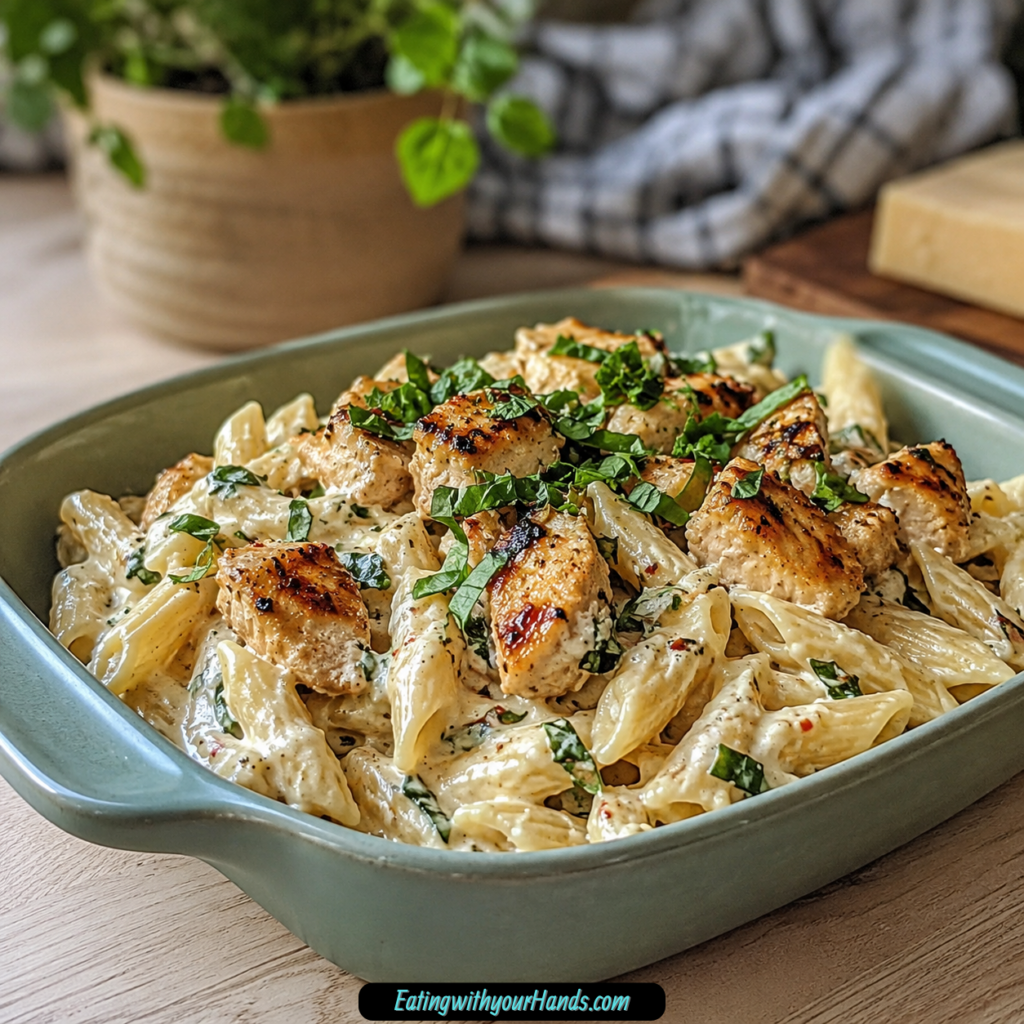
Serve the Creamy Ricotta Chicken Pasta warm. Spoon it into bowls or onto plates.
Garnish with extra basil or Parmesan on top if desired. This adds color and extra flavor.
Pair it with a green salad or garlic bread for a complete meal. Serve right away while the sauce is creamy.
Serving Ideas
Serve Creamy Ricotta Chicken Pasta warm. The sauce is best when it is soft, creamy, and freshly tossed.
Add extra basil on top for color and freshness. A little extra Parmesan gives more savory flavor.
A crisp green salad pairs beautifully with this pasta. The fresh crunch balances the creamy sauce.
Garlic bread is another perfect side. It is great for soaking up any extra sauce on the plate.
This pasta is lovely for weeknight dinners, family meals, or casual gatherings with friends. It feels comforting without being heavy or complicated.
If serving guests, bring it to the table while warm. Creamy pasta is always best when everyone can enjoy it right away.
Storage
Store leftovers in an airtight container in the refrigerator. They will keep for up to 3 days.
Let the pasta cool before storing. This helps keep excess steam from collecting in the container.
The sauce may thicken after refrigeration. That is normal because pasta continues absorbing moisture.
Keep the container sealed. This helps preserve flavor and texture.
Reheating
Reheat the pasta gently on the stove or in the microwave. Use low or moderate heat so the sauce stays creamy.
Add a splash of water, chicken broth, or reserved-style liquid if needed to loosen the sauce. Stir gently as it warms.
If reheating on the stove, keep the heat low and stir often. This helps the ricotta sauce come back together.
If reheating in the microwave, pause and stir partway through. This helps the pasta heat evenly.
Freezing
Creamy Ricotta Chicken Pasta can be frozen for up to 2 months. Let it cool completely before transferring it to an airtight container.
Thaw it in the refrigerator overnight before reheating. This gives the best texture.
Reheat gently on the stove or in the microwave. Add a splash of water or chicken broth if needed.
The sauce may need a little stirring after thawing and reheating. Gentle heat helps it become creamy again.
Make-Ahead
This pasta can be made ahead for a quick meal later. Store it in the refrigerator for up to 3 days or freeze it for up to 2 months.
If making ahead, keep in mind that the sauce will thicken as it sits. Add a splash of liquid during reheating.
Rotisserie chicken can make the dish even faster. It is a helpful shortcut when time is short.
You can also prep herbs, slice chicken, or choose add-ins ahead of time. That makes the cooking process feel easier.
Helpful Notes for Best Results
Salt the pasta water. It makes the pasta taste better from the start.
Save a little pasta water before draining. It is useful for loosening the sauce.
Slice the chicken thin. This helps it cook quickly and evenly.
Do not burn the garlic. Cook it only for about 1 minute after the chicken is browned.
Use chicken broth or reserved pasta water to make the sauce creamy. Add extra as needed.
For extra creaminess, add more ricotta or a splash of heavy cream. This makes the sauce richer.
If you are short on time, rotisserie chicken works great. It saves the chicken-cooking step.
Use gluten-free pasta if needed. This helps accommodate dietary restrictions.
Add frozen peas or broccoli for more color and nutrition. Red pepper flakes can add a spicy kick.
Variations
Spinach Ricotta Chicken Pasta
Add spinach to the pasta. It brings green color and extra nutrition.
The spinach can soften into the warm sauce. It works well with garlic, ricotta, and Parmesan.
Cherry Tomato Ricotta Pasta
Add cherry tomatoes for extra color. They give the creamy pasta a fresh, juicy bite.
This variation feels bright and seasonal. It works especially well with basil.
Grilled Chicken Ricotta Pasta
Use grilled chicken for a lighter version. It gives the dish a different flavor.
Slice the grilled chicken and toss it into the sauce. This is a great option if you already have cooked chicken.
Whole Wheat Ricotta Pasta
Use whole wheat pasta. It gives the dish a heartier flavor.
Cook it according to package instructions until al dente. The creamy sauce will still coat it nicely.
Cottage Cheese Chicken Pasta
Swap ricotta for cottage cheese. This creates a lower-fat option.
The texture will be different. Adjust the seasoning as needed.
Vegan Ricotta Pasta
Use vegan ricotta for a dairy-free version. A vegan ricotta made from blended cashews or tofu can work.
The flavor may vary, so season carefully. Use the same general method for building the sauce.
Cashew Cream Pasta
Use cashew cream instead of ricotta. This creates another dairy-free direction.
The sauce will have a different richness. Add liquid as needed to keep it smooth.
Thyme Ricotta Pasta
Use thyme for a different herb profile. It gives the pasta a more earthy flavor.
This variation changes the mood of the dish. It still pairs well with chicken and ricotta.
Oregano Ricotta Pasta
Use oregano as another herb option. It gives the dish a bolder, savory flavor.
Oregano can replace or join the fresh herb direction depending on your taste. Keep the pasta balanced with salt and pepper.
Turkey Ricotta Pasta
Swap chicken for turkey. This gives the dish a different protein option.
The creamy sauce works well with turkey. Toss it with pasta and herbs the same way.
Shrimp Ricotta Pasta
Use shrimp instead of chicken if you prefer seafood. Shrimp gives the dish a different texture and flavor.
Cook the shrimp carefully so it does not overcook. Then combine it with the creamy ricotta sauce.
Vegetarian Ricotta Pasta
Use sautéed mushrooms or roasted vegetables instead of chicken. This makes the dish meatless but still satisfying.
The vegetables bring their own flavor. The ricotta and Parmesan keep the pasta creamy.
Troubleshooting
Why Is My Sauce Too Thick?
The pasta may have absorbed too much liquid. Add a splash of chicken broth, reserved pasta water, or water.
Stir gently over low heat until the sauce becomes creamy again. Add liquid slowly so it does not become runny.
Why Is My Sauce Too Runny?
The sauce may need more time to coat the pasta. Toss the pasta in the sauce and let it sit briefly.
The sauce will thicken as it clings to the pasta. Ricotta and Parmesan also help create body.
Why Is My Chicken Dry?
The chicken may have cooked too long. Thin slices cook quickly, usually in about 5–7 minutes.
Watch the chicken as it browns. Remove it from direct heat once cooked through and continue building the sauce gently.
Why Does My Garlic Taste Bitter?
The garlic may have burned. Add it only after the chicken is browned and cook it for about 1 minute.
Garlic cooks quickly. Stir it often and keep the heat controlled.
Why Does My Pasta Taste Flat?
The pasta water may not have been salted, or the sauce may need more seasoning. Add salt and black pepper to taste.
Fresh basil and parsley also brighten the dish. Make sure they are stirred in near the end.
Frequently Asked Questions
Can I Freeze Creamy Ricotta Chicken Pasta?
Yes, Creamy Ricotta Chicken Pasta can be frozen. Let it cool completely before transferring it to an airtight container.
It can be frozen for up to 2 months. Thaw it in the refrigerator overnight and reheat gently on the stove or in the microwave.
What Should I Add When Reheating?
Add a splash of water or chicken broth if needed. This helps loosen the sauce.
Heat gently and stir often. This helps the sauce become creamy again.
How Do I Substitute Ingredients?
Chicken can be swapped for turkey or shrimp. For a vegetarian option, use sautéed mushrooms or roasted vegetables instead of chicken.
The cheeses can also be adjusted based on preference or dietary needs. Season as needed because substitutes can vary.
What Can I Use Instead of Ricotta Cheese?
Cottage cheese can be used for a similar texture. Vegan ricotta made from blended cashews or tofu can also be used for a dairy-free version.
Adjust seasoning as needed because the flavor can vary. The sauce should still taste creamy and balanced.
Can I Use Rotisserie Chicken?
Yes, rotisserie chicken works great as a quick substitute. It saves time and makes the recipe even easier.
Add it when the sauce is being combined. It only needs to heat through.
Can I Make This Gluten-Free?
Yes, use gluten-free pasta. Cook it according to the package instructions.
Make sure any other ingredients you use fit your dietary needs. The creamy ricotta sauce still works with gluten-free pasta.
What Can I Serve With This Pasta?
A crisp green salad is a great side. Garlic bread also pairs beautifully with the creamy sauce.
Extra basil or Parmesan on top makes the dish look finished. Serve warm for the best texture.
Why This Recipe Works So Well
Creamy Ricotta Chicken Pasta works because it builds flavor in layers. The chicken browns in olive oil, the garlic becomes fragrant, and the ricotta sauce comes together with Parmesan and broth or pasta water.
The short pasta makes every bite satisfying. Penne, rigatoni, or farfalle hold the creamy sauce beautifully.
Ricotta is the heart of the sauce. It creates creaminess without needing a long cooking process.
Parmesan adds savory flavor. It helps the sauce taste more complete and balanced.
Fresh basil and parsley bring brightness at the end. They make the dish feel fresh, warm, and homemade.
The recipe also works because it is flexible. You can use different pasta shapes, swap proteins, add vegetables, or adjust the sauce with extra ricotta, heavy cream, or a splash of liquid.
Final Thoughts
Creamy Ricotta Chicken Pasta is a warm, comforting meal that feels special without being difficult. It brings together tender chicken, short pasta, ricotta, Parmesan, garlic, basil, parsley, and a creamy sauce that coats every bite.
I love how this dish can turn a busy evening into something softer. The garlic hits the pan, the pasta water bubbles, the ricotta melts into the sauce, and suddenly dinner feels like a moment worth slowing down for.
Serve it warm with a green salad, garlic bread, extra Parmesan, or fresh basil, and save the leftovers for an easy lunch the next day. Whether you make it for family, friends, or a quiet night at home, this pasta brings creamy comfort and simple joy to the table.
Creamy Ricotta Chicken Pasta
This Creamy Ricotta Chicken Pasta is rich, tender, and comforting with sliced chicken breasts, short pasta, creamy ricotta, Parmesan, garlic, and fresh herbs. It is a quick Italian-style dinner that feels fresh and satisfying, perfect for busy weeknights, family meals, or anytime you want a creamy pasta without a complicated sauce.
Recipe Details
- Prep Time: 15 minutes
- Cook Time: 20 minutes
- Total Time: 35 minutes
- Course: Dinner, Pasta
- Cuisine: Italian
- Servings: 4 people
- Calories: 450 kcal
Equipment
- Pan
- Pot
Ingredients
Protein
- 2 pieces chicken breasts, sliced thin
Dairy
- ½ cup grated Parmesan cheese
- 1 cup ricotta cheese
Pasta & Grains
- 8 oz short pasta (penne, rigatoni, or farfalle)
Aromatics & Herbs
- ¼ cup fresh parsley, chopped
- ¼ cup fresh basil, chopped
- 3 cloves garlic, minced
Liquids & Oils
- ¼ cup chicken broth or reserved pasta water (plus extra as needed)
- 2 tablespoons olive oil
Seasonings
- to taste black pepper
- to taste salt
Instructions
Step 1: Cook the Pasta
Cook the short pasta according to package instructions. Drain and set it aside.
Step 2: Cook the Chicken
In a pan, heat the olive oil over medium heat. Add the thinly sliced chicken breasts and cook until browned and cooked through.
Step 3: Add the Garlic
Add the minced garlic to the pan and cook for another minute, until fragrant.
Step 4: Make the Creamy Ricotta Sauce
Mix in the ricotta cheese, grated Parmesan cheese, and chicken broth or reserved pasta water. Stir until well combined and creamy.
Step 5: Toss Everything Together
Add the cooked pasta, fresh basil, fresh parsley, salt, and black pepper. Toss to combine and heat through.
Step 6: Serve Warm
Serve the creamy ricotta chicken pasta warm while the sauce is smooth and the herbs taste fresh.
Notes
For extra creaminess, you can add more ricotta or a splash of cream.
Serving Suggestions
- Serve warm with garlic bread or crusty bread.
- Pair with a simple green salad for a balanced dinner.
- Add roasted vegetables on the side for extra color and texture.
- Serve with extra Parmesan at the table if desired.
- Enjoy with penne, rigatoni, or farfalle so the creamy ricotta sauce clings well to the pasta.
Storage
How to Store
Let leftovers cool, then transfer them to an airtight container. Refrigerate until ready to reheat.
How to Reheat
Reheat gently on the stovetop or in the microwave until warmed through. Add a little extra chicken broth or reserved pasta water as needed to loosen the sauce.
Best Texture Tip
For the creamiest texture, reheat gently and stir well so the ricotta and Parmesan sauce stays smooth instead of drying out.
Make-Ahead Tip
You can cook the pasta and slice the chicken ahead of time, then combine everything with the ricotta sauce when ready to serve.

Fernando is the creator and writer behind the food blog Eating with your Hands. Living and working in cities like Paris, Barcelona, and Berlin, and being married to a Canadian foodie, has given Fernando a passion and interest in food and inspired him to run EWYH.