
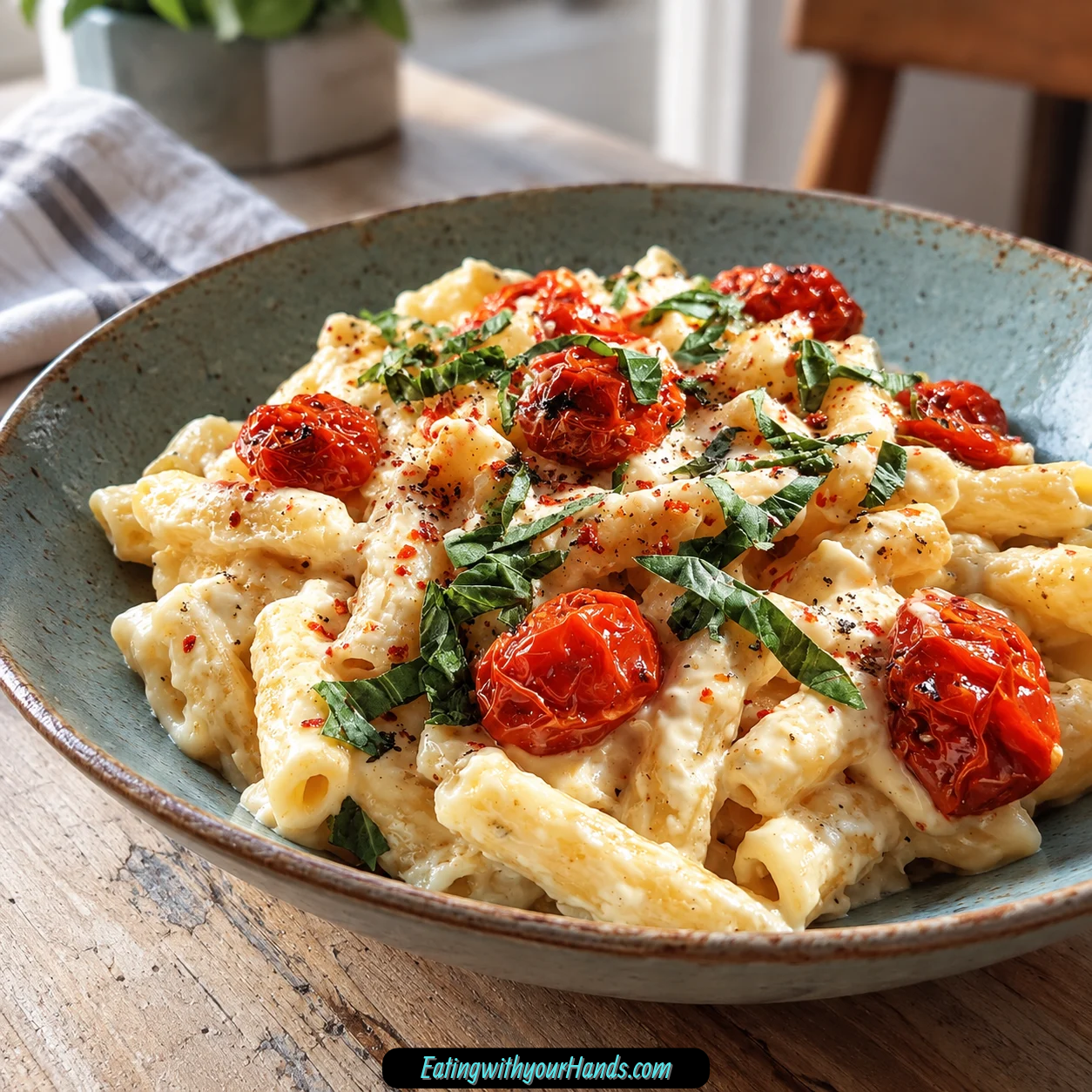
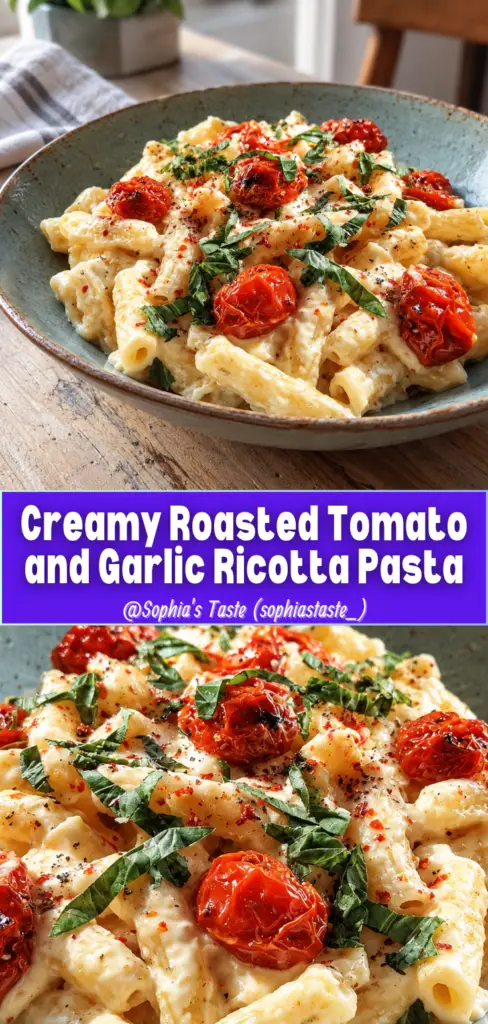
I still remember the first time I pulled a tray of roasted cherry tomatoes and garlic from the oven for this pasta and wondered why I had not been making dinner this way every week. The tomatoes had softened until their juices ran across the pan, the garlic had mellowed into something warm and golden, and suddenly a handful of everyday ingredients smelled like the beginning of a meal I wanted immediately.
That first bowl gave me everything I had been hoping for without asking me to spend the evening hovering over the stove. Creamy ricotta wrapped itself around the pasta, sweet roasted tomatoes broke into little pockets of concentrated flavor, and fresh basil and lemon lifted everything just enough to keep the dish rich without feeling heavy.
It quickly became one of those recipes that slipped into my regular rotation almost without trying. Whenever I wanted comfort food but still wanted dinner to feel fresh and bright, this was the bowl I found myself making again.
There is something especially satisfying about the way simple ingredients change in the oven. Cherry tomatoes that begin juicy and fresh become softer, sweeter, and more intense, while minced garlic loses its sharper edge and settles into the olive oil and tomato juices.
Then the ricotta changes everything once the hot pasta arrives. Instead of building a sauce in a separate pan, the warm noodles, Parmesan, roasted tomato juices, and starchy pasta water loosen the ricotta until it becomes creamy enough to coat every bite.
The whole dinner comes together in about 30 minutes because the tomatoes roast while the pasta cooks. That overlap makes the recipe feel effortless enough for a weeknight, even though the finished plate looks polished enough to serve when friends come over.
I also love that it is naturally satisfying without requiring meat. The pasta, whole-milk ricotta, Parmesan, roasted tomatoes, olive oil, garlic, and herbs create enough richness and texture that nothing feels missing from the plate.
And then there is the smell. When the tomatoes are blistering and the garlic is turning golden, the kitchen takes on the kind of warm, garlicky aroma that makes everyone nearby suddenly interested in what is for dinner.
Table of Contents
- Why You’ll Love This Roasted Tomato and Garlic Ricotta Pasta
- Ingredients for Roasted Tomato and Garlic Ricotta Pasta
- Why Roasted Tomatoes Make Such a Difference
- Why Whole-Milk Ricotta Works Best
- Pasta Water Is Part of the Sauce
- Equipment Needed
- How to Make Roasted Tomato and Garlic Ricotta Pasta
- Step 1: Preheat the Oven and Prepare the Tomato Mixture
- Step 2: Roast Until the Tomatoes Soften and the Garlic Turns Golden
- Step 3: Cook the Pasta While the Tomatoes Roast
- Step 4: Reserve Pasta Water and Drain
- Step 5: Combine the Pasta, Roasted Tomatoes, Ricotta, and Parmesan
- Step 6: Add the Fresh Basil and Lemon
- Step 7: Adjust the Final Sauce Consistency
- Step 8: Serve Immediately
- Tips for the Best Roasted Tomato and Garlic Ricotta Pasta
- Variations for Roasted Tomato and Garlic Ricotta Pasta
- Using Dried Basil Instead of Fresh
- Ricotta Substitutions
- How to Make It Gluten-Free
- Serving Suggestions
- How to Store Leftovers
- How to Reheat the Pasta
- Making the Tomatoes Ahead
- Frequently Asked Questions
- Nutritional Information
- The Pasta That Became a Weekly Favorite
- Creamy Roasted Tomato and Garlic Ricotta Pasta Perfection
Why You’ll Love This Roasted Tomato and Garlic Ricotta Pasta
The creaminess is probably the first thing you notice. Whole-milk ricotta softens against the heat of the pasta and turns silky when a little reserved pasta water is folded into it.
The roasted tomatoes bring the contrast that keeps that creaminess interesting. Their juices become concentrated in the oven, so each softened piece brings sweetness and tang against the mild ricotta.
Garlic adds another layer without overwhelming the dish. Roasting it with the tomatoes allows it to become mellow and golden rather than staying aggressively sharp.
Fresh basil and lemon juice arrive at the end, and those final ingredients make a noticeable difference. The basil adds freshness while the lemon cuts through the richness and gives the finished pasta a cleaner, brighter finish.
This is also one of those useful recipes that feels more elaborate than it really is. There is no complicated sauce technique, no specialty equipment, and no long simmering time.
Most of the work happens in two places at once. The tomatoes roast in the oven while the pasta cooks on the stove, which is why dinner can move from preparation to serving in roughly half an hour.
Ingredients for Roasted Tomato and Garlic Ricotta Pasta
The recipe uses a short list of familiar ingredients, and every one contributes something important to the final texture or flavor. Whole-milk ricotta gives the creamiest result, while fresh lemon juice and basil keep the richer ingredients from taking over.
- 2 cups cherry tomatoes, halved
- 1 tablespoon olive oil
- 4 cloves garlic, minced
- 1 teaspoon dried oregano
- 1 teaspoon salt, plus more for pasta water
- ½ teaspoon black pepper, freshly cracked
- 12 ounces pasta
- 1 cup ricotta cheese
- ½ cup grated Parmesan cheese, packed
- ¼ cup fresh basil leaves
- 1 tablespoon lemon juice, freshly squeezed
Spaghetti, penne, or another pasta you enjoy can be used. The shape may change the way the sauce settles around the noodles, but the same roasted tomato and ricotta mixture works with either long or short pasta.
Why Roasted Tomatoes Make Such a Difference
Fresh cherry tomatoes already bring plenty of flavor, but roasting changes both their texture and intensity. Halving them first gives the juices an easy path out of the fruit, which helps them soften and collapse rather than staying firm in the center.
The olive oil, oregano, salt, black pepper, and garlic coat those cut surfaces before the tray enters the oven. As everything roasts, the tomato juices become part of the sauce instead of something separate that gets discarded.
You want the tomatoes softened enough that some begin to collapse. If they still look firm after 20 minutes, another 5 minutes can give them more time to caramelize and release their juices.
Keep an eye on the garlic if you extend the roasting time. Golden garlic adds mellow flavor, while garlic that moves too far toward brown can lose the soft character you want here.
Why Whole-Milk Ricotta Works Best
The standard version uses 1 cup whole-milk ricotta because it creates the richest and smoothest texture. Letting it sit at room temperature for about 15 minutes before mixing helps it blend more easily into the hot pasta.
Cold ricotta can remain more stubbornly lumpy when it first hits the noodles. A slightly warmer temperature, combined with reserved pasta water, helps it relax into a softer sauce.
If the ricotta still looks uneven while you are mixing, do not panic or start stirring aggressively. A splash of warm pasta water and gentle folding can smooth it considerably.
The goal is not a heavy cream sauce. You want enough looseness for the ricotta to coat the pasta while still allowing the roasted tomatoes and basil to remain visible.
Pasta Water Is Part of the Sauce
Before draining the pasta, reserve about ½ cup of the cooking water. You may not need all of it, but having it nearby gives you control over the final consistency.
About ¼ cup goes into the pasta when the ricotta and Parmesan are first mixed in. From there, additional water can be added gradually if the sauce still feels too thick.
That gradual approach matters because it is always easier to loosen a sauce than to remove excess liquid. Add a little, fold gently, and stop as soon as the ricotta looks silky enough to cling to the pasta.
The starch in the reserved water also helps the sauce hold onto the noodles. It is one of the simplest details in the recipe, but skipping it can leave the ricotta much thicker and harder to distribute.
Equipment Needed
You only need a few basic kitchen tools to make this pasta. A baking sheet handles the tomatoes, a large pot gives the pasta room to cook, a mixing bowl helps with preparation, and a wooden spoon or spatula is enough for combining everything.
No specialty pasta equipment or stand mixer is necessary. The simplicity of the setup is one of the reasons this dinner feels so manageable on an ordinary weeknight.
How to Make Roasted Tomato and Garlic Ricotta Pasta
The easiest rhythm is to start the tomatoes first and cook the pasta while they roast. By the time the tomatoes become soft and golden at the edges, the pasta can be drained and ready to meet the ricotta, Parmesan, basil, and lemon.
Step 1: Preheat the Oven and Prepare the Tomato Mixture
Preheat the oven to 400°F (200°C), then halve 2 cups cherry tomatoes and place them in a mixing bowl. Add 1 tablespoon olive oil, 4 cloves minced garlic, 1 teaspoon dried oregano, 1 teaspoon salt, and ½ teaspoon freshly cracked black pepper.
Toss everything until the cut sides and skins of the tomatoes are coated with the oil and seasonings. You can use a spoon or your hands, but make sure the garlic and oregano are distributed rather than sitting in one concentrated area.
Spread the seasoned tomatoes across a baking sheet in a single layer. Give them enough space that they roast instead of sitting in a crowded pile and steaming in their own moisture.
Step 2: Roast Until the Tomatoes Soften and the Garlic Turns Golden
Place the baking sheet in the 400°F oven and roast for about 20 minutes. During that time, the tomatoes should soften, some should begin to collapse, and their juices should collect around the pan with the olive oil and garlic.
Look closely at both the tomatoes and garlic near the end of the roasting time. The garlic should be golden rather than brown, while the tomatoes should appear blistered, juicy, and noticeably softer than when they went into the oven.
If the tomatoes still look too firm after 20 minutes, give them up to another 5 minutes. Watch the garlic during this extra time so the deeper tomato roasting does not come at the expense of burnt garlic.
Step 3: Cook the Pasta While the Tomatoes Roast
While the tomatoes are in the oven, bring a large pot of salted water to a boil. About 1 tablespoon salt can be used for the water when cooking the 12 ounces pasta.
Add the pasta and cook until al dente, using the package timing as your guide. A typical range is about 8–10 minutes, but the exact cooking time depends on the pasta you choose.
Stir occasionally so the noodles do not stick together. The goal is pasta that is cooked through but still has enough structure to hold up when it is folded with the ricotta and roasted tomatoes.
Step 4: Reserve Pasta Water and Drain
Before draining, scoop out about ½ cup of the starchy pasta water and set it aside. Do not forget this step, because the warm water is one of the easiest ways to turn the ricotta into a smoother sauce.
Drain the pasta once it reaches al dente, then return it to the pot with the heat turned off. Keeping the pot off the burner gives you enough residual heat to blend the sauce without aggressively cooking the ricotta.
Have the roasted tomatoes nearby, including every bit of juice left on the baking sheet. Those juices belong in the pasta because they carry the roasted garlic, tomato, olive oil, oregano, salt, and pepper flavors.
Step 5: Combine the Pasta, Roasted Tomatoes, Ricotta, and Parmesan
Add the roasted tomatoes and all their juices to the hot drained pasta. Dollop in 1 cup ricotta and sprinkle in the packed ½ cup grated Parmesan.
Pour in about ¼ cup of the reserved pasta water, then begin folding everything together gently with a wooden spoon. Avoid vigorous stirring because you want many of the roasted tomatoes to remain recognizable rather than becoming completely crushed into the sauce.
As the ricotta warms, it should begin loosening around the noodles while the Parmesan melts into the mixture. If the sauce still feels too thick or lumpy, add more reserved pasta water gradually until the texture becomes creamy and cohesive.
Step 6: Add the Fresh Basil and Lemon
Once the ricotta sauce coats the pasta, add ¼ cup fresh basil leaves and 1 tablespoon freshly squeezed lemon juice. Tearing the basil by hand is especially good here because it keeps the pieces rustic and releases their fragrance just before serving.
Fold the basil and lemon through gently so they are distributed without breaking down the tomatoes unnecessarily. These final ingredients should brighten the richer ricotta and Parmesan rather than disappear into the background.
Taste the pasta after everything is combined. Add another pinch of salt if needed, or a little more lemon when you want a brighter finish.
Step 7: Adjust the Final Sauce Consistency
Look at the sauce before serving and decide whether it needs more reserved pasta water. The ricotta should coat the noodles smoothly, but the pasta should not sit in a watery pool.
Add extra water only a splash at a time and fold gently after each addition. This is especially useful if the ricotta started cold or if the pasta absorbed more moisture while you were combining everything.
If the tomatoes released plenty of juice, you may need very little additional water beyond the first ¼ cup. Let the appearance of the sauce guide the final adjustment rather than automatically using the entire reserved ½ cup.
Step 8: Serve Immediately
Transfer the pasta to plates or a serving bowl while it is still hot and creamy. Finish with extra Parmesan and, if you like, a drizzle of good olive oil over the top.
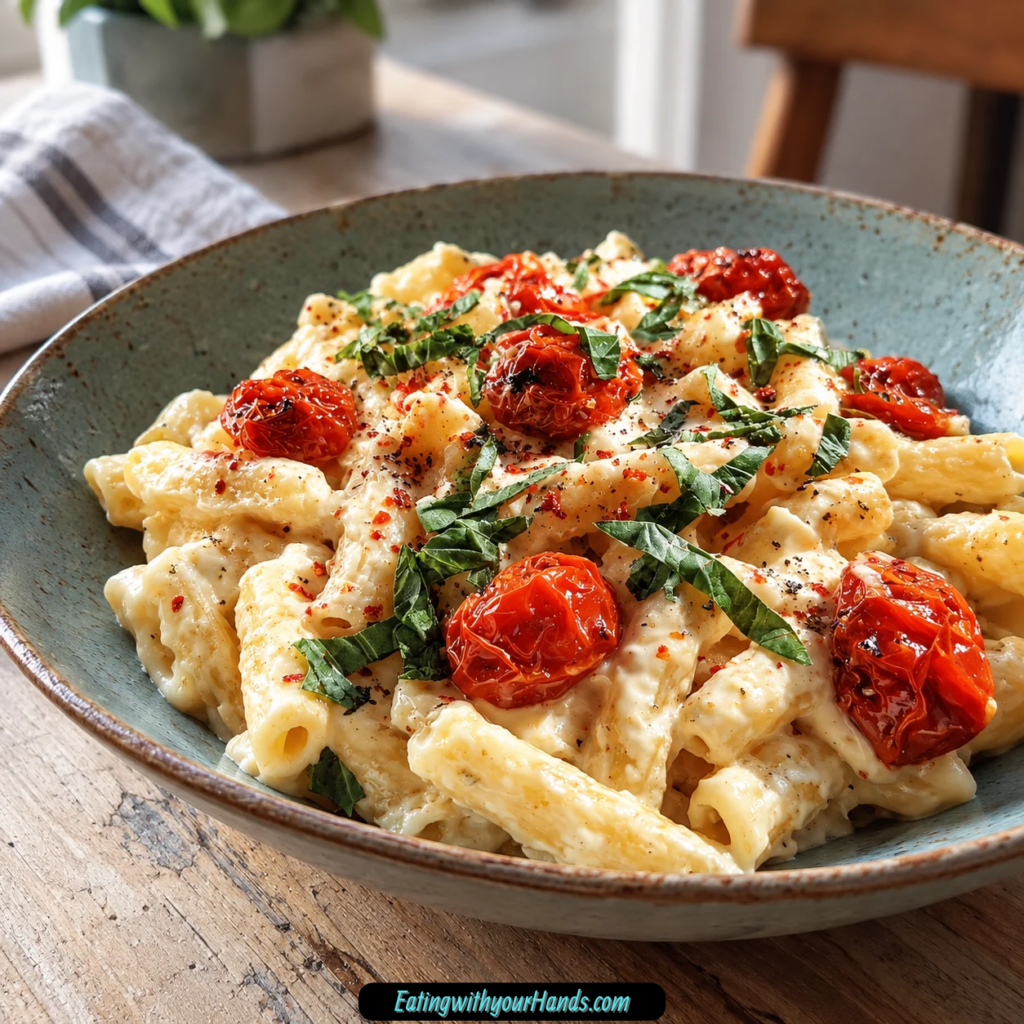
Serve immediately because the ricotta sauce is at its silkiest while warm. The fresh basil, lemon, sweet roasted tomatoes, and mellow garlic are also most vivid right after the pasta comes together.
Tips for the Best Roasted Tomato and Garlic Ricotta Pasta
Letting the ricotta rest at room temperature for about 15 minutes makes mixing easier. Whole-milk ricotta gives the richest result and blends more smoothly than a colder, leaner version.
Always reserve the pasta water before draining. Add it gradually so you can stop as soon as the sauce reaches the texture you want.
Give the tomatoes enough time to become soft and caramelized. Another 5 minutes can help if they are not ready at the 20-minute mark, but keep watching the garlic so it stays golden rather than brown.
Season at more than one point rather than expecting the first teaspoon of salt to carry the entire dish. Pasta water needs salt, the tomatoes are seasoned before roasting, and the finished pasta should still be tasted before serving.
Fresh basil is best torn by hand. This keeps the leaves from bruising as much and releases their aroma right before the pasta reaches the table.
Variations for Roasted Tomato and Garlic Ricotta Pasta
One of the strengths of this pasta is how easily small additions can change the mood of the dish. The creamy ricotta and roasted tomato base can stay the same while spice, greens, nuts, protein, or herbs move the flavor in different directions.
Add Red Pepper Flakes
A pinch of red pepper flakes can go onto the tomatoes before roasting. If you prefer a more noticeable kick, an extra ¼ teaspoon is one way to build warmer heat into the dish.
The pepper works particularly well against the mild ricotta. Add enough to create warmth without covering the sweetness of the roasted tomatoes.
Add Baby Spinach or Arugula
A couple handfuls of baby spinach can be folded into the hot pasta after the ricotta and tomatoes have been combined. The residual heat wilts the leaves without requiring another cooking step.
Arugula is another option when you want something more peppery. Fold it in gently so the greens soften without disappearing completely into the sauce.
Add Toasted Pine Nuts or Walnuts
Toasted pine nuts or walnuts can be scattered over the pasta just before serving. Toast them in a dry pan until golden so their nuttiness stands out against the creamy sauce.
The crunch creates an especially pleasant contrast with the tender pasta and ricotta. No exact amount is required, so add according to the texture you prefer.
Add Pancetta, Shrimp, or Chicken
Crispy pancetta can turn the pasta into a more savory version when vegetarian preparation is not required. Sautéed shrimp is another option that pairs easily with the tomato, garlic, lemon, and basil.
Leftover rotisserie chicken can also be added. Toss it in with the tomatoes so it has time to warm through before serving.
Change the Herbs
Fresh thyme leaves or parsley can replace basil when necessary. These substitutions change the herbal character but still provide freshness against the ricotta.
When fresh herbs are unavailable, 1 teaspoon pesto can be used. It offers another way to bring herb flavor into the creamy tomato base.
Add Roasted Red Peppers
Jarred roasted red peppers can be added for another sweet, roasted element. Fold them in with the other ingredients so they warm through without needing another cooking step.
No exact quantity is required for this variation. Add enough to complement the tomatoes without overwhelming the ricotta base.
Using Dried Basil Instead of Fresh
Fresh basil gives the brightest finish, but dried basil can work when necessary. Use 1 teaspoon dried basil instead of the fresh leaves.
One option is mixing the dried basil directly into the ricotta. Another is adding it halfway through roasting the tomatoes so the heat has time to wake up the herb.
The flavor will be more muted than fresh basil. The finished pasta will still work, but it will lose some of the fragrant freshness that comes from torn leaves added at the end.
Ricotta Substitutions
Cottage cheese can replace ricotta when blended until smooth. Drain it first so excess moisture does not make the pasta sauce too loose.
Mascarpone is another alternative for a richer result. Because it is more decadent, thin it with a little more reserved pasta water until it coats the pasta smoothly.
Whole-milk ricotta remains the standard choice because its mild flavor and creamy texture fit the roasted tomato base especially well. The substitutions work, but they each move the sauce in a slightly different direction.
How to Make It Gluten-Free
Use your preferred gluten-free pasta in place of the regular pasta. Brown rice pasta and chickpea pasta are two options that fit the dish.
Watch the cooking time carefully because gluten-free pasta can soften quickly. Drain it as soon as it reaches the texture you want so it does not become overly soft during mixing.
The remaining ingredients do not require another substitution for this variation. Continue with the roasted tomatoes, ricotta, Parmesan, basil, lemon, and reserved pasta water in the same general way.
Serving Suggestions
Garlic bread is one of my favorite things to put beside this pasta. Its crisp buttery surface is perfect for picking up any creamy ricotta and tomato sauce left on the plate.
A store-bought loaf brushed with garlic butter and broiled until golden makes an especially quick side. It keeps the meal easy while still giving you something crunchy beside the soft pasta.
A simple arugula salad with lemon vinaigrette is another natural pairing. The fresh greens and acidity balance the ricotta and Parmesan without competing with the roasted tomato flavor.
A chopped Caprese-style side with tomatoes, fresh mozzarella, basil, and balsamic is another option. It carries some of the same Italian-inspired flavors while adding a fresh, cool contrast.
For a drink pairing, chilled Pinot Grigio is one suggestion. Its crisp citrus character is especially pleasant against the creaminess of the ricotta sauce.
The pasta can also stand completely on its own. On nights when comfort is the only goal, a warm bowl straight from the pot is more than enough.
How to Store Leftovers
Transfer leftover pasta to an airtight container and refrigerate it for about 3 days. Pressing plastic wrap directly against the surface before closing the lid can help prevent the ricotta from drying out.
The tomato and garlic flavors may deepen as the pasta sits overnight. The tomatoes will also become softer, allowing their sweetness and juices to spread more fully through the pasta.
Do not be surprised if the sauce feels thicker when cold. Ricotta and pasta naturally firm in the refrigerator, which is why adding a little liquid during reheating makes such a difference.
How to Reheat the Pasta
Add about 2 tablespoons water or milk per serving before reheating. That extra liquid loosens the chilled ricotta and helps the sauce become creamy again.
For microwave reheating, warm the pasta in 30-second bursts and stir between each interval. Continue until it is warmed through without overheating the noodles.
A skillet over medium-low heat is another good option. Add the same splash of liquid and stir gently as the pasta warms so the sauce comes back together without cooking the noodles too aggressively.
Finish reheated pasta with a fresh squeeze of lemon and a little basil when available. That final touch brings back some of the brightness that is strongest in a freshly made batch.
Making the Tomatoes Ahead
The tomatoes can be roasted up to 2 days in advance. Store them in the refrigerator with all their juices rather than separating the fruit from the flavorful liquid.
Warm them slightly before combining them with ricotta. Very cold tomatoes can make the cheese tighten rather than blending smoothly into the sauce.
The roasting juices may thicken during refrigeration. Stir in 1 tablespoon warm water if needed to loosen them before adding them to the pasta.
Frequently Asked Questions
Can I Use Dried Basil?
Yes. Use 1 teaspoon dried basil in place of the fresh basil.
Mix it into the ricotta or add it partway through roasting the tomatoes. Expect a more subdued herbal flavor than you would get from fresh leaves.
What Can I Use Instead of Ricotta?
Drained cottage cheese blended until smooth works well. It gives you a creamy base while keeping the sauce relatively mild.
Mascarpone is another option when you want something richer. Thin it with additional reserved pasta water until the sauce reaches the right consistency.
How Can I Make the Pasta Gluten-Free?
Use your favorite gluten-free pasta. Brown rice and chickpea varieties are both suitable options.
Watch the cooking closely because gluten-free pasta can soften quickly. Continue with the remaining ingredients as usual once the pasta reaches the texture you want.
Can I Roast the Tomatoes Ahead?
Yes. Roast them up to 2 days ahead and refrigerate them with their juices.
Warm them slightly before combining with the ricotta. If the chilled juices are too thick, loosen them with 1 tablespoon warm water.
Why Isn’t My Sauce Creamy Enough?
The ricotta may be too cold, or the sauce may need more reserved pasta water. Letting the ricotta sit at room temperature for 15 minutes makes it easier to blend.
Add warm pasta water gradually while folding the ingredients together. Stop once the sauce turns smooth and silky enough to coat the noodles.
Nutritional Information
One serving, about ¼ of the recipe, is approximately 450 calories. It contains about 15g fat, including 7g saturated fat, along with 60g carbohydrates and 4g fiber.
Each serving also provides about 20g protein and 700mg sodium. Exact numbers can shift depending on the pasta, cheeses, and other specific ingredients used.
The values are based on regular pasta and whole-milk ricotta. Using low-fat ricotta can reduce the estimate by about 40 calories per serving, while additional Parmesan or optional toppings will change the numbers in the opposite direction.
The tomatoes contribute vitamin C, while ricotta contributes calcium and olive oil contributes fat to the dish. Those ingredients sit alongside the carbohydrates from the pasta and protein from the cheeses to make the meal feel satisfying.
The Pasta That Became a Weekly Favorite
I love recipes that surprise me by becoming part of everyday life, and this pasta did exactly that. What began as a quick experiment with tomatoes, garlic, and ricotta turned into one of those dinners I now crave before I even start cooking.
Part of that affection comes from how quickly the kitchen begins to smell wonderful. Once the garlic and tomatoes have spent a few minutes in the oven, dinner already feels much more elaborate than the amount of work involved.
Then comes the moment when the roasted tomato juices hit the hot pasta and the ricotta begins to loosen. The ingredients that looked completely separate a few minutes earlier suddenly become one creamy, glossy bowl.
I like that the dish feels indulgent without losing its freshness. Ricotta and Parmesan make it comforting, but basil, lemon, and those sweet roasted tomatoes keep every forkful lively.
Some nights I make it exactly as written because that balance is what I am craving. On other nights, red pepper flakes, spinach, walnuts, shrimp, or another variation makes the same basic dinner feel completely new.
That flexibility is useful, but the simple version remains the one I return to most often. There is something hard to beat about soft tomatoes, mellow garlic, whole-milk ricotta, Parmesan, basil, and lemon wrapped around warm pasta.
It still gives me the same reaction I had the first time I made it. One bite in, I find myself wondering why I do not cook it even more often.
And that may be the best compliment I can give a weeknight dinner. Creamy Roasted Tomato and Garlic Ricotta Pasta feels comforting enough to crave, easy enough to make regularly, and special enough that I am always happy to put another bowl on the table.
Creamy Roasted Tomato and Garlic Ricotta Pasta Perfection

Creamy, savory, and full of roasted tomato flavor, this Creamy Roasted Tomato and Garlic Ricotta Pasta brings together juicy cherry tomatoes, fragrant garlic, smooth ricotta, Parmesan, fresh basil, and a splash of lemon. Ready in just 30 minutes, it is a simple Italian main dish with a rich, comforting texture and a bright, fresh finish.
Recipe Details
- Prep Time: 10 minutes
- Cook Time: 20 minutes
- Total Time: 30 minutes
- Course: Main Dish
- Cuisine: Italian
- Servings: 4 servings
- Calories: 450 kcal
Ingredients
For the Roasted Tomatoes
- 2 cups cherry tomatoes
- 4 cloves garlic minced
- 1 tablespoon olive oil
- 1 teaspoon dried oregano
- 1 teaspoon salt
- ½ teaspoon black pepper
For the Pasta
- 12 ounces pasta such as spaghetti or penne
- 1 cup ricotta cheese
- ½ cup grated Parmesan cheese
- ¼ cup fresh basil leaves chopped
- 1 tablespoon lemon juice
Instructions
Step 1: Preheat the Oven
Preheat the oven to 400°F (200°C).
Prepare a baking sheet while the oven heats.
Step 2: Season the Tomatoes
Combine the cherry tomatoes with the olive oil, minced garlic, dried oregano, salt, and black pepper.
Toss well so the tomatoes are evenly coated with the garlic, herbs, and seasoning.
Step 3: Roast Until Flavorful
Spread the seasoned tomatoes across the baking sheet in an even layer.
Roast for 20 minutes, allowing the tomatoes to soften and the garlic and oregano to become fragrant.
Step 4: Cook the Pasta
While the tomatoes roast, prepare the pasta according to the package instructions.
Use spaghetti or penne, then drain well once cooked.
Step 5: Add the Creamy Cheese
Combine the hot drained pasta with the roasted tomatoes, ricotta cheese, and grated Parmesan.
Toss gently until the ricotta becomes creamy and coats the pasta while the roasted tomatoes are distributed throughout.
Step 6: Finish with Basil and Lemon
Add the chopped fresh basil and lemon juice.
Stir gently until the basil and lemon are evenly incorporated into the creamy pasta.
Step 7: Serve Warm
Divide the pasta among 4 servings and enjoy while warm.
Taste before serving and adjust the seasoning if desired.
Notes
- Use fresh basil for the best flavor.
- Adjust seasoning to taste.
- Add red pepper flakes for a spicy kick.
Serving Suggestions
Serve Creamy Roasted Tomato and Garlic Ricotta Pasta warm, when the ricotta is soft and creamy and the roasted tomatoes are still juicy. The combination of Parmesan, garlic, basil, oregano, and lemon gives the pasta both comforting richness and a bright finish.
Spaghetti and penne both work beautifully with the creamy ricotta mixture. For a little extra heat, finish the pasta with red pepper flakes before serving.
Storage
This pasta has its best creamy texture when served warm after the ricotta, Parmesan, roasted tomatoes, basil, and lemon have been mixed together.
Allowing the pasta to sit briefly before serving can help the creamy cheese mixture settle around the noodles without losing the fresh basil and roasted tomato character.
Tomato Tip
Toss the 2 cups cherry tomatoes with olive oil, garlic, oregano, salt, and black pepper before roasting.
Spread them evenly so they roast consistently and soften throughout.
Ricotta Tip
Add 1 cup ricotta cheese directly to the drained pasta with the roasted tomatoes.
Toss while the pasta is still warm so the ricotta spreads smoothly through the dish.
Parmesan Tip
Use ½ cup grated Parmesan cheese with the ricotta for a richer, more savory finish.
Basil Tip
Use ¼ cup chopped fresh basil leaves and add them near the end.
Fresh basil keeps the finished pasta bright and aromatic.
Lemon Tip
Stir in 1 tablespoon lemon juice just before serving.
The lemon adds a fresh contrast to the creamy ricotta and Parmesan.
Spice Tip
Add red pepper flakes for a spicy kick if desired.

Fernando is the creator and writer behind the food blog Eating with your Hands. Living and working in cities like Paris, Barcelona, and Berlin, and being married to a Canadian foodie, has given Fernando a passion and interest in food and inspired him to run EWYH.