
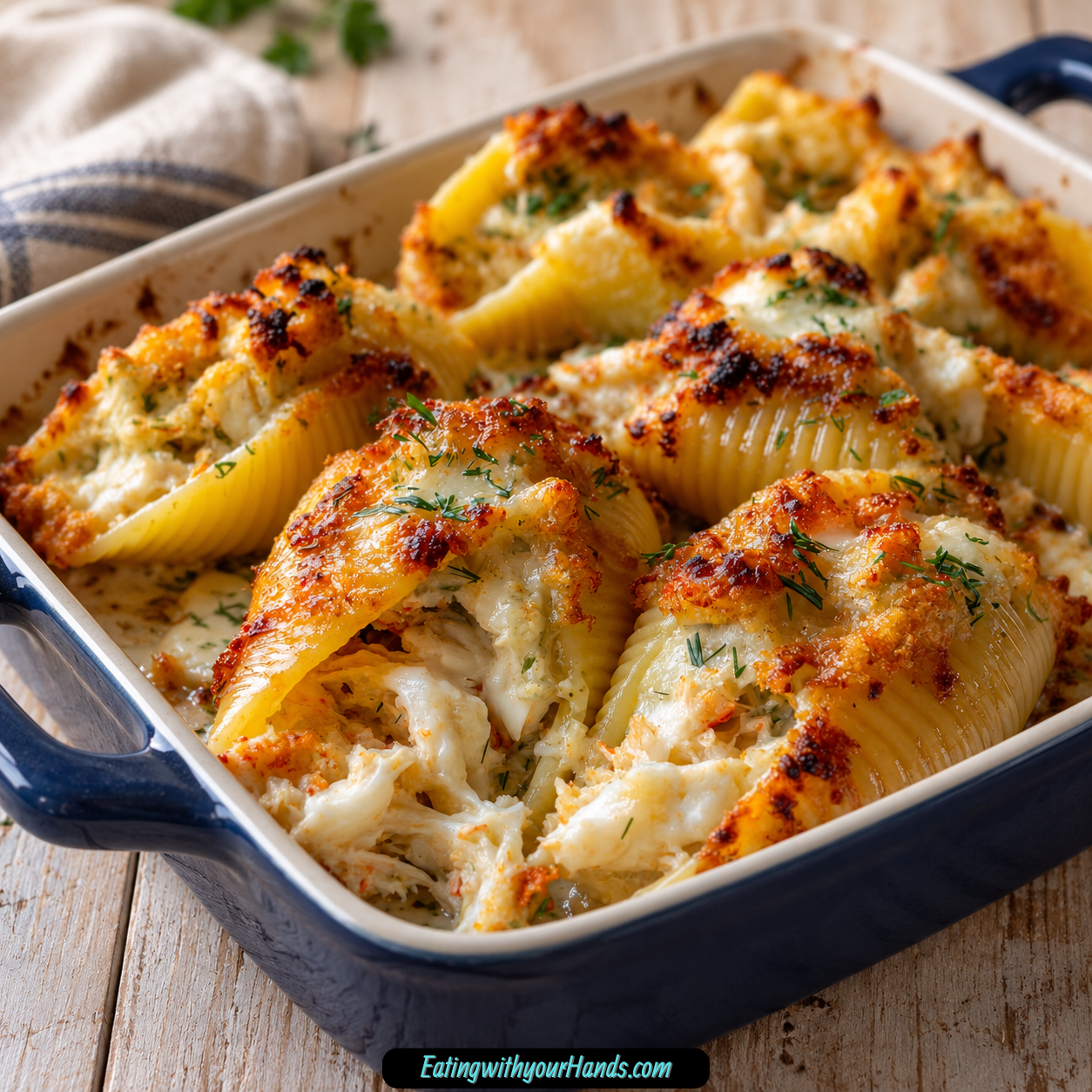
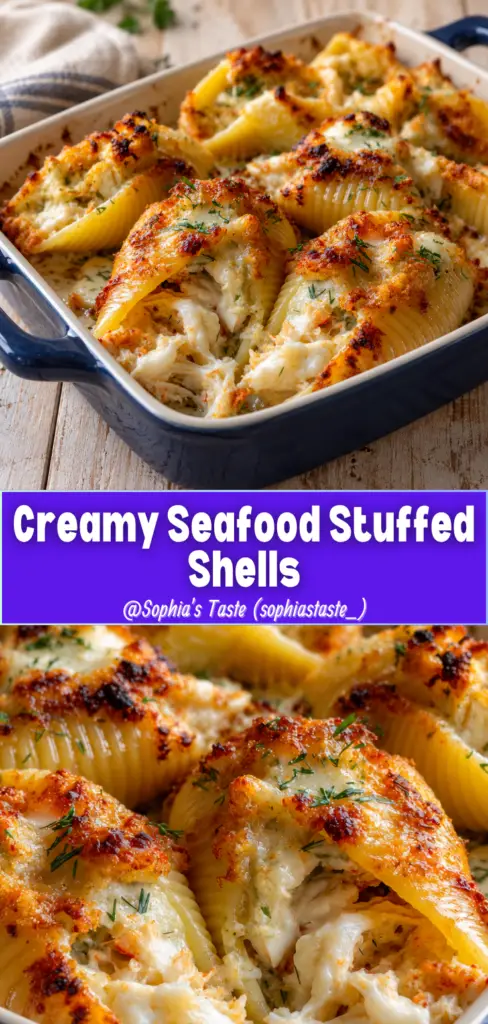
Creamy Seafood Stuffed Shells are the kind of dinner that feels like a celebration the moment the baking dish comes out of the oven. Tender pasta shells are filled with rich lobster, lump crab, cream cheese, mozzarella, Parmesan Reggiano, garlic, and cream, then baked until the top is melted, bubbly, and ready for the first unforgettable bite.
This is comfort food with a little elegance tucked inside. It has the cozy, cheesy feeling of a baked pasta dish, but the lobster and crab make it feel special enough for guests, holidays, anniversaries, or the kind of dinner where you want the table to go quiet for a minute.
The beauty of this recipe is that it looks and tastes restaurant-worthy without requiring complicated cooking. The filling comes together in one saucepan, the shells are stuffed generously, and the oven finishes everything under a blanket of cheese.
The sauce is creamy but not heavy in a dull way. Garlic, cream cheese, heavy cream, mozzarella, and Parmesan Reggiano melt into a rich base that clings to the seafood and fills each shell with luxurious flavor.
The seafood matters here. Real lobster and real lump crab give the dish its sweet, briny richness and make every bite feel like something worth slowing down for.
This recipe is also surprisingly practical. It comes together in under an hour, can be assembled ahead, and reheats gently when you are lucky enough to have leftovers.
Creamy Seafood Stuffed Shells are decadent, cozy, creamy, and full of seafood flavor. They are the kind of stuffed shells that turn a regular dinner into something people talk about after the plates are cleared.
Table of Contents
- Why You’ll Love These Creamy Seafood Stuffed Shells
- Recipe Details
- Ingredients
- Equipment You’ll Need
- Ingredient Notes
- Optional Swaps, Variations, and Flavor Ideas
- Classic Creamy Seafood Stuffed Shells
- Shrimp Stuffed Shells
- Scallop and White Fish Stuffed Shells
- Lighter Cream Sauce Shells
- Coconut Cream Seafood Shells
- Asiago Seafood Stuffed Shells
- Pecorino Seafood Stuffed Shells
- Gluten-Free Seafood Stuffed Shells
- Mushroom Seafood Stuffed Shells
- Spinach Seafood Stuffed Shells
- Why This Recipe Works
- Directions
- Step 1: Prepare the Oven
- Step 2: Cook the Pasta Shells
- Step 3: Prepare the Seafood
- Step 4: Melt the Butter
- Step 5: Sauté the Garlic
- Step 6: Add the Seafood
- Step 7: Season and Add Flour
- Step 8: Warm the Seafood Mixture
- Step 9: Add the Cream Cheese
- Step 10: Add the Heavy Cream
- Step 11: Add Mozzarella to the Filling
- Step 12: Butter the Baking Dish
- Step 13: Stuff the Shells
- Step 14: Arrange the Shells
- Step 15: Add the Cheese Topping
- Step 16: Bake Covered
- Step 17: Bake Uncovered
- Step 18: Rest and Serve
- Serving Ideas
- Storage
- Freezing
- Reheating
- Make-Ahead
- Helpful Notes for Best Results
- Variations
- Classic Creamy Seafood Stuffed Shells
- Shrimp Seafood Stuffed Shells
- Scallop and White Fish Stuffed Shells
- Half-and-Half Seafood Shells
- Coconut Cream Seafood Shells
- Asiago Seafood Stuffed Shells
- Pecorino Seafood Stuffed Shells
- Gluten-Free Creamy Seafood Stuffed Shells
- Mushroom Seafood Stuffed Shells
- Spinach Seafood Stuffed Shells
- Deconstructed Seafood Shells
- Manicotti Seafood Bake
- Troubleshooting
- Frequently Asked Questions
- Can I use frozen seafood instead of fresh?
- How do I keep the shells from drying out?
- Can I make these ahead of time?
- What if I cannot find jumbo shells?
- How do I know when the filling is done cooking?
- Can I freeze Creamy Seafood Stuffed Shells?
- What can I serve with these shells?
- Can I make this gluten-free?
- Nutritional Information
- Why This Recipe Works So Well
- Final Thoughts
- Heavenly Creamy Seafood Stuffed Shells You’ll Crave Daily
Why You’ll Love These Creamy Seafood Stuffed Shells
These stuffed shells taste luxurious. Lobster, lump crab, cream cheese, heavy cream, mozzarella, and Parmesan Reggiano create a rich, restaurant-style filling.
They are easier than they look. The filling comes together quickly in a saucepan, and the oven does the rest.
They are perfect for special occasions. The seafood makes the dish feel elegant without making the method difficult.
They also work for cozy nights at home. Baked pasta, creamy sauce, and melted cheese always feel comforting.
They are crowd-pleasing. Seafood lovers will want seconds, and the creamy filling makes each shell satisfying.
They can be made ahead. Assemble up to 24 hours in advance, then bake when ready.
Recipe Details
This recipe bakes at 375°F. Use a 9×13-inch baking dish.
The seafood filling uses 8 oz cooked lobster meat and 8 oz lump crab meat. Chop the lobster into bite-sized pieces and check the crab for stray shells.
The sauce begins with 1 tablespoon butter and 3 minced garlic cloves. The garlic cooks for about 30 seconds, just until fragrant.
The seafood warms in the pan with 1 tablespoon all-purpose flour, salt, and pepper for 2 to 3 minutes. The goal is to warm and season it, not overcook it.
The creamy filling uses 8 oz softened cream cheese, ½ cup heavy whipping cream, and ½ cup shredded mozzarella. Stir until smooth and creamy, then remove from heat.
The baking dish is lightly coated with the remaining ½ tablespoon butter. The cooked pasta shells are stuffed generously with the seafood mixture.
The topping uses the remaining ½ cup mozzarella and ¾ cup freshly grated Parmesan Reggiano. Bake covered with foil for 20 minutes, then uncovered for 5 minutes.
Let the shells rest for about 5 minutes before serving. This helps the filling set slightly.
Ingredients
For the Seafood Stuffed Shells
- Pasta shells, cooked al dente
- 8 oz lobster meat, cooked and chopped into bite-sized pieces
- 8 oz lump crab meat
- 3 garlic cloves, minced
- 1 tablespoon all-purpose flour
- Salt and pepper, to taste
- 1 cup shredded mozzarella cheese, divided
- 1 ½ tablespoons butter, divided
- 8 oz cream cheese, softened at room temperature
- ½ cup heavy whipping cream
- ¾ cup Parmesan Reggiano cheese, freshly grated
Optional Swaps, Add-Ins, and Serving Ideas
- Shrimp
- Scallops
- White fish
- Half-and-half
- Coconut cream
- Asiago
- Pecorino
- Nutritional yeast
- Olive oil
- Cornstarch
- Gluten-free pasta shells
- Finely diced mushrooms
- Spinach
- Garlic bread
- Arugula salad with lemon vinaigrette
- Roasted asparagus
- Sautéed green beans
- Antipasto platter
- Chilled white wine
- Milk, for make-ahead sauce adjustment
Equipment You’ll Need
Basic Equipment
- 9×13-inch baking dish
- Medium saucepan
- Mixing bowl
- Wooden spoon
- Aluminum foil
Equipment Notes
A 9×13-inch baking dish gives the shells enough room to bake evenly. It also gives the cheese enough surface area to melt beautifully.
A medium saucepan is used to make the seafood filling. Use one large enough to stir the seafood and creamy sauce without spilling.
A mixing bowl can help hold ingredients as you prep. Having everything ready makes the filling come together smoothly.
A wooden spoon is ideal for stirring the cream cheese and seafood gently. It helps combine the filling without breaking the seafood too much.
Aluminum foil is important during baking. It keeps the shells moist for the first part of the oven time.
Ingredient Notes
Lobster meat gives the filling its sweet, delicate seafood flavor. Use cooked lobster and chop it into bite-sized pieces.
Lump crab meat adds richness and texture. Pick through it carefully for any stray shells before cooking.
Garlic brings the savory base. Fresh minced garlic is strongly preferred for the best flavor.
All-purpose flour helps thicken the filling. It keeps the creamy sauce from feeling too loose.
Salt and pepper build flavor. Taste after adding the cream cheese because the richness can mute seasoning.
Mozzarella melts into the filling and also goes on top. Dividing it gives creaminess inside and a cheesy finish outside.
Butter is used for sautéing and for lightly coating the baking dish. The total amount is 1½ tablespoons.
Cream cheese creates the thick, creamy body of the filling. It should be softened at room temperature so it melts smoothly.
Heavy whipping cream makes the sauce rich and luxurious. It gives the filling that smooth restaurant-style texture.
Parmesan Reggiano adds salty, nutty flavor. Freshly grated cheese is recommended for the best finish.
Pasta shells should be cooked al dente. They will continue cooking in the oven.
Optional Swaps, Variations, and Flavor Ideas
Classic Creamy Seafood Stuffed Shells
Use lobster, lump crab, garlic, cream cheese, heavy cream, mozzarella, and Parmesan Reggiano. This gives the full creamy seafood version.
Bake covered first, then uncovered to melt the cheese. Rest before serving.
Shrimp Stuffed Shells
Use shrimp if lobster is unavailable. Chop the shrimp into bite-sized pieces.
Keep the total seafood amount about the same. Warm gently so the shrimp does not become tough.
Scallop and White Fish Stuffed Shells
Use a mix of scallops and white fish. Keep the seafood pieces small enough to fit inside the shells.
This variation keeps the creamy seafood character. Do not overcook the seafood before baking.
Lighter Cream Sauce Shells
Use half-and-half instead of heavy cream. The sauce will be lighter and less thick.
The filling will not be quite as luxurious. It still works when you want a lighter version.
Coconut Cream Seafood Shells
Use coconut cream for a dairy-free-style cream substitution. The flavor will become slightly tropical.
This changes the taste of the dish. It can still create a rich texture.
Asiago Seafood Stuffed Shells
Use Asiago instead of Parmesan Reggiano. It gives a sharp, savory flavor.
Grate it fresh if possible. Sprinkle it over the top before baking.
Pecorino Seafood Stuffed Shells
Use pecorino as a Parmesan substitute. It gives a saltier, bolder cheese flavor.
Taste before adding extra salt. Pecorino can be strong.
Gluten-Free Seafood Stuffed Shells
Use gluten-free pasta shells and replace the flour with cornstarch. Use half as much cornstarch as flour.
The texture stays creamy while fitting gluten-free needs. Stir carefully to avoid lumps.
Mushroom Seafood Stuffed Shells
Sauté finely diced mushrooms with the garlic. Cook out all the liquid before adding the seafood.
This adds earthy flavor. Make sure the filling does not become watery.
Spinach Seafood Stuffed Shells
Add spinach with the garlic and cook out the moisture. Spinach adds color and a little freshness.
Drain or cook off excess liquid. Watery spinach can loosen the filling.
Why This Recipe Works
This recipe works because it keeps the seafood creamy without overcooking it. The lobster and crab only need to warm through before the shells go into the oven.
The cream cheese creates a thick base that holds the seafood inside the shells. It keeps the filling rich and spoonable.
Heavy cream loosens the cream cheese just enough. It creates a smooth sauce without becoming thin.
Mozzarella melts into the filling for stretch and softness. More mozzarella on top gives the baked dish its cheesy finish.
Parmesan Reggiano adds deeper flavor. It balances the richness of the cream cheese and cream.
The flour helps the filling thicken. This keeps the sauce from running out of the shells too quickly.
Covered baking keeps the pasta moist. Uncovering for the final few minutes lets the cheese become bubbly and lightly golden.
The 5-minute rest helps the filling settle. This makes serving much easier and keeps the shells from spilling everywhere.
Directions
Step 1: Prepare the Oven
Preheat the oven to 375°F. Let it fully heat while you prepare the filling and pasta shells.
A properly heated oven helps the shells bake evenly. This also helps the cheese melt at the right pace.
Step 2: Cook the Pasta Shells
Cook the pasta shells according to the package directions until al dente. They should be tender but still able to hold their shape.
Drain the shells carefully. Set them aside so they are cool enough to handle.
Step 3: Prepare the Seafood
Chop 8 oz cooked lobster meat into bite-sized pieces. Pick through 8 oz lump crab meat for any stray shells.
Handle the seafood gently. Real chunks of seafood are one of the best parts of this dish.
Step 4: Melt the Butter
Place a medium saucepan over medium heat. Add 1 tablespoon of the butter.
Let the butter melt until it just begins to bubble. Do not let it brown heavily.
Step 5: Sauté the Garlic
Add 3 minced garlic cloves to the melted butter. Sauté for about 30 seconds.
The garlic should smell fragrant but should not turn brown. Burned garlic can make the filling bitter.
Step 6: Add the Seafood
Add the chopped lobster and lump crab meat to the saucepan. Stir gently.
Try not to break the seafood into tiny pieces. The filling is best with visible seafood chunks.
Step 7: Season and Add Flour
Sprinkle 1 tablespoon all-purpose flour over the seafood. Add salt and pepper to taste.
Stir gently to coat the seafood. The flour will help thicken the creamy sauce.
Step 8: Warm the Seafood Mixture
Cook the seafood mixture for 2 to 3 minutes. The seafood only needs to warm through and take on the garlic flavor.
Do not overcook it. The seafood will continue heating in the oven.
Step 9: Add the Cream Cheese
Add 8 oz softened cream cheese in chunks. Stir constantly as it begins to melt.
Softened cream cheese melts more smoothly than cold cream cheese. Keep stirring gently.
Step 10: Add the Heavy Cream
Pour in ½ cup heavy whipping cream. Stir until the filling becomes smooth and creamy.
The sauce should cling to the seafood. It should not look watery.
Step 11: Add Mozzarella to the Filling
Add ½ cup shredded mozzarella to the seafood filling. Stir until melted and evenly combined.
Once the filling is smooth and creamy, remove it from the heat. This prevents the seafood from overcooking.
Step 12: Butter the Baking Dish
Use the remaining ½ tablespoon butter to lightly coat the 9×13-inch baking dish. This helps prevent sticking.
A light coating is enough. Do not overload the dish with butter.
Step 13: Stuff the Shells
Spoon the creamy seafood mixture into the cooked pasta shells. Fill each shell generously without forcing it to burst.
A little overfilling is fine if the shells can still sit neatly. The creamy center is what makes this dish special.
Step 14: Arrange the Shells
Place the stuffed shells in the prepared baking dish. Arrange them in an even layer.
Keep them close enough to support each other, but not smashed together. This helps them bake evenly.
Step 15: Add the Cheese Topping
Sprinkle the remaining ½ cup mozzarella over the shells. Add all ¾ cup freshly grated Parmesan Reggiano on top.
The cheese topping creates the golden, savory finish. Spread it evenly.
Step 16: Bake Covered
Cover the baking dish tightly with aluminum foil. Bake for 20 minutes.
The foil keeps moisture inside. This helps the shells stay tender and the filling stay creamy.
Step 17: Bake Uncovered
Remove the foil and bake for another 5 minutes. The cheese should become bubbly and slightly golden.
Do not overbake. The goal is melted cheese, not dry seafood.
Step 18: Rest and Serve
Let the stuffed shells rest for about 5 minutes before serving. This helps the filling set slightly.
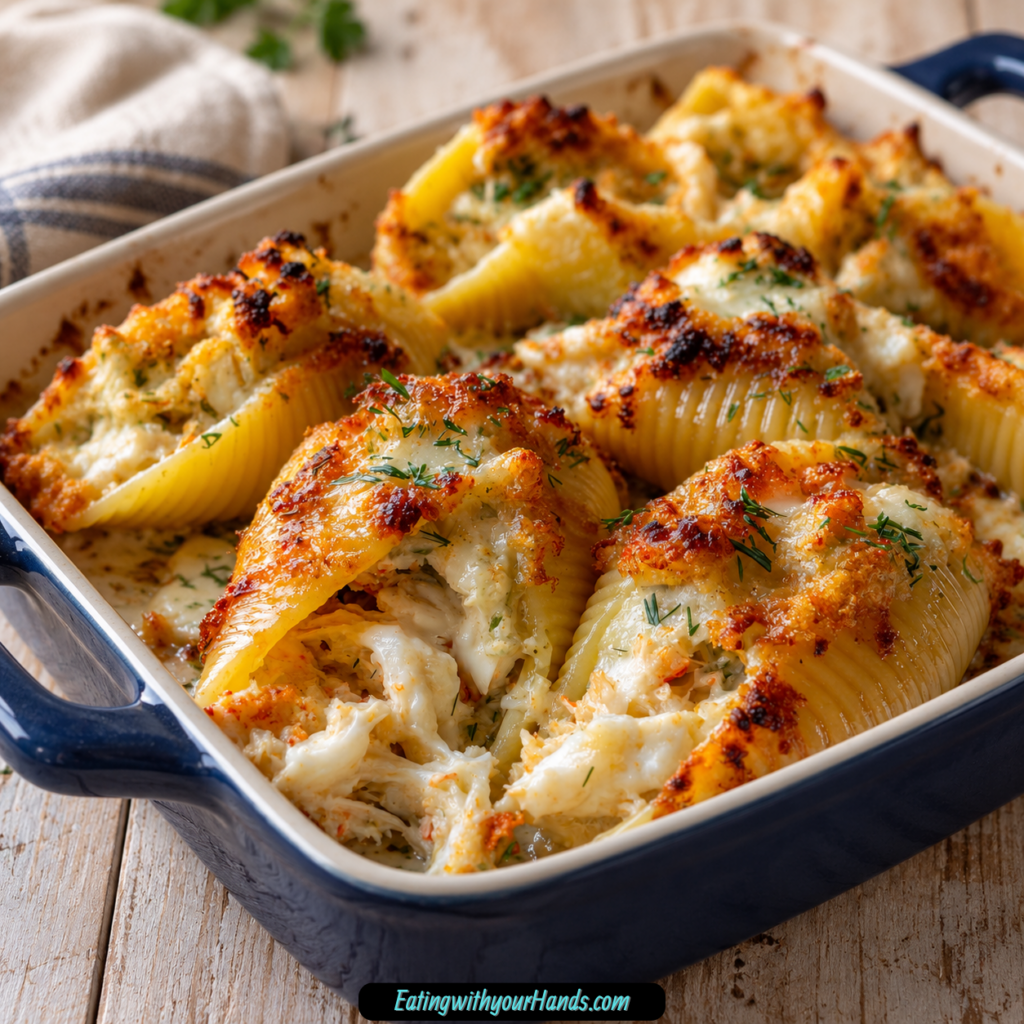
Serve warm. The shells should be creamy, tender, and full of seafood flavor.
Serving Ideas
Serve Creamy Seafood Stuffed Shells with garlic bread. It is perfect for soaking up any extra creamy sauce.
A fresh arugula salad with lemon vinaigrette adds brightness. The peppery greens cut through the richness.
Roasted asparagus makes the meal feel elegant. It pairs well with the creamy seafood filling.
Sautéed green beans also work nicely. They add color and freshness to the plate.
For a larger dinner, serve the shells with an antipasto platter. Salty meats and briny olives make the sweet seafood stand out.
A chilled white wine can round out the meal. The dish is rich, so something crisp is especially welcome.
These shells also work as the centerpiece for a dinner party. Add bread, salad, and a simple side vegetable.
Serve the shells warm after resting. That is when the filling is creamy but not too loose.
Storage
Let leftovers cool completely before storing. This helps protect the creamy filling.
Transfer the shells to an airtight container. Refrigerate for up to 3 days.
Store in a single layer if possible. This helps keep the shells from tearing.
Keep the container sealed. Seafood and cream sauces should stay covered in the refrigerator.
Do not store leftovers while hot. Steam can create extra moisture.
The filling may firm up as it chills. This is normal because of the cream cheese.
Reheat gently for the best texture. The sauce should warm slowly.
Freezing
Freezing is not recommended for this recipe. The creamy sauce can separate when thawed.
The texture of the seafood may also change. The filling is best fresh or refrigerated for a few days.
For make-ahead planning, refrigerate the assembled shells instead. They can be prepared up to 24 hours before baking.
If you need to plan ahead, assemble and chill rather than freeze. This gives a better final texture.
The cream cheese and heavy cream make the filling rich, but they do not freeze perfectly. Refrigeration is the safer option.
Leftover baked shells should also be kept in the refrigerator. Use within 3 days.
This dish is at its best when baked fresh or reheated gently from the fridge. That keeps the seafood and sauce closest to their ideal texture.
Reheating
The oven is the best way to reheat these stuffed shells. Cover with foil and warm at 350°F for about 15 minutes.
The foil helps prevent the shells from drying out. It also protects the cheese topping.
Check that the filling is heated through. Add a few more minutes if needed.
For single portions, the microwave can work in a hurry. Use 50% power in 30-second bursts.
Stir or shift gently between bursts if possible. This helps warm the filling without overheating the seafood.
The cheese may not be quite as bubbly in the microwave. The flavor will still be good.
Avoid overheating. Seafood can become rubbery if reheated too aggressively.
Make-Ahead
These shells can be assembled ahead of time. Prepare everything up to the baking step.
Cover the dish tightly and refrigerate for up to 24 hours. Keep it cold until ready to bake.
When baking from the refrigerator, add about 5 extra minutes to the covered baking time. The shells start colder, so they need a little more time.
The sauce may thicken in the refrigerator. If needed, stir in 1 tablespoon milk before stuffing.
Do not leave assembled shells sitting at room temperature for long. Keep them refrigerated.
Add the cheese topping before baking if desired, or right before the dish goes into the oven. Both approaches work.
Make-ahead assembly is useful for dinner parties. The oven does the final work while you prepare sides.
Helpful Notes for Best Results
Use real lobster and real crab. The seafood flavor is the heart of the recipe.
Thaw frozen seafood completely in the refrigerator if using frozen. Pat it dry with paper towels before cooking.
Do not overcook the seafood in the saucepan. It only needs 2 to 3 minutes to warm through.
Stop the cream sauce once it is smooth and creamy. Overcooking can make the seafood tough.
Do not overstuff the shells so much that they burst. Generous filling is good, but leave room for the pasta to hold together.
Taste after adding cream cheese. Creamy ingredients can mute salt and pepper.
Cover the baking dish tightly for the first 20 minutes. This keeps the shells moist.
Let the shells rest for 5 minutes before serving. The filling settles and serves more neatly.
Variations
Classic Creamy Seafood Stuffed Shells
Use lobster, lump crab, garlic, flour, cream cheese, heavy cream, mozzarella, Parmesan Reggiano, butter, salt, and pepper. This gives the full rich seafood version.
Bake covered, then uncovered. Rest before serving.
Shrimp Seafood Stuffed Shells
Use shrimp in place of lobster if needed. Chop the shrimp into bite-sized pieces.
Keep the total seafood amount about the same. Warm gently.
Scallop and White Fish Stuffed Shells
Use a mix of scallops and white fish. Cut everything into small pieces.
This keeps the seafood filling tender and balanced. Avoid overcooking.
Half-and-Half Seafood Shells
Use half-and-half instead of heavy whipping cream. The sauce will be lighter.
It will not be as thick or luxurious. The flavor still works.
Coconut Cream Seafood Shells
Use coconut cream as a dairy-free-style cream swap. The flavor becomes slightly tropical.
This is a noticeable change, but it can work. Taste and adjust seasoning.
Asiago Seafood Stuffed Shells
Use Asiago in place of Parmesan Reggiano. It gives a sharp, savory flavor.
Sprinkle it over the top before baking. Bake until melted.
Pecorino Seafood Stuffed Shells
Use pecorino instead of Parmesan Reggiano. The flavor becomes saltier and more pronounced.
Taste before adding extra salt. Pecorino can be bold.
Gluten-Free Creamy Seafood Stuffed Shells
Use gluten-free pasta shells and replace the flour with cornstarch. Use half as much cornstarch.
The filling should still thicken. Stir carefully.
Mushroom Seafood Stuffed Shells
Add finely diced mushrooms to the garlic step. Cook out all the liquid before adding seafood.
This adds extra depth. Do not let extra moisture thin the filling.
Spinach Seafood Stuffed Shells
Add spinach with the garlic or seafood and cook out the liquid. This adds color and freshness.
Make sure it is not watery. Extra moisture can affect the sauce.
Deconstructed Seafood Shells
Use smaller pasta shapes like conchiglie if jumbo shells are unavailable. Toss the creamy seafood filling with the pasta.
This gives the same flavor in a less formal form. It is a fun option when shells are hard to find.
Manicotti Seafood Bake
Use manicotti tubes instead of jumbo shells. Fill them gently with the seafood mixture.
Bake the same way, watching that the filling stays creamy. Rest before serving.
Troubleshooting
The Filling Is Too Runny
The sauce may need a little more time to thicken, or the seafood may have released moisture. Make sure seafood is patted dry before cooking.
Do not skip the flour. It helps thicken the filling.
The Filling Is Too Thick
The cream cheese may have thickened too much. Stir in a small splash of cream if needed.
For make-ahead filling, 1 tablespoon milk can loosen the sauce before stuffing. Stir gently.
The Seafood Is Rubbery
It may have been overcooked. The seafood only needs 2 to 3 minutes in the saucepan.
It continues heating in the oven. Slightly underdone before baking is better than overdone.
The Garlic Tastes Bitter
The garlic may have browned or burned. Sauté it for only about 30 seconds.
Garlic should smell fragrant but stay pale. Add seafood quickly after it blooms.
The Shells Tore While Stuffing
The shells may have been overcooked. Cook them al dente so they hold their shape.
Handle them gently and let them cool enough before filling. Use a spoon instead of forcing the filling.
The Dish Dried Out
The foil may not have been tight enough, or the shells baked too long uncovered. Cover tightly for the first 20 minutes.
The uncovered 5 minutes should only melt and slightly brown the cheese. Do not overbake.
The Cheese Topping Browned Too Much
The uncovered baking time may have gone too long. Bake uncovered just until bubbly and slightly golden.
Watch closely during the final 5 minutes. Cheese can go from perfect to overdone quickly.
The Filling Leaked Everywhere
The shells may have been overfilled or served too soon. Let them rest for about 5 minutes.
Generous filling is good, but the shell still needs to close around it. Resting helps the sauce set.
The Sauce Tastes Bland
Cream cheese can mute seasoning. Taste after adding it and adjust salt and pepper.
Fresh Parmesan Reggiano also helps bring flavor. Use enough on top.
The Leftovers Separated
Cream sauce can separate if overheated. Reheat gently in the oven or at 50% microwave power.
Avoid high heat. Seafood and cream both need gentle reheating.
Frequently Asked Questions
Can I use frozen seafood instead of fresh?
Yes, frozen seafood can be used. Thaw it completely in the refrigerator overnight.
Pat it dry with paper towels before cooking. The texture may be slightly softer than fresh, but the flavor can still be excellent.
How do I keep the shells from drying out?
Cover the baking dish tightly with aluminum foil for the first 20 minutes. This keeps moisture in the dish.
The heavy cream in the filling also helps. You can brush cooked shells with a tiny bit of olive oil before stuffing if you are worried.
Can I make these ahead of time?
Yes, assemble the shells up to the baking step, cover tightly, and refrigerate for up to 24 hours. Add about 5 extra minutes to the covered baking time because the dish will be cold.
If the sauce thickens in the refrigerator, stir in 1 tablespoon milk before stuffing. This helps loosen it.
What if I cannot find jumbo shells?
Regular large shells can work, though you will get more of them. Manicotti tubes can also be used.
You can also make a deconstructed version with smaller pasta shapes like conchiglie. Toss the filling with the pasta instead of stuffing.
How do I know when the filling is done cooking?
The seafood only needs to heat through for about 2 to 3 minutes in the pan. The sauce should be smooth, and the cheese should be melted.
It will continue cooking in the oven. Avoid overcooking so the seafood stays tender.
Can I freeze Creamy Seafood Stuffed Shells?
Freezing is not recommended. The creamy sauce can separate when thawed.
The texture of seafood can also change. Refrigerate leftovers instead and use within 3 days.
What can I serve with these shells?
Garlic bread, arugula salad with lemon vinaigrette, roasted asparagus, sautéed green beans, an antipasto platter, and chilled white wine all work well. The best sides add freshness or crunch.
The shells are rich, so light sides are especially helpful. Garlic bread is perfect for extra sauce.
Can I make this gluten-free?
Yes, use gluten-free pasta shells and replace the flour with cornstarch. Use half as much cornstarch as flour.
The texture should still be creamy. Stir carefully to avoid clumps.
Nutritional Information
These values are estimates and may vary depending on the exact ingredients and serving size. One generous serving is about 3 to 4 stuffed shells.
Each serving is estimated at about 520 calories. This is a rich, creamy seafood pasta dish.
Each serving has about 32g total fat. About 18g is saturated fat and about 10g is unsaturated fat.
Each serving has about 160mg cholesterol. Lobster, crab, cheese, and cream contribute to that number.
Each serving has about 780mg sodium. Cheese and seafood can affect the final amount.
Each serving has about 25g total carbohydrates. About 1g is fiber and about 3g is sugar.
Each serving has about 35g protein. The lobster and crab help make the dish protein-rich.
Exact values can change based on pasta, cheese, seafood, and cream brands. Use your specific ingredients if precise numbers matter.
Why This Recipe Works So Well
Creamy Seafood Stuffed Shells work because the filling is rich, thick, and flavorful enough to stand up to the pasta. The seafood is the focus, and the cream sauce supports it rather than covering it up.
Lobster brings sweet richness. Lump crab adds delicate texture and briny flavor.
Garlic gives the filling a savory base. A quick 30-second sauté is enough to make it fragrant.
Cream cheese and heavy cream create the smooth sauce. They give the filling body and help it stay inside the shells.
Mozzarella melts into the filling and also tops the dish. Parmesan Reggiano adds deeper flavor and a golden finish.
Covered baking keeps the shells moist. The final uncovered bake melts the cheese beautifully.
The 5-minute rest makes serving easier. It keeps the creamy filling from spilling out too quickly.
Most of all, this recipe works because it feels indulgent without being complicated. It is creamy, seafood-packed, cheesy, and special enough for company while still simple enough to make at home.
Final Thoughts
Creamy Seafood Stuffed Shells are made with pasta shells, cooked lobster meat, lump crab meat, fresh garlic, all-purpose flour, salt, pepper, mozzarella, butter, softened cream cheese, heavy whipping cream, and freshly grated Parmesan Reggiano. The seafood is warmed gently, folded into a rich creamy filling, stuffed into cooked shells, topped with cheese, baked covered, finished uncovered, and rested before serving.
Serve them with garlic bread, arugula salad with lemon vinaigrette, roasted asparagus, sautéed green beans, an antipasto platter, or chilled white wine, and store leftovers in the refrigerator for up to 3 days. With their 375°F oven temperature, 30-second garlic sauté, 2-to-3-minute seafood warming step, 20-minute covered bake, 5-minute uncovered finish, 5-minute rest, 24-hour make-ahead option, 350°F 15-minute oven reheating method, and variations like shrimp, scallops, white fish, half-and-half, coconut cream, Asiago, pecorino, gluten-free shells, mushrooms, spinach, manicotti, and deconstructed pasta, these stuffed shells are creamy, elegant, rich, and full of seafood comfort.
Heavenly Creamy Seafood Stuffed Shells You’ll Crave Daily
Rich, creamy, cheesy, and filled with tender seafood, these Heavenly Creamy Seafood Stuffed Shells are baked with lobster meat, lump crab meat, cream cheese, heavy cream, mozzarella, and Parmesan Reggiano. The shells are stuffed with a savory seafood filling, covered with foil, then baked until warm and finished with a golden cheesy top.
Recipe Details
- Prep Time: 20 minutes
- Cook Time: 25 minutes
- Total Time: 45 minutes
- Course: Main Course
- Cuisine: Italian-American
- Servings: 4 servings
- Calories: 520 kcal
Ingredients
For the Seafood Filling
- Salt and pepper to taste
- 1 tablespoon all-purpose flour
- 3 garlic cloves minced
- 8 oz lump crab meat
- 8 oz lobster meat
- 1 ½ tablespoons butter divided
- 8 oz cream cheese
- ½ cup heavy whipping cream
- 1 cup shredded mozzarella cheese divided into 2 portions of ½ cup each
For the Topping and Baking
- ¾ cup Parmesan Reggiano cheese grated
- Aluminum foil
Instructions
Step 1: Prepare the Oven
Preheat the oven to 375°F. Let the oven heat while you prepare the pasta shells and seafood filling.
This recipe bakes in two stages: first covered with foil, then uncovered for the final few minutes.
Step 2: Cook the Pasta Shells
Cook the pasta shells according to package instructions. Drain them and set them aside.
The recipe does not list a specific quantity for the pasta shells, so use the package instructions as the guide for cooking. Keep the shells intact so they can be filled with the seafood mixture.
Step 3: Sauté the Garlic
Sauté the minced garlic in butter. Use part of the divided butter for this step.
Cook just until the garlic becomes fragrant. Avoid letting it burn, since the garlic will flavor the seafood filling.
Step 4: Cook the Seafood Filling Base
Add the lobster meat, lump crab meat, all-purpose flour, salt, and pepper. Cook for 3 minutes.
Stir gently so the seafood stays tender. Do not overcook the seafood filling, as noted.
Step 5: Make the Filling Creamy
Stir in the cream cheese, heavy whipping cream, and half the mozzarella. Mix until the filling becomes creamy and well combined.
Use ½ cup of the shredded mozzarella in the filling. Save the remaining ½ cup mozzarella for the top.
Step 6: Stuff the Shells
Stuff the cooked pasta shells with the seafood mixture. Fill them carefully so the shells hold their shape.
The creamy lobster and crab filling should sit inside each shell without being packed too tightly.
Step 7: Add the Cheese Topping
Sprinkle the remaining mozzarella and the grated Parmesan Reggiano cheese on top. Spread the cheese evenly over the stuffed shells.
The remaining mozzarella melts over the top, while the Parmesan Reggiano adds a savory finish.
Step 8: Bake Covered
Cover with aluminum foil and bake for 20 minutes. The foil helps the stuffed shells heat through without drying out.
Keep the dish covered during this first baking stage so the creamy filling stays moist.
Step 9: Finish Uncovered
Remove the foil and bake for an additional 5 minutes. This final uncovered bake helps finish the cheese topping.
Once baked, remove the stuffed shells from the oven and let them rest for 5 minutes before serving.
Notes
- Use fresh seafood for best flavor.
- Do not overcook the seafood filling.
- Let rest for 5 minutes before serving.
Serving Suggestions
Serve Heavenly Creamy Seafood Stuffed Shells warm after they have rested for 5 minutes. The lobster meat, lump crab meat, cream cheese, heavy whipping cream, mozzarella, and Parmesan Reggiano create a rich Italian-American main course with a creamy seafood filling.
This recipe makes 4 servings, making it a comforting dinner option when you want something creamy, cheesy, and seafood-forward. Letting the shells rest before serving helps the filling settle and makes them easier to plate.
For the best flavor, use fresh seafood as noted. Avoid overcooking the seafood filling before stuffing the shells so the lobster and crab stay tender.
Storage
How to Store
The recipe does not provide specific storage instructions or storage duration, so no exact storage time is added here.
Seafood Tip
Use 8 oz lobster meat and 8 oz lump crab meat. Fresh seafood gives the best flavor.
Filling Tip
Cook the seafood filling for 3 minutes after adding the lobster meat, lump crab meat, flour, salt, and pepper. Do not overcook the seafood filling.
Cheese Tip
Use 1 cup shredded mozzarella cheese divided into 2 portions of ½ cup each. Add half to the filling and sprinkle the remaining half on top with the Parmesan Reggiano.
Shell Tip
Cook the pasta shells according to package instructions. The recipe does not provide an exact shell quantity, so no amount is added.
Foil Tip
Cover with aluminum foil and bake for 20 minutes. Remove the foil and bake for an additional 5 minutes.
Resting Tip
Let the stuffed shells rest for 5 minutes before serving. This helps the creamy seafood filling settle.

Fernando is the creator and writer behind the food blog Eating with your Hands. Living and working in cities like Paris, Barcelona, and Berlin, and being married to a Canadian foodie, has given Fernando a passion and interest in food and inspired him to run EWYH.