
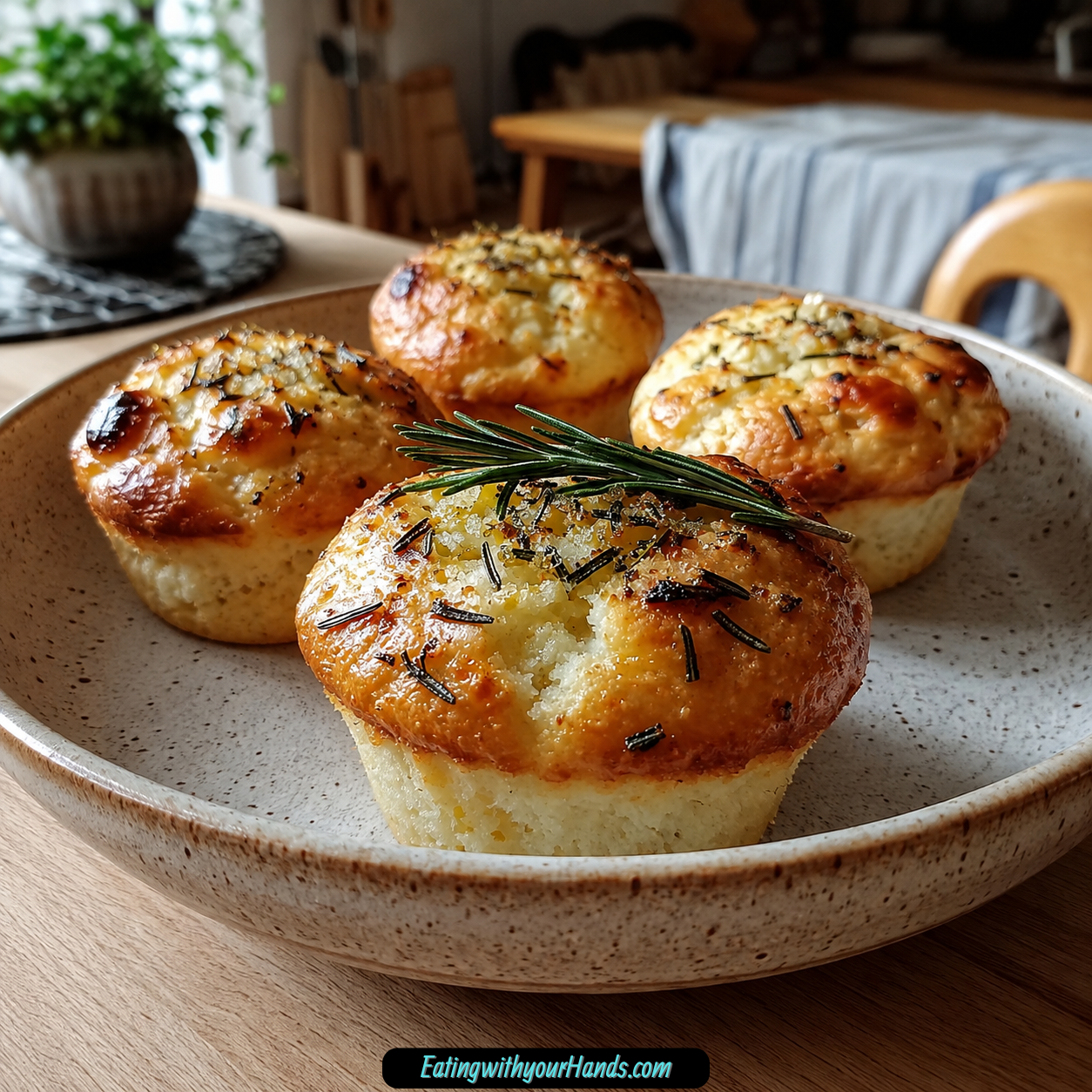

Delicious Easy Garlic Rosemary Focaccia Muffins are the kind of little bread bites that make the whole kitchen smell warm, savory, and inviting. They have the olive oil richness of focaccia, the soft interior of homemade bread, the crispy edges of a muffin tin bake, and the fragrant topping of garlic, rosemary, flaky salt, and more olive oil.
I love this recipe because it takes the feeling of a big bakery-style focaccia and turns it into something smaller, faster, and easier to serve. Instead of slicing a large loaf, each person gets their own golden muffin-sized piece with dimples on top, olive oil pooled in the little pockets, and garlicky rosemary flavor baked into every bite.
There is something comforting about bread that does not need to be perfect. These muffins are rustic, slightly uneven in the best way, and forgiving enough for bakers who feel nervous around yeast dough.
The dough is simple: warm water, honey, yeast, flour, salt, and olive oil. After one rise, it gets divided into a 12-cup muffin tin, dimpled with your fingers, topped generously, rested briefly, and baked until deeply golden.
These focaccia muffins are perfect for dinner parties, packed lunches, soup nights, cozy dinners, or any moment when you want something carb-y, savory, and homemade without fussing over a sheet pan. They are easy enough for a weekday and special enough to set on the table for guests.
Table of Contents
- Why You’ll Love This Recipe
- Recipe Details
- Ingredients
- Optional Swaps, Variations, Add-Ins, and Serving Ideas
- Why These Garlic Rosemary Focaccia Muffins Work
- Directions
- Step 1: Warm the Water Correctly
- Step 2: Add the Honey
- Step 3: Sprinkle in the Yeast
- Step 4: Proof Active Dry Yeast Longer if Using It
- Step 5: Add Flour, Salt, and Olive Oil
- Step 6: Stir Into a Shaggy Dough
- Step 7: Dust Your Hands With Flour
- Step 8: Knead Gently for 1–2 Minutes
- Step 9: Cover the Dough
- Step 10: Let the Dough Rise for 1 Hour
- Step 11: Grease the Muffin Tin
- Step 12: Punch Down the Dough
- Step 13: Divide the Dough Into 12 Pieces
- Step 14: Shape Rough Balls
- Step 15: Make Deep Dimples
- Step 16: Add Garlic and Rosemary
- Step 17: Drizzle With Olive Oil
- Step 18: Sprinkle With Flaky Sea Salt
- Step 19: Rest Uncovered for 15 Minutes
- Step 20: Bake Until Deeply Golden
- Step 21: Cool for 5 Minutes
- Serving Ideas
- Storage
- Reheating
- Freezing
- Make-Ahead
- Helpful Notes for Best Results
- Variations
- Troubleshooting
- Frequently Asked Questions
- Why This Recipe Works So Well
- Final Thoughts
- Easy Garlic Rosemary Focaccia Muffins
Why You’ll Love This Recipe
These focaccia muffins are no-fuss and low-mess. The dough comes together in one bowl with only minimal kneading.
They are perfectly portioned. Instead of cutting into a large focaccia, you can grab one warm muffin-sized piece straight from the pan.
The aroma is incredible. Garlic, rosemary, olive oil, and bread baking together make the kitchen smell warm and savory.
They are wonderfully versatile. Serve them with soup, split them for mini sandwiches, or dunk them in olive oil.
They are great for gatherings. A basket of golden focaccia muffins on the table always feels welcoming and easy to share.
They are also flexible. You can try cheese, sun-dried tomatoes, different herbs, everything bagel seasoning, or red pepper flakes.
Recipe Details
These focaccia muffins use 2 ¼ teaspoons instant yeast or active dry yeast. If using active dry yeast, proof it in warm water and honey for 10 minutes.
The water should be warm, about 110°F or 43°C. It should feel like bathwater, not scalding.
The dough is made with 1 cup warm water, 1 tablespoon honey, 3 cups all-purpose flour, 1 teaspoon salt, and ¼ cup extra virgin olive oil. A little extra flour can be used for dusting your hands.
The dough rises in a warm spot for 1 hour, or until about doubled in size. If the kitchen is cold, it may take longer.
A 12-cup muffin tin should be greased generously with olive oil. This helps create the signature crispy bottoms.
The topping uses 2 tablespoons chopped fresh rosemary, 2 minced garlic cloves, and 1 teaspoon flaky sea salt. If using dried rosemary, reduce it to 1 tablespoon.
After shaping, the dough rests uncovered for 15 minutes while the oven preheats to 400°F or 200°C. The muffins bake for 18–20 minutes, until deeply golden.
Ingredients
Focaccia Dough
2 ¼ teaspoons instant yeast
1 cup warm water, 110°F/43°C
1 tablespoon honey
3 cups all-purpose flour
1 teaspoon salt
¼ cup extra virgin olive oil
Garlic Rosemary Topping
2 tablespoons fresh rosemary, chopped
2 cloves garlic, minced
1 teaspoon flaky sea salt
Extra for Shaping and Baking
Extra flour, for dusting your hands
More olive oil, for drizzling and greasing the muffin tin
Ingredient Notes
Instant yeast helps the dough rise quickly and easily. Active dry yeast can also be used, but it should be proofed longer in the warm water and honey.
Warm water wakes up the yeast. It should be about 110°F or 43°C, warm like bathwater but not hot enough to kill the yeast.
Honey feeds the yeast and helps the dough begin rising. Sugar can be used if you are out of honey.
All-purpose flour creates the bread structure. Keep a little extra nearby for dusting your hands if the dough feels sticky.
Salt seasons the dough. Any kind works, though kosher salt is a good option.
Extra virgin olive oil gives the muffins their focaccia-style richness. Use it in the dough, in the muffin tin, and for drizzling over the tops.
Fresh rosemary brings the signature herby flavor. Dried rosemary works in a pinch, but use 1 tablespoon instead of 2 tablespoons fresh.
Minced garlic is the star of the topping. It gets fragrant as it bakes and gives the muffins their savory personality.
Flaky sea salt gives texture and a pop of flavor on top. Coarse salt can also be used.
Optional Swaps, Variations, Add-Ins, and Serving Ideas
Cheese Focaccia Muffins
Fold ½ cup grated parmesan or sharp cheddar into the dough before shaping. You can also sprinkle cheese on top with the herbs.
Cheese makes the muffins richer and more savory. Parmesan gives a salty finish, while sharp cheddar makes them bolder.
Sun-Dried Tomato Muffins
Chop ¼ cup sun-dried tomatoes and mix them into the dough. Oil-packed sun-dried tomatoes work best.
You can also use some of the flavorful oil for drizzling. This adds color and a deeper savory flavor.
Herb Swap
Rosemary is classic here, but thyme, oregano, or basil can also work beautifully. If you need a quick option, use 1 tablespoon dried Italian seasoning.
Changing the herbs changes the mood of the muffins. Rosemary feels bold and fragrant, while basil or oregano gives them a different savory direction.
Everything Bagel Version
Skip the rosemary and top the muffins with everything bagel seasoning before baking. This variation is especially good for brunch.
The topping adds savory crunch and a different flavor profile. Keep the olive oil drizzle because it still helps the muffins bake beautifully.
Spicy Garlic Focaccia Muffins
Add a pinch of red pepper flakes to the garlic topping. This gives the muffins a subtle heat.
The spice should wake up the flavor without overpowering the rosemary and garlic. Use a light hand if serving them with dinner.
Whole Wheat Variation
Swap half the all-purpose flour for whole wheat flour. Add an extra tablespoon of water to keep the dough from drying out.
This makes the muffins heartier. The texture will be slightly different, but the olive oil and herbs keep them flavorful.
Gluten-Free Direction
Use a 1:1 gluten-free flour blend and add ½ teaspoon xanthan gum to help the dough hold together. The texture will be different from the original.
Handle the dough gently. Gluten-free dough can behave differently, but the muffin tin format helps with shaping.
Why These Garlic Rosemary Focaccia Muffins Work
These muffins work because they keep the spirit of focaccia while changing the shape. The dough is soft, olive oil-rich, dimpled, salted, and baked until golden, but the muffin tin gives each piece its own crispy edges.
The yeast gives the bread lift. A warm water and honey mixture helps the yeast wake up and begin creating airy texture.
The olive oil is important in several places. It enriches the dough, crisps the muffin tin edges, pools in the dimples, and carries the rosemary and garlic flavor.
The short knead keeps the bread approachable. You only knead for 1–2 minutes, just enough for the dough to come together.
The 1-hour rise gives the muffins their softness. If the kitchen is cool, extra patience helps the dough double properly.
The dimples are more than decoration. They create little pockets where olive oil, garlic, rosemary, and salt can settle before baking.
Directions
Step 1: Warm the Water Correctly
Measure 1 cup warm water at about 110°F or 43°C. It should feel warm like bathwater, not hot or scalding.
This matters because yeast needs warmth, but too much heat can kill it. If the water feels uncomfortable to touch, let it cool before using.
Pour the warm water into a large bowl. This bowl will hold the dough as it comes together and rises.
Step 2: Add the Honey
Whisk 1 tablespoon honey into the warm water. The honey helps wake up the yeast.
If you do not have honey, sugar can be used instead. It is there to feed the yeast and support the rise.
Make sure the honey dissolves into the water. This gives the yeast an even mixture to bloom in.
Step 3: Sprinkle in the Yeast
Sprinkle 2 ¼ teaspoons instant yeast over the warm water and honey mixture. Let it sit for about 5 minutes.
The mixture should become frothy. That froth tells you the yeast is alive and active.
If nothing happens, the yeast may be old. Use a fresh packet before continuing so the dough can rise properly.
Step 4: Proof Active Dry Yeast Longer if Using It
If using active dry yeast instead of instant yeast, proof it in the warm water and honey for 10 minutes. It should become frothy and ready to use.
This longer proof gives active dry yeast time to wake up. It helps make sure the dough rises well.
If the yeast does not bubble after 10 minutes, discard it and start again. Old yeast can lead to dough that never rises.
Step 5: Add Flour, Salt, and Olive Oil
Add 3 cups all-purpose flour, 1 teaspoon salt, and ¼ cup extra virgin olive oil to the yeast mixture. Add them directly into the large bowl.
The flour gives the dough structure, the salt seasons it, and the olive oil makes it rich and tender. Together, they create the focaccia muffin base.
Use a wooden spoon to begin stirring. The dough will not look smooth right away.
Step 6: Stir Into a Shaggy Dough
Stir the mixture until it forms a shaggy dough. It should look messy and uneven at first.
This is normal. Bread dough often looks rough before it is kneaded.
Make sure most of the flour is moistened. Scrape around the sides and bottom of the bowl so dry pockets do not remain.
Step 7: Dust Your Hands With Flour
Dust your hands lightly with flour before kneading. This helps keep the dough from sticking too much.
Do not add too much flour. The dough should stay slightly sticky for the best texture.
Keep the extra flour nearby. Use only a little at a time as needed.
Step 8: Knead Gently for 1–2 Minutes
Gently knead the dough in the bowl for 1–2 minutes. Work just until it comes together.
This is not a long, intense kneading process. The dough should become manageable but still soft and slightly sticky.
If it is sticking like crazy, add 1 tablespoon more flour. Add only what you need so the muffins do not become dense.
Step 9: Cover the Dough
Cover the bowl with a damp kitchen towel. This keeps the dough from drying out as it rises.
A damp towel helps protect the surface of the dough. It also keeps the environment slightly moist.
Place the covered bowl in a warm spot. The dough needs warmth to rise comfortably.
Step 10: Let the Dough Rise for 1 Hour
Let the dough rise for 1 hour, or until it has about doubled in size. If your kitchen is cold, it may take longer.
Be patient with this step. A good rise gives the muffins their airy texture.
If you need a warmer spot, turn the oven on for a minute, then turn it off and place the bowl inside. The oven should be warm, not hot.
Step 11: Grease the Muffin Tin
While the dough rises, grease a 12-cup muffin tin generously with olive oil. Be generous because the oil helps create crispy bottoms.
Coat the bottom and sides of each cup. This prevents sticking and adds focaccia-style richness.
Set the muffin tin aside until the dough has risen. It should be ready before shaping begins.
Step 12: Punch Down the Dough
Once the dough has doubled, punch it down gently. This releases excess air.
The dough will deflate slightly, which is expected. It will puff again during the final rest and baking.
Handle the dough gently after punching it down. You want to shape it without overworking it.
Step 13: Divide the Dough Into 12 Pieces
Divide the dough into 12 equal pieces. Each piece will become one focaccia muffin.
The pieces do not need to be perfectly identical, but try to keep them close in size. This helps them bake evenly.
If the dough sticks, lightly flour your hands. Avoid adding too much flour to the dough itself.
Step 14: Shape Rough Balls
Roll each piece into a rough ball. They do not need to look perfect.
Rustic shapes are part of the charm. The muffins will puff and become golden as they bake.
Place each dough ball into a greased muffin cup. Press down slightly to flatten the top.
Step 15: Make Deep Dimples
Use your finger to poke deep dimples into each dough ball. Press gently but firmly.
These dimples are what make the muffins feel like focaccia. They create little pockets for olive oil and toppings.
Do not poke all the way through the dough. The goal is to create wells, not holes.
Step 16: Add Garlic and Rosemary
Sprinkle 2 minced garlic cloves and 2 tablespoons chopped fresh rosemary evenly over the muffins. If using dried rosemary, use 1 tablespoon.
Try to spread the garlic and rosemary across all 12 muffins. Each muffin should get some of the topping.
The garlic will toast as the muffins bake. The rosemary will become fragrant and savory.
Step 17: Drizzle With Olive Oil
Drizzle the muffins liberally with more olive oil. About 2 tablespoons total can be used for the tops.
The olive oil settles into the dimples and helps create crispy, flavorful bits. It also gives the muffins their golden richness.
Do not be too shy with the drizzle. Focaccia-style bread loves olive oil.
Step 18: Sprinkle With Flaky Sea Salt
Finish each muffin with a generous pinch of flaky sea salt. Coarse salt can also be used.
The salt adds texture and flavor. It makes the olive oil, garlic, and rosemary taste brighter.
Try to sprinkle evenly. Each muffin should get that salty little pop on top.
Step 19: Rest Uncovered for 15 Minutes
Let the muffins rest uncovered for 15 minutes. This is the final rise.
During this time, they will puff slightly. This helps give them a lighter texture after baking.
While they rest, preheat the oven to 400°F or 200°C. The oven should be hot and ready when the muffins finish resting.
Step 20: Bake Until Deeply Golden
Bake the muffins for 18–20 minutes. They should become deeply golden.
If they brown too fast, tent them with foil. This protects the tops while the centers finish baking.
The muffins are done when they sound hollow when tapped. If you are unsure, insert a toothpick; it should come out clean with no doughy bits.
Step 21: Cool for 5 Minutes
Let the muffins cool for at least 5 minutes before eating. They will be very hot right out of the oven.
The garlic, olive oil, and bread aroma may make waiting difficult. Still, the short rest helps the texture settle.
After 5 minutes, remove them from the pan and serve warm. The bottoms should be lightly crisp from the olive oil.
Serving Ideas
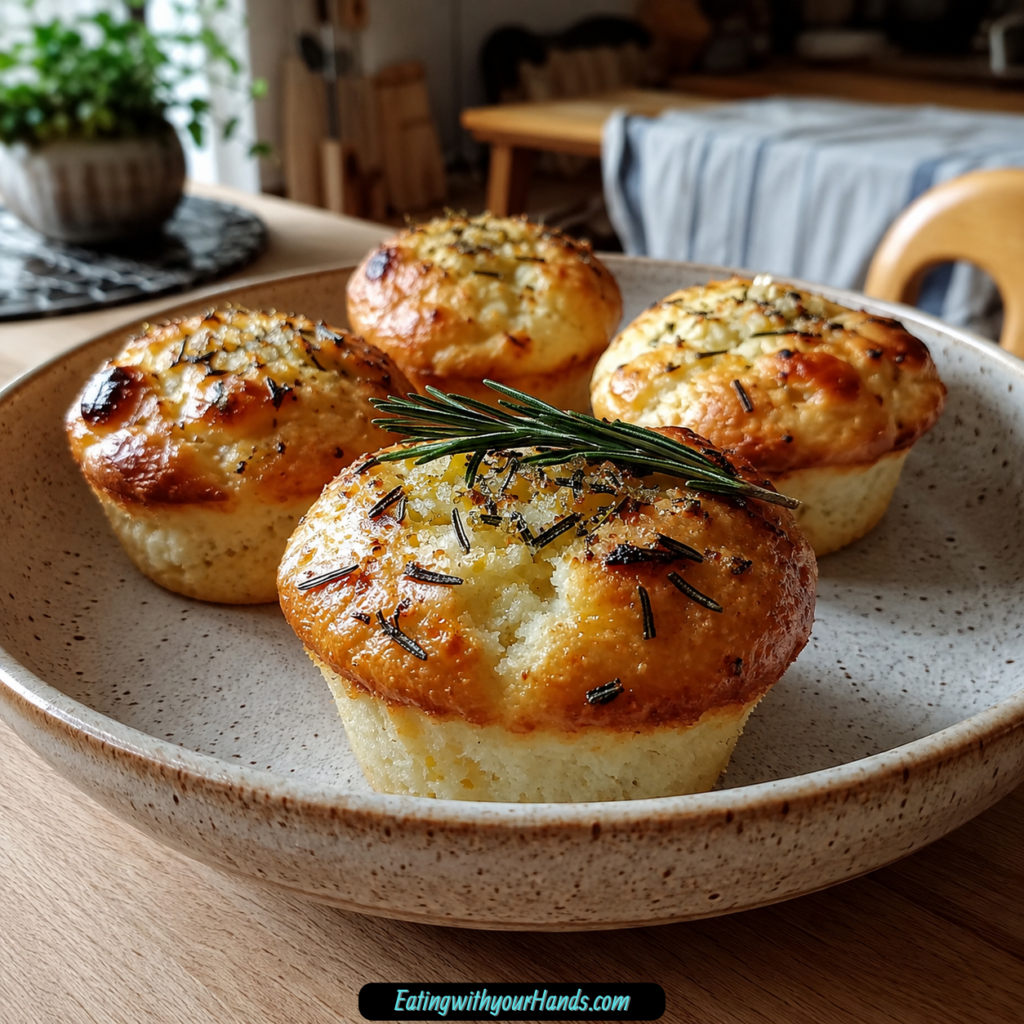
Serve Easy Garlic Rosemary Focaccia Muffins warm whenever possible. They are best when the outside is crackly and the inside is pillowy.
Place them in a basket lined with a tea towel to keep them warm at the table. They look inviting and homemade that way.
For extra indulgence, serve them with a small bowl of good olive oil mixed with balsamic vinegar. Dunking makes them feel restaurant-worthy.
They are wonderful with soup. The soft bread and savory topping make them perfect for dipping and tearing.
You can also slice them open for mini sandwiches. Their muffin shape makes them naturally portioned for packed lunches.
Serve them at dinner parties, family dinners, or cozy nights in. They bring warm bread comfort without needing a large loaf.
Storage
Store leftover muffins in an airtight container at room temperature for up to 2 days. After that, they can start drying out.
Let the muffins cool completely before storing. Warm bread can create steam inside the container.
Keep the container sealed between servings. This helps preserve softness.
If you plan to serve them later, reheating makes them taste much fresher. A short oven warm-up brings back the crisp edges.
Reheating
To revive day-old muffins, wrap them in foil and warm them in a 350°F or 175°C oven for 5–8 minutes. This brings back softness.
For just-baked crispness, unwrap them for the last 2 minutes. This lets the outside crisp again.
If reheating frozen muffins, place them straight into a 375°F or 190°C oven for 10–12 minutes. They should taste freshly baked.
Do not overheat them. The goal is warm, soft bread with crisp edges, not dry bread.
Freezing
These muffins freeze beautifully. Let them cool completely before freezing.
Wrap cooled muffins tightly in foil, then place them in a bag. This protects them from drying out.
Frozen muffins can be reheated straight from the freezer. Bake them at 375°F or 190°C for 10–12 minutes.
They can be frozen in an airtight bag for up to 3 months. Reheat when you want warm focaccia muffins again.
Make-Ahead
If making these ahead for guests, bake them until just lightly golden. Finish browning them right before serving.
This makes them taste freshly made. It is a useful trick for dinner parties or gatherings.
You can also bake them fully, cool them, and reheat before serving. Warm bread always feels more special than room-temperature bread.
Store them at room temperature for up to 2 days or freeze for longer storage. Reheat as needed to bring back texture.
Helpful Notes for Best Results
If using active dry yeast, proof it in the warm water and honey for 10 minutes. It should become frothy before you continue.
If you have no yeast, you can swap in 1 ½ teaspoons baking powder and ½ teaspoon baking soda for a quick fix. The muffins will be denser.
For gluten-free muffins, use a 1:1 gluten-free flour blend and add ½ teaspoon xanthan gum. This helps the dough hold together.
If you want a heartier dough, swap half the all-purpose flour for whole wheat flour. Add an extra tablespoon of water to keep the dough from drying out.
Do not over-knead the dough. It should be soft and slightly sticky.
Let the dough rise in a warm spot. If the kitchen is cool, give it more time.
If the yeast does not bubble when tested with warm water and a pinch of sugar, use a fresh packet. Old yeast can prevent the dough from rising.
Variations
Parmesan Focaccia Muffins
Fold ½ cup grated parmesan into the dough before shaping. You can also sprinkle parmesan on top with the herbs.
This gives the muffins a salty, cheesy flavor. It pairs beautifully with garlic and rosemary.
Sharp Cheddar Focaccia Muffins
Use ½ cup sharp cheddar in the dough. The flavor is bolder and richer.
Sharp cheddar makes these muffins feel more casual and hearty. They are especially good with soup.
Sun-Dried Tomato Focaccia Muffins
Chop ¼ cup oil-packed sun-dried tomatoes and mix them into the dough. Use some of the flavorful oil for drizzling if desired.
This variation adds color and savory depth. It makes the muffins feel a little more special.
Thyme or Oregano Muffins
Use thyme or oregano instead of rosemary. These herbs create a different savory flavor.
This is helpful when you do not have fresh rosemary. The muffins still keep their herby focaccia personality.
Basil Focaccia Muffins
Use basil as the herb swap. It gives the muffins a softer, fresh herb flavor.
This version is lovely for packed lunches or mini sandwiches. Keep the garlic topping for the savory base.
Italian Seasoning Muffins
Use 1 tablespoon dried Italian seasoning in a pinch. This is an easy pantry-friendly option.
It gives the muffins a mixed herb flavor. The olive oil and garlic still make them taste rich.
Everything Bagel Focaccia Muffins
Skip the rosemary and top with everything bagel seasoning before baking. This gives the muffins brunch-style flavor.
Serve them warm or slice them for mini sandwiches. The topping adds crunch and savory seasoning.
Spicy Rosemary Garlic Muffins
Add a pinch of red pepper flakes to the garlic topping. This creates subtle heat.
This variation is great if you like a little spice. Keep the amount small so it does not overpower the rosemary.
Troubleshooting
Why Did My Dough Not Rise?
Your yeast may have been old, or the water may have been too hot or too cold. Test the yeast in warm water with a pinch of sugar.
If it does not bubble after 10 minutes, toss it and use fresh yeast. Good yeast is essential for a proper rise.
Why Are My Muffins Dense?
The dough may have been over-kneaded, or it may not have risen long enough. Keep kneading to only 1–2 minutes.
Let the dough rise in a warm spot until about doubled. Cold kitchens may need more time.
Why Is My Dough Too Sticky?
The dough should be slightly sticky but manageable. If it sticks too much, add 1 tablespoon more flour.
Add flour carefully. Too much can make the muffins dry or dense.
Why Did the Tops Brown Too Fast?
The oven may be running hot, or the toppings may be browning quickly. Tent the muffins with foil if needed.
The muffins should still bake until done inside. Look for a hollow sound when tapped or a clean toothpick.
Why Did My Garlic Taste Too Strong?
The garlic may have been piled too heavily in one spot. Spread the minced garlic evenly over all the muffins.
The olive oil helps mellow the garlic as it bakes. Even distribution gives a better flavor in each muffin.
Frequently Asked Questions
Can I Use Dried Rosemary Instead of Fresh?
Yes, use 1 tablespoon dried rosemary instead of 2 tablespoons fresh. Rub it between your fingers first to wake up the flavor.
Dried rosemary is stronger than fresh rosemary. That is why the amount is reduced.
How Do I Know When They Are Fully Baked?
They should be deeply golden on top and sound hollow when tapped. If you are unsure, insert a toothpick.
The toothpick should come out clean with no doughy bits. If it does not, bake a little longer.
Can I Freeze These Muffins?
Yes, freeze cooled muffins in an airtight bag for up to 3 months. Reheat them straight from frozen at 375°F or 190°C for 10–12 minutes.
They should taste freshly baked after reheating. Wrapping them well helps preserve texture.
My Dough Did Not Rise. What Went Wrong?
The yeast may have been old, or the water may have been too hot or too cold. Yeast needs warm water, not scalding water.
Next time, test the yeast in warm water with a pinch of sugar. If it does not bubble after 10 minutes, discard it.
Can I Make These Without a Muffin Tin?
Yes, shape the dough into small rounds on a baking sheet. They will spread more, but they will still taste amazing.
Space them about 2 inches apart. Bake until golden and done through.
Can I Use Active Dry Yeast?
Yes, active dry yeast can be used. Proof it in the warm water and honey for 10 minutes before adding the flour, salt, and olive oil.
It should look frothy before you continue. If it does not, the yeast may not be active.
Can I Make a Quick Version Without Yeast?
Yes, if you have no yeast, use 1 ½ teaspoons baking powder and ½ teaspoon baking soda. The muffins will be denser.
This is a quick fix rather than the same texture. The yeast version gives the best focaccia-style result.
Why This Recipe Works So Well
Delicious Easy Garlic Rosemary Focaccia Muffins work because they turn a classic olive oil bread idea into a small, practical shape. The muffin tin creates individual portions with crisp bottoms and soft centers.
The yeast dough is simple and forgiving. Warm water, honey, yeast, flour, salt, and olive oil create a dough that rises well without heavy kneading.
The olive oil makes a big difference. It enriches the dough, coats the muffin tin, fills the dimples, and helps the muffins bake with golden flavor.
Garlic and rosemary give the muffins their savory identity. As they bake, the topping becomes fragrant and slightly toasted.
The flaky sea salt creates little pops of flavor. It keeps the bread from tasting plain and makes the olive oil taste even better.
The recipe also works because it is easy to serve. Each muffin is already portioned, which makes them ideal for soup nights, lunches, dinner parties, and snack baskets.
Final Thoughts
Delicious Easy Garlic Rosemary Focaccia Muffins are warm, golden, fragrant, and wonderfully simple. They give you the comfort of focaccia in a smaller shape, with less fuss and plenty of flavor.
I love how they feel both casual and special. You can serve them with soup on a quiet night, place them in a basket for guests, slice them for mini sandwiches, or dip them into olive oil and balsamic vinegar.
Make them classic with garlic and rosemary, or play with cheese, sun-dried tomatoes, dried herbs, everything bagel seasoning, or a pinch of red pepper flakes. However you serve them, these little focaccia muffins bring soft bread, crispy edges, and savory kitchen magic to the table.
Easy Garlic Rosemary Focaccia Muffins

These Easy Garlic Rosemary Focaccia Muffins are soft, savory, and fragrant with olive oil, fresh rosemary, garlic, and flaky sea salt. They bring the flavor of classic focaccia into easy muffin-sized portions, making them perfect for bread baskets, Italian dinners, soups, salads, brunch, or casual snacking.
Recipe Details
- Prep Time: 15 minutes
- Cook Time: 20 minutes
- Total Time: 35 minutes
- Course: Bread
- Cuisine: Italian
- Servings: 12 muffins
Ingredients
Dough
- ¼ cup olive oil extra virgin, plus more for drizzling
- 1 cup warm water 110°F/43°C
- 1 tablespoon honey or sugar
- 2 ¼ teaspoons instant yeast or active dry yeast
- 3 cups all-purpose flour
- 1 teaspoon salt
Topping
- 2 cloves garlic minced
- 2 tablespoons fresh rosemary chopped
- 1 teaspoon sea salt flaky or coarse
Instructions
Step 1: Activate the Yeast
In a large bowl, combine the warm water 110°F/43°C with the honey or sugar and yeast. Let the mixture sit briefly until the yeast begins to look foamy.
Step 2: Make the Dough
Add the all-purpose flour, salt, and ¼ cup extra virgin olive oil to the yeast mixture. Mix until a soft dough forms.
Step 3: Knead the Dough
Knead the dough until it becomes smooth and elastic. If it feels sticky, work gently and avoid adding extra ingredients beyond what is listed.
Step 4: Let the Dough Rise
Place the dough in a bowl, cover it, and let it rise until puffy.
Step 5: Prepare the Muffin Portions
Divide the risen dough into 12 portions and place each portion into a muffin cup. Drizzle the tops with extra virgin olive oil.
Step 6: Add the Focaccia Topping
Sprinkle the minced garlic, chopped fresh rosemary, and flaky or coarse sea salt over the dough portions.
Step 7: Dimple the Dough
Use your fingertips to gently press dimples into the tops of the dough so the olive oil, garlic, rosemary, and sea salt settle into the surface.
Step 8: Bake the Muffins
Bake for 20 minutes, or until the focaccia muffins are golden and cooked through.
Step 9: Serve Warm
Let the muffins cool slightly before serving. Serve warm for the best texture and flavor.
Serving Suggestions
- Serve with pasta, soup, salad, or an Italian-style dinner.
- Add to a bread basket for holidays, brunch, or family meals.
- Pair with tomato soup or vegetable soup for a cozy lunch.
- Serve warm alongside roasted vegetables or grilled meats.
- Enjoy as a savory snack with a little extra olive oil for dipping.
Storage
How to Store
Let the focaccia muffins cool completely, then store them in an airtight container.
How to Reheat
Warm the muffins gently before serving so the texture becomes soft again and the rosemary garlic aroma comes through.
Best Texture Tip
These muffins taste best warm, especially when the olive oil topping is soft and fragrant.

Fernando is the creator and writer behind the food blog Eating with your Hands. Living and working in cities like Paris, Barcelona, and Berlin, and being married to a Canadian foodie, has given Fernando a passion and interest in food and inspired him to run EWYH.