
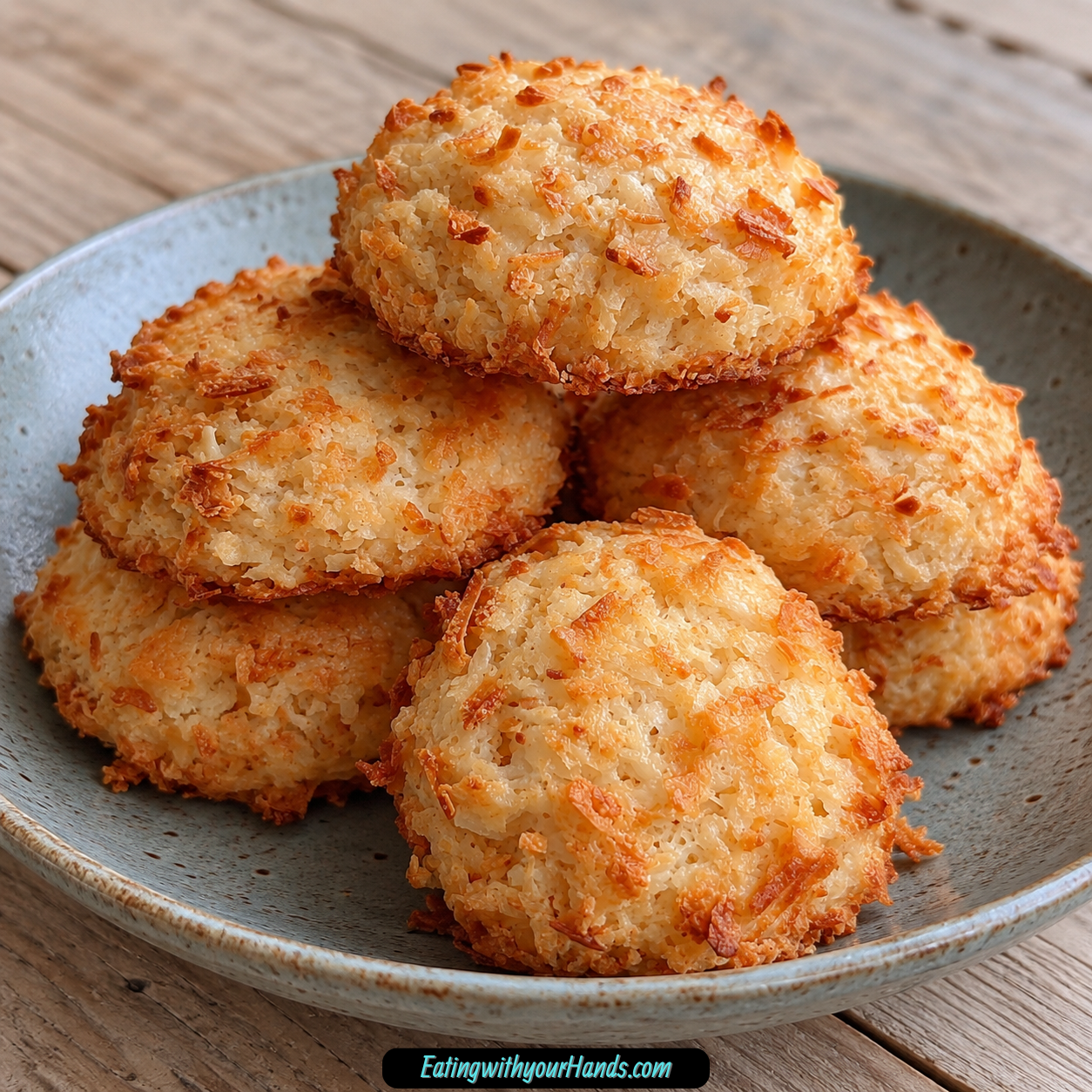
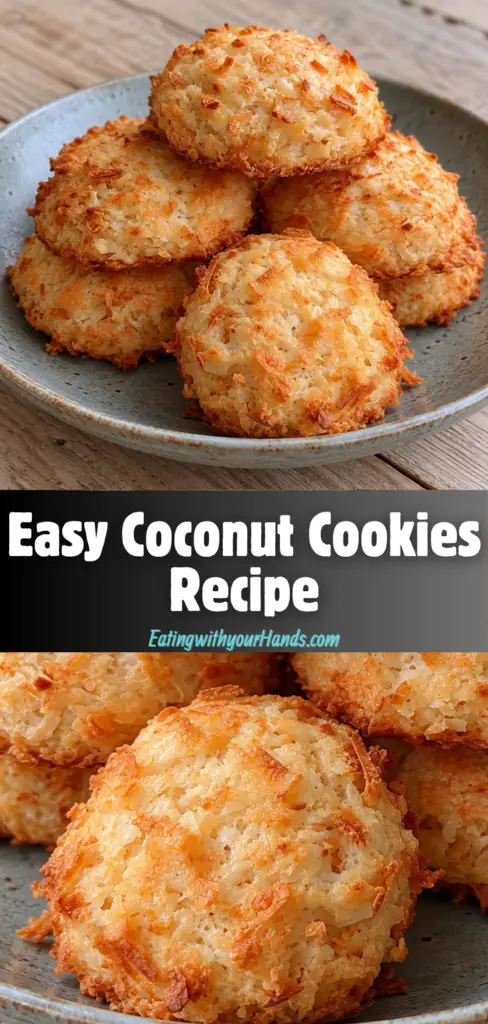
Easy Coconut Cookies Recipe is the kind of simple homemade treat that proves you do not need a complicated baking project to make something memorable. These cookies are buttery, lightly sweet, gently crisp around the edges, and filled with the delicate chew and fragrance of desiccated coconut.
They are the cookies to make when you want something quick but still homemade. No chilling is required, the ingredient list is short, and the dough comes together with basic pantry staples.
The first thing you notice is the smell. As the coconut toasts slightly in the oven and the butter bakes into the dough, the whole kitchen takes on that warm, tropical, bakery-like scent.
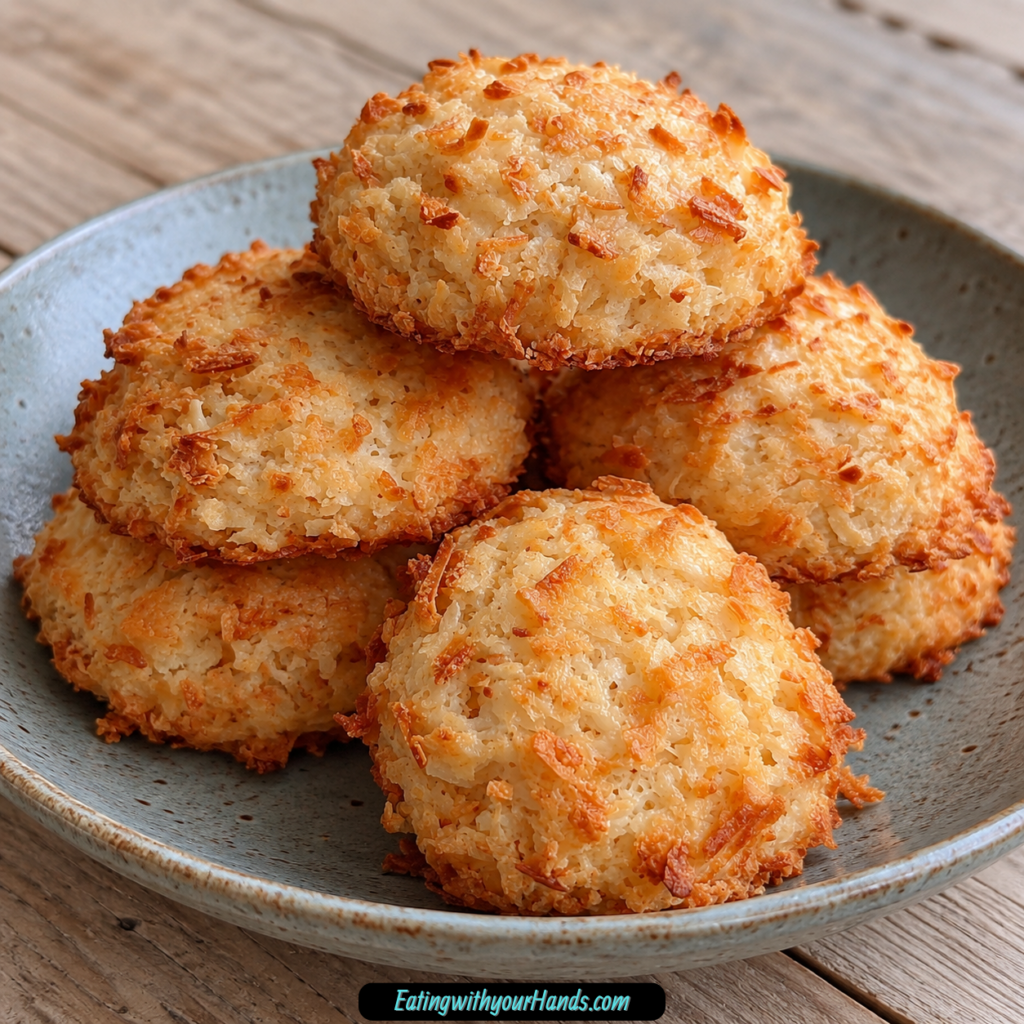
The texture is what makes them especially charming. The edges bake up lightly golden and crisp, while the centers stay tender with just enough chew from the coconut.
They are not heavy like macaroons, and they are not plain like simple sugar cookies. They sit right in the middle, with a buttery cookie base and a gentle coconut flavor that makes every bite interesting.
These cookies are perfect for afternoon tea, coffee breaks, lunchboxes, dessert trays, midnight snacks, and last-minute guests. They are easy enough for a weekday but pretty enough to serve when someone stops by.
You can also dress them up in small ways. Dip them in chocolate, add lime zest, swap in almond extract, stir in white chocolate chips, or press a maraschino cherry half into the top for a retro bakery look.
Easy Coconut Cookies are quick, reliable, and wonderfully comforting. They are the kind of cookie that feels low-effort in the kitchen but tastes like something you will want to make again and again.
Table of Contents
- Why You’ll Love These Coconut Cookies
- Recipe Details
- Ingredients
- Ingredient Notes
- Optional Swaps, Variations, and Flavor Ideas
- Why This Recipe Works
- Directions
- Step 1: Preheat the Oven
- Step 2: Prepare the Baking Sheet
- Step 3: Soften the Butter
- Step 4: Cream Butter and Sugars
- Step 5: Add the Egg and Vanilla
- Step 6: Mix the Dry Ingredients
- Step 7: Combine Wet and Dry Mixtures
- Step 8: Check the Dough Texture
- Step 9: Scoop the Dough
- Step 10: Roll Into Balls
- Step 11: Arrange on the Baking Sheet
- Step 12: Bake the Cookies
- Step 13: Rotate if Needed
- Step 14: Rest on the Baking Sheet
- Step 15: Move to a Wire Rack
- Step 16: Serve Warm or Cool
- Step 17: Store Properly
- Step 18: Freeze if Desired
- Serving Ideas
- Storage
- Freezing
- Make-Ahead
- Helpful Notes for Best Results
- Variations
- Troubleshooting
- Frequently Asked Questions
- Why This Recipe Works So Well
- Final Thoughts
- Coconut Cookies
Why You’ll Love These Coconut Cookies
These cookies come together fast. There is no dough chilling required unless the dough feels sticky.
They use simple ingredients. Butter, sugars, flour, coconut, baking powder, salt, egg, and vanilla create a full batch of cookies.
They have a beautiful texture. The edges are crisp, the centers are tender, and the coconut adds chew.
They are lightly sweet and buttery. The coconut flavor is present without being overpowering.
They are flexible. You can add chocolate, lime, almond, cherries, or use gluten-free flour.
They store well. Keep them at room temperature or freeze them for later.
Recipe Details
This recipe bakes at 350°F (175°C). Line a baking sheet with parchment paper for easy cleanup.
The recipe uses 1 cup or 226g unsalted butter, softened. Softened butter is important because it creams properly with the sugars.
The sugars are ¾ cup or 150g granulated sugar and ½ cup or 65g powdered sugar. Granulated sugar helps the edges crisp, while powdered sugar helps create a tender crumb.
The dry ingredients are 2 cups or 250g all-purpose flour, 1½ cups or 120g desiccated coconut, 1 teaspoon baking powder, and ½ teaspoon salt. Spoon and level the flour for best texture.
Use unsweetened desiccated coconut. Sweetened coconut can be used, but reduce the granulated sugar to ½ cup.
The wet ingredients also include 1 large egg and 1 teaspoon vanilla extract. Room-temperature egg is ideal, but a cold egg can work in a pinch.
The butter and sugars are creamed for about 2 minutes. The dough is mixed only until no dry patches remain.
The cookies bake for 10 to 12 minutes. They are done when the edges are light golden and the centers still look a little soft.
Ingredients
For the Coconut Cookies
- 1 cup unsalted butter, softened
- ¾ cup granulated sugar
- ½ cup powdered sugar
- 2 cups all-purpose flour
- 1½ cups desiccated coconut
- 1 teaspoon baking powder
- ½ teaspoon salt
- 1 large egg
- 1 teaspoon vanilla extract
Optional Swaps, Add-Ins, and Serving Ideas
- Coconut oil
- Refined coconut oil
- 1:1 gluten-free flour blend
- Sweetened coconut
- Freshly grated coconut
- Extra all-purpose flour
- Dark chocolate chips
- Semi-sweet chocolate chips
- Sea salt
- Extra coconut flakes
- Lime zest
- Lime juice
- White chocolate chips
- Almond extract
- Maraschino cherry halves
- Bread slice for storage
Ingredient Notes
Unsalted butter gives the cookies their rich, buttery base. It should be softened, not melted.
If the butter is cold, it will not cream properly with the sugars. If it is too soft or oily, the cookies may spread too much.
Granulated sugar helps create lightly crisp cookie edges. It also gives the cookies their classic sweetness.
Powdered sugar is the secret to the tender crumb. If it is lumpy, sift it before using.
All-purpose flour gives the cookies structure. Spoon and level it instead of scooping from the bag so the cookies do not turn dry.
Desiccated coconut gives the cookies their flavor and gentle chew. Unsweetened coconut is preferred so the butter and coconut flavors stay balanced.
Baking powder gives the cookies a little lift. Make sure it is fresh for best results.
Salt balances the sweetness. Fine sea salt works well.
The egg helps bind the dough. Room-temperature egg blends best, though a cold egg can still work.
Vanilla extract rounds out the flavor. Pure vanilla is lovely, but imitation vanilla also works.
Optional Swaps, Variations, and Flavor Ideas
Classic Easy Coconut Cookies
Use softened butter, granulated sugar, powdered sugar, all-purpose flour, desiccated coconut, baking powder, salt, egg, and vanilla. This gives the full buttery coconut cookie.
Bake until the edges are light golden. Let the cookies rest on the baking sheet before moving.
Coconut Oil Cookies
Use coconut oil instead of butter. The cookies will be more crumbly.
Use refined coconut oil if you do not want extra coconut flavor. The texture will not be exactly the same as butter.
Gluten-Free Coconut Cookies
Use a 1:1 gluten-free flour blend in place of all-purpose flour. The cookies may spread a little more.
Let them cool fully before moving. The flavor will still be delicious.
Sweetened Coconut Cookies
Use sweetened coconut if that is what you have. Reduce the granulated sugar to ½ cup.
This keeps the cookies from becoming too sweet. Bake as directed.
Fresh Coconut Cookies
Use about 2 cups freshly grated coconut, lightly packed. Fresh coconut adds more moisture.
You may need 1 extra tablespoon of flour. The texture will be chewier.
Chocolate-Dipped Coconut Cookies
Melt about 1 cup dark or semi-sweet chocolate chips. Dip half of each cooled cookie into the chocolate.
Let the excess drip off before setting the cookies on parchment. Sprinkle with sea salt or extra coconut flakes before the chocolate sets.
Lime Coconut Cookies
Add the zest of 1 lime to the dough when mixing in the dry ingredients. The citrus brightens the coconut flavor.
For extra lime flavor, drizzle the cooled cookies with a simple glaze made from powdered sugar and lime juice. The glaze should be pourable.
White Chocolate Coconut Cookies
Add a handful of white chocolate chips to the dough. The white chocolate makes the cookies sweeter and creamier.
Keep the add-in moderate so the dough still holds together. Bake until edges are golden.
Almond Coconut Cookies
Swap the vanilla extract for almond extract. This gives the cookies a slightly nutty bakery flavor.
Use almond extract carefully because it can be strong. Mix evenly.
Cherry Coconut Cookies
Press a maraschino cherry half into each cookie before baking. This gives the cookies a retro look.
Drain the cherries well first. Extra moisture can affect the tops.
Why This Recipe Works
This recipe works because the butter and two sugars create a dough that is both tender and crisp-edged. Granulated sugar helps with the light crunch, while powdered sugar softens the crumb.
Desiccated coconut gives the cookies texture and aroma. It toasts lightly as the cookies bake, becoming fragrant without taking over the whole cookie.
The flour gives structure, and the baking powder adds just enough lift. The cookies stay simple but not flat or heavy.
The egg binds the dough and helps everything bake into a cohesive cookie. Vanilla adds warmth and sweetness.
There is no need to chill the dough when the butter is properly softened and the dough has the right texture. That keeps the recipe fast and practical.
The cookies are removed from the oven while the centers still look slightly soft. They firm up as they cool on the baking sheet.
The 5-minute rest on the baking sheet is important. It lets the cookies settle before they are moved to a wire rack.
The recipe is also easy to customize because the base flavor is simple. Chocolate, lime, almond, cherries, and extra coconut all fit naturally.
Directions
Step 1: Preheat the Oven
Preheat the oven to 350°F (175°C). Let it fully heat before baking the cookies.
Starting with a hot oven helps the cookies bake evenly. It also helps the edges become lightly crisp.
Step 2: Prepare the Baking Sheet
Line a baking sheet with parchment paper. This prevents sticking and makes cleanup easier.
If you do not have parchment, use a light spray of nonstick cooking spray. Parchment is still the easiest option.
Step 3: Soften the Butter
Make sure 1 cup or 226g unsalted butter is softened. It should be soft enough to cream, but not melted.
If you forgot to set it out, dice it and let it sit on the counter for about 15 minutes. You can also use very short microwave bursts, but avoid melting it.
Step 4: Cream Butter and Sugars
Add the softened butter, ¾ cup granulated sugar, and ½ cup powdered sugar to a large bowl. Beat for about 2 minutes.
The mixture should look light, fluffy, and almost like whipped frosting. This step helps create the cookie texture.
Step 5: Add the Egg and Vanilla
Add 1 large egg and 1 teaspoon vanilla extract. Mix until smooth and combined.
If the mixture looks slightly curdled at first, keep mixing briefly. It should come together.
Step 6: Mix the Dry Ingredients
In another bowl, whisk together 2 cups all-purpose flour, 1½ cups desiccated coconut, 1 teaspoon baking powder, and ½ teaspoon salt. Whisk until evenly combined.
This helps distribute the baking powder and salt. It also prevents dry pockets later.
Step 7: Combine Wet and Dry Mixtures
Gradually add the dry ingredients to the butter mixture. Mix on low speed or stir gently.
Stop as soon as the dough forms and no dry patches remain. Do not overmix.
Step 8: Check the Dough Texture
The dough should be soft enough to scoop but not overly sticky. If it clings badly to your hands, chill it for 15 minutes.
A short chill makes scooping easier. It is not required unless the dough feels too soft.
Step 9: Scoop the Dough
Use a tablespoon or small cookie scoop to portion the dough. Try to make the scoops similar in size.
Even portions bake more evenly. This also helps every cookie finish at the same time.
Step 10: Roll Into Balls
Roll each portion gently into a ball. The shape does not need to be perfect.
Do not compact the dough too firmly. A gentle roll keeps the cookies tender.
Step 11: Arrange on the Baking Sheet
Place the dough balls on the prepared baking sheet. Leave about 2 inches between cookies.
They will spread a little as they bake. Spacing helps prevent them from touching.
Step 12: Bake the Cookies
Bake for 10 to 12 minutes. Watch for light golden edges.
The centers should still look slightly soft. Do not wait for the whole cookie to darken.
Step 13: Rotate if Needed
If your oven browns unevenly, rotate the baking sheet halfway through. This helps the cookies bake more evenly.
Ovens can have hot spots. Rotating protects the edges from overbrowning.
Step 14: Rest on the Baking Sheet
Let the cookies sit on the baking sheet for 5 minutes after baking. This step helps them firm.
Do not move them right away. Warm cookies are delicate.
Step 15: Move to a Wire Rack
Transfer the cookies to a wire rack to cool completely. Use a spatula and move gently.
The cookies will continue setting as they cool. The edges will become crispier.
Step 16: Serve Warm or Cool
Enjoy a cookie warm if desired. It pairs beautifully with milk, tea, or coffee.
For storage, let the cookies cool fully first. Warm cookies should not be sealed in a container.
Step 17: Store Properly
Place cooled cookies in an airtight container. Store at room temperature for up to 5 days.
If your kitchen is warm and you want them softer, tuck in a piece of bread. Replace it if needed.
Step 18: Freeze if Desired
Layer cookies between sheets of parchment in a freezer bag. Freeze for up to 3 months.
Thaw at room temperature when ready to enjoy. Dough balls can also be frozen and baked straight from frozen with 1 to 2 extra minutes.
Serving Ideas
Serve coconut cookies with afternoon tea. Their buttery coconut flavor pairs beautifully with a warm cup.
Enjoy them with coffee for breakfast or a snack. The cookies are simple enough to fit any time of day.
Pack them in lunchboxes once fully cooled. They hold their shape well.
Arrange them on a pretty plate for guests. They look simple but taste impressive.
Serve chocolate-dipped versions on dessert trays. They feel a little fancier without much extra work.
Add lime-glazed cookies to a spring or summer table. The citrus makes them taste bright.
Enjoy one warm with a glass of milk. The coconut flavor is especially comforting that way.
Keep a few in a cookie tin for late-night snacks. They are easy to grab and enjoy.
Storage
Store cooled cookies in an airtight container. A cookie tin or glass container with a tight lid works well.
They stay crisp and delicious at room temperature for up to 5 days. Keep the container sealed.
If your kitchen is warm, tuck a piece of bread into the container. This can help keep cookies softer.
Use parchment between layers if stacking many cookies. This helps protect the surfaces.
Do not store cookies while warm. Steam can soften them too much.
Keep chocolate-dipped cookies separated until the chocolate is fully set. Otherwise, they can stick.
The cookies are best in the first few days. They remain enjoyable as long as they are stored properly.
Freezing
Baked coconut cookies freeze well. Layer them between sheets of parchment in a freezer bag.
Freeze for up to 3 months. Thaw at room temperature when ready to eat.
You can also freeze the dough. Scoop the dough into balls and freeze them on a tray first.
Once firm, transfer the dough balls to a freezer bag. This keeps them from sticking together.
Bake straight from frozen. Add 1 to 2 extra minutes to the baking time.
Freezing dough is helpful for fresh cookies anytime. Bake only what you need.
Label the freezer bag if desired. This helps track storage time.
Make-Ahead
The dough can be made ahead and chilled if needed. This is useful if the dough feels too sticky.
You can also scoop the dough into balls and freeze them. This gives you ready-to-bake cookies for later.
Baked cookies can be made several days before serving. Store them airtight at room temperature.
For parties, bake the cookies the day before and dip in chocolate once cool. Let the chocolate set fully before packing.
If making lime-glazed cookies, glaze after the cookies cool. Let the glaze firm before stacking.
Make-ahead coconut cookies are great for guests, lunchboxes, and dessert trays. The flavor stays lovely when stored well.
Keep variations separated if packaging for gifts. This prevents flavors and toppings from mixing.
Helpful Notes for Best Results
Use softened butter, not melted butter. This helps the dough cream properly.
If the dough is too sticky, chill it for 15 minutes. This makes scooping easier.
If the cookies spread too much, the butter may have been too soft or the oven may have been too cool. Chill the dough for 20 minutes next time.
You can also reduce the butter by 2 tablespoons or bake at 375°F for a slightly puffier cookie. Watch them carefully if changing the temperature.
If the edges brown too fast, rotate the baking sheet halfway through baking. This helps with hot spots.
If you want stronger coconut flavor, toast the desiccated coconut in a dry skillet for 2 to 3 minutes before mixing it into the dough. Let it cool before adding.
Spoon and level flour. Too much flour makes dry cookies.
Do not overmix after adding the dry ingredients. Stop when the dough forms.
Variations
Classic Easy Coconut Cookies
Use softened butter, granulated sugar, powdered sugar, all-purpose flour, desiccated coconut, baking powder, salt, egg, and vanilla. This gives the original buttery coconut cookie.
Bake until the edges are light golden. Cool on the sheet before moving.
Chocolate-Dipped Coconut Cookies
Dip cooled cookies halfway into melted dark or semi-sweet chocolate. Use about 1 cup chocolate chips for dipping.
Sprinkle with sea salt or extra coconut flakes before the chocolate sets. Let them firm on parchment.
Lime Coconut Cookies
Add the zest of 1 lime to the dough. The lime brightens the coconut flavor.
Drizzle baked cookies with powdered sugar mixed with lime juice if desired. The glaze should be pourable.
White Chocolate Coconut Cookies
Add a handful of white chocolate chips. This makes the cookies sweeter and creamier.
Do not add too many chips. Keep the dough balanced.
Almond Coconut Cookies
Use almond extract instead of vanilla extract. The cookies take on a bakery-style flavor.
Use almond extract carefully. It is stronger than vanilla.
Cherry Coconut Cookies
Press a maraschino cherry half into each cookie before baking. Drain cherries well first.
This gives the cookies a retro, colorful look. Bake as directed.
Gluten-Free Coconut Cookies
Use a 1:1 gluten-free flour blend. The cookies may spread slightly more.
Let them cool fully before serving. The flavor stays delicious.
Coconut Oil Cookies
Use coconut oil instead of butter. The cookies will be more crumbly.
Use refined coconut oil if you want less coconut flavor. Unrefined can make the coconut flavor stronger.
Sweetened Coconut Cookies
Use sweetened coconut if needed. Reduce the granulated sugar to ½ cup.
This keeps the cookies from becoming overly sweet. Bake as usual.
Fresh Coconut Cookies
Use about 2 cups freshly grated coconut, lightly packed. Add an extra tablespoon of flour if needed.
Fresh coconut has more moisture. The cookies will be a little chewier.
Toasted Coconut Cookies
Toast the desiccated coconut for 2 to 3 minutes in a dry skillet before adding it to the dough. Let it cool first.
This makes the coconut flavor stronger. It adds a deeper toasted aroma.
Troubleshooting
The Dough Is Too Sticky
Chill the dough for 15 minutes. A short chill makes it much easier to scoop.
You can also lightly dust your hands if rolling. Do not add too much flour unless necessary.
The Cookies Spread Too Much
The butter may have been too soft. Chill the dough for 20 minutes before baking next time.
Old baking powder can also affect texture. Check that it fizzes in hot water.
The Cookies Are Too Flat
Try chilling the dough before baking. You can also reduce the butter by 2 tablespoons.
Another option is baking at 375°F for a slightly puffier cookie. Watch closely so the edges do not overbrown.
The Cookies Are Dry
Too much flour may have been added. Spoon and level the flour instead of scooping.
Overbaking can also dry them out. Pull them when centers still look slightly soft.
The Edges Browned Too Quickly
Your oven may have hot spots. Rotate the baking sheet halfway through baking.
The cookies should have light golden edges, not dark brown edges. Watch the final minutes.
The Coconut Flavor Is Too Mild
Toast the desiccated coconut in a dry skillet for 2 to 3 minutes before using. Let it cool before mixing.
This deepens the coconut aroma. It makes a big difference.
The Cookies Are Tough
The dough may have been overmixed after adding the flour. Mix only until no dry patches remain.
Too much flour can also make them tough. Measure carefully.
The Cookies Stuck to the Pan
Use parchment paper. It makes removal and cleanup easier.
A light spray of nonstick cooking spray can work if parchment is not available. Let cookies rest before moving.
The Frozen Dough Needs More Time
Bake frozen dough balls straight from the freezer. Add 1 to 2 extra minutes.
Watch for light golden edges. The centers should still look slightly soft.
The Fresh Coconut Made the Dough Too Wet
Fresh coconut has more moisture than desiccated coconut. Add 1 extra tablespoon of flour if needed.
Use lightly packed fresh coconut. Do not overpack the measuring cup.
Frequently Asked Questions
Can I use fresh coconut instead of desiccated?
Yes, use about 2 cups freshly grated coconut, lightly packed. The texture will be chewier.
Because fresh coconut has more moisture, you may need 1 extra tablespoon of flour. Watch the dough texture.
Yes, scoop the dough into balls and freeze them on a tray. Once firm, transfer them to a bag.
Bake straight from frozen and add 1 to 2 extra minutes. This is a great make-ahead option.
The butter may have been too soft, or the baking powder may be old. Chill the dough for 20 minutes next time.
Check that the baking powder fizzes in hot water. Fresh baking powder helps the cookies lift.
Can I use sweetened coconut?
Yes, but reduce the granulated sugar to ½ cup. Sweetened coconut adds extra sugar.
The cookies will still taste good. They may be slightly sweeter and softer.
Can I make these gluten-free?
Yes, use a 1:1 gluten-free flour blend. The cookies may spread a little more.
Let them cool fully so they set properly. Store as usual.
Can I use coconut oil instead of butter?
Yes, coconut oil can work, but the cookies will be more crumbly. Use refined coconut oil if you do not want extra coconut flavor.
The texture will be different from butter-based cookies. Butter gives the best classic texture.
Serve them with tea, coffee, milk, or on a dessert platter. They also pack well in lunchboxes.
Chocolate-dipped versions are great for guests. Lime-glazed versions taste bright and fun.
They stay fresh at room temperature in an airtight container for up to 5 days. They can also be frozen for up to 3 months.
Layer with parchment if freezing or stacking. Thaw at room temperature.
Why This Recipe Works So Well
Easy Coconut Cookies Recipe works because it balances buttery cookie richness with the light chew of desiccated coconut. The cookies feel simple but never boring.
The combination of granulated sugar and powdered sugar is important. One helps the edges crisp, while the other keeps the crumb tender.
Softened butter creams smoothly with the sugars. This creates a dough that bakes evenly and has a pleasant texture.
Desiccated coconut adds flavor, aroma, and structure. As it bakes, it becomes gently toasted and fragrant.
Baking powder gives the cookies enough lift without making them cakey. The result is still cookie-like and tender.
The 10-to-12-minute bake keeps the centers soft. The cookies finish setting during the 5-minute rest on the baking sheet.
The recipe also works because it is flexible. Chocolate, lime, almond, cherry, fresh coconut, sweetened coconut, and gluten-free flour can all fit the base.
Most of all, these cookies work because they are easy enough to make whenever a sweet craving appears. They are quick, buttery, coconut-scented, and full of homemade charm.
Final Thoughts
Easy Coconut Cookies Recipe is made with softened unsalted butter, granulated sugar, powdered sugar, all-purpose flour, desiccated coconut, baking powder, salt, egg, and vanilla extract. The dough comes together quickly, scoops easily, and bakes into golden coconut cookies with crisp edges and tender centers.
Serve them with tea, coffee, milk, or as a simple dessert tray cookie, and store them airtight at room temperature for up to 5 days or freeze for up to 3 months. With their 350°F bake, 10-to-12-minute oven time, 5-minute baking sheet rest, optional 15-to-20-minute chill for sticky or spreading dough, frozen dough bake adjustment of 1 to 2 extra minutes, and variations like chocolate dipping, lime zest, lime glaze, white chocolate chips, almond extract, maraschino cherries, coconut oil, gluten-free flour, sweetened coconut, fresh coconut, and toasted coconut, these cookies are easy, flexible, and full of sweet coconut comfort.
Coconut Cookies

Buttery, lightly crisp at the edges, sweet, and full of coconut flavor, these Coconut Cookies are made with desiccated coconut, softened butter, granulated sugar, powdered sugar, flour, egg, and vanilla. They bake into simple International-style dessert cookies that are easy to scoop, share, and store for several days.
Recipe Details
- Prep Time: 15 minutes
- Cook Time: 12 minutes
- Total Time: 27 minutes
- Course: Dessert, Snack
- Cuisine: International
- Servings: 24 cookies
Equipment
- Mixing bowl
- Baking sheet
- electric mixer
Ingredients
For the Coconut Cookies
- 1 teaspoon vanilla extract
- 1 large egg
- ½ teaspoon salt
- 1 teaspoon baking powder
- 1 ½ cups desiccated coconut 120g
- 2 cups all-purpose flour 250g
- ½ cup powdered sugar 65g
- ¾ cup granulated sugar 150g
- 1 cup unsalted butter, softened 226g
Instructions
Step 1: Prepare the Oven and Baking Sheet
Preheat your oven to 350°F (175°C). Line a baking sheet with parchment paper.
Keep the baking sheet ready before mixing the cookie dough. The parchment paper helps the cookies release cleanly after baking.
Step 2: Cream the Butter and Sugars
In a mixing bowl, beat the softened unsalted butter, granulated sugar, and powdered sugar until light and fluffy. The mixture should look smooth, pale, and evenly blended.
Using both granulated sugar and powdered sugar gives the cookies a sweet, tender texture. Make sure the butter is softened so it mixes easily with the sugars.
Step 3: Add the Egg and Vanilla
Add the large egg and vanilla extract to the butter mixture. Mix until well combined.
The egg helps bring the dough together, while the vanilla adds a simple sweet flavor that works well with the coconut. Scrape the bowl as needed so everything blends evenly.
Step 4: Mix the Dry Ingredients
In a separate bowl, whisk together the all-purpose flour, desiccated coconut, baking powder, and salt. Stir until the coconut and baking powder are evenly distributed through the flour.
This helps the dough bake evenly. The desiccated coconut gives the cookies their main texture and flavor.
Step 5: Make the Dough
Gradually add the dry ingredients to the wet ingredients. Mix until a dough forms.
Stop mixing once the dough comes together. Overmixing is not needed once the flour and coconut are fully incorporated.
Step 6: Scoop the Cookies
Scoop tablespoon-sized portions of dough onto the prepared baking sheet. Space them about 2 inches apart.
Keeping the dough portions similar in size helps the cookies bake evenly. Leave enough room between each cookie so the edges can bake properly.
Step 7: Bake Until Lightly Golden
Bake for 10-12 minutes, or until the edges are lightly golden. Watch closely near the end of the baking time so the cookies stay tender.
The cookies are ready when the edges show light color. Remove them from the oven once they reach that stage.
Step 8: Cool Completely
Let the cookies cool on the baking sheet for 5 minutes. Then transfer them to a wire rack to cool completely.
The short rest on the baking sheet helps the cookies set before moving. Once fully cooled, they are ready to serve or store.
Notes
- Store the cookies in an airtight container at room temperature for up to 5 days.
Serving Suggestions
Serve Coconut Cookies after they have cooled completely so the texture can set. The desiccated coconut, butter, vanilla, granulated sugar, and powdered sugar create a simple cookie with a sweet coconut flavor and lightly golden edges.
This recipe makes 24 cookies, making it easy to share them on dessert trays, snack plates, lunchbox treats, or everyday cookie platters. They work well as both a dessert and a snack.
For the best texture, let the cookies cool on the baking sheet for 5 minutes before transferring them to a wire rack. This helps them hold their shape while they finish cooling.
Storage
How to Store
Store the cookies in an airtight container at room temperature for up to 5 days. Make sure the cookies are fully cooled before storing.
Coconut Tip
Use 1 ½ cups desiccated coconut 120g. Whisk it with the flour, baking powder, and salt so it spreads evenly through the dough.
Butter Tip
Use 1 cup softened unsalted butter 226g. Softened butter creams more easily with the granulated sugar and powdered sugar.
Sugar Tip
Use both ¾ cup granulated sugar 150g and ½ cup powdered sugar 65g. This combination gives the cookies sweetness and a tender texture.
Scooping Tip
Scoop tablespoon-sized portions of dough and space them about 2 inches apart on the baking sheet. This helps the cookies bake evenly.
Baking Tip
Bake at 350°F (175°C) for 10-12 minutes, or until the edges are lightly golden.
Cooling Tip
Let the cookies cool on the baking sheet for 5 minutes before transferring them to a wire rack to cool completely.

Fernando is the creator and writer behind the food blog Eating with your Hands. Living and working in cities like Paris, Barcelona, and Berlin, and being married to a Canadian foodie, has given Fernando a passion and interest in food and inspired him to run EWYH.