
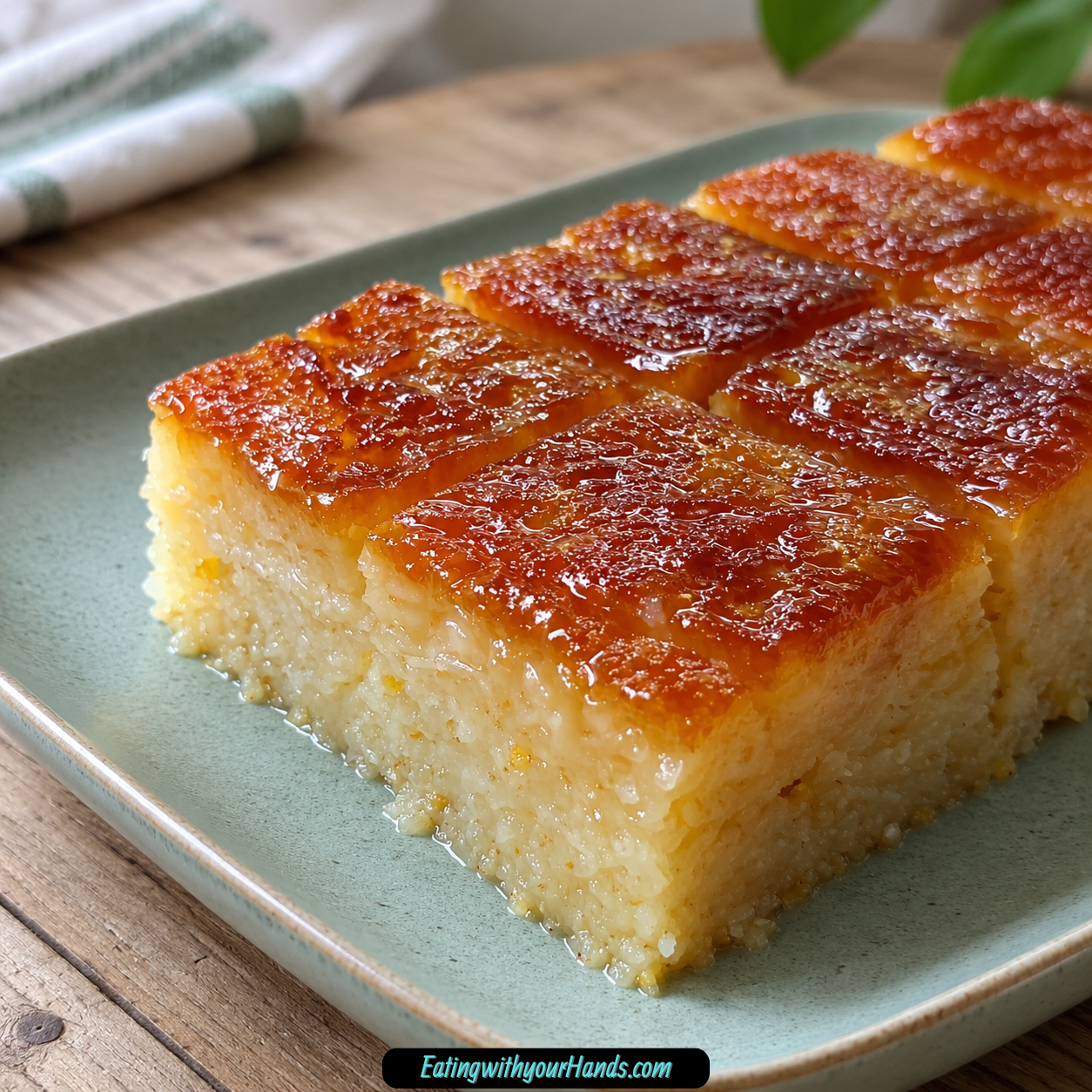
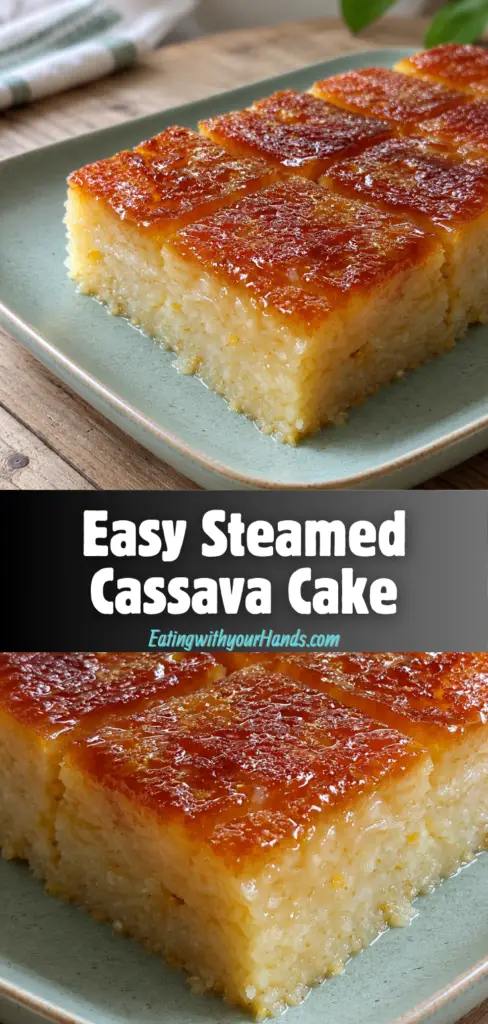
Easy Steamed Cassava Cake is one of those simple desserts that feels deeply comforting before you even take the first bite. It is made with grated cassava, coconut milk, sugar, and a caramel layer that turns shiny and golden once the cake is flipped onto a plate.
This cake is humble in the best way. There is no oven needed for the classic version, no complicated batter, no long list of ingredients, and no fancy equipment required beyond a pan and a steamer setup.
What makes it memorable is the texture. The cassava turns sticky, soft, slightly chewy, and tender, while the coconut milk gives it richness and a mellow sweetness that feels warm and familiar.
Then there is the caramel. A simple layer of melted sugar goes into the bottom of the pan before the cassava mixture, and after steaming, that hidden bottom becomes the glossy top.
The first slice is always the best moment. The cake cuts into sticky golden pieces, the caramel shines, and the aroma of coconut and cassava makes the whole dessert feel like something passed down from a family kitchen.
This recipe is especially lovely because it uses only four main ingredients. Fresh grated cassava is wonderful, but thawed frozen grated cassava also works when fresh is not available.
It is the kind of dessert that can be served warm, chilled, or at room temperature. Each version has its own charm, from gooey and soft to firm and chewy.
Easy Steamed Cassava Cake is perfect for potlucks, family snacks, simple celebrations, or afternoons when you want a sweet treat without turning on the oven. It is easy, nostalgic, fragrant, and quietly special in that comforting way only simple desserts can be.
Table of Contents
- Why You’ll Love This Easy Steamed Cassava Cake
- Recipe Details
- Ingredients
- Ingredient Notes
- Optional Swaps, Variations, Add-Ins, and Serving Ideas
- Classic Steamed Cassava Cake
- Frozen Cassava Cake
- Fresh Cassava Cake
- Pandan Steamed Cassava Cake
- Latik-Topped Cassava Cake
- Jackfruit Cassava Cake
- Condensed Milk Cassava Cake
- Less Sweet Cassava Cake
- Coconut Cream Cassava Cake
- Warm Cassava Cake
- Chilled Cassava Cake
- Room-Temperature Cassava Cake
- Baked Cassava Cake Option
- Why This Recipe Works
- Directions
- Step 1: Prepare the Cassava
- Step 2: Drain if the Cassava Is Watery
- Step 3: Mix Cassava and Coconut Milk
- Step 4: Add the Sugar
- Step 5: Prepare the Cake Pan
- Step 6: Start the Caramel
- Step 7: Cook the Caramel Until Golden
- Step 8: Pour the Caramel Into the Pan
- Step 9: Add the Cassava Batter
- Step 10: Set Up the Steamer
- Step 11: Cover the Pan
- Step 12: Steam the Cake
- Step 13: Check the Water Level
- Step 14: Test for Doneness
- Step 15: Cool Completely
- Step 16: Flip the Cake
- Step 17: Slice and Serve
- Step 18: Store Leftovers
- Serving Ideas
- Storage
- Freezing
- Make-Ahead
- Helpful Notes for Best Results
- Variations
- Troubleshooting
- Frequently Asked Questions
- Can I use coconut cream instead of coconut milk?
- What if I cannot find fresh cassava?
- My caramel hardened too fast. What can I do?
- Can I bake this instead of steaming?
- How do I know when the cake is done steaming?
- Can I make this less sweet?
- Can I add pandan extract?
- How long does steamed cassava cake last?
- Why This Recipe Works So Well
- Final Thoughts
- Steamed Cassava Cake
Why You’ll Love This Easy Steamed Cassava Cake
This cake is unbelievably easy. You mix the cassava batter, caramelize sugar, pour everything into a pan, steam, cool, and serve.
It does not need an oven. The classic version is steamed, which gives the cake its soft, sticky, chewy texture.
The texture is dreamy and comforting. It is moist, dense, slightly chewy, and topped with a shiny caramel layer.
It uses minimal ingredients. Grated cassava, coconut milk, sugar, and caramelizing sugar are all you need for the basic recipe.
It is versatile. Serve it warm, chilled, or at room temperature.
It can be customized. Pandan extract, latik, chopped jackfruit, condensed milk, and sweetness adjustments all work beautifully.
Recipe Details
This recipe uses 4 cups grated cassava. Fresh cassava is best, but thawed frozen grated cassava works in a pinch.
If using frozen cassava, thaw it and squeeze or pat out excess liquid. The cassava should be moist but not dripping.
The batter uses 2 ¾ cups coconut milk. Full-fat coconut milk gives the richest, creamiest texture.
The batter is sweetened with 1 ½ cups sugar. Plain white sugar dissolves easily into the cassava mixture.
The caramel layer uses ¾ cup sugar. This sugar is melted in a non-stick pan over medium heat until golden.
The cake steams for 60 minutes. Check the water level halfway through so the pot does not run dry.
To test doneness, insert a toothpick into the center. It should come out clean.
If the cake is not done, steam another 5 to 10 minutes. The edges may also pull slightly away from the pan.
The cake must cool completely before flipping onto a plate. The caramel layer becomes the top after unmolding.
Ingredients
For the Cassava Cake
- 4 cups grated cassava
- 2 ¾ cups coconut milk
- 1 ½ cups sugar
For the Caramel Layer
- ¾ cup sugar
Optional Add-Ins, Swaps, and Serving Ideas
- 1 teaspoon pandan extract
- Latik
- Chopped jackfruit
- Condensed milk
- Coconut cream
- Water
- Frozen grated cassava
- Fresh cassava
- Paper towels
- Warm slices
- Chilled slices
- Room-temperature slices
Ingredient Notes
Grated cassava is the base of the cake. Fresh cassava gives wonderful texture, but thawed frozen grated cassava is convenient and works well.
If the cassava seems watery, strain it for 10 minutes or gently squeeze it with clean hands. You want moisture, not dripping liquid.
Coconut milk gives the cake richness. Full-fat coconut milk creates the creamiest texture.
Shake the coconut milk well before opening. This helps mix the thicker cream with the liquid.
Sugar sweetens the batter. The cassava and coconut milk bring mellow natural sweetness, but sugar gives the cake its dessert flavor.
The extra sugar for caramelizing becomes the glossy top after the cake is flipped. It should be cooked only until golden, not dark.
Coconut cream can be used instead of coconut milk if diluted. Use about ¼ cup water per cup of cream to match coconut milk consistency.
Pandan extract is optional. It adds a green hue and a gentle fragrance.
Latik can be sprinkled on top. It adds crisp coconut curd texture.
Chopped jackfruit can be stirred into the batter for small sweet bursts. It makes the cake more festive.
Condensed milk can replace half the coconut milk for a richer twist. Reduce the sugar slightly if using it.
Optional Swaps, Variations, Add-Ins, and Serving Ideas
Classic Steamed Cassava Cake
Make the cake with grated cassava, coconut milk, sugar, and a caramelized sugar layer. This gives the classic sticky, chewy, coconut-rich dessert.
Steam for 60 minutes and cool completely before flipping. The caramel layer becomes the shiny top.
Frozen Cassava Cake
Use thawed frozen grated cassava if fresh cassava is unavailable. Squeeze out excess liquid before mixing.
Patting it dry with paper towels also works. The cassava should be moist but not watery.
Fresh Cassava Cake
Use freshly grated cassava for the best texture. If it releases too much liquid, gently squeeze it before using.
Fresh cassava gives a naturally hearty texture. It works beautifully with coconut milk.
Pandan Steamed Cassava Cake
Add 1 teaspoon pandan extract to the batter. This gives the cake a green color and gentle fragrance.
The flavor becomes slightly more aromatic. Mix well so the color spreads evenly.
Latik-Topped Cassava Cake
Sprinkle latik on top before serving. It adds a crisp, coconutty contrast.
Use it after the cake is unmolded. The caramel top and latik create a lovely texture combination.
Jackfruit Cassava Cake
Stir in a handful of chopped jackfruit. It adds little sweet bursts throughout the cake.
This variation is especially nice for holidays or gatherings. Keep the pieces small so the cake slices cleanly.
Condensed Milk Cassava Cake
Replace half the coconut milk with condensed milk for a richer twist. Reduce the sugar slightly.
This version is sweeter and creamier. Keep the batter thick but pourable.
Less Sweet Cassava Cake
Reduce the batter sugar by ¼ cup. The cassava and coconut milk still bring gentle sweetness.
The cake will taste milder. Keep the caramel layer the same for the glossy top.
Coconut Cream Cassava Cake
Use coconut cream diluted with water. Use about ¼ cup water for every cup of coconut cream.
This creates a rich version while keeping the batter consistency close to coconut milk. Mix thoroughly before adding to cassava.
Warm Cassava Cake
Serve the cake slightly warm after it cools enough to slice. The caramel layer will feel a little gooey.
This is a cozy way to enjoy it. Let it set first so it slices properly.
Chilled Cassava Cake
Serve the cake chilled from the refrigerator. The texture becomes firmer and chewier.
This is wonderful for make-ahead dessert. The flavor settles as it chills.
Room-Temperature Cassava Cake
Serve at room temperature for potlucks or gatherings. It holds its shape well once cooled.
This is the easiest serving style. Slice it neatly after the cake has fully set.
Baked Cassava Cake Option
Bake at 350°F (175°C) for about 45 minutes if you prefer or need to bake it. The texture changes and becomes denser with a crustier top.
The steamed version stays softer and chewier. Baking is still tasty, but different.
Why This Recipe Works
This recipe works because cassava naturally creates a sticky, chewy texture when steamed. Coconut milk adds creaminess and helps the cake stay moist.
Sugar sweetens the batter without complicating the recipe. It dissolves into the coconut milk and cassava mixture.
The caramel layer adds depth. It starts at the bottom of the pan and becomes the glossy top when the cake is flipped.
Steaming gives the cake its soft texture. It cooks gently without drying the edges.
Covering the pan with foil helps prevent excess moisture from dripping into the cake. Tiny holes allow steam to escape.
Cooling is important. The cake needs time to firm before flipping and slicing.
The recipe is forgiving. If the batter is a little thick, a splash of coconut milk can loosen it; if the cassava is watery, straining or squeezing helps.
The cake stores well in the refrigerator. The texture can become even better on the second day as the flavors settle.
Directions
Step 1: Prepare the Cassava
Measure 4 cups grated cassava. If using fresh cassava, make sure it is grated finely enough to mix evenly.
If using thawed frozen grated cassava, squeeze out excess water. You can also pat it dry with paper towels.
Step 2: Drain if the Cassava Is Watery
If the cassava looks runny, let it sit in a strainer for 10 minutes. This helps excess liquid drain away.
You can also gently squeeze it with clean hands or in a clean kitchen towel. The cassava should be moist, not dripping.
Step 3: Mix Cassava and Coconut Milk
Place the grated cassava in a large mixing bowl. Pour in 2 ¾ cups coconut milk.
Mix until every strand of cassava is coated. You can use clean hands or a sturdy spoon.
Step 4: Add the Sugar
Add 1 ½ cups sugar to the cassava mixture. Stir until the sugar dissolves into the batter.
The batter should look thick but pourable. If it seems too stiff, add a small splash of coconut milk, but do not make it soupy.
Step 5: Prepare the Cake Pan
Set your cake pan nearby before caramelizing the sugar. Caramel sets quickly once it is poured.
Use a pan that fits inside your steamer setup. Make sure it is heat-safe.
Step 6: Start the Caramel
Heat a non-stick pan over medium heat. Add ¾ cup sugar.
Stir constantly with a wooden spoon. The sugar may clump at first, but it will begin to melt.
Step 7: Cook the Caramel Until Golden
Continue stirring until the sugar becomes an even golden liquid, about 5 minutes. Do not let it get too dark.
Burnt caramel tastes bitter. Remove it from the heat as soon as it is golden.
Step 8: Pour the Caramel Into the Pan
Immediately pour the hot caramel into the cake pan. Tilt the pan carefully to coat the bottom evenly.
Work quickly because caramel hardens fast. Be very careful because melted sugar is extremely hot.
Step 9: Add the Cassava Batter
Pour the cassava mixture over the caramel layer. It may sizzle a little, and that is normal.
Spread the batter evenly in the pan. Smooth the top gently.
Step 10: Set Up the Steamer
Prepare a steamer with boiling water. If you do not have a steamer, place a rack in a large pot with about 2 inches of boiling water.
The cake pan should sit above the water, not in it. Keep the water at a steady steam.
Step 11: Cover the Pan
Cover the cake pan tightly with foil. Poke a few tiny holes to let steam escape.
The foil helps prevent dripping water from landing on the cake. The holes keep pressure from building under the cover.
Step 12: Steam the Cake
Place the covered pan in the steamer. Steam for 60 minutes.
Keep the water simmering steadily. Avoid opening the steamer too often.
Step 13: Check the Water Level
Check the water level halfway through steaming. Add more boiling water if needed.
Do not let the pot run dry. A dry pot can damage the pan and interrupt cooking.
Step 14: Test for Doneness
After 60 minutes, insert a toothpick into the center of the cake. It should come out clean.
The edges may pull away slightly from the pan. If the toothpick is still wet, steam another 5 to 10 minutes.
Step 15: Cool Completely
Remove the pan from the steamer and let the cake cool completely. Do not flip it while hot.
Cooling allows the cake to set. This helps it hold together when unmolded.
Step 16: Flip the Cake
Once fully cooled, run a knife around the edges if needed. Place a serving plate over the pan.
Carefully flip the cake onto the plate. The caramel layer will now be on top.
Step 17: Slice and Serve
Slice the cake into portions. Serve slightly warm, chilled, or at room temperature.
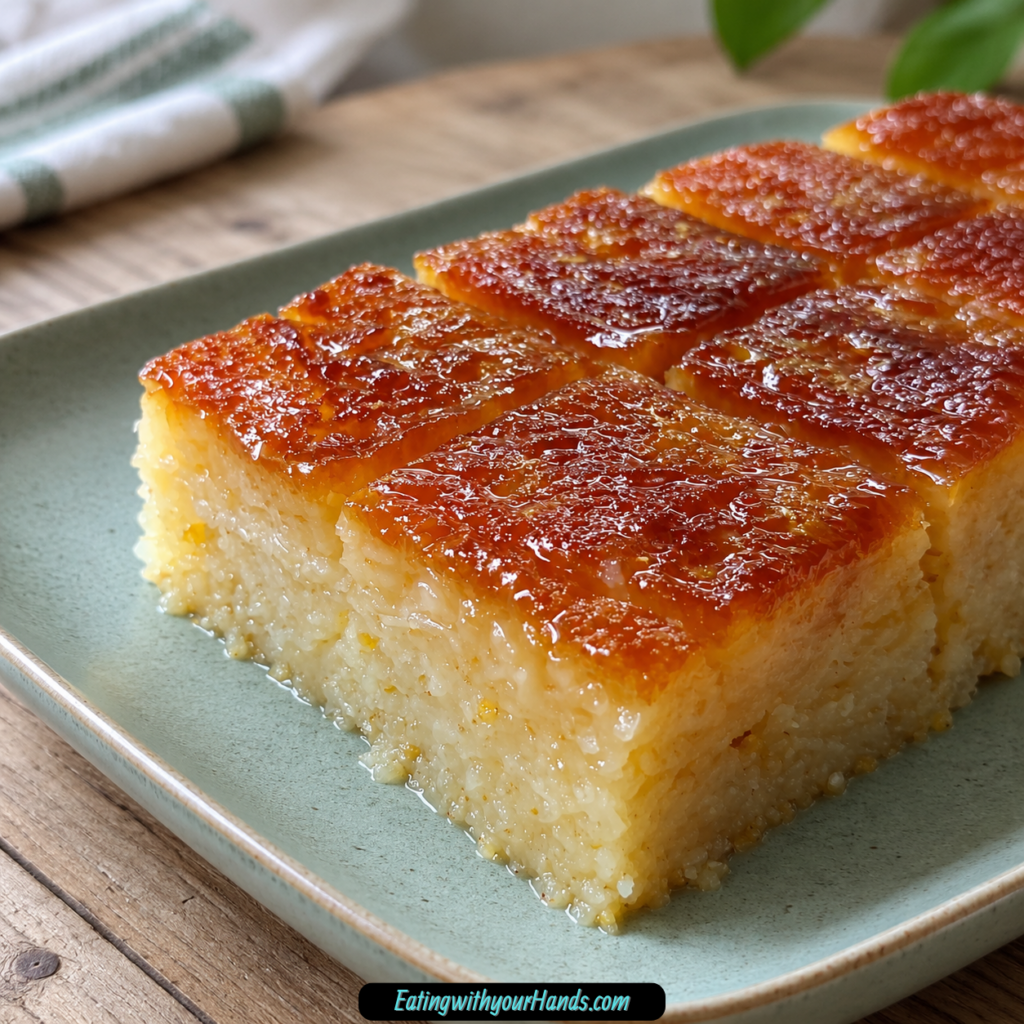
The caramel top should look shiny and golden. The cake should be sticky, soft, and slightly chewy.
Step 18: Store Leftovers
Place leftovers in an airtight container. Refrigerate for 3 to 4 days.
Serve chilled or let slices come toward room temperature. No freezer is needed.
Serving Ideas
Serve Easy Steamed Cassava Cake slightly warm if you enjoy a softer texture. The caramel top will feel a little more gooey.
Serve it chilled if you like a firmer, chewier bite. The cake becomes more set after refrigeration.
Room temperature slices are great for gatherings. They are easy to serve and hold together well.
Top with latik for crunch. The crisp coconut curds contrast beautifully with the sticky cake.
Add chopped jackfruit to the batter for a sweeter, fruitier version. This makes the cake feel festive.
Serve plain for the most nostalgic experience. The cassava, coconut milk, and caramel are enough on their own.
Cut into small squares for parties. The cake is rich and satisfying, so small portions work well.
Enjoy with tea or coffee as a simple afternoon treat. The coconut-cassava flavor pairs well with warm drinks.
Storage
Store leftover steamed cassava cake in an airtight container in the refrigerator. It keeps for 3 to 4 days.
The texture can become even better on the second day. The cake firms slightly and the flavors settle.
Serve slices cold, at room temperature, or gently warmed if desired. The recipe does not require reheating.
Keep the container sealed so the cake does not dry out. Cassava cake should stay moist.
If slices stick together, separate them with small pieces of parchment. This keeps the caramel from making them cling.
Do not leave the cake uncovered in the refrigerator. It can absorb odors.
For best flavor, enjoy within a few days. The caramel layer is especially nice while fresh.
Freezing
Freezing is not needed for this cake. It stores well in the refrigerator for 3 to 4 days.
The texture of steamed cassava cake is best when enjoyed fresh or chilled from the refrigerator. Freezing can change the chewiness.
Because the recipe is simple, it is better to make and store it in the fridge. The cake usually disappears quickly.
If planning for a gathering, make it a day ahead and refrigerate. This gives the cake time to set.
Serve chilled or bring slices toward room temperature before serving. Both textures are delicious.
Keep toppings like latik separate until serving if you want them crisp. This keeps the texture contrast.
Make-Ahead
Easy Steamed Cassava Cake is a good make-ahead dessert. It needs to cool completely before flipping and slicing, so making it early is helpful.
You can prepare it the day before and store it in the refrigerator. The flavor and texture settle nicely overnight.
If serving at a potluck, chill the cake first. It will slice more cleanly and travel better.
Add latik or any crisp topping right before serving. This keeps the topping crunchy.
If using chopped jackfruit, stir it into the batter before steaming. Then steam and chill as usual.
Caramel should be made right before assembling. It hardens quickly once poured into the pan.
Do not flip the cake until it is completely cooled. This helps keep the caramel top neat.
Helpful Notes for Best Results
Use full-fat coconut milk for the richest texture. Shake the can well before opening.
If cassava seems watery, strain it for 10 minutes or squeeze gently. Too much liquid can make the cake too soft.
Do not cook the caramel past golden amber. Dark caramel can taste bitter.
Work carefully with hot caramel. Melted sugar is extremely hot and should not be touched.
Cover the cake pan with foil while steaming. Poke a few tiny holes so steam can escape.
Check the steamer water halfway through. Add more boiling water if needed.
Cool completely before flipping. The cake needs time to set.
If the cake is not done after 60 minutes, steam another 5 to 10 minutes. Use the toothpick test.
Variations
Classic Steamed Cassava Cake
Use grated cassava, coconut milk, sugar, and caramelized sugar. This gives the traditional sticky, coconut-rich version.
Steam for 60 minutes and cool completely before flipping. The caramel becomes the shiny top.
Pandan Cassava Cake
Add 1 teaspoon pandan extract to the batter. This gives the cake a green hue and gentle fragrance.
Mix until the color is even. Steam as usual.
Latik-Topped Cassava Cake
Top the finished cake with latik. The crisp coconut curds add crunch.
Add the latik after unmolding. This keeps the texture more noticeable.
Jackfruit Cassava Cake
Stir in chopped jackfruit. It adds sweet bursts throughout the cake.
This version works especially well for holidays. Keep the pieces small.
Condensed Milk Cassava Cake
Replace half the coconut milk with condensed milk. Reduce the sugar slightly because condensed milk adds sweetness.
The cake becomes richer. Keep the batter thick but pourable.
Less Sweet Cassava Cake
Reduce the batter sugar by ¼ cup. This makes the cake less sweet.
The cassava and coconut milk still provide mellow sweetness. Keep the caramel layer for the glossy top.
Coconut Cream Cassava Cake
Use coconut cream diluted with water. Add about ¼ cup water per cup of coconut cream.
This creates an extra rich cake. Stir well so the consistency is even.
Frozen Grated Cassava Cake
Use thawed frozen grated cassava. Squeeze out excess liquid before mixing.
Patting dry with paper towels also helps. This prevents the batter from becoming watery.
Fresh Cassava Cake
Use freshly grated cassava for the most traditional texture. Drain or squeeze if very wet.
Fresh cassava gives a hearty, chewy result. Mix thoroughly with coconut milk.
Warm Caramel Cassava Cake
Serve slightly warm after it has cooled enough to set. The caramel will feel softer.
Do not slice too soon. The cake still needs to firm up first.
Chilled Cassava Cake
Refrigerate the cake before serving. The texture becomes firmer and chewier.
This is a great make-ahead option. It slices neatly.
Baked Cassava Cake
Bake at 350°F (175°C) for about 45 minutes if steaming is not possible. The texture will be denser with a crustier top.
The steamed version remains softer and chewier. Both are tasty, but different.
Troubleshooting
The Batter Is Too Watery
The cassava may have too much liquid. Let it drain in a strainer for 10 minutes.
You can also squeeze it gently or pat it dry. The batter should be thick but pourable.
The Batter Is Too Thick
Add a small splash of coconut milk. Mix well.
Do not add too much. The batter should not become soupy.
The Caramel Turned Bitter
The sugar cooked too dark. Remove it from the heat as soon as it becomes golden.
Caramel continues to darken quickly. Watch it closely.
The Caramel Hardened Too Fast
This is normal because caramel sets quickly. If needed, briefly warm the pan over low heat to loosen it.
You can also carefully warm the bottom of the pan with a wet towel while tilting. Work gently and safely.
The Cake Is Still Wet in the Center
Steam it another 5 to 10 minutes. Test again with a toothpick.
Make sure the steamer has enough water and steady steam. Low steam can slow cooking.
The Pot Ran Dry
Check the water level halfway through steaming. Add boiling water if needed.
Do not add cold water if you can avoid it. Boiling water keeps the steam steady.
The Cake Fell Apart When Flipped
It may not have cooled completely. Let the cake fully set before flipping.
Run a knife around the edges if needed. Use a plate large enough to support the cake.
Water Dripped Onto the Cake
Cover the pan tightly with foil next time. Poke a few tiny holes for steam.
This helps prevent condensation from landing on the batter. It keeps the surface smoother.
The Cake Is Not Sweet Enough
Serve with the caramel side up, as intended. The caramel adds sweetness to each slice.
Next time, use the full sugar amount. Reducing sugar by ¼ cup gives a less sweet version.
The Cake Is Too Sweet
Reduce the batter sugar by ¼ cup next time. Keep the caramel layer if you still want the glossy top.
Serve chilled for a slightly calmer sweetness. Cold slices taste more settled.
Frequently Asked Questions
Can I use coconut cream instead of coconut milk?
Yes, coconut cream can be used. Dilute it with about ¼ cup water per cup of cream to match the consistency of coconut milk.
The cake will be extra rich. Mix the diluted cream well before adding it.
What if I cannot find fresh cassava?
Use frozen grated cassava. Thaw it overnight in the refrigerator and squeeze out excess liquid before using.
Some stores also sell pre-grated cassava in the refrigerated section. Use the same amount.
My caramel hardened too fast. What can I do?
You can briefly warm the pan over low heat to soften the caramel again. Work carefully because caramel is very hot.
Another option is to warm the bottom of the pan with a wet towel while tilting to spread. Move slowly and safely.
Can I bake this instead of steaming?
Yes, bake at 350°F (175°C) for about 45 minutes. The texture will be denser with a crustier top.
The steamed version has a softer chew. Baking still works, but it creates a different result.
How do I know when the cake is done steaming?
The edges will pull away slightly from the pan, and a toothpick inserted in the center should come out clean. The cake should not look wet in the middle.
If it is still wet, steam another 5 to 10 minutes. Check again.
Can I make this less sweet?
Yes, reduce the batter sugar by ¼ cup. The cassava and coconut milk still provide gentle sweetness.
The cake will be milder. Keep the caramel layer if you want the classic finish.
Can I add pandan extract?
Yes, add 1 teaspoon pandan extract to the batter. It gives a green color and a subtle fragrance.
Mix well so the color is evenly distributed. Steam as usual.
How long does steamed cassava cake last?
Store it in an airtight container in the refrigerator for 3 to 4 days. The texture may get even better by the next day.
Serve chilled, warm, or at room temperature. Keep it covered.
Why This Recipe Works So Well
Easy Steamed Cassava Cake works because it relies on the natural starchiness of cassava. When steamed, grated cassava becomes sticky, tender, and chewy.
Coconut milk gives the cake richness. It softens the cassava and adds a creamy coconut flavor.
Sugar sweetens the batter and helps the dessert taste balanced. It dissolves into the coconut milk and cassava mixture.
The caramel layer turns the dessert into something special. It begins underneath the batter and becomes the shiny top after flipping.
Steaming cooks the cake gently. This keeps the texture moist and soft.
The foil cover protects the batter from dripping condensation. Tiny holes let steam escape so the cake cooks evenly.
Cooling is what makes the cake sliceable. A hot cassava cake is too soft to flip cleanly.
The recipe is flexible because the base is so simple. Pandan, jackfruit, latik, condensed milk, and coconut cream all work as variations.
Most of all, this dessert works because it brings big comfort from a few ingredients. It is sticky, sweet, coconutty, and full of old-fashioned homemade charm.
Final Thoughts
Easy Steamed Cassava Cake is made with grated cassava, coconut milk, sugar, and a golden caramel layer that becomes a glossy topping after steaming. The batter is mixed until thick but pourable, poured over caramel, steamed for 60 minutes, cooled completely, and flipped into a sticky, tender, coconut-rich dessert.
Serve it warm, chilled, or at room temperature, and try variations with pandan extract, latik, chopped jackfruit, condensed milk, or coconut cream. With its no-oven method, minimal ingredients, soft chewy texture, 3-to-4-day refrigerator storage, and simple homemade flavor, this steamed cassava cake is an easy dessert that feels comforting every time.
Steamed Cassava Cake
Soft, sweet, coconut-rich, and gently steamed until set, this Steamed Cassava Cake is a simple Asian-style dessert made with grated cassava, coconut milk, sugar, and a golden caramel layer. The caramelized sugar creates a sweet base beneath the cassava mixture, while the cake cools into tender slices that can be served at room temperature or chilled.
Recipe Details
- Prep Time: 20 minutes
- Cook Time: 1 hour
- Total Time: 1 hour 20 minutes
- Course: Dessert
- Cuisine: Asian
- Servings: 8 slices
Ingredients
For the Cake
- 0.75 cup sugar for caramelizing
- 1.5 cups sugar
- 2.75 cups coconut milk
- 4 cups grated cassava
Instructions
Step 1: Mix the Cassava Batter
In a bowl, combine the grated cassava, coconut milk, and 1.5 cups sugar. Mix until the cassava is evenly coated and the sugar is worked through the coconut milk.
The mixture should look moist and well combined. This creates the main cake layer that will steam on top of the caramelized sugar.
Step 2: Caramelize the Sugar
Add the remaining 0.75 cup sugar to a pan. Caramelize it until it turns golden brown.
Watch the sugar carefully as it changes color. The caramel should be golden before it is poured into the cake pan.
Step 3: Add the Caramel to the Pan
Pour the caramelized sugar into a cake pan. Spread it evenly across the bottom.
This caramel layer will sit beneath the cassava mixture as the cake steams. Try to cover the base of the pan evenly so the finished slices have a consistent caramel layer.
Step 4: Add the Cassava Mixture
Pour the cassava mixture on top of the caramelized sugar. Spread it gently so the layer is even.
Keep the caramel layer underneath and the cassava mixture on top. The cake should be ready for steaming once the surface is leveled.
Step 5: Steam Until Set
Steam the cake for about 60 minutes, or until set. The cake should firm up as it steams.
Use the set texture as the main doneness cue. Once the cassava cake is no longer loose, it is ready to cool.
Step 6: Cool Before Serving
Let the cake cool before serving. Cooling helps the cake settle so it can be sliced more cleanly.
Cut into 8 slices once cooled. Serve at room temperature or chilled.
Notes
- Serve the cake at room temperature or chilled.
Serving Suggestions
Serve Steamed Cassava Cake after it has cooled and set. The grated cassava and coconut milk give the cake a tender texture, while the caramelized sugar adds sweetness and a golden layer.
This recipe makes 8 slices, so it works well as a simple dessert for sharing. Serve the slices at room temperature if you want a softer feel, or chilled if you prefer a firmer texture.
Because the cake is steamed rather than baked, let it cool before cutting. This helps the slices hold together and keeps the caramel layer neater.
Storage
How to Store
The recipe does not provide specific storage instructions or storage duration, so no exact storage time is added here.
Cassava Tip
Use 4 cups grated cassava as listed. Mix it thoroughly with the coconut milk and sugar before adding it to the pan.
Coconut Milk Tip
Use 2.75 cups coconut milk. Stir it evenly into the grated cassava so the cake mixture is fully moistened.
Caramel Tip
Use 0.75 cup sugar for caramelizing. Cook it until golden brown, then spread it evenly in the cake pan.
Steaming Tip
Steam the cake for about 60 minutes, or until set. The cake should be firm enough to slice after cooling.
Serving Tip
Serve the cake at room temperature or chilled, as noted. Let it cool before slicing into 8 pieces.

Fernando is the creator and writer behind the food blog Eating with your Hands. Living and working in cities like Paris, Barcelona, and Berlin, and being married to a Canadian foodie, has given Fernando a passion and interest in food and inspired him to run EWYH.