
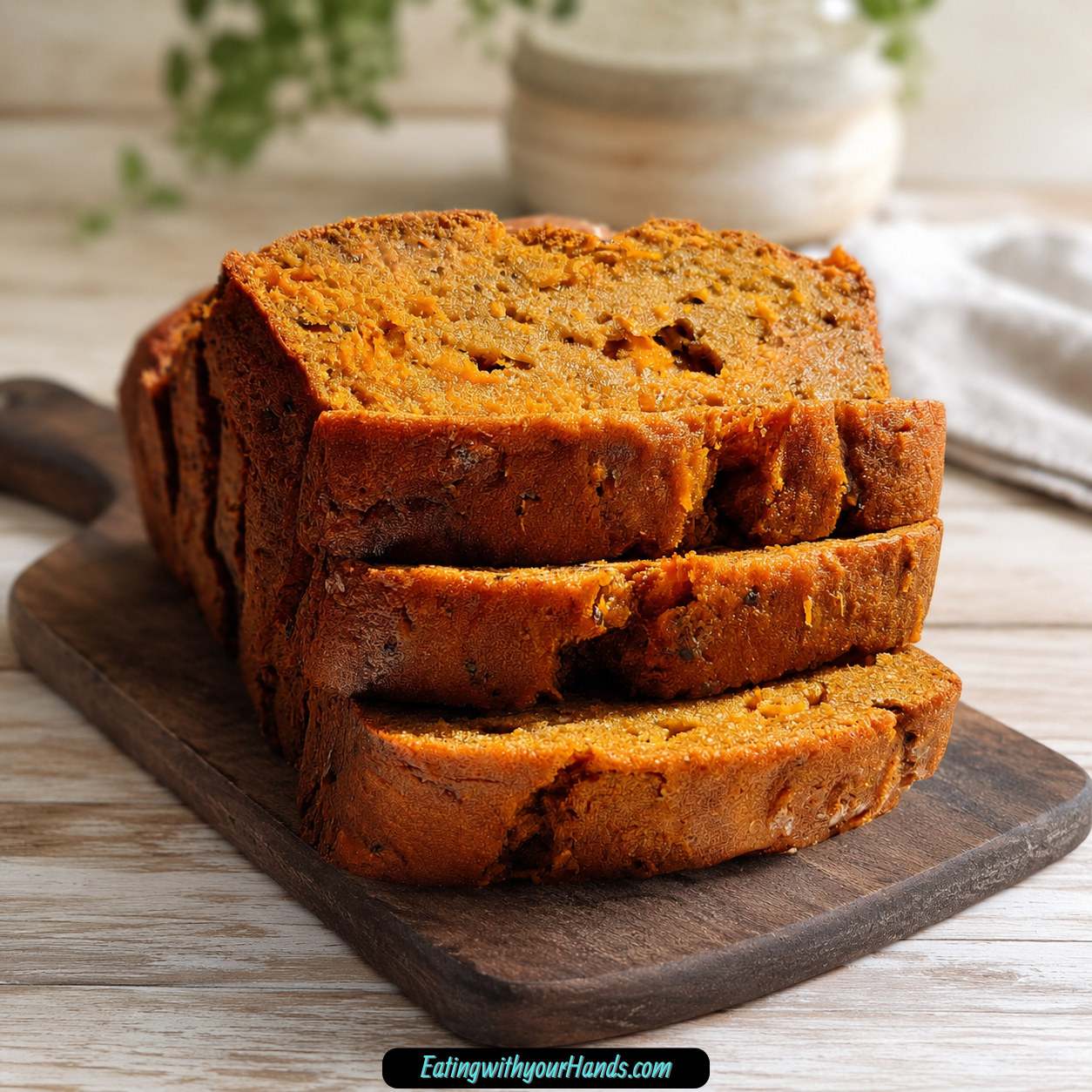
Easy Sweet Potato Bread is the kind of homemade loaf that feels comforting before it even comes out of the oven. The batter is simple, the ingredients are familiar, and the finished bread is moist, gently spiced, lightly sweet, and full of that cozy flavor that makes a kitchen feel warmer.
This recipe has the feeling of something created from a practical little moment: a few leftover sweet potatoes after a big meal, a handful of pantry staples, and the hope that something good could come from not wasting what was already there. That is exactly the kind of baking I love most, because it turns simple ingredients into something that feels thoughtful and special.
Sweet potato gives this bread its soft texture and beautiful moisture. It also adds a gentle earthy sweetness that works beautifully with cinnamon, nutmeg, brown sugar, and just enough granulated sugar.
What makes this loaf so useful is how easily it fits into different parts of the day. You can enjoy a slice at breakfast, pack it as a snack, serve it warm as dessert, or toast it later with butter melting into every tender crumb.
It is also wonderfully approachable. There is no stand mixer required, no complicated shaping, and no fancy technique beyond mixing carefully, folding in the mashed sweet potatoes, and baking until the center is done.
The best part is the aroma. As the loaf bakes, the cinnamon and nutmeg fill the room with that cozy fall feeling, even if you are making it nowhere near fall.
Table of Contents
- Why You’ll Love Sweet Potato Bread
- A Moist Quick Bread with Cozy Sweet Potato Flavor
- Recipe Details
- Ingredients for Easy Sweet Potato Bread
- Granulated Sugar
- Light Brown Sugar
- Vegetable Oil
- Eggs
- All-Purpose Flour
- Baking Soda
- Salt
- Ground Cinnamon
- Ground Nutmeg
- Whole Milk
- Cooked and Mashed Sweet Potatoes
- Before You Start
- Directions for Easy Sweet Potato Bread
- Step 1: Preheat the Oven
- Step 2: Prepare the Loaf Pan
- Step 3: Cook the Sweet Potato If Needed
- Step 4: Mash the Sweet Potato
- Step 5: Drain Canned Sweet Potato If Using
- Step 6: Combine the Sugars and Oil
- Step 7: Add the First Egg
- Step 8: Add the Second Egg
- Step 9: Whisk the Flour
- Step 10: Add Baking Soda
- Step 11: Add Salt
- Step 12: Add Cinnamon and Nutmeg
- Step 13: Begin Alternating Dry Ingredients and Milk
- Step 14: Add Half the Milk
- Step 15: Add the Second Portion of Dry Ingredients
- Step 16: Add the Remaining Milk
- Step 17: Add the Final Dry Ingredients
- Step 18: Fold in the Mashed Sweet Potatoes
- Step 19: Check the Batter Texture
- Step 20: Transfer Batter to the Pan
- Step 21: Smooth the Top
- Step 22: Add Optional Coarse Sugar
- Step 23: Bake the Bread
- Step 24: Check for Doneness
- Step 25: Tent With Foil If Needed
- Step 26: Cool in the Pan
- Step 27: Transfer to a Wire Rack
- Step 28: Slice the Bread
- Step 29: Serve Warm or Cooled
- Tips for Success
- Variations to Try
- Serving Suggestions
- Storage Tips
- Freezing Tips
- Make-Ahead Tips
- Helpful Notes for Perfect Sweet Potato Bread
- Troubleshooting Sweet Potato Bread
- Frequently Asked Questions
- Final Thoughts
- Sweet Potato Bread
Why You’ll Love Sweet Potato Bread
You will love this Sweet Potato Bread because it is incredibly moist. The cooked and mashed sweet potatoes keep the loaf tender and help it stay fresh for days.
The sweetness is balanced rather than overwhelming. Granulated sugar and light brown sugar work together to create sweetness with a gentle caramel-like depth.
It is easy enough for beginner bakers. If you can whisk dry ingredients, stir wet ingredients, fold in mashed sweet potato, and pour batter into a loaf pan, you can make this bread.
The ingredients are pantry-friendly. Flour, eggs, oil, milk, sugar, spices, baking soda, salt, and sweet potatoes come together without requiring anything unusual.
It is versatile and practical. Serve it for breakfast, enjoy it as an afternoon snack, pack it in lunches, or turn it into dessert with ice cream and caramel drizzle.
It also smells incredible while baking. Cinnamon and nutmeg give the loaf that warm, spiced aroma that makes the whole kitchen feel inviting.
A Moist Quick Bread with Cozy Sweet Potato Flavor
Sweet Potato Bread is a quick bread, which means it does not need yeast or rising time. The structure comes from flour, eggs, baking soda, and the way the batter is mixed.
The mashed sweet potatoes are the heart of the recipe. They bring moisture, color, and flavor without making the bread taste too heavy.
Brown sugar adds a deeper sweetness that pairs naturally with sweet potato. Granulated sugar keeps the loaf balanced and familiar.
Vegetable oil helps create a moist texture. Whole milk adds tenderness and helps bring the batter together.
Cinnamon and nutmeg give the bread its warm, cozy flavor. They support the sweet potato without covering it up.
The result is a loaf that slices beautifully once cooled, stays soft, and can be enjoyed plain or dressed up with spreads, toppings, or dessert-style finishes.
Recipe Details
- Recipe Name: Easy Sweet Potato Bread Recipe
- Recipe Style: Moist sweet potato quick bread
- Pan Size: 9×5-inch loaf pan
- Oven Temperature: 350°F (175°C)
- Bake Time: 55 to 60 minutes
- Cooling in Pan: 10 minutes
- Main Flavor: Sweet potato, cinnamon, nutmeg, brown sugar, and vanilla-like warmth from the spices
- Main Texture: Moist, tender, soft, and sliceable
- Sweet Potato Amount: 1 cup cooked and mashed sweet potatoes
- Fresh Sweet Potato Note: About 1 medium potato, or fresh roasted sweet potatoes for best flavor
- Canned Sweet Potato Note: Canned works in a hurry if drained well
- Room Temperature Storage: Airtight container or tightly wrapped in foil for up to 3 days
- Freezer Storage: Wrap cooled loaf or slices tightly and freeze for up to 3 months
- Reheating Slice: Microwave a frozen slice for 15 seconds, or toast a warm slice briefly
Ingredients for Easy Sweet Potato Bread
This sweet potato bread uses basic baking ingredients, but every ingredient affects the final loaf. The sweet potatoes keep it moist, the sugars add sweetness, the spices add warmth, and the oil and milk help create a tender crumb.
Granulated Sugar
You need 1/2 cup sugar. Plain granulated sugar works well in this recipe.
It adds clean sweetness and helps balance the deeper flavor of brown sugar. If you are out of granulated sugar, the source notes that you can use all brown sugar, but the flavor will be deeper and more caramel-like.
The amount keeps the bread sweet without making it too much. That balance is part of what makes the loaf useful for breakfast, snacks, or dessert.
Light Brown Sugar
You need 1/2 cup light brown sugar. Pack it firmly into the measuring cup.
Brown sugar adds moisture and a slight molasses flavor. That subtle richness works beautifully with sweet potato, cinnamon, and nutmeg.
The combination of white sugar and brown sugar gives the bread both structure and depth. It is sweet, but not cloying.
Vegetable Oil
You need 1/2 cup vegetable oil. This helps keep the bread moist and tender.
The source also mentions melted coconut oil as an option if you want a subtle tropical twist. Olive oil is not recommended for this loaf because its flavor does not fit the intended profile.
Oil is one reason the bread stays soft. It blends smoothly into the batter and keeps the crumb from becoming dry.
Eggs
You need 2 large eggs. Eggs help bind the batter and give structure to the loaf.
Room temperature eggs are ideal. If you forget to take them out early, the source suggests placing them in warm water for 5 minutes to take off the chill.
Add the eggs one at a time and stir well after each. This helps them fully incorporate into the sugar and oil mixture.
All-Purpose Flour
You need 1 3/4 cups flour. All-purpose flour is perfect for this recipe.
The flour gives the bread structure. It helps the loaf rise, slice cleanly, and hold together.
If you want to experiment, the source notes that you can swap half for whole wheat flour. The bread will be denser with that change.
Baking Soda
You need 1 teaspoon baking soda. Make sure you use baking soda, not baking powder.
The two are not interchangeable here. Check the label before adding it to the dry ingredients.
Baking soda helps the loaf rise properly. It should be whisked evenly into the flour so there are no bitter pockets.
Salt
You need 1/4 teaspoon salt. This small amount balances the sweetness.
Salt does not make the loaf taste salty. It simply helps the sweet potato, sugar, cinnamon, and nutmeg taste more complete.
Do not skip it. Even sweet baked goods need a little salt for balance.
Ground Cinnamon
You need 3/4 teaspoon ground cinnamon. Cinnamon gives the bread its cozy warmth.
Use fresh cinnamon if you can. Older spice can lose its strength and make the loaf taste less vibrant.
Cinnamon pairs naturally with sweet potato. It gives the bread that warm, familiar aroma.
Ground Nutmeg
You need 1/2 teaspoon ground nutmeg. Nutmeg adds a deeper spice note.
Freshly grated nutmeg can be used if you like, but pre-ground nutmeg works fine too. The flavor should support the cinnamon, not overpower it.
Together, cinnamon and nutmeg make the loaf taste warm and comforting. They are simple spices, but they make the bread feel special.
Whole Milk
You need 1/3 cup whole milk. The fat content helps keep the bread tender.
In a pinch, 2% milk can work, but skim milk is not recommended in the source. This loaf benefits from the richness of whole milk.
Milk helps loosen the batter and brings everything together. It is added alternately with the dry ingredients for a smoother texture.
Cooked and Mashed Sweet Potatoes
You need 1 cup cooked and mashed sweet potatoes. This is about one medium potato.
The sweet potato should be cooked first, then mashed until smooth. Do not use raw sweet potato.
Fresh roasted sweet potatoes give the best flavor. Canned sweet potato can work in a hurry, but it should be drained very well so the loaf does not turn soggy.
Before You Start
Before mixing the batter, cook and mash the sweet potato if you have not done so already. The mash should be smooth enough to fold evenly into the batter.
Preheat the oven to 350°F, or 175°C. A properly heated oven helps the loaf rise and bake through evenly.
Grease a 9×5-inch loaf pan well. Use butter or baking spray, making sure to coat the corners so the bread releases cleanly.
Measure the flour carefully. Too much flour can make the loaf dry or dense.
Bring the eggs closer to room temperature if possible. Room temperature eggs mix more smoothly into the batter.
Directions for Easy Sweet Potato Bread
Step 1: Preheat the Oven
Preheat your oven to 350°F, or 175°C. Let it fully heat before placing the loaf inside.
A consistent oven temperature helps the bread rise evenly. It also helps the center bake through without drying out the edges.
Step 2: Prepare the Loaf Pan
Grease a 9×5-inch loaf pan with butter or baking spray. Be sure to reach the corners.
A well-greased pan helps the bread release cleanly after baking. This prevents the loaf from losing its edges when removed.
Step 3: Cook the Sweet Potato If Needed
If you are starting with fresh sweet potato, cook it before mixing the batter. The source notes that fresh roasted sweet potatoes give the best flavor.
To roast, poke the sweet potato with a fork and bake at 400°F until tender, about 45 minutes. Let it cool enough to handle before mashing.
Step 4: Mash the Sweet Potato
Mash the cooked sweet potato until smooth. Measure out 1 cup.
Smooth mashed sweet potato blends more evenly into the batter. Large lumps can make the loaf texture uneven.
Step 5: Drain Canned Sweet Potato If Using
If using canned sweet potato, drain it very well. Too much liquid can make the bread soggy.
Canned works in a hurry, but it needs extra attention. The mashed sweet potato should be thick, not watery.
Step 6: Combine the Sugars and Oil
In a large mixing bowl, add 1/2 cup granulated sugar, 1/2 cup packed light brown sugar, and 1/2 cup vegetable oil. Stir until smooth and well combined.
This mixture becomes the sweet, moist base of the bread. The oil helps dissolve and blend the sugars.
Step 7: Add the First Egg
Add one egg to the sugar and oil mixture. Stir well until fully incorporated.
Make sure no streaks of yolk remain. This helps the batter become smooth and consistent.
Step 8: Add the Second Egg
Add the second egg and stir again. Mix until the wet ingredients look evenly blended.
Adding the eggs one at a time gives better control. It also helps the batter stay smooth.
Step 9: Whisk the Flour
In a separate bowl, add 1 3/4 cups all-purpose flour. Break up any clumps if needed.
The dry ingredients should be mixed separately before going into the wet ingredients. This helps prevent uneven baking soda or spice pockets.
Step 10: Add Baking Soda
Add 1 teaspoon baking soda to the flour. Make sure it is baking soda, not baking powder.
Baking soda helps the loaf rise. It needs to be evenly distributed for the bread to bake properly.
Step 11: Add Salt
Add 1/4 teaspoon salt to the dry ingredients. This balances the sweetness.
Even a small amount matters. It keeps the loaf from tasting flat.
Step 12: Add Cinnamon and Nutmeg
Add 3/4 teaspoon ground cinnamon and 1/2 teaspoon ground nutmeg. These spices give the bread its warm flavor.
Whisk them thoroughly into the flour mixture. You want the spices spread evenly through the entire loaf.
Step 13: Begin Alternating Dry Ingredients and Milk
Add about one-third of the dry mixture to the wet mixture. Stir just until combined.
Do not overmix. The goal is to bring the ingredients together while keeping the bread tender.
Step 14: Add Half the Milk
Pour in half of the 1/3 cup whole milk. Stir gently.
The milk loosens the batter and helps blend the flour mixture smoothly. Keep the mixing light.
Step 15: Add the Second Portion of Dry Ingredients
Add another third of the dry ingredients. Stir until just combined.
The batter will begin to thicken. This is normal.
Step 16: Add the Remaining Milk
Pour in the rest of the milk. Stir gently again.
Alternating dry ingredients and milk helps the batter come together evenly. It also reduces the chance of overmixing.
Step 17: Add the Final Dry Ingredients
Add the last portion of the dry ingredients. Stir only until no dry streaks remain.
The batter should be thick but still soft enough to spoon or pour into the pan. Avoid heavy mixing.
Step 18: Fold in the Mashed Sweet Potatoes
Add 1 cup cooked and mashed sweet potatoes to the batter. Use a spatula to fold them in gently.
Folding keeps the batter lighter. The sweet potato should be evenly distributed without overworking the batter.
Step 19: Check the Batter Texture
The batter should look thick and moist, not dry like dough. It should slowly plop off a spoon.
If the batter looks too thick, the source suggests adding 1 to 2 extra tablespoons milk. Add only a little at a time.
Step 20: Transfer Batter to the Pan
Pour or spoon the batter into the prepared 9×5-inch loaf pan. Scrape the bowl so none of the batter is left behind.
Spread the batter evenly in the pan. This helps the loaf bake with a more even shape.
Step 21: Smooth the Top
Use a spatula to smooth the top of the batter. Make sure it reaches the corners.
A smooth top helps the loaf rise more evenly. It also gives the finished bread a neater surface.
Step 22: Add Optional Coarse Sugar
If you want extra sweetness, sprinkle the top with coarse sugar before baking. This is optional.
The source suggests this as a way to make the loaf a little sweeter. It can also add a slight crunch on top.
Step 23: Bake the Bread
Place the loaf pan in the preheated oven. Bake for 55 to 60 minutes.
The bread should rise, darken slightly, and smell warm with cinnamon and nutmeg. The center needs enough time to bake through.
Step 24: Check for Doneness
Insert a toothpick into the center of the loaf. If it comes out clean, the bread is done.
If wet batter sticks to the toothpick, bake longer. Sweet potato adds moisture, so it is better to make sure the center is fully baked.
Step 25: Tent With Foil If Needed
If the top browns too quickly but the center is still wet, tent the loaf loosely with foil for the last 15 minutes. This protects the top.
Do not wrap it tightly. A loose tent allows the bread to finish baking without burning the surface.
Step 26: Cool in the Pan
Let the bread cool in the pan for 10 minutes. This helps it set.
Removing the loaf too soon can make it break. The short rest helps the structure firm up.
Step 27: Transfer to a Wire Rack
After 10 minutes, remove the bread from the pan and transfer it to a wire rack. Let it cool completely for the cleanest slices.
Cooling completely can feel difficult, but it improves slicing. The crumb becomes more stable as it cools.
Step 28: Slice the Bread
Use a serrated knife for clean slices. Saw gently instead of pressing down.
Pressing too hard can compress the tender loaf. A gentle sawing motion keeps the slices neat.
Step 29: Serve Warm or Cooled
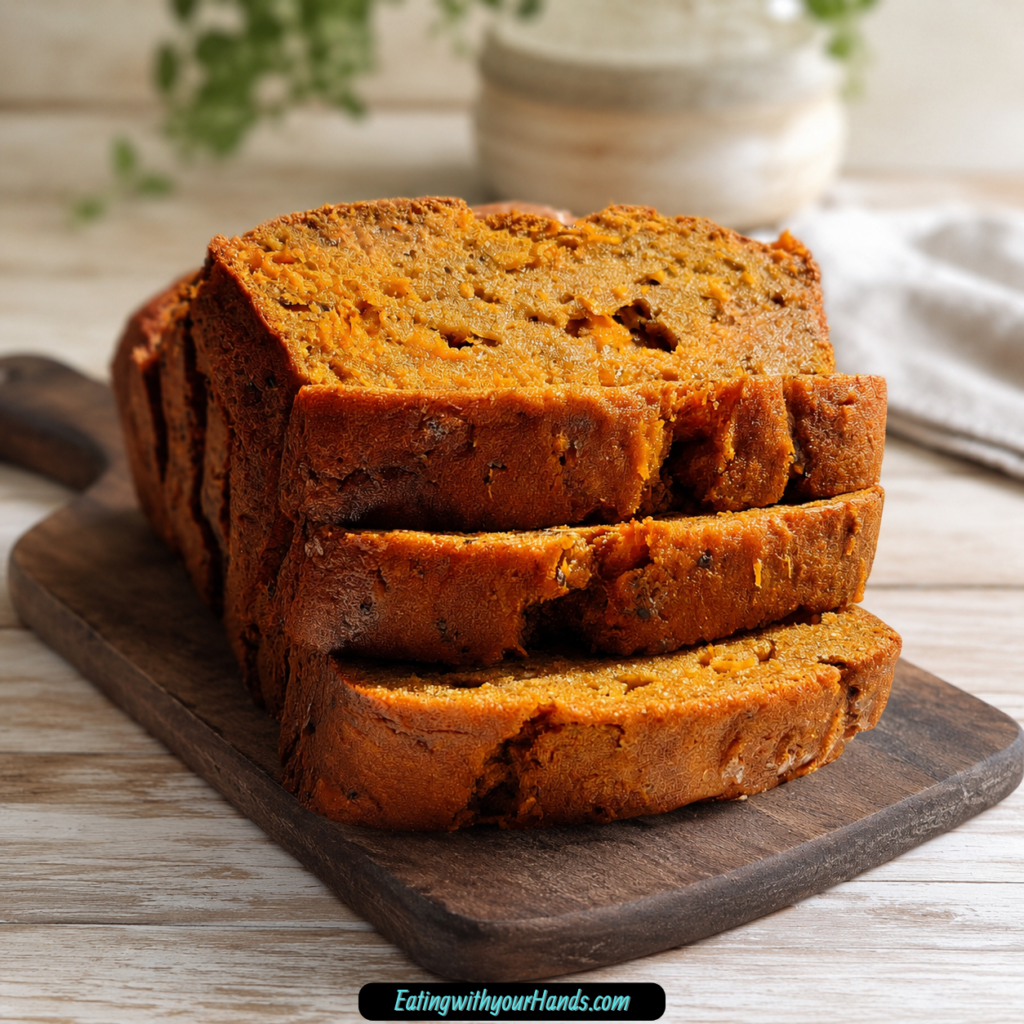
Serve the bread cooled for clean slices, or warm a slice if you want a softer, cozier bite. A warm slice with butter is especially comforting.
You can also toast a slice for about 30 seconds. Toasting brings back warmth and gives the edges a little texture.
Tips for Success
Do Not Overmix
Mix the batter only until the ingredients are combined. Overmixing can make the bread tough or dense.
This matters most after the flour is added. Gentle stirring protects the tender crumb.
Use Well-Drained Sweet Potato
Sweet potato should be moist but not watery. If using canned sweet potato, drain it very well.
Too much liquid can make the loaf soggy or gummy. A thick mash gives better structure.
Check Baking Soda Carefully
Use baking soda, not baking powder. They are not interchangeable in this recipe.
Check the label before measuring. This small detail affects the rise and texture.
Watch the Center
Sweet potato adds moisture, so the center needs to bake fully. Test with a toothpick.
If you are unsure, give it a few more minutes. The source notes that underbaking can lead to dense or gummy bread.
Cool Before Slicing
For clean slices, let the loaf cool completely. It is tempting to slice early, but warm bread can crumble.
If you want a warm slice, cool the loaf first, then toast or reheat a slice. This gives you warmth without ruining the loaf.
Adjust Sweetness Carefully
If you prefer less sugar, reduce both sugars by 2 tablespoons total. Do not cut more than that or the texture may suffer.
For more sweetness, sprinkle coarse sugar on top before baking. This keeps the base recipe balanced.
Variations to Try
Nutty Sweet Potato Bread
Fold in 1/2 cup chopped pecans or walnuts with the sweet potatoes. The crunch is a beautiful contrast to the soft bread.
This variation makes the loaf feel heartier. It also adds texture to each slice.
Extra Spiced Version
Add 1/4 teaspoon ground ginger or cloves along with the cinnamon. This gives the bread extra warmth.
In winter, the source also mentions adding a pinch of cardamom. This creates an even cozier flavor.
Chocolate Chip Version
Stir in 1/2 cup chocolate chips. Mini chocolate chips distribute best.
You can also drizzle melted chocolate on top after baking. This turns the bread into more of a dessert.
Gluten-Free Version
Replace the all-purpose flour with a 1:1 gluten-free blend. The source mentions Bob’s Red Mill as an example that works well.
If your blend does not include xanthan gum, add 1/4 teaspoon xanthan gum. This helps support the texture.
Orange Zest Version
Grate in the zest of one orange when mixing the wet ingredients. The citrus brightens the warm spices.
Orange zest works especially well with cinnamon, nutmeg, and sweet potato. It makes the loaf feel fresher.
Coconut Version
Substitute 1/4 cup of the flour with unsweetened shredded coconut. Use coconut milk instead of regular milk.
This gives the loaf a subtle tropical feeling. It is a fun twist on the cozy base recipe.
Whole Wheat Version
Swap half of the all-purpose flour for whole wheat flour. The bread will be denser.
This variation gives the loaf a heartier texture. It changes the crumb but still keeps the sweet potato flavor.
Pumpkin Version
Use plain canned pumpkin instead of sweet potato in an equal amount. Do not use pumpkin pie filling.
The flavor will be a little different but still delicious. The source also suggests trying pumpkin spice instead of cinnamon and nutmeg.
Savory Version
The source mentions a savory version with rosemary and black pepper. This turns the sweet potato base in a very different direction.
Use this idea when you want the loaf to pair with soup. It is a creative variation rather than the classic sweet version.
Serving Suggestions
Serve Sweet Potato Bread for breakfast with butter. A warm slice makes a simple morning feel cozy.
It also works as an afternoon snack. The loaf is sweet enough to feel like a treat but not so sweet that it feels heavy.
For dessert, serve a warm slice with vanilla ice cream and caramel drizzle. This turns the bread into something richer.
Toast a slice and top it with cream cheese and honey. This adds creaminess and sweetness without needing much effort.
Pack slices in lunches. The bread holds up well and stays moist.
If the bread starts drying out, turn it into French toast. The source describes this as a game-changing way to use older slices.
Storage Tips
Let the loaf cool completely before storing. This helps prevent trapped steam from making it sticky.
Store it in an airtight container or wrap it tightly in foil. Keep it at room temperature for up to 3 days.
The sweet potatoes help the bread stay moist. If your kitchen is humid, place a paper towel in the container to absorb excess moisture.
Keep the loaf covered between servings. Air exposure can dry out the cut edges.
Freezing Tips
Sweet Potato Bread freezes very well. You can freeze the whole cooled loaf or individual slices.
Wrap the cooled loaf or slices tightly in plastic wrap. Then add foil or place them in a freezer bag.
Freeze for up to 3 months. Labeling the bag can help you keep track if you bake often.
For easy mornings, freeze slices individually. Thaw at room temperature or microwave a frozen slice for 15 seconds.
Make-Ahead Tips
You can bake this bread ahead because it stays moist for days. Store it tightly wrapped at room temperature.
You can also cook and mash the sweet potato ahead of time. Keep it ready so the batter comes together faster.
If making for a brunch or potluck, bake the loaf the day before. Let it cool completely before wrapping.
Slice just before serving for the freshest presentation. If you want neat slices, use a serrated knife and gentle pressure.
Helpful Notes for Perfect Sweet Potato Bread
Fresh Versus Canned Sweet Potato
Fresh roasted sweet potatoes give the best flavor. Poke them with a fork and bake at 400°F until tender, about 45 minutes.
Canned sweet potato works in a hurry, but drain it very well. Too much liquid can make the bread soggy.
Use Room Temperature Eggs If Possible
Room temperature eggs mix more easily into the batter. If you forget, place them in warm water for 5 minutes.
This helps remove the chill. It is a simple trick that makes mixing smoother.
Avoid Olive Oil
Vegetable oil works well, and melted coconut oil can be used for a subtle tropical twist. Olive oil is not recommended here.
The source makes it clear that olive oil does not fit the flavor of this bread. Use a neutral oil for the best result.
Keep Spices Fresh
Cinnamon and nutmeg give the loaf its cozy flavor. Old spices can taste dull.
Use fresher spices if possible. They make the bread smell and taste warmer.
Know the Right Batter Texture
The batter should be thick, but it should not feel like dough. It should slowly plop off a spoon.
If it is too thick, add 1 to 2 extra tablespoons milk. Add slowly so you do not make the batter too loose.
Use the Toothpick Test
A toothpick inserted into the center should come out clean. If it has wet batter on it, bake longer.
A few moist crumbs are different from wet batter. Wet batter means the loaf needs more time.
Troubleshooting Sweet Potato Bread
Why Did My Bread Sink in the Middle?
The bread may have needed a few more minutes in the oven, or the oven temperature may have been off. Test the center with a toothpick before removing it.
The source recommends checking oven temperature with a thermometer if this happens. A loaf can sink when the center is not fully baked.
Why Is My Bread Dense or Gummy?
The batter may have been overmixed, or the bread may be underbaked. Stir only until combined once the flour is added.
Sweet potato adds moisture, so underbaking can lead to a gummy texture. When in doubt, give it 5 extra minutes.
Why Is My Bread Soggy?
The sweet potato may have had too much moisture. This is especially possible with canned sweet potato.
Drain canned sweet potato very well. The mash should be thick before going into the batter.
Why Is My Bread Dry?
It may have baked too long, or too much flour may have been added. Measure carefully and check the bread near the end of baking.
Sweet potato helps keep the loaf moist, but overbaking can still dry it out. Tent with foil if the top browns too quickly.
Why Does My Bread Taste Flat?
It may need the full amount of salt and fresh spices. Salt, cinnamon, and nutmeg make the flavor more complete.
Old spices can lose strength. Use fresh cinnamon and nutmeg when possible.
Why Did My Loaf Stick to the Pan?
The loaf pan may not have been greased well enough. Grease the bottom, sides, and corners.
Let the bread cool in the pan for 10 minutes before removing. This helps it release more cleanly.
Frequently Asked Questions
Can I Freeze Sweet Potato Bread?
Absolutely. Wrap the cooled loaf or slices tightly in plastic wrap, then foil or a freezer bag.
It will keep for up to 3 months. Thaw overnight on the counter or microwave a frozen slice for 15 seconds.
My Bread Sunk in the Middle. What Went Wrong?
It usually means the bread needed a few more minutes in the oven or the oven temperature was off. Test with a toothpick.
If it comes out with a few moist crumbs, not wet batter, the bread is done. The source also suggests checking oven temperature with a thermometer.
Can I Use Pumpkin Instead of Sweet Potato?
Yes, you can swap in an equal amount of plain canned pumpkin. Do not use pumpkin pie filling.
The flavor will be a little different but still delicious. You can also try pumpkin spice instead of cinnamon and nutmeg.
Why Is My Bread Dense or Gummy?
The most likely causes are overmixing the batter or underbaking. Stir just until combined after adding flour.
Because sweet potato adds moisture, it is safer to bake a little longer if unsure. Give it 5 extra minutes if the center is not done.
Can I Use Canned Sweet Potato?
Yes, canned sweet potato works in a hurry. Drain it very well before using.
Fresh roasted sweet potato gives the best flavor, but canned is convenient. Avoid adding excess liquid to the batter.
Can I Make It Less Sweet?
Yes, reduce both sugars by 2 tablespoons total if you prefer less sweetness. Do not reduce more than that because the texture may suffer.
The loaf is designed to be sweet but not overpowering. Small adjustments are safest.
What If I Do Not Have Brown Sugar?
Use all white sugar plus 1 tablespoon molasses. This gives a brown sugar-like depth.
The molasses helps bring back the caramel-style flavor. It is a helpful substitute.
What Can I Add to the Bread?
You can add chopped pecans, walnuts, chocolate chips, orange zest, ginger, cloves, cardamom, shredded coconut, or even try a savory rosemary and black pepper version. The loaf is flexible.
Add-ins should be folded in gently. This keeps the batter tender.
Final Thoughts
Easy Sweet Potato Bread is the kind of recipe that turns simple ingredients into something warm, moist, and memorable. With cooked mashed sweet potatoes, brown sugar, granulated sugar, oil, eggs, flour, baking soda, salt, cinnamon, nutmeg, and milk, it creates a loaf that feels cozy without being complicated.
It is sweet enough to enjoy as a treat, but balanced enough for breakfast or an afternoon snack. The mashed sweet potato keeps the bread tender, while cinnamon and nutmeg give it that comforting bakery-style aroma.
This loaf is also forgiving and versatile. You can add nuts, chocolate chips, orange zest, extra spices, coconut, whole wheat flour, gluten-free flour blend, or even swap in pumpkin for a different version.
Serve it plain, toasted with butter, topped with cream cheese and honey, or warm with vanilla ice cream and caramel drizzle. If it starts to dry out, turn it into French toast and enjoy it in a whole new way.
Most of all, this is a recipe that feels like home baking at its best. It is simple, cozy, practical, and full of the kind of flavor that makes one loaf disappear faster than expected.
Sweet Potato Bread
Sweet Potato Bread is a soft, moist loaf with warm cinnamon and nutmeg flavor in every slice. Cooked mashed sweet potatoes add natural sweetness and tenderness, while brown sugar and whole milk help create a rich, comforting crumb. This easy quick bread is perfect for breakfast, snacking, brunch, or a simple homemade dessert. It slices beautifully and tastes especially cozy with coffee, tea, or a little butter spread on top.
Recipe Details
- Prep Time: 15 minutes
- Cook Time: 1 hour
- Total Time: 1 hour 15 minutes
- Course: Bread
- Cuisine: American
- Servings: 8 slices
Ingredients
- 1 cup sweet potatoes cooked and mashed
- ⅓ cup whole milk
- ½ teaspoon ground nutmeg
- ¾ teaspoon ground cinnamon
- ¼ teaspoon salt
- 1 teaspoon baking soda
- 1 ¾ cups flour
- 2 large eggs
- ½ cup vegetable oil
- ½ cup light brown sugar
- ½ cup sugar
Instructions
Step 1: Prepare the Oven and Pan
Preheat your oven to 350°F (175°C). Grease a 9×5-inch loaf pan so the bread releases easily after baking.
Step 2: Mix the Sugars and Oil
In a large bowl, stir together the sugar, light brown sugar, and vegetable oil until well combined.
Step 3: Add the Eggs
Add the eggs one at a time, mixing well after each addition so the batter stays smooth.
Step 4: Combine the Dry Ingredients
In a separate bowl, whisk together the flour, baking soda, salt, ground cinnamon, and ground nutmeg.
Step 5: Add Dry Ingredients and Milk
Alternately add the dry ingredients and the whole milk to the sugar mixture, mixing just until combined after each addition.
Step 6: Fold in the Sweet Potatoes
Fold in the cooked and mashed sweet potatoes until they are evenly distributed throughout the batter.
Step 7: Fill the Loaf Pan
Pour the batter into the prepared 9×5-inch loaf pan and smooth the top.
Step 8: Bake the Bread
Bake for 55-60 minutes, or until a toothpick inserted into the center comes out clean.
Step 9: Cool Completely
Let the bread cool in the pan for 10 minutes, then transfer it to a wire rack to cool completely before slicing.
Notes
Store the bread in an airtight container at room temperature for up to 3 days.
Serving Suggestions
- Hot coffee
- Black tea
- Cold milk
- Softened butter
- Cream cheese spread
- Maple glaze
- Fresh fruit
Storage
How to Store
Store the bread in an airtight container at room temperature for up to 3 days, as noted in the original recipe.
How to Freeze
Wrap cooled slices or the whole loaf tightly and freeze for longer storage. Thaw at room temperature before serving.
Best Texture Tip
Let the bread cool completely before slicing so the crumb sets properly and each slice holds together cleanly.

Fernando is the creator and writer behind the food blog Eating with your Hands. Living and working in cities like Paris, Barcelona, and Berlin, and being married to a Canadian foodie, has given Fernando a passion and interest in food and inspired him to run EWYH.