
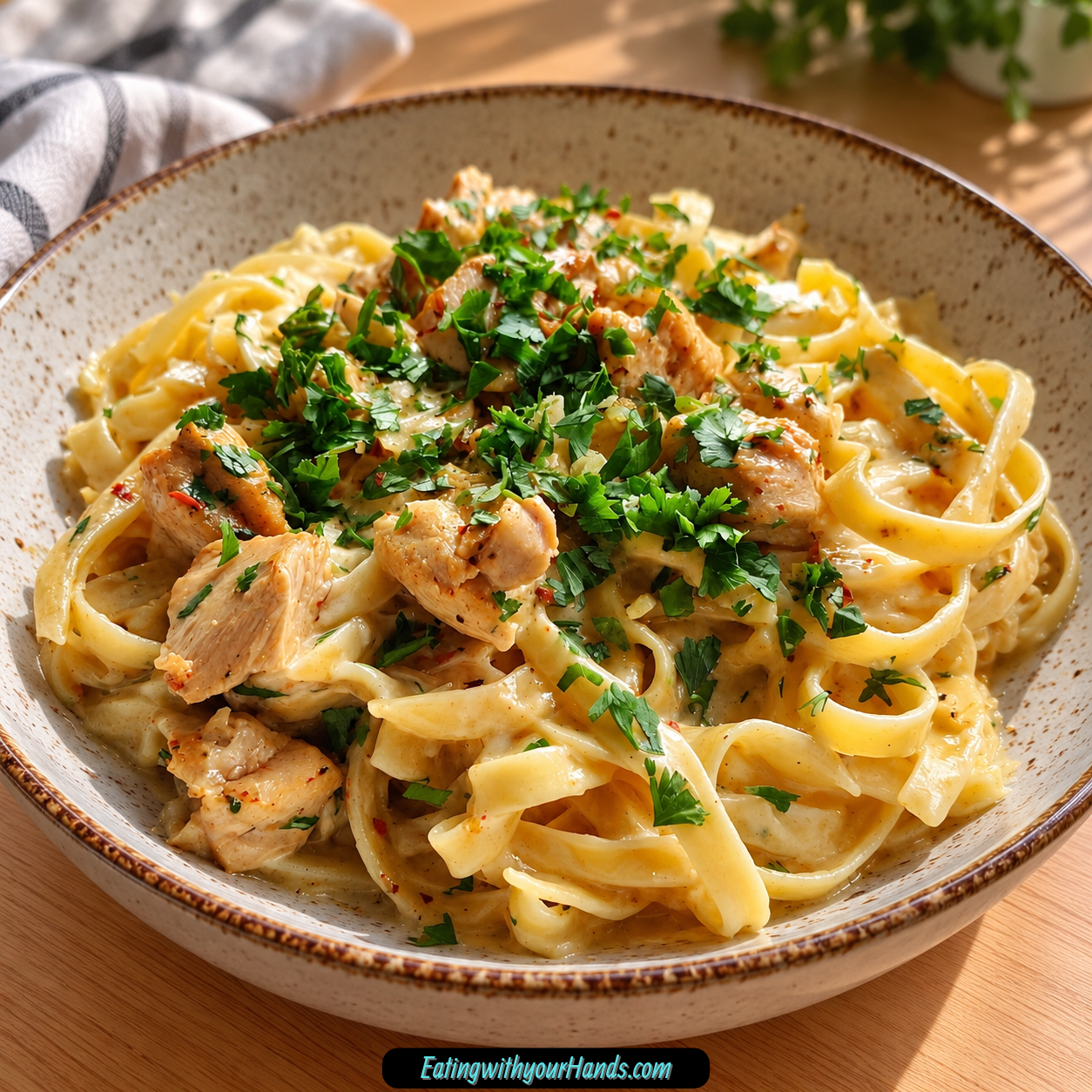
There are nights when a plain bowl of pasta simply is not enough, and that is exactly when Rattlesnake Pasta earns its place at the table. Creamy sauce, Cajun-spiced chicken, fresh jalapeños, Parmesan, garlic, and a final splash of lemon come together in a dish that is rich, fiery, and impossible to mistake for an ordinary weeknight dinner.
The first time I made it, I was craving two things at once: serious heat and the kind of creamy pasta that feels deeply comforting after a long day. That combination turned out to be exactly what I had been looking for, because one forkful delivered both the bold spice of a Cajun-inspired meal and the velvety richness of a Parmesan cream sauce.
What I love most is that the pasta has personality without requiring hours in the kitchen. From boiling the noodles to finishing the sauce, the entire meal can come together in about 30 minutes.
The jalapeños bring fresh heat, while Cajun seasoning gives the chicken a deep savory kick. Parmesan melts into the heavy cream and chicken broth until every piece of pasta is coated in a sauce that feels rich but still gets a lift from lemon juice.
The chicken makes the dish especially satisfying. It is browned in the skillet first, then returned at the end so the seasoned pieces become coated in the finished sauce without losing all of their texture.
The heat level is also easy to control. Leave jalapeño seeds in for a hotter version, remove them for something gentler, or make one of the milder adjustments when cooking for people who are less enthusiastic about spice.
After making Cajun-inspired pasta dishes over the years, I have learned that balance matters more than simply adding more heat. Rattlesnake Pasta works because the jalapeños and seasoning are held in check by cream, Parmesan, broth, and the brightness of lemon.
That balance is exactly why it keeps returning to my weeknight rotation. It feels indulgent enough for a restaurant-style dinner but remains practical enough to make on an ordinary evening.
Table of Contents
- Why You’ll Love This Rattlesnake Pasta
- Ingredients for Rattlesnake Pasta
- Choosing the Pasta
- Why the Cajun Chicken Matters
- Fresh Jalapeños Bring the Heat
- Heavy Cream and Parmesan Build the Sauce
- Lemon Juice Balances the Richness
- How to Make Rattlesnake Pasta
- Step 1: Boil the Pasta and Reserve the Cooking Water
- Step 2: Season and Brown the Chicken
- Step 3: Rest the Chicken Briefly
- Step 4: Sauté the Jalapeños and Garlic
- Step 5: Build the Cream Sauce
- Step 6: Melt in the Parmesan
- Step 7: Return the Chicken and Pasta
- Step 8: Finish With Lemon, Salt, and Pepper
- Step 9: Garnish and Serve Immediately
- How to Control the Heat
- Why Reserved Pasta Water Is Useful
- Let the Chicken Rest
- Gluten-Free Variation
- Shrimp Variation
- Crawfish Variation
- Bell Pepper Variation
- Baby Spinach Variation
- Bacon Variation
- Andouille Sausage Variation
- Roasted Chickpea Variation
- Portobello Mushroom Variation
- Serving With Garlic Bread
- Serving With Green Salad
- Garnishes for the Table
- Storage
- Reheating in a Skillet
- Microwave Reheating
- Using Pre-Cooked Chicken
- Frequently Asked Questions
- Nutritional Information
- The Pasta That Changed My Weeknight Routine
- Fiery Rattlesnake Pasta Recipe That Delivers Bold Flavors
Why You’ll Love This Rattlesnake Pasta
The first reason is bold flavor. Cajun seasoning, fresh jalapeños, garlic, and black pepper make sure the dish never feels flat or forgettable.
The second reason is the sauce. Heavy cream and freshly grated Parmesan create a silky coating that clings to the noodles and softens the sharper edges of the spice.
It is also fast enough for a busy schedule. Having the ingredients ready before you start allows everything to move from stovetop to table in around 30 minutes.
The recipe is easy to customize too. Chicken can become shrimp, crawfish, roasted chickpeas, or portobello mushrooms, while vegetables such as bell peppers or baby spinach can be added without changing the basic character of the dish.
Heat is another flexible part of the recipe. You can keep every jalapeño seed, remove them completely, add cayenne, or use the milder adjustments depending on who is eating.
And if you are lucky enough to have leftovers, the pasta can be stored for up to 3 days. The sauce thickens in the refrigerator, but a little broth or cream during reheating helps restore its creamy texture.
Ingredients for Rattlesnake Pasta
The ingredient list is straightforward, but the order in which everything is used matters. Preparing the chicken, peppers, garlic, cheese, and lemon before cooking makes the final assembly much easier.
- 12 ounces or 340g pasta, such as fettuccine, penne, or another preferred shape
- 2 tablespoons olive oil
- 1 pound or 450g boneless, skinless chicken breast, cut into bite-sized pieces
- 2 tablespoons Cajun seasoning
- 3–4 fresh jalapeños, sliced
- 3 cloves garlic, minced
- 1 cup heavy cream
- ½ cup chicken broth
- 1 cup grated Parmesan cheese
- 1 tablespoon fresh lemon juice
- Salt, to taste
- Black pepper, to taste
- Fresh parsley, chopped, for garnish
Freshly grated Parmesan is preferred because it melts more smoothly into the sauce. The jalapeños can be prepared with or without seeds depending on how much heat you want.
Choosing the Pasta
Fettuccine works especially well because its wide surface carries plenty of creamy sauce. Penne is another strong choice because the sauce can settle inside the tubes.
Rigatoni, cavatappi, and tagliatelle also work well. Both short and long shapes can handle the chicken and jalapeños as long as the pasta is sturdy enough for the rich sauce.
Very delicate pasta such as angel hair is not ideal for this dish. The chunky chicken and pepper pieces are better matched with noodles that can hold their own.
Cook the pasta until just al dente. It continues spending a little time in the sauce later, so keeping some bite in the noodles helps preserve the finished texture.
Why the Cajun Chicken Matters
The chicken is seasoned directly with 2 tablespoons Cajun seasoning. That means the spice is built into the meat rather than relying only on the sauce.
Cutting the chicken into bite-sized pieces allows more surface area to pick up seasoning and browning. Keeping the pieces reasonably even also helps them finish cooking at a similar time.
Slightly frozen chicken can be easier to slice evenly. Once cut, let it return to a workable state before cooking.
The chicken is browned before the sauce is prepared. Removing it temporarily prevents it from spending the entire sauce-making process in the pan.
Fresh Jalapeños Bring the Heat
Three to four fresh jalapeños give Rattlesnake Pasta its distinctive fiery edge. Slice them before cooking so they soften quickly when they hit the skillet.
Leaving the seeds and membranes increases the heat. Removing them creates a milder version without eliminating the fresh jalapeño flavor.
The peppers cook briefly with the garlic rather than simmering for a long time. That keeps them noticeable in the finished sauce.
Extra thin slices can also be served as garnish for anyone who wants more heat at the table. This makes it easy to let individual diners control their own spice level.
Heavy Cream and Parmesan Build the Sauce
One cup heavy cream creates the rich base of the sauce. Half a cup chicken broth loosens it enough to coat the pasta without turning it into an excessively thick cheese mixture.
One cup grated Parmesan is stirred in gradually after the cream and broth have simmered. Reducing the heat before adding the cheese helps everything melt into a smoother sauce.
The Parmesan should be freshly grated when possible. It blends more easily than pre-shredded cheese.
The sauce only needs a short reduction before the cheese goes in. You are looking for slight thickening rather than a long simmer.
Lemon Juice Balances the Richness
One tablespoon fresh lemon juice is added near the end. That small amount brings brightness to the cream, cheese, and Cajun spices.
The lemon is not meant to turn the pasta into a citrus dish. It simply cuts through some of the richness and makes the final flavor feel more balanced.
Add it after the chicken and pasta are coated. This keeps the fresh acidity noticeable.
Taste afterward and adjust salt and black pepper. The Cajun seasoning and Parmesan already bring plenty of flavor, so final seasoning should be added according to taste.
How to Make Rattlesnake Pasta
This pasta comes together quickly once cooking begins, so have the jalapeños sliced, garlic minced, Parmesan grated, chicken cut, and lemon ready in advance. The process is easiest when the pasta and skillet components are prepared side by side.
Step 1: Boil the Pasta and Reserve the Cooking Water
Bring a large pot of salted water to a rolling boil. Add the 12 ounces of pasta and cook until just al dente, usually about 1 minute less than the package direction.
Before draining, reserve 1 cup of the pasta cooking water. Keep it close to the stove because you may need it later to loosen the sauce.
Drain the pasta once it has reached the desired texture. Give it a quick drizzle of olive oil to help prevent sticking while the chicken and sauce are finished.
Set the pasta aside rather than rinsing it. It will return to the skillet near the end.
Step 2: Season and Brown the Chicken
Heat the 2 tablespoons olive oil in a large skillet over medium-high heat. Wait until the oil is shimmering but not smoking.
Add the bite-sized chicken pieces in a single layer. Sprinkle the 2 tablespoons Cajun seasoning evenly over them.
Let the chicken cook undisturbed for about 3–4 minutes on the first side. This gives the surface time to develop a golden crust.
Flip the pieces and cook for another 3–4 minutes until no pink remains. Avoid pushing the chicken far beyond that stage because it will return to the sauce later.
Step 3: Rest the Chicken Briefly
Transfer the cooked chicken to a plate. Let it rest for about 5 minutes while you begin building the sauce.
That short pause helps the chicken stay juicy when it is returned to the skillet. It also clears the pan so the jalapeños and garlic can cook directly in the flavorful surface left behind.
Do not clean the skillet. The browned bits are meant to become part of the sauce.
Keep the chicken nearby. It will return once the cream mixture is ready.
Step 4: Sauté the Jalapeños and Garlic
Add the sliced jalapeños and 3 minced garlic cloves to the same skillet. Sauté for about 1–2 minutes.
The jalapeños should soften slightly while the garlic turns golden. Keep the cooking time short enough that the garlic does not become too dark.
Stir frequently during this stage. The aroma becomes noticeably stronger as the peppers and garlic warm.
If you want a milder dish, use jalapeños with the seeds and membranes removed. For more heat, leave some or all of them intact.
Step 5: Build the Cream Sauce
Pour in the 1 cup heavy cream and ½ cup chicken broth. Stir while scraping up the browned bits from the bottom of the skillet.
Bring the mixture to a gentle simmer. Let it cook for about 2–3 minutes until it reduces slightly.
Watch for bubbles around the edges rather than an aggressive boil. The sauce only needs a little concentration before the cheese is added.
Reduce the heat to medium-low after the brief simmer. This prepares the sauce for the Parmesan.
Step 6: Melt in the Parmesan
Add the 1 cup grated Parmesan gradually. Stir continuously as each addition melts into the cream mixture.
Continue until the cheese is incorporated and the sauce looks smooth and creamy. Avoid dumping all of the cheese into the pan at once.
Keep the heat moderate. The sauce should remain silky rather than boiling hard.
Once the Parmesan has melted, check the consistency. It should be thick enough to coat the pasta without feeling stiff.
Step 7: Return the Chicken and Pasta
Add the cooked chicken back to the skillet. Follow with the drained pasta.
Use tongs or a large spoon to toss everything together. Continue until the noodles and chicken are coated evenly in the sauce.
If the sauce feels too thick, add reserved pasta water 1 tablespoon at a time. Continue tossing after each addition until the consistency loosens enough to coat everything smoothly.
Do not add the entire cup automatically. Use only what the sauce needs.
Step 8: Finish With Lemon, Salt, and Pepper
Add the 1 tablespoon fresh lemon juice. Toss again so the acidity spreads through the sauce.
Taste the pasta and add salt and black pepper as needed. Remember that Cajun seasoning and Parmesan already contribute a strong savory flavor.
Check the heat level as well. Extra cayenne can be added if you want a more intense finish.
Keep the pan over gentle heat only long enough to bring everything together. The chicken is already cooked.
Step 9: Garnish and Serve Immediately
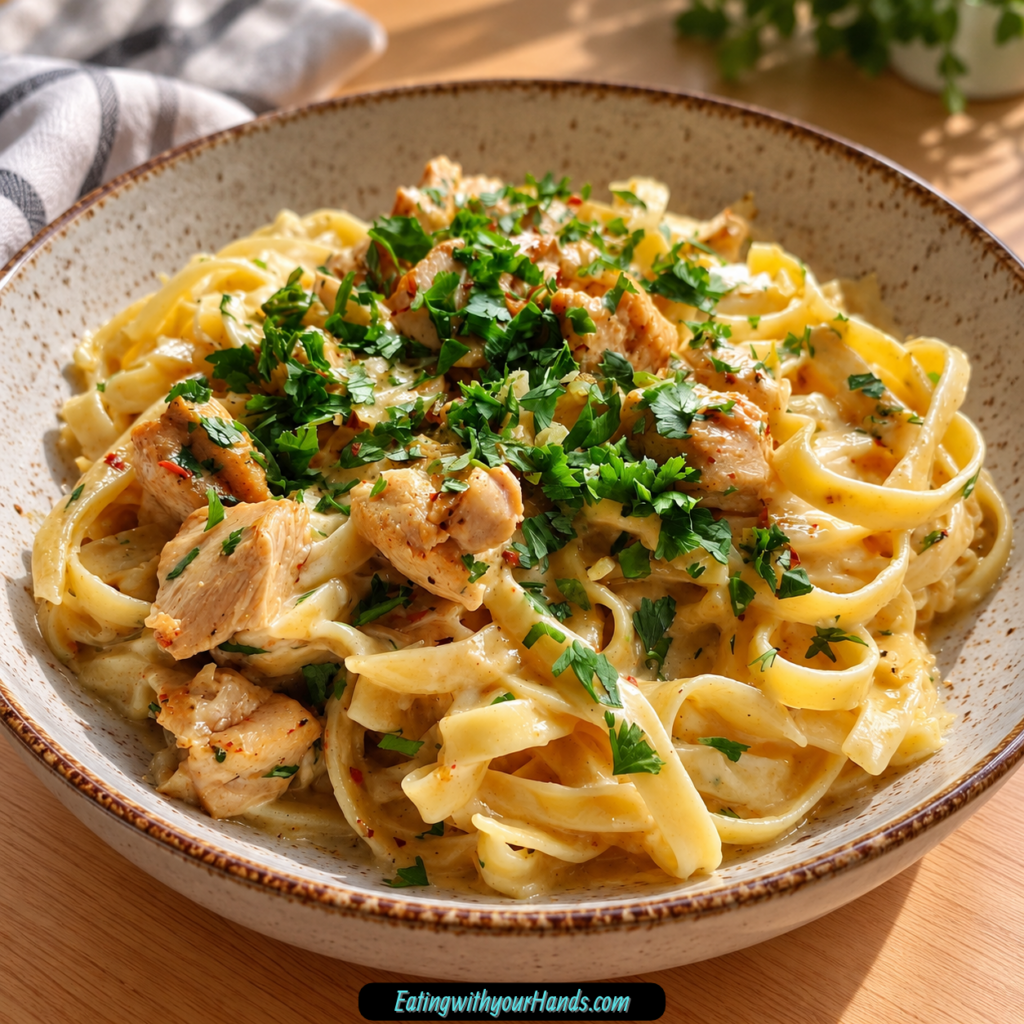
Transfer the pasta to a serving bowl or plates while it is still hot. Sprinkle chopped fresh parsley over the top.
Extra Parmesan can be added at the table. Thinly sliced jalapeños, chili oil, and chopped scallions can also be offered as optional finishing touches.
Serve immediately while the sauce is creamy. Rattlesnake Pasta is at its best before the cheese sauce begins thickening as it cools.
Family-style serving works especially well. A large bowl in the center of the table lets everyone add their preferred extra heat or garnish.
How to Control the Heat
Removing jalapeño seeds and membranes creates the easiest milder version. This keeps the pepper flavor while reducing much of the fire.
The Cajun seasoning can also be cut in half for a gentler pasta. Smoked paprika can replace the reduced portion when you still want plenty of flavor.
One tablespoon honey can be added to help balance remaining heat. This creates a noticeably softer version for people who are especially sensitive to spice.
For a hotter bowl, keep the jalapeño seeds and add a pinch of cayenne. Extra fresh jalapeño slices and chili oil can also be served at the table.
Why Reserved Pasta Water Is Useful
The sauce thickens quickly once Parmesan meets the cream. Reserved cooking water gives you a simple way to loosen it without adding a completely new flavor.
Add the water slowly rather than pouring in a large amount at once. A tablespoon at a time gives you much better control.
The goal is a sauce that clings easily to the pasta. It should coat the noodles without becoming either watery or overly stiff.
Keep the reserved cup nearby until the dish is completely finished. You may not need all of it.
Let the Chicken Rest
After browning, let the chicken sit for about 5 minutes before returning it to the sauce. This brief rest helps it remain juicier.
It also prevents the chicken from spending unnecessary extra time over high heat. The pieces only need to warm through when they go back into the finished sauce.
Do not cut the cooked pieces smaller after resting. Bite-sized pieces are already ideal for serving.
The browned exterior remains one of the best parts of the dish. Gentle handling helps preserve some of that texture.
Gluten-Free Variation
Use your preferred gluten-free pasta in place of standard pasta. Follow its cooking time carefully because different varieties can cook at different rates.
Keep the chicken, peppers, sauce, Parmesan, and lemon the same. The central flavor of the dish does not need to change.
Cook the pasta until just al dente. A texture that becomes too soft before entering the sauce will continue softening during the final toss.
Reserve some cooking water before draining as usual. Use it only if the sauce needs loosening.
Shrimp Variation
Shrimp can replace the chicken. Because shrimp cooks quickly, add it near the end rather than following the longer chicken cooking process.
Season the shrimp with the same spicy flavor profile. Cook only until it is ready, then combine it with the sauce and pasta.
This version keeps the dish creamy and fiery while changing the main protein. The jalapeños and Parmesan remain just as important.
Serve immediately after the shrimp is added. Extra cooking time is unnecessary.
Crawfish Variation
Crawfish can also replace the chicken. Like shrimp, it should be added late because it does not need the same extended skillet cooking.
The creamy Cajun-style sauce works naturally with crawfish. Jalapeños keep the heat level firmly in Rattlesnake Pasta territory.
Keep the remaining ingredients unchanged. The biggest adjustment is simply the timing of the seafood.
Add it after the sauce is mostly complete. Toss gently with the pasta before serving.
Bell Pepper Variation
Sliced bell peppers can be added alongside the jalapeños. They bring more vegetable texture and a milder pepper flavor.
Sauté them in the same skillet during the pepper stage. Their sweetness provides another contrast with the Cajun seasoning.
Keep the jalapeños if you still want the standard heat. Bell peppers are an addition rather than a replacement.
The sauce and chicken do not need to change. Continue with the cream and Parmesan once the vegetables have softened.
Baby Spinach Variation
Baby spinach can be stirred in immediately before serving. The heat of the pasta and sauce is enough to wilt it.
Add the leaves after the chicken and pasta have been combined. Toss until they soften into the sauce.
This is an easy way to add another vegetable without lengthening the cooking process much. The spinach becomes part of the finished pasta rather than a separate side.
Do not cook it for a long period. The hot sauce does the work quickly.
Bacon Variation
Crumbled bacon can add a smoky element. Stir it into the pasta near the end or use it as a finishing addition.
Because bacon has a strong savory flavor, reduce the Cajun seasoning slightly. This prevents the seasoning from becoming too intense.
Keep the cream and Parmesan unchanged. Their richness works well with the bacon.
Serve while the bacon still has some texture. It makes the dish feel even more indulgent.
Andouille Sausage Variation
Andouille sausage is another smoky option. It adds a strong flavor that pairs naturally with the Cajun-inspired character of the pasta.
Reduce the Cajun seasoning slightly when using it. The sausage already contributes plenty of bold flavor.
Add it according to the version you are making and combine it with the creamy sauce. The jalapeños can remain for heat.
This variation creates a deeper, smokier pasta. It is especially good when you want something more intense than the original chicken version.
Roasted Chickpea Variation
Roasted chickpeas can replace the chicken for a meatless version. Toss them with Cajun seasoning before roasting.
Add them to the finished sauce and pasta. Their texture creates a completely different experience while keeping the spicy flavor.
The cream, Parmesan, peppers, and garlic remain the foundation. The dish still feels rich and bold without chicken.
Serve immediately after the chickpeas are combined. Their texture is best when they have not spent too long sitting in sauce.
Portobello Mushroom Variation
Portobello mushrooms can also replace the chicken. Their substantial texture absorbs the spicy, creamy flavors well.
Cut them into pieces that are easy to eat with the pasta. Cook them so they become flavorful before combining with the sauce.
The Cajun seasoning can be used with the mushrooms. Jalapeños and garlic still provide the heat and aromatic base.
This variation keeps the dish hearty without meat. The Parmesan cream sauce remains the centerpiece.
Serving With Garlic Bread
Garlic bread is one of the easiest sides for Rattlesnake Pasta. The crisp bread is perfect for collecting any cream sauce left on the plate.
Store-bought garlic bread can keep the meal especially simple. Toasted baguette slices rubbed with raw garlic and sprinkled with parsley are another option.
Serve the bread hot beside the pasta. The crunchy texture is a nice contrast with the soft noodles and creamy sauce.
Keep the bread separate until serving. That prevents it from soaking too early.
Serving With Green Salad
A crisp green salad provides a lighter contrast to the rich sauce. Romaine with lemon vinaigrette works especially well.
A tangy Caesar is another option. Both bring acidity that balances the cream and Parmesan.
Shaved radishes can be added for extra crunch. Their texture creates a fresh contrast with the pasta.
Serve the salad alongside rather than underneath the pasta. This keeps both dishes distinct.
Garnishes for the Table
Extra Parmesan can be offered for anyone who wants an even cheesier finish. Freshly grated cheese works especially well.
Thinly sliced jalapeños allow heat lovers to increase the spice without changing everyone else’s serving. A small bowl on the table makes this easy.
Chili oil is another way to intensify the heat. A drizzle is enough to make an individual portion significantly spicier.
Chopped scallions bring a fresher onion flavor. Parsley remains the standard garnish, while the extras can stay optional.
Storage
Store leftover Rattlesnake Pasta in an airtight container in the refrigerator. It keeps for up to 3 days.
The sauce will thicken as it chills. This is normal and can be corrected during reheating.
If possible, pasta, chicken, and sauce can be stored separately for the best texture. Combining them only during reheating gives you more control.
Freezing is not recommended. The dairy-based sauce can become grainy after thawing.
Reheating in a Skillet
Place the pasta in a skillet over medium-low heat. Add a splash of chicken broth or cream.
Stir frequently while warming for about 5–7 minutes. The added liquid helps the sauce return to a smoother consistency.
Keep the heat gentle. High heat can make the chicken tougher and encourage the sauce to separate.
Add fresh parsley or Parmesan after reheating. Fresh garnish makes the leftovers feel much more lively.
Microwave Reheating
A skillet gives the best texture, but the microwave can work when necessary. Heat in short 30-second bursts.
Cover the pasta with a damp paper towel. This helps retain moisture.
Stir after each interval. Continue only until the pasta is heated through.
Avoid one long blast at full power. Shorter periods give you more control over the chicken and sauce.
Using Pre-Cooked Chicken
Rotisserie chicken can be used when you need an even faster version. Add it toward the end so it does not become overcooked.
Toss the chicken with 1 teaspoon Cajun seasoning before adding it. This helps reinforce the flavor that would otherwise come from browning freshly seasoned chicken.
Expect a slightly different texture. Fresh-cooked chicken provides the browned exterior that adds extra flavor to the skillet.
Still, the shortcut works well when time matters more than the crisp browned edges. The rest of the sauce can stay the same.
Frequently Asked Questions
Can I Make Rattlesnake Pasta Less Spicy?
Yes. Remove the seeds and membranes from all of the jalapeños.
Cut the Cajun seasoning in half and replace the reduced portion with smoked paprika. A tablespoon of honey can also help balance the remaining heat.
Can I Make It Hotter?
Yes. Keep the jalapeño seeds and add a pinch of cayenne.
Fresh jalapeño slices and chili oil can also be added at serving time. This lets individual portions become hotter without changing the entire pan.
What Pasta Shapes Work Best?
Fettuccine is excellent for carrying the creamy sauce. Penne, rigatoni, cavatappi, and tagliatelle are also good choices.
Avoid extremely delicate pasta such as angel hair. The chicken, peppers, and thick sauce pair better with sturdier shapes.
Can I Use Pre-Cooked Chicken?
Yes. Rotisserie chicken works in a pinch.
Toss it with 1 teaspoon Cajun seasoning and add it at the end. This prevents unnecessary extra cooking.
Can I Make This Gluten-Free?
Yes. Use your preferred gluten-free pasta.
Watch the cooking time carefully and stop at al dente. Keep the sauce and other ingredients the same.
How Long Do Leftovers Keep?
Store them airtight in the refrigerator for up to 3 days. The jalapeño flavor can become stronger as the pasta sits.
Freezing is not recommended. The dairy sauce may become grainy after thawing.
What’s the Best Way to Reheat It?
Warm it gently in a skillet over medium-low heat with a splash of broth or cream. Stir frequently until the sauce becomes creamy again.
If using a microwave, work in 30-second intervals under a damp paper towel. Stir between each burst.
Nutritional Information
One serving contains approximately 650 calories. It also provides about 38g protein, largely from the chicken and Parmesan.
Fat is approximately 32g, including about 14g saturated fat. The heavy cream and cheese contribute much of that amount.
Carbohydrates are approximately 50g, with about 3g fiber. Sodium is around 800mg, though the final amount can vary with Cajun seasoning and other ingredient choices.
Using half-and-half instead of heavy cream is one option for a lighter variation. It may need a longer simmer to thicken.
The Pasta That Changed My Weeknight Routine
The first time I made Rattlesnake Pasta, I expected something spicy and comforting. What I did not expect was how quickly it would become one of those meals I started craving before I had even finished the leftovers.
There is something about the contrast that keeps pulling me back. The Cajun chicken is bold, the jalapeños are lively, and then the Parmesan cream sauce wraps around everything and makes the whole dish feel generous rather than harsh.
I also love that the pasta gives me room to adjust without losing its personality. Some nights the jalapeños stay fully seeded, while other nights I tone everything down because the people at the table are less interested in a serious burn.
The same flexibility applies to the protein. Chicken remains my favorite, but shrimp, crawfish, mushrooms, or roasted chickpeas can all move the dish into a different direction.
Even the vegetables can change depending on what is in the refrigerator. Bell peppers add another layer of pepper flavor, while spinach disappears almost instantly into the hot sauce.
What never changes is that creamy-spicy balance. Heavy cream and Parmesan provide the comfort, Cajun seasoning and jalapeños provide the excitement, and lemon gives the final bowl just enough brightness.
I also appreciate that the meal does not demand an entire evening. In about 30 minutes, a few basic ingredients become a pasta dinner that feels much more dramatic than the preparation suggests.
Garlic bread and a crisp salad can make it feel like a full occasion. On a busy night, I am perfectly happy eating a big bowl of the pasta by itself.
The leftovers are worth looking forward to as well. Once the sauce is loosened gently with broth or cream, the flavors feel settled and deeply blended the next day.
That is why this Fiery Rattlesnake Pasta Recipe keeps earning another place in my rotation. It brings heat, creaminess, chicken, Parmesan, jalapeños, and Cajun flavor together in one fast dinner that refuses to be boring.
Fiery Rattlesnake Pasta Recipe That Delivers Bold Flavors
Creamy, spicy, and packed with bold flavor, this Fiery Rattlesnake Pasta combines Cajun-seasoned chicken, fresh jalapeños, garlic, Parmesan, and a rich cream sauce. A splash of lemon juice brightens the finished pasta, while fresh parsley adds a simple finishing touch.
Recipe Details
- Prep Time: 10 minutes
- Cook Time: 20 minutes
- Total Time: 30 minutes
- Course: Main Dish
- Cuisine: American
- Servings: 4 servings
- Calories: 650 kcal
Ingredients
For the Pasta and Chicken
- 12 oz 340g pasta, fettuccine, penne, or any pasta of your choice
- 1 lb 450g chicken breast, boneless and skinless, cut into bite-sized pieces
- 2 tablespoons Cajun seasoning
- 2 tablespoons olive oil
For the Creamy Jalapeño Sauce
- 3–4 fresh jalapeños sliced, remove seeds for less heat
- 3 cloves garlic minced
- 1 cup heavy cream
- ½ cup chicken broth
- 1 cup grated Parmesan cheese
- 1 tablespoon fresh lemon juice
- Salt and black pepper to taste
For Garnish
- Fresh parsley chopped
Instructions
Step 1: Cook the Pasta
Cook the pasta according to the package instructions.
Drain and set it aside while you prepare the chicken and sauce.
Step 2: Heat the Skillet
Heat the olive oil in a large skillet over medium-high heat.
Allow the oil to get hot before adding the chicken.
Step 3: Cook the Cajun Chicken
Add the bite-sized chicken pieces and Cajun seasoning to the skillet.
Cook for about 6–8 minutes, until the chicken is browned and fully cooked.
Step 4: Add the Jalapeños and Garlic
Stir in the sliced jalapeños and minced garlic.
Sauté for 1–2 minutes, until fragrant.
Step 5: Build the Cream Sauce
Pour the heavy cream and chicken broth into the skillet.
Stir well and bring the mixture to a simmer.
Step 6: Add the Parmesan
Reduce the heat to medium-low.
Stir in the grated Parmesan cheese until it melts into the sauce.
Step 7: Toss with the Pasta
Add the cooked pasta to the skillet.
Toss until every piece is evenly coated in the creamy Cajun sauce.
Step 8: Finish the Flavor
Drizzle the fresh lemon juice over the pasta.
Season with salt and black pepper to taste.
Step 9: Garnish and Serve
Finish with chopped fresh parsley.
Serve while the pasta and sauce are hot.
Notes
- Adjust the number of jalapeños for desired spiciness.
- Reserve some pasta water to thin the sauce if needed.
- Use gluten-free pasta for dietary restrictions.
Serving Suggestions
Serve Fiery Rattlesnake Pasta hot while the Parmesan cream sauce is smooth and coating the pasta. The Cajun chicken, jalapeños, garlic, and lemon create a bold combination of spicy, savory, creamy, and bright flavors.
This recipe makes 4 servings and can be prepared with fettuccine, penne, or another pasta of your choice. Removing the jalapeño seeds will help reduce the heat, while using more peppers will make the dish spicier.
If the sauce becomes thicker than you prefer, loosen it with a little reserved pasta water.
Storage
Keep any leftover pasta together with the creamy chicken sauce.
Pasta Tip
Use 12 oz 340g pasta.
Fettuccine, penne, or another preferred pasta shape can be used.
Chicken Tip
Use 1 lb 450g boneless, skinless chicken breast cut into bite-sized pieces.
Cook with the Cajun seasoning for about 6–8 minutes, until browned and fully cooked.
Jalapeño Tip
Use 3–4 fresh sliced jalapeños.
Remove the seeds for less heat or adjust the number of peppers to match your preferred spice level.
Cajun Tip
Use 2 tablespoons Cajun seasoning to coat and flavor the chicken.
Parmesan Tip
Stir 1 cup grated Parmesan cheese into the cream and broth over medium-low heat until melted.
Lemon Tip
Finish the pasta with 1 tablespoon fresh lemon juice.
Sauce Tip
Reserve some pasta water and add a little if the sauce needs thinning.
Variation Tip
Use gluten-free pasta if needed.
Garnish Tip
Finish with chopped fresh parsley before serving.

Fernando is the creator and writer behind the food blog Eating with your Hands. Living and working in cities like Paris, Barcelona, and Berlin, and being married to a Canadian foodie, has given Fernando a passion and interest in food and inspired him to run EWYH.