
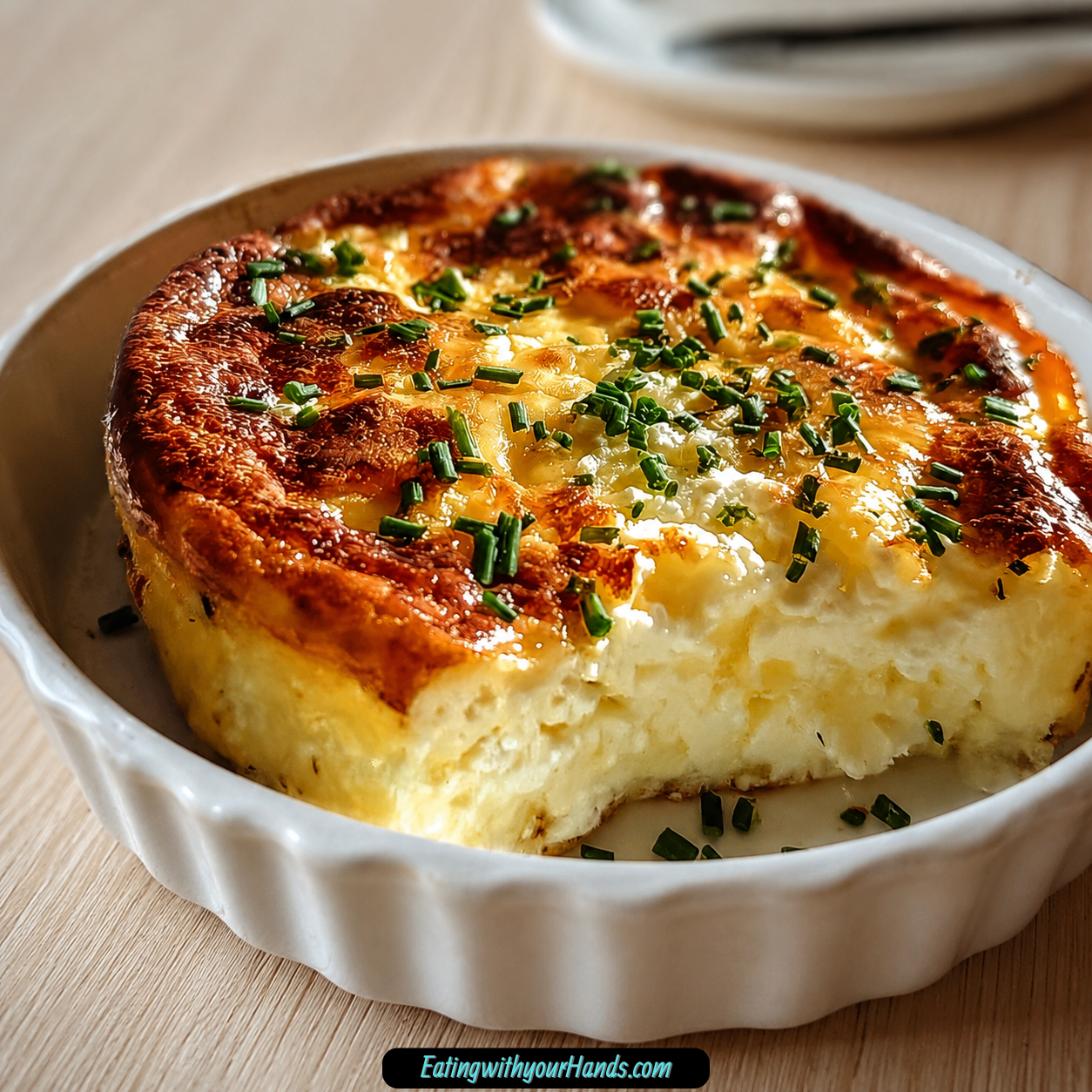

Fluffy Baked Cottage Cheese Eggs are the kind of breakfast that feels quietly brilliant. They are simple enough for a sleepy morning, hearty enough to keep you full, and flexible enough to handle whatever vegetables, herbs, or cheeses are already waiting in your refrigerator.
This dish has that cozy, one-pan comfort of a baked breakfast casserole, but it does not feel heavy or complicated. Eggs give it structure, cottage cheese brings creaminess and protein, and parmesan adds a savory finish that makes the whole dish taste warm and satisfying.
What I love most about baked cottage cheese eggs is how forgiving they are. You do not need to stand at the stove, flip anything, or worry about perfect timing the way you might with scrambled eggs or omelets.
You simply mix everything together, pour it into a greased baking dish, and let the oven do the work. While it bakes, the edges turn lightly golden, the center becomes soft and fluffy, and the cottage cheese melts into creamy little pockets throughout the eggs.
This recipe is also one of those rare breakfasts that works for different kinds of mornings. It can be served fresh from the oven for a slow weekend brunch, made ahead for busy weekdays, or sliced cold from the fridge when you need something quick and filling.
Whether you keep it simple with chives, garlic powder, paprika, salt, and pepper, or fold in bell peppers, spinach, and sun-dried tomatoes, the result is comforting and deeply practical. It tastes homemade without asking too much from you.
Table of Contents
- Why You’ll Love Baked Cottage Cheese Eggs
- Why Cottage Cheese Works So Well With Eggs
- Recipe Details
- Ingredients for Baked Cottage Cheese Eggs
- For the Base
- For Seasoning
- Optional Add-Ins
- Before You Start
- Directions for Fluffy Baked Cottage Cheese Eggs
- Step 1: Preheat the Oven
- Step 2: Prepare the Baking Dish
- Step 3: Add the Cottage Cheese to a Bowl
- Step 4: Add the Eggs
- Step 5: Add the Parmesan
- Step 6: Whisk the Base Mixture
- Step 7: Add the Chives
- Step 8: Add Garlic Powder
- Step 9: Add Paprika
- Step 10: Season With Salt and Pepper
- Step 11: Prepare Any Optional Vegetables
- Step 12: Fold in Optional Add-Ins
- Step 13: Pour the Mixture Into the Baking Dish
- Step 14: Bake the Eggs
- Step 15: Use the Jiggle Test
- Step 16: Broil Briefly If Desired
- Step 17: Let the Eggs Rest
- Step 18: Slice and Serve
- Delicious Variations of Baked Cottage Cheese Eggs
- Serving Suggestions
- Storage Tips
- Reheating Tips
- Freezing Tips
- Helpful Notes for Perfect Baked Cottage Cheese Eggs
- Troubleshooting Baked Cottage Cheese Eggs
- Frequently Asked Questions About Baked Cottage Cheese Eggs
- Final Thoughts
- Baked Cottage Cheese Eggs
Why You’ll Love Baked Cottage Cheese Eggs
Baked Cottage Cheese Eggs are easy to love because they offer a lot of reward for very little effort. The preparation is as simple as mixing, seasoning, pouring, and baking.
The combination of cottage cheese and eggs makes this dish protein-rich and satisfying. It is the kind of breakfast that can carry you through the morning without feeling too heavy.
The texture is soft, fluffy, and creamy. Cottage cheese curds melt gently into the eggs, creating little pockets of richness instead of a flat or rubbery bake.
This recipe is also highly customizable. You can add bell peppers, spinach, sun-dried tomatoes, mushrooms, olives, feta, black beans, jalapeños, or whatever fits the flavor direction you want.
It is meal-prep friendly, too. You can bake it once, slice it into portions, and reheat it for breakfast over the next few days.
It is also a great choice for feeding a group. Instead of making eggs one serving at a time, you can bake everything together and serve it in squares.
Why Cottage Cheese Works So Well With Eggs
Cottage cheese may seem like a simple ingredient, but it does a lot in this recipe. It adds moisture, creaminess, and a mild tang that makes the eggs taste richer.
Full-fat cottage cheese gives the creamiest texture. Low-fat cottage cheese also works, and lactose-free cottage cheese is an option if dairy is an issue.
The curds do not need to disappear completely into the mixture. In fact, a few cottage cheese lumps are part of what makes the texture so good.
As the eggs bake, the cottage cheese softens and creates creamy little bites throughout the dish. It keeps the egg bake from tasting dry or plain.
The parmesan adds a different kind of cheese flavor. It is salty, savory, and bold enough to make the simple egg base taste more finished.
Together, cottage cheese and parmesan make this breakfast feel both nourishing and comforting. It is simple food, but it does not taste boring.
Recipe Details
- Recipe Name: Fluffy Baked Cottage Cheese Eggs
- Recipe Style: Baked egg breakfast dish
- Oven Temperature: 350°F (175°C)
- Baking Dish: 8×8-inch baking dish works great
- Bake Time: About 30 minutes, checking around 25 minutes
- Resting Time: 5 to 10 minutes before slicing
- Best Texture: Fluffy, creamy, lightly golden around the edges
- Storage: Refrigerate for up to 3 days
- Reheating: Microwave for 30 to 60 seconds, or bake covered at 350°F for about 10 minutes
- Freezing: Possible, but texture may become slightly grainy after thawing
Ingredients for Baked Cottage Cheese Eggs
The ingredient list is short, but each ingredient brings something important. The eggs give structure, the cottage cheese gives creaminess, the parmesan adds savory depth, and the seasonings make everything taste complete.
For the Base
You need 1 cup cottage cheese. Full-fat cottage cheese gives the creamiest result, but low-fat cottage cheese also works.
If dairy is an issue, lactose-free cottage cheese can be used. The cottage cheese is the star ingredient because it makes the baked eggs soft, creamy, and satisfying.
You need 4 large eggs. Large eggs help create a fluffy, structured bake.
If you are using small eggs, the original note suggests adding an extra one. The eggs hold everything together and give the dish its main breakfast-casserole texture.
You need 1/2 cup parmesan cheese. Freshly grated parmesan melts best, but pre-grated parmesan can work in a pinch.
For a dairy-free option, nutritional yeast can add a savory umami flavor. The parmesan adds saltiness and richness, so keep that in mind when seasoning.
For Seasoning
You need 2 tablespoons fresh chives. Chives add a fresh onion-like flavor without being too sharp.
Green onions can also work well. Either one adds color and brightness to the egg mixture.
You need 1 teaspoon garlic powder. Garlic powder is quick, easy, and blends evenly through the eggs.
Fresh minced garlic can also be used, about 2 cloves. Fresh garlic gives a stronger, more aromatic flavor.
You need 1 teaspoon paprika. Regular paprika works, or smoked paprika can be used for a deeper, cozier flavor.
Paprika adds color and warmth. It makes the eggs taste more savory without making the dish spicy.
You need salt and pepper, to taste. These simple seasonings help bring out all the other flavors.
Because parmesan is already salty, start lightly with the salt. You can always add more after baking if needed.
Optional Add-Ins
You can add 1 cup bell peppers, diced small. If the peppers are watery, drain any extra juice before adding them.
Bell peppers add sweetness, color, and a little texture. Dicing them small helps them distribute evenly.
You can add 1 cup spinach. Fresh spinach works, or frozen spinach can be used if thawed and squeezed dry.
Removing moisture from spinach is important. Wet spinach can make the baked eggs watery.
You can add 1/2 cup sun-dried tomatoes. Oil-packed sun-dried tomatoes should be drained well.
Dry-packed sun-dried tomatoes can be soaked briefly before using. They add concentrated flavor and a slightly chewy texture.
Before You Start
Before mixing the eggs, preheat the oven and prepare the baking dish. This keeps the process smooth and helps the egg mixture go into a ready pan.
Grease the baking dish well. Eggs can stick, especially around the edges where they brown first.
If you plan to use vegetables, prepare them before mixing the base. Dice peppers small, squeeze spinach dry, and drain sun-dried tomatoes well.
Moisture control is important in this recipe. Watery vegetables can make the baked eggs look loose or wet in the center.
Do not worry about making the cottage cheese perfectly smooth. A mostly blended mixture with a few curds is exactly right.
Directions for Fluffy Baked Cottage Cheese Eggs
Step 1: Preheat the Oven
Preheat your oven to 350°F, or 175°C. This gives the oven time to heat evenly before the egg mixture goes in.
A steady oven temperature helps the eggs bake gently. Baking too hot can make eggs tough, while a moderate temperature keeps them fluffy and soft.
Step 2: Prepare the Baking Dish
Grab an 8×8-inch baking dish and grease it with butter or cooking spray. Coat the bottom and sides so the eggs release easily after baking.
This step makes cleanup much easier. It also helps the edges lift cleanly when you slice the baked eggs into squares.
Step 3: Add the Cottage Cheese to a Bowl
Place 1 cup cottage cheese in a large mixing bowl. Use a bowl with enough room for whisking and folding in add-ins.
The cottage cheese does not have to be perfectly smooth. Its curds will soften during baking and create creamy pockets in the finished dish.
Step 4: Add the Eggs
Crack 4 large eggs into the bowl with the cottage cheese. If your eggs are small, you can add an extra one as noted in the original recipe.
The eggs are what give the dish structure. They also help bind the cottage cheese, parmesan, seasonings, and optional vegetables.
Step 5: Add the Parmesan
Sprinkle in 1/2 cup parmesan cheese. Freshly grated parmesan melts best, but pre-grated parmesan is fine when that is what you have.
Parmesan adds savory depth and saltiness. Because of that, you will want to season carefully later.
Step 6: Whisk the Base Mixture
Use a fork or whisk to mix the cottage cheese, eggs, and parmesan. Whisk until the eggs are fully blended and the mixture looks mostly combined.
A few cottage cheese lumps are completely fine. They add texture and creaminess, so there is no need to make the mixture perfectly smooth.
Step 7: Add the Chives
Add 2 tablespoons fresh chives to the bowl. Stir them into the egg mixture so they are evenly spread throughout.
Chives add a fresh, gentle onion flavor. They also bring little green flecks that make the baked eggs look more inviting.
Step 8: Add Garlic Powder
Add 1 teaspoon garlic powder. Stir well so the garlic flavor distributes evenly.
Garlic powder is useful here because it blends smoothly into the egg mixture. If using fresh minced garlic, use about 2 cloves and mix thoroughly.
Step 9: Add Paprika
Add 1 teaspoon paprika. You can use regular paprika or smoked paprika, depending on the flavor you want.
Regular paprika keeps the flavor mild and warm. Smoked paprika adds a deeper, slightly cozy note.
Step 10: Season With Salt and Pepper
Add salt and pepper to taste. Start with a light amount of salt because parmesan already contributes saltiness.
Pepper adds gentle warmth and balance. You can always add more seasoning after baking if needed.
Step 11: Prepare Any Optional Vegetables
If using bell peppers, dice them small and drain any extra juice. If using spinach, make sure frozen spinach is thawed and squeezed dry.
If using sun-dried tomatoes, drain oil-packed tomatoes well. If using dry-packed tomatoes, give them a quick soak before adding.
Step 12: Fold in Optional Add-Ins
Gently fold in any optional add-ins, such as bell peppers, spinach, or sun-dried tomatoes. Stir just until the vegetables are evenly distributed.
Do not overmix. Gentle folding keeps the mixture light and prevents the vegetables from breaking down too much.
Step 13: Pour the Mixture Into the Baking Dish
Pour the egg mixture into the greased baking dish. Use a spatula to spread it evenly into the corners.
An even layer helps the eggs bake consistently. If the mixture is deeper in one area, that part may take longer to set.
Step 14: Bake the Eggs
Place the dish in the preheated oven and bake for about 30 minutes. Begin checking around 25 minutes because ovens can vary.
The edges should look golden, and the center should barely jiggle. You want it set, but not overbaked.
Step 15: Use the Jiggle Test
Gently shake the baking dish to check the center. It should have a slight wiggle, similar to Jell-O, but it should not slosh.
The eggs will continue setting as they rest. Pulling them out at the right moment helps keep the texture fluffy instead of dry.
Step 16: Broil Briefly If Desired
If the top is not as golden as you would like, place it under the broiler for 1 to 2 minutes. Watch closely the entire time.
The broiler can brown the top quickly. Do not walk away, because it can go from golden to too dark fast.
Step 17: Let the Eggs Rest
Remove the dish from the oven and let it rest for 5 to 10 minutes. This short wait helps the eggs finish setting.
Resting also makes slicing easier. If you cut immediately, the eggs may be softer and less tidy.
Step 18: Slice and Serve
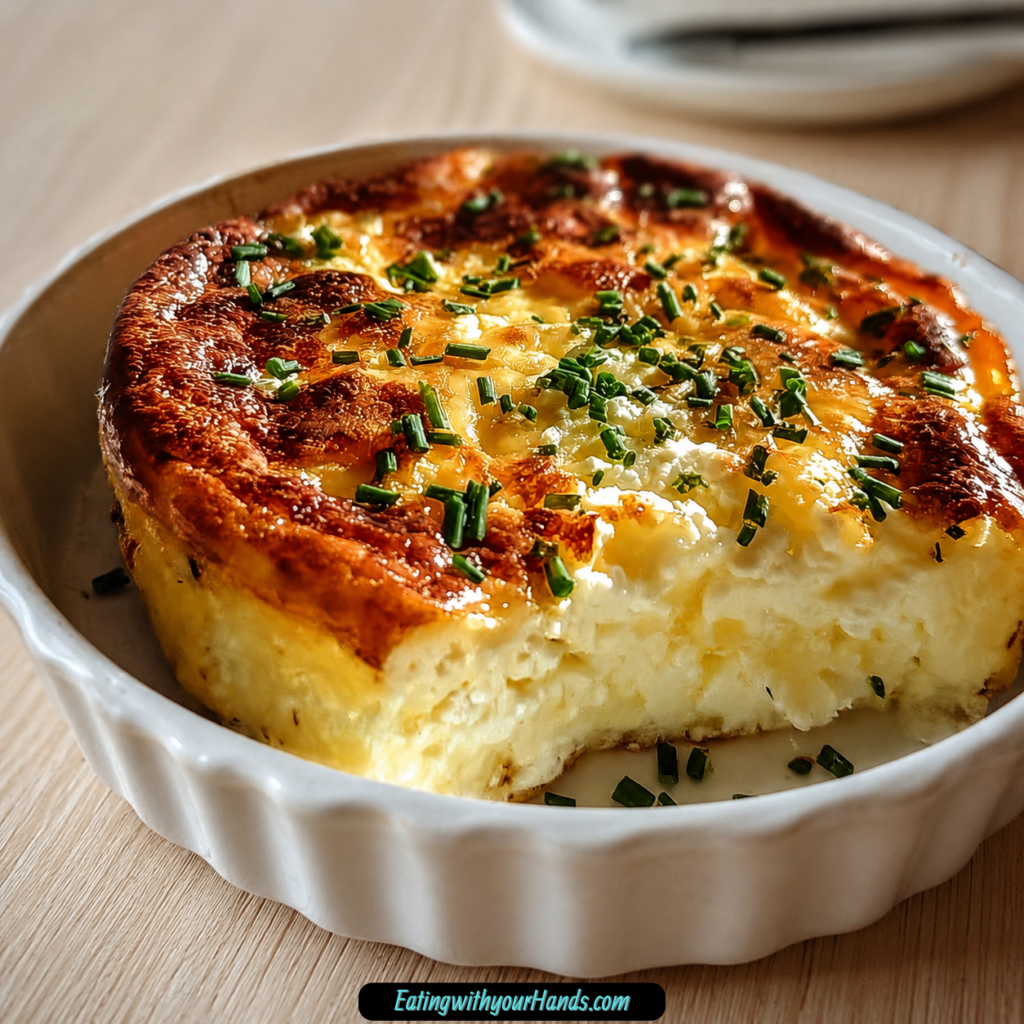
Cut the baked cottage cheese eggs into squares and serve warm. The texture should be fluffy, creamy, and lightly golden at the edges.
If the top cracks slightly as it cools, do not worry. That is part of the rustic charm of a simple baked egg dish.
Delicious Variations of Baked Cottage Cheese Eggs
This recipe is a wonderful base for different flavor combinations. Once you understand the method, you can change the add-ins and cheeses to match your mood.
Mushroom and Swiss
Sauté 1 cup sliced mushrooms with a pinch of thyme until golden. Fold them into the egg mixture before baking.
Swap the parmesan for shredded Swiss cheese. The Swiss melts into soft, gooey pockets and pairs beautifully with the mushrooms.
Mediterranean Twist
Add chopped Kalamata olives, crumbled feta, and a sprinkle of dried oregano. Sun-dried tomatoes are also especially good in this version.
This variation has a salty, tangy flavor. Because olives and feta can be salty, season carefully.
Southwestern Style
Mix in a handful of drained black beans, diced jalapeños, and a dash of cumin. After baking, top with avocado and hot sauce.
This version is heartier and has a little kick. It is especially good for brunch or a filling breakfast plate.
Dairy-Free Inspired Option
For a dairy-free adjustment, skip the parmesan and use a dollop of nutritional yeast instead. It adds savory flavor and helps replace some of the cheesy depth.
The original base uses cottage cheese, so choose your swaps according to your needs. Nutritional yeast is specifically noted as a flavorful parmesan alternative.
Serving Suggestions
Fresh out of the oven, baked cottage cheese eggs are delicious sliced into squares. They feel cozy and satisfying on their own, but they also pair well with simple sides.
Serve them with buttery whole-grain toast for an easy breakfast. The toast adds crunch and makes the plate feel complete.
A pile of fresh greens is another great option. An arugula salad with lemon vinaigrette adds brightness and balances the richness of the eggs.
For brunch, serve the baked eggs with roasted potatoes and avocado. This makes the meal more filling and colorful.
Crispy bacon can also be served alongside if you want a more indulgent brunch plate. The salty crunch pairs well with the soft, cheesy eggs.
A dollop of Greek yogurt or salsa on top adds tangy contrast. Either one gives the dish a fresh finish.
Storage Tips
Let the baked eggs cool completely before storing. Once cooled, cover the baking dish tightly or transfer slices to an airtight container.
Store in the refrigerator for up to 3 days. This makes the recipe useful for meal prep or quick weekday breakfasts.
If storing slices, separate them neatly so you can grab one portion at a time. This makes reheating faster and easier.
The texture is best within the first few days. After that, the eggs may become a little drier.
Reheating Tips
Reheat a slice in the microwave for 30 to 60 seconds. This is the quickest option for busy mornings.
You can also reheat slices in a 350°F oven for about 10 minutes. Cover them with foil to help prevent drying out.
If the eggs seem a little dry, sprinkle with a small amount of water before reheating. This helps bring back some moisture.
Do not overheat the slices. Gentle reheating keeps the eggs softer and more pleasant to eat.
Freezing Tips
Freezing is possible, but it is not the best option for texture. The eggs can become a little grainy after thawing.
If you need to freeze them, wrap individual portions tightly in foil. This makes it easier to thaw only what you need.
Thaw overnight in the refrigerator before reheating. Then warm as directed in the microwave or oven.
Freezing works in a pinch, but fresh or refrigerated leftovers will have a better texture. Use the freezer only when needed.
Helpful Notes for Perfect Baked Cottage Cheese Eggs
Drain Watery Add-Ins
If you add watery vegetables, drain or squeeze them very well. Frozen spinach should be thawed and squeezed dry with a clean towel.
Wet vegetables are one of the main reasons baked eggs turn watery. Taking a minute to remove moisture makes the final dish much better.
Watch the Dish Depth
A deeper baking dish will take longer to bake. A shallow dish may cook more quickly.
An 8×8-inch dish works well, and a dish about 2 to 3 inches deep is a good target for even cooking. Always use visual cues along with the timer.
Do Not Overbake
Overbaking can make eggs dry or cause curdling. Remove the dish when the center barely jiggles.
Carryover heat will finish the setting process as the dish rests. This is why the resting time matters.
Cottage Cheese Curds Are Fine
Do not worry if the cottage cheese does not disappear completely into the mixture. Those curds become creamy pockets in the baked eggs.
Trying to make the mixture perfectly smooth is not necessary. A little texture is part of the dish’s charm.
Salt Carefully
Parmesan is salty, and some add-ins like olives or feta are salty too. Add salt lightly at first.
You can always season after baking. It is much harder to fix a dish that has become too salty.
Embrace a Rustic Top
If the top cracks or browns unevenly, that is not a problem. This dish is homey, not fussy.
A few cracks simply show that the eggs puffed and settled. The flavor will still be delicious.
Troubleshooting Baked Cottage Cheese Eggs
Why Does My Dish Look Watery?
The most likely reason is wet add-ins or underbaking. Frozen spinach, watery peppers, or other juicy vegetables need to be drained well before mixing.
The center also needs to bake until it is set with only a slight jiggle. If it sloshes, it needs more time.
How Do I Prevent Curdling?
Mix the cottage cheese and eggs well before baking. A smooth base helps everything bake more evenly.
Do not overbake the dish. Full-fat cottage cheese can curdle less than low-fat, and pulling the dish when the center just barely jiggles helps protect the texture.
Why Is the Center Too Soft?
The dish may need a few more minutes in the oven, especially if your baking dish is deep. Check around 25 minutes, but continue baking if the center is still loose.
The center should wiggle slightly, not move like liquid. It will firm up more as it rests.
Why Are the Edges Brown Before the Center Is Done?
Your dish may be too deep, or your oven may run hot around the edges. Cover loosely with foil if needed and let the center finish baking.
You can also use a slightly shallower dish next time. Even depth helps the eggs bake more consistently.
Frequently Asked Questions About Baked Cottage Cheese Eggs
Can I Freeze Baked Cottage Cheese Eggs?
Yes, you can freeze them, but it is not the first choice. The texture can become a little grainy after thawing.
If freezing, wrap individual slices tightly in foil. Thaw overnight in the refrigerator before reheating.
Can I Use Egg Whites Instead of Whole Eggs?
Yes, you can use egg whites. Swap each whole egg for 2 egg whites.
The dish will be lighter and less rich. Add an extra pinch of salt to help make up for the flavor lost from the yolks.
How Do I Prevent Curdling?
Mix the cottage cheese and eggs really well before baking. This helps the base bake more evenly.
Do not overbake the dish. Remove it when the center just barely jiggles, because carryover heat will finish the job.
Can I Use Low-Fat Cottage Cheese?
Yes, low-fat cottage cheese works. Full-fat gives the creamiest texture, but low-fat is still a good option.
The texture may be slightly less rich. Be careful not to overbake, especially with lower-fat cottage cheese.
Can I Make This Dairy-Free?
The original recipe suggests nutritional yeast as a dairy-free alternative for parmesan. It gives a savory, umami-style flavor.
Since cottage cheese is central to the recipe, choose substitutions according to your needs. Lactose-free cottage cheese is also mentioned as an option if dairy is an issue.
Can I Add Vegetables?
Yes, vegetables work very well. Bell peppers, spinach, and sun-dried tomatoes are all included as optional add-ins.
Just make sure watery vegetables are drained well. This keeps the baked eggs fluffy instead of wet.
How Long Does It Last in the Fridge?
It keeps for up to 3 days in the refrigerator. Store it covered tightly or in an airtight container.
Reheat individual slices as needed. The microwave is quick, while the oven helps preserve texture.
Can I Eat It Cold?
Yes, it tastes good cold straight from the refrigerator. It has a crustless-quiche feeling when chilled.
This makes it useful for busy mornings. You can grab a slice and still get a hearty breakfast.
Final Thoughts
Fluffy Baked Cottage Cheese Eggs are the kind of recipe that makes breakfast feel easier without making it feel boring. The ingredients are simple, the method is straightforward, and the result is creamy, savory, fluffy, and satisfying.
The base of cottage cheese, eggs, and parmesan creates a protein-rich dish that feels comforting but not complicated. Chives, garlic powder, paprika, salt, and pepper add enough flavor to make the simple version delicious on its own.
The optional add-ins make it even more useful. Bell peppers, spinach, sun-dried tomatoes, mushrooms, Swiss, feta, olives, black beans, jalapeños, and herbs all give you ways to change the dish without changing the basic method.
It is also practical for real life. You can bake it for brunch, slice it for meal prep, reheat it during the week, or eat it cold when the morning is moving too fast.
Most of all, this recipe proves that a good breakfast does not have to be fussy. Sometimes all you need is a bowl, a baking dish, a few good ingredients, and enough patience to let the oven turn them into something warm and nourishing.
Baked Cottage Cheese Eggs

Baked Cottage Cheese Eggs are an easy, protein-rich breakfast with a creamy texture and savory flavor. The eggs bake together with cottage cheese, Parmesan cheese, fresh chives, and simple seasonings until the center is set and tender. This dish is useful for a quick morning meal, a light brunch, or make-ahead breakfasts during the week. You can keep it simple or fold in vegetables like bell peppers, spinach, or sun-dried tomatoes for extra color and texture.
Recipe Details
- Prep Time: 10 minutes
- Cook Time: 30 minutes
- Total Time: 40 minutes
- Course: Breakfast
- Cuisine: International
- Servings: 4 servings
Ingredients
Optional Add-ins
- 1 cup Spinach consider using fresh or frozen, thawed well
- ½ cup Sun-Dried Tomatoes drain well to prevent sogginess
- 1 cup Bell Peppers ensure to drain excess moisture if using
For Seasoning
- 1 teaspoon Paprika smoked paprika can enhance the flavor profile
- 2 tablespoons Fresh Chives green onion can be used as a substitute
- to taste Pepper essential seasoning
- 1 teaspoon Garlic Powder switch to fresh minced garlic if desired, adjusting to taste
- to taste Salt essential seasoning
For the Base
- 4 large Eggs opt for large eggs for best results
- ½ cup Parmesan Cheese replace with nutritional yeast for a dairy-free option
- 1 cup Cottage Cheese use lactose-free cottage cheese if needed
Instructions
Step 1: Prepare the Oven and Baking Dish
Preheat the oven to 350°F (175°C). Grease a baking dish so the baked egg mixture releases more easily after cooking.
Step 2: Mix the Base
In a bowl, combine the cottage cheese, eggs, and Parmesan cheese. Stir until the mixture is well blended.
Step 3: Add the Seasonings
Stir in the fresh chives, garlic powder, paprika, salt, and pepper until the seasonings are evenly distributed.
Step 4: Fold in Optional Add-ins
If using any optional add-ins, gently fold in the bell peppers, spinach, or sun-dried tomatoes. Make sure excess moisture is drained so the baked eggs do not become watery.
Step 5: Bake Until Set
Pour the mixture into the prepared baking dish. Bake for 30 minutes, or until the eggs are set.
Step 6: Cool and Serve
Remove the baking dish from the oven and let it cool slightly before serving.
Notes
You can customize the dish by adding other vegetables like mushrooms or zucchini. Store leftovers in the refrigerator for up to 3 days.
Serving Suggestions
- Toasted sourdough
- Fresh fruit
- Breakfast potatoes
- Mixed greens
- Avocado slices
- Hot coffee
- Brunch plates
Storage
How to Store
Store leftovers in the refrigerator for up to 3 days, as noted in the original recipe. Keep them covered or in an airtight container.
How to Reheat
Reheat individual portions gently until warmed through. Avoid overheating so the eggs stay tender instead of becoming rubbery.
Best Texture Tip
Drain any moist add-ins well before baking, especially spinach, bell peppers, or sun-dried tomatoes, to help the eggs set with a creamy but not watery texture.

Fernando is the creator and writer behind the food blog Eating with your Hands. Living and working in cities like Paris, Barcelona, and Berlin, and being married to a Canadian foodie, has given Fernando a passion and interest in food and inspired him to run EWYH.