
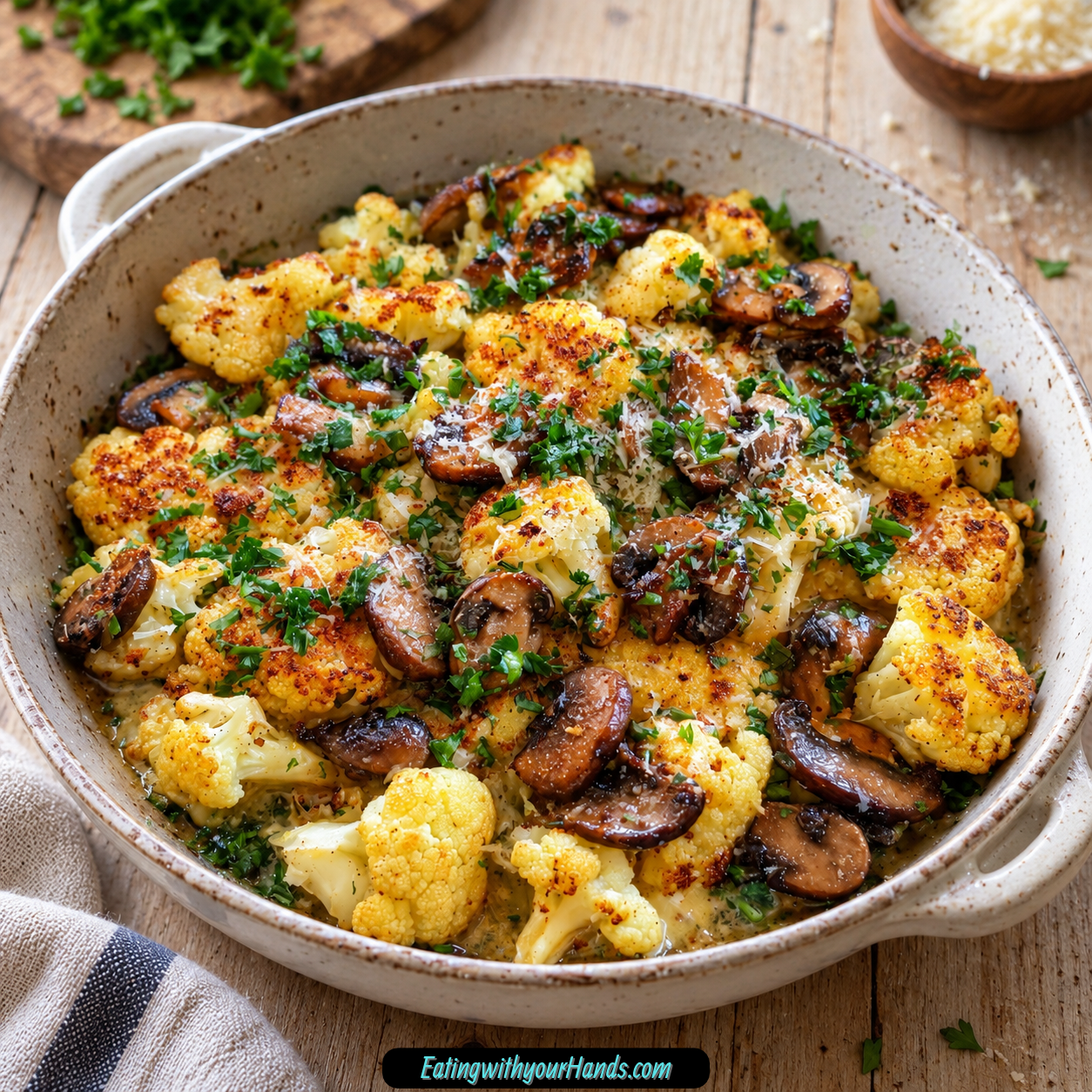
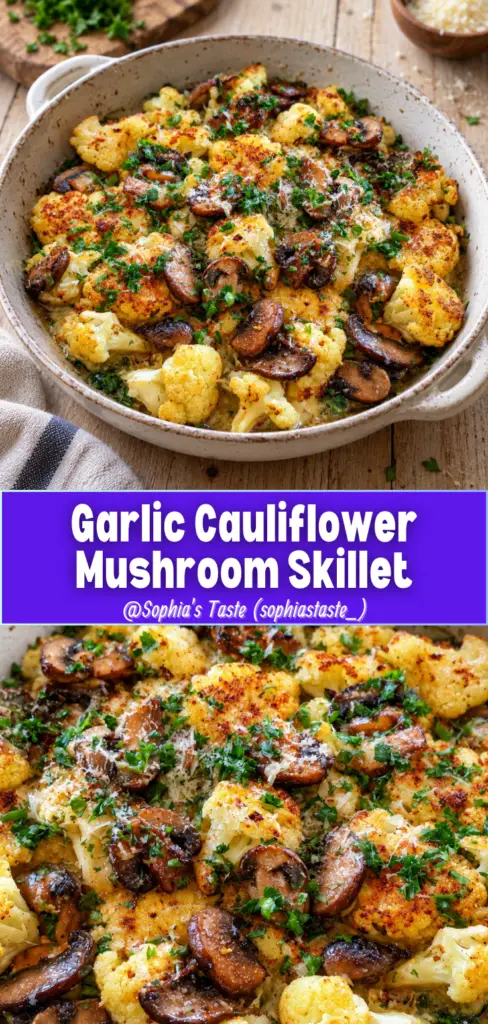
There are certain weeknight recipes that earn a permanent place in the kitchen because they manage to feel comforting without demanding much time, and this Garlic Cauliflower Mushroom Skillet is one of those dishes for me. It comes together quickly, uses simple ingredients, and somehow turns cauliflower and mushrooms into something I genuinely look forward to eating.
I have made this skillet on busy evenings for years, and it still gives me that same little moment of satisfaction when the garlic finally hits the hot pan. The smell changes almost instantly, and suddenly the whole kitchen feels warmer, richer, and far more inviting than you would expect from such a straightforward vegetable dish.
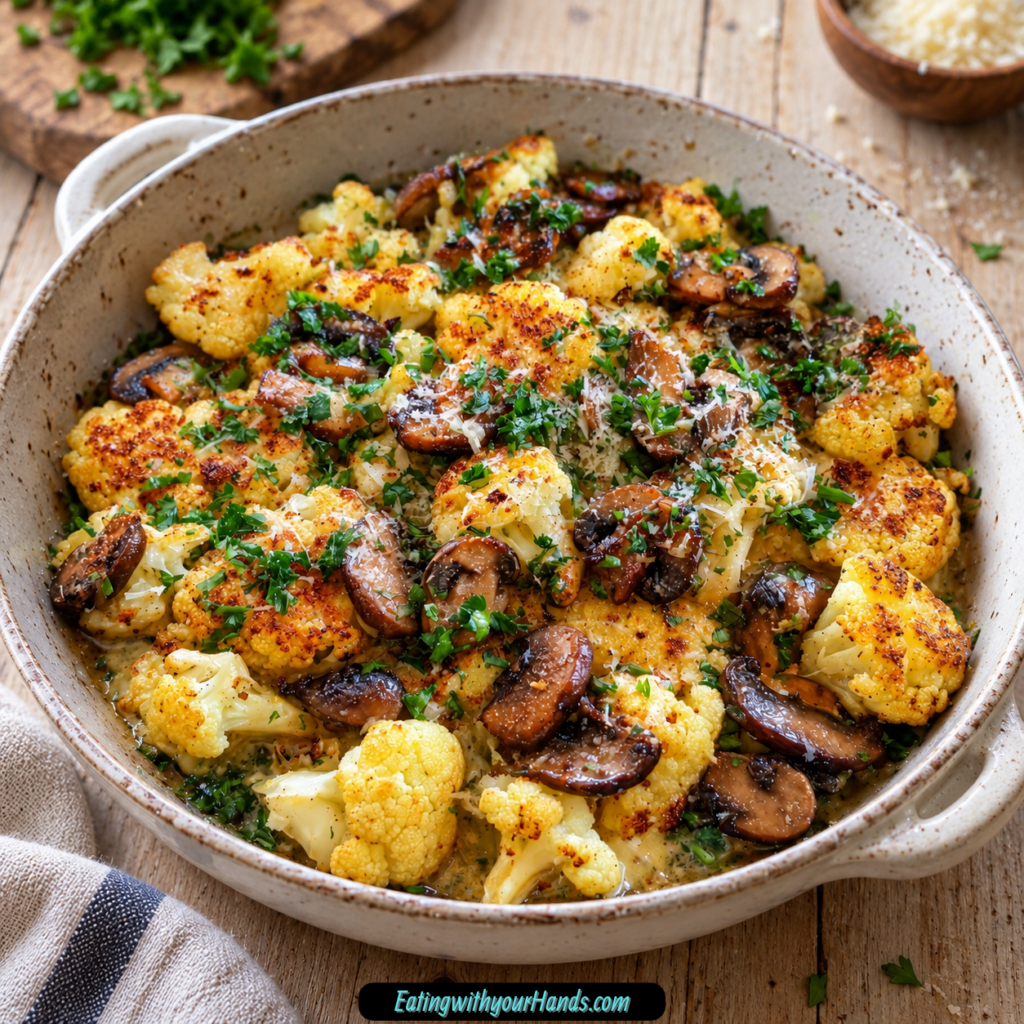
What keeps me coming back is the combination of textures. The cauliflower stays tender-crisp with golden edges, while the mushrooms soften, release their moisture, and soak up the buttery, herby flavors around them.
The smoked paprika is what gives the whole skillet its deeper personality. Garlic and Italian seasoning bring the familiar savory foundation, but that smoky note makes the vegetables taste far more interesting than a plain sauté.
My picky nephew asking for seconds was probably the moment I realized this dish had moved beyond being something I made only for myself. When a vegetable skillet becomes the part of dinner people start reaching for again, I consider that a very good sign.
It is easy enough to make on a rushed Tuesday and flexible enough to serve in several different ways. You can keep it as a side dish, turn it into a light vegetarian meal, spoon it over grains, or add a protein when you want something more substantial.
And perhaps best of all, everything happens in one skillet. That means less cleanup, fewer moving parts, and more time to actually sit down and enjoy the meal while those browned cauliflower edges are still crisp.
Table of Contents
- Why You’ll Love This Garlic Cauliflower Mushroom Skillet
- Ingredients for Garlic Cauliflower Mushroom Skillet
- Why the Cauliflower Size Matters
- Why Smoked Paprika Makes a Difference
- Why the Lemon Juice Belongs at the End
- Equipment You’ll Need
- How to Make Garlic Cauliflower Mushroom Skillet
- Tips for Perfect Results
- Why You Shouldn’t Crowd the Pan
- Variations for Garlic Cauliflower Mushroom Skillet
- Turning It Into a More Complete Meal
- Serving Suggestions
- A Favorite Way to Use Leftovers
- Storage
- How to Reheat the Skillet
- Can You Freeze Garlic Cauliflower Mushroom Skillet?
- Can You Use Frozen Cauliflower?
- What If You Don’t Have Smoked Paprika?
- Nutritional Information
- Frequently Asked Questions
- Why This Skillet Keeps Returning to My Table
- Garlic Cauliflower Mushroom Skillet: Irresistible 20-Minute Magic
Why You’ll Love This Garlic Cauliflower Mushroom Skillet
The first reason is speed. From the first sizzle of olive oil and butter to the final squeeze of lemon, the dish comes together in about 20 minutes and stays comfortably under the 30-minute mark.
The second reason is flavor. Smoked paprika, garlic, Italian seasoning, butter, olive oil, lemon juice, mushrooms, and optional Parmesan build layers that make the vegetables taste rich without becoming complicated.
Texture also plays a huge role. The cauliflower is cooked until the edges caramelize but the center still has some bite, while the mushrooms turn tender and absorb the savory pan juices.
It is also a satisfying vegetarian option. Even without meat, the combination of earthy mushrooms, browned cauliflower, butter, Parmesan, and herbs gives the skillet enough depth to feel complete.
The one-pan method makes the recipe especially practical. Everything cooks in the same skillet, so there is no separate roasting tray, no extra pot, and no elaborate cleanup waiting afterward.
Most importantly, the dish is flexible without losing its character. Fresh herbs, red pepper flakes, feta, different mushrooms, cherry tomatoes, grains, eggs, chicken, or bread can all fit around the same garlicky cauliflower-and-mushroom base.
Ingredients for Garlic Cauliflower Mushroom Skillet
The ingredient list is simple, but each item adds something important to the final skillet. The cauliflower brings structure, the mushrooms bring earthiness, the butter and olive oil carry the flavors, and the lemon keeps the richer elements from becoming too heavy.
- 2 tablespoons olive oil
- 2 tablespoons butter
- 1 small head cauliflower, cut into bite-sized florets, about 4 cups
- 8 oz mushrooms, sliced
- 4 cloves garlic, minced
- ½ teaspoon smoked paprika
- ½ teaspoon Italian seasoning
- Salt, to taste
- Black pepper, to taste
- 1 tablespoon lemon juice
- ¼ cup Parmesan cheese, optional
- Fresh parsley, for garnish
The cauliflower florets should be cut small enough to cook evenly in the skillet. Oversized pieces will take longer to soften and can make the final pan feel inconsistent.
Cremini mushrooms are a favorite choice, but other mushrooms can also work. Slicing them evenly helps them release moisture and brown at a similar rate.
Why the Cauliflower Size Matters
Cauliflower is the ingredient that benefits most from careful preparation. Bite-sized florets have enough surface area to brown while still cooking through in the short skillet time.
If the pieces are too large, the outside can color before the inside becomes properly tender. Cutting them smaller gives you that tender-crisp texture without needing extra steaming or a longer cooking method.
The goal is not soft cauliflower that collapses under the spatula. You want the centers cooked enough to eat comfortably while the browned edges still give each bite a little structure.
That balance is what makes this skillet feel satisfying rather than mushy. Every forkful should still remind you that the cauliflower was sautéed, not boiled.
Why Smoked Paprika Makes a Difference
The recipe uses ½ teaspoon smoked paprika, and that small amount has a surprisingly big effect. It adds a deeper smoky quality that works especially well with mushrooms and browned cauliflower.
Regular paprika can be used if that is what you have, but the flavor will be noticeably flatter. The smoky version is one of the details that gives the skillet its more distinctive personality.
It also works beautifully with the butter and garlic. Once those seasonings bloom briefly in the hot pan, the vegetables become coated in a warm, savory mixture rather than simply tasting seasoned on the surface.
That smoky note is subtle enough not to dominate. It stays in the background and makes the mushrooms feel earthier and the cauliflower more robust.
Why the Lemon Juice Belongs at the End
The skillet finishes with 1 tablespoon lemon juice after it comes off the heat. Adding it at the end keeps the flavor bright and fresh against the butter and Parmesan.
That acidity is important because the dish has several richer ingredients. Olive oil, butter, cheese, and mushrooms can all create depth, while lemon gives the final bite a cleaner finish.
The lemon also helps wake the whole pan back up just before serving. Instead of tasting heavy, the vegetables finish with a sharper note that makes the garlic and herbs stand out again.
It is one of the simplest parts of the recipe, but it is worth keeping. Skipping it changes the balance more than you might expect.
Equipment You’ll Need
You only need a few basic tools for this recipe. A large skillet, wooden spatula, and sharp knife are enough to take the vegetables from prep to serving.
A 12-inch skillet works especially well because it gives the cauliflower and mushrooms enough room to brown. Crowding the pan traps steam, which is exactly what you want to avoid when the goal is caramelized edges.
The wooden spatula is useful for turning the vegetables without breaking them up unnecessarily. A regular spatula works too, but something broad enough to move the cauliflower gently makes the process easier.
No food processor or special cookware is necessary. The whole recipe depends more on pan space and heat control than on equipment.
How to Make Garlic Cauliflower Mushroom Skillet
The method is simple, but the order matters because cauliflower, mushrooms, and garlic all behave differently in the pan. The cauliflower needs the longest time, the mushrooms need room to release moisture, and the garlic goes in near the end so it stays fragrant instead of burning.
Step 1: Prepare the Vegetables and Preheat the Skillet
Cut the cauliflower into bite-sized florets until you have about 4 cups, making the pieces as even as possible. Slice the 8 oz mushrooms, mince the 4 cloves garlic, and have the smoked paprika, Italian seasoning, salt, pepper, lemon juice, optional Parmesan, and parsley ready nearby.
Place a large skillet, preferably around 12 inches, over medium heat and let it warm before adding the fats. Add the 2 tablespoons olive oil and 2 tablespoons butter, swirling the pan as the butter melts into the oil.
Wait for a gentle sizzle before moving on. A test cauliflower floret should react immediately when it touches the pan, which tells you the skillet is hot enough to begin browning rather than steaming the vegetables.
Step 2: Brown the Cauliflower
Add the cauliflower florets to the skillet in a single layer as much as possible. Give them room to make direct contact with the hot surface so the edges can begin developing color.
Sauté for about 5 minutes, stirring only occasionally instead of moving the florets constantly. The goal is to give the vegetables enough uninterrupted contact with the pan to create golden edges.
Watch for signs of caramelization while keeping the centers firm enough to retain texture. By the end of this stage, the cauliflower should look lightly browned in spots but should not be fully soft.
Step 3: Add the Mushrooms and Continue Sautéing
Add the sliced mushrooms directly to the browned cauliflower and spread them through the skillet. Continue cooking for another 5 minutes, stirring as needed to expose different surfaces to the heat.
The mushrooms will release moisture as they cook, then begin to shrink and turn more golden. Give that liquid time to cook away so the pan does not become watery.
As the moisture reduces, the mushrooms start absorbing the butter, olive oil, and browned flavors already in the skillet. This is the stage where the cauliflower and mushrooms begin tasting like one cohesive dish rather than two separate vegetables.
Step 4: Add the Garlic Without Burning It
Push the cauliflower and mushrooms slightly toward the sides of the skillet to create a small open space in the center. Add the 4 cloves minced garlic directly to that hot surface and let it cook for about 30 seconds.
Watch the garlic closely because it can move from fragrant to burnt very quickly. As soon as it smells strongly aromatic and begins turning golden, stir it through the vegetables.
Do not wait until the garlic becomes dark brown. Adding it near the end protects its flavor and keeps bitterness out of the final skillet.
Step 5: Season the Entire Skillet
Sprinkle in the ½ teaspoon smoked paprika and ½ teaspoon Italian seasoning, then season with salt and black pepper to taste. Toss everything gently so the spices coat the cauliflower and mushrooms evenly.
Let the seasonings warm briefly in the oil and butter remaining in the skillet. You may notice the paprika darken slightly as it blooms, which helps its smoky flavor distribute through the pan.
Taste the vegetables and adjust the salt or pepper if needed. Keep the skillet over the heat only long enough for the seasonings to become fragrant and evenly incorporated.
Step 6: Finish With Lemon and Parmesan
Remove the skillet from the heat and immediately add the 1 tablespoon lemon juice. Toss gently so the acidity reaches both the cauliflower and mushrooms rather than pooling in one spot.
Sprinkle over the ¼ cup Parmesan if using. The residual heat will soften and melt some of the cheese into the vegetables, creating small creamy, salty pockets throughout the skillet.
Finish with fresh parsley and serve right away. The cauliflower edges are at their best while still hot and crisp, and the lemon tastes brightest immediately after it is added.
Tips for Perfect Results
Use the largest skillet you have, ideally around 12 inches. Enough surface area allows the vegetables to brown properly instead of releasing moisture into a crowded pan and steaming one another.
Preheating the pan also matters. The cauliflower should sizzle immediately when it touches the skillet, which tells you the surface is hot enough to start caramelization.
Add the garlic near the end rather than at the beginning. Its flavor develops quickly, and a short 30-second sauté is enough to release the aroma without risking a burnt, bitter taste.
Smoked paprika is especially important for the signature flavor. Regular paprika can fill the seasoning role, but it will not bring the same smoky depth.
The final lemon juice should not be forgotten either. That bright acidity balances the butter and optional Parmesan and gives the vegetables a fresher finish.
Why You Shouldn’t Crowd the Pan
Crowding changes the way vegetables cook. When too much cauliflower and mushroom are packed into a small skillet, the moisture they release becomes trapped around them.
Instead of developing browned edges, the vegetables start steaming. That creates a softer texture and takes away much of the caramelization that makes this skillet so satisfying.
A 12-inch skillet gives the ingredients more breathing room. Even then, spreading the cauliflower into a single layer as much as possible gives you the best start.
The mushrooms also need space because they release liquid. Letting that moisture evaporate helps them shrink, brown, and absorb the buttery pan flavors.
Variations for Garlic Cauliflower Mushroom Skillet
The basic recipe is easy to adjust because the cauliflower and mushrooms work well with several herbs, cheeses, vegetables, and proteins. Keep the skillet method the same and change the finishing ingredients according to what you have or what kind of meal you want.
Use Fresh Thyme or Rosemary
Fresh thyme or rosemary can replace the Italian seasoning. Both bring a deeper, more earthy herbal flavor that fits naturally with mushrooms.
Use them as a direct flavor variation rather than adding every herb at once. The idea is to shift the aromatic profile while keeping garlic, paprika, butter, and lemon as the main structure.
Add Red Pepper Flakes
A pinch of red pepper flakes can be added with the garlic. This creates gentle heat without turning the skillet into a very spicy dish.
Add only enough to suit your preference. The warmth works especially well with smoked paprika and lemon.
Use Feta Instead of Parmesan
Crumbled feta can replace the optional Parmesan. It gives the finished skillet a tangier, saltier bite and a different texture.
Add it toward the end just as you would the Parmesan. Let the warm vegetables soften it slightly without trying to melt it completely.
Try Different Mushrooms
Wild mushrooms or shiitakes can replace the standard sliced mushrooms. Both options bring a stronger earthy character and can make the skillet feel even more savory.
Keep the same 8 oz total mushroom amount when using them as a direct substitution. Slice or prepare them so they cook evenly with the cauliflower.
Add Cherry Tomatoes
Halved cherry tomatoes can be tossed in near the end. Their juices bring extra acidity and sweetness against the smoky cauliflower and mushrooms.
No exact amount is required for this variation. Add enough to create little bursts of tomato without turning the skillet into a wet vegetable mixture.
Turning It Into a More Complete Meal
This skillet works beautifully as a side dish, but it can also become the center of a light meal. The easiest approach is to add something that makes the vegetables feel more substantial without covering their garlicky flavor.
Quinoa or farro works well as a base. Spoon the hot cauliflower and mushrooms over the grains so the buttery pan juices can soak into them.
A fried egg is another easy addition. The richness of the egg pairs naturally with the smoked paprika, mushrooms, butter, and lemon.
Grilled chicken can also be served on top when you want extra protein. The skillet stays recognizable while the meal becomes more filling.
Serving Suggestions
Crusty bread is one of the simplest ways to serve this dish. Use it to mop up the garlicky butter, olive oil, lemon, and mushroom juices left at the bottom of the skillet.
Quinoa and farro turn the vegetables into a hearty bowl. The grains absorb the pan flavors while giving the meal more body.
A fried egg works particularly well when you want something easy and satisfying. Place it over the warm vegetables and let the skillet act as the base.
Grilled chicken is another option for a more substantial dinner. Keep the chicken simple so the smoky garlic flavor of the vegetables remains noticeable.
A Favorite Way to Use Leftovers
Leftovers can be layered onto toasted sourdough and topped with melted mozzarella. This turns the vegetables into an entirely different kind of meal without needing to remake the skillet from scratch.
The toasted bread adds crunch, while the mozzarella brings another layer of richness. The cauliflower and mushrooms already carry enough garlic and seasoning to make the combination feel complete.
Warm everything until the cheese melts and the bread stays crisp underneath. It becomes an easy veggie melt that feels much more intentional than simply reheating leftovers.
This is one of those transformations that makes me appreciate the skillet even more. The original dish is simple, but it leaves plenty of room for a second meal that does not feel repetitive.
Storage
Transfer leftovers to an airtight container once they have cooled. Refrigerate for up to 3 days.
A glass container works especially well because it does not hold onto the strong garlic and mushroom aroma. Any airtight container is fine as long as it seals properly.
The vegetables will soften somewhat as they sit. That is normal, especially because mushrooms continue holding moisture after refrigeration.
The flavor still remains enjoyable. A quick reheating and a fresh squeeze of lemon can bring back some of the brightness of the original skillet.
How to Reheat the Skillet
The stovetop is the preferred reheating method. Place the leftovers in a skillet over medium-low heat and warm gently until heated through.
Stir occasionally so the vegetables warm evenly without becoming too soft. The lower heat gives the cauliflower a better chance of keeping some texture.
A microwave works when convenience matters most. The mushrooms may become a little softer, but the dish will still reheat successfully.
Finish with another squeeze of fresh lemon right before serving. That small addition revives the flavor and makes the reheated vegetables taste brighter.
Can You Freeze Garlic Cauliflower Mushroom Skillet?
Freezing is not recommended. Mushrooms tend to become watery after thawing, and cauliflower can lose its tender-crisp texture and become mushy.
Because the recipe comes together so quickly, making a fresh batch is usually the better option. The short cooking time also means there is little advantage to sacrificing texture for freezer convenience.
If you expect leftovers, refrigeration for up to 3 days is the better choice. The skillet holds up much more successfully in the refrigerator than in the freezer.
The vegetables may soften slightly, but the overall flavor stays appealing. Reheating on the stovetop helps preserve as much texture as possible.
Can You Use Frozen Cauliflower?
Fresh cauliflower gives the best texture. Its lower moisture level makes it easier to brown and keeps the florets firmer during sautéing.
Frozen cauliflower can still work in a pinch. Thaw it completely and pat the florets very dry before adding them to the skillet.
Removing excess moisture is especially important. Wet frozen cauliflower will steam much more easily and can prevent the golden caramelized edges that make this dish special.
Once dry, cook it using the same general method. Watch the texture carefully because previously frozen florets may soften more quickly than fresh ones.
What If You Don’t Have Smoked Paprika?
Regular paprika can be used if necessary. The skillet will still have garlic, herbs, butter, mushrooms, and lemon, but it will lose some of the deeper smoky character.
The flavor difference is noticeable because smoked paprika is one of the defining seasonings here. If you enjoy this dish, it is worth keeping some on hand for future batches.
Use the same general amount when substituting regular paprika. Just expect a milder, less smoky finish.
The dish will still work, but the result will feel more straightforward. The smoked version is what gives it the more distinctive savory depth.
Nutritional Information
Specific calories, fat, carbohydrates, protein, fiber, sodium, and serving-size values are not provided for this skillet. The exact nutrition will depend on the specific cauliflower, mushrooms, butter, olive oil, Parmesan, portion size, and any optional additions.
The dish is centered around vegetables and is described as naturally low-carb. Ingredients such as cauliflower, mushrooms, herbs, olive oil, butter, and optional Parmesan each contribute differently to the final nutritional profile.
Adding grains, bread, eggs, chicken, feta, nuts, or other variations will change those values. The same is true if the Parmesan is omitted.
For the most accurate nutrition, the final calculation would need to reflect the exact products and portions used. This version keeps the ingredient information intact without assigning numbers that were not established.
Frequently Asked Questions
Can I Freeze the Leftovers?
Freezing is not the best choice for this skillet. Mushrooms can become watery after thawing, while cauliflower tends to lose its firmer texture.
Refrigerate leftovers instead and use them within 3 days. Reheating gently in a skillet gives you a much better result.
Can I Use Regular Paprika?
Yes, regular paprika can work when smoked paprika is unavailable. The flavor will be less deep and smoky, but the dish will still be enjoyable.
Use the same seasoning stage and combine it with the Italian seasoning, salt, and pepper. If smoked paprika becomes available later, it is worth trying because it changes the character of the skillet noticeably.
Can I Use Frozen Cauliflower?
Yes, but fresh cauliflower gives the best texture. Frozen florets should be thawed completely and patted very dry before cooking.
Removing excess water helps them brown instead of steaming. Keep an eye on them because they may soften faster than fresh cauliflower.
Why Isn’t My Cauliflower Browning?
The skillet may not be hot enough, or the vegetables may be too crowded. Cauliflower needs direct contact with a properly preheated pan to develop golden edges.
Use a large skillet and spread the florets out as much as possible. Stir only occasionally so each side has enough time against the hot surface.
Why Should the Garlic Go in Near the End?
Garlic cooks much faster than cauliflower or mushrooms. Adding it late lets you bring out its aroma without exposing it to enough heat to burn.
About 30 seconds on the hot pan is enough before everything is stirred together. Watch for golden color and fragrance rather than waiting for dark browning.
Can I Use Another Cheese?
Yes. Crumbled feta is one of the suggested alternatives to Parmesan.
Add it after the skillet comes off the heat. The warm vegetables will soften the feta while keeping its tangy texture intact.
Can I Make It Spicy?
Yes. Add a pinch of red pepper flakes along with the garlic.
The heat should stay gentle enough that you still taste the mushrooms, smoked paprika, and lemon. Add more only if you prefer a stronger kick.
Why This Skillet Keeps Returning to My Table
I think the recipes I make most often are rarely the ones with the longest ingredient lists or the most elaborate methods. They are usually the dishes that make ordinary ingredients taste far better than I expected while still leaving enough energy to enjoy dinner afterward.
This Garlic Cauliflower Mushroom Skillet fits that description perfectly. It asks for a knife, one pan, a handful of familiar ingredients, and around 20 minutes, yet the finished dish still feels like something worth sitting down for.
The first few minutes are all about patience with the cauliflower. Watching those pale florets begin developing golden edges is the moment I know the skillet is moving in the right direction.
Then the mushrooms go in and everything changes again. Their moisture hits the hot pan, the pieces shrink, and soon they are soaking up the same butter and olive oil that browned the cauliflower.
But the garlic is still my favorite moment. Thirty seconds is barely any time at all, yet the smell spreads through the kitchen so quickly that everyone suddenly seems to know dinner is almost ready.
The smoked paprika follows with that warm, deeper aroma, and then the lemon arrives at the very end to wake everything back up. A handful of Parmesan and parsley makes the pan look finished without turning a simple vegetable skillet into something overly complicated.
Some nights it sits beside another main dish. Other nights I spoon it over quinoa, put an egg on top, or grab crusty bread and decide that the skillet itself is enough.
And that is exactly why I have kept making it for years. It is fast without tasting rushed, simple without feeling plain, and flavorful enough that even people who claim vegetables are not exciting can find themselves reaching for seconds.
There is something comforting about knowing a dependable dinner can begin with cauliflower, mushrooms, garlic, and one good skillet. Once those caramelized edges, buttery mushrooms, smoky paprika, bright lemon, and fresh parsley come together, it is very easy to understand why this dish never stays out of my weeknight rotation for long.
Garlic Cauliflower Mushroom Skillet: Irresistible 20-Minute Magic
Savory, garlicky, and full of smoky herb flavor, this Garlic Cauliflower Mushroom Skillet brings tender cauliflower and mushrooms together in a buttery olive oil base with paprika, Italian seasoning, lemon, and optional Parmesan. It works beautifully as a quick side dish or a light main course when you want something warm, simple, and satisfying.
Recipe Details
- Prep Time: 10 minutes
- Cook Time: 12 minutes
- Total Time: 22 minutes
- Course: Side Dish
- Cuisine: American
- Servings: 4 servings
- Calories: 150 kcal
Ingredients
For the Skillet
- 1 tablespoon lemon juice
- Salt & black pepper to taste
- ½ teaspoon Italian seasoning
- ½ teaspoon smoked paprika
- 4 cloves garlic minced
- 8 oz mushrooms sliced
- 1 small head cauliflower cut into florets
- 2 tablespoon butter
- 2 tablespoon olive oil
For Finishing
- ¼ cup Parmesan cheese optional
- Fresh parsley for garnish
Instructions
Step 1: Heat the Skillet
Add the olive oil and butter to a large skillet over medium heat.
Let the butter melt into the oil and coat the bottom of the pan.
Step 2: Cook the Cauliflower
Add the cauliflower florets to the skillet.
Sauté for 5 minutes, stirring occasionally so the pieces cook evenly.
Step 3: Add the Mushrooms
Add the sliced mushrooms to the cauliflower.
Cook for another 5 minutes, allowing the mushrooms to soften while the cauliflower continues to cook.
Step 4: Add the Garlic and Seasonings
Stir in the minced garlic, smoked paprika, Italian seasoning, salt, and black pepper.
Mix well so the vegetables are evenly coated with the seasonings.
Step 5: Finish Cooking
Cook for 2 more minutes, until the garlic becomes fragrant.
Stir gently during this final stage so the garlic and spices stay evenly distributed.
Step 6: Add the Lemon and Parmesan
Sprinkle the lemon juice over the hot vegetables.
Add the Parmesan cheese if using, then toss lightly to finish the skillet.
Step 7: Garnish and Serve
Garnish with fresh parsley.
Serve warm as a side dish or light main course.
Notes
- Use a mix of mushrooms like cremini or shiitake for deeper flavor.
- Skip Parmesan for a vegan version.
- Store leftovers in an airtight container for up to 3 days.
Serving Suggestions
Serve Garlic Cauliflower Mushroom Skillet warm while the cauliflower is tender and the mushrooms are freshly cooked. The combination of garlic, smoked paprika, Italian seasoning, butter, olive oil, and lemon gives the vegetables plenty of savory flavor without needing a heavy sauce.
This recipe makes 4 servings and works well as either a side dish or a light main course. Add the optional Parmesan for a more savory finish, or leave it off for the vegan variation.
For deeper mushroom flavor, use a mix such as cremini or shiitake. Finish with fresh parsley just before serving for a bright final touch.
Storage
Store leftovers in an airtight container for up to 3 days.
Cauliflower Tip
Use 1 small head cauliflower cut into florets.
Give the cauliflower the first 5 minutes of cooking before adding the mushrooms.
Mushroom Tip
Use 8 oz sliced mushrooms.
Cremini, shiitake, or a mix can be used for deeper flavor.
Garlic Tip
Add 4 cloves minced garlic after the cauliflower and mushrooms have cooked for 10 minutes.
Cook for another 2 minutes until fragrant.
Seasoning Tip
Use ½ teaspoon smoked paprika and ½ teaspoon Italian seasoning, then add salt and black pepper to taste.
Lemon Tip
Finish the skillet with 1 tablespoon lemon juice after the vegetables are cooked.
Parmesan Tip
Add ¼ cup Parmesan cheese if desired.
Skip it for the vegan version.
Garnish Tip
Finish with fresh parsley before serving.

Fernando is the creator and writer behind the food blog Eating with your Hands. Living and working in cities like Paris, Barcelona, and Berlin, and being married to a Canadian foodie, has given Fernando a passion and interest in food and inspired him to run EWYH.