
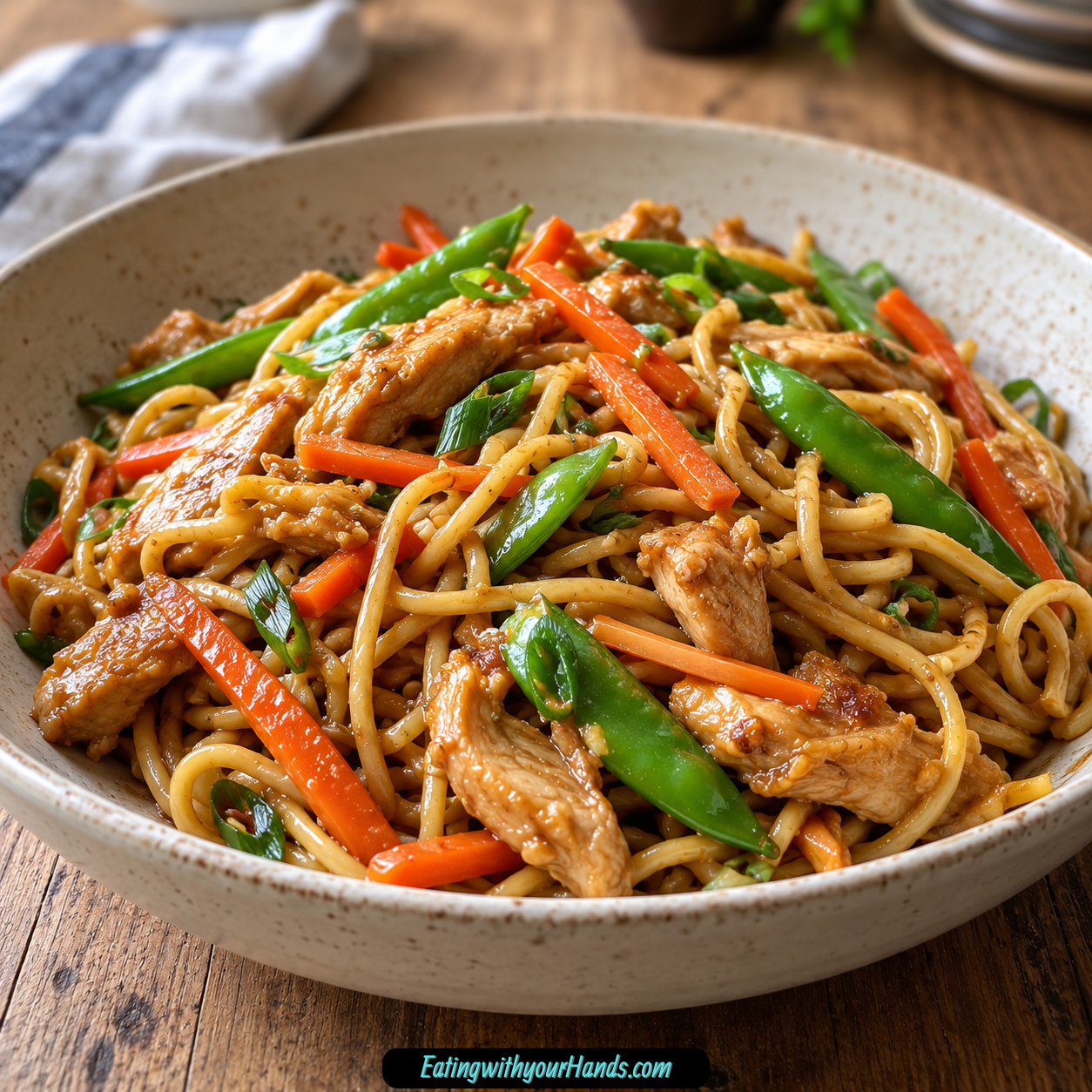
Some evenings, the only thing I want from dinner is a bowl of something warm, savory, and satisfying enough to make the day’s exhaustion disappear for a little while. That’s when this Garlic Chicken Lo Mein Recipe becomes exactly the kind of meal I need, bringing together tender chicken, silky noodles, colorful vegetables, and an incredibly flavorful garlic sauce in just 30 minutes.
There is something wonderfully comforting about noodles coated in a glossy sauce. Every strand carries a little sweetness, a little saltiness, and that unmistakable aroma of fresh garlic that makes the kitchen feel inviting long before dinner reaches the table.
I first started making garlic chicken lo mein on evenings when ordering takeout seemed easier than cooking. Eventually, I realized that with a few familiar ingredients and a hot skillet, I could create the same satisfying combination of noodles, chicken, and vegetables without waiting for delivery.
What makes this dish special is the way everything comes together so quickly. The chicken receives a short marinade, the vegetables stay crisp-tender, and the noodles are tossed with a sauce that coats them without feeling overly heavy.
Fresh garlic is the flavor I look forward to most. Four minced cloves become fragrant in the hot pan, creating the savory foundation that makes the finished lo mein difficult to resist.
The sauce brings its own balance of flavors. Soy sauce provides depth, oyster sauce adds savory richness, hoisin sauce contributes a gentle sweetness, and toasted sesame oil gives the noodles their distinctive finishing aroma.
The vegetables add more than color. Bell peppers bring freshness, carrots contribute sweetness, and snap peas provide a pleasant crunch that contrasts beautifully with the tender chicken.
By the time everything is tossed together, the noodles become glossy and the kitchen smells like a favorite takeout restaurant. It’s the kind of meal that makes everyone settle into their seats quickly, ready to enjoy that first warm forkful.
Table of Contents
- Why You’ll Love This Garlic Chicken Lo Mein
- What Makes Homemade Garlic Chicken Lo Mein So Good?
- Recipe Overview
- Ingredients for Garlic Chicken Lo Mein
- Choosing the Best Ingredients
- Equipment You’ll Need
- How to Make Garlic Chicken Lo Mein
- Step 1: Prepare and Slice the Chicken
- Step 2: Marinate the Chicken for 10 Minutes
- Step 3: Mix the Lo Mein Sauce
- Step 4: Prepare the Vegetables and Aromatics
- Step 5: Cook the Lo Mein Noodles
- Step 6: Heat the Wok and Cook the Chicken
- Step 7: Remove the Chicken and Cook the Garlic
- Step 8: Stir-Fry the Vegetables
- Step 9: Return the Chicken and Add the Noodles
- Step 10: Add the Sauce and Finish the Lo Mein
- Tips for the Best Garlic Chicken Lo Mein
- Delicious Garlic Chicken Lo Mein Variations
- Using Frozen Vegetables
- How to Make Gluten-Free Garlic Chicken Lo Mein
- How to Reduce Sodium
- What to Serve With Garlic Chicken Lo Mein
- How to Store Garlic Chicken Lo Mein
- Can You Freeze Garlic Chicken Lo Mein?
- The Best Way to Reheat Garlic Chicken Lo Mein
- Common Garlic Chicken Lo Mein Problems
- Frequently Asked Questions
- Nutritional Information
- Why This Recipe Has Become a Weeknight Favorite
- Final Thoughts
- Irresistible Garlic Chicken Lo Mein Recipe
Why You’ll Love This Garlic Chicken Lo Mein
A dependable noodle recipe needs to offer more than convenience. It should have enough flavor and texture to feel like a complete dinner rather than a rushed combination of ingredients.
- Ready in 30 minutes: The chicken marinates briefly while the other ingredients are prepared.
- Bold garlic flavor: Four fresh garlic cloves bring a wonderful aroma to the stir-fry.
- Tender, juicy chicken: A simple soy sauce, cornstarch, and sesame oil marinade helps create a pleasant texture.
- Colorful vegetables: Bell peppers, shredded carrots, and snap peas remain crisp-tender.
- Glossy, savory sauce: Soy sauce, oyster sauce, hoisin sauce, brown sugar, chicken broth, and toasted sesame oil coat the noodles.
- Flexible ingredients: Chicken, tofu, mushrooms, broccoli, and several noodle options offer easy variations.
- Convenient leftovers: Refrigerated portions can be enjoyed again, and the dish can also be frozen.
One of my favorite things about this recipe is how naturally it fits into a busy evening. Once the chicken, vegetables, and sauce are prepared, everything moves through the skillet quickly.
What Makes Homemade Garlic Chicken Lo Mein So Good?
The secret is not one complicated ingredient or an elaborate technique. It is the combination of a quick chicken marinade, fresh garlic, carefully cooked vegetables, and a sauce that brings everything together.
The chicken is sliced thinly against the grain so it can cook quickly. A short marinade with soy sauce, cornstarch, and sesame oil helps the pieces remain tender and flavorful.
The vegetables are added after the chicken has been browned and removed from the pan. This allows them to cook over medium-high heat without being crowded by the meat.
Garlic and optional fresh ginger go into the skillet just before the vegetables. Their fragrance develops quickly, creating a savory base for the entire dish.
The noodles are cooked separately until al dente, then drained before being added to the skillet. Tossing them with the sauce at the end ensures that the strands become evenly coated rather than overcooked.
This sequence creates the balance I want in lo mein. The chicken is tender, the vegetables still have texture, and the noodles remain pleasantly silky.
Recipe Overview
| Detail | Information |
|---|---|
| Recipe | Garlic Chicken Lo Mein Recipe You’ll Crave Daily |
| Total Time | Approximately 30 minutes |
| Chicken Marinade | 10 minutes |
| Chicken Cooking | Approximately 2 minutes per side |
| Garlic Cooking | Approximately 30 seconds |
| Vegetable Stir-Fry | 2–3 minutes |
| Final Noodle Toss | Approximately 1 minute |
| Noodle Cooking | According to package directions, until al dente |
| Serving Size for Nutrition | Approximately 1½ cups |
| Calories | Approximately 350 per serving |
| Protein | Approximately 25g per serving |
The cooking process moves quickly once the skillet becomes hot. Preparing all the ingredients in advance is one of the easiest ways to make the recipe feel effortless.
This is especially important with stir-frying because the garlic, vegetables, and sauce are added within a short period. Having everything ready keeps you focused on cooking rather than searching for ingredients.
Ingredients for Garlic Chicken Lo Mein
For the Chicken
- 1 pound boneless, skinless chicken breasts or thighs, thinly sliced against the grain
For the Chicken Marinade
- 1 tablespoon soy sauce
- 1 teaspoon cornstarch
- 1 teaspoon sesame oil
For the Lo Mein Sauce
- 3 tablespoons soy sauce
- 1 tablespoon oyster sauce
- 1 tablespoon hoisin sauce
- 1 teaspoon brown sugar
- ¼ cup chicken broth
- 1 teaspoon toasted sesame oil
For the Noodles and Vegetables
- 8 ounces lo mein noodles, or spaghetti if needed
- 4 cloves fresh garlic, minced
- 1 cup bell peppers, sliced
- 1 cup carrots, shredded
- 1 cup snap peas
- 3 green onions, sliced
For Stir-Frying
- 2 tablespoons vegetable oil
- 1 teaspoon freshly grated ginger, optional
The ingredients are organized according to when they enter the cooking process. Keeping the marinade and finishing sauce separate is especially important because they serve different purposes.
Choosing the Best Ingredients
Chicken Breast or Chicken Thighs
Both boneless, skinless chicken breasts and thighs work beautifully in this recipe. Chicken breast offers a leaner texture, while thighs bring a richer, naturally tender bite.
Whichever you choose, slice the meat thinly against the grain. Smaller, evenly sized pieces cook quickly and mix naturally with the noodles.
The short marinade adds flavor before the chicken enters the skillet. It also makes the final dish feel more cohesive because the meat is seasoned independently of the sauce.
Fresh Garlic
Four cloves of fresh garlic are at the heart of this recipe. Their aroma becomes especially noticeable when they hit the warm oil after the chicken has been cooked.
I prefer freshly minced cloves rather than relying on prepared jarred garlic. Fresh garlic gives the finished noodles the bold fragrance that makes this dish so memorable.
Because minced garlic cooks quickly, it needs only about 30 seconds in the skillet. Allowing it to burn would change the flavor, so keep the remaining ingredients close at hand.
Lo Mein Noodles
Eight ounces of lo mein noodles create the traditional noodle base. They are cooked until al dente before being tossed with chicken, vegetables, and sauce.
Spaghetti is a practical alternative when lo mein noodles are unavailable. Udon noodles can also be used for a different texture.
The most important detail is avoiding overcooked noodles. They should be tender enough to eat but still firm enough to handle the final stir-frying stage.
Bell Peppers, Carrots, and Snap Peas
The combination of bell peppers, shredded carrots, and snap peas gives this dish its color and freshness. Each vegetable brings a slightly different texture, making the finished noodles more interesting.
Bell peppers offer a crisp bite, carrots contribute gentle sweetness, and snap peas provide a fresh crunch. Together, they balance the softness of the noodles and chicken.
If snap peas are unavailable, broccoli is an easy alternative. This flexibility makes the recipe convenient when using vegetables already in the refrigerator.
Soy Sauce, Oyster Sauce, and Hoisin Sauce
These three sauces create the savory foundation of the lo mein. Soy sauce brings saltiness, oyster sauce contributes deeper savory flavor, and hoisin sauce adds a touch of sweetness.
They work together rather than competing with one another. The brown sugar, broth, and toasted sesame oil help turn them into a balanced coating for the noodles.
Toasted Sesame Oil
Toasted sesame oil adds a distinctive aroma to the finishing sauce. The recipe uses 1 teaspoon in the sauce, while the chicken marinade includes a separate teaspoon of sesame oil.
Keeping these amounts distinct helps preserve the intended seasoning. Each contributes flavor at a different stage of the recipe.
Equipment You’ll Need
A wok or large skillet is the main cooking vessel for garlic chicken lo mein. It should be large enough to hold the chicken, vegetables, and noodles during the final toss.
- Wok or large skillet
- Pot for boiling noodles
- Mixing bowl for chicken marinade
- Small bowl for sauce
- Whisk
- Colander
- Knife and cutting board
- Tongs or large spoon
- Measuring cups and spoons
A wok is especially convenient because the ingredients can be stirred and tossed efficiently. However, a large skillet works well as long as the ingredients have enough room to cook.
The noodle pot and colander are used before the final skillet stage. Draining the noodles thoroughly helps the sauce coat them instead of becoming diluted.
How to Make Garlic Chicken Lo Mein
The process is easier when everything is prepared before heating the pan. Because several stages take only a minute or two, organizing the ingredients helps maintain the proper texture of the chicken, vegetables, and noodles.
Step 1: Prepare and Slice the Chicken
Begin with 1 pound boneless, skinless chicken breast or thigh meat. Slice it thinly against the grain, keeping the pieces as consistent in size as possible.
Thin slices cook quickly and distribute evenly throughout the noodles. Place the prepared chicken into a mixing bowl.
Step 2: Marinate the Chicken for 10 Minutes
Add 1 tablespoon soy sauce, 1 teaspoon cornstarch, and 1 teaspoon sesame oil to the sliced chicken. Toss gently until every piece is evenly coated.
Let the mixture rest for approximately 10 minutes. This gives the chicken time to absorb the seasoning while you prepare the other components.
Step 3: Mix the Lo Mein Sauce
In a separate bowl, combine 3 tablespoons soy sauce, 1 tablespoon oyster sauce, 1 tablespoon hoisin sauce, 1 teaspoon brown sugar, ¼ cup chicken broth, and 1 teaspoon toasted sesame oil. Whisk until the sugar is incorporated and the mixture looks uniform.
Set the prepared sauce aside near the stove. It will be added during the final stage when the chicken, vegetables, and noodles are ready.
Step 4: Prepare the Vegetables and Aromatics
Mince 4 fresh garlic cloves, slice 1 cup bell peppers, shred 1 cup carrots, and prepare 1 cup snap peas. Slice 3 green onions and reserve them for finishing.
If using ginger, grate 1 teaspoon fresh ginger and keep it with the garlic. Having these ingredients ready prevents delays once the stir-frying begins.
Step 5: Cook the Lo Mein Noodles
Bring a pot of water to a boil and cook 8 ounces lo mein noodles according to the package directions until al dente. Spaghetti or udon noodles may be used when preferred.
Drain the noodles thoroughly and rinse them with cold water to stop the cooking process. Shake away excess moisture so the sauce will cling to the strands later.
Step 6: Heat the Wok and Cook the Chicken
Place a wok or large skillet over medium-high heat and add the measured 2 tablespoons vegetable oil for stir-frying. Allow the oil to become shimmering hot before adding the chicken.
Cook the marinated chicken in batches if necessary, giving the pieces room to brown. Sear for approximately 2 minutes per side, continuing as needed until the chicken is cooked through.
Step 7: Remove the Chicken and Cook the Garlic
Transfer the cooked chicken to a plate and set it aside. Keep the skillet over medium-high heat for the next stage.
Add the minced fresh garlic and optional grated ginger to the pan. Stir for approximately 30 seconds, just until the mixture becomes fragrant.
Step 8: Stir-Fry the Vegetables
Add the sliced bell peppers, shredded carrots, and snap peas to the fragrant garlic mixture. Stir-fry over medium-high heat for approximately 2–3 minutes.
The vegetables should become vibrant and crisp-tender rather than soft and limp. Keep them moving in the skillet so they cook evenly.
Step 9: Return the Chicken and Add the Noodles
Return the cooked chicken to the pan with the vegetables. Add the drained noodles and gently separate any strands that have become tangled.
Toss the ingredients together so the chicken and vegetables are distributed throughout the noodles. Work carefully to avoid breaking the noodles unnecessarily.
Step 10: Add the Sauce and Finish the Lo Mein
Pour the prepared lo mein sauce evenly over the noodles, chicken, and vegetables. Toss continuously for approximately 1 minute until the strands look glossy and everything is thoroughly coated and heated through.
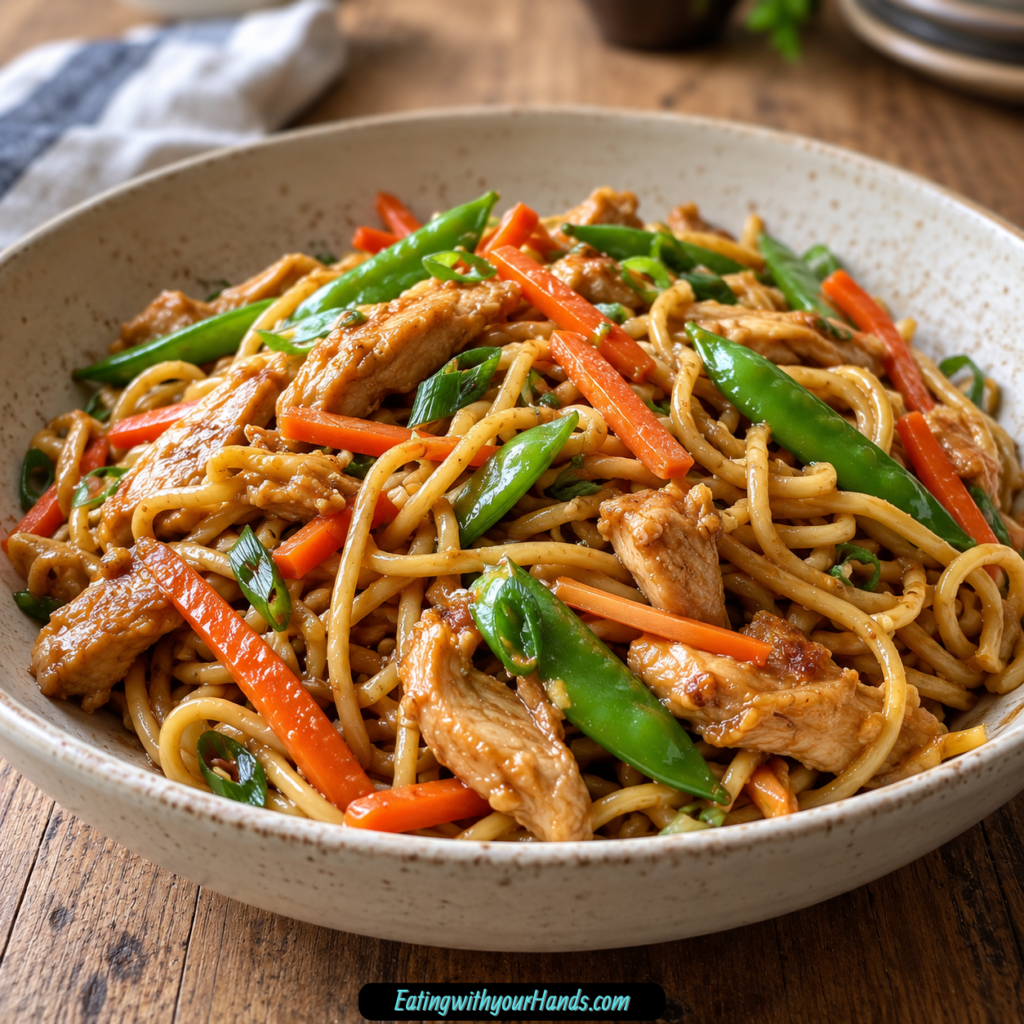
Finish with the sliced green onions and serve immediately. The best texture comes while the noodles are warm, the chicken is tender, and the vegetables still have a little crunch.
Tips for the Best Garlic Chicken Lo Mein
Use Fresh Garlic
Freshly minced garlic creates the bold aroma that defines this dish. Prepared garlic from a jar may be convenient, but it does not provide quite the same fresh character.
Keep the garlic cooking time short. Approximately 30 seconds is enough to release its fragrance before the vegetables are added.
Maintain Medium-High Heat
The vegetables need enough heat to remain crisp-tender rather than steaming slowly. Medium-high heat is ideal for developing the quick stir-fried texture associated with lo mein.
Avoid allowing the pan to become overcrowded, particularly while cooking the chicken. Working in batches helps the meat develop a lightly browned surface.
Drain the Noodles Thoroughly
Water clinging to the noodles can dilute the sauce and make the finished dish less flavorful. After draining and rinsing, shake off as much excess water as practical.
This allows the sauce to coat the noodles properly. The result should be glossy rather than watery.
Prepare Everything Before Cooking
Stir-frying leaves little time for measuring sauces or chopping vegetables once the heat is on. Having the ingredients ready makes the process smoother.
The chicken, sauce, vegetables, and noodles should all be prepared before the final stir-fry begins. This helps prevent overcooking while searching for missing ingredients.
Adjust the Sauce to Your Taste
Soy sauce controls much of the saltiness, while hoisin and brown sugar contribute sweetness. Taste the sauce and adjust according to your preference.
For a spicier finish, add chili oil. If you enjoy especially saucy noodles, doubling the sauce is another option.
Delicious Garlic Chicken Lo Mein Variations
Garlic Tofu Lo Mein
Tofu works well as an alternative to chicken. Press it thoroughly, cut it into cubes, and marinate it before cooking.
The garlic sauce provides plenty of flavor, while the tofu creates a different texture. This variation can be adjusted further by using suitable vegetarian sauces and broth.
Vegetable Lo Mein With Mushrooms
For a vegetable-focused version, increase the amount of vegetables and add mushrooms. Their savory character works beautifully with garlic, soy sauce, and noodles.
Bell peppers, carrots, snap peas, and mushrooms create a colorful combination. Use sauces that suit your dietary preferences when preparing a fully vegetarian version.
Spicy Garlic Chicken Lo Mein
Add chili crisp or sriracha when you want more heat. Chili flakes and chili oil are also suitable options for adjusting the spice level.
The savory garlic sauce works particularly well with spicy additions. Begin with a small amount and increase according to your preference.
Broccoli Chicken Lo Mein
Broccoli can replace snap peas when needed. It brings a heartier vegetable texture that complements the tender chicken and silky noodles.
Frozen broccoli can also be used with a slight adjustment to cooking time. Stir-frying it for an additional minute helps accommodate the frozen ingredient.
Spaghetti or Udon Lo Mein
Spaghetti is a convenient substitute when traditional lo mein noodles are unavailable. Udon noodles offer another satisfying option with a different texture.
Cook the chosen noodles until al dente before adding them to the skillet. The garlic sauce and vegetable mixture remain the same.
Using Frozen Vegetables
Frozen vegetables can make this recipe even more convenient on busy evenings. They are particularly useful when fresh snap peas or broccoli are not available.
For many frozen vegetable mixtures, thawing and patting them dry helps remove excess moisture. This prevents the noodles from becoming watery during stir-frying.
Frozen peas or broccoli can also be stir-fried directly from the freezer. Allow approximately 1 additional minute of cooking when using this approach.
The important goal is maintaining the crisp-tender character of the vegetables. Too much moisture can soften them and dilute the sauce.
How to Make Gluten-Free Garlic Chicken Lo Mein
Rice noodles can replace traditional lo mein noodles when avoiding gluten. Tamari is another option in place of regular soy sauce.
The garlic chicken flavor can remain bold and savory with these substitutions. However, oyster sauce and hoisin sauce should also be checked or replaced with suitable gluten-free products.
The same general cooking method applies once the ingredients are appropriate for your needs. Cook the rice noodles according to their package instructions and avoid overcooking before the final toss.
How to Reduce Sodium
Soy sauce contributes much of the saltiness in garlic chicken lo mein. One option is to reduce the amount used by half or choose a low-sodium version.
Additional fresh garlic helps maintain a flavorful profile when reducing soy sauce. A squeeze of lime can also add brightness.
Because oyster sauce and hoisin sauce contribute seasoning as well, the finished flavor may vary depending on the products chosen. Taste the sauce before combining everything.
What to Serve With Garlic Chicken Lo Mein
Crispy Egg Rolls
Crispy egg rolls are a classic side when you want a takeout-inspired dinner at home. Their crunchy exterior contrasts nicely with the soft noodles.
Serve them alongside the lo mein rather than mixing them into the skillet. This keeps the different textures distinct.
Steamed Dumplings
Steamed dumplings are another satisfying accompaniment. They make the meal feel like a full restaurant-style noodle dinner.
A little extra soy sauce can be served for dipping. The combination is especially popular with anyone who enjoys savory noodle dishes.
Extra Green Onions and Sauce
A final sprinkle of sliced green onions adds freshness and color. You can also serve additional soy sauce or chili oil on the side.
These simple finishing touches let everyone adjust the flavor of their own portion. They also make the meal feel more inviting at the table.
How to Store Garlic Chicken Lo Mein
Allow leftover lo mein to cool slightly before transferring it to an airtight container. Refrigerate for 3–4 days.
The noodles absorb more flavor as they sit, which can make leftovers especially enjoyable the following day. However, refrigeration can also make the noodles firmer.
Keep the container tightly sealed so the noodles do not dry out unnecessarily. Reheat only the portion you plan to eat.
Can You Freeze Garlic Chicken Lo Mein?
Yes, garlic chicken lo mein can be frozen for up to 2 months. Store the cooled portions in suitable freezer-safe containers.
Freezing provides a convenient option when preparing more food than needed for one meal. The noodle texture may differ slightly after thawing and reheating.
For the best eating experience, reheat gently in a hot skillet with a little water. This helps loosen the noodles and refresh the sauce.
The Best Way to Reheat Garlic Chicken Lo Mein
A hot skillet is the preferred reheating method for this dish. Add a small splash of water to the pan before adding the leftover noodles.
Stir gently until the noodles, chicken, and vegetables are heated through. The added moisture helps loosen the sauce without making the dish overly wet.
Microwaving can leave noodles gummy, so skillet reheating is preferable when possible. The pan method also helps restore more of the original stir-fried texture.
Common Garlic Chicken Lo Mein Problems
Why Are My Noodles Sticky?
Noodles can become sticky when they are overcooked or left sitting after draining. Cooking them until al dente and rinsing briefly with cold water helps stop the cooking process.
Shake off excess water before adding them to the skillet. The sauce should coat the noodles rather than mix with leftover cooking water.
Why Are My Vegetables Soggy?
The pan may not have been hot enough, or the vegetables may have contained excess moisture. Medium-high heat helps them cook quickly while preserving some crunch.
Frozen vegetables should be dried when necessary. Avoid cooking them longer than needed to reach a crisp-tender texture.
Why Is the Chicken Dry?
Chicken that is sliced unevenly or cooked too long can lose tenderness. Thin slices and a short marinade help produce a better texture.
Cook the chicken in batches and remove it once done. Return it to the skillet only for the brief final toss.
Why Does My Sauce Taste Too Salty?
Soy sauce and oyster sauce both contribute saltiness. If the mixture tastes stronger than preferred, reduce the soy sauce or use a lower-sodium alternative in future batches.
Extra garlic and a squeeze of lime can help build flavor when less soy sauce is used. Adjust the sauce according to your own preference.
Why Doesn’t the Sauce Coat the Noodles?
Excess water on the noodles can thin the sauce. Drain them thoroughly before returning them to the skillet.
Toss everything together over the heat for approximately 1 minute. This helps the sauce spread evenly and create the desired glossy finish.
Frequently Asked Questions
Can I Use Frozen Vegetables?
Yes, frozen vegetables can be used in garlic chicken lo mein. Thawing and patting them dry first helps prevent excess moisture from entering the pan.
Frozen peas or broccoli may also be added directly from the freezer. Allow approximately 1 extra minute of stir-frying.
Can I Make Garlic Chicken Lo Mein Gluten-Free?
Use rice noodles instead of traditional lo mein noodles and tamari instead of regular soy sauce. Also choose gluten-free versions of oyster sauce and hoisin sauce where needed.
This allows the dish to retain its garlic-forward flavor. The exact texture may differ depending on the noodles selected.
How Can I Lower the Sodium?
Reduce the soy sauce by half or choose a low-sodium variety. Extra fresh garlic and a squeeze of lime can help maintain flavor.
The saltiness of the remaining sauces also matters. Taste before adding additional seasonings.
Can I Use Chicken Thighs Instead of Breasts?
Yes, boneless, skinless chicken thighs work beautifully. Slice them thinly against the grain and marinate as directed.
Chicken thighs offer a slightly richer texture. The stir-frying method remains the same.
What Can I Use Instead of Lo Mein Noodles?
Spaghetti or udon noodles are convenient substitutes. Cook them according to package instructions until al dente.
Drain thoroughly before adding them to the skillet. The sauce and other ingredients can remain unchanged.
Can I Make This Dish Spicier?
Yes, chili flakes, chili crisp, sriracha, or chili oil can be added. Each creates a slightly different type of heat.
Start with a small amount and adjust gradually. The garlic sauce provides a flavorful base for spicy variations.
How Long Does Garlic Chicken Lo Mein Last?
Refrigerated leftovers keep for approximately 3–4 days in an airtight container. The dish can also be frozen for up to 2 months.
Reheat in a skillet with a small splash of water. Stir gently until everything is heated through.
Nutritional Information
The following values are estimates for one serving of approximately 1½ cups. Exact nutrition will vary depending on ingredient brands, noodle choices, and any substitutions.
| Nutrient | Estimated Amount |
|---|---|
| Calories | 350 |
| Protein | 25g |
| Carbohydrates | 45g |
| Fat | 10g |
Chicken contributes much of the protein, while noodles provide the main carbohydrate component. The sauce, vegetables, and cooking oil contribute to the remaining nutritional profile.
Using tofu, additional vegetables, rice noodles, or alternative sauces can change the values. Doubling the sauce or increasing the portion size will also affect the totals.
These figures are best treated as a general guide rather than exact measurements. For more precise tracking, calculate the recipe using the specific ingredients and portions prepared.
Why This Recipe Has Become a Weeknight Favorite
One of the greatest pleasures of homemade cooking is discovering a meal that feels both exciting and reliable. Garlic Chicken Lo Mein has become that kind of dish for me because it combines familiar ingredients with a cooking process that fits into a busy evening.
The flavors are bold enough to satisfy a craving for takeout, but the recipe remains flexible. Chicken, tofu, different vegetables, and alternative noodles can all fit into the same basic method.
I especially love the moment when the sauce meets the noodles. The strands become glossy, the garlic aroma rises from the skillet, and the colorful vegetables make the dish look as inviting as it tastes.
There is no need for elaborate plating or complicated sides. A warm bowl of tender chicken, crisp vegetables, and savory noodles is often exactly what dinner should be.
The leftovers are another reason I return to the recipe. Having a container of flavorful noodles ready for the next day makes a busy schedule feel a little easier.
Final Thoughts
Garlic Chicken Lo Mein Recipe brings together thinly sliced chicken, fresh garlic, colorful vegetables, tender noodles, and a savory sauce made with soy sauce, oyster sauce, hoisin sauce, brown sugar, chicken broth, and toasted sesame oil. A quick marinade and a few minutes of stir-frying create a satisfying homemade noodle dinner in approximately 30 minutes.
The recipe is easy to adapt with tofu, broccoli, mushrooms, spaghetti, udon noodles, rice noodles, and spicy additions. It also stores conveniently, making it useful for weeknight dinners and planned leftovers.
For me, the best part is gathering everyone around the table while the noodles are still warm and fragrant. That combination of juicy chicken, crisp-tender vegetables, silky noodles, and bold garlic flavor is exactly what makes this dish worth preparing again.
Irresistible Garlic Chicken Lo Mein Recipe
Tender chicken, perfectly coated noodles, crisp vegetables, and plenty of fragrant garlic make this Garlic Chicken Lo Mein a satisfying choice for a busy weeknight. Tossed in a savory blend of soy sauce, oyster sauce, hoisin, and toasted sesame oil, this easy Chinese-style noodle dish delivers rich flavor and colorful texture in just 30 minutes.
Recipe Details
- Prep Time: 15 minutes
- Cook Time: 15 minutes
- Total Time: 30 minutes
- Course: Main Course
- Cuisine: Chinese
- Servings: 4 servings
- Calories: 350 kcal
Ingredients
For the Chicken and Marinade
- 1 teaspoon sesame oil
- 1 teaspoon cornstarch
- 1 tablespoon soy sauce
- 1 lb (450g) boneless, skinless chicken breast or thighs, thinly sliced
For the Lo Mein Sauce
- 1 teaspoon toasted sesame oil
- ¼ cup chicken broth or water
- 1 teaspoon brown sugar
- 1 tablespoon hoisin sauce
- 1 tablespoon oyster sauce
- 3 tablespoons soy sauce, use low sodium if preferred
For the Noodles and Vegetables
- 3 green onions, sliced (reserve some for garnish)
- 1 cup snap peas or snow peas
- 1 cup shredded carrots
- 1 cup sliced bell peppers, red, yellow, or green
- 4 cloves garlic, minced
- 2 tablespoons vegetable oil or peanut oil
- 8 oz (225g) lo mein noodles or spaghetti
- Optional: 1 teaspoon fresh ginger, grated
Instructions
Step 1: Marinate the Chicken
Place the thinly sliced chicken in a bowl and add 1 tablespoon soy sauce, cornstarch, and sesame oil.
Mix thoroughly until the chicken pieces are evenly coated. Allow the chicken to marinate for 10 minutes while preparing the remaining ingredients.
The cornstarch helps create a light coating on the chicken, while the soy sauce and sesame oil give it a savory foundation.
Step 2: Prepare the Lo Mein Sauce
In a separate bowl, combine the 3 tablespoons soy sauce, oyster sauce, hoisin sauce, brown sugar, chicken broth or water, and toasted sesame oil.
Whisk until the ingredients are thoroughly blended and the brown sugar is incorporated.
Set the sauce aside so it is ready to add once the chicken, noodles, and vegetables are cooked.
Step 3: Cook the Noodles
Prepare the lo mein noodles according to the package instructions. If preferred, use spaghetti instead.
Once cooked, drain the noodles and set them aside.
Keep the noodles ready for the final stir-fry, when they will be combined with the savory sauce and cooked ingredients.
Step 4: Brown the Chicken
Heat the vegetable oil or peanut oil in a large pan over medium-high heat.
Add the marinated chicken and cook until browned and cooked through. Stir the pieces as needed so they cook evenly.
Once the chicken is ready, remove it from the pan and set it aside temporarily.
Step 5: Sauté the Garlic and Optional Ginger
Using the same pan, add the minced garlic and grated fresh ginger if using.
Stir for 30 seconds, allowing the aromatics to become fragrant.
Fresh garlic is especially important for giving this lo mein its signature savory flavor. Stir continuously during this short cooking stage.
Step 6: Stir-Fry the Vegetables
Add the sliced bell peppers, shredded carrots, and snap peas or snow peas to the pan.
Cook for 2–3 minutes, stirring frequently, until the vegetables become crisp-tender.
The vegetables should soften slightly while retaining some of their natural crunch and colorful appearance.
Step 7: Combine the Chicken, Noodles, and Sauce
Return the cooked chicken to the pan with the vegetables.
Add the drained noodles, followed by the prepared lo mein sauce. Toss everything together until the chicken, noodles, and vegetables are evenly coated.
Continue combining the ingredients so the sauce is distributed throughout the dish and the noodles are warmed through.
Step 8: Garnish and Serve
Finish the lo mein with sliced green onions, including the portion reserved for garnish.
Divide into 4 servings and serve warm.
The finished dish should feature tender seasoned chicken, flavorful noodles, crisp vegetables, and plenty of aromatic garlic.
Notes
- Fresh garlic: Use fresh garlic for the best flavor.
- Soy sauce adjustment: Adjust the soy sauce to taste when using a low-sodium variety.
- Vegetable substitutions: Replace the listed vegetables with alternatives according to your preferences.
- Spicy variation: Add chili flakes or sriracha if you want extra heat.
Serving Suggestions
Serve this Irresistible Garlic Chicken Lo Mein immediately after tossing the noodles with the chicken, vegetables, and sauce. The combination of tender chicken, crisp-tender vegetables, and savory noodles creates a balanced main dish that feels hearty without requiring a complicated preparation.
With four servings and a total preparation and cooking time of 30 minutes, this recipe works particularly well for quick family dinners or weeknight meals.
For the classic combination, use lo mein noodles with bell peppers, carrots, snap peas, and green onions. The colorful vegetables provide contrasting textures against the tender chicken and sauce-coated noodles.
If you prefer a different noodle option, spaghetti can replace the lo mein noodles. Follow the package directions for cooking, then combine them with the remaining ingredients using the same method.
To introduce a little more heat, add chili flakes or sriracha as suggested in the notes. You can also adjust the vegetables according to your preferences while keeping the garlic-forward sauce as the central flavor.
Finish with the reserved sliced green onions just before serving to bring a fresh contrast to the warm noodles and rich, savory sauce.
Storage
How to Store
The recipe does not provide a specific storage method or storage duration, so no exact number of days is added here.
Chicken Preparation Tip
Use 1 lb (450g) boneless, skinless chicken breast or thighs, sliced thinly.
Marinate the chicken with 1 tablespoon soy sauce, 1 teaspoon cornstarch, and 1 teaspoon sesame oil for 10 minutes before cooking.
Sauce Tip
Combine 3 tablespoons soy sauce, 1 tablespoon oyster sauce, 1 tablespoon hoisin sauce, 1 teaspoon brown sugar, ¼ cup chicken broth or water, and 1 teaspoon toasted sesame oil.
Whisk the sauce thoroughly before adding it to the noodles and vegetables.
Soy Sauce Tip
Low-sodium soy sauce can be used if preferred. Adjust the seasoning to taste when choosing this option.
Noodle Tip
Use 8 oz (225g) lo mein noodles or spaghetti. Cook according to package instructions and drain before adding to the skillet.
Garlic and Ginger Tip
Use 4 cloves minced garlic for the main aromatic flavor. Add 1 teaspoon freshly grated ginger if desired.
Stir the garlic and optional ginger for 30 seconds before adding the vegetables.
Vegetable Tip
Use 1 cup sliced bell peppers, 1 cup shredded carrots, and 1 cup snap peas or snow peas.
Cook the vegetables for 2–3 minutes until crisp-tender. Other vegetables can be substituted according to personal preference.
Spice Tip
For a spicier version, add chili flakes or sriracha. Adjust the amount to suit your preferred level of heat.
Final Mixing Tip
Return the cooked chicken to the pan before adding the noodles and sauce. Toss everything together until the ingredients are evenly coated.
Garnish Tip
Reserve some of the sliced green onions for the final garnish. Sprinkle them over the finished lo mein immediately before serving.

Fernando is the creator and writer behind the food blog Eating with your Hands. Living and working in cities like Paris, Barcelona, and Berlin, and being married to a Canadian foodie, has given Fernando a passion and interest in food and inspired him to run EWYH.