
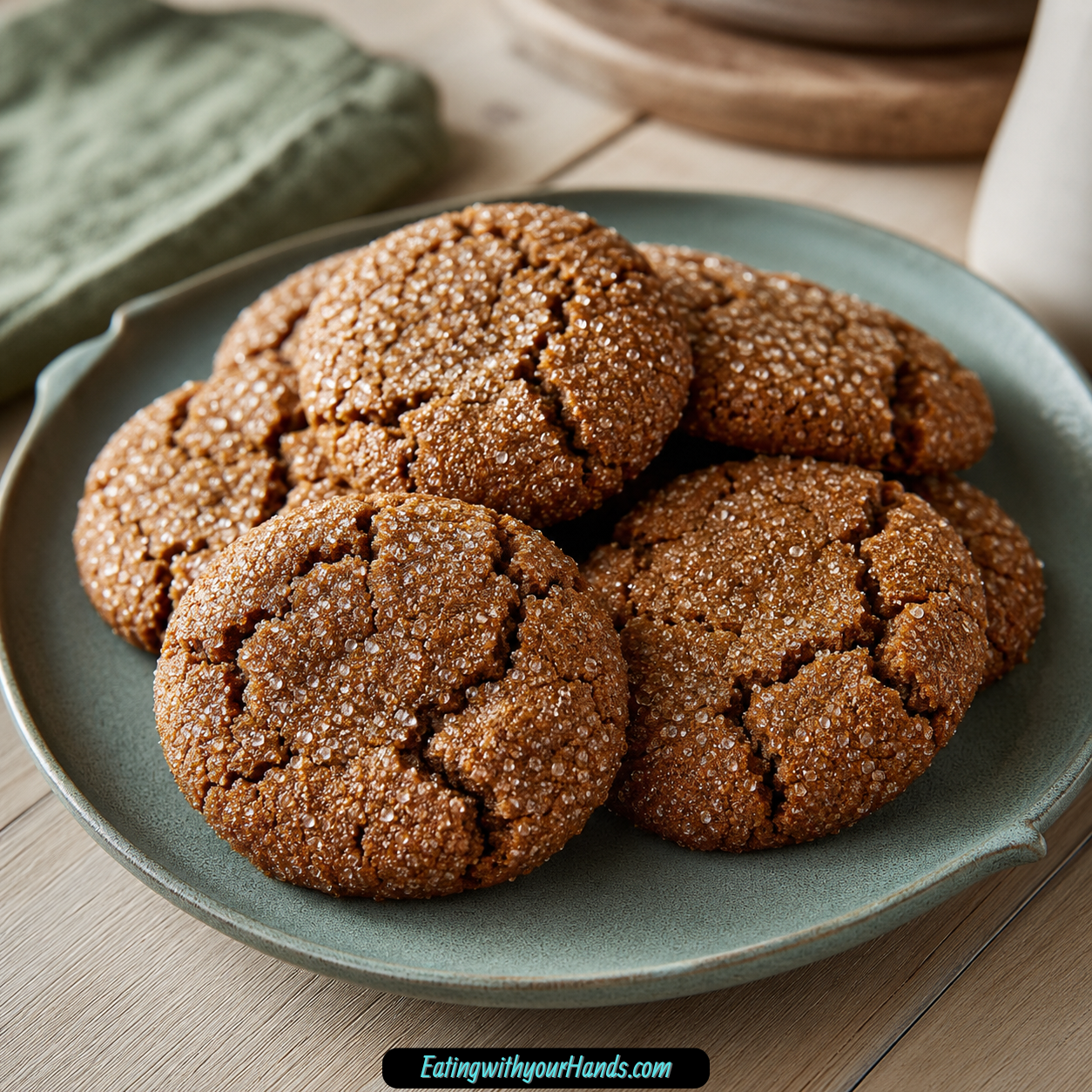
Ginger Molasses Christmas Cookies are the kind of cookies that make a kitchen feel like the holidays before the first tray even comes out of the oven. The smell of ginger, cinnamon, cloves, nutmeg, and molasses fills the air in a way that feels warm, familiar, and deeply comforting.
These cookies carry that old-fashioned Christmas feeling so many of us love. They are soft in the center, lightly crisp at the edges, rolled in sugar, and full of warm spice.
I always think of cookies like these as the kind that belong in a tin lined with wax paper. They feel homemade, nostalgic, and generous, like something baked slowly on a quiet December afternoon while the house fills with the scent of molasses and spice.
The flavor is bold but balanced. Ginger gives the cookies their signature warmth, cinnamon rounds it out, cloves add depth, nutmeg gives a soft background note, and molasses brings that deep caramel-like sweetness.
The texture is just as important as the flavor. These cookies bake up soft and chewy when pulled from the oven at the right time, with edges that set gently and centers that stay tender.
They are perfect for cookie exchanges, holiday parties, edible gifts, cocoa nights, coffee breaks, or a simple Christmas baking tradition. One batch feels festive enough for a celebration and simple enough to make whenever the season calls for something cozy.
Table of Contents
- What Are Ginger Molasses Christmas Cookies?
- Why You’ll Love Ginger Molasses Christmas Cookies
- Recipe Details
- Ingredients You’ll Need
- A Closer Look at the Ingredients
- The Flavor Behind These Christmas Cookies
- Directions
- Step 1: Gather the Ingredients and Tools
- Step 2: Preheat the Oven
- Step 3: Prepare the Baking Sheets
- Step 4: Combine the Dry Ingredients
- Step 5: Cream the Butter and Sugar
- Step 6: Add the Egg
- Step 7: Add the Molasses
- Step 8: Add the Vanilla Extract
- Step 9: Add the Dry Ingredients Gradually
- Step 10: Check the Dough Texture
- Step 11: Chill the Dough If Needed
- Step 12: Prepare the Rolling Sugar
- Step 13: Scoop the Dough
- Step 14: Roll Into Balls
- Step 15: Coat in Granulated Sugar
- Step 16: Space the Cookies
- Step 17: Bake the Cookies
- Step 18: Add Extra Sugar for a More Defined Crackle
- Step 19: Cool on the Baking Sheet
- Step 20: Transfer to a Wire Rack
- Helpful Tips for the Best Ginger Molasses Christmas Cookies
- Common Mistakes
- Variations
- Serving Suggestions
- Storage Tips
- Freezing Instructions
- Make-Ahead Notes
- Frequently Asked Questions
- Final Thoughts
- Ginger Molasses Christmas Cookies
What Are Ginger Molasses Christmas Cookies?
Ginger Molasses Christmas Cookies are soft, chewy spice cookies made with flour, ginger, cinnamon, cloves, nutmeg, baking soda, butter, sugar, egg, molasses, and vanilla extract. The dough is rolled into balls, coated in granulated sugar, and baked until the edges are just set.
They are known for their warm spice flavor and deep molasses sweetness. The sugar coating gives the tops a pretty sparkle and a lightly crackly finish.
These cookies are especially popular during the Christmas season because their flavor feels festive without needing frosting or decoration. They look simple, but the aroma and taste make them feel special.
The best version has a tender center and a lightly crisp edge. That contrast comes from careful mixing, proper baking time, and not overbaking the cookies.
Why You’ll Love Ginger Molasses Christmas Cookies
These cookies are perfectly spiced. Ginger, cinnamon, cloves, and nutmeg create a warm holiday flavor that feels classic and comforting.
They have a soft, chewy texture. The centers stay tender while the edges set lightly.
They are easy to make. The dough uses simple pantry ingredients and straightforward steps.
They smell incredible while baking. The aroma of molasses and spice makes the whole kitchen feel festive.
They are make-ahead friendly. The dough can be chilled or frozen, which is helpful during busy holiday weeks.
They are loved by all ages. Kids, adults, and grandparents can all appreciate a soft, spiced Christmas cookie.
Recipe Details
- Recipe name: Ginger Molasses Christmas Cookies
- Recipe style: Soft and chewy holiday spice cookie
- Oven temperature: 350°F (175°C)
- Cookie dough portion: Tablespoon-sized portions
- Cookie coating: Additional granulated sugar
- Cookie spacing: About 2 inches apart
- Bake time: 10-12 minutes
- Doneness cue: Cookies spread slightly and edges are just set
- Cooling time on baking sheet: 5 minutes
- Texture: Soft, chewy center with lightly crisp edges
- Optional dough chill: 30 minutes if kitchen is warm
- Room temperature storage: Up to 1 week in an airtight container
- Freezer storage for baked cookies: Up to 3 months
- Freezer dough option: Roll dough balls, freeze on a tray, then bag
- Frozen dough baking adjustment: Add 1-2 minutes
- Fresh-baked softness tip: Microwave a cookie for 8-10 seconds before serving
- Molasses note: Use unsulphured molasses and avoid blackstrap molasses
- Optional stronger molasses flavor: Replace 2 tablespoons of the sugar with dark brown sugar
Ingredients You’ll Need
For the Cookies
- 3 cups all-purpose flour
- 1 tablespoon ground ginger
- 2 teaspoons ground cinnamon
- ½ teaspoon ground cloves
- ¼ teaspoon ground nutmeg
- 1 teaspoon baking soda
- ½ teaspoon salt
- ¾ cup unsalted butter, softened
- 1 cup granulated sugar
- 1 large egg
- ¼ cup molasses
- 1 teaspoon vanilla extract
- Additional granulated sugar, for rolling
A Closer Look at the Ingredients
All-purpose flour gives the cookies structure. Spoon and level the flour so the dough does not become too dense.
Ground ginger is the star spice. It gives the cookies their signature warmth and holiday bite.
Ground cinnamon softens and rounds out the ginger. It adds warmth without overpowering the cookie.
Ground cloves bring deep spice and a classic Christmas aroma. A small amount goes a long way.
Ground nutmeg completes the spice blend. It adds a gentle background flavor that makes the cookie taste more rounded.
Baking soda helps the cookies puff slightly and stay soft. It also helps create the right spread during baking.
Salt enhances the warm spices and balances the sweetness. Even in sweet cookies, salt matters.
Unsalted butter gives richness and tenderness. It should be softened so it creams smoothly with the sugar.
Granulated sugar sweetens the dough and gives the cookies structure. Additional sugar is used for rolling the dough balls before baking.
The egg binds the dough together and adds richness. It helps the cookies bake with a soft, cohesive texture.
Molasses gives the cookies their deep color, chewy texture, and caramel-like flavor. Unsulphured molasses is the best choice for a balanced taste.
Vanilla extract adds smoothness and warmth. It supports the molasses and spice flavors without taking over.
The Flavor Behind These Christmas Cookies
These cookies taste like the holidays because the spice blend is layered. Ginger leads the way, but cinnamon, cloves, and nutmeg make the flavor fuller and warmer.
Molasses is what gives the cookies their deep sweetness. It tastes richer than plain sugar and adds that cozy, old-fashioned flavor.
The butter keeps the cookies soft and rich. It also helps carry the spices through the dough.
The sugar coating on the outside adds sweetness and sparkle. It creates a light texture on the surface as the cookies bake.
The result is a cookie that feels simple but not plain. It is warm, chewy, fragrant, and perfect for Christmas baking.
Directions
Step 1: Gather the Ingredients and Tools
Start by gathering the flour, ground ginger, ground cinnamon, ground cloves, ground nutmeg, baking soda, salt, softened butter, granulated sugar, egg, molasses, vanilla extract, and additional granulated sugar for rolling. You will also need mixing bowls, a whisk, hand mixer or stand mixer, spatula, cookie scoop or spoon, baking sheets, parchment paper, and wire rack.
Having everything measured before you start makes the process easier. This is especially helpful during holiday baking, when multiple trays and ingredients can crowd the counter.
Make sure the butter is softened before mixing. It should press easily but should not be melted.
Step 2: Preheat the Oven
Preheat your oven to 350°F (175°C). A fully heated oven helps the cookies bake evenly.
Do not rush this part. If the oven is still warming when the cookies go in, the dough may spread differently.
Let the oven come to temperature while you prepare the dough. This keeps the recipe moving smoothly.
Step 3: Prepare the Baking Sheets
Line baking sheets with parchment paper. This helps prevent sticking and makes cleanup easier.
Parchment also helps the cookies bake more evenly on the bottom. It is especially helpful with sugar-coated dough.
Set the prepared pans aside. You will need them once the dough is rolled.
Step 4: Combine the Dry Ingredients
In a medium bowl, whisk together 3 cups all-purpose flour, 1 tablespoon ground ginger, 2 teaspoons ground cinnamon, ½ teaspoon ground cloves, ¼ teaspoon ground nutmeg, 1 teaspoon baking soda, and ½ teaspoon salt. Whisk until everything is evenly combined.
This step helps distribute the spices evenly through the dough. Nobody wants one cookie with too much clove and another with none.
The dry mixture should smell warm and fragrant even before baking. Set it aside while you make the butter mixture.
Step 5: Cream the Butter and Sugar
In a large mixing bowl, beat ¾ cup softened unsalted butter with 1 cup granulated sugar. Mix until light and fluffy.
This step helps create a soft cookie texture. Take your time and do not rush it.
The mixture should look creamy and slightly lighter in color. Scrape down the sides of the bowl as needed.
Step 6: Add the Egg
Add 1 large egg to the butter and sugar mixture. Beat until smooth.
The egg helps bind the dough and adds richness. It also helps the cookies hold together after baking.
Mix until the egg is fully incorporated. Avoid beating much longer than needed.
Step 7: Add the Molasses
Pour in ¼ cup molasses. Beat until the mixture becomes smooth and evenly colored.
The dough base will turn a beautiful deep caramel shade. The molasses aroma should become noticeable right away.
Use unsulphured molasses for the best flavor. Avoid blackstrap molasses because it is too bitter for this cookie.
Step 8: Add the Vanilla Extract
Add 1 teaspoon vanilla extract. Mix it into the wet ingredients until combined.
Vanilla makes the spice and molasses flavors feel smoother. It gives the cookies a warmer finish.
Scrape the bowl again if needed. This keeps the wet mixture even before the flour is added.
Step 9: Add the Dry Ingredients Gradually
Add the dry mixture to the wet ingredients in portions. Mix gently after each addition.
Gradual mixing helps the flour and spices blend evenly without overworking the dough. It also keeps the dry ingredients from spilling out of the bowl.
Stop mixing when the flour disappears. Overmixing can make the cookies less tender.
Step 10: Check the Dough Texture
The dough should be soft but not overly sticky. It should hold together when scooped.
If the dough feels too warm or too soft, chill it before shaping. A short chill can make rolling easier.
Do not add extra flour unless truly necessary. Too much flour can make the cookies dense.
Step 11: Chill the Dough If Needed
If your kitchen is warm, chill the dough for 30 minutes before baking. This helps prevent excessive spreading.
Chilled dough also enhances the chewy texture. It gives the butter time to firm slightly.
This step is optional if the dough is already easy to handle. Use it when the dough feels soft or loose.
Step 12: Prepare the Rolling Sugar
Pour additional granulated sugar into a shallow bowl. This will be used to coat each dough ball.
The sugar gives the cookies their sparkling tops. It also helps create a lightly crackly finish.
Keep the bowl near the baking sheets so shaping is easy. This makes the process faster.
Step 13: Scoop the Dough
Scoop tablespoon-sized portions of dough. Try to keep each scoop close in size.
A cookie scoop is helpful for uniform cookies. Even sizing helps the cookies bake at the same rate.
If using a spoon, gently shape each portion with your hands. The dough should roll smoothly.
Step 14: Roll Into Balls
Roll each tablespoon-sized portion into a ball. Work gently and avoid packing the dough too tightly.
A smooth dough ball gives the cookies a nicer shape. It also helps the sugar coating stick evenly.
If the dough begins to stick to your hands, pause and chill it briefly. Warm hands can soften the butter in the dough.
Step 15: Coat in Granulated Sugar
Roll each dough ball in granulated sugar until coated all over. Place the coated balls on the prepared baking sheets.
The sugar should cling to the outside of the dough. This creates sparkle and a light outer texture after baking.
Do not press the dough flat. The cookies will spread during baking.
Step 16: Space the Cookies
Arrange the dough balls about 2 inches apart on the baking sheets. This gives them room to spread.
Crowding the pan can cause cookies to run into each other. It can also affect airflow and baking.
Bake in batches if needed. It is better to give the cookies space.
Step 17: Bake the Cookies
Bake at 350°F for 10-12 minutes. The cookies should spread slightly, and the edges should be just set.
Do not overbake if you want a soft, chewy center. The cookies will continue to firm as they cool.
If you prefer crisp cookies, bake them 2-3 minutes longer until the edges turn a bit darker. This changes the texture from chewy to crisper.
Step 18: Add Extra Sugar for a More Defined Crackle
For a more defined crackle top, sprinkle a touch of sugar over the cookies right after baking. Do this while they are still warm.
The added sugar gives the surface a little extra sparkle. It also makes the tops look more festive.
This step is optional. The cookies are already rolled in sugar before baking.
Step 19: Cool on the Baking Sheet
Let the cookies rest on the baking sheet for 5 minutes. This helps them set.
They will be soft right out of the oven. Moving them immediately can cause them to break.
During this rest, the centers finish cooking gently. This is how they become soft and chewy instead of dry.
Step 20: Transfer to a Wire Rack
After 5 minutes, move the cookies to a wire rack. Let them cool completely if you plan to store them.
Cooling on a rack helps the texture settle. It also prevents the bottoms from steaming on the hot pan.
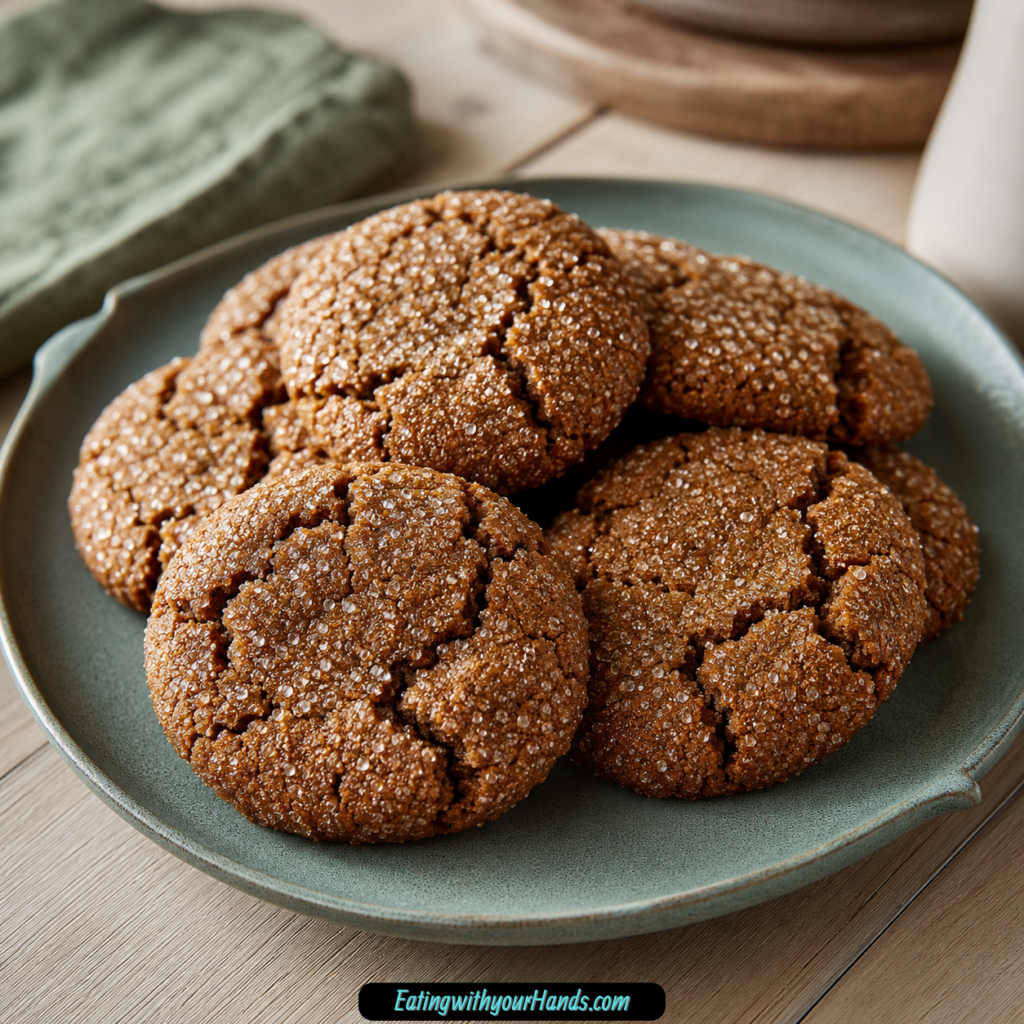
Once cooled, the cookies should be soft, chewy, warmly spiced, and ready for serving. The aroma alone will make them hard to resist.
Helpful Tips for the Best Ginger Molasses Christmas Cookies
Spoon and level the flour. Too much flour can make the cookies dense.
Use unsulphured molasses. Blackstrap molasses is too bitter for this recipe.
Do not overmix once the dry ingredients are added. Stop when the flour disappears.
Chill the dough for 30 minutes if the kitchen is warm. This prevents too much spreading.
Use a cookie scoop for even cookies. Even dough portions bake more consistently.
Do not overbake unless you want crisp cookies. For soft centers, remove them when the edges are just set.
Common Mistakes
Using Blackstrap Molasses
Blackstrap molasses is too bitter for these cookies. It can overpower the spices and make the cookies taste harsh.
Use unsulphured molasses for a deep but balanced flavor. This gives the classic ginger molasses taste.
Measuring Too Much Flour
Too much flour can make cookies dense and dry. Spoon and level the flour instead of packing it into the cup.
The dough should be soft, not stiff. Correct measuring helps preserve the chewy texture.
Overmixing the Dough
Overmixing after adding flour can make the cookies tougher. Mix only until the dry ingredients are combined.
Once the flour disappears, stop. The dough does not need extra beating.
Baking Too Long
These cookies should be soft and chewy in the center. If baked too long, they become crisp.
For chewy cookies, remove them when the edges are just set. They will firm up as they cool.
Skipping the Chill in a Warm Kitchen
Warm dough can spread too much. If the kitchen is warm, chill the dough for 30 minutes.
This simple step helps the cookies keep their shape. It also improves the final texture.
Variations
Replace 2 tablespoons of the granulated sugar with dark brown sugar for a stronger molasses flavor. This adds chew and richness.
Mix in white chocolate chips for a sweet contrast. The creamy sweetness pairs nicely with ginger and molasses.
Add candied ginger for a stronger ginger bite. It gives little chewy pieces throughout the cookies.
Sprinkle coarse sugar on top before baking. This creates extra sparkle and a slightly crunchy finish.
Make them gluten-free by using a cup-for-cup gluten-free flour blend. The texture should remain tender and chewy.
Make them dairy-free by swapping the butter with a high-quality plant-based alternative. Follow the same method.
Use dark corn syrup or maple syrup instead of molasses in a pinch. The flavor will be lighter, but the cookies can still work.
Bake 2-3 minutes longer if you want crisp cookies instead of chewy ones. The edges should become a bit darker.
Double the recipe for large gatherings or gifting. This recipe doubles easily.
Serving Suggestions
Serve Ginger Molasses Christmas Cookies warm with a glass of milk. The soft spice flavor works beautifully with something cold and simple.
They are also wonderful with a mug of hot cocoa. This makes them perfect for snowy evenings or holiday movie nights.
Serve them with tea or coffee for an afternoon treat. The molasses and spice pair well with warm drinks.
Arrange them on a holiday cookie platter with shortbread and peppermint bark. They add a rich, spiced option to a festive dessert table.
Pack them into cookie exchange boxes. Their sturdy texture and classic flavor make them great for sharing.
Warm a cookie in the microwave for 8-10 seconds before serving. This helps restore that fresh-baked softness.
Storage Tips
Store cooled cookies in an airtight container at room temperature for up to 1 week. Make sure they are fully cool before sealing.
Keep the container tightly closed so the cookies stay soft. Air can dry them out.
If stacking, use parchment or wax paper between layers. This helps protect the sugar-coated tops.
Store them in a cool, dry place. Avoid humid areas if you want the texture to stay nice.
For a fresh-baked feel, microwave a cookie for 8-10 seconds before eating. This makes the center soft again.
Freezing Instructions
Baked Ginger Molasses Christmas Cookies freeze well. Place cooled cookies in a zip-top bag or airtight container.
Freeze them for up to 3 months. Thaw at room temperature when ready to serve.
You can also freeze the unbaked cookie dough. Roll the dough into balls first.
Freeze the dough balls on a tray until solid, then transfer them to a freezer bag. This keeps them from sticking together.
Bake straight from frozen and add 1-2 minutes to the baking time. This makes holiday baking much easier.
Make-Ahead Notes
This recipe is great for busy holiday schedules. You can make the dough ahead and chill it before baking.
If your kitchen is warm, chilling for 30 minutes also helps control spread. That makes the dough easier to handle.
You can freeze dough balls for later. This is perfect when you want fresh cookies without making dough from scratch.
Baked cookies can also be made ahead and frozen. Thaw them before serving and warm briefly if desired.
For gifting, bake and cool the cookies completely before packing. Store them in tins, boxes, or bags with parchment or wax paper between layers.
Frequently Asked Questions
Can I Freeze Ginger Molasses Christmas Cookies?
Yes, both baked cookies and unbaked dough freeze beautifully. Store them in airtight containers or freezer bags for up to 3 months.
For dough, roll into balls and freeze on a tray first. Then transfer to a freezer bag and bake from frozen with 1-2 extra minutes.
What If I Do Not Have Molasses?
You can substitute dark corn syrup or maple syrup in a pinch. The flavor will be lighter.
Molasses is what gives these cookies their deep, classic taste. Use it when possible for the best result.
Why Did My Cookies Spread Too Much?
The butter may have been too soft, or the dough may have been too warm. Warm dough spreads more quickly in the oven.
Chill the dough for 30 minutes before baking. This helps control spreading and improves chewiness.
Can I Make These Cookies Crisp Instead of Chewy?
Yes, bake them 2-3 minutes longer. The edges should turn a bit darker.
This will create a crispier texture. For soft cookies, stay closer to the 10-12 minute bake time.
Can I Double the Recipe?
Yes, this recipe doubles easily. It is a great option for large gatherings, cookie exchanges, or gifting.
Make sure you have enough baking sheets and storage containers ready. Holiday cookie batches disappear quickly.
Can I Make These Gluten-Free?
Yes, use a cup-for-cup gluten-free flour blend. The texture should remain tender and chewy.
The final result may vary slightly depending on the blend. Follow the same method.
Can I Make These Dairy-Free?
Yes, swap the butter with a high-quality plant-based alternative. Use the same amount and method.
The flavor and texture may change slightly, but the cookies should still work well. Keep an eye on spreading.
What Kind of Molasses Should I Use?
Use unsulphured molasses for a balanced flavor. It gives the cookies their deep sweetness without bitterness.
Avoid blackstrap molasses. It is too bitter for this recipe.
Final Thoughts
Ginger Molasses Christmas Cookies are more than just another holiday cookie. They are soft, chewy, warmly spiced, and filled with the kind of nostalgic flavor that makes a home feel festive.
The recipe uses simple ingredients, but the flavor is rich and memorable. Ginger, cinnamon, cloves, nutmeg, molasses, butter, vanilla, and sugar come together in a cookie that tastes like Christmas tradition.
They are easy enough for new bakers and dependable enough for experienced ones. You can bake them fresh, chill the dough, freeze the dough balls, or make a double batch for gifting.
Serve them with cocoa, coffee, tea, or milk, tuck them into cookie tins, or add them to a holiday dessert table. Every batch brings warmth, spice, and that unmistakable homemade Christmas feeling.
Ginger Molasses Christmas Cookies
These Ginger Molasses Christmas Cookies are soft, chewy, and full of warm holiday spice. Ground ginger, cinnamon, cloves, nutmeg, and molasses give each cookie a deep, cozy flavor that feels perfect for Christmas baking. The dough is rolled in granulated sugar before baking, creating lightly crisp edges, crackly tops, and tender centers. These cookies are great for holiday cookie boxes, festive dessert trays, gift bags, or enjoying with a warm mug of cocoa.
Recipe Details
- Prep Time: 15 minutes
- Cook Time: 12 minutes
- Total Time: 27 minutes
- Servings: 24 cookies
- Calories: 140 kcal
Ingredients
- Additional granulated sugar for rolling
- 1 teaspoon vanilla extract
- ¼ cup molasses
- 1 large egg
- 1 cup granulated sugar
- ¾ cup unsalted butter softened
- ½ teaspoon salt
- 1 teaspoon baking soda
- ¼ teaspoon ground nutmeg
- ½ teaspoon ground cloves
- 2 teaspoons ground cinnamon
- 1 tablespoon ground ginger
- 3 cups all-purpose flour
Instructions
Step 1: Prepare the Oven
Preheat the oven to 350°F (175°C).
Line baking sheets with parchment paper and set them aside.
Step 2: Mix the Dry Ingredients
In a medium bowl, whisk together the all-purpose flour, ground ginger, ground cinnamon, ground cloves, ground nutmeg, baking soda, and salt.
Set the dry mixture aside.
Step 3: Cream the Butter and Sugar
In a large mixing bowl, beat the softened unsalted butter and granulated sugar until light and fluffy.
This creates a soft base for the cookies.
Step 4: Add the Egg, Molasses, and Vanilla
Beat in the egg, molasses, and vanilla extract.
Mix until the wet ingredients are fully combined.
Step 5: Make the Cookie Dough
Gradually add the dry ingredients to the butter mixture.
Mix just until combined. Do not overmix, or the cookies may lose their soft texture.
Step 6: Shape and Roll
Scoop tablespoon-sized portions of dough.
Roll each portion into a ball, then coat each dough ball in additional granulated sugar.
Step 7: Arrange on Baking Sheets
Place the coated dough balls on the prepared baking sheets.
Keep them about 2 inches apart so they have room to spread.
Step 8: Bake
Bake for 10-12 minutes, or until the edges are set and the tops have formed cracks.
The centers should still look soft for the best chewy texture.
Step 9: Cool
Let the cookies cool on the baking sheet for 5 minutes.
Transfer them to a wire rack to cool completely.
Notes
Chill the dough for 30 minutes before baking to prevent spreading.
For extra chewiness, substitute 2 tablespoons of granulated sugar with brown sugar.
Store cookies in an airtight container at room temperature for up to 1 week or freeze for up to 3 months.
Avoid blackstrap molasses; use unsulphured molasses for best flavor.
To make gluten-free, use a 1:1 gluten-free flour blend.
Serving Suggestions
These ginger molasses Christmas cookies pair well with:
- Hot cocoa
- Coffee
- Chai tea
- Cold milk
- Vanilla ice cream
- Eggnog
- Holiday cookie trays
- Christmas gift boxes
Storage
How to Store
Store cooled cookies in an airtight container at room temperature for up to 1 week.
How to Freeze
Freeze the cookies in a freezer-safe container for up to 3 months.
Best Texture Tip
Do not overbake the cookies. Remove them when the edges are set and the centers still look slightly soft so they stay chewy after cooling.

Fernando is the creator and writer behind the food blog Eating with your Hands. Living and working in cities like Paris, Barcelona, and Berlin, and being married to a Canadian foodie, has given Fernando a passion and interest in food and inspired him to run EWYH.