
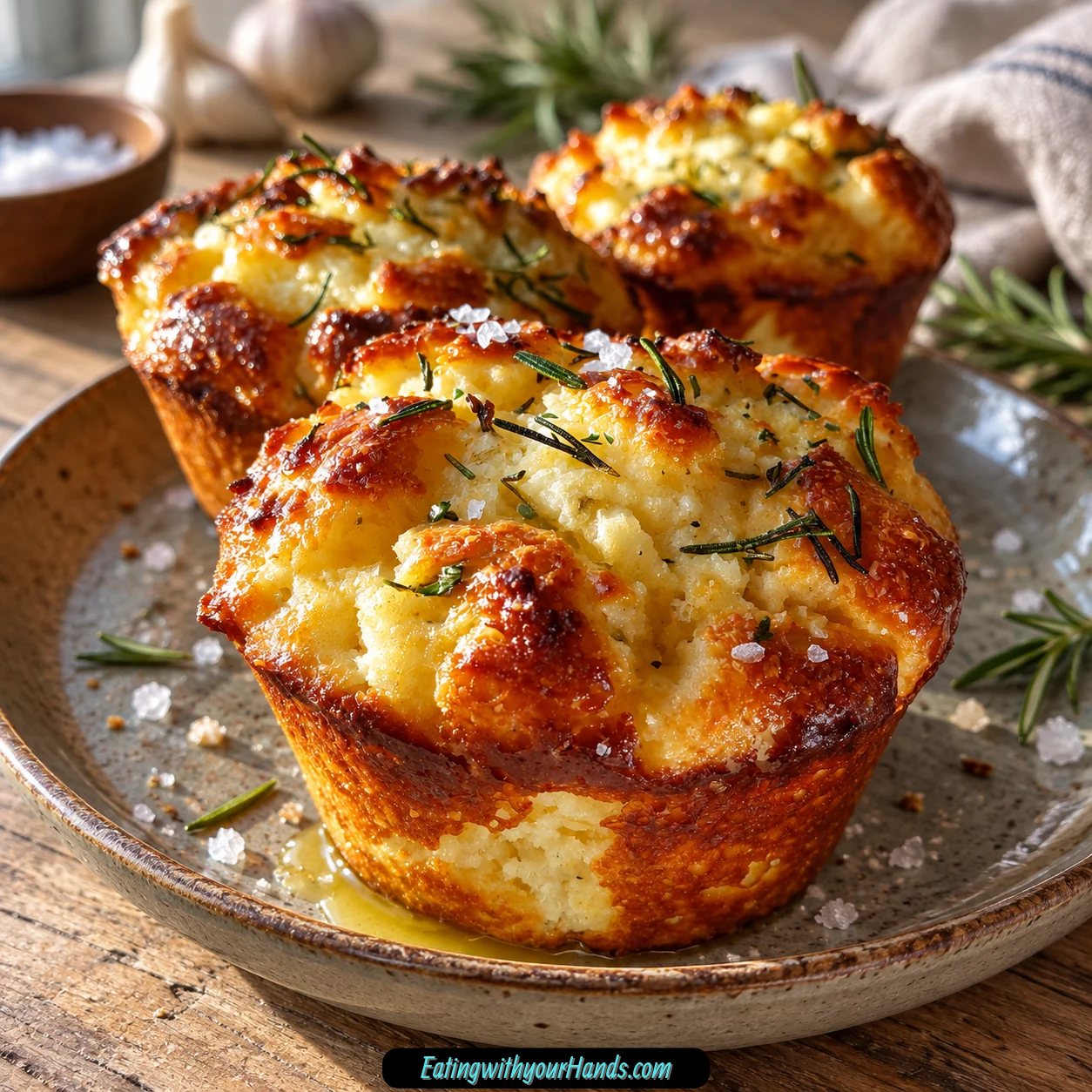

There are few kitchen smells that pull people toward the oven quite like warm bread, garlic, rosemary, and olive oil. These Golden Crust Garlic Rosemary Focaccia Muffins bring all of those aromas together in small, individual portions with crisp golden tops and soft, fluffy centers.
I love them because they give me everything I want from focaccia without asking me to cut a large pan into pieces before serving. Each muffin gets its own browned edges, its own generous drizzle of olive oil, and its own little crust dusted with rosemary, sea salt, and cracked pepper.
The first bite is always the part that makes me want to bake another batch before the current one is even gone. The outside has that satisfying crispness, while the inside stays tender enough to pull apart easily with your fingers.
Garlic and rosemary make the flavor unmistakably savory. Fresh minced garlic brings warmth, rosemary adds an earthy herbal note, and extra virgin olive oil carries both flavors throughout the dough.
These muffins also fit naturally into almost any meal. I can put them beside soup, add them to a salad dinner, slice one for breakfast, or eat one warm on its own before it ever reaches the table.
That last option happens more often than I would like to admit. When the kitchen smells this good, waiting until dinner can feel much harder than mixing the dough in the first place.
What I appreciate most, though, is how approachable the method is. You mix, knead, let the dough rise, portion it into a muffin tin, add toppings, and bake until those tops turn beautifully golden.
There is yeast involved, but there is nothing intimidating about the process when you give it the right temperature and enough time. Once you see the dough double and watch those individual portions puff in the oven, the whole recipe starts feeling less like a bread project and more like a reliable routine.
Table of Contents
- Why You’ll Love Golden Crust Garlic Rosemary Focaccia Muffins
- Ingredients for Golden Crust Garlic Rosemary Focaccia Muffins
- Why Fresh Yeast Activity Matters
- Why 110°F Water Is Important
- Garlic and Rosemary Build the Signature Flavor
- The Role of Extra Virgin Olive Oil
- How to Make Golden Crust Garlic Rosemary Focaccia Muffins
- Tips for Perfect Focaccia Muffins
- How to Avoid Dry Muffins
- Dried Rosemary Substitution
- Garlic Powder Substitution
- Gluten-Free Variation
- Parmesan Topping
- Chili Flake Variation
- Olive and Sun-Dried Tomato Variations
- Serving Golden Crust Garlic Rosemary Focaccia Muffins
- Focaccia Muffins for Breakfast
- Serving With Soup
- Serving With Salad
- Making the Dough Ahead
- Baking as One Large Focaccia
- Storage
- How to Reheat Focaccia Muffins
- How to Freeze Them
- Frequently Asked Questions
- Nutritional Information
- The Little Focaccia Muffins That Never Last Long
- Golden Crust Garlic Rosemary Focaccia Muffins
Why You’ll Love Golden Crust Garlic Rosemary Focaccia Muffins
These muffins are wonderfully simple compared with how impressive they look. The dough requires no advanced shaping, and dividing it into muffin cups eliminates the need to create a perfectly even sheet of focaccia.
The aroma is another reason I return to them. Garlic, rosemary, olive oil, and fresh bread create the kind of smell that seems to fill every corner of the kitchen before the timer even goes off.
Texture is where these really shine. The exterior becomes golden and crisp while the inside remains soft, airy, and pleasantly chewy.
The individual shape gives you more crust in every serving. Instead of getting one soft middle square from a large focaccia, each muffin has edges that can brown and crisp on their own.
They are also extremely versatile. Serve them with soup, beside salad, as part of breakfast, or simply warm with butter and more olive oil.
And because the toppings can change, the same dough can feel different from batch to batch. Parmesan, chili flakes, olives, and sun-dried tomatoes can all move the flavor in a new direction without changing the heart of the recipe.
Ingredients for Golden Crust Garlic Rosemary Focaccia Muffins
The ingredient list is short, but bread this simple depends on each component doing its job well. Fresh yeast activity, accurately measured flour, properly warmed water, good olive oil, and fresh aromatics all contribute to the finished texture and flavor.
- 2 ¼ cups all-purpose flour
- 1 packet active dry yeast, 2 ¼ teaspoons
- 1 teaspoon sugar
- 1 teaspoon salt
- ¾ cup warm water, 110°F
- ¼ cup extra virgin olive oil, plus extra for drizzling
- 2 cloves garlic, finely minced
- 2 tablespoons fresh rosemary, chopped
- Coarse sea salt, for topping
- Cracked black pepper, for topping
- Parmesan, optional
- Chili flakes, optional
The flour should be spooned into the measuring cup and leveled rather than scooped directly from the bag. Too much flour can make the dough stiffer and the finished muffins heavier than intended.
The water temperature matters just as much. Around 110°F is warm enough to activate the yeast without exposing it to excessive heat.
Why Fresh Yeast Activity Matters
Active dry yeast is what gives these muffins their rise. If it is old or inactive, the dough may stay heavy no matter how carefully everything else is measured.
The easiest check happens before the flour ever goes into the bowl. Combine the yeast with warm water and sugar, then look for a frothy surface after about 5 minutes.
That foam tells you the yeast is active and ready to work. If nothing happens, it is better to restart with fresh yeast than to spend an hour waiting for dough that never rises.
Temperature is part of that equation too. Water that is too hot can damage the yeast, while water that is too cold can leave it sluggish.
Why 110°F Water Is Important
The recipe calls for ¾ cup warm water at about 110°F. Think pleasantly warm rather than hot, closer to a comfortable bath than boiling water.
That warmth helps the yeast wake up quickly. Combined with the teaspoon of sugar, it creates the right start for the dough before the flour and salt are added.
Do not rush this step by using very hot water. Bread dough benefits much more from steady yeast activity than from forcing the process with heat.
If the yeast mixture becomes frothy after 5 minutes, you know the water temperature was suitable. That small test can save an entire batch.
Garlic and Rosemary Build the Signature Flavor
Two finely minced garlic cloves go directly into the dough. Cutting them very small helps distribute the flavor throughout the muffins instead of leaving large pieces that stay sharp or crunchy.
Fresh rosemary brings the other major flavor note. Chop 2 tablespoons and rub the leaves gently between your fingers before using them to help release their aroma.
Together, garlic and rosemary give the dough its warm, savory character. Olive oil then carries those flavors through both the interior and the crust.
Extra rosemary can also be scattered over the tops before baking. This reinforces the aroma right where the heat can toast it gently.
The Role of Extra Virgin Olive Oil
The dough includes ¼ cup extra virgin olive oil, plus more for drizzling. The oil adds richness to the interior and helps create the characteristic golden surface.
Do not be too timid with the topping drizzle. Olive oil is part of what gives focaccia its distinctive crust and keeps the exterior from tasting dry.
Another drizzle after baking is also recommended for an even richer finish. That post-bake oil settles into the hot crust and adds another layer of savory flavor.
Because olive oil is so prominent here, use one you enjoy. Its flavor will remain noticeable rather than disappearing into a heavily seasoned dough.
How to Make Golden Crust Garlic Rosemary Focaccia Muffins
The method is easiest when you treat it as a sequence of clear stages: activate the yeast, mix and knead the dough, let it rise, portion it, top it, and bake until golden. The dough does need patience during the rise, but the hands-on work itself stays very manageable.
Step 1: Activate the Yeast
Pour the ¾ cup warm water into a mixing bowl, making sure it is close to 110°F rather than very hot. Add 1 teaspoon sugar and the 2 ¼ teaspoons active dry yeast, then stir gently to combine.
Let the mixture sit undisturbed for about 5 minutes. By the end of that time, the surface should look frothy or foamy, almost like a tiny cappuccino.
If there is no visible activity, do not continue with the dough. Replace the yeast and repeat the step, because inactive yeast will not give the muffins the lift they need.
Step 2: Mix the Dough
Once the yeast is clearly active, add 2 ¼ cups all-purpose flour, 1 teaspoon salt, ¼ cup extra virgin olive oil, 2 finely minced garlic cloves, and the chopped fresh rosemary. Stir until the ingredients come together into a shaggy, uneven dough.
Do not expect the mixture to look polished at this stage. A rough dough is exactly what you want before kneading begins.
Make sure there are no large dry pockets of flour left at the bottom of the bowl. Once everything has gathered into one mass, move on to kneading.
Step 3: Knead Until Smooth and Springy
Turn the dough out onto a lightly floured work surface. Knead for about 5 minutes, folding and pressing the dough repeatedly until the texture becomes smoother and slightly springy.
The dough should not remain aggressively sticky. If it clings heavily to your fingers or work surface, add only a small sprinkle of flour rather than dumping in a large amount at once.
Stop once the dough feels cohesive and elastic enough to hold its shape. Overloading it with flour can make the finished muffins denser and drier.
Step 4: Let the Dough Rise
Place the kneaded dough in a bowl and cover it with a damp towel. Move it to a warm spot and let it rise for about 1 hour.
A turned-off oven with only the light on can create a gentle, warm environment. The dough should approximately double in size during this rest.
Do not rush this stage just because the dough begins looking puffy early. The full rise gives the yeast time to create the lighter interior that makes the muffins feel soft instead of heavy.
Step 5: Prepare the Muffin Tin and Portion the Dough
As the rise nears completion, preheat the oven to 400°F (200°C). Grease a 12-cup muffin tin thoroughly so the baked focaccia muffins release cleanly.
Once the dough has doubled, gently handle it and divide it among the 12 muffin cups. Fill each cup about halfway, leaving room for the dough to puff as it bakes.
Try to keep the portions reasonably even so the muffins finish baking at roughly the same time. They do not need to look perfectly shaped because focaccia is naturally rustic.
Step 6: Add Olive Oil and Toppings
Drizzle the tops generously with extra olive oil. Let some of the oil settle naturally across the surface instead of trying to keep the dough completely dry and neat.
Sprinkle additional rosemary, coarse sea salt, and cracked black pepper over the muffins. Add optional Parmesan or chili flakes at this point if you are using them.
Keep the toppings evenly distributed so every muffin gets some flavor. The olive oil helps the herbs and seasonings cling to the surface as the crust develops.
Step 7: Bake Until Deeply Golden
Transfer the muffin tin to the 400°F oven and bake for 15–20 minutes. Begin checking around the 15-minute mark because overbaking can dry out the centers.
Look for golden, crisp tops and browned edges. When tapped, the muffins should give a light hollow sound that signals the bread has baked through.
Do not rely only on the upper end of the time range. If they look properly golden and sound hollow at 15 minutes, continuing unnecessarily can take away the soft interior you worked to create.
Step 8: Finish With Olive Oil and Cool Briefly
Remove the muffin tin from the oven and drizzle the hot focaccia muffins with a little more olive oil if desired. This finishing drizzle adds richness and helps keep the crust flavorful while the muffins cool.
Let them rest briefly before removing them from the pan. They will be very hot straight from the oven, especially where olive oil has collected around the crust.
Serve while warm for the strongest contrast between crisp exterior and soft center. If you can resist eating one immediately, move them to a cooling rack so the bottoms do not become overly steamy.

Tips for Perfect Focaccia Muffins
Always test the yeast before mixing the full dough. Froth after about 5 minutes is your best early sign that the batch has a good chance of rising properly.
Mince the garlic very finely. Large pieces can stay sharper in flavor and disrupt the soft texture of the crumb.
Use enough olive oil to give the crust character. A generous drizzle before baking helps the tops become golden, while a little more after baking can keep them flavorful.
Start checking at 15 minutes. A longer bake is not automatically better, especially when the goal is a soft interior.
Give the dough a properly warm place to rise. A cool room can slow the process and leave you wondering why the dough seems reluctant to double.
How to Avoid Dry Muffins
The simplest way to avoid dryness is to stop baking as soon as the muffins are properly golden. Begin checking at the earliest end of the 15–20 minute window.
The olive oil also matters. It contributes moisture and richness to the dough while helping protect the crust from tasting dry.
A post-bake drizzle gives the hot muffins another small boost of oil. That is especially useful when you want the crust to stay flavorful and crisp.
Do not compensate for sticky dough with too much flour either. Adding flour only in small amounts while kneading helps preserve a softer crumb.
Dried Rosemary Substitution
Fresh rosemary is the preferred choice for its aroma and stronger herbal character. When dried rosemary is necessary, crush it between your fingers before adding it so the flavor becomes more noticeable.
A substitution note gives the ratio of 2 teaspoons fresh rosemary to approximately ⅔ teaspoon dried rosemary. That guidance is useful when converting a smaller fresh quantity, while the main dough itself calls for 2 tablespoons fresh rosemary.
Use the dried herb carefully because its flavor is more concentrated. The goal is to preserve the rosemary character without letting it overwhelm the garlic and olive oil.
Garlic Powder Substitution
Fresh garlic gives these muffins the strongest flavor, but garlic powder can work when fresh cloves are unavailable. Use ½ teaspoon garlic powder as the substitute.
Mix it evenly through the dough with the flour and other ingredients. That keeps the garlic flavor dispersed rather than concentrated in one section.
The finished aroma will be slightly different from fresh minced garlic. The recipe still retains its savory character with rosemary and olive oil around it.
Gluten-Free Variation
A 1:1 gluten-free flour blend can replace the all-purpose flour. A blend that contains xanthan gum is specifically suggested for this variation.
Expect the texture to be somewhat denser. The dough may not behave exactly like the all-purpose flour version, but the same garlic, rosemary, and olive oil flavors still carry through.
Keep the remaining method as close as possible to the standard process. Watch the rise and final texture rather than expecting a perfectly identical crumb.
Parmesan Topping
Grated Parmesan can be scattered over the muffins before baking. It brings a salty, cheesy finish that works especially well with rosemary and garlic.
Use enough to add flavor without burying the entire surface. You still want the olive-oil crust and herbs to remain noticeable.
Parmesan also adds another savory layer when the muffins are served with soup. The cheese and garlic combination feels especially comforting with a creamy bowl.
If you want the muffins dairy-free, simply skip the Parmesan. The base dough itself does not depend on cheese.
Chili Flake Variation
Chili flakes can be sprinkled over the tops before baking when you want a little heat. They create a spicy contrast against the richer olive oil and soft bread.
Use as much as suits your preference. The heat should complement the garlic and rosemary rather than overpowering them.
This variation works particularly well when the muffins are served alongside a mild soup or salad. The small amount of spice makes each bite feel more pronounced.
Olive and Sun-Dried Tomato Variations
Olives can be added when you want a salty, savory variation. Keep the pieces small enough to distribute easily through or over the dough.
Sun-dried tomatoes are another optional topping for a tangier flavor. Their concentrated character pairs naturally with garlic, rosemary, and olive oil.
Neither addition needs to replace the core herbs. Think of them as accents that make the same dough feel more customized.
Use a light hand if combining several optional toppings. The basic focaccia flavor is strong enough to stand on its own.
Serving Golden Crust Garlic Rosemary Focaccia Muffins
Warm muffins with butter are difficult to beat. Split one open and let the butter melt into the soft center while the exterior still has its fresh-baked crispness.
Creamy tomato soup is one of my favorite pairings. The garlic and rosemary echo beautifully against the tomato flavor, while the muffins are sturdy enough for dipping.
A crisp green salad with balsamic dressing works especially well in warmer weather. The bread gives the meal substance while the salad keeps the plate feeling fresh.
They are also good enough to serve completely alone. A drizzle of olive oil is often all a warm muffin needs.
Focaccia Muffins for Breakfast
Slice one horizontally and toast it lightly for breakfast. The garlic and rosemary become even more fragrant once the cut surfaces warm again.
Top with avocado and a soft-boiled egg for a more substantial morning meal. The bread provides a savory base without needing a completely separate breakfast recipe.
This is especially useful when you have leftovers from dinner. One batch can move easily from an evening side dish into the next morning.
Warm the muffins only enough to refresh the crust. Overheating can dry the soft center unnecessarily.
Serving With Soup
These muffins are almost made for dunking. Their individual shape makes them easy to hold, and the crisp edges soak up soup without immediately falling apart.
Creamy tomato soup is an especially good match. Garlic and rosemary bring a savory contrast to the smooth tomato base.
Serve the muffins warm whenever possible. Heat revives both the olive oil aroma and the herbs.
A little butter inside is optional but especially comforting. Let it melt before tearing the muffin into pieces for dipping.
Serving With Salad
A crisp green salad with balsamic dressing gives these savory muffins a lighter partner. The acidity in the dressing works against the olive oil richness in a very pleasant way.
This pairing is especially useful during summer meals. The bread makes the salad feel more substantial without requiring a heavy main course.
Serve the muffins whole or split them. Either way, their crust adds another texture alongside fresh greens.
Keep some extra olive oil nearby if you like. A light drizzle over the bread is often enough to tie the whole plate together.
Making the Dough Ahead
The dough can be prepared in advance after the first rise. Once it has risen, punch it down gently and cover it tightly.
Refrigerate the dough overnight. This gives you the option to prepare most of the work the day before you plan to bake.
The next day, let the chilled dough sit at room temperature for about 30 minutes. That short rest takes some of the chill off before you divide it into the muffin tin.
Continue with shaping, topping, and baking as usual. The overnight rest can also deepen the flavor.
Baking as One Large Focaccia
The same dough can be baked as one large focaccia instead of individual muffins. Press it into a greased 9×13-inch pan.
Use your fingers to create dimples across the surface. Add olive oil, rosemary, sea salt, pepper, and any optional toppings just as you would for the muffin version.
Bake at 400°F for 20–25 minutes. Look for the same golden crust and fully baked interior.
This version is especially useful when you want something designed for sharing. The flavor stays familiar, but the presentation becomes more traditional.
Storage
Let the focaccia muffins cool completely before storing them. Trapping heat inside a sealed container can soften the crust with excess moisture.
Place the cooled muffins in an airtight container and keep them at room temperature for up to 3 days. Seal them well so the interiors remain soft.
The crust will naturally lose some crispness during storage. A short oven reheating brings much of that fresh-baked texture back.
Avoid the microwave when crispness matters. It tends to make bread softer rather than restoring the exterior.
How to Reheat Focaccia Muffins
Preheat the oven to 350°F and warm the muffins for about 5 minutes. That is usually enough to refresh the crust without drying the centers.
Serve as soon as they are warm. The garlic, rosemary, and olive oil aroma becomes more noticeable again with heat.
You can add a little olive oil after reheating if desired. This is especially nice when the muffins have been stored for a day or two.
Skip microwave reheating whenever possible. The oven gives you a much better chance of preserving the crisp-soft contrast.
How to Freeze Them
For longer storage, wrap the cooled muffins tightly in foil. Freeze them for up to 1 month.
Individual wrapping makes it easy to remove only the number you need. It also protects each muffin more effectively from drying in the freezer.
Thaw overnight before reheating. Once thawed, use the same 350°F oven method for about 5 minutes.
That brief warming brings back much of the fresh-baked character. Serve immediately while the crust is crisp and the center is warm.
Frequently Asked Questions
Can I Use Instant Yeast?
Yes. Use the same 2 ¼ teaspoon quantity.
Skip the initial frothing step and mix the instant yeast directly with the dry ingredients. The dough can then proceed through mixing, kneading, rising, and baking in the same general way.
Why Are My Muffins Dry?
Overbaking is one of the most likely causes. Begin checking at 15 minutes instead of automatically leaving the muffins in for the full 20.
Olive oil also helps preserve the intended texture. Drizzle generously before baking and add another light drizzle after baking if desired.
Can I Make the Dough Ahead?
Yes. Let the dough complete its first rise, then punch it down and cover tightly.
Refrigerate overnight and let it sit at room temperature for about 30 minutes before shaping. Then divide it into the muffin cups and continue normally.
Why Didn’t My Dough Rise?
Inactive yeast is a common reason. The warm water, sugar, and active dry yeast should become visibly frothy after about 5 minutes.
Water temperature also matters. Water that is too hot can damage the yeast, while water that is too cold can slow activation.
Can I Bake One Large Focaccia?
Yes. Press the dough into a greased 9×13-inch pan and dimple the surface with your fingers.
Bake at 400°F for 20–25 minutes. You will still get the same garlic, rosemary, olive oil, and golden-crust character in a larger format.
Can I Make Them Gluten-Free?
Yes. Use a 1:1 gluten-free flour blend, preferably one containing xanthan gum.
Expect a slightly denser texture. Keep the remaining ingredients and general method aligned with the standard recipe.
Can I Use Garlic Powder?
Yes. Substitute ½ teaspoon garlic powder when fresh garlic is unavailable.
Mix it evenly through the dough. Fresh garlic remains the preferred option for the strongest aromatic flavor.
Nutritional Information
Exact calorie, carbohydrate, fat, protein, fiber, sugar, sodium, and serving values are not specified. The final numbers will vary according to the flour, olive oil, toppings, optional Parmesan, and how generously additional oil is drizzled over each muffin.
The muffins provide carbohydrates from flour and fat from extra virgin olive oil, along with some protein. They are vegetarian-friendly and can remain dairy-free when Parmesan and any dairy-based serving additions are omitted.
Optional toppings change the nutritional profile. Parmesan, olives, sun-dried tomatoes, additional olive oil, avocado, eggs, butter, or other serving additions each affect the finished values.
For exact tracking, calculate nutrition using the specific ingredient brands and quantities used in your kitchen. That is especially important because olive oil amounts can vary depending on how generously the muffins are finished.
The Little Focaccia Muffins That Never Last Long
There is a moment during baking when I stop whatever else I am doing because the smell from the oven has finally reached the rest of the house. Garlic, rosemary, olive oil, and warm bread together have a way of making the kitchen feel instantly more inviting.
That aroma is still one of my favorite parts of this recipe. Before anyone has seen the tray, the smell has already announced that something good is almost ready.
Then the muffins come out with their golden tops and crisp little edges. They look rustic rather than perfect, which somehow makes them even more appealing.
The first one rarely survives long enough to cool completely. I usually tell myself I am only checking the texture, but a torn-open muffin with steam escaping from the center is difficult to treat like a scientific experiment.
What I love is that the recipe still feels special even though the ingredient list is modest. Flour, yeast, water, olive oil, garlic, rosemary, salt, and pepper become something much more memorable once they have had time to rise and bake.
The individual shape makes them especially fun to serve. Everyone gets those crisp edges without having to negotiate over the corner pieces of a large focaccia.
Some batches stay completely simple with just rosemary, garlic, salt, pepper, and olive oil. Others get Parmesan, chili flakes, olives, or sun-dried tomatoes depending on what sounds good that day.
No matter how I top them, the core pleasure stays the same. A crisp golden crust gives way to a soft, fluffy center that carries the warm flavors of garlic and rosemary through every bite.
They are easy enough to make for an ordinary dinner and useful enough to store, freeze, or prepare ahead. At the same time, they still have that warm-from-the-oven quality that makes people gather around before the meal has officially started.
That is why these Golden Crust Garlic Rosemary Focaccia Muffins keep finding their way back into my kitchen. They smell wonderful, taste comforting, fit beside almost anything, and somehow always disappear faster than I expect.
Golden Crust Garlic Rosemary Focaccia Muffins

Savory, fragrant, and beautifully golden, these Garlic Rosemary Focaccia Muffins bring classic focaccia flavors into soft individual bread portions. Garlic, fresh rosemary, olive oil, sea salt, and black pepper give each muffin a warm Italian-style finish, while optional Parmesan or chili flakes add extra flavor if desired.
Recipe Details
- Prep Time: 15 minutes
- Cook Time: 20 minutes
- Total Time: 1 hour 35 minutes
- Course: Bread
- Cuisine: Italian
- Servings: 12 muffins
- Calories: 150 kcal
Ingredients
For the Dough
- 2 ¼ cups all-purpose flour
- 1 packet 2 ¼ teaspoons active dry yeast
- 1 teaspoon sugar
- 1 teaspoon salt
- ¾ cup warm water about 110°F
- ¼ cup extra virgin olive oil plus extra for drizzling
- 2 cloves garlic finely minced
- 2 tablespoons fresh rosemary chopped plus extra for garnish
For Finishing
- Coarse sea salt for sprinkling
- Freshly cracked black pepper
- Grated Parmesan cheese optional
- Chili flakes optional
Instructions
Step 1: Activate the Yeast
In a bowl, combine the warm water, sugar, and active dry yeast.
Let the mixture stand for 5 minutes, until it becomes frothy.
Step 2: Build the Dough
Add the all-purpose flour, salt, olive oil, finely minced garlic, and chopped fresh rosemary to the yeast mixture.
Mix until the ingredients come together and a dough begins to form.
Step 3: Knead Until Smooth
Knead the dough for 5 minutes.
Continue until it becomes smooth and cohesive.
Step 4: Let the Dough Rise
Cover the dough and place it in a warm spot.
Let it rise for 1 hour, or until doubled in size.
Step 5: Prepare the Oven and Muffin Tin
Preheat the oven to 400°F (200°C).
Grease a muffin tin so the baked focaccia muffins release more easily.
Step 6: Portion the Dough
Divide the risen dough evenly among the muffin cups.
Fill each cup about halfway with dough.
Step 7: Add the Focaccia Toppings
Drizzle the tops with extra olive oil.
Sprinkle with additional rosemary, coarse sea salt, freshly cracked black pepper, and optional grated Parmesan cheese or chili flakes.
Step 8: Bake Until Golden
Bake for 15–20 minutes, until the focaccia muffins are golden brown.
The tops should develop a warm golden crust while the centers remain soft.
Step 9: Cool Slightly
Remove the muffins from the oven and let them cool slightly.
Serve while still warm for the best flavor.
Notes
- Let the dough rise in a warm spot for best results.
- Adjust garlic and rosemary to taste.
- Serve warm for maximum flavor.
Serving Suggestions
Serve Golden Crust Garlic Rosemary Focaccia Muffins warm, when the olive oil, garlic, and rosemary are especially aromatic. Their individual size makes them easy to place alongside a meal or serve as a savory bread on their own.
This recipe makes 12 muffins, making it convenient for sharing. Finish them simply with rosemary, sea salt, and black pepper, or add Parmesan and chili flakes for a stronger savory finish.
The muffins are especially enjoyable shortly after baking, once they have cooled just enough to handle but are still warm inside.
Storage
These focaccia muffins are best served warm for maximum flavor.
Yeast Tip
Use 1 packet, or 2 ¼ teaspoons, active dry yeast.
Let it sit in the warm water with sugar for 5 minutes until frothy before adding the remaining dough ingredients.
Water Tip
Use ¾ cup warm water at about 110°F.
This warm water is combined with the sugar and yeast at the start of the recipe.
Olive Oil Tip
Use ¼ cup extra virgin olive oil in the dough, plus additional olive oil for drizzling over the tops before baking.
Garlic Tip
Use 2 finely minced garlic cloves in the dough.
Adjust the garlic to taste if desired.
Rosemary Tip
Use 2 tablespoons chopped fresh rosemary in the dough, plus extra rosemary for garnish.
Adjust the rosemary to taste if desired.
Rising Tip
Let the dough rise in a warm place for 1 hour, or until doubled in size.
Topping Tip
Finish with coarse sea salt and freshly cracked black pepper.
Grated Parmesan cheese and chili flakes can also be added if desired.
Baking Tip
Bake at 400°F (200°C) for 15–20 minutes, until golden brown.
Serving Tip
Let the muffins cool slightly, then serve warm for maximum flavor.

Fernando is the creator and writer behind the food blog Eating with your Hands. Living and working in cities like Paris, Barcelona, and Berlin, and being married to a Canadian foodie, has given Fernando a passion and interest in food and inspired him to run EWYH.