
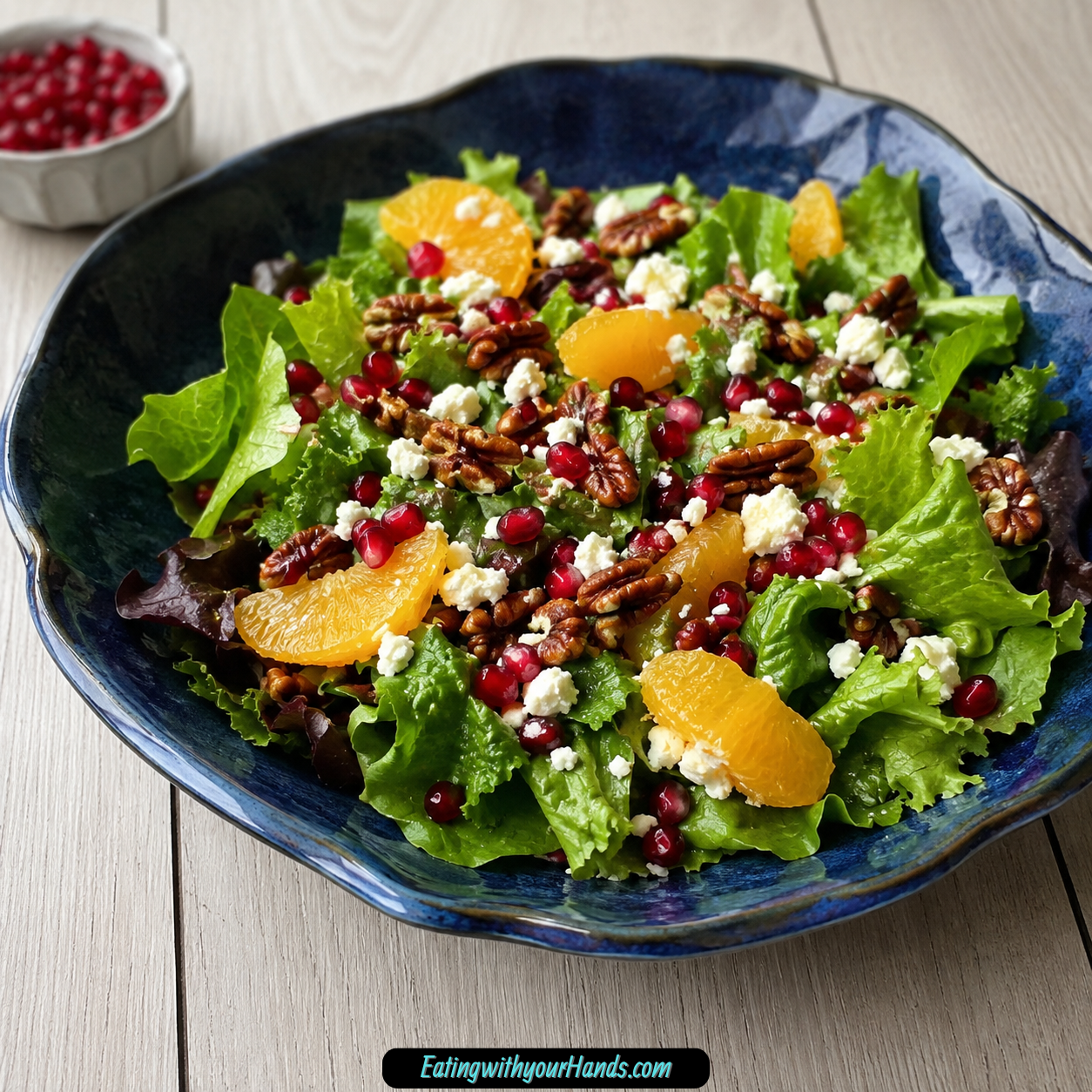
Healthy Winter Salad is the kind of fresh, colorful dish that makes a cold-season table feel instantly brighter. It brings together mixed spring greens, sweet citrus, jewel-like pomegranate seeds, creamy feta, candied pecans, and a honey-Dijon dressing that feels both lively and comforting.
Winter meals can often lean rich, warm, and heavy, which is exactly why a salad like this feels so welcome. It adds crunch, color, freshness, and a little sweetness in a way that balances roasted meats, holiday spreads, weeknight dinners, and cozy family meals.
This salad feels festive without being complicated. The orange segments bring juicy brightness, the pomegranate seeds add a burst of color and sweetness, and the candied pecans give every bite a beautiful crunch.
The feta cheese makes the bowl feel a little creamy and savory. It works beautifully against the fruit and dressing, adding just enough richness without making the salad feel heavy.
The dressing is simple but full of character. Olive oil, honey, Dijon mustard, apple cider vinegar, minced shallot, salt, and pepper come together into something tangy, lightly sweet, and smooth enough to coat the greens gently.
Healthy Winter Salad is ready in just 15 minutes, which makes it perfect for busy weeknights, last-minute gatherings, holiday meals, or a light main dish with protein added. It is fresh, flexible, and cheerful enough to bring a little brightness to even the coldest day.
Table of Contents
- Why You’ll Love This Healthy Winter Salad
- Recipe Details
- Ingredients
- Ingredient Notes
- Optional Swaps, Variations, Add-Ins, and Serving Ideas
- Grilled Chicken Winter Salad
- Shrimp Winter Salad
- Goat Cheese Winter Salad
- Pear Winter Salad
- Apple Winter Salad
- Greek Yogurt Dressing
- Vegan Healthy Winter Salad
- Sunflower Seed Winter Salad
- Pumpkin Seed Winter Salad
- Arugula Winter Salad
- Spinach Winter Salad
- Dairy-Free Winter Salad
- Avocado Winter Salad
- Spicy Winter Salad
- Almond Winter Salad
- Walnut Winter Salad
- Strawberry Winter Salad
- Why This Recipe Works
- Directions
- Step 1: Prepare a Large Salad Bowl
- Step 2: Wash the Mixed Spring Greens
- Step 3: Dry the Greens
- Step 4: Add the Greens to the Bowl
- Step 5: Prepare the Orange Segments
- Step 6: Add the Orange Segments
- Step 7: Measure the Pomegranate Seeds
- Step 8: Add the Pomegranate Seeds
- Step 9: Crumble the Feta
- Step 10: Add the Feta
- Step 11: Chop the Pecans
- Step 12: Add the Pecans
- Step 13: Set the Salad Aside Briefly
- Step 14: Prepare a Dressing Bowl
- Step 15: Add the Olive Oil
- Step 16: Add the Honey
- Step 17: Whisk the Oil and Honey
- Step 18: Add the Dijon Mustard
- Step 19: Add the Apple Cider Vinegar
- Step 20: Whisk Until Smooth
- Step 21: Add the Shallot
- Step 22: Season with Salt and Pepper
- Step 23: Taste the Dressing
- Step 24: Drizzle the Dressing
- Step 25: Toss Gently
- Step 26: Check the Salad
- Step 27: Add Final Garnish
- Step 28: Serve Immediately
- Serving Ideas
- Storage
- Make-Ahead
- Freezing
- Helpful Notes for Best Results
- Variations
- Grilled Chicken Healthy Winter Salad
- Shrimp Healthy Winter Salad
- Goat Cheese Winter Salad
- Pear Winter Salad
- Apple Winter Salad
- Greek Yogurt Dressing Salad
- Vegan Winter Salad
- Sunflower Seed Winter Salad
- Pumpkin Seed Winter Salad
- Arugula Winter Salad
- Spinach Winter Salad
- Dairy-Free Winter Salad
- Avocado Winter Salad
- Jalapeño Winter Salad
- Almond Winter Salad
- Walnut Winter Salad
- Strawberry Winter Salad
- Troubleshooting
- Frequently Asked Questions
- Why This Recipe Works So Well
- Final Thoughts
- Healthy Winter Salad
Why You’ll Love This Healthy Winter Salad
This salad comes together in just 15 minutes. It is perfect for busy weeknights, holiday prep, quick lunches, or last-minute gatherings.
It uses minimal ingredients that are easy to find. Mixed greens, orange segments, pomegranate seeds, feta, pecans, and a simple dressing create a beautiful salad without a long list.
The colors make it especially appealing. Green leaves, orange citrus, red pomegranate seeds, white feta, and golden pecans create a bowl that looks festive right away.
It is fresh and healthy while still feeling satisfying. The greens keep it light, while the feta and pecans add richness and texture.
It pairs beautifully with hearty winter meals. The crisp, bright flavors balance roasted meats and other rich dishes.
It is versatile enough to change based on what you have. You can add protein, swap cheese, change the fruit, adjust the dressing, make it vegan, or use different nuts and seeds.
Recipe Details
Healthy Winter Salad is a fresh salad with a 15-minute preparation time. It does not require cooking.
The salad begins with 7 cups mixed spring greens. The greens should be washed and dried before assembling.
The fruit includes 1 ¼ cups orange segments. Mandarin, clementines, or tangerines can be used for sweetness.
The salad also includes ½ cup pomegranate seeds. Dried cranberries can be used as a substitute if preferred.
Feta cheese adds creaminess. The recipe uses ½ cup crumbled feta cheese.
Candied pecans bring crunch and sweetness. Regular pecans can be used for less sweetness.
The dressing is made separately with olive oil, honey, Dijon mustard, apple cider vinegar, minced shallot, salt, and pepper. Balsamic vinegar can replace apple cider vinegar for a different twist.
The salad should be dressed and tossed gently right before serving. It is best served immediately for the freshest texture.
Leftovers can be stored in an airtight container in the refrigerator for up to 2 days. If there is leftover dressing, it should be kept separate to maintain the crispness of the greens.
Ingredients
For the Salad
- 7 cups mixed spring greens, washed and dried
- 1 ¼ cups orange segments (use mandarin, clementines, or tangerines for sweetness)
- ½ cup pomegranate seeds (or substitute with dried cranberries if preferred)
- ½ cup feta cheese, crumbled
- ½ cup candied pecans, roughly chopped (you can use regular pecans for less sweetness)
For the Dressing
- ⅓ cup olive oil (extra virgin for more flavor)
- 1 tablespoon honey (adjust to taste if you prefer a sweeter dressing)
- 2 teaspoons Dijon mustard (for a nice tang)
- 2 tablespoons apple cider vinegar (or substitute with balsamic for a different twist)
- 1 tablespoon shallot, minced (you can use red onion if shallots aren’t available)
- Salt and pepper, to taste (freshly cracked pepper adds a nice touch)
Ingredient Notes
Mixed spring greens give this salad its fresh base. They should be washed and dried well before the salad is assembled.
Orange segments bring sweetness and juicy brightness. Mandarin, clementines, or tangerines are all good choices for this salad.
Pomegranate seeds add color, sweetness, and little bursts of texture. If you cannot find them or prefer a different option, dried cranberries can be used.
Feta cheese gives the salad a creamy, salty element. It balances the fruit and helps the salad feel more satisfying.
Candied pecans bring sweetness and crunch. If you want less sweetness, regular pecans can be used instead.
Olive oil forms the base of the dressing. Extra virgin olive oil gives the dressing more flavor.
Honey adds sweetness to the dressing. It can be adjusted to taste if you prefer a sweeter dressing.
Dijon mustard gives the dressing tang and helps the flavor feel more rounded. It keeps the dressing from tasting flat.
Apple cider vinegar adds brightness. Balsamic vinegar can be used for a different twist.
Minced shallot adds gentle onion flavor. Red onion can be used if shallots are not available.
Salt and pepper season the dressing. Freshly cracked pepper adds a nice finishing touch.
Optional Swaps, Variations, Add-Ins, and Serving Ideas
Grilled Chicken Winter Salad
Add grilled chicken for a heartier meal option. This turns the salad from a side dish into a light main course.
The chicken works well with the citrus, feta, and pecans. It makes the salad more filling without taking away the freshness.
Shrimp Winter Salad
Grilled shrimp can also be added for protein. It gives the salad a lighter main dish feeling.
Shrimp pairs nicely with the orange segments and honey-Dijon dressing. This variation is especially good when you want something fresh but still satisfying.
Goat Cheese Winter Salad
Swap feta for goat cheese for a tangy twist. Goat cheese gives the salad a creamier texture.
This variation keeps the same bright winter feeling. It simply changes the cheese flavor.
Pear Winter Salad
Incorporate pear during the winter months. Pear adds seasonal sweetness and a softer texture.
This is a lovely option when you want a gentler fruit note. It works well with pecans and feta.
Apple Winter Salad
Apple can also be added as a seasonal fruit. It brings crunch and freshness.
This variation gives the salad a crisp bite. It fits naturally with the winter theme.
Greek Yogurt Dressing
For a lighter dressing, use Greek yogurt instead of olive oil. This changes the dressing texture and makes it creamier.
The flavor will be different from the olive oil version. It is a good option when you want a lighter creamy dressing.
Vegan Healthy Winter Salad
Make the salad vegan by omitting the cheese and using maple syrup instead of honey. This keeps the salad sweet without honey.
The salad will lose the salty creaminess of feta, but the fruit, greens, pecans, and dressing still make it flavorful. Use the maple syrup swap in the dressing.
Sunflower Seed Winter Salad
For a nut-free version, replace pecans with sunflower seeds. This keeps crunch in the salad without using nuts.
Sunflower seeds work well with greens and fruit. They are a practical alternative for nut-free needs.
Pumpkin Seed Winter Salad
Pumpkin seeds can also replace pecans for a nut-free version. They bring crunch and color.
This variation keeps the salad textured and satisfying. It works well with pomegranate seeds and citrus.
Arugula Winter Salad
Use arugula as part of the mixed greens. It gives the salad a more peppery flavor.
This is a good option if you like greens with more bite. Arugula pairs well with citrus and feta.
Spinach Winter Salad
Spinach can also be used as the green base. It gives the salad a softer leaf.
Spinach works beautifully with pomegranate, orange, feta, and pecans. It is an easy greens swap.
Dairy-Free Winter Salad
To make this salad dairy-free, omit the feta or use a dairy-free cheese alternative. The salad will still have fruit, nuts, greens, and dressing for flavor.
This is a simple adjustment for dairy-free needs. Choose an alternative that fits your preference.
Avocado Winter Salad
Add sliced avocado for extra creaminess and healthy fats. Avocado gives the salad a soft, rich texture.
This variation balances the crisp greens and juicy fruit. It makes the salad feel more filling.
Spicy Winter Salad
Add thinly sliced jalapeños for a touch of spice. This gives the salad a little kick.
The heat contrasts with the sweet citrus and honey. Use this variation if you like a bolder salad.
Almond Winter Salad
Almonds can be used as a nut alternative. They add crunch and a different flavor.
This is a good option if you want to change the pecans. Almonds work well with fruit and greens.
Walnut Winter Salad
Walnuts can also be used in this salad. They bring an earthy crunch.
This variation makes the salad taste a little deeper. It pairs nicely with feta and apples or pears.
Strawberry Winter Salad
If pomegranate seeds are not available, sliced strawberries can be used for a different flavor profile. They bring sweetness and color.
The flavor will be less wintry but still fresh. This substitution keeps the salad vibrant.
Why This Recipe Works
Healthy Winter Salad works because it balances freshness with richness. The greens are light, the fruit is juicy, the cheese is creamy, the pecans are crunchy, and the dressing is sweet, tangy, and savory.
The orange segments are important because they add brightness. Winter dishes often need something fresh and juicy beside heavier foods.
Pomegranate seeds bring color and little bursts of sweetness. They make the salad feel festive without needing extra decoration.
Feta cheese adds a savory contrast. It keeps the fruit from making the salad taste too sweet.
Candied pecans give crunch and sweetness. Regular pecans can be used if you want less sweetness.
The dressing brings the whole bowl together. Olive oil makes it smooth, honey adds sweetness, Dijon mustard adds tang, apple cider vinegar adds brightness, and shallot gives depth.
Tossing gently matters. The greens should be coated, but not crushed.
Serving immediately gives the best texture. The salad is most beautiful when the greens are crisp and the fruit looks fresh.
Directions
Step 1: Prepare a Large Salad Bowl
Set a large salad bowl on your work surface. Choose one with enough room for tossing the greens, fruit, cheese, nuts, and dressing.
A wide bowl helps keep the salad light and fluffy. It also makes it easier to distribute the ingredients evenly.
Step 2: Wash the Mixed Spring Greens
Use 7 cups mixed spring greens. Wash them well before adding them to the salad.
Clean greens create a fresh base. Remove any pieces that do not look fresh.
Step 3: Dry the Greens
Dry the mixed spring greens thoroughly. The leaves should not be wet when they go into the bowl.
Dry greens hold dressing better. Extra water can weaken the dressing and make the salad taste flat.
Step 4: Add the Greens to the Bowl
Place the washed and dried mixed spring greens into the large bowl. Spread them out gently.
The greens are the base of the salad. Try not to pack them down.
Step 5: Prepare the Orange Segments
Measure 1 ¼ cups orange segments. Mandarin, clementines, or tangerines can be used for sweetness.
The orange pieces should be ready to scatter into the greens. They add juicy color and fresh flavor.
Step 6: Add the Orange Segments
Add the orange segments to the bowl. Distribute them evenly over the greens.
This helps every serving get some citrus. The orange makes the salad feel bright and seasonal.
Step 7: Measure the Pomegranate Seeds
Measure ½ cup pomegranate seeds. These add color and sweetness.
If you prefer, dried cranberries can be used instead. This gives the salad a different fruity chew.
Step 8: Add the Pomegranate Seeds
Sprinkle the pomegranate seeds over the salad. Let them fall across the greens and oranges.
They look beautiful against the green leaves. They also add little bursts of flavor.
Step 9: Crumble the Feta
Use ½ cup crumbled feta cheese. Make sure the pieces are ready to sprinkle.
Feta adds creaminess and a salty note. It helps balance the sweet fruit.
Step 10: Add the Feta
Crumble the feta over the top of the greens, citrus, and pomegranate. Spread it evenly.
Do not press the feta into the greens. Let it stay visible so the salad looks fresh.
Step 11: Chop the Pecans
Roughly chop ½ cup candied pecans. Regular pecans can be used if you want less sweetness.
The pieces should be small enough to eat easily. They should still have enough size to bring crunch.
Step 12: Add the Pecans
Add the chopped pecans to the bowl. Scatter them evenly across the top.
The pecans give the salad texture. They also make the bowl feel more satisfying.
Step 13: Set the Salad Aside Briefly
Set the salad bowl aside while you make the dressing. Do not toss yet.
Keeping the ingredients loose helps protect the greens. The dressing will be added after it is fully mixed.
Step 14: Prepare a Dressing Bowl
Set out a separate bowl for the dressing. This helps the dressing become smooth before it touches the greens.
A small bowl works well. You need enough room to whisk.
Step 15: Add the Olive Oil
Pour ⅓ cup olive oil into the dressing bowl. Extra virgin olive oil can be used for more flavor.
Olive oil gives the dressing body. It helps coat the greens gently.
Step 16: Add the Honey
Add 1 tablespoon honey to the olive oil. The honey can be adjusted to taste if you prefer a sweeter dressing.
Honey brings sweetness to the dressing. It balances the vinegar and mustard.
Step 17: Whisk the Oil and Honey
Whisk the olive oil and honey until well combined. The mixture should begin to look blended.
This step helps the honey distribute evenly. It prevents sweetness from staying in one spot.
Step 18: Add the Dijon Mustard
Add 2 teaspoons Dijon mustard. This gives the dressing a nice tang.
Dijon also helps the dressing taste more complete. Whisk it into the oil and honey.
Step 19: Add the Apple Cider Vinegar
Pour in 2 tablespoons apple cider vinegar. Balsamic vinegar can be used instead for a different twist.
The vinegar adds brightness. It keeps the dressing from tasting too rich.
Step 20: Whisk Until Smooth
Whisk until the dressing is smooth. The oil, honey, Dijon, and vinegar should be well combined.
The dressing should look glossy and balanced. Make sure no honey is sitting at the bottom.
Step 21: Add the Shallot
Stir in 1 tablespoon minced shallot. Red onion can be used if shallots are not available.
The shallot adds flavor and a gentle savory note. Stir it through the dressing.
Step 22: Season with Salt and Pepper
Add salt and pepper to taste. Freshly cracked pepper adds a nice touch.
The dressing should taste balanced. It should be sweet, tangy, and lightly savory.
Step 23: Taste the Dressing
Taste a small amount of dressing before adding it to the salad. Adjust only if needed.
If you prefer more sweetness, add honey to taste. If you want a different tang, use the vinegar option you like.
Step 24: Drizzle the Dressing
Drizzle the dressing over the salad mixture. Pour it slowly across the bowl.
Do not dump it all in one spot. Spreading it out makes tossing easier.
Step 25: Toss Gently
Gently toss everything together. Make sure the greens are coated without being crushed.
Use light motions and lift from the bottom. The goal is to mix without bruising the leaves.
Step 26: Check the Salad
Look at the salad after tossing. The greens should be lightly coated, and the fruit, feta, and pecans should still be visible.
If it needs more dressing, add a small amount and toss again. Keep the salad fresh and not overloaded.
Step 27: Add Final Garnish
For an extra touch, garnish with additional pomegranate seeds or a sprinkle of feta right before serving. This makes the salad look festive.
The garnish adds color and texture. It is especially nice for holiday meals.
Step 28: Serve Immediately
Serve the salad immediately for the freshest taste. This keeps the greens crisp and the fruit bright.
The salad is ready as a side dish, appetizer, or light main course. Add protein if you want it heartier.
Serving Ideas
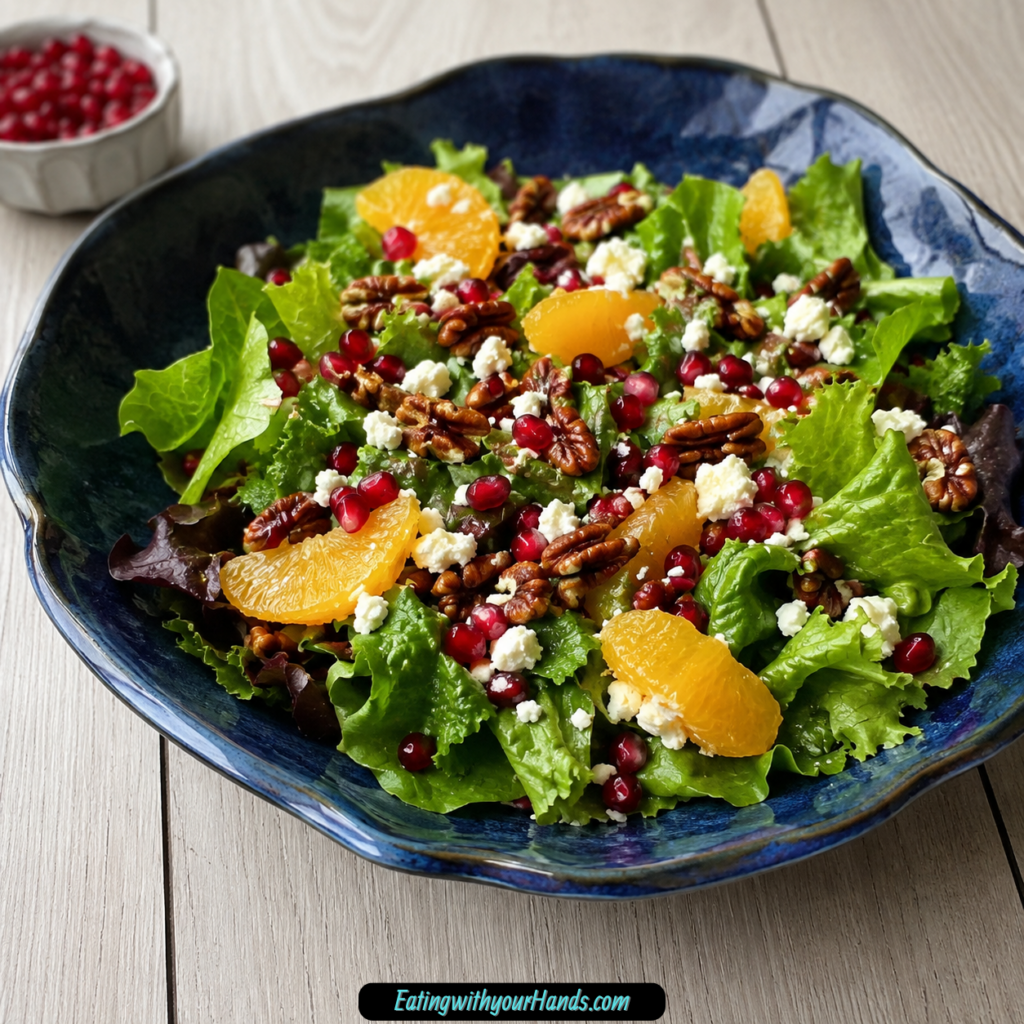
Serve Healthy Winter Salad as a vibrant side dish alongside roasted meats. Its fresh citrus, greens, pomegranate, and tangy dressing balance richer winter plates.
It can also be served as a light main course with your favorite protein added. Grilled chicken or shrimp makes it more filling.
For a holiday table, garnish with extra pomegranate seeds or a little feta right before serving. This gives the salad a polished, festive look.
A bowl of this salad also works well before a heavier meal. It brings freshness to the table without feeling plain.
Serve it immediately after tossing for the best texture. The greens are crispest when freshly dressed.
This salad fits busy weeknights, last-minute gatherings, holiday dinners, and chilly nights when you still want something fresh. It is light but satisfying.
Storage
This salad is best enjoyed fresh. Leftovers can be stored in an airtight container in the refrigerator for up to 2 days.
If you have leftover dressing, keep it separate. This helps maintain the crispness of the greens.
Once dressed, the greens may soften over time. A gentle toss before serving can help redistribute the dressing.
Make-Ahead
You can prepare the ingredients in advance. Wash and dry the greens, segment the oranges, measure the pomegranate seeds, crumble the feta, chop the pecans, and mix the dressing separately.
Wait to dress the salad until just before serving. This keeps the greens fresh and crisp.
Store the dressing in a separate container if preparing ahead. Toss everything together when you are ready to eat.
Freezing
Freezing is not recommended for this salad. The greens, citrus, pomegranate seeds, feta, and dressing are best fresh.
The texture would not hold well after thawing. Store leftovers briefly in the refrigerator instead.
Helpful Notes for Best Results
Wash and dry the greens well. Dry leaves help the dressing cling and keep the salad fresh.
Use mandarin, clementines, or tangerines for sweetness. These orange segments make the salad bright and juicy.
Use dried cranberries if pomegranate seeds are not available. They bring a different flavor and texture.
Candied pecans add sweetness, while regular pecans give less sweetness. Choose based on your preference.
Use extra virgin olive oil for more dressing flavor. Balsamic vinegar can be used instead of apple cider vinegar for a different twist.
For a nut-free version, replace pecans with sunflower seeds or pumpkin seeds. For dairy-free, omit feta or use a dairy-free cheese alternative.
Arugula or spinach can be used if you prefer different mixed greens. Sliced avocado adds creaminess and healthy fats.
For spice, add thinly sliced jalapeños. If you want to customize the dressing, herbs or different vinegar types can be used.
Variations
Grilled Chicken Healthy Winter Salad
Add grilled chicken to make the salad more filling. This turns it into a light main course.
The chicken works well with citrus and feta. It is a simple protein addition.
Shrimp Healthy Winter Salad
Add shrimp for another heartier meal option. Shrimp keeps the salad light but satisfying.
The dressing pairs nicely with shrimp. This variation is fresh and bright.
Goat Cheese Winter Salad
Swap feta for goat cheese. This gives the salad a tangy twist.
Goat cheese is creamy and soft. It changes the texture while keeping the salad rich.
Pear Winter Salad
Add pear during the winter months. Pear brings sweetness and softness.
It pairs well with pecans and feta. This variation feels seasonal and gentle.
Apple Winter Salad
Add apple for a crisp winter fruit option. Apple brings crunch and brightness.
This variation makes the salad feel even fresher. It works well with the honey-Dijon dressing.
Greek Yogurt Dressing Salad
Use Greek yogurt instead of olive oil for a lighter dressing. This creates a creamier dressing with a different texture.
The flavor will change from the original vinaigrette. It is a good lighter option.
Vegan Winter Salad
Omit the cheese and use maple syrup instead of honey. This makes the salad vegan.
The maple syrup keeps the dressing sweet. The salad remains colorful and fresh.
Sunflower Seed Winter Salad
Replace pecans with sunflower seeds for a nut-free version. They add crunch.
Sunflower seeds work well with greens and fruit. They are a simple substitution.
Pumpkin Seed Winter Salad
Use pumpkin seeds instead of pecans. This is another nut-free option.
Pumpkin seeds give texture and color. They help the salad stay satisfying.
Arugula Winter Salad
Use arugula as the greens. It brings a peppery flavor.
Arugula works well with sweet citrus and feta. It gives the salad more bite.
Spinach Winter Salad
Use spinach instead of mixed spring greens. Spinach gives a softer texture.
It pairs beautifully with pomegranate and pecans. This is an easy greens swap.
Dairy-Free Winter Salad
Omit the feta or use a dairy-free cheese alternative. This creates a dairy-free version.
The salad still has plenty of flavor from the citrus, pecans, greens, and dressing. Choose what fits your needs.
Avocado Winter Salad
Add sliced avocado. It brings creaminess and healthy fats.
Avocado makes the salad feel more filling. It also balances the tangy dressing.
Jalapeño Winter Salad
Add thinly sliced jalapeños for a kick. This brings spice to the fresh salad.
The heat contrasts with the sweet fruit. Use this variation when you want more boldness.
Almond Winter Salad
Use almonds instead of pecans. Almonds add crunch and a different flavor.
This is a nice nut variation. It works well with citrus and greens.
Walnut Winter Salad
Use walnuts instead of pecans. They bring an earthy flavor.
Walnuts make the salad taste a little deeper. They pair nicely with feta or goat cheese.
Strawberry Winter Salad
If pomegranate seeds are unavailable, sliced strawberries can be used for a different flavor profile. They add sweetness and color.
This gives the salad a softer fruit note. It still keeps the bowl vibrant.
Troubleshooting
The Greens Wilt Quickly
Dress the salad right before serving. The greens stay crispest when freshly tossed.
If preparing ahead, keep the dressing separate. Add it only when ready to eat.
The Dressing Separates
Whisk the olive oil and honey well before adding the other dressing ingredients. Then whisk again after adding Dijon and vinegar.
A good whisk helps the dressing become smooth. Stir again before serving if it sits.
The Dressing Is Too Sharp
Honey balances the vinegar and Dijon. Add more only to taste if you prefer a sweeter dressing.
The orange segments and pomegranate seeds also bring sweetness. Toss gently and taste.
The Salad Tastes Too Sweet
Use regular pecans instead of candied pecans for less sweetness. You can also choose the apple cider vinegar dressing without extra sweetener beyond your taste.
Feta and shallot help balance sweetness. Pepper also adds a savory note.
The Salad Needs More Texture
Add extra pomegranate seeds, sunflower seeds, pumpkin seeds, almonds, walnuts, or pecans. These give crunch and contrast.
Avocado can add creaminess. Pear or apple can add fruit texture.
The Salad Needs More Protein
Add grilled chicken or shrimp. Either option makes the salad more filling.
This turns it into a light main course. It still keeps the fresh winter flavor.
The Salad Needs to Be Vegan
Omit the cheese and use maple syrup instead of honey. This creates a vegan version.
Use the same greens, fruit, pecans, and dressing structure. Check any ingredients as needed.
The Salad Needs to Be Nut-Free
Replace pecans with sunflower seeds or pumpkin seeds. These add crunch without nuts.
Avoid candied pecans and check any packaged ingredients if needed. This keeps the salad nut-free.
Frequently Asked Questions
Can I make Healthy Winter Salad ahead of time?
Yes, you can prep the ingredients in advance. It is best served fresh.
Keep the dressing separate until just before serving. This helps the greens stay crisp.
How can I customize the dressing?
You can add herbs or substitute vinegar types. Balsamic vinegar can be used instead of apple cider vinegar.
You can also adjust the honey to taste if you prefer a sweeter dressing. Keep the balance sweet, tangy, and savory.
Is Healthy Winter Salad gluten-free?
Yes, all ingredients are gluten-free. As always, check any packaged products if needed.
The salad is naturally fresh and simple. The dressing ingredients are also straightforward.
Can I use different nuts in this salad?
Yes, almonds or walnuts would work beautifully as alternatives. They give the salad a different crunch and flavor.
For a nut-free version, use sunflower seeds or pumpkin seeds. Both are listed options.
What if I cannot find pomegranate seeds?
You can substitute dried cranberries if preferred. Sliced strawberries can also be used for a different flavor profile.
The salad will still be colorful and fruity. The flavor will simply change.
Can I make this salad dairy-free?
Yes, omit the feta or use a dairy-free cheese alternative. The salad still has plenty of flavor.
The fruit, nuts, greens, and dressing make the bowl satisfying. Choose the option that works for your needs.
Can I add avocado?
Yes, sliced avocado can be added. It gives the salad extra creaminess and healthy fats.
Avocado works well with citrus and Dijon dressing. It makes the salad feel more filling.
What should I serve with this salad?
Serve it alongside roasted meats or as a light main course with protein added. Grilled chicken or shrimp are both good options.
It can also be served as an appetizer or fresh holiday side. The bright colors make it beautiful on the table.
Why This Recipe Works So Well
Healthy Winter Salad works so well because it brings freshness into a season known for heavier meals. The mixed greens are light, the citrus is juicy, the pomegranate seeds are bright, the feta is creamy, and the pecans are crunchy.
The dressing adds the flavor that pulls everything together. Olive oil gives body, honey gives sweetness, Dijon mustard adds tang, apple cider vinegar adds sharpness, and shallot brings a mild savory note.
The salad also offers a strong balance of color. It looks festive without needing extra effort, which makes it useful for gatherings and holiday meals.
It is practical because it takes only 15 minutes. That makes it easy to serve even when the rest of the meal is more involved.
The recipe is also adaptable. Chicken, shrimp, goat cheese, pear, apple, Greek yogurt, maple syrup, sunflower seeds, pumpkin seeds, arugula, spinach, dairy-free cheese, avocado, jalapeños, herbs, different vinegar types, almonds, walnuts, dried cranberries, and strawberries all give you options.
Most of all, this salad works because it feels refreshing and satisfying at the same time. It brightens the table, balances rich food, and gives every bite a crisp winter freshness.
Final Thoughts
Healthy Winter Salad is a fresh, colorful salad made with mixed spring greens, orange segments, pomegranate seeds, feta cheese, candied pecans, and a honey-Dijon apple cider vinegar dressing with shallot. It is quick, vibrant, crisp, and ready in just 15 minutes.
Serve it immediately as a side dish, appetizer, or light main course with added protein, and keep dressing separate if preparing ahead. With its citrus brightness, festive pomegranate, creamy feta, crunchy pecans, and tangy dressing, this salad brings fresh color and cheerful balance to winter meals.
Healthy Winter Salad
Fresh, colorful, crisp, and lightly sweet, this Healthy Winter Salad combines mixed spring greens with citrus, pomegranate seeds, feta cheese, and candied pecans. A simple honey Dijon apple cider vinegar dressing brings everything together, making it a refreshing American salad for winter meals, holiday tables, or bright side dishes.
Recipe Details
- Prep Time: 15 minutes
- Total Time: 15 minutes
- Course: Salad
- Cuisine: American
- Servings: 4 people
Ingredients
For the Dressing
- ⅓ cup olive oil
- 2 tablespoons apple cider vinegar
- 1 tablespoon honey
- 2 teaspoons Dijon mustard
- 1 tablespoon shallot, minced
- to taste salt and pepper
For the Salad
- 7 cups mixed spring greens
- 1 ¼ cups orange segments (mandarin, oranges, clementines, or tangerines)
- ½ cup pomegranate seeds can substitute dried cranberries
- ½ cup candied pecans, roughly chopped
- ½ cup feta cheese, crumbled
Instructions
Step 1: Combine the Salad Ingredients
In a large bowl, combine the mixed greens, orange segments, pomegranate seeds, feta cheese, and candied pecans. Toss gently so the citrus, seeds, cheese, and pecans are evenly mixed through the greens.
Step 2: Make the Dressing
In a separate bowl, whisk together the olive oil, honey, Dijon mustard, apple cider vinegar, and minced shallot. Season with salt and pepper to taste.
Step 3: Dress the Salad
Drizzle the dressing over the salad. Toss gently to combine without crushing the greens or fruit.
Notes
- This salad is best served fresh.
- You can substitute other nuts or cheese based on your preference.
Serving Suggestions
Serve this Healthy Winter Salad fresh, right after it has been gently tossed with the dressing. The mixed spring greens, citrus segments, pomegranate seeds, feta cheese, and candied pecans make it bright, crunchy, sweet, and savory.
This salad works well as a side dish for winter dinners, holiday meals, or lighter lunches. You can substitute dried cranberries for pomegranate seeds, or use other nuts or cheese based on your preference exactly as noted.
Storage
How to Store
The recipe does not provide specific storage instructions or storage duration, so no exact storage time is added here.
Best Texture Tip
This salad is best served fresh. Serving it soon after adding the dressing helps the mixed greens stay crisp and the citrus, pomegranate seeds, feta, and pecans keep their best texture.
Dressing Tip
Whisk the olive oil, honey, Dijon mustard, apple cider vinegar, and minced shallot until well combined. Season with salt and pepper to taste before drizzling over the salad.
Substitution Tip
You can substitute dried cranberries for the pomegranate seeds. You can also substitute other nuts or cheese based on your preference, with no extra quantities added because the recipe does not provide them.

Fernando is the creator and writer behind the food blog Eating with your Hands. Living and working in cities like Paris, Barcelona, and Berlin, and being married to a Canadian foodie, has given Fernando a passion and interest in food and inspired him to run EWYH.