
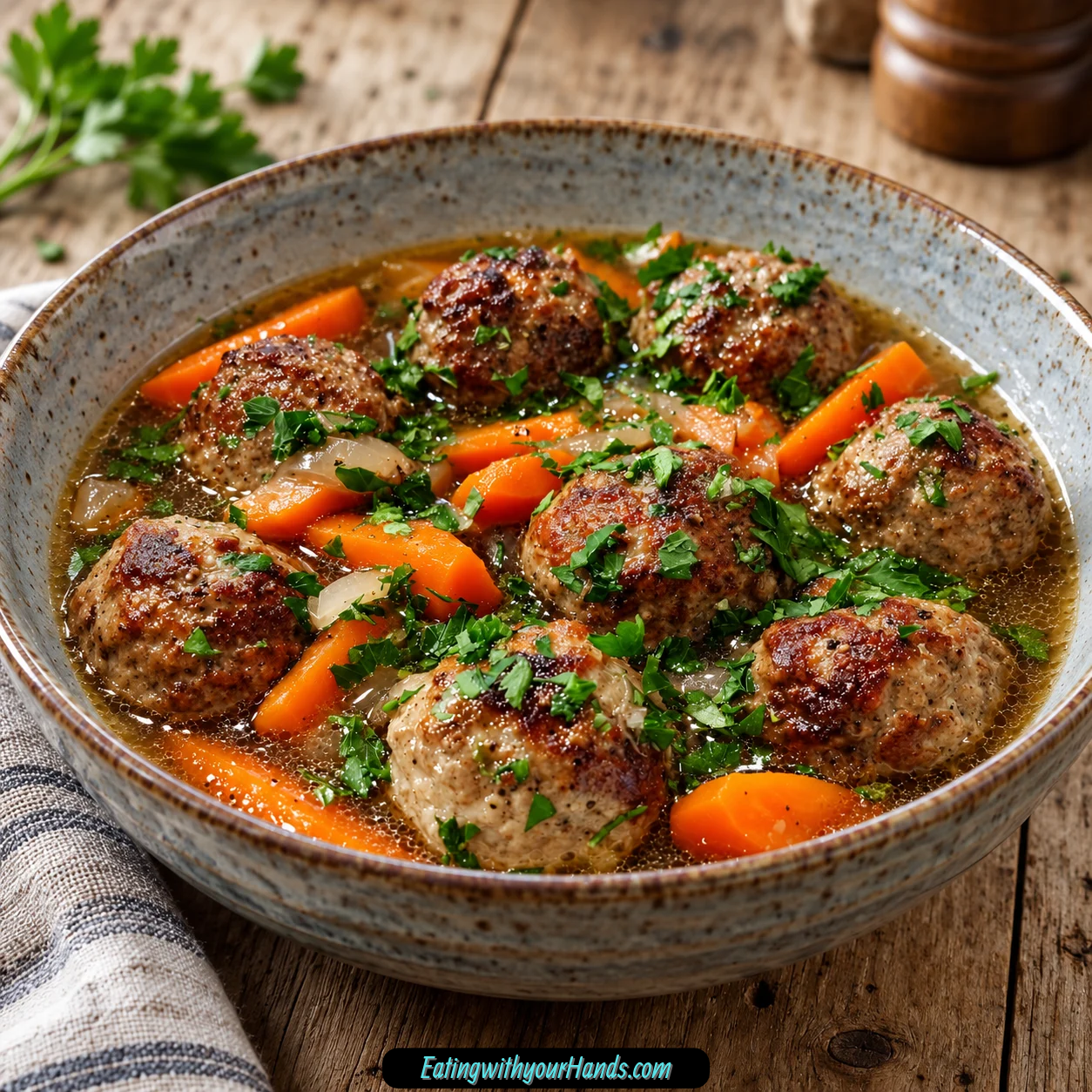

There are certain meals that seem to warm more than just the table, and this Hearty Meatball Stew has always felt that way to me. A steaming bowl filled with tender meatballs, vegetables, tomatoes, and savory broth has the kind of comfort that makes a cold day feel instantly more manageable.
This recipe has been part of my kitchen for years, ever since my grandma showed me how to make meatballs that stayed tender instead of turning firm and dry. Her method was simple, but the lesson stayed with me: mix gently, shape carefully, brown for flavor, and then let the meatballs finish cooking in the broth.
I have made countless pots since then, sometimes on snowy weekends when the whole house seemed built for slow, cozy meals. I have also made it on rushed weeknights when I needed something dependable that could get everyone to the table without turning dinner into an all-evening project.
The thing I keep loving is how uncomplicated the stew really is. A short list of familiar ingredients builds into a pot that tastes layered, hearty, and satisfying enough to feel like far more effort went into it.
The meatballs are the center of everything. They stay juicy inside while their browned surfaces absorb the tomato-rich broth, and every spoonful carries a little of that beefy, savory flavor into the vegetables around them.
Carrots and celery bring texture while the onion softens into the broth. Diced tomatoes add acidity and body, and thyme and paprika give the pot just enough background seasoning to make it feel complete.
It is the kind of dinner that works just as well for company as it does on an ordinary Tuesday. Put a loaf of crusty bread beside it and the meal feels generous, but the actual cooking remains approachable enough for a busy evening.
That balance is why this version became our family favorite after years of small adjustments. It is cozy without being complicated, hearty without feeling overly heavy, and flavorful enough that the pot rarely has much left in it by the end of dinner.
Table of Contents
- Why You’ll Love This Hearty Meatball Stew
- Ingredients for Hearty Meatball Stew
- Why Gentle Mixing Makes Better Meatballs
- Keeping the Meatballs the Same Size
- How to Make Hearty Meatball Stew
- Why Browning the Meatballs Matters
- How to Thicken the Broth
- Tips for the Best Hearty Meatball Stew
- Ground Turkey Variation
- Breadcrumb Alternatives
- Broth Substitutions
- Parmesan Substitution
- Serving Hearty Meatball Stew
- Serving With Mashed Potatoes
- Serving With Egg Noodles
- Serving With Polenta
- Storage
- How to Reheat Meatball Stew
- How to Freeze Hearty Meatball Stew
- Using Frozen Meatballs
- Slow Cooker Method
- Frequently Asked Questions
- Nutritional Information
- The Stew That Still Feels Like Home
- Hearty Meatball Stew Recipe
Why You’ll Love This Hearty Meatball Stew
The first thing to love is the comfort factor. The combination of tender meatballs, warm broth, carrots, celery, tomatoes, and herbs gives every bowl that familiar cold-weather feeling people tend to crave when the temperature drops.
It is also surprisingly quick for something that tastes so hearty. The stew comes together in under an hour, with only a few clear stages: mix and shape the meatballs, soften the vegetables, brown the meatballs, and let everything simmer together.
The one-pot format makes it practical too. Most of the cooking happens in the same heavy-bottomed pot, which means less cleanup once dinner is over.
The meatballs stay especially flavorful because they finish cooking directly in the stew. Instead of being cooked separately and dropped in at the end, they have time to absorb the seasoned broth while still releasing some of their own flavor into the pot.
The vegetables keep the stew from feeling too rich. Carrots add gentle sweetness, celery brings depth, and onion forms a savory base underneath the tomato and beef flavors.
It is also easy to adapt when necessary. Ground turkey can replace beef, other broths can stand in for beef broth, and alternative binders such as crushed saltines or rolled oats can replace breadcrumbs.
Ingredients for Hearty Meatball Stew
The ingredients are divided into two simple parts: the meatballs and the stew itself. That makes preparation easier because you can build the meatball mixture first, then move directly into the pot without juggling too many steps at once.
For the Meatballs
- 1 pound ground beef
- ½ cup plain breadcrumbs, lightly packed
- ¼ cup freshly grated Parmesan cheese
- 1 large egg
- 1 teaspoon garlic powder
- 1 teaspoon onion powder
- Salt, to taste
- Black pepper, to taste
An 85/15 ground beef blend gives the meatballs a good balance of richness and juiciness. Ground turkey also works when you want a different option, though the leaner meat benefits from an extra tablespoon of olive oil.
Freshly grated Parmesan is preferred because it blends more naturally through the mixture. The egg and breadcrumbs help the meatballs hold together while still staying tender when mixed gently.
For the Stew
- 1 tablespoon olive oil
- 1 medium onion, diced, about 1 cup
- 2 carrots, sliced into ¼-inch coins
- 2 celery stalks, sliced
- 4 cups beef broth
- 1 can (14.5 oz) diced tomatoes, with juices
- 1 teaspoon dried thyme
- 1 teaspoon paprika
- Fresh parsley, for garnish
Low-sodium beef broth is especially useful because it gives you more control over the final seasoning. The paprika can be smoked or sweet depending on the flavor you prefer.
The tomatoes should go into the pot with all their juices. That liquid becomes part of the broth and helps give the stew its tomato-rich character.
Why Gentle Mixing Makes Better Meatballs
The meatball mixture should be combined only until the ingredients come together. Overworking can make the texture tighter and less tender, which is exactly what you want to avoid in a stew where the meatballs should feel soft inside.
Using your hands makes it easy to feel when everything is evenly mixed. Once the beef, breadcrumbs, Parmesan, egg, garlic powder, onion powder, salt, and pepper are distributed, stop rather than continuing to knead the mixture.
The temperature of the meat can also make mixing easier. Taking the beef out of the refrigerator about 15 minutes before preparing the meatballs removes some of the chill without letting it sit out for an excessive amount of time.
Wet palms can help with shaping. A little moisture keeps the mixture from sticking heavily to your hands and allows you to roll neater portions without squeezing them too firmly.
Keeping the Meatballs the Same Size
About 1 tablespoon of meat mixture per ball creates a useful size for this stew. Keeping the portions fairly consistent helps them brown and finish cooking at the same rate.
The full batch makes about 20–24 meatballs. That quantity is enough to distribute meat generously through the pot without making the broth feel crowded.
Roll each portion gently between your palms. The goal is a round shape that holds together, not a densely packed ball.
Uniform size also makes serving easier. You are more likely to get a balanced mix of broth, vegetables, and meatballs in every bowl when one meatball is not twice the size of another.
How to Make Hearty Meatball Stew
This stew is easiest when you build flavor in stages rather than adding everything to the pot at once. Start with the meatballs, soften the vegetables, brown the meat, then add the liquids and seasonings and let the simmer finish the work.
Step 1: Mix and Shape the Meatballs
Place the 1 pound ground beef in a large mixing bowl and add ½ cup breadcrumbs, ¼ cup freshly grated Parmesan, 1 large egg, 1 teaspoon garlic powder, 1 teaspoon onion powder, plus salt and black pepper to taste. A good starting point is about ½ teaspoon each of salt and pepper if that suits your seasoning preference.
Use your hands to combine the mixture gently until the ingredients are distributed. Stop as soon as the mixture holds together evenly, because overmixing can make the finished meatballs firm.
Scoop roughly 1 tablespoon at a time and roll it between lightly wet palms. Shape about 20–24 meatballs and keep them on a plate nearby while you begin the stew.
Step 2: Soften the Onion
Heat 1 tablespoon olive oil in a heavy-bottomed pot over medium heat. A Dutch oven works particularly well because it provides enough room for browning the meatballs and simmering the entire stew in one vessel.
Once the oil begins to shimmer, add the diced onion. Cook for about 3 minutes, stirring occasionally, until the pieces soften and begin to look translucent.
Do not rush into the next ingredients immediately. Giving the onion those few minutes on its own helps create the savory base that will carry through the rest of the broth.
Step 3: Add the Carrots and Celery
Add the 2 carrots sliced into ¼-inch coins and the 2 sliced celery stalks to the softened onion. Stir everything together so the vegetables become coated in the olive oil and begin picking up the flavor already in the pot.
Cook for another 4–5 minutes. The vegetables do not need to become completely tender at this stage because they will continue cooking during the later simmer.
This short sauté gives them a head start and deepens their flavor before the broth is added. You should begin smelling the onion, celery, and carrot mixture becoming more savory as they cook together.
Step 4: Brown the Meatballs
Push the vegetables toward the sides of the pot to create enough open surface for the meatballs. Place the meatballs in a single layer so as many as possible make direct contact with the hot bottom.
Let them brown for about 2 minutes on the first side without immediately stirring. Turn them carefully and brown the other side for another 2 minutes.
The goal is to develop color rather than cook them all the way through. That golden surface adds important flavor to the stew, while the centers finish cooking later in the broth.
Step 5: Add the Broth, Tomatoes, and Seasonings
Pour in the 4 cups beef broth and the 14.5-ounce can of diced tomatoes with all their juices. Sprinkle in 1 teaspoon dried thyme and 1 teaspoon paprika, then stir gently so the seasonings disperse without breaking the meatballs.
Rub the dried thyme between your fingers before adding it if you want to release more aroma. Use either smoked or sweet paprika depending on whether you want a smokier or more traditional savory finish.
Make sure the vegetables and meatballs are surrounded by broth. The meatballs should now have enough liquid around them to finish cooking while absorbing the tomato and herb flavors.
Step 6: Simmer Until the Meatballs Are Cooked Through
Bring the stew to a gentle simmer and let it cook for 20–25 minutes. Keep the heat steady rather than boiling aggressively, because a calmer simmer helps the meatballs stay intact.
During this time, the carrots and celery soften while the meatballs cook through. The broth also becomes more flavorful as tomato, thyme, paprika, beef, and browned pan juices mingle together.
Give the pot a gentle stir occasionally if needed. Avoid vigorous stirring that could break apart tender meatballs before they have fully set.
Step 7: Taste and Adjust the Broth
About halfway through the simmer, taste the broth and decide whether the seasoning needs adjustment. Add more salt or pepper if necessary, keeping in mind that Parmesan and broth already contribute some saltiness.
If you want a deeper savory note, a splash of Worcestershire sauce can be added. Use it as an optional adjustment rather than treating it as a required part of the base recipe.
If the broth feels thinner than you prefer, you can thicken it separately with a slurry. Mix either 1 tablespoon flour or 1 tablespoon cornstarch with 2 tablespoons cold water, then stir it gradually into the bubbling stew.
Step 8: Rest and Garnish Before Serving
Once the meatballs are cooked and the vegetables are tender, remove the pot from the heat. Let the stew rest for about 5 minutes before serving.
That short pause allows the broth to settle and the flavors to come together more fully. It also makes the temperature a little more comfortable when the stew reaches the bowl.
Ladle into bowls and finish with fresh parsley. Serve hot with your favorite side, making sure each portion gets a generous combination of meatballs, vegetables, and broth.

Why Browning the Meatballs Matters
Browning is one step worth keeping even when you are in a hurry. The contact with the hot pot creates more savory depth than simply dropping raw meatballs directly into broth.
You do not need a dark crust on every surface. A good golden color on two sides is enough to add flavor while keeping the process quick.
Check one meatball before stirring the whole batch. If it releases easily and has developed color underneath, the others are usually ready to turn.
This short searing stage also helps the meatballs hold their shape. By the time the broth goes in, the exterior has already begun to set.
How to Thicken the Broth
The stew can be enjoyed with its naturally brothy consistency, but it can also be thickened when you want something more substantial. The easiest method is a quick slurry made with starch and cold water.
Mix 1 tablespoon cornstarch or flour with 2 tablespoons cold water until smooth. Add the mixture gradually to the bubbling stew while stirring gently.
Let it simmer for 2–3 minutes. The broth should become glossy and thick enough to lightly coat the back of a spoon.
Stop before it becomes overly thick. The goal is still a stew with plenty of broth, not a heavy gravy surrounding the meatballs.
Tips for the Best Hearty Meatball Stew
Do not overmix the meatball mixture. Tender meatballs start with a light touch long before they ever reach the pot.
Take time to brown the meatballs. That short step builds a layer of flavor that continues to influence the broth throughout the simmer.
Taste the broth midway through cooking. Adjusting seasoning before the final minutes gives salt, pepper, or Worcestershire time to blend into the pot.
Let the stew rest for 5 minutes after cooking. A small pause makes the broth feel more cohesive and gives the flavors a chance to settle before serving.
Use low-sodium broth when possible if you want better control over salt. Parmesan, broth, tomatoes, and any optional Worcestershire all influence the final seasoning.
Ground Turkey Variation
Ground turkey can replace the beef. Because it is leaner, add an extra tablespoon of olive oil to help the mixture stay more moist and flavorful.
Use the same breadcrumbs, Parmesan, egg, garlic powder, onion powder, salt, and pepper. Shape and brown the meatballs using the same basic method.
The finished stew will taste slightly different but still works well with tomatoes, thyme, paprika, carrots, and celery. Keep the simmer gentle so the turkey meatballs stay tender.
Breadcrumb Alternatives
Crushed saltines can replace the plain breadcrumbs. Use them as the binder in the meatball mixture while keeping the remaining ingredients the same.
Rolled oats are another option. Gluten-free versions can also work when that is important for the meal.
The texture will change slightly depending on which binder you choose. The basic goal remains the same: enough structure to hold the meatballs together without making them dense.
Broth Substitutions
Chicken broth can replace beef broth when necessary. The flavor will be lighter but still works well with the tomatoes and meatballs.
Vegetable broth is another option. Mushroom broth is especially useful when you want a deeper savory character without using beef broth.
If you want more richness with an alternative broth, add 1 tablespoon tomato paste while sautéing the vegetables. Let it cook briefly with the onion, carrot, and celery before the liquid goes into the pot.
Parmesan Substitution
If Parmesan is not the right choice for you, 1 tablespoon nutritional yeast can be used instead. It changes the flavor slightly but still adds a savory note to the meatball mixture.
Mix it in with the breadcrumbs, egg, and seasonings. Keep the rest of the method the same.
The meatballs will not taste exactly like the Parmesan version. They will still work within the tomato, thyme, and paprika broth.
Serving Hearty Meatball Stew
Crusty bread is one of my favorite sides because it gives you something sturdy enough to soak up the broth. A thick piece beside the bowl makes it almost impossible to leave any of that tomato-rich liquid behind.
Mashed potatoes create an even heartier meal. Spoon the stew over the potatoes or make a small well in the center and let the broth pool around the meatballs.
A green salad with a tangy vinaigrette is useful when you want a fresher contrast. The acidity balances the richness of the beef and Parmesan without competing with the stew itself.
Buttered egg noodles are another cozy choice. The noodles give the meal more body and make each serving especially filling.
Garlic bread works beautifully too. The garlic flavor pairs naturally with the seasoned meatballs and tomato broth.
Polenta brings a creamy texture underneath the stew. The contrast between soft polenta and browned meatballs makes the bowl feel especially comforting.
Serving With Mashed Potatoes
Fluffy mashed potatoes turn this stew into an even more substantial dinner. Spoon the meatballs and vegetables over a mound of potatoes and let the broth soak into the edges.
The potatoes mellow the tomato and herb flavors slightly. This makes the dish especially comforting on very cold nights.
You can also serve them beside the stew instead of underneath. Either way, the combination gives you another way to enjoy every drop of broth.
Serving With Egg Noodles
Buttered egg noodles are another easy pairing. Their mild flavor leaves plenty of room for the meatballs and tomato broth to remain the focus.
Spoon the stew over the noodles just before serving. The broth coats them lightly and turns the bowl into a more filling meal.
This option is especially good when serving people with bigger appetites. It stretches the stew without changing its core flavor.
Serving With Polenta
Polenta adds a smooth, creamy base for the stew. Spoon it into the bowl first, then place the meatballs and vegetables over the top.
The tomato broth settles into the polenta and creates a rich, comforting combination. The texture contrast is especially good with the browned exterior of the meatballs.
This presentation also works well when serving guests. It feels a little more polished while still keeping the meal relaxed and familiar.
Storage
Let leftover stew cool before transferring it to an airtight container. Refrigerate for 3–4 days.
The flavor can become even deeper the next day as the meatballs, vegetables, tomatoes, and herbs continue to sit together. This makes the stew especially good for planned leftovers.
Keep the broth and solids together during storage. The meatballs continue absorbing flavor as they rest in the liquid.
How to Reheat Meatball Stew
Warm refrigerated stew on the stovetop over medium-low heat. Stir occasionally and give the meatballs time to heat through without boiling aggressively.
If the broth thickens too much during storage, add a small splash of broth or water. Stir gently until the consistency returns to what you want.
Low, steady heat works better than rushing. It keeps the vegetables from breaking down too much and helps the meatballs stay tender.
How to Freeze Hearty Meatball Stew
Cool the stew completely before freezing. Portion it into freezer bags and lay them flat to save space.
Freeze for up to 3 months. The meatballs hold up well during freezing and reheating, making this a useful meal to prepare ahead.
Thaw before reheating whenever possible, then warm gently on the stove. Add a little broth or water if the consistency has become thicker after freezing.
Using Frozen Meatballs
Frozen meatballs can be used when time is especially tight. Brown them directly from frozen and add about 2 extra minutes per side.
Once browned, continue with the broth, tomatoes, thyme, paprika, and vegetables. Let them finish heating and cooking through during the simmer.
Store-bought meatballs make the process faster. Homemade meatballs still provide the most control over texture and seasoning.
Slow Cooker Method
Brown the meatballs first before moving them to the slow cooker. This step is still worth doing because the browned surface adds flavor even in a longer cooking method.
Transfer the meatballs along with the vegetables, broth, tomatoes, thyme, and paprika to the slow cooker. Cook on LOW for 4–5 hours.
The longer gentle cooking makes the meatballs especially tender. Serve once everything is hot and the vegetables have softened.
Frequently Asked Questions
Can I Use Frozen Meatballs?
Yes. Brown frozen meatballs directly from frozen and allow about 2 extra minutes per side.
Continue with the stew as usual once they have developed some color. They will finish heating through during the simmer.
How Can I Thicken the Broth?
Mix 1 tablespoon cornstarch or flour with 2 tablespoons cold water. Stir the smooth slurry gradually into the bubbling stew.
Let it simmer for 2–3 minutes until glossy and lightly thickened. Stop before the consistency becomes overly heavy.
What Can I Use Instead of Beef Broth?
Chicken broth or vegetable broth both work. Mushroom broth is another savory alternative when you want extra depth.
For additional richness, add 1 tablespoon tomato paste while sautéing the vegetables. Cook it briefly before adding the broth.
Can I Make the Stew in a Slow Cooker?
Yes. Brown the meatballs first, then place everything in the slow cooker.
Cook on LOW for 4–5 hours. The meatballs become especially tender during the longer, gentler cooking.
Can I Use Ground Turkey?
Yes. Ground turkey works well in place of beef.
Add an extra tablespoon olive oil because turkey is leaner. Keep the remaining meatball ingredients and method the same.
How Long Does the Stew Keep?
Refrigerated leftovers keep for 3–4 days in an airtight container. The flavors may deepen as the stew sits.
For longer storage, freeze the cooled stew for up to 3 months. Reheat gently and loosen with broth or water if needed.
Nutritional Information
One generous bowl contains approximately 350 calories. It also provides about 25g protein, 18g fat, 6g saturated fat, 22g carbohydrates, and 4g fiber.
The sodium is approximately 800mg, while the natural sugar content is about 6g from the vegetables and tomatoes. Using low-sodium broth can reduce the sodium level.
These values are estimates and will vary depending on the specific beef, Parmesan, broth, vegetables, and portion size. Ground turkey, alternative broths, different binders, and serving additions will also change the final numbers.
Sides such as bread, mashed potatoes, noodles, or polenta are not included in the bowl estimate. The finished meal will naturally be higher once additional foods are added.
The Stew That Still Feels Like Home
What keeps bringing me back to this recipe is not just the flavor, though that would be enough on its own. It is the memory of learning how to make those meatballs properly and realizing how much difference a few small choices could make.
My grandma never needed complicated techniques to make food feel special. She taught me to handle the meat gently, let the vegetables build their flavor, brown the meatballs before adding liquid, and then let time in the pot do the rest.
I still think about that whenever I make this stew. The steps are straightforward, but each one gives something to the finished bowl.
The browned meatballs bring richness, the onions soften into the background, and the carrots and celery add sweetness and texture. Tomatoes deepen the broth, while thyme and paprika make it smell like something that has been cooking far longer than it really has.
Some nights I serve it exactly as it is with crusty bread. Other times it ends up over mashed potatoes, noodles, or polenta depending on how hungry everyone seems.
The leftovers rarely feel repetitive either. After a night in the refrigerator, the meatballs have soaked up even more of the broth, and the whole stew feels more settled.
That is one of the reasons I never mind making a full pot. A meal that tastes this good the next day is exactly the kind of recipe I want around during busy weeks.
And every time I lift the lid and that warm, tomato-and-herb aroma rises from the pot, I understand why this stew has stayed with me for so many years. It is simple, generous, deeply comforting, and still feels like the kind of food that brings everyone toward the table before you even have to call them.
Hearty Meatball Stew Recipe

Warm, comforting, and packed with tender meatballs and vegetables, this Hearty Meatball Stew brings together a savory beef broth, tomatoes, carrots, celery, onion, and simple herbs in one cozy main dish. The homemade meatballs add extra heartiness, making every bowl feel satisfying and full of classic comfort-food flavor.
Recipe Details
- Prep Time: 15 minutes
- Cook Time: 30 minutes
- Total Time: 45 minutes
- Course: Main Dish
- Cuisine: American
- Servings: 4 servings
- Calories: 350 kcal
Ingredients
For the Meatballs
- Salt and pepper to taste
- 1 teaspoon onion powder
- 1 teaspoon garlic powder
- 1 large egg
- ¼ cup grated Parmesan cheese
- ½ cup breadcrumbs
- 1 pound ground beef or turkey
For the Stew
- Fresh parsley for garnish
- Salt and pepper to taste
- 1 teaspoon paprika
- 1 teaspoon dried thyme
- 1 can 14.5 oz diced tomatoes
- 4 cups beef broth
- 2 celery stalks sliced
- 2 carrots sliced
- 1 onion diced
- 1 tablespoon olive oil
Instructions
Step 1: Make the Meatball Mixture
In a bowl, combine the ground beef or turkey, breadcrumbs, grated Parmesan cheese, egg, garlic powder, onion powder, salt, and pepper.
Mix until the ingredients are evenly combined.
Step 2: Shape the Meatballs
Form the meat mixture into small meatballs.
Keep the pieces relatively even in size so they cook consistently in the stew.
Step 3: Start the Vegetables
Heat the olive oil in a large pot over medium heat.
Add the diced onion, sliced carrots, and sliced celery, then cook until the vegetables begin to soften.
Step 4: Brown the Meatballs
Add the shaped meatballs to the pot with the softened vegetables.
Cook until the meatballs are browned on the outside.
Step 5: Add the Broth and Tomatoes
Pour in the beef broth and add the diced tomatoes.
Stir gently so the vegetables, meatballs, broth, and tomatoes are evenly distributed.
Step 6: Season the Stew
Add the dried thyme, paprika, salt, and pepper.
Stir carefully so the seasonings blend into the broth without breaking apart the meatballs.
Step 7: Simmer Until Cooked Through
Bring the stew to a gentle simmer.
Cook for 20–25 minutes, until the meatballs are cooked through and the vegetables are tender.
Step 8: Garnish and Serve
Finish the stew with fresh parsley.
Divide into 4 servings and serve warm.
Notes
- You can use ground turkey instead of beef for a lighter version.
- Freeze leftovers for up to 3 months.
- Serve with crusty bread for a complete meal.
Serving Suggestions
Serve Hearty Meatball Stew hot while the broth is rich and the vegetables are tender. The combination of savory meatballs, tomatoes, carrots, celery, onion, thyme, and paprika creates a cozy main dish with plenty of depth and texture.
This recipe makes 4 servings and pairs well with crusty bread for a complete meal. The bread is especially useful for soaking up the flavorful broth.
If you prefer a lighter version, use ground turkey instead of beef. Finish each bowl with fresh parsley just before serving.
Storage
Freeze leftovers for up to 3 months.
Meatball Tip
Use 1 pound ground beef or turkey.
Combine it with breadcrumbs, Parmesan, egg, garlic powder, onion powder, salt, and pepper before shaping.
Vegetable Tip
Use 1 diced onion, 2 sliced carrots, and 2 sliced celery stalks.
Cook them in olive oil until softened before adding the meatballs.
Broth Tip
Use 4 cups beef broth and one 14.5 oz can diced tomatoes for the stew base.
Seasoning Tip
Add 1 teaspoon dried thyme and 1 teaspoon paprika, then season with salt and pepper to taste.
Simmering Tip
Simmer for 20–25 minutes, until the meatballs are cooked through.
Garnish Tip
Finish with fresh parsley before serving.
Serving Tip
Serve with crusty bread for a complete meal.

Fernando is the creator and writer behind the food blog Eating with your Hands. Living and working in cities like Paris, Barcelona, and Berlin, and being married to a Canadian foodie, has given Fernando a passion and interest in food and inspired him to run EWYH.