
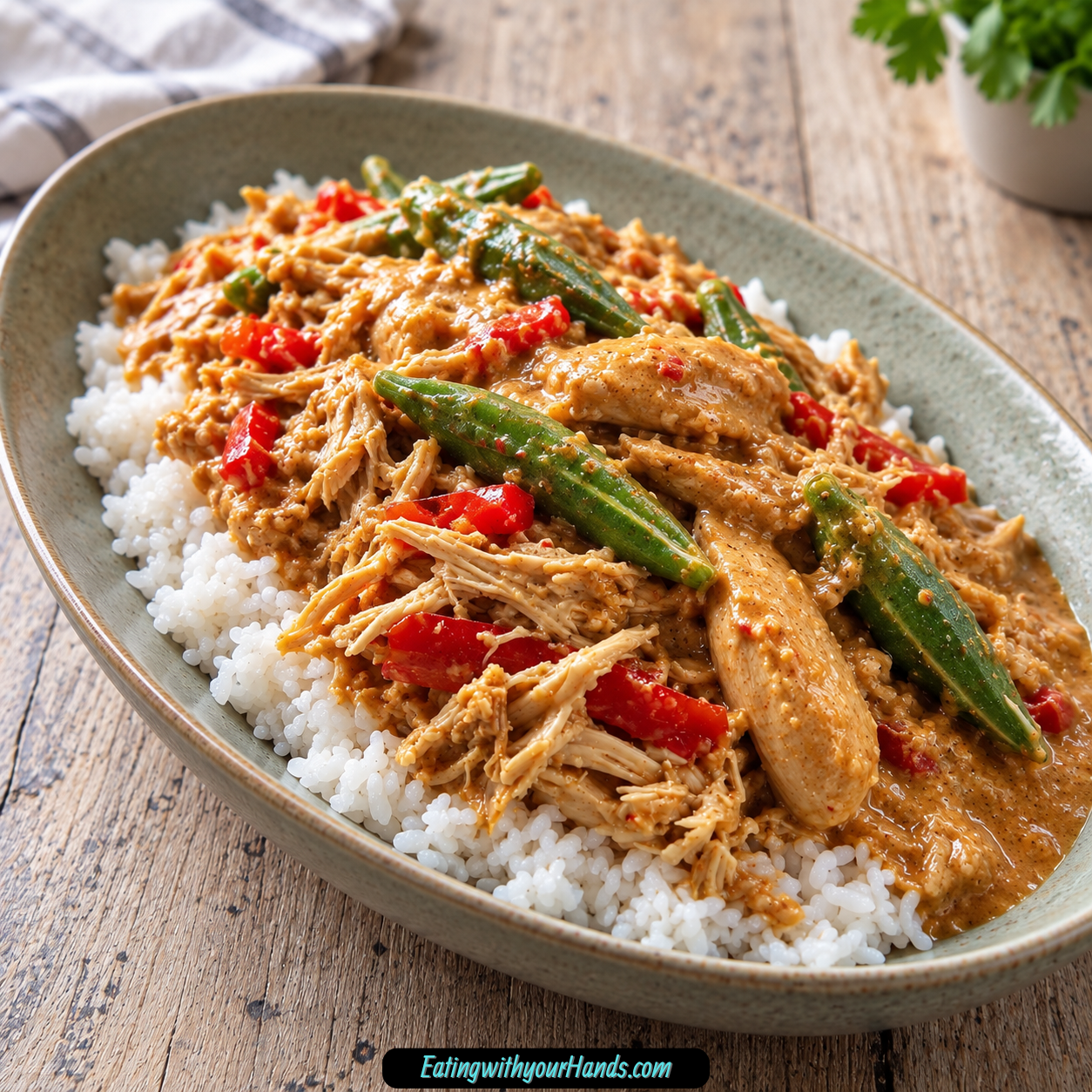
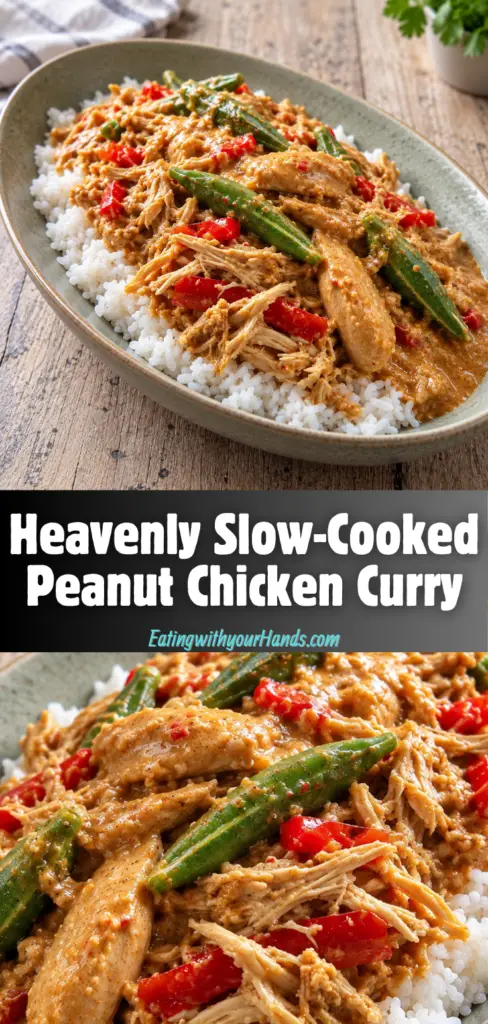
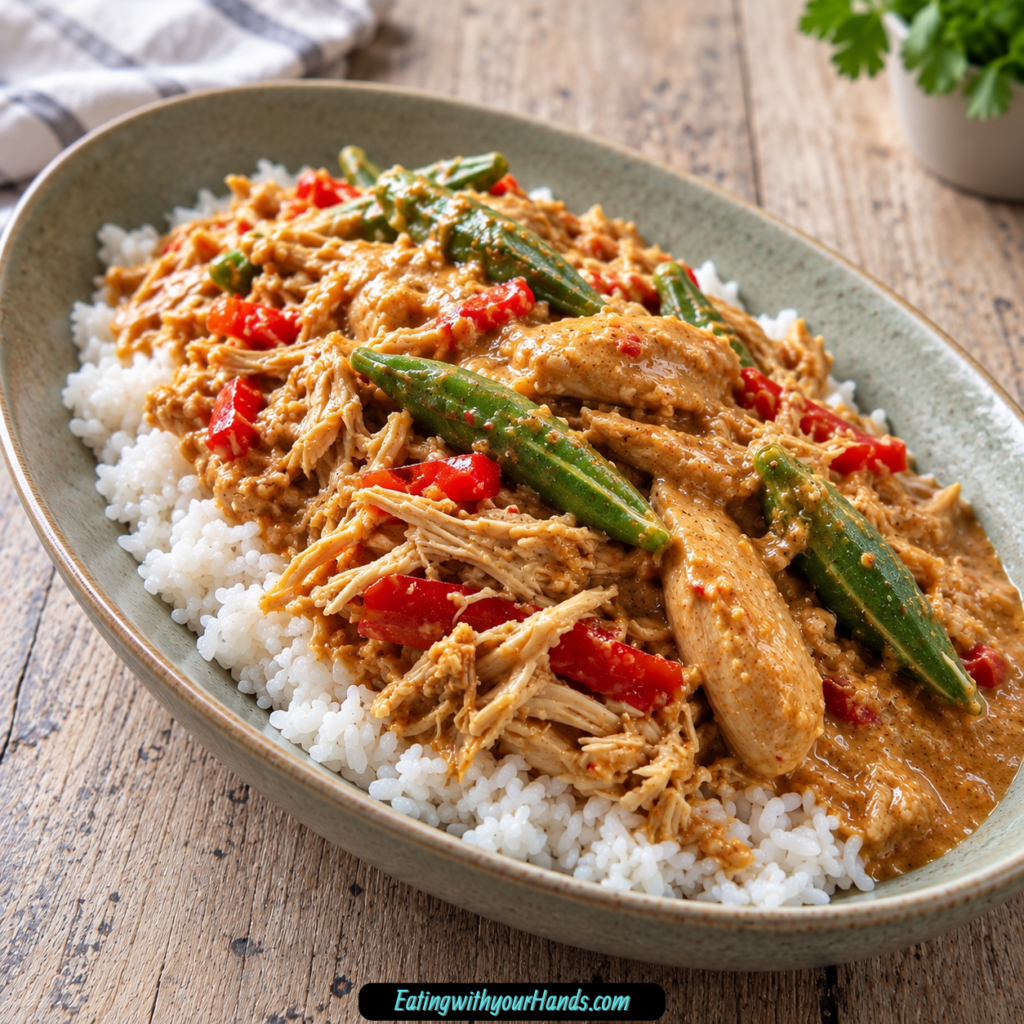
Heavenly Slow-Cooked Peanut Chicken Curry is the kind of meal that makes the whole house smell warm, rich, and comforting long before dinner hits the table. It is creamy, savory, gently sweet, a little tangy, and deeply satisfying, with tender chicken thighs tucked into a velvety peanut coconut sauce that tastes like it spent the whole day becoming exactly what you needed.
This is slow cooker comfort food at its best. You add the sauce ingredients, nestle in the chicken and vegetables, close the lid, and let time do the heavy lifting.
The sauce is the heart of the recipe. Creamy peanut butter melts into coconut milk, then chicken broth, soy sauce, red curry paste, brown sugar, lime juice, garlic, and ginger bring it into balance.
By the time the chicken finishes cooking, the sauce is thick and lush. It clings to every bite and turns simple chicken thighs into something that feels cozy, flavorful, and worth looking forward to all day.
This curry is especially perfect for busy weeknights. It takes about 10 minutes to get everything into the slow cooker, and then dinner quietly takes care of itself while the day keeps moving.
The chicken thighs stay juicy even with slow cooking. They become tender enough to shred with a fork, but still rich and satisfying in the sauce.
The red bell pepper softens into the curry, the onion adds sweetness, and the snap peas bring a pop of green when stirred in near the end. Fresh cilantro and rice finish the bowl with color, freshness, and comfort.
Heavenly Slow-Cooked Peanut Chicken Curry is creamy, family-friendly, flexible, and made for real life. It is the kind of dinner that tastes like effort, even though the slow cooker did most of the work.
Table of Contents
- Why You’ll Love This Slow-Cooked Peanut Chicken Curry
- Recipe Details
- Ingredients
- Ingredient Notes
- Optional Swaps, Variations, and Flavor Ideas
- Classic Slow-Cooked Peanut Chicken Curry
- Mild Peanut Chicken Curry
- Spicier Peanut Chicken Curry
- Honey Peanut Chicken Curry
- Maple Peanut Chicken Curry
- Almond Butter Curry
- Cashew Butter Curry
- Sunflower Seed Butter Curry
- Chicken Breast Peanut Curry
- Tofu Peanut Curry
- Chickpea Peanut Curry
- Shrimp Peanut Curry
- Gluten-Free Peanut Curry
- Lighter Peanut Curry
- Extra Vegetable Peanut Curry
- Why This Recipe Works
- Directions
- Step 1: Prepare the Slow Cooker
- Step 2: Add Peanut Butter and Coconut Milk
- Step 3: Add the Broth and Seasonings
- Step 4: Add Garlic and Ginger
- Step 5: Taste the Sauce Base
- Step 6: Add the Chicken
- Step 7: Add Onion and Bell Pepper
- Step 8: Cook on Low or High
- Step 9: Sear the Chicken First if Desired
- Step 10: Add Snap Peas Near the End
- Step 11: Check the Chicken
- Step 12: Stir and Shred
- Step 13: Adjust the Sauce Thickness
- Step 14: Brighten the Flavor
- Step 15: Let the Curry Rest
- Step 16: Prepare the Rice
- Step 17: Garnish the Curry
- Step 18: Serve Warm
- Serving Ideas
- Storage
- Freezing
- Reheating
- Make-Ahead
- Helpful Notes for Best Results
- Variations
- Classic Heavenly Slow-Cooked Peanut Chicken Curry
- Chicken Breast Peanut Curry
- Almond Butter Chicken Curry
- Cashew Butter Chicken Curry
- Sunflower Seed Butter Curry
- Tofu Peanut Curry
- Chickpea Peanut Curry
- Shrimp Peanut Curry
- Gluten-Free Peanut Curry
- Light Coconut Peanut Curry
- Extra Vegetable Peanut Curry
- Instant Pot Peanut Chicken Curry
- Troubleshooting
- Frequently Asked Questions
- Nutritional Information
- Why This Recipe Works So Well
- Final Thoughts
- Heavenly Slow-Cooked Peanut Chicken Curry
Why You’ll Love This Slow-Cooked Peanut Chicken Curry
This curry is perfect for busy weeknights. You can prepare it in about 10 minutes and let the slow cooker handle the rest.
The sauce is bold and creamy. Peanut butter and coconut milk create a rich base, while curry paste, lime juice, soy sauce, garlic, and ginger add depth.
The chicken becomes very tender. Boneless, skinless chicken thighs stay juicy and shred easily.
It is easy to customize. Adjust the curry paste, swap sweeteners, use different proteins, or change the vegetables.
Leftovers taste even better. The flavors deepen overnight in the refrigerator.
It works for family-style meals. Serve it over rice with garnishes and let everyone build their bowl.
Recipe Details
This recipe uses 2 lbs boneless, skinless chicken thighs. Chicken thighs stay juicier than chicken breasts in the slow cooker.
The sauce starts with 1 cup creamy peanut butter and 1 can or 14 oz coconut milk. Shake the coconut milk well before opening.
The liquid also includes ½ cup chicken broth. Add more if you prefer a thinner sauce.
The seasoning base includes ¼ cup soy sauce, 2 tablespoons red curry paste, 2 tablespoons brown sugar, 1 tablespoon lime juice, 4 cloves minced garlic, and 1 inch grated ginger.
The vegetables include 1 finely chopped onion, 1 sliced red bell pepper, and 1 cup snap peas if using. Add the snap peas during the last 30 minutes.
Cook on low for 4 to 5 hours. Cook on high for 2 to 3 hours if needed.
Let the curry rest for 10 to 15 minutes after cooking. This helps the sauce thicken slightly and the flavors settle.
Serve with cooked rice. Jasmine or basmati rice both work well.
Ingredients
For the Curry
- 2 lbs boneless, skinless chicken thighs
- 1 cup creamy peanut butter
- 1 can coconut milk, 14 oz
- ½ cup chicken broth
- ¼ cup soy sauce
- 2 tablespoon red curry paste
- 2 tablespoon brown sugar
- 1 tablespoon lime juice
- 4 cloves garlic, minced
- 1 inch piece of ginger, grated
- 1 onion, finely chopped
- 1 red bell pepper, sliced
- 1 cup snap peas, optional
- Fresh cilantro for garnish
- Cooked rice for serving
Optional Swaps, Add-Ins, and Serving Ideas
- Honey
- Maple syrup
- Almond butter
- Cashew butter
- Sunflower seed butter
- Boneless chicken breasts
- Firm tofu
- Chickpeas
- Shrimp
- Tamari
- Coconut aminos
- Light coconut milk
- Half-and-half
- Zucchini
- Eggplant
- Baby corn
- Water chestnuts
- Spinach
- Kale
- Jasmine rice
- Basmati rice
- Pandan leaf
- Warm naan
- Roti
- Crispy rice noodles
- Quinoa
- Cauliflower rice
- Lettuce cups
- Crushed peanuts
- Lime wedges
- Thinly sliced red onion
- Scallions
- Chili flakes
- Sriracha
- Hot water
Ingredient Notes
Chicken thighs are ideal for this curry because they stay juicy during slow cooking. They become tender without drying out.
Chicken breasts can be used, but they need a shorter cooking time. Reduce the cook time by about 30 minutes if using breasts.
Creamy peanut butter gives the sauce its thick, velvety texture. Regular store-brand peanut butter works well.
Natural drippy peanut butter is not the best choice here. It can make the sauce thinner and less smooth.
Coconut milk adds richness and body. Shake the can before opening so the cream and liquid combine.
Chicken broth loosens the sauce. Add extra broth if you prefer a thinner curry.
Soy sauce adds savory depth. Reduced-sodium soy sauce can help you control saltiness.
Red curry paste brings heat and flavor. Start with 1 tablespoon if you are spice-shy, or use the full 2 tablespoons for more kick.
Brown sugar balances the spice and salt. Honey or maple syrup can be used for a different sweetness.
Lime juice brightens the sauce. A fresh squeeze at the end can also wake up leftovers.
Garlic and ginger give the curry its aromatic base. Fresh ginger can be grated without peeling first.
Onion melts into the curry and adds sweetness. Red bell pepper adds color and gentle crunch.
Snap peas should be added near the end. If they cook too long, they lose their crisp texture.
Optional Swaps, Variations, and Flavor Ideas
Classic Slow-Cooked Peanut Chicken Curry
Use chicken thighs, peanut butter, coconut milk, chicken broth, soy sauce, red curry paste, brown sugar, lime juice, garlic, ginger, onion, bell pepper, snap peas, cilantro, and rice. This gives the full creamy peanut curry.
Cook low and slow for the deepest flavor. Add snap peas near the end.
Mild Peanut Chicken Curry
Start with 1 tablespoon red curry paste instead of 2 tablespoons. This keeps the curry gentler.
You can always stir in more curry paste later. It is easier to add heat than remove it.
Spicier Peanut Chicken Curry
Use the full 2 tablespoons red curry paste and add chili flakes or sriracha at the end. This gives the curry more warmth.
Taste before adding too much heat. The peanut sauce should stay balanced.
Honey Peanut Chicken Curry
Use honey instead of brown sugar. The sweetness becomes smooth and floral.
Use the same amount. Taste at the end and adjust lime juice if needed.
Maple Peanut Chicken Curry
Use maple syrup instead of brown sugar. This gives a different sweetness.
The curry will still be creamy and rich. Serve with rice.
Almond Butter Curry
Use almond butter instead of peanut butter. The flavor becomes slightly sweeter and more delicate.
The sauce will still be creamy. Stir well to combine.
Cashew Butter Curry
Use cashew butter for an extra creamy sauce. It gives the curry a satay-like feeling.
This version tastes rich and smooth. Use the same method.
Sunflower Seed Butter Curry
Use sunflower seed butter if nut allergies are a concern. The flavor changes but still works.
Avoid very thin seed butter if possible. A creamy texture is best.
Chicken Breast Peanut Curry
Use boneless chicken breasts instead of thighs. Reduce the cooking time by about 30 minutes.
Add an extra ¼ cup broth if needed. Chicken breasts dry out more quickly.
Tofu Peanut Curry
Use firm tofu, patted dry and cubed. Add tofu in the last hour so it keeps its shape.
The sauce still carries the flavor. Serve gently so the tofu does not break apart.
Chickpea Peanut Curry
Use chickpeas for a vegetarian twist. They hold up well in the sauce.
The texture is different from chicken but still hearty. Taste and adjust seasoning.
Shrimp Peanut Curry
Add shrimp during the final 15 minutes. Shrimp cook very quickly.
Do not add them at the beginning. They can become tough.
Gluten-Free Peanut Curry
Use tamari instead of soy sauce. Coconut aminos can also work, though they are sweeter.
Taste before serving. Different sauces change saltiness.
Lighter Peanut Curry
Use light coconut milk or half-and-half instead of full-fat coconut milk. The sauce will not be as rich.
Natural peanut butter can also make it lighter, but stir it well first. The texture may change.
Extra Vegetable Peanut Curry
Add zucchini or eggplant with the chicken. Baby corn and water chestnuts add crunch.
Spinach or kale can be stirred in at the end. They wilt quickly.
Why This Recipe Works
This recipe works because the slow cooker gives the sauce time to become thick and flavorful. Peanut butter and coconut milk slowly blend into a creamy base.
Chicken thighs are forgiving in slow cooking. They stay moist and become tender enough to shred.
Soy sauce adds savory depth. Brown sugar balances the saltiness, and lime juice adds brightness.
Red curry paste gives the dish warmth and spice. Garlic and ginger make the sauce taste layered.
Onion and red bell pepper soften into the curry. They add sweetness and color without needing much effort.
Snap peas are added late so they keep their fresh texture. This prevents them from turning mushy.
Resting the curry before serving helps the sauce settle. It also allows the chicken to absorb more flavor.
The recipe is flexible because the sauce works with many proteins and vegetables. Peanut curry is forgiving as long as you taste and adjust at the end.
Directions
Step 1: Prepare the Slow Cooker
Set out your slow cooker and make sure it is clean and ready. This recipe is mixed directly in the insert to save dishes.
Keep a whisk or sturdy spoon nearby. Peanut butter can take a little effort to blend at first.
Step 2: Add Peanut Butter and Coconut Milk
Add 1 cup creamy peanut butter and 1 can or 14 oz coconut milk to the slow cooker. Shake the coconut milk well before opening.
Whisk until the mixture begins to look creamy. It may resist at first, but it will smooth out.
Step 3: Add the Broth and Seasonings
Add ½ cup chicken broth, ¼ cup soy sauce, 2 tablespoons red curry paste, 2 tablespoons brown sugar, and 1 tablespoon lime juice. Stir well.
If you are spice-shy, start with 1 tablespoon red curry paste. More can be added later.
Step 4: Add Garlic and Ginger
Add 4 cloves minced garlic and 1 inch grated ginger. Stir them into the sauce.
The garlic and ginger will flavor the entire curry as it slow cooks. Fresh aromatics make the sauce taste deeper.
Step 5: Taste the Sauce Base
Taste the sauce before adding the chicken if desired. It should taste savory, creamy, slightly sweet, and a little tangy.
The flavor will deepen as it cooks. Do not over-adjust too early.
Step 6: Add the Chicken
Place 2 lbs boneless, skinless chicken thighs into the sauce. Add them whole.
Push the chicken down so it is mostly covered. The chicken will become tender and easy to shred later.
Step 7: Add Onion and Bell Pepper
Scatter the finely chopped onion and sliced red bell pepper over the chicken. Gently press them into the sauce.
Do not stir too aggressively. The ingredients will settle as they cook.
Step 8: Cook on Low or High
Cover the slow cooker with the lid. Cook on low for 4 to 5 hours or on high for 2 to 3 hours.
Low cooking gives deeper flavor and very tender chicken. High works when time is shorter.
Step 9: Sear the Chicken First if Desired
If you have 5 extra minutes, sear the chicken thighs in a hot pan for about 2 minutes per side before adding them to the slow cooker. This adds a deeper browned flavor.
This step is optional. The curry is still delicious without it.
Step 10: Add Snap Peas Near the End
If using 1 cup snap peas, stir them in during the last 30 minutes. This keeps them bright and crisp.
Do not add them at the beginning. They can turn soft and dull.
Step 11: Check the Chicken
The curry is done when the chicken shreds easily with a fork. The sauce should be thick and creamy.
If the chicken does not shred easily, let it cook a little longer. Slow cookers can vary.
Step 12: Stir and Shred
Gently stir the curry. The chicken will begin to break into bite-sized pieces.
You can shred it more with two forks if desired. Keep some texture rather than turning it into tiny shreds.
Step 13: Adjust the Sauce Thickness
If the sauce seems too thick, stir in a splash of hot water or broth. About ¼ cup extra liquid often works well.
The sauce thickens as it sits. Adjust right before serving.
Step 14: Brighten the Flavor
Taste the curry. Add a splash more lime juice if it needs brightness.
If it tastes too spicy, add a little honey or extra coconut milk. If it tastes too mild, add chili flakes or sriracha.
Step 15: Let the Curry Rest
Let the curry rest for 10 to 15 minutes with the lid on. This helps the sauce settle.
The chicken absorbs more sauce as it rests. The texture becomes even better.
Step 16: Prepare the Rice
Serve the curry with cooked rice. Jasmine rice and basmati rice are both excellent choices.
For extra aroma, jasmine rice can be cooked with a pandan leaf if available. This makes the meal feel special.
Step 17: Garnish the Curry
Top the curry with fresh cilantro if desired. Add crushed peanuts, lime wedges, thinly sliced red onion, scallions, chili flakes, or sriracha if you like.
The garnishes add crunch, freshness, heat, and brightness. Let everyone customize their bowl.
Step 18: Serve Warm
Spoon the peanut chicken curry over rice or your preferred base. Serve warm while the sauce is creamy.
Enjoy with naan, roti, crispy rice noodles, quinoa, cauliflower rice, or lettuce cups if desired. Keep extra lime wedges nearby.
Serving Ideas
Serve this curry over jasmine rice. The floral aroma pairs beautifully with peanut sauce.
Basmati rice also works well. Toasting the grains in butter first can add nuttiness.
Warm naan or roti is perfect for scooping sauce. This is especially good for family-style serving.
Crispy rice noodles add texture. Crush them over the top before serving.
Quinoa or cauliflower rice can make the bowl feel lighter. Both still work with the creamy sauce.
Lettuce cups make the curry feel fresh and hands-on. They are great for warm nights.
Add crushed peanuts on top for crunch. Toast them first if you want deeper flavor.
Serve with lime wedges. A fresh squeeze makes the sauce taste brighter.
Storage
Let the curry cool until it stops steaming, about 30 minutes. Then transfer it to airtight containers.
Store in the refrigerator for 3 to 4 days. The flavors deepen overnight.
Store rice separately if possible. Rice can soak up too much sauce if stored together.
The peanut sauce protects the chicken and helps it stay moist. It may thicken in the refrigerator.
Stir the curry before reheating. The sauce may settle as it chills.
If the sauce looks very thick, add a splash of water or broth when reheating. This brings it back to a creamy texture.
Keep garnishes separate. Add cilantro, peanuts, lime, onions, scallions, and spicy toppings fresh.
Freezing
This curry freezes well. Portion it into freezer bags or containers.
Two-cup portions are helpful for easy meals. Squeeze out excess air if using bags.
Lay freezer bags flat so they stack neatly. Freeze for up to 3 months.
The coconut milk may separate slightly after thawing. A good stir will bring it back together.
Do not freeze snap peas if you can avoid it. They can turn mushy.
Thaw overnight in the refrigerator before reheating. This gives the best texture.
If reheating from frozen in a pinch, place the frozen block in a saucepan with ¼ cup water and simmer covered, stirring often, for about 15 minutes.
Reheating
Reheat refrigerated curry gently on the stove over medium-low heat. Add a splash of water or broth to loosen the sauce.
Stir often. Peanut oils can separate if the curry is heated too aggressively.
Microwaving also works. Cover with a damp paper towel to prevent splatters.
Microwave in 30-second bursts, stirring between each. This helps the sauce heat evenly.
Frozen curry is best thawed overnight first. Then reheat gently.
If the reheated curry tastes flat, add a fresh squeeze of lime juice. This wakes up the sauce.
Add fresh garnishes after reheating. Cilantro, peanuts, and lime taste best fresh.
Make-Ahead
This curry is naturally make-ahead friendly. You can add everything to the slow cooker in the morning and come home to dinner.
You can also prep the sauce base ahead. Combine the peanut butter, coconut milk, broth, soy sauce, curry paste, brown sugar, lime juice, garlic, and ginger.
For a future shortcut, double the sauce base and freeze half in a zip-top bag. Thaw it when ready to cook and add fresh chicken and vegetables.
Chop the onion and bell pepper ahead if needed. Store them separately in the refrigerator.
Wait to prep snap peas until closer to cooking, or keep them separate. Add them only in the last 30 minutes.
Cooked curry can be made a day ahead. The flavor deepens overnight.
When reheating make-ahead curry, add broth or water as needed. Finish with lime and garnishes.
Helpful Notes for Best Results
Use the full cup of peanut butter for the richest sauce. It may seem like a lot, but it creates the creamy texture.
Regular creamy peanut butter works well. Avoid very drippy natural peanut butter if you want a thick sauce.
Shake the coconut milk can before opening. This helps the cream and liquid combine.
Do not stir too much while the curry cooks. The layers create flavor as they simmer.
Add snap peas only during the last 30 minutes. They should stay green and crisp.
Let the curry rest for 10 to 15 minutes before serving. The sauce thickens and the flavor settles.
Add hot water or broth if the sauce becomes too thick. The sauce continues to thicken as it sits.
Taste at the end. A splash of lime juice or a pinch of salt can fix many balance issues.
Variations
Classic Heavenly Slow-Cooked Peanut Chicken Curry
Use chicken thighs, creamy peanut butter, coconut milk, chicken broth, soy sauce, red curry paste, brown sugar, lime juice, garlic, ginger, onion, red bell pepper, snap peas, cilantro, and rice. This gives the full creamy curry.
Cook on low for the best texture. Serve with rice and fresh toppings.
Chicken Breast Peanut Curry
Use boneless chicken breasts instead of thighs. Reduce cooking time by about 30 minutes.
Add ¼ cup extra broth if needed. Chicken breast can dry out more easily.
Almond Butter Chicken Curry
Use almond butter instead of peanut butter. The sauce becomes slightly sweeter and more delicate.
Stir very well. Serve with rice.
Cashew Butter Chicken Curry
Use cashew butter for a very creamy sauce. The flavor becomes smooth and satay-like.
This version is rich and mellow. Add lime to brighten it.
Sunflower Seed Butter Curry
Use sunflower seed butter for an allergy-friendly option. The flavor will change but still work.
Avoid thin, oily seed butter if possible. Creamy texture matters.
Tofu Peanut Curry
Use firm tofu, patted dry and cubed. Add tofu during the last hour.
This helps the tofu keep its shape. Stir gently.
Chickpea Peanut Curry
Use chickpeas instead of chicken for a vegetarian version. The curry becomes hearty and simple.
Taste and adjust seasoning. Chickpeas absorb flavor differently from chicken.
Shrimp Peanut Curry
Add shrimp during the final 15 minutes. They cook quickly.
Do not add shrimp at the beginning. They can become overcooked.
Gluten-Free Peanut Curry
Use tamari instead of soy sauce. Coconut aminos can also work, though they taste sweeter.
Taste before serving. Adjust saltiness and lime as needed.
Light Coconut Peanut Curry
Use light coconut milk. The sauce will be thinner and less rich.
You can also try half-and-half. The flavor and texture will change.
Extra Vegetable Peanut Curry
Add zucchini or eggplant with the chicken. Add baby corn or water chestnuts for crunch.
Stir spinach or kale in at the end. They wilt quickly.
Instant Pot Peanut Chicken Curry
Use the sauté function to mix the sauce. Add everything except snap peas.
Pressure cook on high for 10 minutes, then quick release. Stir in snap peas and let the curry sit for 5 minutes.
Troubleshooting
The Sauce Is Too Thick
Stir in hot water or broth. Start with a splash and add more as needed.
About ¼ cup extra liquid often works well. The sauce thickens as it sits.
The Sauce Is Too Thin
Let the curry rest 10 to 15 minutes. The sauce thickens slightly as it cools.
If it is still too thin, cook uncovered briefly if your slow cooker allows. Stir gently.
The Sauce Separated
Peanut butter and coconut milk can separate if heated too quickly or not mixed well. Stir vigorously.
If needed, whisk in a splash of hot water. It should come back together.
The Curry Is Too Spicy
Add honey or extra coconut milk. This softens the heat.
Serve with rice to mellow the spice. Use less curry paste next time.
The Curry Is Too Mild
Add more red curry paste, chili flakes, or sriracha. Stir well and taste.
Add heat gradually. The flavor should stay balanced.
The Chicken Is Dry
Chicken breasts may have cooked too long. Use thighs for the juiciest texture.
If using breasts, reduce cooking time and add extra broth. Check early.
The Snap Peas Are Mushy
They were added too soon. Add them during the last 30 minutes only.
For leftovers, skip freezing snap peas. They soften too much.
The Sauce Tastes Flat
Add a fresh squeeze of lime juice. This brightens the sauce quickly.
A pinch of salt can also help. Taste before adjusting.
The Curry Is Too Rich
Use light coconut milk next time or add extra vegetables. A little extra lime also helps balance richness.
Serve with cauliflower rice or lettuce cups for a lighter plate. The sauce will still be creamy.
The Coconut Milk Looks Grainy After Freezing
Coconut milk can separate after thawing. Stir well while reheating.
A splash of broth or water helps smooth it out. Reheat gently.
Frequently Asked Questions
Can I use chicken breasts instead of thighs?
Yes, but chicken thighs are recommended because they stay juicier. If using breasts, reduce the cooking time by about 1 hour or check early.
Add an extra ¼ cup broth if needed. Chicken breasts dry out faster than thighs.
How do I adjust the spiciness?
Start with 1 tablespoon red curry paste if you are nervous about heat. You can stir in more later.
If the curry is too spicy, add honey or extra coconut milk. If it is too mild, add cayenne, red pepper flakes, or sriracha.
Why did my sauce separate?
Peanut butter and coconut milk can split if heated too fast or not mixed well. Stir vigorously to bring it back together.
If it still looks separated, whisk in a splash of hot water. Next time, stir the sauce base very well before adding chicken.
Can I make this in an Instant Pot?
Yes, use the sauté function to mix the sauce, then add everything except snap peas. Pressure cook on high for 10 minutes and use quick release.
Stir in the snap peas and let the curry sit for 5 minutes. The texture will be slightly different but still delicious.
How can I make it less rich?
Use light coconut milk and natural peanut butter, making sure the peanut butter is stirred well first. The sauce will be lighter and less thick.
You can also add extra bell pepper or zucchini. The full-rich version has the creamiest texture.
Can I freeze this curry?
Yes, the curry freezes well for up to 3 months. Freeze without snap peas if possible.
Thaw overnight in the refrigerator and reheat gently. Stir well because coconut milk may separate slightly.
What should I serve with peanut chicken curry?
Serve with jasmine rice, basmati rice, naan, roti, crispy rice noodles, quinoa, cauliflower rice, or lettuce cups. Rice is the classic comfort choice.
Add cilantro, crushed peanuts, lime wedges, red onion, scallions, chili flakes, or sriracha. The toppings make the bowl feel fresh.
Can I make a vegetarian version?
Yes, use firm tofu or chickpeas instead of chicken. Add tofu in the last hour so it keeps its shape.
Use tamari or soy sauce as needed and taste at the end. Adjust lime and sweetness if necessary.
Nutritional Information
These numbers are estimates and can vary depending on brands, substitutions, and serving size. The estimate is based on about 1.5 cups curry plus ½ cup rice per serving.
Each serving has about 520 calories. The richness comes from peanut butter and coconut milk.
Each serving has about 38g protein. Chicken and peanut butter both contribute.
Each serving has about 24g carbohydrates. Some come from rice, vegetables, coconut milk, and brown sugar.
Each serving has about 4g fiber. Snap peas, peanut butter, and vegetables contribute.
Each serving has about 12g sugar. Coconut milk and brown sugar are part of that amount.
Each serving has about 32g fat. Peanut butter and coconut milk create the creamy texture.
For a lighter version, use the substitution ideas above. The full version is the richest and creamiest.
Why This Recipe Works So Well
Heavenly Slow-Cooked Peanut Chicken Curry works because it combines slow-cooked tenderness with a sauce that becomes richer over time. Peanut butter and coconut milk create the creamy base.
Chicken thighs are the right protein for the slow cooker. They stay moist and shred easily.
Soy sauce, curry paste, garlic, and ginger make the sauce savory and aromatic. Brown sugar and lime juice keep it balanced.
Onion and bell pepper add sweetness and body. Snap peas bring fresh crunch when added near the end.
The sauce thickens as it cooks and rests. That gives the curry its cozy texture.
The dish is also practical. You can prep it quickly, cook it while busy, and store leftovers for easy meals.
The recipe welcomes substitutions. Nut butters, tofu, chickpeas, shrimp, different vegetables, tamari, coconut aminos, and lighter coconut milk can all work.
Most of all, this curry works because it gives you comfort without constant attention. It is creamy, fragrant, deeply flavorful, and ready when the day slows down.
Final Thoughts
Heavenly Slow-Cooked Peanut Chicken Curry is made with boneless skinless chicken thighs, creamy peanut butter, coconut milk, chicken broth, soy sauce, red curry paste, brown sugar, lime juice, garlic, ginger, onion, red bell pepper, optional snap peas, fresh cilantro, and cooked rice. The slow cooker turns those simple ingredients into tender chicken and a rich peanut coconut curry sauce.
Serve it over jasmine rice, basmati rice, naan, roti, crispy rice noodles, quinoa, cauliflower rice, or lettuce cups, and finish with cilantro, crushed peanuts, lime wedges, red onion, scallions, chili flakes, or sriracha. With its 10-minute prep, low 4-to-5-hour cook time, high 2-to-3-hour option, final 30-minute snap pea timing, 10-to-15-minute rest, 3-to-4-day refrigerator storage, 3-month freezer option, and variations like almond butter, cashew butter, sunflower seed butter, chicken breast, tofu, chickpeas, shrimp, tamari, coconut aminos, light coconut milk, zucchini, eggplant, baby corn, water chestnuts, spinach, kale, and Instant Pot cooking, this curry is creamy, flexible, deeply comforting, and made for busy nights.
Heavenly Slow-Cooked Peanut Chicken Curry
Rich, creamy, tender, and full of bold peanut-curry flavor, this Heavenly Slow-Cooked Peanut Chicken Curry combines chicken thighs, coconut milk, peanut butter, red curry paste, soy sauce, garlic, ginger, vegetables, and lime juice in one comforting slow cooker meal. Serve it hot over cooked rice with fresh cilantro for an easy Asian Fusion main dish.
Recipe Details
- Prep Time: 15 minutes
- Cook Time: 4 hours
- Total Time: 4 hours 15 minutes
- Course: Main Dish
- Cuisine: Asian Fusion
- Servings: 4 -6 servings
- Calories: 520 kcal
Ingredients
For Serving and Garnish
- Cooked rice for serving
- Fresh cilantro for garnish optional
For the Chicken and Vegetables
- 1 cup snap peas optional; adds color and crispness
- 1 red bell pepper sliced
- 1 onion finely chopped
- 2 lbs boneless skinless chicken thighs
For the Peanut Curry Sauce
- 1 inch piece of ginger grated
- 4 cloves garlic minced
- 1 tablespoon lime juice freshly squeezed is best
- 2 tablespoon brown sugar or honey/maple syrup
- 2 tablespoon red curry paste adjust to taste
- ¼ cup soy sauce use reduced-sodium if preferred
- ½ cup chicken broth or more for a thinner sauce
- 1 can 14 oz coconut milk
- 1 cup creamy peanut butter
Instructions
Step 1: Make the Peanut Curry Sauce
In a slow cooker, combine the creamy peanut butter, coconut milk, chicken broth, soy sauce, red curry paste, brown sugar, lime juice, minced garlic, and grated ginger. Stir well until the sauce ingredients are blended.
Use more chicken broth if you want a thinner sauce. Adjust the red curry paste to taste, and use reduced-sodium soy sauce if preferred.
Step 2: Add the Chicken and Vegetables
Add the boneless skinless chicken thighs, finely chopped onion, and sliced red bell pepper to the slow cooker. Mix everything gently so the chicken and vegetables are coated in the peanut curry sauce.
The chicken should sit in the sauce so it can become tender as it cooks. The onion and bell pepper will soften into the curry as the flavors develop.
Step 3: Slow Cook Until Tender
Cover and cook on low for 4-5 hours or on high for 2-3 hours, until the chicken is tender. Keep the slow cooker covered while it cooks.
The listed cook time is 4 hours, but the method gives both low and high cooking options. Use the tenderness of the chicken as the main cue.
Step 4: Add the Snap Peas
If using snap peas, add them during the last 30 minutes of cooking. Stir them into the sauce so they warm through while keeping some color and crispness.
The snap peas are optional. They add brightness and texture to the creamy peanut curry.
Step 5: Finish the Chicken
Shred the chicken slightly if desired. Stir it back into the sauce so the pieces are coated in the creamy peanut curry.
If you prefer larger pieces of chicken, leave them mostly whole. Either way, make sure the chicken is tender before serving.
Step 6: Garnish and Serve
Garnish with fresh cilantro if desired. Serve the curry hot over cooked rice.
Spoon plenty of sauce over each serving. Divide into 4 -6 servings.
Notes
- For a lighter sauce, use light coconut milk or half-and-half.
- Almond or cashew butter can replace peanut butter for a different flavor.
- Tamari can be used for a gluten-free option.
- For a vegan version, swap chicken with firm tofu or chickpeas and use vegetable broth.
Serving Suggestions
Serve Heavenly Slow-Cooked Peanut Chicken Curry hot over cooked rice so the creamy peanut curry sauce can soak into each serving. The chicken thighs, peanut butter, coconut milk, red curry paste, soy sauce, garlic, ginger, lime juice, onion, and bell pepper create a rich, savory-sweet main dish with bold flavor.
Fresh cilantro can be added on top if desired. Snap peas are optional, but they add color and crispness when stirred in during the last 30 minutes of cooking.
For a lighter sauce, use light coconut milk or half-and-half as noted. For a different nutty flavor, replace the peanut butter with almond or cashew butter.
Storage
How to Store
The recipe does not provide specific storage instructions or storage duration, so no exact storage time is added here.
Chicken Tip
Use 2 lbs boneless skinless chicken thighs. Cook until tender, then shred slightly if desired before serving.
Sauce Tip
Use creamy peanut butter, coconut milk, chicken broth, soy sauce, red curry paste, brown sugar, lime juice, garlic, and ginger for the sauce. Add more chicken broth if you want a thinner sauce.
Slow Cooker Tip
Cook on low for 4-5 hours or on high for 2-3 hours, until the chicken is tender. The recipe metadata lists 4 hours as the cook time.
Snap Pea Tip
Add snap peas during the last 30 minutes of cooking if using. They add color and crispness to the curry.
Substitution Tip
Use tamari for a gluten-free option. For a vegan version, swap the chicken with firm tofu or chickpeas and use vegetable broth.
Serving Tip
Serve hot over cooked rice and garnish with fresh cilantro if desired.

Fernando is the creator and writer behind the food blog Eating with your Hands. Living and working in cities like Paris, Barcelona, and Berlin, and being married to a Canadian foodie, has given Fernando a passion and interest in food and inspired him to run EWYH.