
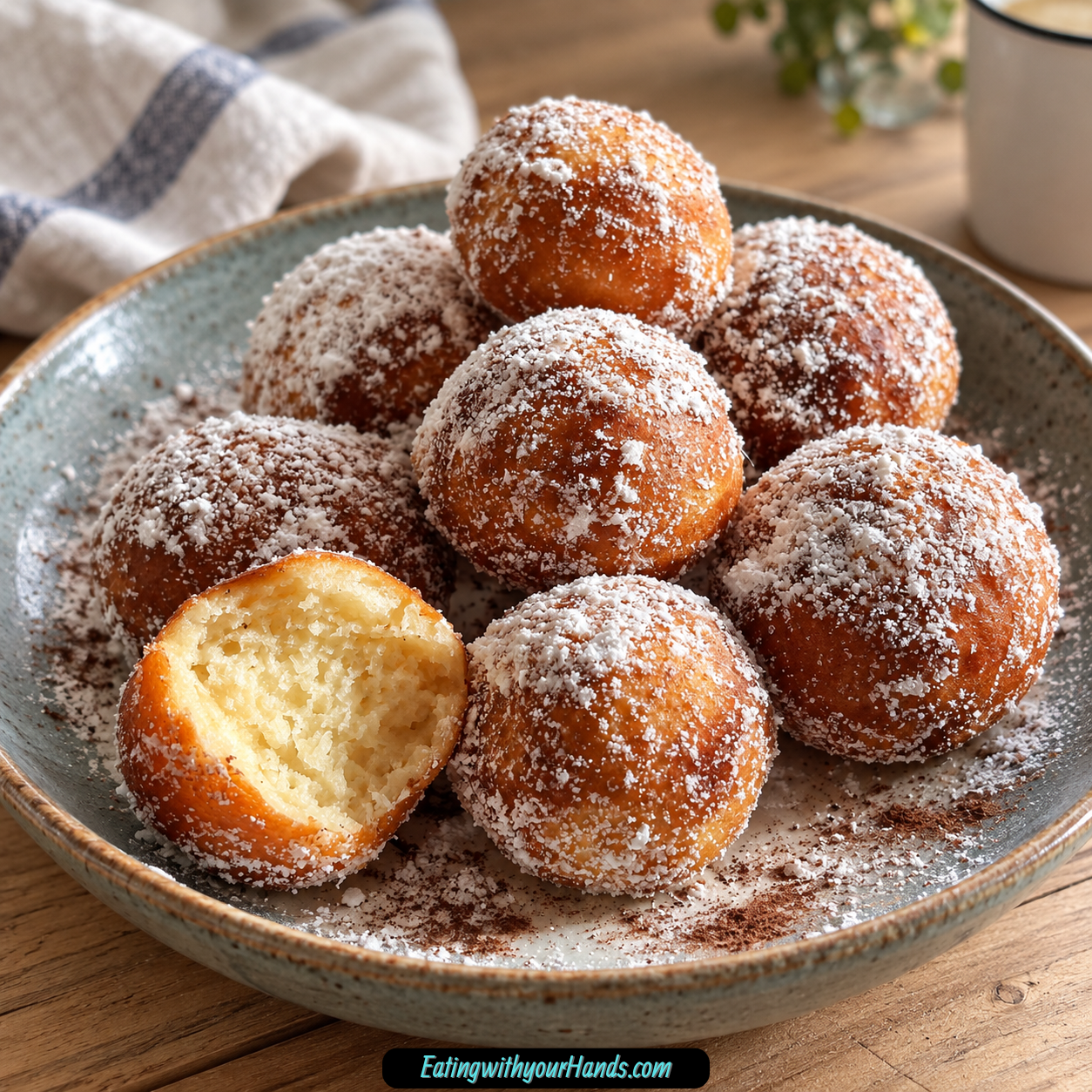
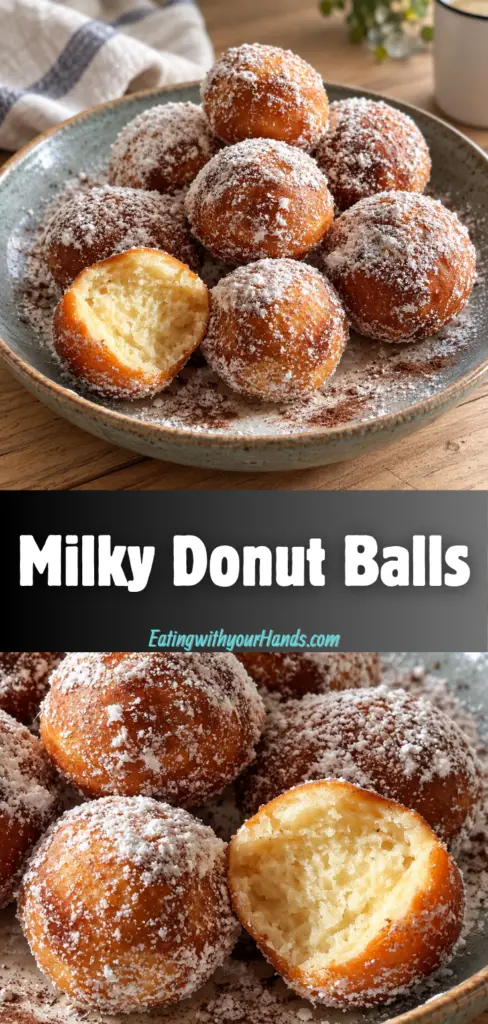
Milky Donut Balls are the kind of sweet little treat that makes a regular morning feel like someone decided to celebrate. They are warm, soft, golden, lightly crisp on the outside, and finished with a sweet milk powder coating that gives every bite a creamy, nostalgic flavor.
These donut balls start with simple pantry ingredients: milk, yeast, milk powder, sugar, butter, flour, and a tiny pinch of salt. After a short rise, the dough is shaped into small rounds, fried until golden, and rolled in a sweet milky dusting while still warm.
The first bite is the reason these disappear so fast. The outside has that delicate fried-dough finish, while the inside stays soft, fluffy, and cloud-like.
The milk powder in the dough gives them their signature flavor. It adds a gentle creamy sweetness that makes these different from plain donut holes.
Then the dusting adds even more milky sweetness. You can keep it classic with milk powder and sugar, or add cocoa powder for a chocolatey finish.
These are perfect for Sunday mornings, afternoon snacks, dessert trays, family gatherings, or those moments when something warm and homemade sounds better than anything from a bakery. They feel special, but the process is simple enough for a relaxed kitchen day.
You do not need fancy equipment or unusual ingredients. The most important things are lukewarm milk, active yeast, a little patience while the dough rises, and oil that is hot enough to fry without making the donut balls greasy.
Milky Donut Balls are soft, sweet, warm, and fun to share. They are tiny golden bites of comfort, and they taste best when eaten fresh, still warm, and coated in that sweet milky dust.
Table of Contents
- Why You’ll Love These Milky Donut Balls
- Recipe Details
- Ingredients
- Ingredient Notes
- Optional Swaps, Variations, and Flavor Ideas
- Why This Recipe Works
- Directions
- Step 1: Prepare a Large Mixing Bowl
- Step 2: Add the Lukewarm Milk
- Step 3: Sprinkle in the Yeast
- Step 4: Add Milk Powder, Sugar, and Butter
- Step 5: Add Flour and Salt
- Step 6: Knead the Dough
- Step 7: Adjust Stickiness Carefully
- Step 8: Cover and Let Rise
- Step 9: Prepare the Frying Area
- Step 10: Shape the Dough
- Step 11: Keep the Pieces Even
- Step 12: Heat the Oil
- Step 13: Fry in Batches
- Step 14: Cook Until Golden
- Step 15: Drain the Donut Balls
- Step 16: Mix the Dusting
- Step 17: Coat While Warm
- Step 18: Serve Fresh
- Serving Ideas
- Storage
- Reheating
- Make-Ahead
- Helpful Notes for Best Results
- Variations
- Troubleshooting
- Frequently Asked Questions
- Why This Recipe Works So Well
- Final Thoughts
- Milky Donut Balls
Why You’ll Love These Milky Donut Balls
These donut balls are soft and fluffy. The yeast gives them an airy texture that feels light inside.
They have a gentle milky sweetness. Milk powder in the dough and coating gives them their signature flavor.
They use simple ingredients. Milk, yeast, flour, sugar, butter, milk powder, and salt create the base.
They are fun to make. Mixing, rising, shaping, frying, and dusting all feel hands-on and satisfying.
They are easy to customize. Add cocoa powder, cinnamon, cardamom, nutmeg, pumpkin spice, or chocolate filling.
They are best warm. Fresh from the fryer, they have the perfect crisp outside and soft center.
Recipe Details
This recipe uses ⅔ cup lukewarm milk. The milk should feel warm, not hot, like baby bottle temperature.
The yeast is 1 teaspoon. Instant yeast or active dry yeast can both work.
The dough also uses 2 tablespoons milk powder. This is the secret to the extra milky flavor.
The sweetness comes from 3 tablespoons sugar. The dough is sweet but not overly sweet.
The dough uses 3 tablespoons softened butter. Unsalted butter is preferred, but salted butter can work if you skip the extra salt.
The flour is 1½ cups all-purpose flour. Spoon it lightly and do not pack it down.
Use a pinch of salt. A small amount balances the sweetness.
The dough rises for about 1 hour in a warm spot. It should become puffy and nearly doubled.
The donut balls fry in about 2 inches of neutral oil over medium heat. Vegetable or canola oil works well.
Fry for about 2 to 3 minutes per side, turning occasionally, until evenly golden brown. Dust while warm.
Ingredients
For the Dough
- ⅔ cup lukewarm milk
- 1 teaspoon yeast
- 2 tablespoon milk powder
- 3 tablespoon sugar
- 3 tablespoon butter
- 1 ½ cups all-purpose flour
- Pinch of salt
For Dusting
- 1 tablespoon milk powder
- 1 tablespoon sugar
- 1 teaspoon cocoa powder
Optional Swaps, Fillings, and Flavor Ideas
- Unsalted butter
- Salted butter
- Vegetable oil
- Canola oil
- Chocolate chips
- Semi-sweet chocolate
- Milk chocolate
- White chocolate
- Cinnamon
- Cardamom
- Nutmeg
- Pumpkin spice blend
- Freeze-dried strawberries
- Matcha powder
- Melted butter
- Almond milk
- Oat milk
- Coconut milk
- Plant-based milk powder
Ingredient Notes
Lukewarm milk is important because it wakes up the yeast without damaging it. If the milk is too hot, the yeast can stop working.
Test the milk on your wrist. It should feel warm but not hot.
Yeast gives the donut balls their airy texture. Instant or active dry yeast both work in this recipe.
Milk powder is what makes these taste extra milky. It goes into the dough and can also be used in the dusting.
Sugar sweetens the dough and helps the yeast. It also gives the donut balls a gentle sweetness before the coating.
Butter makes the dough soft and rich. Softened butter mixes more easily into the milk mixture.
All-purpose flour gives the dough structure. Add it lightly rather than packing it into the measuring cup.
Salt balances the sweetness. Just a two-finger pinch is enough.
Neutral oil is best for frying. Vegetable oil or canola oil lets the milky flavor stay the focus.
The dusting mixture adds the final sweet finish. Milk powder and sugar keep it classic, while cocoa powder gives a chocolate twist.
Optional Swaps, Variations, and Flavor Ideas
Classic Milky Donut Balls
Use lukewarm milk, yeast, milk powder, sugar, softened butter, all-purpose flour, and salt. Fry the dough balls and dust them with milk powder and sugar.
This version is soft, simple, and creamy. Serve warm for the best texture.
Cocoa Milky Donut Balls
Add 1 teaspoon cocoa powder to the dusting mixture. This gives the coating a light chocolate flavor.
Dutch-processed cocoa gives a deeper flavor if you use it. The cocoa version pairs beautifully with the milky dough.
Chocolate-Filled Donut Balls
Place a few chocolate chips or a small square of chocolate in the center of each dough ball before sealing. Fry as usual.
Semi-sweet chocolate is a great choice. Milk chocolate and white chocolate also work.
Cinnamon Milk Donut Balls
Use ½ teaspoon cinnamon in the dusting mixture instead of cocoa powder. This gives the donut balls a churro-like flavor.
Mix the cinnamon with the sugar before dusting. This helps the spice spread evenly.
Cardamom Milky Donut Balls
Add cardamom to the dusting mixture for a floral, warm flavor. It pairs beautifully with milk powder.
Use a small amount so it does not overpower the dough. Mix well with the sugar.
Holiday Spice Donut Balls
Add a pinch of nutmeg or pumpkin spice blend to the dusting mixture. This creates a cozy holiday-style version.
The spice should be subtle. The milky flavor should still be the star.
Strawberry Milk Donut Balls
Try rolling some donut balls in crushed freeze-dried strawberries mixed with the milk powder and sugar. This gives a fruity pink finish.
The idea adds a fun strawberry milk flavor. Keep the pieces finely crushed for even coating.
Matcha Milk Donut Balls
Try adding matcha powder to the dusting mixture. The flavor becomes earthy and slightly sweet.
Use a small amount at first. Matcha can be strong.
Baked Milky Donut Balls
Bake instead of fry if desired, but the texture will be different. Roll the dough balls in melted butter and bake at 375°F for about 12 to 15 minutes, turning halfway.
They will be more like soft dinner rolls with a sweet coating. They will not have the same crisp fried exterior.
Plant-Based Milk Version
Use almond milk, oat milk, or coconut milk. Make sure it is unsweetened and lukewarm.
The dough may behave slightly differently depending on the milk. Plant-based milk powder can be used if going fully dairy-free.
Why This Recipe Works
This recipe works because yeast creates a light, airy dough. The rise time gives the donut balls their soft interior.
Milk powder adds flavor and richness without making the dough too wet. It gives the donut balls their signature milky taste.
A small amount of sugar sweetens the dough and helps the yeast work. The final dusting adds the rest of the sweetness.
Butter keeps the dough tender. It also adds richness to each bite.
The dough is kneaded only about 5 minutes. That is enough to make it smooth without making it tough.
Frying in properly heated oil creates the contrast. The outside becomes golden, while the inside stays fluffy.
Dusting while warm helps the powder stick. The heat catches the milk powder and sugar so each piece gets coated.
The recipe is flexible because the base is mild. Chocolate, cinnamon, cardamom, cocoa, and other coatings all work well with the milky dough.
Directions
Step 1: Prepare a Large Mixing Bowl
Choose a mixing bowl that gives the dough room to rise. The dough will grow as the yeast works.
A bowl that is too small can make mixing and rising messy. Bigger is easier here.
Step 2: Add the Lukewarm Milk
Pour ⅔ cup lukewarm milk into the bowl. Make sure the milk is warm, not hot.
Test it on your wrist. It should feel like baby bottle temperature.
Step 3: Sprinkle in the Yeast
Add 1 teaspoon yeast to the lukewarm milk. Let it sit for about a minute.
The mixture should become slightly foamy. This shows the yeast is alive and ready.
Step 4: Add Milk Powder, Sugar, and Butter
Whisk in 2 tablespoons milk powder, 3 tablespoons sugar, and 3 tablespoons softened butter. Mix until the mixture looks creamy.
The butter may not fully disappear right away. It will work into the dough as you mix and knead.
Step 5: Add Flour and Salt
Add 1½ cups all-purpose flour and a pinch of salt. Stir with a wooden spoon at first.
The dough will begin coming together. Once it becomes too thick to stir easily, use your hands.
Step 6: Knead the Dough
Knead the dough in the bowl for about 5 minutes. It should become smooth and slightly sticky.
Do not overwork it. You are making soft donut balls, not a dense bread loaf.
Step 7: Adjust Stickiness Carefully
If the dough sticks to your hands, avoid adding too much extra flour. Rub a tiny bit of oil on your hands instead.
This keeps the dough tender. Too much flour can make the donut balls heavy.
Step 8: Cover and Let Rise
Cover the bowl with a damp towel or plastic wrap. Let the dough rise in a warm spot for about 1 hour.
The dough should look puffy and nearly doubled. If you poke it gently, the indentation should stay.
Step 9: Prepare the Frying Area
Set out a heavy pot, slotted spoon, paper towels, and the neutral oil. Add about 2 inches of oil to the pot.
Vegetable oil or canola oil works well. Keep the paper towels ready for draining.
Step 10: Shape the Dough
Punch down the risen dough. Turn it onto a lightly floured surface.
Tear off small pieces about the size of a ping pong ball. Roll them between your palms.
Step 11: Keep the Pieces Even
Try to keep the dough balls roughly the same size. This helps them cook evenly.
They do not need to be perfect. Slightly rustic shapes are still delicious.
Step 12: Heat the Oil
Heat the oil over medium heat. Aim for about 350°F if using a thermometer.
Without a thermometer, test with a tiny dough scrap. It should sizzle gently and float to the top.
Step 13: Fry in Batches
Add a few dough balls to the hot oil. Do not crowd the pot.
Crowding drops the oil temperature and can make the donut balls greasy. Give them space to move.
Step 14: Cook Until Golden
Fry the donut balls for about 2 to 3 minutes per side. Turn them occasionally with a slotted spoon.
They should become evenly golden brown. Adjust the heat between batches as needed.
Step 15: Drain the Donut Balls
Lift the cooked donut balls out of the oil. Place them on paper towels.
Let extra oil drain briefly. Do not wait too long before coating them.
Step 16: Mix the Dusting
In a shallow bowl, mix 1 tablespoon milk powder and 1 tablespoon sugar. Add 1 teaspoon cocoa powder if making the cocoa version.
You can make half the dusting plain and half with cocoa if desired. This gives two coating options.
Step 17: Coat While Warm
Roll the warm donut balls in the dusting mixture until coated. The residual heat helps the powder stick.
Do this while they are warm but not scalding hot. Handle gently.
Step 18: Serve Fresh
Serve immediately for the best texture. The outside should be lightly crisp and the inside soft.
These are best warm, soon after dusting. Claim one early because they disappear quickly.
Serving Ideas
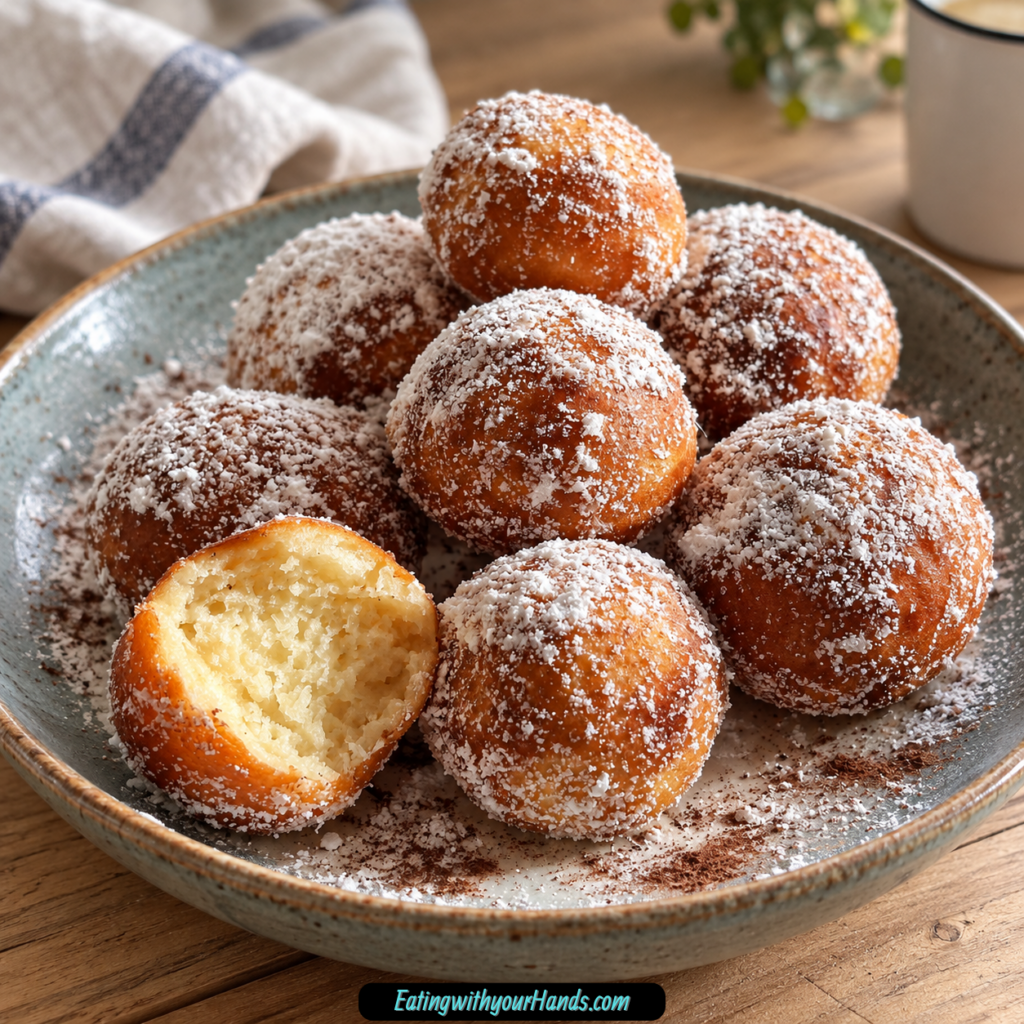
Serve Milky Donut Balls warm right after dusting. This is when the texture is at its best.
Offer both plain milk powder dusting and cocoa dusting. People can choose their favorite.
Serve them for Sunday breakfast. They feel special without being too complicated.
Set them out for an afternoon snack. They pair well with a warm drink or cold milk.
Serve them as a party dessert. Small donut balls are easy to grab and share.
Make chocolate-filled ones for a surprise center. The melted chocolate makes them extra exciting.
Use cinnamon dusting for a churro-style treat. It adds cozy sweetness.
Serve in small bowls or on a platter. A little extra dusting on top makes them look finished.
Storage
These donut balls are best eaten fresh and warm. The texture is most magical right after frying.
If leftovers happen, place them in an airtight container at room temperature. Keep for up to 1 day.
They will lose some crispness as they sit. They will still taste good.
Do not dust leftovers heavily before storage if you plan to reheat them. The sugar coating can get sticky.
Store undusted leftovers when possible. Dust them after reheating.
Keep the container sealed. This prevents them from drying out too much.
Do not refrigerate unless necessary. Room temperature works better for short storage.
Reheating
Reheat leftover donut balls briefly. A 10-second microwave warm-up can bring back softness.
A toaster oven for about 1 minute can help revive some texture. Watch closely so they do not dry out.
Dust after reheating if possible. Fresh dusting tastes better and looks cleaner.
Do not overheat. The donut balls can become tough if warmed too long.
If filled with chocolate, be careful because the center can become hot. Let it sit briefly before eating.
Serve reheated donut balls right away. They soften as they cool.
Leftovers will not be exactly like fresh fried donut balls, but they will still be enjoyable.
Make-Ahead
The best make-ahead option is preparing your ingredients before starting. Measure everything so the dough comes together smoothly.
Because these are fried dough balls, they are best cooked close to serving. Fresh texture matters.
You can mix the dusting ahead. Keep plain milk-sugar dusting and cocoa dusting in separate small bowls.
If serving guests, shape and fry in batches. Dust right before serving.
Warm donut balls create the best reaction at the table. The aroma and texture are part of the experience.
For a gathering, fry smaller batches as needed. This keeps them fresher than frying all too early.
If leftovers are expected, hold off dusting some until after reheating. This keeps the coating from turning sticky.
Helpful Notes for Best Results
The milk must be lukewarm, not hot. Hot milk can kill the yeast.
If the dough does not rise after 30 minutes, the yeast may be old or the room may be too cold. Move the bowl to a warmer spot.
A slightly warmed oven that has been turned off can help the dough rise. Do not put the dough in a hot oven.
Do not add too much flour while shaping. Use a tiny bit of oil on your hands instead.
Oil temperature matters. Too hot burns the outside, while too cold makes the donut balls greasy.
Medium heat is the safest starting point. Around 350°F is ideal if using a thermometer.
Fry in batches. Overcrowding lowers the oil temperature.
Dust while warm. The coating sticks best before the donut balls cool.
Variations
Classic Milky Donut Balls
Use the milk powder and sugar dusting without cocoa powder. This gives the cleanest milky flavor.
Serve warm. The coating tastes creamy and sweet.
Cocoa Milky Donut Balls
Add 1 teaspoon cocoa powder to the dusting mixture. This creates a light chocolate finish.
Dutch-processed cocoa gives deeper flavor. Coat while warm.
Chocolate-Filled Donut Balls
Tuck a few chocolate chips or a small chocolate square into each dough ball before sealing. Fry carefully.
Semi-sweet chocolate is a good choice. Milk chocolate and white chocolate also work.
Cinnamon Milky Donut Balls
Use ½ teaspoon cinnamon in the dusting mixture. This makes the donut balls taste a little like churros.
Mix cinnamon with sugar first. This prevents uneven spice pockets.
Cardamom Milky Donut Balls
Add cardamom to the dusting for a floral flavor. It pairs nicely with milk powder.
Use a small amount. Cardamom can be strong.
Nutmeg Milky Donut Balls
Add a pinch of nutmeg to the dusting. This gives a warmer flavor.
This version works well for cozy mornings. Keep the nutmeg subtle.
Pumpkin Spice Milky Donut Balls
Add a pinch of pumpkin spice blend to the dusting. This gives a holiday-style flavor.
Mix the spice evenly into the sugar. Coat while warm.
Strawberry Milk Donut Balls
Try crushed freeze-dried strawberries in the coating. It gives a fruity strawberry milk feel.
Crush finely before mixing. Large pieces may not coat evenly.
Matcha Milk Donut Balls
Try adding matcha powder to the dusting. The flavor becomes earthy and a little sweet.
Start with a small amount. Add more only if you like the flavor.
Baked Milky Donut Balls
Roll shaped dough balls in melted butter and bake at 375°F for 12 to 15 minutes, turning halfway. The texture will be different.
They will not have the same crisp fried exterior. They will be more like soft sweet rolls.
Plant-Based Milk Donut Balls
Use unsweetened almond milk, oat milk, or coconut milk. Warm it to the same lukewarm temperature.
Use plant-based milk powder if going fully dairy-free. The dough may behave slightly differently.
Troubleshooting
The Dough Did Not Rise
The yeast may be expired, or the milk may have been too hot or too cold. Lukewarm milk is important.
If the room is cold, move the dough to a warmer place. A slightly warmed, turned-off oven can help.
The Dough Is Too Sticky
Use a tiny bit of oil on your hands instead of adding lots of flour. This keeps the dough tender.
A slightly sticky dough is normal. It should still be workable.
The Dough Is Too Dry
Too much flour may have been added. Spoon flour lightly and avoid packing.
If needed, add a tiny splash of milk and knead gently. The dough should be smooth.
The Donut Balls Are Dense
The dough may not have risen enough, or the yeast may not have been active. Give it time to become puffy.
Kneading too much can also make the texture less soft. Knead about 5 minutes.
The Donut Balls Are Greasy
The oil may have been too cold. The dough should sizzle gently and float when added.
Do not crowd the pot. Crowding drops the temperature.
The Outside Burned Before the Inside Cooked
The oil was likely too hot. Lower the heat.
Fry over medium heat and turn occasionally. Aim for even golden color.
The Dusting Did Not Stick
The donut balls may have cooled too much before coating. Dust while warm.
Do not wait too long after draining. Residual heat helps the powder cling.
The Coating Turned Sticky
The donut balls may have been stored after dusting. Sugar can absorb moisture.
For leftovers, reheat first and dust afterward. This gives a fresher coating.
The Chocolate Filling Leaked
The dough may not have been sealed well. Use only a small amount of chocolate and pinch tightly.
Roll gently after sealing. Keep the filling centered.
The Baked Version Was Not Crisp
That is expected. Baking creates a softer, roll-like texture.
For the classic crisp exterior, frying gives the best result. The baked version is delicious but different.
Frequently Asked Questions
Can I bake instead of fry?
Yes, but the texture will be different. Roll the dough balls in melted butter and bake at 375°F for about 12 to 15 minutes, turning halfway.
They will be more like soft dinner rolls with a sweet coating. They will not have the same crisp fried exterior.
Can I use plant-based milk?
Yes, almond milk, oat milk, or coconut milk can work. Use unsweetened milk and warm it to the same lukewarm temperature.
Milk powder gives the signature milky flavor. Use plant-based milk powder if going fully dairy-free.
What should I do if my dough did not rise?
Check whether the yeast is expired and whether the milk was too hot or too cold. Yeast needs warmth but not heat.
Try moving the bowl near a warm oven or into a slightly warmed microwave. If it still does not rise, the dough can be fried, but it will be denser.
How do I know the oil is ready?
A tiny dough scrap should sizzle gently and float to the top. If using a thermometer, aim for around 350°F.
If the oil smokes, it is too hot. If the dough sinks and absorbs oil, it is too cold.
How long do leftovers last?
Leftovers can be stored in an airtight container at room temperature for up to 1 day. They will lose some crispness.
Reheat briefly in the microwave for 10 seconds or in a toaster oven for about 1 minute. Dust after reheating for best results.
Can I fill them with chocolate?
Yes, tuck a few chocolate chips or a small square of chocolate inside each dough ball. Seal well before frying.
Semi-sweet, milk chocolate, and white chocolate all work. Do not overfill.
Why are my donut balls uneven?
Hand-shaped dough balls do not need to be perfect. Try to keep them close in size so they cook evenly.
Rustic shapes still taste great. Even size matters more than perfect roundness.
What dusting tastes best?
The classic milk powder and sugar coating gives the strongest milky flavor. Adding cocoa powder gives a light chocolate version.
Cinnamon, cardamom, nutmeg, or pumpkin spice can also be used. Mix spices into the sugar first.
Why This Recipe Works So Well
Milky Donut Balls work because the dough is simple but balanced. Milk and milk powder create a creamy flavor, while yeast makes the inside fluffy.
Sugar sweetens the dough without making it too heavy. Butter adds softness and richness.
The short knead gives the dough structure. The rise gives it airiness.
Frying creates the golden exterior. The contrast between crisp outside and soft inside is what makes these so satisfying.
The dusting adds flavor while the donut balls are still warm. Milk powder gives the coating a creamy sweetness that plain sugar alone cannot create.
The recipe also works because the base is easy to change. Cocoa, cinnamon, cardamom, chocolate filling, and other ideas all fit naturally.
Oil temperature is the key technical detail. When the oil is right, the donut balls cook evenly and do not become greasy.
Most of all, these work because they are joyful. A bowl of warm, sugared donut balls makes people gather close and reach for one more.
Final Thoughts
Milky Donut Balls are made with lukewarm milk, yeast, milk powder, sugar, softened butter, all-purpose flour, salt, and a sweet milk powder dusting with optional cocoa powder. The dough rises until puffy, gets shaped into small balls, fried until golden, and rolled warm in a milky-sweet coating.
Serve them fresh from the fryer, store leftovers airtight at room temperature for up to 1 day, and reheat briefly before dusting again. With their 1-hour rise, 5-minute knead, 2-inch oil depth, 350°F frying target, 2-to-3-minute-per-side cooking time, baked 375°F option for 12 to 15 minutes, and variations like chocolate filling, cocoa dusting, cinnamon, cardamom, nutmeg, pumpkin spice, freeze-dried strawberry, matcha, plant-based milk, and plant-based milk powder, these donut balls are soft, sweet, flexible, and full of warm milky comfort.
Milky Donut Balls
Soft, sweet, lightly chewy, and finished with a milky cocoa-sugar dusting, these Milky Donut Balls are made with lukewarm milk, yeast, milk powder, butter, sugar, flour, and salt. The dough rises until doubled, gets shaped into small balls, then fries until golden brown for a warm International-style dessert.
Recipe Details
- Prep Time: 20 minutes
- Cook Time: 10 minutes
- Total Time: 30 minutes
- Course: Dessert
- Cuisine: International
- Servings: 4 servings
Ingredients
For Dusting
- 1 teaspoon cocoa powder for dusting
- 1 tablespoon sugar for dusting
- 1 tablespoon milk powder for dusting
For the Dough
- salt to taste
- 1 ½ cups all-purpose flour
- 3 tablespoon butter
- 3 tablespoon sugar
- 2 tablespoon milk powder
- 1 teaspoon yeast
- ⅔ cup lukewarm milk
Instructions
Step 1: Start the Dough Mixture
In a bowl, mix the lukewarm milk, yeast, milk powder, sugar, and butter until well combined. Stir until the mixture looks evenly blended.
The lukewarm milk helps bring the yeast into the dough mixture. Make sure the butter is incorporated as much as possible before adding the flour.
Step 2: Add Flour and Salt
Add the all-purpose flour and salt to taste. Mix the ingredients together until a dough begins to form.
Once the dough comes together, knead it until smooth. The dough should become soft and even in texture.
Step 3: Let the Dough Rise
Cover the dough and let it rise until doubled in size. The recipe does not provide a specific rising time, so no exact proofing duration is added here.
Let the dough rest in a covered state until it has noticeably expanded. This helps the donut balls become softer after frying.
Step 4: Shape the Donut Balls
Shape the risen dough into small balls. Try to keep the pieces similar in size so they fry evenly.
Work gently so the dough stays light. Keep the shaped balls ready for frying.
Step 5: Fry Until Golden
Fry the dough balls in hot oil until golden brown. Turn them as needed so they cook evenly on all sides.
The outside should become golden while the inside stays soft. Remove them once they are evenly browned.
Step 6: Make the Dusting Mixture
Mix the milk powder, sugar, and cocoa powder for dusting. Stir until the dry coating is evenly combined.
This mixture gives the donut balls their sweet milky finish with a light cocoa note. Keep it ready while the fried donut balls are still warm.
Step 7: Dust and Serve
Dust the fried donut balls with the milk powder, sugar, and cocoa powder mixture. Coat them lightly and evenly.
Serve warm for the best taste and texture. The warm donut balls should be soft inside, golden outside, and sweetly dusted.
Notes
- Serve warm for the best taste and texture.
Serving Suggestions
Serve Milky Donut Balls warm right after they have been fried and dusted with the milk powder, sugar, and cocoa powder mixture. The soft yeast dough, sweet milk powder flavor, and light cocoa dusting make them a simple dessert for sharing.
This recipe makes 4 servings, so it works well as a small sweet treat, snack plate, or warm dessert. The sugar and cocoa powder dusting should be added after frying so it clings to the donut balls.
For the best texture, enjoy them while warm. The outside will be golden and lightly coated, while the inside stays soft and milky.
Storage
How to Store
The recipe does not provide specific storage instructions or storage duration, so no exact storage time is added here.
Milk Tip
Use ⅔ cup lukewarm milk in the dough. The milk should be lukewarm as listed before mixing with the yeast, milk powder, sugar, and butter.
Dough Tip
Knead the flour and salt into the milk mixture until a smooth dough forms. Let the dough rise until doubled in size before shaping.
Rising Note
The recipe says to let the dough rise until doubled in size but does not provide a specific rising time. For accuracy, no exact proofing duration is added.
Frying Tip
Shape the dough into small balls and fry them in hot oil until golden brown. Turn them as needed for even color.
Dusting Tip
Use 1 tablespoon milk powder, 1 tablespoon sugar, and 1 teaspoon cocoa powder for dusting. Coat the fried donut balls after frying.
Serving Tip
Serve warm for the best taste and texture.

Fernando is the creator and writer behind the food blog Eating with your Hands. Living and working in cities like Paris, Barcelona, and Berlin, and being married to a Canadian foodie, has given Fernando a passion and interest in food and inspired him to run EWYH.