
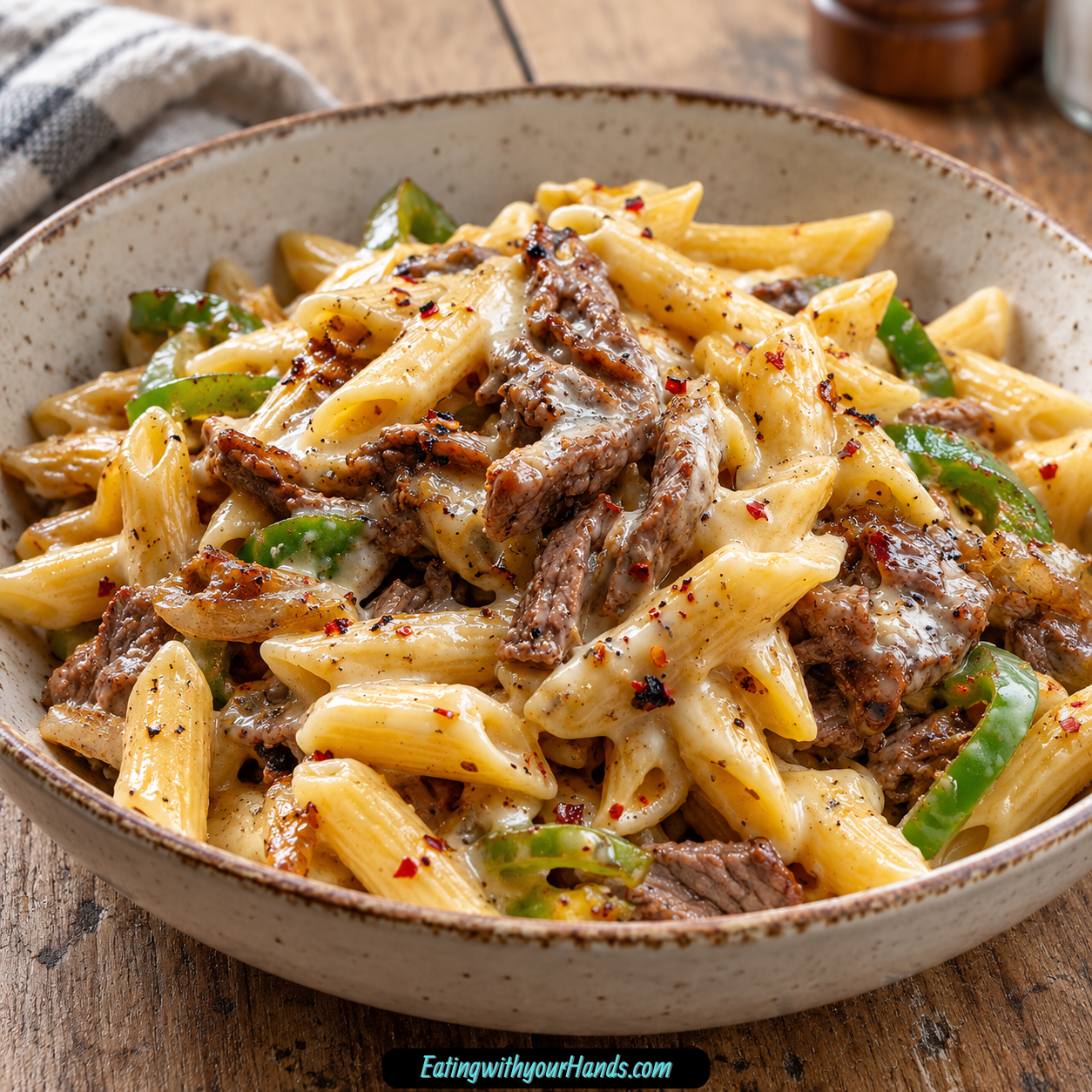
Philly Cheesesteak Pasta is the kind of comfort food that feels like it was made for nights when one craving is not enough. It takes the savory steak, peppers, onions, and melty cheese you love in a cheesesteak and turns them into a big, hearty skillet of pasta.
This is a meal that feels generous from the first forkful. Tender strips of ribeye or sirloin, soft caramelized-style peppers and onions, garlic, beef broth, Worcestershire sauce, penne or rigatoni, provolone, and mozzarella all come together in a dish that is rich, cozy, and deeply satisfying.
It has the spirit of a classic cheesesteak, but it eats like a pasta dinner. The noodles catch the savory sauce, the steak adds substance, and the cheese melts over everything in the most irresistible way.
What makes this recipe so useful is how quickly it comes together. If you can boil pasta, sear steak, sauté vegetables, and melt cheese, you can make this skillet without stress.
It is also a great recipe for busy evenings because each step is simple. The steak cooks quickly, the vegetables soften in minutes, and the sauce comes together right in the same pan with beef broth and Worcestershire.
The cheese is the finishing moment. Provolone brings that classic cheesesteak flavor, while mozzarella gives the dish its creamy, stretchy, melty comfort.
This is not a delicate pasta. It is bold, filling, cheesy, and exactly what you want when dinner needs to feel like a reward.
Serve it hot and bubbly, straight from the skillet, with garlic bread or a crisp salad on the side. The first bite tastes like comfort food with a little attitude, and the leftovers are just as welcome the next day.
Table of Contents
- Why You’ll Love This Philly Cheesesteak Pasta
- Recipe Details
- Ingredients
- Ingredient Notes
- Optional Swaps, Variations, Add-Ins, and Serving Ideas
- Classic Philly Cheesesteak Pasta
- Chicken Cheesesteak Pasta
- Portobello Cheesesteak Pasta
- Mushroom Philly Pasta
- Sharp Cheddar Cheesesteak Pasta
- American Cheese Cheesesteak Pasta
- Blue Cheese Finish
- Spinach Cheesesteak Pasta
- Arugula Cheesesteak Pasta
- Spicy Philly Cheesesteak Pasta
- Fusilli Cheesesteak Pasta
- Farfalle Cheesesteak Pasta
- Egg Noodle Cheesesteak Pasta
- Zucchini Noodle Cheesesteak Pasta
- Gluten-Free Philly Cheesesteak Pasta
- Frozen Pepper and Onion Shortcut
- Garlic Bread Dinner
- Salad and Vinaigrette Pairing
- Why This Recipe Works
- Directions
- Step 1: Prepare the Steak for Slicing
- Step 2: Slice the Vegetables
- Step 3: Boil the Pasta
- Step 4: Season the Steak
- Step 5: Sear the Steak
- Step 6: Remove the Steak
- Step 7: Add More Oil
- Step 8: Cook the Peppers and Onions
- Step 9: Add the Garlic
- Step 10: Deglaze the Pan
- Step 11: Add Pasta and Steak Back In
- Step 12: Taste and Adjust
- Step 13: Add the Cheese
- Step 14: Melt on the Stovetop
- Step 15: Melt Under the Broiler
- Step 16: Serve Immediately
- Step 17: Store Leftovers
- Step 18: Freeze for Later
- Serving Ideas
- Storage
- Freezing
- Make-Ahead
- Helpful Notes for Best Results
- Variations
- Classic Philly Cheesesteak Pasta
- Chicken Philly Cheesesteak Pasta
- Portobello Philly Pasta
- Mushroom Cheesesteak Pasta
- Sharp Cheddar Cheesesteak Pasta
- American Cheese Cheesesteak Pasta
- Blue Cheese Cheesesteak Pasta
- Spinach Philly Pasta
- Arugula Philly Pasta
- Spicy Philly Cheesesteak Pasta
- Fusilli Philly Pasta
- Farfalle Philly Pasta
- Egg Noodle Philly Pasta
- Zucchini Noodle Philly Pasta
- Gluten-Free Philly Cheesesteak Pasta
- Frozen Pepper Shortcut Pasta
- Troubleshooting
- Frequently Asked Questions
- Why This Recipe Works So Well
- Final Thoughts
- Philly Cheesesteak Pasta
Why You’ll Love This Philly Cheesesteak Pasta
This recipe is easy to make. You only need to boil pasta, cook steak, sauté vegetables, stir together a quick sauce, and melt the cheese.
It has classic cheesesteak flavor in pasta form. Steak, peppers, onions, provolone, and savory sauce coat every noodle.
It is ready fast. The whole dish can come together in under 30 minutes.
It is hearty and satisfying. Steak, pasta, broth, and cheese make it a full meal in one skillet.
It reheats well. A splash of broth or water brings leftovers back to life.
It is easy to customize. Chicken, portobello mushrooms, extra vegetables, different cheeses, spice, and pasta swaps all work beautifully.
Recipe Details
This recipe uses 1 lb ribeye or sirloin steak. Thin slicing is important because thin strips cook quickly and stay tender.
Freezing the steak for 20 minutes before slicing makes it easier to cut thinly. This small step helps create better pieces for the pasta.
The pasta is 10 oz penne or rigatoni. These shapes are ideal because they hold onto the sauce and melted cheese.
The vegetables are 1 green bell pepper and 1 medium yellow onion, both thinly sliced. Red or yellow bell peppers can also be used if you want extra sweetness.
The aromatics include 2 cloves garlic, minced. Garlic goes in near the end of the vegetable cooking time so it does not burn.
The sauce uses 1 cup beef broth and 1 tablespoon Worcestershire sauce. Low-sodium broth is best if you want more control over salt.
The cheeses are 1 cup shredded provolone and 1 cup shredded mozzarella. Provolone gives classic cheesesteak flavor, while mozzarella adds stretch.
The oil is 2 tablespoons olive oil, divided. Use 1 tablespoon for searing the steak and the remaining 1 tablespoon for the peppers and onions.
The steak cooks for about 2 to 3 minutes, just until browned. The vegetables cook for 5 to 6 minutes, and the sauce simmers for 2 minutes.
The cheese can be melted on the stovetop by covering the skillet for 2 to 3 minutes. For a bubbly top, place the skillet under the broiler for 1 to 2 minutes.
Ingredients
For the Steak and Pasta
- 1 lb ribeye or sirloin steak, thinly sliced
- 10 oz penne or rigatoni pasta
- 2 tablespoons olive oil, divided
- Salt and pepper, to taste
For the Vegetables and Sauce
- 1 green bell pepper, thinly sliced
- 1 medium yellow onion, thinly sliced
- 2 cloves garlic, minced
- 1 cup beef broth
- 1 tablespoon Worcestershire sauce
For the Cheese
- 1 cup shredded provolone cheese
- 1 cup shredded mozzarella cheese
Optional Swaps, Add-Ins, and Serving Ideas
- Red bell pepper
- Yellow bell pepper
- Thinly sliced chicken breast
- Portobello mushrooms
- Sharp cheddar
- American cheese
- Blue cheese crumbles
- Sliced mushrooms
- Spinach
- Arugula
- Red pepper flakes
- Hot sauce
- Fusilli
- Farfalle
- Egg noodles
- Zucchini noodles
- Frozen peppers and onions
- Soy sauce
- Balsamic vinegar
- Gluten-free penne
- Fresh parsley
- Garlic bread
- Side salad
- Tangy vinaigrette
- Extra beef broth
- Water
Ingredient Notes
Ribeye gives the pasta a rich, classic cheesesteak feel. Sirloin also works well and slices nicely.
Thinly sliced steak is important. Thick pieces can turn chewy and take longer to cook.
Penne and rigatoni are sturdy pasta shapes. Their ridges and hollow centers help catch the sauce and cheese.
Green bell pepper brings classic cheesesteak flavor. Red or yellow peppers can be used if you want a sweeter taste.
Yellow onion softens and becomes savory as it cooks. Thin slices help it cook quickly and blend into the pasta.
Garlic adds depth. Add it near the end of cooking the vegetables so it becomes fragrant without burning.
Beef broth deglazes the skillet and picks up the browned bits from the steak. Those bits add flavor to the sauce.
Worcestershire sauce adds savory depth. If you do not have it, soy sauce or a dash of balsamic vinegar can be used.
Provolone cheese is the classic choice. It melts into the pasta and brings familiar cheesesteak flavor.
Mozzarella adds stretch and extra creaminess. It makes the skillet feel more indulgent.
Olive oil helps cook the steak and vegetables. Dividing it keeps each step from drying out.
Salt and pepper season the steak and final dish. Taste before adding too much salt because broth, Worcestershire, and cheese already bring seasoning.
Optional Swaps, Variations, Add-Ins, and Serving Ideas
Classic Philly Cheesesteak Pasta
Make the recipe with ribeye or sirloin, penne or rigatoni, green bell pepper, yellow onion, garlic, beef broth, Worcestershire sauce, provolone, mozzarella, olive oil, salt, and pepper. This gives the full steakhouse-meets-pasta comfort flavor.
Serve hot while the cheese is melted and stretchy. A little extra black pepper on top works beautifully.
Chicken Cheesesteak Pasta
Use thinly sliced chicken breast instead of steak. Cook it the same way, just until browned and cooked through.
The flavor will be lighter than beef, but still hearty. The peppers, onions, broth, and cheese keep it comforting.
Portobello Cheesesteak Pasta
Use portobello mushrooms for a vegetarian twist. Their meaty texture absorbs the savory flavors well.
Slice them and cook them with the vegetables. They bring depth without steak.
Mushroom Philly Pasta
Add sliced mushrooms with the peppers and onions. Let them cook until softened and slightly caramelized.
Mushrooms add an earthy flavor that works well with beef broth and cheese. They also make the dish feel fuller.
Sharp Cheddar Cheesesteak Pasta
Add sharp cheddar for a stronger cheese flavor. It gives the pasta a bolder bite.
Use it with or instead of part of the provolone or mozzarella. The final texture may be slightly different.
American Cheese Cheesesteak Pasta
Use American cheese for a gooey, classic cheesesteak-style melt. It creates a smooth, creamy finish.
Add it at the end and let it melt gently. It blends easily into the pasta.
Blue Cheese Finish
Sprinkle blue cheese crumbles over the finished pasta. Use a light hand because the flavor is strong.
This gives the dish a bold, savory finish. Add it after cooking rather than melting it fully into the skillet.
Spinach Cheesesteak Pasta
Stir in spinach at the end. Let the heat of the pasta wilt it.
This adds freshness and color. It is an easy way to bring greens into the dish.
Arugula Cheesesteak Pasta
Stir in arugula at the end for a peppery pop. It wilts slightly from the heat.
This keeps the rich pasta from feeling too heavy. Add right before serving.
Spicy Philly Cheesesteak Pasta
Add red pepper flakes with the garlic. You can also drizzle hot sauce over the finished pasta.
This gives the dish a gentle kick. Add slowly so the heat stays balanced.
Fusilli Cheesesteak Pasta
Use fusilli instead of penne or rigatoni. The twists catch the sauce and cheese well.
Cook it al dente. Toss it into the skillet just like the original pasta.
Farfalle Cheesesteak Pasta
Use farfalle for a fun pasta shape. The bow ties hold sauce around the folds.
This gives the dish a slightly different texture. Keep the same cooking method.
Egg Noodle Cheesesteak Pasta
Use egg noodles for a softer, cozy version. They make the dish feel extra comforting.
Cook them carefully so they do not become mushy. Add them at the end with the steak.
Zucchini Noodle Cheesesteak Pasta
Use zucchini noodles for a low-carb-style option. Add them raw at the end and let the residual heat soften them.
Do not overcook them. They only need enough heat to wilt slightly.
Gluten-Free Philly Cheesesteak Pasta
Use gluten-free penne. It works well as a pasta substitute.
Cook according to the package directions and keep it al dente. Gluten-free pasta can soften quickly.
Frozen Pepper and Onion Shortcut
Use frozen peppers and onions if needed. Thaw and pat them dry first.
They may not caramelize as deeply as fresh vegetables. They still work in a pinch.
Garlic Bread Dinner
Serve this pasta with garlic bread. It is perfect for soaking up saucy bits left in the bowl.
This makes the meal extra hearty. It is a classic comfort-food pairing.
Salad and Vinaigrette Pairing
Serve with a side salad and tangy vinaigrette. The acidity cuts through the richness of the cheese and steak.
This is a good way to balance the plate. It keeps the meal from feeling too heavy.
Why This Recipe Works
This recipe works because it builds flavor in one skillet. The steak sears first, leaving browned bits behind that later flavor the sauce.
The peppers and onions cook in the same pan. They pick up flavor from the steak while softening and becoming sweeter.
Garlic adds a quick aromatic finish to the vegetables. It only needs about 30 seconds so it stays fragrant.
Beef broth loosens the browned bits from the skillet. Worcestershire adds savory depth and makes the sauce taste fuller.
The pasta is cooked al dente because it continues to absorb sauce after being added to the skillet. This keeps the noodles from turning mushy.
Provolone and mozzarella work together. Provolone gives cheesesteak flavor, and mozzarella creates that stretchy melt.
The dish comes together quickly because the steak is thinly sliced. Thin pieces cook in just minutes and stay tender.
Finishing the dish hot is important. The cheese melts best when the pasta and skillet are still warm.
Directions
Step 1: Prepare the Steak for Slicing
Place the steak in the freezer for about 20 minutes before slicing. This makes it firmer and easier to cut thinly.
Use ribeye or sirloin. Slice against the grain if possible for a more tender bite.
Step 2: Slice the Vegetables
Thinly slice the green bell pepper and yellow onion. Mince the garlic.
Having everything sliced before cooking makes the recipe move smoothly. The cooking steps happen quickly once the skillet is hot.
Step 3: Boil the Pasta
Cook 10 oz penne or rigatoni according to the package directions. Keep it al dente, meaning slightly firm.
Drain the pasta and set it aside. Save a splash of pasta water in case you need to loosen the skillet later.
Step 4: Season the Steak
Season the thinly sliced steak with salt and pepper. Use enough to flavor the meat without overdoing it.
The broth, Worcestershire, and cheese will add more saltiness later. Taste at the end before adding more.
Step 5: Sear the Steak
Heat 1 tablespoon olive oil in a large skillet over medium-high heat. Add the steak in a single layer if possible.
Cook for about 2 to 3 minutes, just until browned. The steak will finish cooking later, so do not overcook it.
Step 6: Remove the Steak
Transfer the browned steak to a plate. Leave the browned bits in the skillet.
Do not wipe the pan. Those browned bits add important flavor to the sauce.
Step 7: Add More Oil
Add the remaining 1 tablespoon olive oil to the same skillet. Keep the heat around medium-high or adjust slightly if the pan is too hot.
The oil helps the peppers and onions soften. Stir to pick up some flavor from the bottom of the pan.
Step 8: Cook the Peppers and Onions
Add the sliced bell pepper and onion to the skillet. Cook for 5 to 6 minutes, stirring occasionally.
The vegetables should soften and start to caramelize. They should smell savory and slightly sweet.
Step 9: Add the Garlic
Add the minced garlic during the last 30 seconds of cooking the vegetables. Stir constantly.
The garlic should become fragrant. Do not let it burn.
Step 10: Deglaze the Pan
Pour in 1 cup beef broth and 1 tablespoon Worcestershire sauce. Scrape the bottom of the skillet to loosen the browned bits.
This step creates a light, savory sauce. Let it simmer for about 2 minutes so it reduces slightly.
Step 11: Add Pasta and Steak Back In
Return the cooked pasta and steak to the skillet. Toss everything together until the noodles are coated.
If the mixture looks dry, add a splash of reserved pasta water. The pasta should look glossy, not watery.
Step 12: Taste and Adjust
Taste the pasta mixture before adding cheese. Add a little more salt or pepper only if needed.
Remember that cheese will add more flavor. It is best to adjust gently.
Step 13: Add the Cheese
Sprinkle 1 cup shredded provolone and 1 cup shredded mozzarella evenly over the top. Spread the cheese across the pasta.
The cheese should cover the skillet so every serving gets some. Use freshly shredded cheese if possible for the smoothest melt.
Step 14: Melt on the Stovetop
For the stovetop method, cover the skillet with a lid for 2 to 3 minutes. Keep the heat low enough that the bottom does not burn.
The cheese should melt into gooey perfection. Serve as soon as it is melted.
Step 15: Melt Under the Broiler
For a bubbly top, place the skillet under the broiler for 1 to 2 minutes. Watch closely.
Do not walk away from the broiler. The cheese can brown quickly.
Step 16: Serve Immediately
Serve the pasta hot while the cheese is melted and stretchy. Add extra black pepper if desired.
Fresh parsley can be sprinkled on top for color. Serve with garlic bread or a simple salad.
Step 17: Store Leftovers
Let leftovers cool completely. Store in an airtight container in the refrigerator for up to 3 days.
When reheating, add a splash of beef broth or water. Warm gently in the microwave or on the stovetop.
Step 18: Freeze for Later
Portion cooled leftovers into freezer-safe containers. Freeze for up to 2 months.
Thaw overnight in the refrigerator before reheating. Reheat gently on the stove with a little extra cheese on top if desired.
Serving Ideas
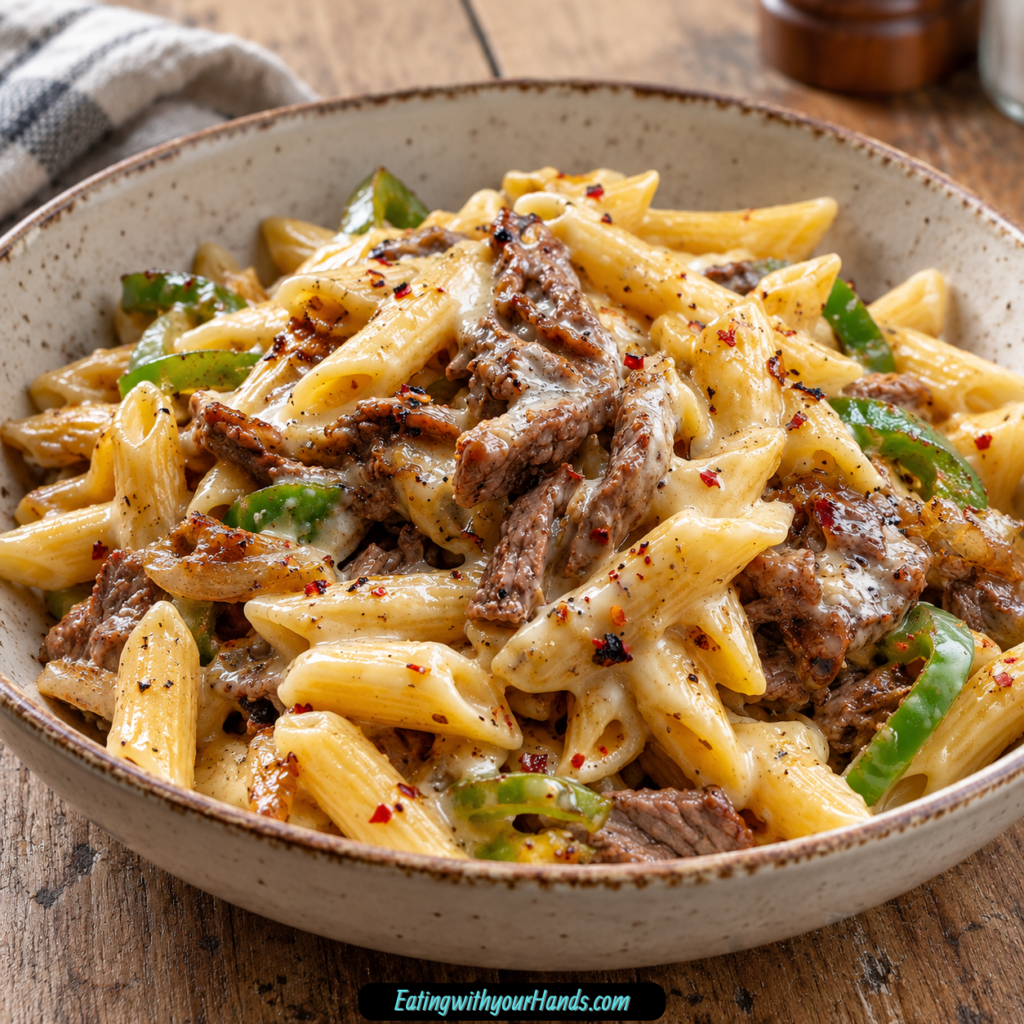
Serve Philly Cheesesteak Pasta hot and cheesy right from the skillet. The cheese pull is part of the experience.
A sprinkle of fresh parsley adds color. It makes the skillet look brighter and more finished.
Garlic bread is a natural side. It helps scoop up any sauce or melted cheese left in the bowl.
A simple side salad with tangy vinaigrette balances the richness. The acidity cuts through the cheese and steak.
Serve it in shallow bowls for a cozy dinner. The pasta, steak, and vegetables are filling enough to stand alone.
For gatherings, place the skillet on the table if it is safe to do so. This dish has a casual, help-yourself feel.
Add hot sauce at the table for anyone who likes extra heat. It works well with the beef and cheese.
Serve leftovers for lunch the next day. Add broth or water when reheating to bring the texture back.
Storage
Let leftovers cool completely before storing. This helps prevent steam from making the pasta soggy.
Transfer the pasta to an airtight container. Refrigerate for up to 3 days.
When reheating, add a splash of beef broth or water. Pasta absorbs sauce as it sits.
Reheat gently on the stovetop or in the microwave. Stir as it warms so the cheese and sauce loosen evenly.
If microwaving, use shorter intervals and stir between them. This helps avoid hot spots.
For stovetop reheating, keep the heat low. Add more broth if the pasta seems dry.
Store any extra fresh parsley separately. Add it after reheating for the best color.
The pasta is best enjoyed warm. The cheese texture is softest when freshly reheated.
Freezing
Philly Cheesesteak Pasta can be frozen for up to 2 months. Portion it into freezer-safe containers once cooled.
Thaw overnight in the refrigerator before reheating. This helps it warm more evenly.
Reheat gently on the stove with a splash of broth or water. Stir often so the pasta loosens.
Add a little extra cheese on top while reheating if desired. This refreshes the creamy, melty finish.
The pasta may soften slightly after freezing. The flavor will still be hearty and satisfying.
Freeze in individual portions for quick meals. This makes reheating easier.
Do not freeze while hot. Cooling first protects the texture.
Label the container if desired. This helps you use it within the 2-month window.
Make-Ahead
You can make this pasta ahead up to the cheese step. Cook the steak, vegetables, sauce, and pasta together, then refrigerate.
When ready to serve, reheat gently on the stove over low heat. Add a splash of broth or water if needed.
Once hot, add the cheese and cover until melted. This keeps the cheese fresher than melting it too far ahead.
You can slice the steak and vegetables in advance. Keep them refrigerated separately until cooking.
The steak slices easier if frozen for 20 minutes first. This can be done right before prep.
If making ahead for a gathering, keep the cheese separate until the final reheating. Freshly melted cheese gives the best presentation.
Do not overcook the pasta if making ahead. Al dente pasta holds up better after reheating.
Helpful Notes for Best Results
Slice the steak thinly. Freezing it for 20 minutes first makes slicing much easier.
Do not overcook the steak during the first sear. It only needs 2 to 3 minutes because it returns to the skillet later.
Cook the pasta al dente. It will absorb sauce and continue softening after being tossed with the steak and vegetables.
Freshly shredded cheese melts better than pre-shredded. Pre-shredded still works if needed.
Taste before adding extra salt. Beef broth, Worcestershire, and cheese all add seasoning.
Use low-sodium beef broth if you want more control. This helps prevent an overly salty dish.
If the pasta looks dry, add pasta water, broth, or water. A small splash can bring it back to life.
Watch the broiler closely. Cheese can go from bubbly to burnt very fast.
Variations
Classic Philly Cheesesteak Pasta
Use ribeye or sirloin, penne or rigatoni, green bell pepper, yellow onion, garlic, beef broth, Worcestershire sauce, provolone, mozzarella, olive oil, salt, and pepper. This gives the classic cheesy steak pasta flavor.
Serve immediately while the cheese is hot and stretchy. Add black pepper if desired.
Chicken Philly Cheesesteak Pasta
Use thinly sliced chicken breast instead of steak. Cook it the same way in the skillet.
The flavor will be lighter but still satisfying. The peppers, onions, broth, and cheese keep the dish hearty.
Portobello Philly Pasta
Use portobello mushrooms instead of steak for a vegetarian twist. Their meaty texture works well with the sauce.
Slice them and sauté with the vegetables. They soak up the savory flavor beautifully.
Mushroom Cheesesteak Pasta
Add sliced mushrooms with the peppers and onions. Let them cook until soft and browned.
This adds depth and extra texture. Mushrooms pair naturally with steak and cheese.
Sharp Cheddar Cheesesteak Pasta
Use sharp cheddar for a bolder cheese flavor. It adds a stronger bite than mozzarella.
Combine it with provolone or use it as part of the cheese blend. The pasta becomes richer.
American Cheese Cheesesteak Pasta
Use American cheese for a very gooey melt. It creates a smooth, classic cheesesteak-style finish.
Add it at the end and let it melt gently. It blends easily with the pasta.
Blue Cheese Cheesesteak Pasta
Finish with a sprinkle of blue cheese crumbles. This adds a strong, tangy flavor.
Use only a small amount. Blue cheese can overpower the dish quickly.
Spinach Philly Pasta
Stir in spinach at the end. The heat from the pasta will wilt it.
This adds freshness and color. It is an easy vegetable boost.
Arugula Philly Pasta
Add arugula at the end for a peppery fresh bite. Let it wilt slightly.
This balances the richness of the cheese and steak. Serve right away.
Spicy Philly Cheesesteak Pasta
Add red pepper flakes with the garlic. Drizzle hot sauce over the finished dish if desired.
The heat gives the pasta more energy. Start with a small amount.
Fusilli Philly Pasta
Use fusilli instead of penne or rigatoni. The spirals hold onto the sauce and cheese.
Cook al dente. Toss with the steak and vegetables as usual.
Farfalle Philly Pasta
Use farfalle for a different texture. The pasta folds catch small bits of onion, pepper, and cheese.
This makes the dish feel a little more playful. Keep the method the same.
Egg Noodle Philly Pasta
Use egg noodles for a softer comfort-food version. They cook quickly and feel cozy.
Watch closely so they do not overcook. Add them to the skillet after draining.
Zucchini Noodle Philly Pasta
Use zucchini noodles for a low-carb option. Add them raw at the end and let the heat wilt them.
Do not cook them too long. They soften quickly.
Gluten-Free Philly Cheesesteak Pasta
Use gluten-free penne. Cook it according to the package directions.
Keep it al dente so it holds up in the skillet. Toss gently.
Frozen Pepper Shortcut Pasta
Use frozen peppers and onions if needed. Thaw and pat them dry first.
They will not caramelize quite as well as fresh vegetables. They still work for a quick dinner.
Troubleshooting
The Steak Is Chewy
The steak may have been sliced too thick or cooked too long. Slice thinly and sear only 2 to 3 minutes at first.
Freezing the steak for 20 minutes before slicing makes thin cuts easier. Thin strips stay more tender.
The Pasta Is Mushy
The pasta may have been overcooked before adding it to the skillet. Cook it al dente.
It will continue absorbing sauce after mixing. Firm pasta works best.
The Dish Is Too Dry
Add a splash of beef broth, water, or reserved pasta water. Toss gently until loosened.
Pasta absorbs liquid quickly. Add only a little at a time.
The Dish Is Too Salty
The broth, Worcestershire, and cheese may have added enough salt. Taste before adding extra salt.
Use low-sodium broth next time. Balance with pasta or vegetables if needed.
The Cheese Is Grainy
Pre-shredded cheese can sometimes melt less smoothly. Freshly shredded cheese melts better.
Melt the cheese gently. High heat can affect the texture.
The Cheese Burned Under the Broiler
The skillet was under the broiler too long. Broil only 1 to 2 minutes and watch closely.
Remove as soon as the cheese is bubbly. Do not walk away.
The Vegetables Are Watery
Frozen peppers and onions may not have been dried enough. Thaw and pat them dry first.
Fresh vegetables will caramelize better. Cook them until softened before adding broth.
The Sauce Tastes Flat
Worcestershire adds savory depth. If you do not have it, use soy sauce or a dash of balsamic vinegar.
Also taste for salt and pepper at the end. Adjust gently.
The Pasta Stuck Together
Toss it with the sauce as soon as it goes into the skillet. Add a splash of pasta water if needed.
Al dente pasta separates more easily. Do not let drained pasta sit too long without stirring.
Leftovers Are Thick
Add broth or water when reheating. Stir gently until creamy again.
Microwave or stovetop both work. Heat slowly for the best texture.
Frequently Asked Questions
Can I use frozen peppers and onions?
Yes, frozen peppers and onions can be used. Thaw them and pat them dry first.
They may not caramelize as nicely as fresh vegetables. They still taste good in a pinch.
What if I do not have Worcestershire sauce?
Soy sauce or a dash of balsamic vinegar can be used for savory depth. You can also skip it if needed.
The beef broth and cheese still bring plenty of flavor. Taste and adjust at the end.
What is the best gluten-free pasta substitute?
Gluten-free penne works well. Cook it according to the package directions and keep it al dente.
For a lighter option, use zucchini noodles. Add them raw at the end and let the heat soften them.
Can I make this ahead?
Yes, prepare everything up to the cheese step and refrigerate. Reheat on the stove over low heat.
Add the cheese after reheating, then cover until melted. This gives the best texture.
Can I use chicken instead of steak?
Yes, thinly sliced chicken breast works well. Cook it the same way in the skillet.
Make sure it is cooked through before serving. The rest of the recipe stays the same.
Can I add mushrooms?
Yes, sliced mushrooms can be added with the peppers and onions. Let them cook until softened.
They add a rich, savory flavor. They are a great match for steak and cheese.
How long do leftovers last?
Leftovers last up to 3 days in an airtight container in the refrigerator. Let the pasta cool before storing.
Reheat with a splash of broth or water. Stir until the sauce loosens.
Can I freeze Philly Cheesesteak Pasta?
Yes, portion leftovers and freeze for up to 2 months. Thaw overnight in the refrigerator.
Reheat gently on the stove with a little broth or water. Add extra cheese if desired.
Why This Recipe Works So Well
Philly Cheesesteak Pasta works so well because it brings together the heart of a cheesesteak and the comfort of pasta. Steak, peppers, onions, broth, Worcestershire, provolone, and mozzarella all support one another.
The steak gives the dish its meaty richness. Slicing it thin helps it cook quickly and stay tender.
Peppers and onions bring sweetness and savory depth. Cooking them in the same skillet after the steak lets them pick up extra flavor.
Garlic adds a quick aromatic layer. It only needs 30 seconds to make the skillet smell incredible.
Beef broth and Worcestershire form a light sauce. They scrape up the browned bits and coat the pasta without making the dish heavy.
Penne or rigatoni works well because the shapes hold onto sauce and cheese. Al dente pasta keeps the final dish from becoming soft.
Provolone gives classic cheesesteak personality. Mozzarella adds stretch and creamy melt.
The dish is flexible because the core idea is simple. Steak, vegetables, pasta, sauce, and cheese can handle small changes without losing their comfort-food appeal.
Most of all, this recipe works because it feels like a full meal in one skillet. It is fast, rich, cheesy, and satisfying without being complicated.
Final Thoughts
Philly Cheesesteak Pasta is made with thinly sliced ribeye or sirloin steak, penne or rigatoni, green bell pepper, yellow onion, garlic, beef broth, Worcestershire sauce, provolone, mozzarella, olive oil, salt, and pepper. The steak is seared, the vegetables are sautéed, the pan is deglazed, the pasta is tossed back in, and the cheese is melted over the top until hot and gooey.
Serve it with garlic bread, a crisp salad with tangy vinaigrette, or enjoy it straight from the skillet while the cheese is still stretchy. With its under-30-minute timing, classic cheesesteak flavor, hearty pasta base, easy variations, make-ahead option, freezer-friendly storage, and bold comfort-food personality, this pasta is a weeknight dinner that tastes like a little celebration in every bite.
Philly Cheesesteak Pasta
Hearty, cheesy, savory, and inspired by the flavors of a classic Philly cheesesteak, this Philly Cheesesteak Pasta brings together thinly sliced ribeye or sirloin steak, tender penne or rigatoni, green bell pepper, onion, garlic, beef broth, Worcestershire sauce, provolone, and mozzarella. It is a comforting American-style dinner with steakhouse flavor, melted cheese, and pasta all in one skillet.
Recipe Details
- Prep Time: 15 minutes
- Cook Time: 20 minutes
- Total Time: 35 minutes
- Course: Dinner
- Cuisine: American
- Servings: 4 people
Equipment
- Large skillet
- large pot
- colander
Ingredients
For the Philly Cheesesteak Pasta
- Salt and pepper to taste
- 2 tablespoon olive oil
- 1 cup mozzarella cheese shredded
- 1 cup provolone cheese shredded
- 1 tablespoon Worcestershire sauce
- 1 cup beef broth
- 2 cloves garlic minced
- 1 medium yellow onion sliced
- 1 green bell pepper sliced
- 10 oz penne or rigatoni pasta
- 1 lb ribeye or sirloin steak thinly sliced
Instructions
Step 1: Cook the Pasta
Bring water to a boil in the large pot and cook the penne or rigatoni until tender enough for the dish. Drain the pasta in a colander and set it aside.
The recipe does not provide a specific pasta cooking time, so follow the package timing for the pasta shape you choose. Penne or rigatoni both work as listed.
Step 2: Season the Steak
Season the thinly sliced ribeye or sirloin steak with salt and pepper to taste. Make sure the steak pieces are ready before the skillet gets hot.
Using thin slices helps the steak cook quickly and blend easily with the pasta, peppers, onions, broth, and cheese.
Step 3: Cook the Steak
Heat the olive oil in a large skillet. Add the seasoned steak and cook until browned.
Once the steak is cooked, keep it in the skillet or set it aside briefly while the vegetables soften. The goal is to keep the steak tender while still building flavor in the same skillet.
Step 4: Add the Peppers, Onion, and Garlic
Add the sliced green bell pepper and sliced yellow onion to the skillet. Cook until they soften.
Stir in the minced garlic and cook just until fragrant. The peppers, onion, and garlic give the pasta its cheesesteak-style flavor base.
Step 5: Build the Savory Sauce
Pour in the beef broth and Worcestershire sauce. Stir everything together so the steak, peppers, onions, and garlic are coated in the savory liquid.
Let the mixture heat through and slightly reduce within the listed cook time. The broth and Worcestershire sauce help create a flavorful base for the pasta and cheese.
Step 6: Add the Pasta
Add the cooked penne or rigatoni to the large skillet. Toss until the pasta is mixed with the steak, vegetables, and sauce.
Make sure the pasta gets coated evenly. The ridges and hollow centers of penne or rigatoni help catch the broth, cheese, and savory steak mixture.
Step 7: Melt in the Cheese
Add the shredded provolone cheese and shredded mozzarella cheese. Stir until the cheese melts into the pasta and coats everything evenly.
The provolone brings the cheesesteak-style flavor, while the mozzarella adds extra meltiness. Serve while the cheese is warm and creamy.
Serving Suggestions
Serve Philly Cheesesteak Pasta hot, right after the provolone and mozzarella have melted into the skillet. The steak, pasta, green bell pepper, onion, garlic, beef broth, Worcestershire sauce, and cheese make it a hearty dinner for 4 people.
Use ribeye for a richer steak flavor or sirloin for the alternate option listed. Penne and rigatoni both work well because they hold the cheesy sauce and savory beef mixture.
For the best texture, serve the pasta as soon as it is mixed with the cheeses. This keeps the sauce smooth and the melted cheese evenly distributed.
Storage
How to Store
The recipe does not provide specific storage instructions or storage duration, so no exact storage time is added here.
Steak Tip
Use 1 lb ribeye or sirloin steak, thinly sliced. Thin slices help the steak cook quickly and mix well with the pasta.
Pasta Tip
Use 10 oz penne or rigatoni pasta. Since no exact pasta cooking time is provided, cook according to the package directions and drain in a colander.
Vegetable Tip
Use 1 sliced green bell pepper and 1 sliced medium yellow onion. Cook them until softened before adding the garlic and liquid.
Sauce Tip
Use 1 cup beef broth and 1 tablespoon Worcestershire sauce to create the savory base. Stir well so the flavor coats the steak, vegetables, and pasta.
Cheese Tip
Use both shredded provolone and shredded mozzarella. Add them near the end so they melt into the pasta without overcooking.

Fernando is the creator and writer behind the food blog Eating with your Hands. Living and working in cities like Paris, Barcelona, and Berlin, and being married to a Canadian foodie, has given Fernando a passion and interest in food and inspired him to run EWYH.