
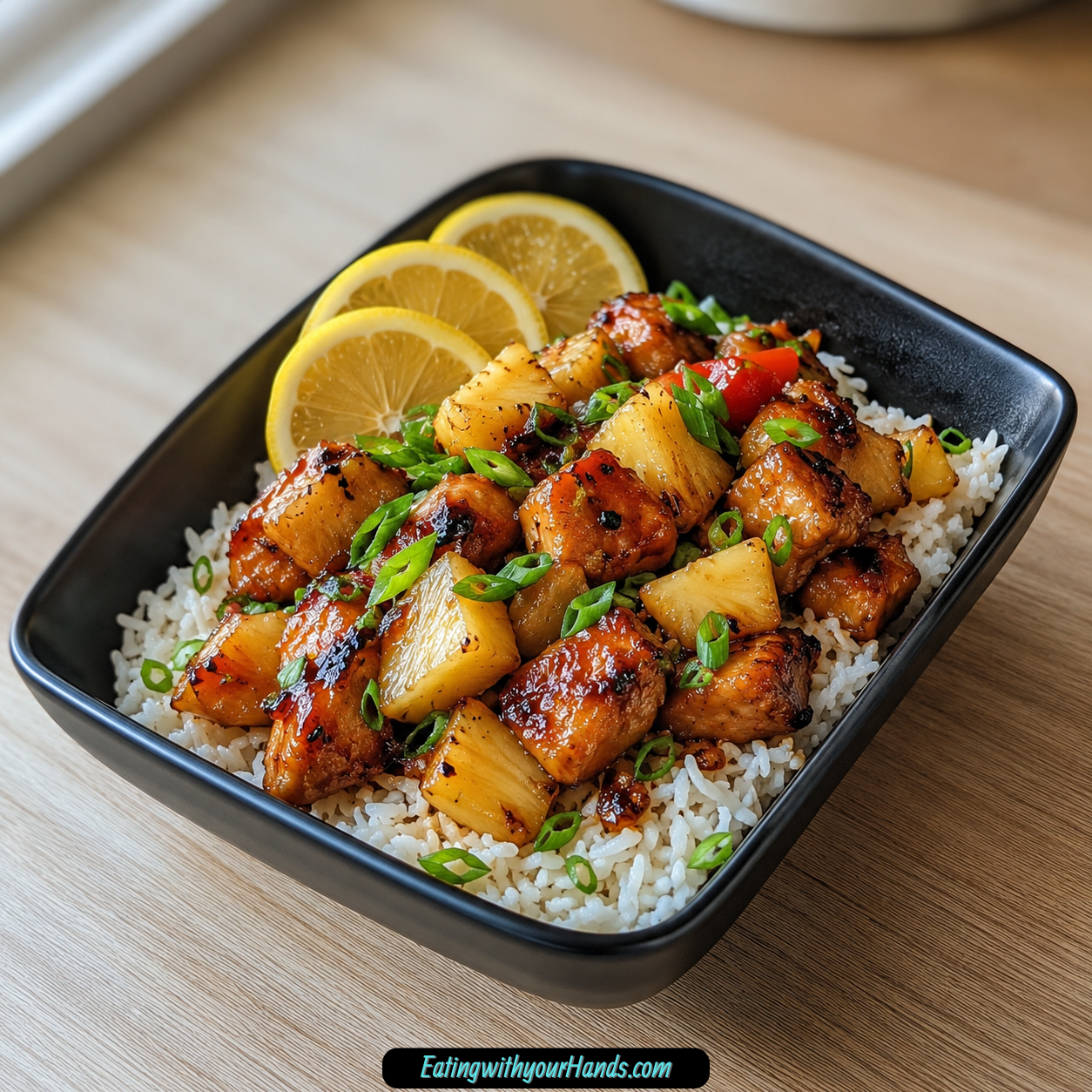
Some dinners feel like a small burst of sunshine in the middle of an ordinary day. Pineapple Chicken and Rice is one of those meals, bringing together tender chicken, sweet pineapple, colorful vegetables, fluffy jasmine rice, and a savory-sweet sauce that makes the whole kitchen feel brighter.
I always imagine this recipe on a rainy afternoon, when the house feels a little too quiet and everyone needs something warm, cheerful, and satisfying. The moment the pineapple opens and that sweet scent rises into the air, the meal already feels like it is doing its job.
This dish has a way of turning simple ingredients into something that feels special. Diced chicken cooks until golden, onion and red bell pepper soften in the skillet, garlic adds that comforting aroma, and pineapple brings a juicy sweetness that changes the whole mood of the meal.
The sauce is simple but full of flavor. Soy sauce, honey, rice vinegar, and optional crushed red pepper flakes create a blend that is savory, sweet, tangy, and lightly warm.
Everything gets spooned over jasmine rice, which gives the dish a soft and fragrant base. The final sprinkle of sliced green onions adds freshness and color right before serving.
Pineapple Chicken and Rice is quick, family-friendly, freezer-friendly, and flexible enough for busy weeknights or cozy family dinners. It is the kind of meal that feels easy to make, easy to love, and easy to bring back into your regular rotation.
Table of Contents
- What Is Pineapple Chicken and Rice?
- Why You’ll Love Pineapple Chicken and Rice
- Recipe Details
- Ingredients You’ll Need
- A Closer Look at the Ingredients
- The Sweet and Savory Flavor Behind This Dish
- Directions
- Step 1: Gather Your Tools and Ingredients
- Step 2: Rinse the Jasmine Rice
- Step 3: Cook the Rice in a Rice Cooker
- Step 4: Cook the Rice in a Pot
- Step 5: Prepare the Chicken
- Step 6: Prepare the Vegetables
- Step 7: Heat the Skillet
- Step 8: Add the Chicken
- Step 9: Cook the Chicken
- Step 10: Add the Onion
- Step 11: Add the Red Bell Pepper
- Step 12: Add the Garlic
- Step 13: Cook the Vegetables
- Step 14: Add the Pineapple
- Step 15: Add the Soy Sauce
- Step 16: Add the Honey
- Step 17: Add the Rice Vinegar
- Step 18: Add Optional Heat
- Step 19: Let the Sauce Cook
- Step 20: Taste and Adjust
- Step 21: Fluff the Rice Again
- Step 22: Plate the Rice
- Step 23: Add the Pineapple Chicken Mixture
- Step 24: Garnish with Green Onions
- Step 25: Serve and Enjoy
- Helpful Tips for the Best Pineapple Chicken and Rice
- Common Mistakes
- Variations
- Serving Suggestions
- Storage Tips
- Freezing Instructions
- Make-Ahead Notes
- Frequently Asked Questions
- Final Thoughts
- Pineapple Chicken and Rice
What Is Pineapple Chicken and Rice?
Pineapple Chicken and Rice is a sweet and savory chicken skillet served over fluffy jasmine rice. It combines diced boneless, skinless chicken breasts with pineapple chunks, red bell pepper, onion, garlic, soy sauce, honey, rice vinegar, and optional crushed red pepper flakes.
The rice is cooked separately until fluffy, then kept warm while the chicken mixture comes together. This keeps the rice soft and ready to soak up the sauce.
The chicken is cooked in a skillet until browned and no longer pink in the center. Then the vegetables are added and cooked until tender and fragrant.
Finally, pineapple and sauce ingredients are stirred into the skillet. The mixture cooks for a few more minutes so the flavors can blend before being served over rice.
Why You’ll Love Pineapple Chicken and Rice
This recipe is quick and easy to prepare. It is ready in about 30 minutes, which makes it a helpful choice for busy weeknights.
It uses minimal ingredients. Chicken, jasmine rice, pineapple, bell pepper, onion, garlic, soy sauce, honey, rice vinegar, and green onions create a complete meal without a long shopping list.
It is family-friendly and appealing to picky eaters. The sweet pineapple and honey balance the savory sauce and make the dish bright and approachable.
It is a one-pan chicken mixture served over rice, which keeps cleanup manageable. Less time washing dishes means more time at the table.
It is freezer-friendly and useful for meal prep. Leftovers can be refrigerated for up to 3 days or frozen for up to 2 months.
It is easy to customize. You can swap rice for brown rice, quinoa, or another grain, add seasonal vegetables, use tofu or shrimp, make it gluten-free with tamari, or add spice with jalapeños or sriracha.
Recipe Details
- Recipe name: Pineapple Chicken and Rice
- Total time: About 30 minutes
- Main protein: Boneless, skinless chicken breasts
- Rice: Jasmine rice
- Main fruit: Fresh pineapple chunks or drained canned pineapple
- Main vegetables: Red bell pepper, onion, garlic, and green onions
- Main sauce: Soy sauce, honey, rice vinegar, and optional crushed red pepper flakes
- Rice cook time: About 15-20 minutes in a pot, or according to package instructions
- Chicken cook time: About 5-7 minutes
- Vegetable cook time: About 3-4 minutes
- Final sauce cook time: About 5 minutes
- Best served: Hot over fluffy jasmine rice
- Storage: Airtight container in the refrigerator for up to 3 days
- Freezer-friendly: Yes, up to 2 months
- Gluten-free option: Use tamari instead of soy sauce
- Vegan-style sweetness option: Use maple syrup or agave syrup instead of honey
- Protein swaps: Tofu, shrimp, grilled chicken, or rotisserie chicken
Ingredients You’ll Need
For the Rice
- 2 cups jasmine rice, rinsed and drained
For the Chicken
- 1 pound boneless, skinless chicken breasts, diced into bite-sized pieces
For the Sauce
- ¼ cup soy sauce
- 2 tablespoons honey
- 1 tablespoon rice vinegar
- ½ teaspoon crushed red pepper flakes, optional
For the Vegetables
- 1 cup fresh pineapple chunks, or canned, drained
- 1 small red bell pepper, diced
- 1 small onion, chopped
- 2 cloves garlic, minced
- 2 green onions, sliced, for garnish
Seasoning
- Salt and pepper, to taste
A Closer Look at the Ingredients
Jasmine rice gives this dish a fragrant, soft base. Rinsing and draining the rice first helps remove excess starch so the grains cook up fluffier.
Boneless, skinless chicken breasts make the meal filling and protein-packed. Cutting the chicken into bite-sized pieces helps it cook quickly and evenly.
Soy sauce forms the savory base of the sauce. Low-sodium soy sauce can be used for a healthier option.
Honey adds sweetness and helps balance the soy sauce and rice vinegar. Maple syrup or agave syrup can be used as alternatives.
Rice vinegar adds a pleasant tang. It keeps the sauce from tasting too heavy or too sweet.
Crushed red pepper flakes are optional. They add gentle heat if your family enjoys a little spice.
Pineapple chunks bring the tropical flavor that makes this dish special. Fresh pineapple is wonderful, and canned pineapple works well when drained.
Red bell pepper adds color, sweetness, and a little crunch. It makes the skillet look bright and inviting.
Onion gives the dish a savory foundation. As it cooks, it softens and blends into the sauce.
Garlic adds warmth and aroma. It makes the chicken and vegetables taste deeper and more complete.
Green onions are used as a garnish. They add a fresh pop of flavor and color right before serving.
Salt and pepper help season the chicken as it cooks. Use them to taste so the dish feels balanced.
The Sweet and Savory Flavor Behind This Dish
Pineapple Chicken and Rice works because it balances sweet, savory, tangy, and fresh flavors. The pineapple and honey bring sweetness, while the soy sauce gives the dish a deep savory base.
Rice vinegar adds brightness. It keeps the sauce lively and helps balance the sweetness from the pineapple.
The optional crushed red pepper flakes add a little heat. Even a small amount can make the sweet and savory flavors feel more exciting.
The red bell pepper and onion bring color and texture. They make the skillet feel fresh instead of heavy.
The jasmine rice is important because it catches the sauce. Each spoonful gets a little chicken, pineapple, vegetable, and rice together.
Directions
Step 1: Gather Your Tools and Ingredients
Start by gathering the jasmine rice, chicken, pineapple, soy sauce, honey, rice vinegar, crushed red pepper flakes, red bell pepper, onion, garlic, green onions, salt, and pepper. You will also need a rice cooker or pot for the rice and a large skillet for the chicken mixture.
This recipe does not need the oven, but it does help to have your cooking space ready before you begin. The rice and skillet steps move quickly once the chicken starts cooking.
Set the sauce ingredients near the stove and prepare your cutting board. Having everything close makes the recipe feel easy and organized.
Step 2: Rinse the Jasmine Rice
Measure 2 cups jasmine rice. Place it in a fine-mesh strainer or bowl and rinse under cold water.
Rinse until the water runs mostly clear. This removes extra starch and helps the rice cook up fluffy instead of sticky.
Drain the rice well after rinsing. Too much extra water can affect the final texture.
Step 3: Cook the Rice in a Rice Cooker
If using a rice cooker, add the rinsed and drained rice to the cooker. Follow your rice cooker or package instructions for the correct amount of water.
The original guidance notes that 4 cups of water is typically used with 2 cups of rinsed jasmine rice. Cook until the rice is tender and the water is absorbed.
Once the rice is finished, fluff it with a fork. Keep it warm while you prepare the chicken and pineapple mixture.
Step 4: Cook the Rice in a Pot
If using a pot, combine the rinsed rice with water according to package instructions. The provided method notes bringing the water to a boil, then reducing the heat, covering, and simmering for about 15-20 minutes.
Let the rice cook until the water is absorbed. Keep the lid on while it simmers so the steam stays inside.
When the rice is done, fluff it gently with a fork. Keep it warm until serving.
Step 5: Prepare the Chicken
Dice 1 pound boneless, skinless chicken breasts into bite-sized pieces. Try to keep the pieces similar in size so they cook evenly.
Smaller pieces cook quickly and are easy to eat with rice. They also soak up the sauce well.
Season the chicken lightly with salt and pepper. This gives it flavor before the sauce is added.
Step 6: Prepare the Vegetables
Dice 1 small red bell pepper. Chop 1 small onion and mince 2 cloves garlic.
Slice 2 green onions and set them aside for garnish. They will be added at the end, not cooked with the main mixture.
If using fresh pineapple, cut it into chunks. If using canned pineapple, drain it before adding it to the skillet.
Step 7: Heat the Skillet
Place a large skillet over medium heat. Add a drizzle of vegetable oil.
Let the oil heat until a drop of water sizzles when it touches the pan. This helps the chicken brown instead of steam.
A hot skillet gives the chicken better texture. Do not rush this step.
Step 8: Add the Chicken
Carefully add the diced chicken to the hot skillet. Spread it out so the pieces have room to cook.
If the chicken is crowded, it may release liquid and steam. A little space helps it brown better.
Let the chicken cook for a moment before stirring. This helps the first side develop color.
Step 9: Cook the Chicken
Cook the chicken for about 5-7 minutes, stirring occasionally. It should become browned and no longer pink in the center.
Season with a little salt and pepper as it cooks. This builds flavor from the beginning.
Check a piece if needed to make sure it is cooked through. The chicken should be fully cooked before the vegetables are added.
Step 10: Add the Onion
Add the chopped onion to the skillet with the cooked chicken. Stir to combine.
The onion will begin to soften and release flavor. It adds a savory base to the sweet pineapple sauce.
Let it cook with the chicken briefly before adding the bell pepper and garlic. This gives it time to soften.
Step 11: Add the Red Bell Pepper
Add the diced red bell pepper to the skillet. Stir it into the chicken and onion.
The red bell pepper adds sweetness, color, and freshness. It should soften slightly but still keep some texture.
Keep the ingredients moving so nothing sticks. The skillet should look colorful and inviting now.
Step 12: Add the Garlic
Add the minced garlic to the skillet. Stir it through the chicken and vegetables.
Garlic cooks quickly, so keep an eye on it. You want it fragrant, not burned.
The garlic will make the whole skillet smell warm and savory. This is one of the best moments in the recipe.
Step 13: Cook the Vegetables
Cook the onion, bell pepper, and garlic with the chicken for about 3-4 minutes. The vegetables should become tender and fragrant.
Do not overcook them until they lose all texture. A little bite keeps the dish fresh.
Stir occasionally so the garlic does not burn. The chicken and vegetables should be evenly mixed.
Step 14: Add the Pineapple
Add 1 cup fresh pineapple chunks or drained canned pineapple to the skillet. Stir gently.
The pineapple brings juicy sweetness and tropical flavor. It also adds bright color to the skillet.
Let the pineapple begin warming with the chicken and vegetables. It will release a little sweetness into the sauce.
Step 15: Add the Soy Sauce
Pour ¼ cup soy sauce into the skillet. Stir so it coats the chicken, vegetables, and pineapple.
The soy sauce gives the dish its savory depth. It balances the sweetness from the pineapple and honey.
If you need a gluten-free option, use tamari instead of soy sauce. This keeps the flavor similar while meeting gluten-free needs.
Step 16: Add the Honey
Add 2 tablespoons honey to the skillet. Stir until it melts into the soy sauce and coats the ingredients.
The honey makes the sauce slightly sweet and glossy. It also helps the sauce cling to the chicken.
For a vegan-style sweetener swap, use agave syrup. Maple syrup can also be used as mentioned in the ingredient notes.
Step 17: Add the Rice Vinegar
Add 1 tablespoon rice vinegar. Stir it into the sauce.
The vinegar gives the sauce a tangy lift. It keeps the sweetness from becoming too strong.
This small amount makes the dish taste more balanced. It brightens the pineapple and honey.
Step 18: Add Optional Heat
Add ½ teaspoon crushed red pepper flakes if you want a little heat. Stir them through the sauce.
This step is optional. Use more or less based on your family’s spice preference.
You can also use diced jalapeños or a splash of sriracha for a spicier twist. Start small and adjust carefully.
Step 19: Let the Sauce Cook
Cook the pineapple chicken mixture for an additional 5 minutes. Stir occasionally.
This gives the flavors time to meld together. The chicken, vegetables, pineapple, and sauce will become glossy and fragrant.
Do not worry if the mixture looks a little saucy. That sauce is delicious over the jasmine rice.
Step 20: Taste and Adjust
Taste the chicken mixture and adjust with salt and pepper if needed. The soy sauce adds saltiness, so season carefully.
If you want more sweetness, add a little extra honey or agave. If you want more heat, add a small pinch of red pepper flakes.
The final flavor should be sweet, savory, tangy, and lightly bright. It should taste balanced, not flat.
Step 21: Fluff the Rice Again
Before serving, fluff the warm jasmine rice again with a fork. This separates the grains and makes it easier to plate.
The rice should be soft and fragrant. It is the base that catches the pineapple chicken sauce.
Do not mash the rice. Use gentle movements so it stays light.
Step 22: Plate the Rice
Spoon generous portions of jasmine rice onto plates or into bowls. Spread it slightly so it can hold the chicken mixture.
A warm bed of rice makes the dish feel complete. It also absorbs the sauce beautifully.
Use enough rice for a satisfying serving. The chicken mixture is flavorful, so the rice helps balance it.
Step 23: Add the Pineapple Chicken Mixture
Spoon the pineapple chicken mixture over the rice. Make sure each serving gets chicken, pineapple, red bell pepper, onion, and sauce.
The sauce should soak lightly into the rice. This is what makes the dish so comforting.
If serving family-style, place the rice in a large bowl and spoon the chicken mixture over the top. It looks colorful and inviting.
Step 24: Garnish with Green Onions
Sprinkle sliced green onions over the top. This adds freshness, color, and a mild onion flavor.
Green onions make the finished dish look brighter. They also give a fresh contrast to the sweet sauce.
Add them right before serving. They taste best when fresh.
Step 25: Serve and Enjoy
Serve Pineapple Chicken and Rice hot. It is best straight from the skillet over warm rice.
Pair it with a simple side salad, steamed broccoli, or crispy spring rolls for a more complete meal. These sides were suggested because they balance the sweet and savory flavors.
Enjoy it with family or friends while the sauce is warm and glossy. This is the kind of dish that tends to bring people back for seconds.
Helpful Tips for the Best Pineapple Chicken and Rice
Rinse the jasmine rice before cooking. This helps remove excess starch and keeps the rice fluffy.
Use fresh pineapple when you have it. Canned pineapple works well too, but drain it first.
Season the chicken while it cooks. This gives the dish better flavor from the start.
Do not overcook the vegetables. The onion and bell pepper should become tender but still have some texture.
Use low-sodium soy sauce if you want a lighter sodium option. It gives you more control over the final seasoning.
Adjust the spice level with crushed red pepper flakes. Add more for heat or skip them for a mild dish.
Common Mistakes
Skipping the Rice Rinse
Rinsing jasmine rice helps remove extra starch. Without rinsing, the rice may turn out stickier than expected.
Take a minute to rinse until the water runs clear. This small step improves the final texture.
Adding Pineapple Without Draining
If using canned pineapple, drain it before adding it to the skillet. Too much extra liquid can water down the sauce.
Fresh pineapple can be added directly. Keep the chunks bite-sized.
Overcooking the Chicken
Chicken breast can dry out if cooked too long. Cook it for about 5-7 minutes, just until browned and no longer pink in the center.
The chicken will cook a little longer when the sauce is added. Avoid overdoing it in the first stage.
Burning the Garlic
Garlic cooks quickly. Add it with the vegetables and stir often.
If garlic burns, it can make the dish taste bitter. Keep the heat at medium and watch it closely.
Forgetting to Taste the Sauce
Soy sauce, honey, and pineapple can vary in intensity. Taste before serving.
Adjust salt, pepper, sweetness, or heat based on your preference. This helps the final dish feel balanced.
Variations
Swap jasmine rice for brown rice or quinoa for a healthier grain option. This changes the texture and adds a different kind of heartiness.
Add seasonal vegetables like snap peas or carrots for extra color and nutrition. They make the skillet even brighter.
Use teriyaki sauce instead of soy sauce for a sweeter, bolder flavor. This creates a different sauce profile.
For a lighter version, use grilled chicken or tofu instead of sautéed chicken. Tofu also works well as a meatless protein option.
Make it gluten-free by using tamari instead of soy sauce. Check all sauces if needed.
For a spicy twist, add diced jalapeños or a splash of sriracha to the sauce. You can also adjust the crushed red pepper flakes.
Add cashews or almonds just before serving for extra texture. They bring crunch to the finished dish.
Use pre-cooked rotisserie chicken if you are short on time. Add it after the vegetables and heat it through with the sauce.
Substitute honey with agave syrup for a vegan option. You can also omit honey for a lower-sugar version.
Make it dairy-free by ensuring all sauces and ingredients are free of dairy products. The base recipe does not rely on dairy.
Serving Suggestions
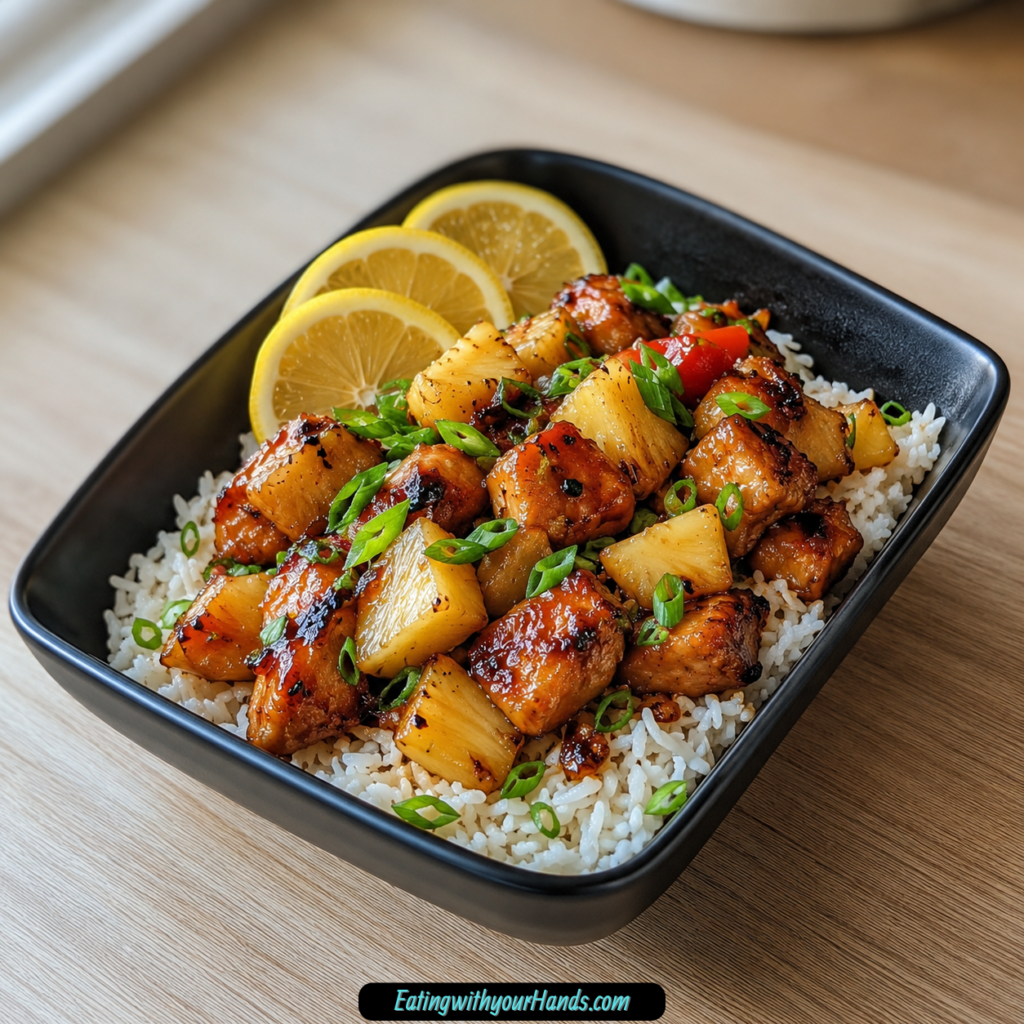
Serve Pineapple Chicken and Rice hot, straight from the skillet over jasmine rice. The dish looks beautiful when the colorful chicken mixture is spooned over the fluffy rice.
A simple side salad pairs well with the sweet and savory sauce. The fresh greens add a cooling contrast.
Steamed broccoli is another great side. It adds a refreshing crunch and more vegetables to the meal.
Crispy spring rolls make the meal feel extra special. They add texture beside the saucy chicken and rice.
You can also serve the chicken mixture chilled if you want a different kind of meal. The recipe notes that it can be served warm or chilled, making it versatile for different occasions.
For entertaining, serve it in a large bowl with sliced green onions scattered on top. The pineapple and red bell pepper make it naturally colorful.
Storage Tips
Store leftovers in an airtight container in the refrigerator for up to 3 days. Let the dish cool before sealing it.
You can store the chicken mixture and rice together or separately. Separate storage can help the rice keep a better texture.
Reheat in the microwave or on the stovetop. Stir gently so the sauce warms evenly.
If reheating on the stovetop, add a small splash of water if the rice or sauce seems dry. Warm over medium-low heat.
Add fresh green onions after reheating if possible. This keeps the garnish bright and fresh.
Freezing Instructions
Pineapple Chicken and Rice can be frozen in freezer-safe containers for up to 2 months. Let it cool completely before freezing.
Portioning the dish before freezing makes it easier to reheat later. Individual containers work well for quick meals.
Thaw overnight in the refrigerator before reheating. This helps the dish warm more evenly.
Reheat in the microwave or on the stovetop until hot. Add a splash of water if needed to loosen the rice or sauce.
The texture of the rice may soften slightly after freezing, but the sweet and savory flavor remains satisfying. This makes it a helpful meal prep option.
Make-Ahead Notes
You can cook the rice ahead of time and keep it refrigerated until needed. Warm it before serving or reheat it with the chicken mixture.
You can also dice the chicken, chop the onion and bell pepper, mince the garlic, and slice the green onions ahead. This makes the cooking process much faster.
If using canned pineapple, drain it ahead and store it covered. If using fresh pineapple, cut it into chunks before cooking.
The sauce ingredients can be measured in advance. Keep the soy sauce, honey, rice vinegar, and red pepper flakes ready near the stove.
For the freshest texture, cook the chicken mixture close to serving time. The prep can happen early, but the skillet step is best fresh.
Frequently Asked Questions
Can Pineapple Chicken and Rice Be Frozen?
Yes, Pineapple Chicken and Rice can be frozen in airtight containers for up to 2 months. Let it cool completely before freezing.
Thaw it overnight in the refrigerator before reheating. Reheat in the microwave or on the stovetop until hot.
How Can I Substitute Ingredients?
You can substitute chicken with tofu or shrimp. You can also use any vegetables you have on hand.
Honey can be replaced with agave syrup or omitted for a lower-sugar option. Jasmine rice can also be swapped for brown rice or quinoa.
What Are Some Serving Suggestions?
This dish pairs beautifully with a side salad, steamed vegetables, or crispy spring rolls. These sides help create a well-rounded meal.
You can also serve it on its own over jasmine rice. It already includes chicken, fruit, vegetables, and sauce.
Can I Use Canned Pineapple?
Yes, canned pineapple works well for convenience. Make sure it is drained before adding it to the skillet.
Fresh pineapple can also be used. Both options bring sweetness and tropical flavor.
Can I Make This Gluten-Free?
Yes, use tamari instead of soy sauce. This keeps the dish gluten-free while still giving it savory flavor.
Always check any sauce labels if needed. This helps keep the whole meal gluten-free.
Can I Use Rotisserie Chicken?
Yes, pre-cooked rotisserie chicken works great if you are short on time. Add it after the vegetables have cooked.
Since it is already cooked, you only need to heat it through with the pineapple and sauce. This makes the recipe even faster.
How Can I Make It Spicier?
Add more crushed red pepper flakes, diced jalapeños, or a splash of sriracha. Start small and increase to taste.
The sweetness from pineapple and honey balances heat nicely. This makes spice easy to adjust.
Can I Serve This Dish Chilled?
Yes, the recipe notes that it can be served warm or chilled. Warm is especially comforting, but chilled can work for a different occasion.
If serving chilled, make sure the chicken has been safely cooked, cooled, and stored properly. Add fresh green onions before serving.
Final Thoughts
Pineapple Chicken and Rice is the kind of meal that brings color, comfort, and a little tropical brightness to the table. It has tender chicken, juicy pineapple, red bell pepper, onion, garlic, a sweet-savory sauce, and fluffy jasmine rice all working together in one satisfying dish.
It is quick enough for a busy weeknight but cheerful enough for a family gathering. The ingredients are simple, the steps are easy, and the result feels warm and memorable.
This recipe is also easy to make your own. You can use brown rice, quinoa, tofu, shrimp, rotisserie chicken, extra vegetables, tamari, teriyaki sauce, jalapeños, sriracha, cashews, almonds, agave syrup, or a lower-sugar version.
Serve it hot with green onions, gather everyone around, and enjoy a dinner that feels bright, sweet, savory, and full of simple joy.
Pineapple Chicken and Rice
This Pineapple Chicken and Rice is a sweet, savory, and easy dinner made with tender diced chicken, jasmine rice, pineapple, bell pepper, onion, garlic, soy sauce, honey, and rice vinegar. The pineapple adds juicy tropical sweetness, while the soy sauce and honey create a simple glaze that coats the chicken and vegetables beautifully. Served over fluffy jasmine rice, this meal comes together quickly and works well for busy weeknights, family dinners, or anytime you want a bright, flavorful chicken and rice dish.
Recipe Details
- Prep Time: 10 minutes
- Cook Time: 20 minutes
- Total Time: 30 minutes
- Course: Dinner
- Cuisine: American
- Servings: 4 people
- Calories: 400 kcal
Equipment
- Rice Cooker
- Skillet
Ingredients
For the Vegetables
- 1 small onion, chopped
- 2 cloves garlic, minced
- 1 cup fresh pineapple chunks (or canned, drained)
- 1 small red bell pepper, diced
For the Sauce
- 1 tablespoon rice vinegar
- 2 tablespoons honey
- ½ teaspoon crushed red pepper flakes (optional)
- ¼ cup soy sauce
Seasoning
- to taste Salt and pepper
For the Chicken
- 1 pound boneless, skinless chicken breasts, diced
For the Rice
- 2 cups jasmine rice
Instructions
Step 1: Cook the Rice
Cook the jasmine rice according to the package instructions.
Keep it warm while you prepare the chicken and pineapple mixture.
Step 2: Brown the Chicken
In a skillet, heat vegetable oil over medium heat.
Add the diced chicken and cook until browned and fully cooked through.
Step 3: Add the Vegetables
Add the onion, red bell pepper, and garlic to the skillet.
Cook until the vegetables are tender and fragrant.
Step 4: Add the Pineapple and Sauce
Stir in the pineapple, soy sauce, honey, rice vinegar, and optional crushed red pepper flakes.
Cook for an additional 5 minutes, allowing the sauce to coat the chicken and vegetables.
Step 5: Season and Serve
Season with salt and pepper to taste.
Serve the pineapple chicken mixture over the warm jasmine rice.
Garnish with sliced green onions if desired.
Notes
You can use canned pineapple for convenience. Adjust the spice level by adding more or less crushed red pepper.
Serving Suggestions
This pineapple chicken and rice pairs well with:
- Steamed broccoli
- Cucumber salad
- Stir-fried vegetables
- Roasted green beans
- Egg rolls
- Extra pineapple chunks
- Lime wedges
- Sesame seeds
Storage
How to Store
Store the rice and pineapple chicken mixture in separate airtight containers in the refrigerator when possible.
How to Reheat
Reheat gently in the microwave or in a skillet until warmed through. Add a small splash of water, broth, or soy sauce if the rice or sauce thickens after chilling.

Fernando is the creator and writer behind the food blog Eating with your Hands. Living and working in cities like Paris, Barcelona, and Berlin, and being married to a Canadian foodie, has given Fernando a passion and interest in food and inspired him to run EWYH.