
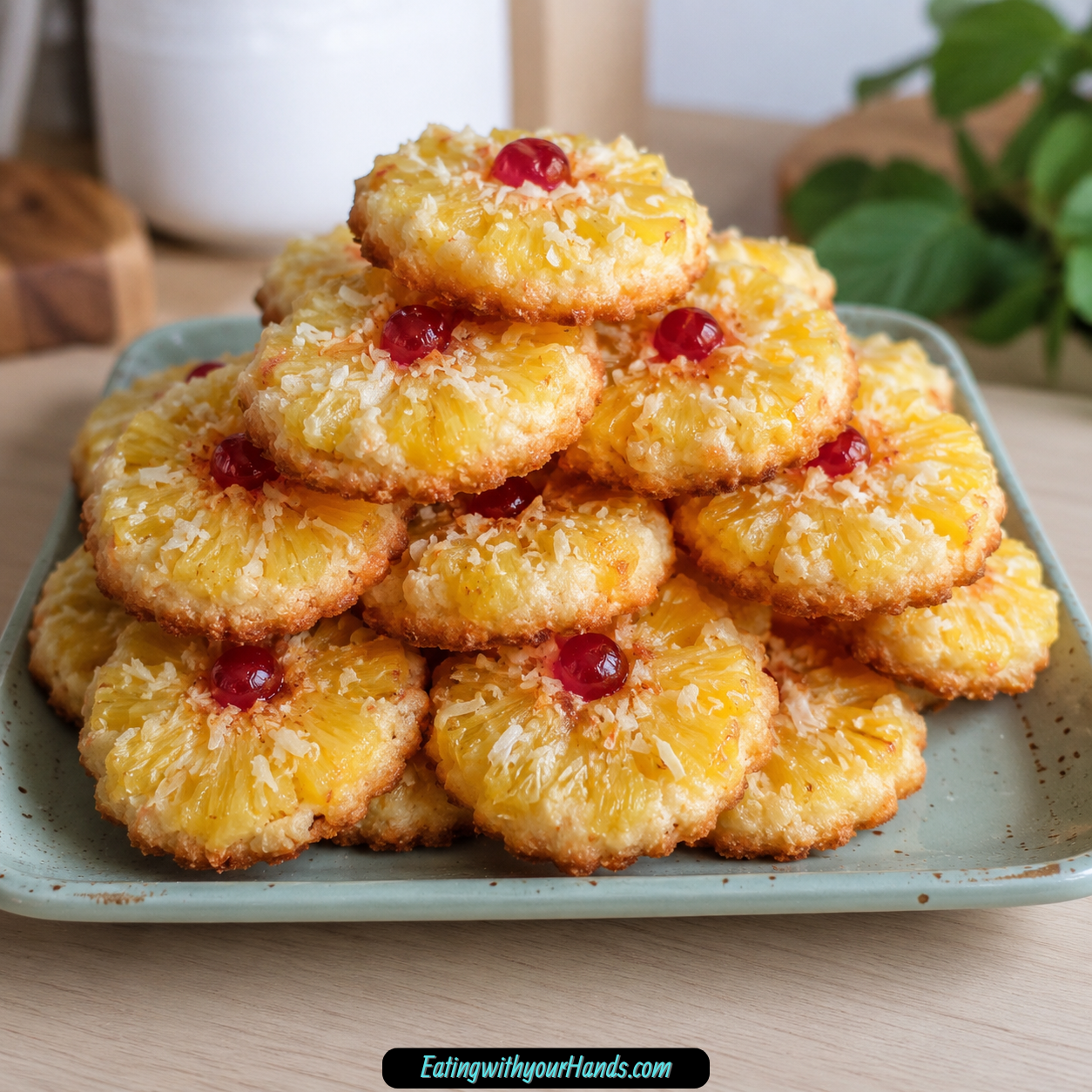
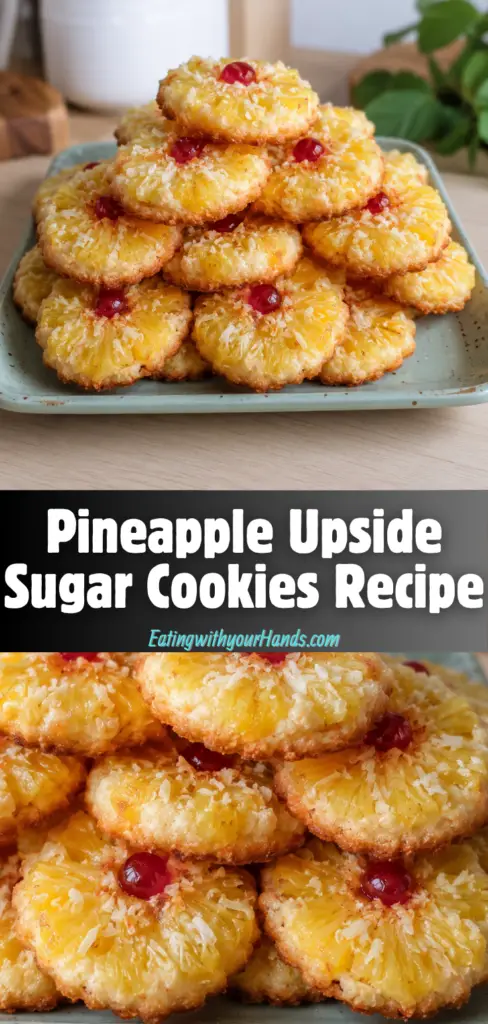
Pineapple Upside Sugar Cookies are the kind of bright, cheerful cookie that can make an ordinary day feel a little sunnier. They take the nostalgic flavors of pineapple upside-down cake and tuck them into a soft, chewy sugar cookie with sweet pineapple, coconut, brown sugar, and the option of a classic maraschino cherry in the center.
I love desserts that feel familiar but still bring a little surprise. These cookies have the buttery comfort of a sugar cookie, but the crushed pineapple gives them a fruity lift, the shredded coconut adds texture, and the brown sugar coating bakes into a lightly caramelized edge that hints at the cake that inspired them.
There is something so fun about seeing that little cherry pressed into the middle. It immediately gives the cookie that old-fashioned pineapple upside-down feeling, the kind of dessert memory that belongs at summer parties, bake sales, family tables, and any day that needs a little color.
These cookies are soft, festive, and easy to love. They are special enough for luaus, pool parties, themed desserts, spring brunches, summer BBQs, or cheerful holiday cookie trays, but simple enough to make when you just want something fruity and different.
Table of Contents
- Why You’ll Love This Recipe
- Recipe Details
- Ingredients
- Optional Swaps, Variations, Add-Ins, and Serving Ideas
- Why These Pineapple Upside Sugar Cookies Work
- Directions
- Step 1: Preheat the Oven to 350°F (175°C)
- Step 2: Line Two Baking Sheets
- Step 3: Cream the Butter and Granulated Sugar
- Step 4: Add the Egg and Vanilla Extract
- Step 5: Whisk the Dry Ingredients
- Step 6: Combine the Wet and Dry Mixtures
- Step 7: Drain the Crushed Pineapple Thoroughly
- Step 8: Fold in the Pineapple and Coconut
- Step 9: Mix the Brown Sugar Coating
- Step 10: Scoop the Dough
- Step 11: Roll the Dough Into Balls
- Step 12: Coat Each Dough Ball in Brown Sugar
- Step 13: Flatten the Cookies Slightly
- Step 14: Add Maraschino Cherries if Desired
- Step 15: Chill the Dough if It Feels Too Soft
- Step 16: Bake for 12–15 Minutes
- Step 17: Cool on the Baking Sheet for 5 Minutes
- Step 18: Transfer to a Wire Rack
- Serving Ideas
- Storage
- Reheating
- Freezing
- Make-Ahead
- Helpful Notes for Best Results
- Variations
- Troubleshooting
- Frequently Asked Questions
- Why This Recipe Works So Well
- Final Thoughts
- Pineapple Upside Sugar Cookies
- Recipe Details
- Ingredients
- Instructions
- Step 1: Prepare the Oven and Baking Sheets
- Step 2: Cream the Butter and Sugar
- Step 3: Add the Egg and Vanilla
- Step 4: Whisk the Dry Ingredients
- Step 5: Combine the Dough
- Step 6: Fold in the Pineapple and Coconut
- Step 7: Prepare the Brown Sugar Coating
- Step 8: Scoop and Coat the Dough
- Step 9: Shape the Cookies
- Step 10: Add the Optional Cherry Garnish
- Step 11: Bake Until Golden
- Step 12: Cool the Cookies
- Notes
- Serving Suggestions
- Storage
Why You’ll Love This Recipe
Pineapple Upside Sugar Cookies bring a tropical twist to a classic sugar cookie. They combine the buttery sweetness of soft cookies with crushed pineapple, coconut, brown sugar, and optional maraschino cherries.
They are quick to make because there is no required chill time. The dough can be ready to bake in under 20 minutes, which makes the recipe helpful when you want a fun cookie without waiting too long.
The cookies have a soft and chewy texture. Creamed butter, sugar, egg, and the right balance of dry ingredients help create a tender cookie with golden edges and soft centers.
They are fun and festive for gatherings. The pineapple flavor, coconut texture, brown sugar coating, and cherry center make them stand out on cookie trays.
They are also customizable. You can add lime zest, use toasted coconut, swap cherries for candied ginger, or leave the cherry off entirely.
These cookies are freezer-friendly, too. You can freeze baked cookies or freeze unbaked dough balls after rolling and flattening them.
Recipe Details
Pineapple Upside Sugar Cookies bake at 350°F (175°C). The recipe uses two baking sheets lined with parchment paper.
The dough begins with 1 cup softened unsalted butter and 1 cup granulated sugar. These are beaten together until light and fluffy, about 2–3 minutes.
One large egg and 1 teaspoon vanilla extract are added to the butter mixture. The mixture should become smooth and well combined.
The dry ingredients include 2 ½ cups all-purpose flour, ½ teaspoon baking powder, and ¼ teaspoon salt. The flour should be spooned and leveled to avoid dense cookies.
The dough gets its pineapple flavor from ½ cup crushed pineapple, well-drained. Too much moisture can make the dough soggy, so draining well is important.
The dough also includes ¼ cup unsweetened shredded coconut. This adds tropical flair and texture without making the cookies too sugary.
The brown sugar coating is made with ½ cup brown sugar mixed with 1–2 teaspoons flour. The flour helps prevent the sugar from melting too quickly and helps coat the cookies evenly.
The cookies bake for 12–15 minutes. They are ready when the edges are golden and the tops are just set, while the centers still stay soft.
Ingredients
Sugar Cookie Dough
1 cup unsalted butter, softened
1 cup granulated sugar
1 large egg
1 teaspoon vanilla extract
2 ½ cups all-purpose flour
½ teaspoon baking powder
¼ teaspoon salt
Pineapple Coconut Add-Ins
½ cup crushed pineapple, well-drained
¼ cup unsweetened shredded coconut
Brown Sugar Coating and Optional Finish
½ cup brown sugar, for rolling
Maraschino cherries, optional
Ingredient Notes
Softened unsalted butter is important for creaming. It should be soft but not melted, which helps create a light and tender cookie dough.
Granulated sugar gives sweetness and structure. When beaten with the butter, it helps the dough bake into soft cookies with lightly golden edges.
The egg binds the dough and adds richness. Vanilla extract enhances the pineapple, coconut, and buttery sugar cookie flavor.
All-purpose flour gives the cookies structure. Spoon and level the flour to avoid packing in too much, which can make the cookies dense.
Baking powder adds a gentle lift. Salt balances the sweetness and boosts the flavor.
Crushed pineapple should be well-drained before it goes into the dough. Extra moisture can make the dough too soft or soggy.
Unsweetened shredded coconut adds tropical texture without adding too much sweetness. Sweetened coconut can make the cookies too sugary.
Brown sugar creates the caramelized coating that nods to pineapple upside-down cake. Maraschino cherries are optional, but they add color and a classic upside-down cake touch.
Optional Swaps, Variations, Add-Ins, and Serving Ideas
Lime Zest Variation
Add 1 teaspoon finely grated lime zest to the dough for a citrusy zing. The lime adds brightness and makes the pineapple flavor feel even sunnier.
This is a lovely option for summer parties or tropical-themed desserts. It keeps the cookie sweet but gives it a fresh edge.
Toasted Coconut Option
Toast the shredded coconut in a dry pan for added flavor and crunch. Let it cool before adding it to the dough.
Toasted coconut gives the cookies a deeper, nuttier flavor. It also adds a little more texture.
Cherry Swaps
Maraschino cherries are optional and add the classic look. You can substitute candied ginger, dried pineapple chunks, or leave them off entirely.
Candied ginger gives the cookies a warmer flavor. Dried pineapple chunks keep the fruit theme while changing the texture.
Coconut-Free Option
If you do not like coconut, you can omit it entirely. You can also replace it with chopped nuts or extra flour, 2–3 tablespoons.
This changes the texture but keeps the pineapple sugar cookie idea intact. The cookies will still have tropical flavor from the pineapple.
Glaze Option
For a decorative finish, drizzle the cookies with a simple glaze made from powdered sugar and pineapple juice. This gives the cookies a prettier look and more pineapple sweetness.
Let the cookies cool before glazing. A warm cookie can make the glaze run too much.
Serving Extras
Serve these cookies with pineapple juice, coconut milk, or iced tea. They also work beautifully as ice cream sandwiches with vanilla or coconut ice cream.
Why These Pineapple Upside Sugar Cookies Work
These cookies work because they borrow the best parts of pineapple upside-down cake and reshape them into an easy cookie. The pineapple brings tangy sweetness, the brown sugar coating hints at caramel, and the cherry gives the classic visual touch.
The sugar cookie dough gives the recipe its soft and chewy base. Butter and sugar create tenderness, while the egg and flour hold everything together.
Draining the pineapple is one of the most important steps. Pineapple brings flavor, but too much liquid can make the dough too wet and cause the cookies to spread too much.
Unsweetened coconut adds texture without overwhelming the cookie. It supports the tropical flavor while letting the pineapple stay at the center.
The brown sugar coating caramelizes lightly as the cookies bake. Mixing it with a little flour helps it coat the dough evenly and prevents it from melting too fast.
A soft center is part of the charm. The cookies should come out when the edges are golden and the tops are just set, not when the centers are dry.
Directions
Step 1: Preheat the Oven to 350°F (175°C)
Set your oven to 350°F (175°C). This temperature gives the cookies enough heat to bake through while keeping the centers soft.
Let the oven fully preheat before the baking sheets go in. A steady oven temperature helps the cookies bake evenly and keeps the texture consistent.
Because there is no required chill time, this recipe moves quickly. Starting with a properly heated oven keeps the process smooth.
Step 2: Line Two Baking Sheets
Line two baking sheets with parchment paper. This prevents sticking and makes cleanup easier.
The brown sugar coating can caramelize slightly during baking, so parchment helps the cookies release cleanly. It also protects the baking sheets from sticky spots.
Set the prepared sheets aside while you make the dough. You will arrange the cookies about 2 inches apart before baking.
Step 3: Cream the Butter and Granulated Sugar
In a large mixing bowl, beat 1 cup softened unsalted butter with 1 cup granulated sugar. Cream them together until the mixture is light and fluffy, about 2–3 minutes.
This step is important for the soft sugar cookie texture. Properly creamed butter and sugar create a lighter dough.
The butter should be soft but not melted. Melted butter can change the texture and make the dough harder to handle.
Step 4: Add the Egg and Vanilla Extract
Beat in 1 large egg and 1 teaspoon vanilla extract. Mix until the dough base is smooth and well combined.
The egg helps bind the cookie dough, while vanilla enhances the buttery, fruity flavor. Together, they make the dough taste more complete.
Scrape the bowl if needed so everything mixes evenly. The wet mixture should look creamy before the dry ingredients are added.
Step 5: Whisk the Dry Ingredients
In a separate bowl, whisk together 2 ½ cups all-purpose flour, ½ teaspoon baking powder, and ¼ teaspoon salt. Whisk until evenly combined.
This step helps distribute the baking powder and salt through the flour. It gives the cookies a more even texture and flavor.
Spoon and level the flour when measuring. Too much flour can make the cookies heavy instead of soft.
Step 6: Combine the Wet and Dry Mixtures
Gradually add the dry ingredients to the butter mixture. Mix just until combined.
Do not overmix. Once the flour disappears into the dough, stop mixing so the cookies stay tender.
The dough should be soft but able to hold its shape. It will become more textured once the pineapple and coconut are folded in.
Step 7: Drain the Crushed Pineapple Thoroughly
Make sure ½ cup crushed pineapple is well-drained before adding it to the dough. Press it gently in a strainer to remove excess moisture.
This step matters because pineapple holds a lot of liquid. Too much moisture can make the dough soggy and cause the cookies to spread.
The pineapple should still be juicy in flavor but not dripping wet. Once drained, it is ready to fold into the dough.
Step 8: Fold in the Pineapple and Coconut
Gently stir the well-drained crushed pineapple and ¼ cup unsweetened shredded coconut into the dough. Fold until evenly distributed.
Use a gentle hand so the dough does not become overworked. The pineapple and coconut should be spread throughout without turning the dough loose.
This is where the cookies start to feel tropical. The dough should smell buttery, sweet, and fruity.
Step 9: Mix the Brown Sugar Coating
In a small bowl, mix ½ cup brown sugar with 1–2 teaspoons flour. This creates the coating for the cookie dough balls.
The flour helps prevent the brown sugar from melting too quickly. It also helps the sugar cling more evenly to the dough.
Stir until the flour is blended into the brown sugar. The coating should look even before rolling.
Step 10: Scoop the Dough
Using a tablespoon or cookie scoop, portion out the dough. Try to keep the portions similar in size.
Even portions help the cookies bake at the same rate. A cookie scoop is useful if you want a neater, more consistent look.
The dough should be soft but scoopable. If it feels too soft, you can chill it before baking.
Step 11: Roll the Dough Into Balls
Roll each portion of dough into a ball. Handle the dough gently.
If the dough sticks to your hands, work lightly and avoid adding too much extra flour. The dough should stay soft enough to bake into tender cookies.
Keep the dough balls close in size. This helps the edges brown at the same time.
Step 12: Coat Each Dough Ball in Brown Sugar
Roll each dough ball in the brown sugar mixture until completely coated. Make sure the coating covers the outside evenly.
This coating is what gives the cookies their caramelized pineapple upside-down cake feeling. It also adds a deeper sweetness to the outside.
Place each coated dough ball onto the prepared baking sheets. Leave about 2 inches of space between cookies.
Step 13: Flatten the Cookies Slightly
Flatten each dough ball slightly with your palm or the bottom of a glass. Do not press them completely flat.
A slight flattening helps the cookies bake evenly. It also creates a better surface for the optional cherry.
The cookies should still have some thickness. This helps them stay soft in the center.
Step 14: Add Maraschino Cherries if Desired
Press a maraschino cherry into the center of each cookie if desired. Press gently so it sits in place without splitting the dough too much.
The cherry adds color, sweetness, and the classic pineapple upside-down cake look. It is optional, but it makes the cookies feel festive.
If you skip the cherry, the cookies will still be flavorful. The pineapple, coconut, and brown sugar coating carry the tropical flavor.
Step 15: Chill the Dough if It Feels Too Soft
If your dough feels too soft, chill it for 20–30 minutes before baking. This helps reduce spreading.
Soft dough can happen if the butter is warm or the pineapple has extra moisture. Chilling gives the dough a chance to firm up.
Also make sure the pineapple is not too wet. Properly drained pineapple helps the cookies hold their shape.
Step 16: Bake for 12–15 Minutes
Bake the cookies for 12–15 minutes. They are done when the edges are golden and the tops are just set.
The centers should still be soft. Do not wait until the entire cookie looks firm, or the texture may become less tender.
Watch the edges for the best doneness cue. The brown sugar coating should look slightly caramelized.
Step 17: Cool on the Baking Sheet for 5 Minutes
Let the cookies cool on the baking sheet for 5 minutes. This helps them firm enough to move without breaking.
The centers will continue to set as the cookies rest. This short cooling time protects the soft texture.
Do not transfer them too early. Warm cookies with pineapple can be delicate.
Step 18: Transfer to a Wire Rack
Transfer the cookies to a wire rack to cool completely. This lets air move around the cookies and helps the bottoms finish setting.
Cooling completely also makes the cookies easier to store. If you plan to glaze them, wait until they are fully cool.
Once cooled, the cookies are ready to serve, store, freeze, or turn into ice cream sandwiches. Their soft texture and fruity flavor make them easy to enjoy in different ways.
Serving Ideas
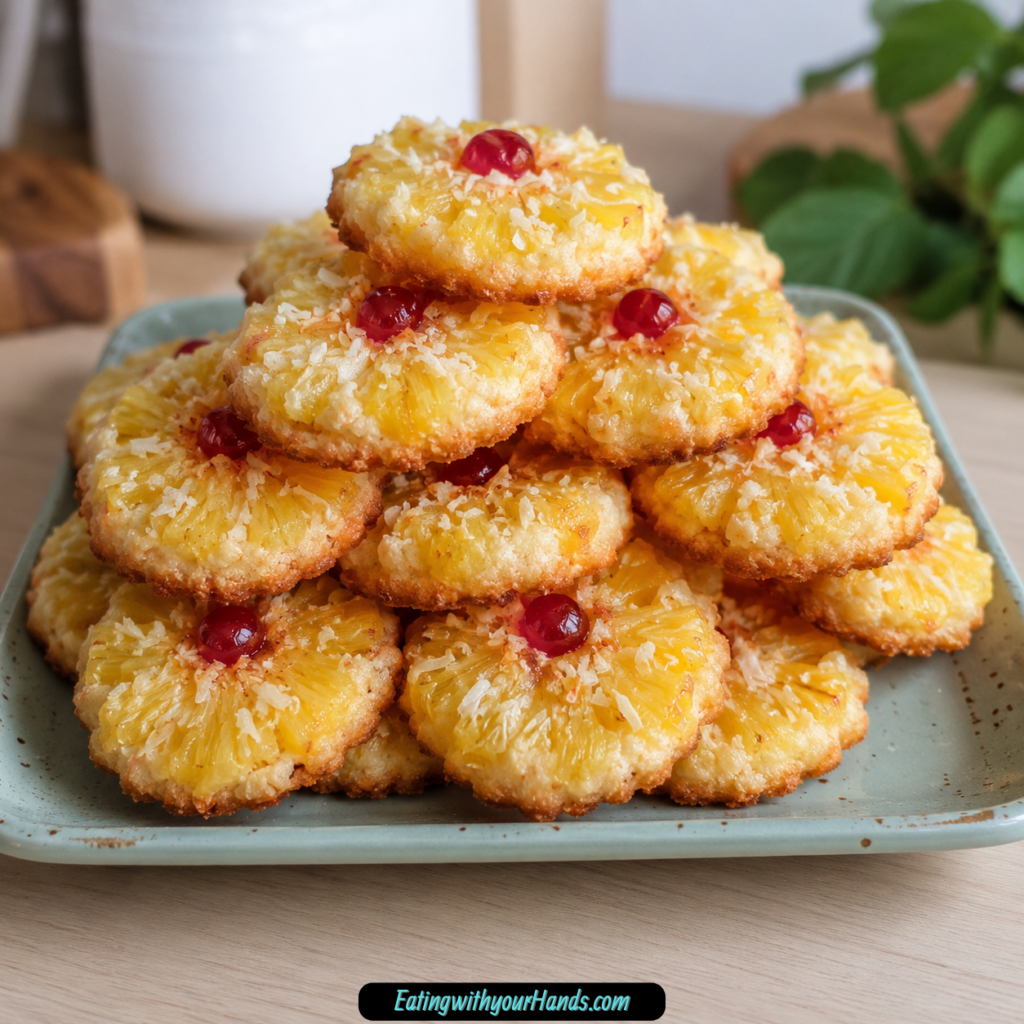
Serve Pineapple Upside Sugar Cookies slightly warm for a softer bite. The pineapple flavor feels especially cozy when the cookies are fresh.
Serve them chilled for a firmer texture. This is helpful if you want cleaner cookies for a party tray.
Pair them with tropical drinks like pineapple juice, coconut milk, or iced tea. The fruit and coconut flavors fit those drinks beautifully.
Use the cookies for ice cream sandwiches with vanilla or coconut ice cream. Their soft texture makes them a fun base for a cold dessert.
These cookies are wonderful for summer parties, bake sales, luaus, pool parties, spring brunches, and cheerful holiday trays. They bring color and personality wherever they go.
Storage
Store the cookies in an airtight container at room temperature for up to 5 days. Let them cool completely before storing.
Place parchment paper between layers to prevent sticking. This is especially helpful if the brown sugar coating or cherry tops feel tacky.
Keep the container sealed between servings. Airtight storage helps preserve the soft texture.
If your kitchen is warm, check the cookies before stacking. The pineapple and brown sugar can make them a little more delicate than plain sugar cookies.
Reheating
These cookies do not need reheating, but they can be enjoyed slightly warm. A warm cookie will have a softer bite.
If the cookies have been stored, let them come to room temperature before serving. This helps the texture feel more natural.
Avoid overheating because the fruit and sugar coating can become too soft. Gentle warmth is enough if you want that fresh-baked feel.
Freezing
Freeze baked cookies in a single layer first, then transfer them to a bag. Thaw at room temperature before serving.
Freezing in a single layer helps the cookies keep their shape. Once firm, they can be stored together more easily.
You can also freeze unbaked dough balls. Roll and flatten them before freezing.
Bake straight from frozen with 1–2 extra minutes added to the baking time. This makes it easy to bake fresh cookies later.
Make-Ahead
These cookies are make-ahead friendly because both baked cookies and unbaked dough balls can be frozen. You can prepare them before a party or save some for later.
For baked cookies, cool them completely, freeze in a single layer, then transfer them to a bag. Thaw at room temperature when ready to serve.
For unbaked dough balls, roll, coat, flatten, and freeze before baking. Bake from frozen with 1–2 extra minutes.
If the dough feels too soft while preparing ahead, chill it for 20–30 minutes before shaping or baking. This helps keep the cookies neat.
Helpful Notes for Best Results
Drain the pineapple thoroughly. Press it gently in a strainer to remove excess moisture.
Use unsweetened coconut. Sweetened coconut can make the cookies too sugary.
Do not overmix once the dry ingredients are added. Mix just until the dough comes together.
If the dough feels too soft, chill it for 20–30 minutes before baking. This helps reduce spreading.
Mix the brown sugar coating with 1–2 teaspoons flour. This prevents the sugar from melting too quickly and helps coat the cookies evenly.
For a citrusy zing, add 1 teaspoon finely grated lime zest to the dough. For more coconut flavor and crunch, toast the shredded coconut in a dry pan before adding.
A simple glaze made with powdered sugar and pineapple juice can be drizzled over cooled cookies for a decorative finish. Let the cookies cool completely before glazing.
Variations
Lime Pineapple Sugar Cookies
Add 1 teaspoon finely grated lime zest to the dough. This gives the cookies a citrusy brightness.
The lime flavor works well with pineapple and coconut. It makes the cookies feel extra fresh.
Toasted Coconut Pineapple Cookies
Toast the shredded coconut in a dry pan before adding it to the dough. Let it cool first.
This variation gives the cookies more flavor and crunch. It makes the coconut taste deeper and nuttier.
Cherry-Free Pineapple Cookies
Leave off the maraschino cherries if you prefer. The cookies will still have pineapple, coconut, and brown sugar flavor.
This version is a little simpler. It works well when you want less decoration.
Dried Pineapple Cookie Variation
Substitute the maraschino cherry with dried pineapple chunks. This keeps the fruity theme but changes the look and texture.
Dried pineapple adds chewiness. It is a fun option when you want something different from the classic cherry.
Coconut-Free Pineapple Cookies
Omit the coconut entirely if you do not like it. You can replace it with chopped nuts or extra flour, 2–3 tablespoons.
This changes the texture while keeping the pineapple cookie flavor. It is a good option for coconut-free baking.
Glazed Pineapple Cookies
Drizzle cooled cookies with a simple glaze of powdered sugar and pineapple juice. This adds sweetness and a decorative finish.
Let the glaze set before storing. This keeps the cookies neater in the container.
Ice Cream Sandwich Cookies
Use the cookies for ice cream sandwiches with vanilla or coconut ice cream. This turns them into a fun warm-weather dessert.
Make sure the cookies are fully cooled first. Soft cookies are easier to sandwich when they are set.
Troubleshooting
Why Did My Cookies Spread Too Much?
The dough may have been too soft, or the pineapple may have been too wet. Chill the dough for 20–30 minutes before baking.
Also make sure the pineapple is drained thoroughly. Press it gently in a strainer to remove excess moisture.
Why Are My Cookies Dense?
Too much flour may have been added. Spoon and level the flour to avoid packing it tightly.
Overmixing can also make cookies denser. Mix only until the dry ingredients are combined.
Why Is My Dough Soggy?
The crushed pineapple may not have been drained well enough. Too much moisture can make the dough soggy.
Press the pineapple gently in a strainer before adding it. The pineapple should be flavorful but not dripping wet.
Why Is the Brown Sugar Coating Melting Too Quickly?
The brown sugar may need the flour mixed in. Combine the brown sugar with 1–2 teaspoons flour before rolling the dough balls.
This helps the coating stay more even during baking. It also helps prevent the sugar from melting too fast.
Why Are My Cookies Too Sweet?
Sweetened coconut may have been used instead of unsweetened. Unsweetened shredded coconut is recommended.
The maraschino cherry and brown sugar coating already add sweetness. Unsweetened coconut keeps the balance better.
Frequently Asked Questions
Can I Use Canned Pineapple Chunks Instead of Crushed?
Yes, but you need to chop them finely and drain them thoroughly. Crushed pineapple is easier and more consistent in the dough.
The smaller texture blends better into the cookie. Large chunks may make shaping and baking less even.
What If I Do Not Like Coconut?
You can omit the coconut entirely. You can also replace it with chopped nuts or extra flour, 2–3 tablespoons.
The cookies will still have pineapple flavor. The texture will simply be a little different.
How Do I Keep the Cookies From Spreading Too Much?
If the dough feels too soft, chill it for 20–30 minutes before baking. Also make sure the pineapple is not too wet.
Draining the pineapple well is very important. Extra moisture can loosen the dough.
Can I Make These Gluten-Free?
Yes, use a 1:1 gluten-free all-purpose flour blend. The texture may be slightly different.
Bake with the same visual cues. The edges should be golden and the tops just set.
Are Maraschino Cherries Necessary?
No, maraschino cherries are not necessary. They add a pop of color and flavor, but the cookies still work without them.
You can substitute dried pineapple chunks or leave them off entirely. The pineapple and coconut in the dough still carry the flavor.
Can I Freeze the Dough?
Yes, you can freeze unbaked dough balls. Roll and flatten them before freezing.
Bake straight from frozen with 1–2 extra minutes. This makes future cookie baking easy.
Can I Glaze the Cookies?
Yes, drizzle cooled cookies with a simple glaze made from powdered sugar and pineapple juice. This gives them a decorative finish.
Let the glaze set before storing. Use parchment between layers if needed.
Why This Recipe Works So Well
Pineapple Upside Sugar Cookies work because they turn a familiar cake flavor into a soft, portable cookie. The pineapple, brown sugar, coconut, and cherry all point back to the classic dessert while keeping the cookie format easy and fun.
The creamed butter and sugar create a tender base. The egg adds richness, while the flour and baking powder give structure and gentle lift.
Crushed pineapple adds fruitiness, but draining it well keeps the dough from becoming too wet. This balance is what makes the cookies soft rather than soggy.
The brown sugar coating creates a caramel-like finish as the cookies bake. It gives the outside a richer sweetness and makes the cookies taste more like pineapple upside-down cake.
Unsweetened coconut adds tropical texture without pushing the sweetness too far. The maraschino cherry, when used, adds that classic bright center.
Most of all, this recipe works because it feels joyful. It is soft, sunny, fruity, nostalgic, and just different enough to make people ask what is in it.
Final Thoughts
Pineapple Upside Sugar Cookies are a sweet little mash-up of old-fashioned comfort and tropical brightness. They have the soft bite of a sugar cookie, the fruity charm of pineapple, the texture of coconut, and the caramel-like warmth of a brown sugar coating.
I love how cheerful these cookies look with a maraschino cherry pressed into the center, but I also love that they are flexible enough to make your own. Add lime zest, toast the coconut, drizzle a pineapple glaze, or leave them simple and let the pineapple shine.
Bake them for summer parties, bake sales, pool days, spring brunches, or any afternoon that could use something bright. They are easy, soft, flavorful, and full of the sunny sweetness that makes pineapple desserts so hard to resist.
Pineapple Upside Sugar Cookies
These Pineapple Upside Sugar Cookies are soft, chewy, and full of tropical sweetness from crushed pineapple, coconut, and a brown sugar coating. Inspired by the nostalgic flavor of pineapple upside-down cake, they make a fun cookie for parties, summer dessert trays, holidays, or anytime you want a bright fruity twist on a classic sugar cookie.
Recipe Details
- Prep Time: 15 minutes
- Cook Time: 15 minutes
- Total Time: 30 minutes
- Servings: 24 cookies
- Calories: 180 kcal
Ingredients
- ½ cup crushed pineapple well-drained
- ¼ cup unsweetened shredded coconut
- Maraschino cherries optional, for garnish
- ½ cup brown sugar for rolling
- 1 cup unsalted butter softened
- 1 cup granulated sugar
- 1 large egg
- 1 teaspoon vanilla extract
- 2½ cups all-purpose flour
- ½ teaspoon baking powder
- ¼ teaspoon salt
Instructions
Step 1: Prepare the Oven and Baking Sheets
Preheat oven to 350°F (175°C). Line baking sheets with parchment paper.
Step 2: Cream the Butter and Sugar
Cream the softened butter and granulated sugar until the mixture is light and fluffy.
Step 3: Add the Egg and Vanilla
Add the egg and vanilla extract, then beat until combined.
Step 4: Whisk the Dry Ingredients
In a separate bowl, whisk together the all-purpose flour, baking powder, and salt.
Step 5: Combine the Dough
Gradually mix the dry ingredients into the wet ingredients until just combined.
Step 6: Fold in the Pineapple and Coconut
Fold in the well-drained crushed pineapple and unsweetened shredded coconut until evenly mixed into the dough.
Step 7: Prepare the Brown Sugar Coating
Mix the brown sugar with 1-2 teaspoon flour in a small bowl.
Step 8: Scoop and Coat the Dough
Scoop tablespoon-sized dough balls and roll them in the brown sugar mixture.
Step 9: Shape the Cookies
Place the coated dough balls 2 inches apart on the prepared baking sheets and flatten them slightly.
Step 10: Add the Optional Cherry Garnish
Optionally press a maraschino cherry into the center of each cookie.
Step 11: Bake Until Golden
Bake for 12-15 minutes, until the edges are golden.
Step 12: Cool the Cookies
Cool the cookies on the sheet for 5 minutes, then transfer them to a wire rack.
Notes
Drain the pineapple well to help prevent the dough from becoming overly moist.
Add lime zest for extra tropical flavor.
Use parchment between cookie layers during storage.
Cookies freeze well; thaw at room temperature.
For an optional glaze, mix powdered sugar with pineapple juice to drizzle.
Serving Suggestions
- Serve on a summer dessert tray with fruit bars, coconut cookies, or lemon treats.
- Add to holiday cookie boxes for a bright tropical flavor.
- Pair with iced tea, lemonade, coffee, or cold milk.
- Serve at parties with the optional maraschino cherry garnish for a colorful finish.
- Enjoy as a soft, chewy snack when you want a fruity twist on sugar cookies.
Storage
How to Store
Store the cooled cookies in an airtight container. Use parchment between cookie layers during storage to help keep them neat.
How to Freeze
Cookies freeze well.
How to Thaw
Thaw frozen cookies at room temperature before serving.
Best Texture Tip
Drain the crushed pineapple well before mixing it into the dough so the cookies stay soft and chewy without becoming too moist.

Fernando is the creator and writer behind the food blog Eating with your Hands. Living and working in cities like Paris, Barcelona, and Berlin, and being married to a Canadian foodie, has given Fernando a passion and interest in food and inspired him to run EWYH.