
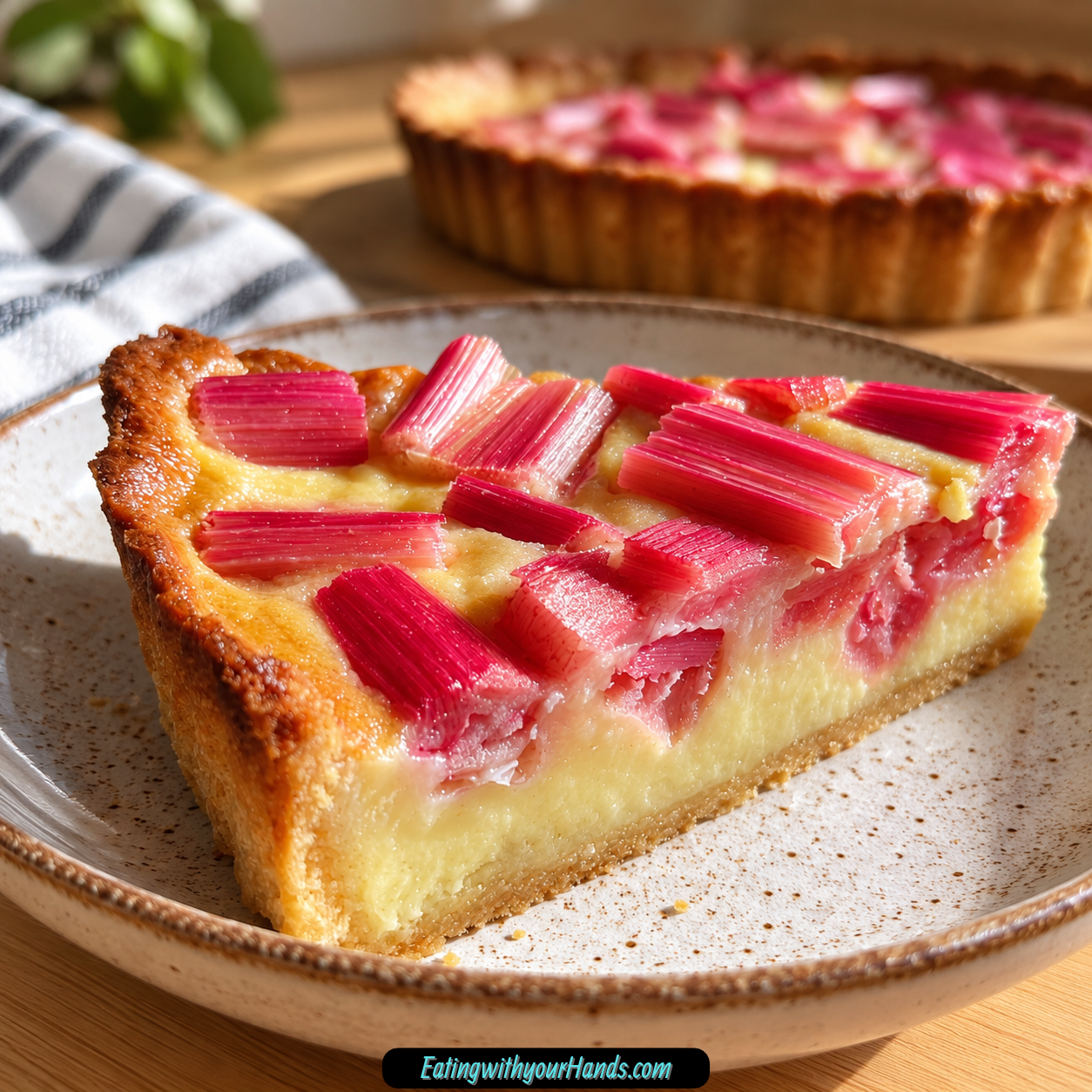

There are desserts that look as though they came from the pastry case of a small café, yet somehow manage to be much less intimidating once you actually make them. This Quick Rhubarb Custard Tart is exactly that kind of recipe, pairing a buttery crumbly crust with smooth vanilla custard and a jewel-bright layer of poached rhubarb.
The first time I brought it to the table, everyone assumed I had spent far more time on it than I really had. The contrast between silky custard, tangy fruit, and crisp pastry makes the finished tart feel polished even when the process behind it is wonderfully straightforward.
Rhubarb season always pulls me back toward the kitchen because I love how dramatically that tart fruit changes once it meets sugar and gentle heat. Here, it softens into a ruby-colored topping while still keeping enough structure to sit beautifully over the pale custard beneath it.
That contrast is what makes every bite so satisfying. The crust is rich and crumbly, the custard is soft and creamy, and the rhubarb brings a bright acidity that keeps the dessert from feeling too heavy.
I also love that the custard does not require a water bath or an overly fussy technique. Once you understand how to temper the yolks slowly and keep the heat low, the filling comes together with a whisk, saucepan, and a little patience.
The rhubarb is equally forgiving. Uneven pieces still taste wonderful, and the finished tart looks charming whether the fruit is arranged neatly or piled on in a more relaxed, rustic way.
One of my earliest test batches even taught me how flexible the sweetness can be. I accidentally used double the intended sugar in the rhubarb, and while it was far sweeter than the version I usually prefer, my niece immediately declared it the best dessert ever.
That little mistake became part of the way I think about this tart now. I like a more tart-forward version for myself, while sweeter palates can comfortably move toward the upper end of the sugar range.
Table of Contents
- Why You’ll Love This Quick Rhubarb Custard Tart
- Ingredients for Quick Rhubarb Custard Tart
- For the Tart Crust
- For the Custard Filling
- For the Rhubarb Topping
- Choosing and Preparing Rhubarb
- Why the Crust Is So Forgiving
- Why the Custard Works
- Equipment You’ll Need
- How to Make Quick Rhubarb Custard Tart
- Step 1: Preheat the Oven and Prepare the Pan
- Step 2: Make the Tart Dough
- Step 3: Press and Blind Bake the Crust
- Step 4: Warm the Milk and Vanilla
- Step 5: Whisk the Yolks, Sugar, and Cornstarch
- Step 6: Temper the Custard Carefully
- Step 7: Cook the Custard Until Thick
- Step 8: Poach the Rhubarb
- Step 9: Drain the Rhubarb
- Step 10: Assemble the Tart
- Step 11: Chill Until Set
- How to Avoid Lumpy Custard
- How to Fix Custard That Seems Too Thin
- How to Prevent a Soggy Crust
- Making the Rhubarb Sweeter or More Tart
- Strawberry Rhubarb Variation
- Apple Rhubarb Variation
- Ginger Variation
- Cardamom Variation
- Graham Cracker Crust Variation
- Chocolate Crust Variation
- Serving Warm With Vanilla Ice Cream
- Serving With Whipped Cream
- Tea-Time Serving
- Storage
- Reheating Individual Slices
- Why Freezing Is Not Recommended
- Make-Ahead Planning
- Frequently Asked Questions
- Nutritional Information
- The Tart I Wait for Every Rhubarb Season
- Quick Rhubarb Custard Tart Recipe
- Recipe Details
- Ingredients
- Instructions
- Step 1: Preheat the Oven
- Step 2: Cream the Butter and Sugar
- Step 3: Add the Egg and Almond Flour
- Step 4: Finish the Dough
- Step 5: Bake the Tart Shell
- Step 6: Warm the Milk and Vanilla
- Step 7: Mix the Custard Base
- Step 8: Temper the Egg Mixture
- Step 9: Thicken the Custard
- Step 10: Fill the Tart Shell
- Step 11: Cook the Rhubarb
- Step 12: Drain and Arrange
- Step 13: Chill
- Notes
- Serving Suggestions
- Storage
Why You’ll Love This Quick Rhubarb Custard Tart
The first reason is the flavor balance. Rhubarb brings a sharp, fruity tang that cuts through the richness of the custard and butter-based crust.
The texture is just as appealing. Each slice gives you a firm pastry base, creamy center, and tender rhubarb topping with a little syrupy shine.
It also looks more complicated than it is. Pressing the dough directly into the tart pan removes the need for careful rolling, while the custard relies on a simple stovetop method.
The recipe is flexible enough to handle small imperfections. A slightly uneven crust, a few lumps in the rhubarb pile, or edges that brown a little more deeply will not ruin the dessert.
It can also be served in more than one way. A chilled slice feels fresh and springlike, while a slightly warmed piece with vanilla ice cream creates a richer, more indulgent dessert.
And because the tart keeps well in the refrigerator, it is a useful make-ahead option. The crust can even be baked a day in advance, while the assembled tart can rest chilled before serving.
Ingredients for Quick Rhubarb Custard Tart
This tart is built in three parts: the crust, the custard, and the rhubarb topping. Each component is simple on its own, and together they create the layered texture that makes the dessert feel special.
For the Tart Crust
- 100g unsalted butter, about 6.5 tablespoons, softened to room temperature
- 40g powdered sugar, about ⅓ cup
- 1 large egg
- 40g almond flour, about ⅓ cup plus 1 tablespoon
- A pinch of salt
- 200g all-purpose flour, about 1⅓ cups
The butter should be soft rather than melted. That distinction helps the crust stay crumbly instead of oily.
The almond flour adds a delicate nuttiness and softer texture. If almonds are not an option, an equal amount of all-purpose flour can be used instead.
For the Custard Filling
- 375ml full-fat milk, about 1½ cups
- ½ teaspoon vanilla extract or vanilla paste
- 3 large egg yolks
- 30g granulated sugar, about 2 tablespoons
- 20g cornstarch, about 2½ tablespoons
Whole milk creates the richest custard. Skim milk can work, though the finished texture will be less lush.
Arrowroot powder can replace cornstarch. Reduce the amount by 1 teaspoon when using that substitution.
For the Rhubarb Topping
- 500g fresh rhubarb, about 1 lb
- 500ml water, about 2 cups
- 150g granulated sugar, about ⅔ cup
- Juice of 1 lemon
- 1 cinnamon stick or ½ teaspoon ground cinnamon
- 6 star anise or ½ teaspoon ground star anise
For a more tart-forward topping, the sugar can be reduced to 100g. Orange juice can replace the water when you want a brighter citrus note.
Fresh rhubarb should be firm with good pink color. Trim away the leafy tops before cooking.
Choosing and Preparing Rhubarb
Fresh rhubarb gives the prettiest color and firmer texture. Look for stalks that feel crisp rather than limp.
Frozen rhubarb can also work. Thaw it completely, drain it well, and pat it dry before poaching.
Because frozen rhubarb is already somewhat broken down, it may need 2–3 minutes less cooking time. Watch the texture closely so it stays tender rather than collapsing into mush.
The lemon juice is important for both brightness and color. Adding it from the beginning helps the rhubarb retain a more vibrant pink appearance.
Why the Crust Is So Forgiving
This crust does not require perfect pastry technique. The dough is pressed directly into the pan with your fingers, so there is no need to roll a flawless circle.
The combination of butter, powdered sugar, egg, almond flour, and all-purpose flour creates a tender base. Mixing only until everything comes together keeps the crust from becoming tough.
If a small crack appears during baking, it can be patched while the crust is still warm. Once the custard and rhubarb are added, tiny imperfections become nearly invisible.
That relaxed approach is one of the things I enjoy most about the recipe. It delivers a polished tart without demanding perfection from the baker.
Why the Custard Works
The custard is thickened with egg yolks and cornstarch. That combination gives it enough structure to hold a slice while keeping the texture soft and creamy.
Vanilla brings warmth without competing with the rhubarb. Because the filling is relatively simple, using a vanilla extract or paste you enjoy makes a noticeable difference.
Tempering is the most important stage. Warm milk must be poured into the yolk mixture gradually while you whisk continuously.
Once everything returns to the saucepan, low heat and constant stirring finish the job. The custard thickens within a few minutes and continues firming as it cools.
Equipment You’ll Need
A 9-inch tart pan is ideal, especially one with a removable bottom. A pie dish can also work if that is what you have.
You will need two medium mixing bowls, a whisk, a saucepan, and a rubber spatula. A spoon can replace the spatula if necessary.
A knife and cutting board are useful for the rhubarb. Measuring cups and spoons work, though a kitchen scale gives the most precise results.
A stand mixer is optional for the crust. Mixing by hand works beautifully and gives you more direct control over the texture.
How to Make Quick Rhubarb Custard Tart
The recipe is easiest when you think of it as three separate tasks. Bake the crust first, cook the custard second, poach the rhubarb third, then assemble and chill.
Step 1: Preheat the Oven and Prepare the Pan
Preheat the oven to 180°C or 350°F. If your tart pan tends to stick, lightly coat it with butter or nonstick spray.
Set the pan nearby before mixing the dough. Having everything ready keeps the crust process quick and simple.
If you know your oven runs hot, monitor the crust carefully. The edges should become golden without turning deeply brown.
Step 2: Make the Tart Dough
Place the softened butter and powdered sugar in a mixing bowl. Cream them together until the mixture looks light and fluffy.
Add the egg, almond flour, and pinch of salt. Mix only until those ingredients are incorporated.
Gently fold in the all-purpose flour. Stop as soon as the dough clings together when pressed.
Overworking at this point can make the crust tough. A soft, cohesive dough is exactly what you want.
Step 3: Press and Blind Bake the Crust
Transfer the dough to the prepared 9-inch tart pan. Press it evenly across the base and up the sides with your fingertips.
Pay extra attention to the corners where the bottom meets the sides. Firm, even pressure there helps create a sturdy shell.
Prick the base with a fork. Bake for about 15 minutes, or until the edges look golden.
If the center puffs during baking, gently press it down with a spoon while the crust is still warm. Let the baked shell cool before adding the custard.
Step 4: Warm the Milk and Vanilla
Pour the 375ml milk into a saucepan and add the vanilla. Heat over medium until the milk is steaming but not boiling.
Remove the saucepan from the heat once it is hot. Boiling is unnecessary and makes the tempering step harder to control.
The milk should be hot enough to warm the yolks gradually. Keep it nearby while you prepare the egg mixture.
Step 5: Whisk the Yolks, Sugar, and Cornstarch
In a separate bowl, combine the 3 egg yolks, 30g sugar, and 20g cornstarch. Whisk for about 1 minute until the mixture looks pale and smooth.
Make sure there are no obvious dry pockets of cornstarch. A smooth base makes the finished custard easier to cook evenly.
If the yolks are at room temperature, they blend especially smoothly. Cold yolks can still be used successfully.
Step 6: Temper the Custard Carefully
Begin pouring the warm milk into the yolk mixture in a slow, thin stream. Whisk constantly while you pour.
Do not rush this step. Adding the milk too quickly can cook the yolks before they are fully blended.
Once the milk has been incorporated, pour the entire mixture back into the saucepan. Keep the heat low for the thickening stage.
Step 7: Cook the Custard Until Thick
Cook over low heat for about 3–5 minutes while stirring continuously. Watch for the custard to thicken enough to coat the back of a spoon.
Do not stop stirring, especially along the bottom and corners of the saucepan. This keeps the mixture smooth and prevents scorching.
The custard will continue thickening as it cools. Pour it into the cooled tart shell once it reaches the proper consistency.
Spread the surface gently with a spatula. Let it settle while you prepare the rhubarb.
Step 8: Poach the Rhubarb
Cut the 500g rhubarb into pieces and add it to a saucepan with 500ml water, the sugar, lemon juice, cinnamon, and star anise. Bring the mixture to a gentle simmer over medium heat.
Cook for about 8–10 minutes. The rhubarb should become tender while still holding its shape.
Avoid a hard boil. Gentle cooking gives you a better chance of preserving both the texture and pink color.
Taste the poaching liquid after about 5 minutes if you want to adjust sweetness. Start closer to 100g sugar when you prefer a stronger tartness, then add more if needed.
Step 9: Drain the Rhubarb
Transfer the cooked rhubarb to a colander and let it drain for about 5 minutes. Press only gently so the pieces keep their shape.
Reserve a little of the pink poaching syrup. It can be used later to brush over the tart for extra shine.
Draining thoroughly protects the custard and crust from excess moisture. This is one of the most important steps for keeping the tart from becoming soggy.
Step 10: Assemble the Tart
Spoon the drained rhubarb over the custard. Arrange it neatly or pile it on in a relaxed pattern depending on the look you prefer.
Distribute the fruit evenly so every slice gets enough tart rhubarb. Try not to press deeply into the custard.
Brush a little reserved syrup over the fruit if you want extra shine. The rhubarb will look glossy and jewel-like.
Step 11: Chill Until Set
Transfer the assembled tart to the refrigerator. Chill for at least 1 hour.
This resting time allows the custard to firm and makes slicing much easier. It also gives the flavors time to settle together.
If you need to speed up the process, the tart can go into the freezer for about 20 minutes. Do not forget it there.

How to Avoid Lumpy Custard
Tempering slowly is the first defense against lumps. Hot milk should meet the egg mixture gradually while the whisk keeps moving.
If you see signs of curdling, remove the custard from the heat immediately. Vigorous whisking can smooth out minor problems.
For stubborn lumps, pass the hot custard through a fine-mesh strainer. An immersion blender can also rescue a cooled custard when used gently.
Avoid blending too aggressively. You want a smooth filling without whipping unnecessary air into it.
How to Fix Custard That Seems Too Thin
If the custard still seems too loose after cooling, combine 1 teaspoon cornstarch with 1 tablespoon cold milk. Whisk that mixture into the custard.
Return it to heat for about 1 minute. Continue stirring until the consistency improves.
Use this only when needed. The standard custard already thickens further as it cools.
Patience is important before deciding something is wrong. Warm custard naturally looks softer than chilled custard.
How to Prevent a Soggy Crust
Let the baked shell cool before adding custard. About 15 minutes gives the crust time to firm.
Drain the rhubarb extremely well. Five minutes in a colander with gentle pressure removes much of the excess poaching liquid.
A thin layer of melted white chocolate can also be brushed over the cooled crust as a moisture barrier. Let it set before adding the custard.
Assemble close enough to serving that the crust does not sit under moist filling for days. The tart is best when the pastry still has some crispness.
Making the Rhubarb Sweeter or More Tart
The standard poaching liquid uses 150g sugar. If you enjoy rhubarb with a stronger tart edge, start with 100g instead.
Taste the liquid after about 5 minutes of simmering. More sugar can be added if necessary.
That flexibility is part of the tart’s charm. A sweeter version feels more dessert-like for kids, while a tangier topping creates stronger contrast against the custard.
Avoid adding all the sugar automatically if you already know you prefer sour fruit desserts. It is much easier to increase sweetness than reduce it.
Strawberry Rhubarb Variation
Use 250g rhubarb and 250g strawberries for a classic fruit combination. Reduce the sugar by 20g because the strawberries bring more natural sweetness.
Cook gently so the fruit does not completely break down. The finished topping will be softer and more berry-forward.
Keep the custard and crust unchanged. The fruit layer alone creates an entirely different personality.
This version is especially beautiful during spring. The colors become even more vivid across the pale custard.
Apple Rhubarb Variation
Add 1 diced Granny Smith apple during the last 5 minutes of poaching. The apple gives the topping another layer of texture.
Its tart flavor fits naturally with rhubarb. The pieces also stay more distinct than fully softened fruit.
Keep the spice mixture the same unless you prefer another listed variation. Cinnamon works especially naturally with apple.
Drain everything together before assembling. Excess syrup should still stay out of the custard layer.
Ginger Variation
Replace the cinnamon stick with 5 thin slices peeled fresh ginger. The rhubarb will take on a brighter, sharper warmth.
Keep the star anise if you enjoy it. The spice combination becomes more aromatic without adding extra sweetness.
Ginger works especially well when you want the fruit to taste lively rather than cozy. The creamy custard softens the sharper notes.
Remove the ginger with the other whole spices before serving. The rhubarb itself should remain the focus.
Cardamom Variation
Three crushed cardamom pods can be added to the rhubarb. They bring a fragrant, pastry-shop style aroma.
Use them as a spice variation when you want something different from cinnamon. Their flavor is distinctive enough that a small amount goes a long way.
Poach the fruit as usual. Let the cardamom perfume the syrup without overpowering the rhubarb.
Remove the pods before arranging the fruit. The final topping should stay smooth and easy to eat.
Graham Cracker Crust Variation
For a quicker alternative, combine 150g crushed graham crackers with 60g melted butter. Press the mixture into the tart pan.
This creates a no-bake style base rather than the standard pastry crust. The flavor becomes sweeter and more cookie-like.
Pair it with the same custard and rhubarb topping. The contrast between graham crumbs and tangy fruit works especially well.
Chill thoroughly before slicing. The crust needs enough time to firm around the filling.
Chocolate Crust Variation
Add 2 tablespoons cocoa powder to the dry ingredients of the crust. This gives the base a deeper chocolate flavor.
The bittersweet cocoa creates a richer contrast with tart rhubarb. Vanilla custard remains soft and neutral between the two.
Keep the remaining crust method unchanged. Press, prick, and bake as usual.
This variation feels more indulgent without changing the topping. It is a simple way to make the tart feel dramatically different.
Serving Warm With Vanilla Ice Cream
A slightly warm slice with vanilla ice cream creates one of the most indulgent ways to serve the tart. The cold ice cream begins melting over the custard and rhubarb.
About 10 seconds in the microwave is enough to take the chill off an individual slice. Do not overheat the custard.
Add the ice cream immediately before serving. The contrast between warm tart and cold cream is the whole point.
Crushed pistachios can be scattered on top for extra texture. They give the soft dessert a little crunch.
Serving With Whipped Cream
Lightly sweetened whipped cream works beautifully with the tangy rhubarb. A soft dollop beside each slice is enough.
For a pink variation, fold in 1 teaspoon reserved rhubarb poaching liquid. That gives the cream a subtle color and fruit note.
Keep the whipped cream separate until serving. This protects both the crust and presentation.
The result feels light and elegant. It is an easy option when ice cream would feel too heavy.
Tea-Time Serving
Earl Grey and chamomile tea both work well beside the tart. Their floral character complements the fruit and vanilla.
Serve the tart chilled or at room temperature for an afternoon treat. Smaller slices work especially well in this setting.
The tart already looks polished enough for a café-style plate. No elaborate decoration is necessary.
A little reserved rhubarb syrup can add shine just before serving. That small detail makes each slice look freshly finished.
Storage
Cover the tart tightly with plastic wrap or transfer it to an airtight container. Refrigerate for up to 3 days.
The custard may release a little moisture after about 2 days. Dab the surface gently with paper towel if necessary.
The crust will gradually soften as it sits under the filling. Freshly assembled tart has the best contrast between creamy center and pastry base.
Keep the tart chilled whenever it is not being served. Custard does not do well in prolonged warmth.
Reheating Individual Slices
If the crust softens, place a slice in a 160°C or 325°F oven for about 5 minutes. This can restore some crispness.
For a slightly warm custard experience, microwave an individual slice for about 10 seconds. Keep the heating brief.
Do not try to make the tart piping hot. Gentle warming is enough to change the texture without damaging the custard.
Serve immediately after reheating. A scoop of vanilla ice cream pairs especially well with a warmed slice.
Why Freezing Is Not Recommended
Custard does not freeze particularly well. It can become grainy and separate after thawing.
The rhubarb also loses texture and becomes softer. That combination makes freezing a poor choice for this tart.
Refrigeration is the better storage method. Enjoy the dessert within 3 days whenever possible.
The crust can be made ahead independently, which gives you plenty of flexibility without freezing the assembled tart. That approach preserves the texture far better.
Make-Ahead Planning
The tart shell can be baked 1 day in advance. Wrap it tightly and keep it at room temperature.
The assembled tart can be refrigerated for up to 8 hours before serving. Longer resting can soften the crust more noticeably.
A useful schedule is to bake the crust in the morning, make the custard and rhubarb later, then assemble before dinner. That spreads the work out without sacrificing texture.
The flavor benefits from some resting time. The custard and rhubarb become more cohesive while the tart chills.
Frequently Asked Questions
Can I Use Frozen Rhubarb?
Yes. Thaw it completely in a colander and pat it very dry.
Reduce the poaching time by about 2–3 minutes if needed. Frozen rhubarb will usually be softer than fresh.
How Do I Keep the Crust From Getting Soggy?
Cool the baked shell before adding custard. Drain the rhubarb for at least 5 minutes.
A thin layer of melted white chocolate over the cooled crust can add another moisture barrier. Let it set before filling.
Can I Fix Lumpy Custard?
Yes. Remove it from the heat and whisk vigorously.
If lumps remain, pass the custard through a fine-mesh strainer. An immersion blender can also help when used gently.
Can I Make the Tart Ahead?
Yes. The crust can be baked 1 day ahead and stored tightly wrapped at room temperature.
The assembled tart can be refrigerated for up to about 8 hours before serving. Longer storage may soften the crust.
Why Did My Rhubarb Turn Brown?
Overcooking can dull the color. Keep the heat at a gentle simmer rather than a hard boil.
Add the lemon juice at the beginning. Reserved pink poaching syrup can also be brushed over the topping before serving.
Can I Use Less Sugar?
Yes. The rhubarb poaching sugar can be reduced from 150g to 100g for a more tart result.
Taste the liquid after about 5 minutes. Add more sugar only if needed.
Can I Replace Almond Flour?
Yes. Use an equal amount of all-purpose flour.
The crust will lose some of the almond character. The basic method remains the same.
Can I Replace Cornstarch?
Arrowroot powder can be used. Reduce the amount by 1 teaspoon.
Cook gently until the custard thickens. Continue stirring so the filling stays smooth.
Nutritional Information
When the tart is cut into 8 slices, each portion contains approximately 280 calories. Each slice also contains about 20g sugar, 15g fat, 5g protein, 2g fiber, and 30g carbohydrates.
The butter and egg yolks contribute much of the richness. Rhubarb and almond flour contribute to the fiber content, while milk and eggs contribute protein.
These values can change when ingredient substitutions or sugar adjustments are made. Different butter, milk, flour, or crust variations will also alter the final numbers.
A larger 6-slice portion will naturally be more generous than an 8-slice serving. The tart is rich enough that even a modest slice feels satisfying.
The Tart I Wait for Every Rhubarb Season
There is always a moment each spring when rhubarb starts appearing and I immediately begin thinking about this tart. The color alone is enough to make me want to bake, but it is that sharp, almost mouth-puckering flavor that keeps pulling me back.
I love how the fruit changes once it meets the poaching syrup. It softens, brightens, and becomes glossy without losing the tang that makes rhubarb so distinctive.
The custard is the perfect contrast because it does not try to compete. Vanilla, milk, yolks, and just enough sugar create a soft layer that lets the fruit remain the star.
Then there is the crust, which brings the entire thing back toward comfort food. Butter, almond flour, and powdered sugar create a crumbly base sturdy enough to hold those softer layers.
I still laugh about the batch where I doubled the rhubarb sugar by accident. What felt like a mistake to me became the version my niece loved most, which was a good reminder that dessert preferences are wonderfully personal.
These days, I usually keep my own topping on the sharper side. I like the moment when the tangy rhubarb cuts directly through the rich custard and leaves me wanting another forkful.
Sometimes I serve the tart completely chilled. Other times I warm an individual slice for a few seconds and let vanilla ice cream begin melting across the top.
Both versions have their place. One feels bright and fresh enough for spring, while the other turns the same tart into something much more decadent.
That flexibility is a big part of why I make Quick Rhubarb Custard Tart so often. It looks elegant enough for guests, stays forgiving enough for a relaxed home kitchen, and gives me exactly the sweet-tart contrast I crave every time rhubarb season returns.
And if there happens to be a little reserved pink syrup left after the tart is finished, I never waste it. A drizzle over the next day’s slice is a beautiful reminder that sometimes the smallest parts of a recipe are the ones worth saving.
Quick Rhubarb Custard Tart Recipe

Tangy rhubarb, silky vanilla custard, and a buttery almond-infused crust come together in this beautiful European-style dessert. The spiced rhubarb topping adds bright flavor over the smooth custard, while cinnamon, star anise, and lemon bring extra warmth and freshness.
Recipe Details
- Prep Time: 20 minutes
- Cook Time: 30 minutes
- Total Time: 50 minutes
- Course: Dessert
- Cuisine: European
- Servings: 1 tart (8 servings)
- Calories: 280 kcal
Ingredients
For the Tart Crust
- 100 grams unsalted butter softened, about 6.5 tablespoons
- 40 grams powdered sugar, roughly ⅓ cup
- 1 egg
- 40 grams almond flour, around ⅓ cup plus 1 tablespoon
- A pinch of salt
- 200 grams all-purpose flour, approx. 1 + ⅓ cups
For the Custard
- 375 ml full-fat milk, 1.5 cups
- ½ teaspoon vanilla extract or paste
- 3 egg yolks
- 30 grams granulated sugar, about 2 tablespoons
- 20 grams cornstarch, equivalent to 2.5 tablespoons
For the Rhubarb Topping
- 500 grams fresh rhubarb, 1 pound
- 500 ml water, 2 cups, marked with *
- 150 grams granulated sugar, about ⅔ cup
- Juice from 1 lemon
- 1 cinnamon stick or ½ teaspoon ground cinnamon
- 6 pieces of star anise or ½ teaspoon ground star anise
Instructions
Step 1: Preheat the Oven
Preheat the oven to 180°C (350°F).
Prepare the tart crust ingredients while the oven comes to temperature.
Step 2: Cream the Butter and Sugar
In a bowl, combine the softened unsalted butter and powdered sugar.
Mix until creamy and evenly blended.
Step 3: Add the Egg and Almond Flour
Add the egg, almond flour, and pinch of salt.
Mix well until the ingredients are fully incorporated.
Step 4: Finish the Dough
Gradually add the all-purpose flour.
Continue mixing until a dough forms.
Step 5: Bake the Tart Shell
Press the dough evenly into a tart pan.
Bake for 15 minutes, or until the crust becomes golden.
Step 6: Warm the Milk and Vanilla
Add the full-fat milk and vanilla extract or paste to a saucepan.
Heat over medium heat until warm.
Step 7: Mix the Custard Base
In a separate bowl, whisk together the egg yolks, granulated sugar, and cornstarch.
Whisk until the mixture is smooth.
Step 8: Temper the Egg Mixture
Slowly pour the warm milk into the egg mixture while whisking continuously.
Keep whisking as you add the milk so the mixture stays smooth.
Step 9: Thicken the Custard
Return the mixture to the saucepan.
Cook over low heat, stirring constantly, until thickened.
Step 10: Fill the Tart Shell
Pour the thickened custard into the baked tart shell.
Spread it evenly across the crust.
Step 11: Cook the Rhubarb
Cut the fresh rhubarb into small pieces.
Simmer it with the water, granulated sugar, lemon juice, cinnamon, and star anise until tender.
Step 12: Drain and Arrange
Drain the cooked rhubarb.
Arrange the tender pieces evenly over the custard layer.
Step 13: Chill
Place the assembled tart in the refrigerator.
Chill for at least 1 hour before serving.
Notes
- You can substitute almond flour with more all-purpose flour if needed.
- For a quicker version, use pre-made tart shells.
- Adjust the sugar in the rhubarb based on your taste.
Serving Suggestions
Serve Quick Rhubarb Custard Tart after it has chilled for at least 1 hour so the custard and rhubarb layers have time to settle. The smooth vanilla custard contrasts beautifully with the tangy rhubarb and buttery tart shell.
This recipe makes 1 tart with 8 servings. The cinnamon, star anise, and lemon add extra depth to the rhubarb topping without overpowering its naturally bright flavor.
For a faster preparation, use pre-made tart shells. You can also adjust the sugar in the rhubarb mixture to suit your preferred balance of sweet and tart.
Storage
Keep the tart chilled until ready to serve.
Butter Tip
Use 100 grams softened unsalted butter, about 6.5 tablespoons.
Mix it with the powdered sugar until creamy before adding the remaining crust ingredients.
Almond Flour Tip
Use 40 grams almond flour, around ⅓ cup plus 1 tablespoon.
Substitute more all-purpose flour if needed.
Custard Tip
Whisk the egg yolks, granulated sugar, and cornstarch before gradually adding the warm vanilla milk.
Cook over low heat while stirring constantly until thickened.
Rhubarb Tip
Use 500 grams fresh rhubarb, about 1 pound.
Cut it into small pieces before simmering with the water, sugar, lemon juice, cinnamon, and star anise.
Cinnamon Tip
Use 1 cinnamon stick or ½ teaspoon ground cinnamon.
Star Anise Tip
Use 6 pieces of star anise or ½ teaspoon ground star anise.
Shortcut Tip
Use pre-made tart shells when you want a quicker version.
Chilling Tip
Chill the finished tart for at least 1 hour before serving.

Fernando is the creator and writer behind the food blog Eating with your Hands. Living and working in cities like Paris, Barcelona, and Berlin, and being married to a Canadian foodie, has given Fernando a passion and interest in food and inspired him to run EWYH.