
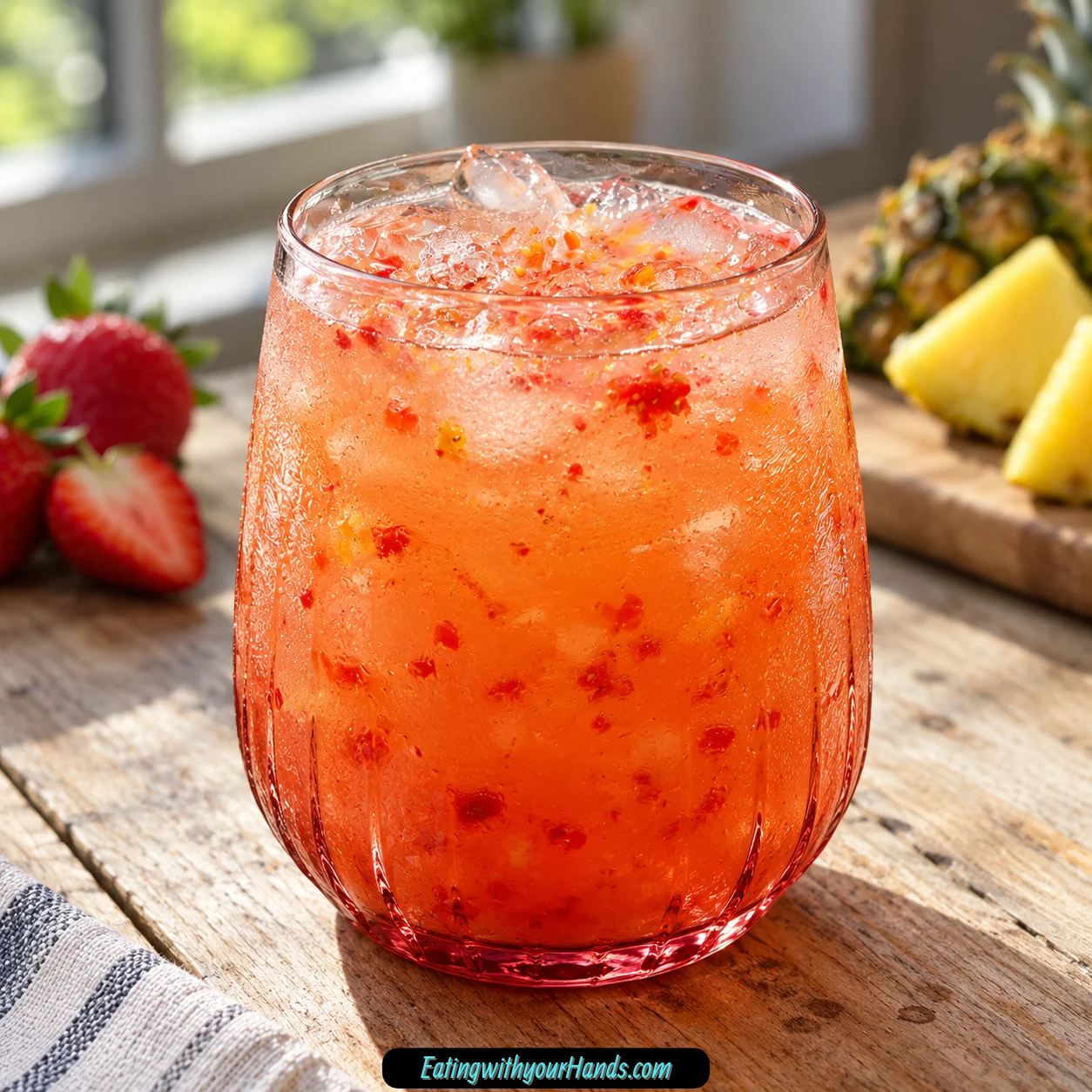

There are summer afternoons when even a cold glass of water does not feel exciting enough, and that is exactly when I start thinking about Pineapple Strawberry Agua Fresca. It is bright, fruity, icy, and somehow manages to taste like the best parts of a hot-weather vacation poured into a glass.
This drink first became part of my summer routine after I came home from the farmers’ market with far more fruit than I had planned to buy. Faced with a kitchen full of ripe pineapple and strawberries, I blended them together with cold water, lime, and a little agave and realized almost immediately that I had found my new warm-weather obsession.
Since then, it has become the drink I make again and again when the temperature climbs. The preparation takes less than 10 minutes, yet the finished pitcher feels much more special than anything that quick should have a right to be.
The pineapple brings the tropical sweetness that forms the heart of the drink. Strawberries add their own bright berry flavor and deepen the color into that gorgeous pink-orange shade that always looks irresistible over ice.
Then comes the lime, which is the ingredient I would never want to skip. That fresh squeeze of citrus lifts the sweeter fruit and gives the whole drink the kind of lively finish that makes one glass turn into two before you notice.
What I love most is that the fruit is doing most of the work. There is no complicated syrup to cook, no long list of ingredients, and no elaborate technique standing between you and a cold pitcher.
Everything goes into the blender, the mixture can be strained if you want it smoother, and then it is simply a matter of tasting and adjusting. On especially hot days, that kind of simplicity feels almost as refreshing as the drink itself.
Table of Contents
- Why You’ll Love This Pineapple Strawberry Agua Fresca
- Ingredients for Pineapple Strawberry Agua Fresca
- Choosing the Best Fruit
- Why Lime Changes the Whole Drink
- Equipment You’ll Need
- How to Make Pineapple Strawberry Agua Fresca
- Tips for the Best Pineapple Strawberry Agua Fresca
- Add Fresh Mint
- Sweetener Variations
- Coconut Water Variation
- Berry Variations
- Mango Pineapple Variation
- Add a Little Jalapeño
- Serving Pineapple Strawberry Agua Fresca
- Serving It for Summer Gatherings
- Storage
- Freezing Extra Agua Fresca
- Using Frozen Fruit
- Can You Make It Without a Blender?
- Frequently Asked Questions
- Pineapple Strawberry Agua Fresca Nutritional Information
- The Drink That Became a Summer Ritual
- Refreshing Pineapple Strawberry Agua Fresca
Why You’ll Love This Pineapple Strawberry Agua Fresca
The first reason is obvious the moment you take a sip. Served over plenty of ice, the combination of pineapple, strawberry, lime, and cold water tastes incredibly refreshing when the weather is blazing hot.
It is also remarkably easy to make. From cutting the fruit to pouring the finished drink, the entire active process can be done in under 10 minutes.
The sweetness is easy to control because ripe fruit provides so much flavor on its own. The standard recipe starts with 2 tablespoons agave nectar, and you can add more gradually only if the pitcher needs it.
The flavor combination is friendly enough for both adults and children. Pineapple gives it that familiar tropical sweetness while strawberries bring a berry note that keeps every sip from tasting one-dimensional.
It is also a great option when plain water feels boring. The fruit makes the drink feel festive without requiring the kind of heavy sweetness that comes from a thick syrup.
And if you are serving a group, this recipe is easy to scale up. Doubling the batch is especially useful because a cold pitcher tends to disappear quickly once everyone has had the first taste.
Ingredients for Pineapple Strawberry Agua Fresca
The ingredient list is wonderfully short, which makes fruit quality especially important. When pineapple and strawberries are ripe and fragrant, the finished drink needs very little help.
- 4 cups fresh pineapple chunks, about 1 medium pineapple, peeled and cored
- 1 ½ cups fresh strawberries, hulled and halved
- 2 ½ cups cold water
- 2 tablespoons agave nectar, plus more to taste if desired
- Juice of 1 lime, about 2–3 tablespoons
Save any juice that collects while cutting the pineapple. That juice can go straight into the blender with the fruit rather than being left behind on the cutting board.
The strawberries should smell sweet and look deeply colored when ripe. The pineapple should also have a sweet aroma, especially near the base.
Choosing the Best Fruit
Ripe fruit makes the biggest difference because the drink depends so heavily on fresh pineapple and strawberries. Underripe fruit can leave the agua fresca tasting sharper and less naturally sweet.
Look for a pineapple with a noticeable sweet fragrance at the base. Once peeled and cored, cut enough fruit to measure 4 cups of chunks and save every bit of juice released during chopping.
The strawberries should be fully colored and fragrant. Hull them, halve them, and measure 1 ½ cups before blending.
When the fruit is at its best, the 2 tablespoons agave may be all the added sweetness you need. Taste after blending rather than automatically adding more.
Why Lime Changes the Whole Drink
The juice of 1 lime may seem like a small addition compared with 4 cups pineapple and 1 ½ cups strawberries, but it changes the balance dramatically. Its acidity makes the sweeter fruit taste brighter instead of heavy.
Roll the lime firmly on the counter before cutting it. That simple step can help you squeeze out as much of the 2–3 tablespoons juice as possible.
The lime should not dominate the pitcher. It is there to sharpen the pineapple and strawberry flavors and make the finish feel fresher.
If the finished drink still tastes a little flat, a tiny pinch of salt is another optional trick. Use only a very small amount so it enhances the fruit rather than becoming noticeable on its own.
Equipment You’ll Need
A blender is the main piece of equipment required for this recipe. You will also need a knife and cutting board for the fruit, plus a pitcher or container for serving and storage.
A fine-mesh sieve is useful if you prefer a smoother agua fresca. It catches strawberry seeds and other small fruit pieces after blending.
If you enjoy some pulp in your drink, the sieve is completely optional. The unstrained version has a little more texture but the same pineapple-strawberry flavor.
How to Make Pineapple Strawberry Agua Fresca
The method is simple enough for a first-time cook, but a few details help create a smoother, more balanced pitcher. Start with ripe fruit, blend thoroughly, strain only if you want to, then adjust the sweetness after tasting rather than before.
Step 1: Prepare the Pineapple, Strawberries, and Lime
Peel and core the pineapple, then cut the flesh into chunks until you have 4 cups. Save the juice that gathers on the cutting board and add it to the measured fruit.
Hull and halve 1 ½ cups strawberries, then roll the lime on the counter before cutting and squeezing it. Measure the lime juice if desired, keeping in mind that 1 lime provides about 2–3 tablespoons.
Have the 2 ½ cups cold water and 2 tablespoons agave nectar ready before you begin blending. Starting with everything measured makes the process especially fast.
Step 2: Add Everything to the Blender
Place the 4 cups pineapple chunks, 1 ½ cups strawberries, 2 ½ cups cold water, 2 tablespoons agave nectar, and lime juice into the blender. Add any reserved pineapple juice from the cutting board as well.
Secure the lid before turning the blender on. The pitcher will contain plenty of liquid, so make sure everything is properly closed before increasing the speed.
Do not add extra sweetener yet. It is much easier to decide whether more is needed after the fruit has been completely blended.
Step 3: Blend Until Completely Smooth
Blend the mixture on high for a full minute. Giving the fruit enough time helps break down the pineapple and strawberries into a much smoother drink.
Watch the texture as the blender runs. By the end, the liquid should look evenly colored with no large fruit pieces moving through the pitcher.
This longer blend is especially helpful if you plan to serve the agua fresca unstrained. The smoother the mixture becomes at this stage, the more pleasant the final texture will be.
Step 4: Strain for a Silkier Texture
If you prefer a smoother drink, pour the blended mixture through a fine-mesh sieve into a clean pitcher or container. Let the liquid pass through while the strawberry seeds and fibrous fruit pieces remain behind.
Do not worry if you prefer to skip this step. Keeping the pulp produces a slightly thicker drink that still tastes just as refreshing.
Straining is mainly about texture and appearance. Choose whichever version sounds more appealing to you.
Step 5: Taste and Adjust the Balance
Taste the agua fresca before serving. If you want more sweetness, add additional agave 1 teaspoon at a time and blend or stir after each addition.
If the drink tastes too tart, a splash of pineapple juice can bring back more sweetness and tropical flavor. Make small adjustments so you do not accidentally move too far in the other direction.
If the fruit flavors seem muted, try a tiny pinch of salt. Stir well and taste again before deciding whether anything else is necessary.
Step 6: Chill or Serve Over Ice
The agua fresca can be served immediately over a glass full of ice. Large cubes are especially useful when you want the drink to stay cold without melting too quickly.
For an even better flavor blend, refrigerate the pitcher for about 1 hour before serving. That short rest gives the pineapple, strawberry, lime, and agave time to settle together.
Stir or shake before pouring if the drink has been sitting. Natural fruit solids may settle toward the bottom as it chills.
Step 7: Garnish and Serve
Fill each glass generously with ice, then pour the cold agua fresca over the top. Add a thin pineapple slice and a halved strawberry when you want the drink to look as festive as it tastes.
A paper umbrella can make it even more playful for a party or backyard gathering. The bright color already does most of the work, so the garnish can stay simple.
Serve immediately while everything is cold. That first icy sip is when the pineapple, strawberry, and lime combination feels especially refreshing.
Tips for the Best Pineapple Strawberry Agua Fresca
Start with ripe fruit whenever possible. Sweet pineapple and deeply colored strawberries give the drink more natural flavor and reduce the need for additional sweetener.
Give the blender enough time to do its job. A full minute on high produces a smoother drink than a quick pulse.
Letting the pitcher chill for about 1 hour improves the overall flavor. The ingredients have time to mingle, and the drink becomes even more refreshing when properly cold.
A tiny pinch of salt can help when the fruit tastes muted. Use it sparingly because the goal is to intensify sweetness and acidity, not make the drink taste salty.
For gatherings, consider doubling the recipe. A chilled pitcher can disappear surprisingly quickly when the weather is hot.
Add Fresh Mint
For an extra fresh finish, add 5–6 mint leaves while blending. The mint gives the pineapple and strawberry combination a cooler herbal note without changing the basic character of the drink.
You can also skip blending the mint and simply use a fresh sprig as garnish. This keeps the mint aroma lighter while adding a pretty green contrast to the glass.
Use whichever method fits the flavor you want. Blended mint is more noticeable, while garnish keeps it more subtle.
Sweetener Variations
Honey can replace the agave nectar. Warming it slightly before blending helps it combine more easily with the cold water and fruit.
Maple syrup is another option. It brings a deeper, slightly caramel-like sweetness that tastes different from agave but still works with the fruit.
Medjool dates can also be blended with the fruit for a no-added-sugar option. Blend thoroughly so the dates become fully incorporated into the drink.
Another way to increase sweetness is a splash of orange juice. This adds fruit sweetness while bringing another citrus note into the pitcher.
Coconut Water Variation
Replace half of the regular water with coconut water for a more tropical version. Keep the total liquid amount balanced rather than simply adding coconut water on top of the original 2 ½ cups.
This version pairs naturally with pineapple. The coconut flavor makes the drink feel even more like something you would want beside a pool or at the beach.
It can also be especially appealing on very hot days. The flavor is still light enough for the strawberries and lime to remain noticeable.
Berry Variations
Raspberries can replace strawberries when they are in season. They create a different tart berry flavor and change the color of the drink.
Blackberries are another option. Their deeper color can turn the agua fresca into a dramatic jewel-toned pitcher.
Use these swaps when you want to keep the pineapple base but change the berry character. The method remains the same: blend, strain if desired, taste, and adjust.
Mango Pineapple Variation
Mango chunks can be added with the pineapple for an even more tropical flavor. This variation creates a sweeter, fuller fruit profile that feels especially summery.
There is no exact amount required for the mango addition. Add according to taste while keeping enough pineapple and strawberry present to preserve the character of the drink.
The result is a fun variation when you have extra mango on hand. It also works especially well for family gatherings and poolside serving.
Add a Little Jalapeño
For a sweet-and-spicy version, add a tiny slice of jalapeño with the seeds removed. Blend it with the fruit so the heat is distributed throughout the pitcher.
Start very small because jalapeño can quickly overpower the refreshing fruit flavors. The goal is a gentle kick behind the pineapple and strawberry, not an aggressively spicy drink.
Taste before adding any more. Heat is easy to increase but difficult to remove once blended.
Serving Pineapple Strawberry Agua Fresca
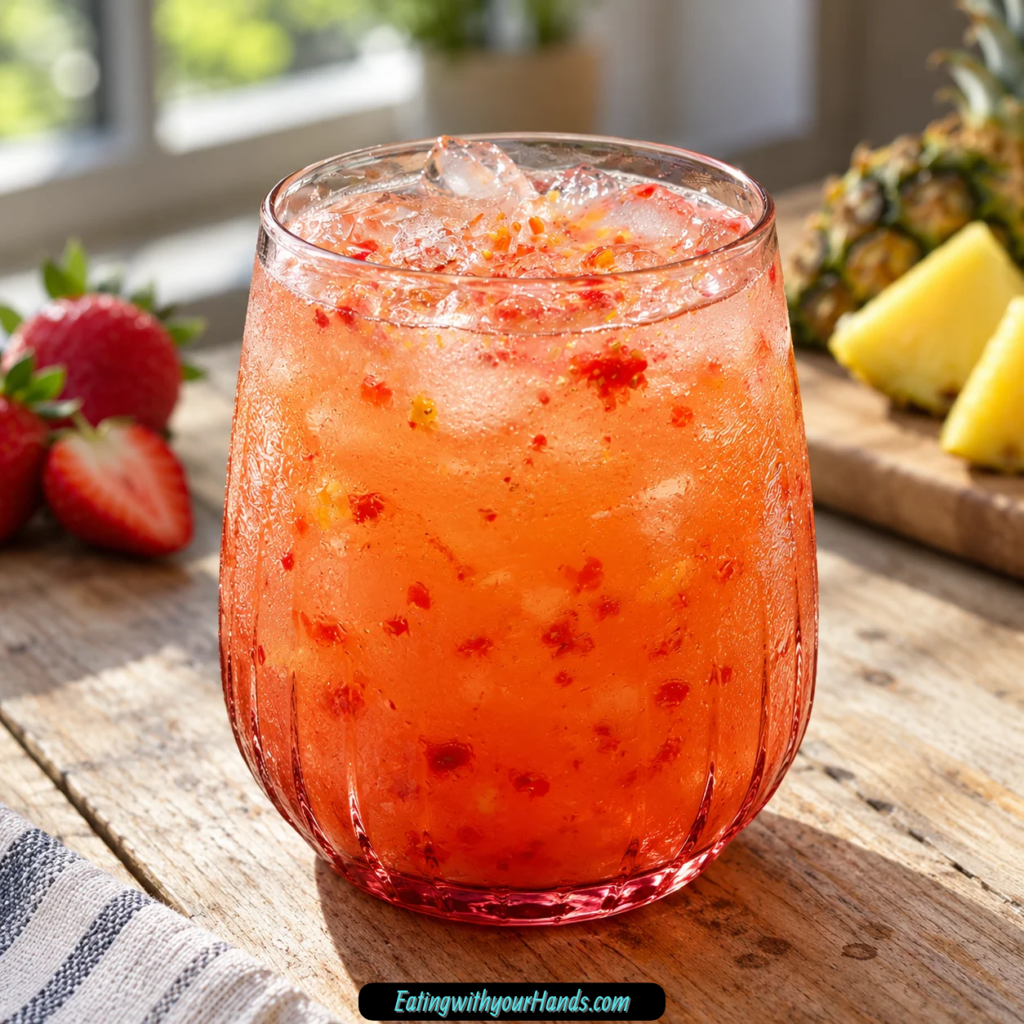
This drink looks especially beautiful in a clear glass pitcher. The vibrant pink-orange color becomes part of the presentation before anyone even picks up a glass.
Fill each serving glass to the top with ice. Pour the agua fresca slowly so the cold liquid settles around the cubes and immediately begins chilling further.
A pineapple slice and halved strawberry make simple garnishes. They reinforce the flavors in the drink while adding a little color and texture at the top of the glass.
For a playful party presentation, add paper umbrellas. It is a small detail, but it instantly makes a casual backyard drink feel more festive.
Serving It for Summer Gatherings
This agua fresca works beautifully at pool parties, backyard meals, brunches, and warm-weather celebrations. Its bright fruit flavor gives both adults and children something refreshing without requiring a complicated drink station.
Make a larger batch when serving a group. The combination tends to disappear quickly once the pitcher is placed on the table.
Keep the drink chilled until close to serving. If it sits in the refrigerator for a while, shake or stir before pouring because the blended fruit naturally settles.
Set out plenty of ice separately. That lets each person decide how cold and diluted they want their glass.
Storage
Transfer leftover agua fresca to an airtight container and refrigerate it. It stays fresh for about 2 days.
The fruit will naturally settle during storage. Give the container a good shake or stir before pouring another glass.
The flavor can become even more blended after a few hours in the refrigerator. That makes preparing the drink slightly ahead of time a useful option.
Label the container with the date if you are storing it alongside other drinks. That makes it easier to keep track of the 2-day window.
Freezing Extra Agua Fresca
Extra agua fresca can be frozen in ice cube trays. Once frozen, the cubes can be used later in lemonade or sparkling water.
These fruit-filled cubes add flavor as they melt instead of simply diluting the drink. They are also a fun way to use a small amount of leftover agua fresca that is not enough for another full glass.
Children may especially enjoy the brightly colored cubes. They turn an ordinary glass of water or lemonade into something more playful.
This method also reduces waste when you know the pitcher will not be finished within the refrigerator storage period. Freeze the extras while the flavor is still fresh.
Using Frozen Fruit
Frozen pineapple and strawberries can be used when fresh fruit is unavailable. Thaw them first so they blend more smoothly.
The finished texture may be slightly different from a batch made with fresh fruit. The flavor can still be very enjoyable, especially when you need a quick option from what you already have.
Drain only if there is excessive unwanted liquid, and then proceed with the same blending method. Taste at the end because frozen fruit sweetness can vary.
Keeping frozen fruit on hand also makes spontaneous agua fresca easier. You do not have to wait for the next shopping trip when a hot-day craving hits.
Can You Make It Without a Blender?
A blender is strongly preferred because it creates the smooth texture that defines this drink. Mashing the fruit by hand is technically possible, but it requires much more effort and does not create the same result.
A potato masher can break down the fruit if necessary. The mixture would then need additional stirring and straining to become drinkable.
For the easiest and smoothest version, use a blender whenever possible. This is one recipe where the appliance genuinely makes the method much simpler.
Frequently Asked Questions
Can I Use Frozen Pineapple and Strawberries?
Yes. Thaw the fruit first so it blends smoothly.
The finished texture may be slightly less vibrant than when using fresh fruit. The pineapple-strawberry flavor will still work beautifully.
Is Pineapple Strawberry Agua Fresca Kid-Friendly?
Yes. The naturally sweet fruit combination is especially appealing to children.
For children who dislike seeds or pulp, strain the drink thoroughly through a fine-mesh sieve. This creates a smoother texture without changing the basic flavor.
How Can I Sweeten It Without Agave?
Honey works well and blends more easily if warmed slightly first. Maple syrup is another option when you want a deeper sweetness.
Medjool dates can be blended with the fruit for a no-added-sugar option. A splash of orange juice can also boost sweetness using additional fruit.
How Long Does It Keep in the Refrigerator?
Store the drink in an airtight container for about 2 days. Shake or stir well before serving because the fruit will settle.
The flavors may become more blended after a few hours of chilling. If the drink ever smells fermented or develops a fizzy quality during storage, discard it.
Do I Have to Strain It?
No. Straining is optional and depends entirely on the texture you prefer.
A fine-mesh sieve removes strawberry seeds and small fruit fibers for a smoother drink. Leaving everything in creates a more pulpy version.
Can I Add Mint?
Yes. Blend in 5–6 fresh mint leaves for a more noticeable herbal finish.
A simple mint sprig can also be used as garnish. This gives the drink a lighter mint aroma without changing the entire pitcher.
Can I Make It Spicy?
Yes. Add a tiny seedless slice of jalapeño to the blender.
Start with very little and increase only after tasting. The sweet-and-spicy combination should still allow the pineapple and strawberry to stay at the center of the drink.
Pineapple Strawberry Agua Fresca Nutritional Information
One serving of about 1 cup contains approximately 90 calories. It also provides about 18g sugar, 2g fiber, 5mg sodium, 0g fat, and 1g protein.
These values are estimates because fruit size, ripeness, sweetness, brands, and any adjustments can change the final numbers. Additional agave will increase the sugar content, while keeping more pulp instead of straining can affect the amount of fiber.
The pineapple and strawberries contribute vitamin C, and fresh fruit is the base of the drink. The exact nutritional profile will depend on the specific fruit and sweetener used.
Variations will naturally change the numbers as well. Coconut water, honey, maple syrup, dates, mango, orange juice, berries, or other additions all create a different final profile.
The Drink That Became a Summer Ritual
What began as a way to use too much farmers’ market fruit turned into something I now look forward to every summer. I did not expect such a simple blender drink to become part of our weekend routine, but once the weather gets hot, I find myself reaching for pineapple and strawberries almost automatically.
There is something wonderfully cheerful about the color alone. Watching the yellow pineapple and red strawberries disappear into the blender and become a bright pink-orange pitcher always feels like the beginning of something refreshing.
Then I add the lime and remember why that small ingredient matters so much. Without it, the fruit is sweet and pleasant, but with it, the whole drink suddenly feels awake.
Some weekends I keep the recipe completely simple. Other times mint goes into the blender, coconut water replaces part of the water, or a tiny piece of jalapeño turns the pitcher into something much more unexpected.
I have also learned not to underestimate how quickly it disappears when other people are around. One pitcher can look like plenty until everyone pours a first glass and immediately starts thinking about the second.
That is why doubling the batch has become almost automatic when friends are coming over. It is easier to make more at the beginning than to discover an empty pitcher while everyone is still thirsty.
But I think my favorite version is still the straightforward one that started everything. Ripe pineapple, fresh strawberries, cold water, a little agave, lime, and a blender are all it really needs.
It tastes like the kind of drink I want when the day feels too hot to do anything complicated. Cold, fruity, bright, and easy, it turns a few minutes in the kitchen into a pitcher that genuinely makes summer feel more enjoyable.
And every time condensation starts running down the outside of the glass, I remember why I keep coming back to it. Pineapple Strawberry Agua Fresca is simple enough for an ordinary weekend, pretty enough for a party, and refreshing enough to earn a permanent place in my hottest days of the year.
Refreshing Pineapple Strawberry Agua Fresca

Bright, fruity, and incredibly refreshing, this Pineapple Strawberry Agua Fresca blends ripe pineapple and fresh strawberries with lime, water, and agave nectar for a naturally vibrant drink. Served chilled over ice, it is a simple Mexican-inspired beverage that comes together in just 10 minutes.
Recipe Details
- Prep Time: 10 minutes
- Total Time: 10 minutes
- Course: Beverage
- Cuisine: Mexican
- Servings: 4 servings
- Calories: 90 kcal
Ingredients
For the Agua Fresca
- Juice of 1 lime about 2-3 tablespoons
- 2 tablespoons agave nectar
- 2 ½ cups water
- 1 ½ cups fresh strawberries
- 4 cups fresh pineapple chunks
Instructions
Step 1: Add Everything to the Blender
Place the fresh pineapple chunks, strawberries, water, agave nectar, and lime juice in a blender.
Make sure the fruit is evenly distributed so it blends smoothly.
Step 2: Blend Until Smooth
Blend the mixture until completely smooth.
Continue until the pineapple and strawberries are fully broken down into the liquid.
Step 3: Strain if Desired
For a smoother texture, pour the agua fresca through a fine mesh sieve.
Skip this step if you prefer to keep more of the fruit pulp in the drink.
Step 4: Chill and Serve
Serve the agua fresca chilled over ice.
Divide into 4 servings and enjoy cold.
Notes
- Adjust sweetness with more or less agave nectar.
- Use ripe fruit for best flavor.
- Store in the refrigerator for up to 2 days.
Serving Suggestions
Serve Refreshing Pineapple Strawberry Agua Fresca well chilled over ice. The sweet pineapple, juicy strawberries, lime, and agave create a light and refreshing drink with a bright tropical flavor.
This recipe makes 4 servings and is especially enjoyable when made with ripe fruit. Adjust the agave nectar to make the drink sweeter or less sweet according to your preference.
For a smoother finish, strain the blended mixture through a fine mesh sieve before serving. If you enjoy a little more fruit texture, serve it without straining.
Storage
Store the agua fresca in the refrigerator for up to 2 days.
Keep it chilled until ready to serve.
Pineapple Tip
Use 4 cups fresh pineapple chunks.
Ripe pineapple gives the drink the best natural sweetness and flavor.
Strawberry Tip
Use 1 ½ cups fresh strawberries and blend them directly with the pineapple.
Lime Tip
Use the juice of 1 lime, about 2–3 tablespoons.
The lime adds brightness and balances the sweetness of the fruit.
Agave Tip
Use 2 tablespoons agave nectar.
Adjust the amount to make the drink sweeter or less sweet as desired.
Texture Tip
Strain through a fine mesh sieve if you prefer a smoother agua fresca.
Serving Tip
Serve chilled over ice for the most refreshing result.

Fernando is the creator and writer behind the food blog Eating with your Hands. Living and working in cities like Paris, Barcelona, and Berlin, and being married to a Canadian foodie, has given Fernando a passion and interest in food and inspired him to run EWYH.