
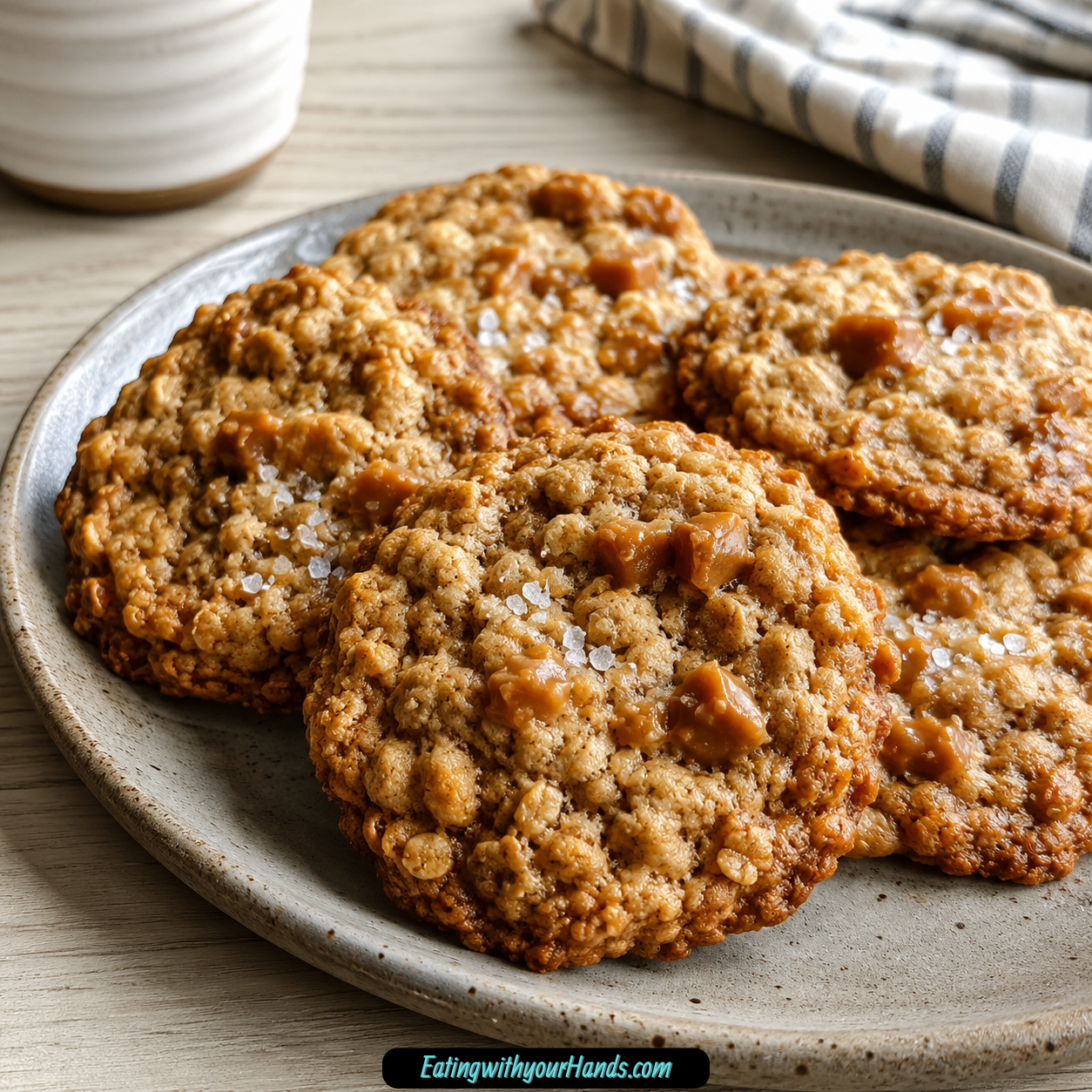

Salted Toffee Oatmeal Cookies are the kind of cookie that feel familiar and surprising at the same time. They have the cozy chew of a classic oatmeal cookie, but the buttery toffee bits and sprinkle of sea salt give them a rich, sweet-salty finish that makes every bite feel a little more special.
I love a cookie that can sit comfortably between everyday comfort and holiday-worthy treat. These cookies do exactly that with golden edges, soft centers, old-fashioned oats, brown sugar sweetness, and little pockets of caramel-like toffee tucked throughout the dough.
There is something deeply comforting about oatmeal cookies cooling on the counter. The oats make them feel hearty, the butter gives them richness, and the brown sugar brings that warm molasses flavor that always makes a kitchen smell inviting.
The sea salt on top is the detail that changes everything. It does not make the cookies salty in a harsh way; it simply wakes up the toffee, balances the sweetness, and makes the buttery flavor feel fuller.
These cookies are wonderful for potlucks, lunchboxes, cookie jars, homemade gifts, holiday trays, or quiet weekends when the oven is on and the house needs to smell like something sweet. They are easy to make, freezer-friendly, and dependable enough to become one of those recipes you keep coming back to.
Table of Contents
- Why You’ll Love This Recipe
- Recipe Details
- Ingredients
- Optional Swaps, Variations, Add-Ins, and Serving Ideas
- Why These Salted Toffee Oatmeal Cookies Work
- Directions
- Step 1: Preheat the Oven to 350°F (175°C)
- Step 2: Line the Baking Sheets
- Step 3: Cream the Butter and Sugars
- Step 4: Scrape the Bowl
- Step 5: Add the Eggs One at a Time
- Step 6: Add the Vanilla Extract
- Step 7: Whisk the Flour, Baking Soda, and Salt
- Step 8: Add the Dry Ingredients to the Wet Ingredients
- Step 9: Fold in the Old-Fashioned Oats
- Step 10: Fold in the Toffee Bits
- Step 11: Chill the Dough if Possible
- Step 12: Scoop the Dough
- Step 13: Space the Cookies Properly
- Step 14: Flatten the Tops Lightly
- Step 15: Sprinkle With Sea Salt
- Step 16: Bake for 10–12 Minutes
- Step 17: Cool on the Baking Sheet
- Step 18: Transfer to a Wire Rack
- Serving Ideas
- Storage
- Reheating
- Freezing
- Make-Ahead
- Helpful Notes for Best Results
- Variations
- Troubleshooting
- Frequently Asked Questions
- Why This Recipe Works So Well
- Final Thoughts
- Salted Toffee Oatmeal Cookies
- Recipe Details
- Ingredients
- Instructions
- Step 1: Prepare the Oven and Baking Sheets
- Step 2: Cream the Butter and Sugars
- Step 3: Add the Eggs and Vanilla
- Step 4: Whisk the Dry Ingredients
- Step 5: Combine the Dough
- Step 6: Fold in the Oats and Toffee
- Step 7: Chill the Dough
- Step 8: Scoop and Shape the Cookies
- Step 9: Add the Sea Salt
- Step 10: Bake Until Golden
- Step 11: Cool the Cookies
- Notes
- Frequently Asked Questions
- Serving Suggestions
- Storage
Why You’ll Love This Recipe
These Salted Toffee Oatmeal Cookies are delightfully chewy. The centers stay soft while the edges turn golden and lightly crisp.
The salty-sweet balance is what makes them memorable. A pinch of flaky sea salt on top enhances the buttery toffee and keeps the cookies from tasting too sweet.
Old-fashioned oats give the cookies a hearty texture. They make each bite chewy and satisfying without losing that soft-baked feel.
The recipe is straightforward and approachable. You cream the butter and sugars, add eggs and vanilla, mix in the dry ingredients, fold in oats and toffee, then scoop and bake.
These cookies are perfect for gifting because they pack well and hold up beautifully. They feel special enough for a holiday box but simple enough for a regular baking day.
They are also freezer-friendly. You can freeze baked cookies or freeze scooped dough balls for fresh cookies later.
Recipe Details
These cookies bake at 350°F (175°C). Baking sheets should be lined with parchment paper to help the cookies bake evenly and prevent sticking.
The prep time is 15 minutes, the cook time is 12 minutes, and the total time is 27 minutes. The recipe makes 24 cookies.
Each cookie is about 210 kcal. The cookies are soft in the center, golden around the edges, and finished with sea salt.
The dough begins with 1 cup softened unsalted butter, 1 cup packed brown sugar, and ½ cup granulated sugar. These are creamed together for 2–3 minutes until light and fluffy.
Two large eggs are beaten in one at a time, followed by 1 teaspoon vanilla extract. The dry ingredients include 1 ½ cups all-purpose flour, 1 teaspoon baking soda, and ½ teaspoon salt.
The final dough includes 3 cups old-fashioned oats and 1 cup toffee bits, such as Heath Bits o’ Brickle. The dough is thick and slightly sticky.
Chilling the dough for at least 30 minutes is optional but recommended. It helps prevent spreading and deepens the flavor.
The cookies bake for 10–12 minutes. They are done when the edges are golden and the centers look set but still slightly soft.
Ingredients
Cookie Dough Base
1 cup unsalted butter, softened
1 cup brown sugar, packed
½ cup granulated sugar
2 large eggs
1 teaspoon vanilla extract
Dry Ingredients
1 ½ cups all-purpose flour
1 teaspoon baking soda
½ teaspoon salt
Oats, Toffee, and Finish
3 cups old-fashioned oats
1 cup toffee bits, like Heath Bits o’ Brickle
Sea salt, for sprinkling
Ingredient Notes
Softened unsalted butter creates the rich, buttery base of these cookies. Room temperature butter helps with proper creaming, which improves the final texture.
Brown sugar adds moisture and deep molasses flavor. It also supports the chewy center that makes these cookies so satisfying.
Granulated sugar balances the brown sugar and adds sweetness. The combination of both sugars gives the cookies a soft center with crisp edges.
Eggs bind the dough and help create structure. Add them one at a time so they blend smoothly into the butter and sugar mixture.
Vanilla extract adds warmth and enhances the toffee flavor. It also rounds out the sweetness of the dough.
All-purpose flour forms the foundation of the cookie dough. Measure carefully so the cookies do not become dry or heavy.
Baking soda gives the cookies just the right spread and lift. Salt in the dough balances the sweetness before the finishing salt is added on top.
Old-fashioned oats are important for the best chewy texture. Do not substitute quick oats or steel-cut oats because the texture is key.
Toffee bits add crunchy, buttery caramel flavor throughout the cookies. Sea salt on top gives the final sweet-salty sparkle.
Optional Swaps, Variations, Add-Ins, and Serving Ideas
Brown Butter Option
For extra richness, brown the butter first and let it cool before using. This gives the cookies a deeper flavor.
Make sure the butter is cooled before mixing it into the dough. If it is too warm, the cookies may spread too much.
Toffee Substitutions
If you cannot find toffee bits, chop up a toffee bar like Heath or Skor. This keeps the buttery caramel flavor in the cookies.
Butterscotch chips can also be used for a similar vibe. The flavor will be different, but still sweet and cozy.
Extra Mix-Ins
Add ½ cup chopped nuts or chocolate chips for variety. These additions make the cookies feel even more loaded.
Chopped nuts add crunch, while chocolate chips add sweetness and richness. Keep the amount moderate so the dough still holds together well.
Salt Options
Flaky sea salt like Maldon works beautifully on top. Kosher salt can also be used if you do not have flaky sea salt.
Avoid table salt for sprinkling because it is too fine. A tiny pinch of kosher salt is a better substitute.
Gluten-Free Direction
To make these gluten-free, use a 1:1 gluten-free all-purpose flour. Also make sure the oats are certified gluten-free.
The texture may vary slightly, but the chewy oatmeal cookie idea remains. Keep the same baking cues and watch the edges.
Cookie Bar Option
You can turn the dough into cookie bars. Press it into a greased 9×13-inch pan and bake for 22–25 minutes.
Let the bars cool before slicing. This is a helpful option when you want the flavor of the cookies without scooping individual dough balls.
Why These Salted Toffee Oatmeal Cookies Work
These cookies work because they balance texture and flavor in a simple way. The oats make them chewy, the toffee makes them buttery and sweet, and the sea salt keeps everything balanced.
Creaming the butter and sugars is an important step. It creates a lighter base that helps the cookies bake with soft centers and crisp edges.
Brown sugar brings moisture and depth. Granulated sugar helps with sweetness and structure, giving the cookies a more balanced bite.
Old-fashioned oats make the cookies hearty and chewy. Their texture is what separates these from softer, smoother cookie doughs.
The toffee bits melt and crisp in little pockets. They add caramel-like richness without needing any complicated candy work.
The finishing salt is small but powerful. It makes the toffee taste richer and gives each cookie a more polished flavor.
Directions
Step 1: Preheat the Oven to 350°F (175°C)
Preheat your oven to 350°F (175°C). This temperature gives the cookies enough heat to bake golden edges while keeping the centers soft.
Let the oven fully preheat before placing the baking sheets inside. Cookies bake quickly, so an accurate oven temperature helps the texture stay consistent.
This is also a good time to set up your baking area. Have the parchment paper, baking sheets, mixing bowls, and ingredients ready.
Step 2: Line the Baking Sheets
Line baking sheets with parchment paper. This helps the cookies bake evenly and prevents sticking.
Parchment also makes cleanup easier, especially because toffee bits can melt slightly during baking. It keeps the bottoms from clinging to the pan.
Set the prepared baking sheets aside while you make the dough. You will place the dough balls 2 inches apart later.
Step 3: Cream the Butter and Sugars
In a large mixing bowl, cream together 1 cup softened unsalted butter, 1 cup packed brown sugar, and ½ cup granulated sugar. Beat on medium speed for 2–3 minutes.
The mixture should become light and fluffy. This step is crucial for the final texture.
Do not use melted butter unless you are following the brown butter option and allowing it to cool first. Butter that is too warm can cause the cookies to spread too much.
Step 4: Scrape the Bowl
Scrape the sides and bottom of the bowl as needed. This makes sure the butter and sugars are evenly mixed.
Small streaks of unmixed butter or sugar can affect the dough texture. A quick scrape keeps everything smooth.
After scraping, beat briefly again if needed. The base should look soft, creamy, and evenly blended.
Step 5: Add the Eggs One at a Time
Beat in 2 large eggs one at a time. Mix well after each egg.
Adding the eggs one at a time helps the dough stay smooth. It also gives each egg time to fully blend into the butter mixture.
The dough base should look creamy after the eggs are added. Scrape the bowl again if needed.
Step 6: Add the Vanilla Extract
Add 1 teaspoon vanilla extract and mix until smooth. The vanilla adds warmth and helps deepen the toffee flavor.
This small amount of vanilla supports the brown sugar, oats, and buttery toffee. It makes the cookies taste fuller.
Mix just until the vanilla is incorporated. The wet mixture is now ready for the dry ingredients.
Step 7: Whisk the Flour, Baking Soda, and Salt
In a separate bowl, whisk together 1 ½ cups all-purpose flour, 1 teaspoon baking soda, and ½ teaspoon salt. Whisk until evenly combined.
This helps distribute the baking soda and salt throughout the flour. Even distribution keeps the cookies baking and tasting consistently.
Do not skip the salt in the dough. It balances the sweetness before the sea salt topping is added.
Step 8: Add the Dry Ingredients to the Wet Ingredients
Gradually add the dry mixture into the wet ingredients. Mix just until combined.
Avoid overmixing because it can make the cookies less tender. Once the flour disappears into the dough, stop mixing.
The dough will begin to thicken at this stage. It should still be soft enough to accept the oats and toffee.
Step 9: Fold in the Old-Fashioned Oats
Fold in 3 cups old-fashioned oats by hand or on low speed. Mix until the oats are evenly distributed.
The dough will become thicker and slightly sticky. This is normal because the oats give the cookies their hearty chew.
Do not use quick oats or steel-cut oats. Old-fashioned oats give the best texture for these cookies.
Step 10: Fold in the Toffee Bits
Add 1 cup toffee bits and fold them into the dough. Mix until the toffee is spread evenly.
The toffee bits bring buttery caramel flavor throughout the batch. Each scoop should have little bits of toffee tucked inside.
If using chopped Heath or Skor bars instead, fold them in the same way. Keep the pieces small enough to distribute through the dough.
Step 11: Chill the Dough if Possible
Cover the dough and chill it in the refrigerator for at least 30 minutes. This step is optional but recommended.
Chilling helps prevent spreading. It also deepens the flavor and makes the dough easier to scoop.
If you skip chilling, the cookies will still work, but they may spread more. Chilled dough gives a thicker, neater cookie.
Step 12: Scoop the Dough
Scoop tablespoon-sized portions of dough. Roll each portion into a ball.
Try to keep the dough balls similar in size. This helps the cookies bake evenly.
A consistent scoop also makes the finished cookies look better for gifting. Place the dough balls onto the prepared baking sheets.
Step 13: Space the Cookies Properly
Place the dough balls 2 inches apart on the parchment-lined baking sheets. This gives them room to spread.
Crowding the baking sheet can cause the cookies to bake into each other. Space helps the edges turn golden evenly.
If baking in batches, keep extra dough chilled while the first tray bakes. This helps maintain the cookie shape.
Step 14: Flatten the Tops Lightly
Lightly flatten the tops with your fingers or the back of a spoon. Do not press them completely flat.
A gentle flattening helps the cookies bake into an even shape. The cookies will still spread slightly in the oven.
If the dough sticks, lightly dampen your fingers or use the back of a spoon. Keep the shape thick enough for soft centers.
Step 15: Sprinkle With Sea Salt
Sprinkle each cookie with a pinch of flaky sea salt. Do not skip this step if you want the full salted toffee flavor.
The salt enhances the buttery toffee and balances the sweetness. It makes the cookies taste more layered.
Use flaky sea salt or a tiny pinch of kosher salt. Avoid table salt because it is too fine for this topping.
Step 16: Bake for 10–12 Minutes
Bake the cookies for 10–12 minutes. They are ready when the edges are golden and the centers look set but still slightly soft.
Do not wait for the centers to look dry. The cookies will continue to firm as they cool.
Watch the edges for the best doneness cue. Golden edges with soft centers give the ideal texture.
Step 17: Cool on the Baking Sheet
Allow the cookies to cool on the baking sheet for 5 minutes. This helps them finish setting.
Freshly baked oatmeal cookies can be delicate when hot. The short rest makes them easier to move.
The toffee also firms slightly as the cookies sit. After 5 minutes, they are ready for the wire rack.
Step 18: Transfer to a Wire Rack
Transfer the cookies to a wire rack to cool completely. This allows air to circulate around them.
Cooling on a rack helps the edges keep their texture. It also prevents the bottoms from staying too warm on the baking sheet.
You can enjoy them warm or let them cool fully for storage. Either way, the sweet toffee and sea salt finish make them irresistible.
Serving Ideas
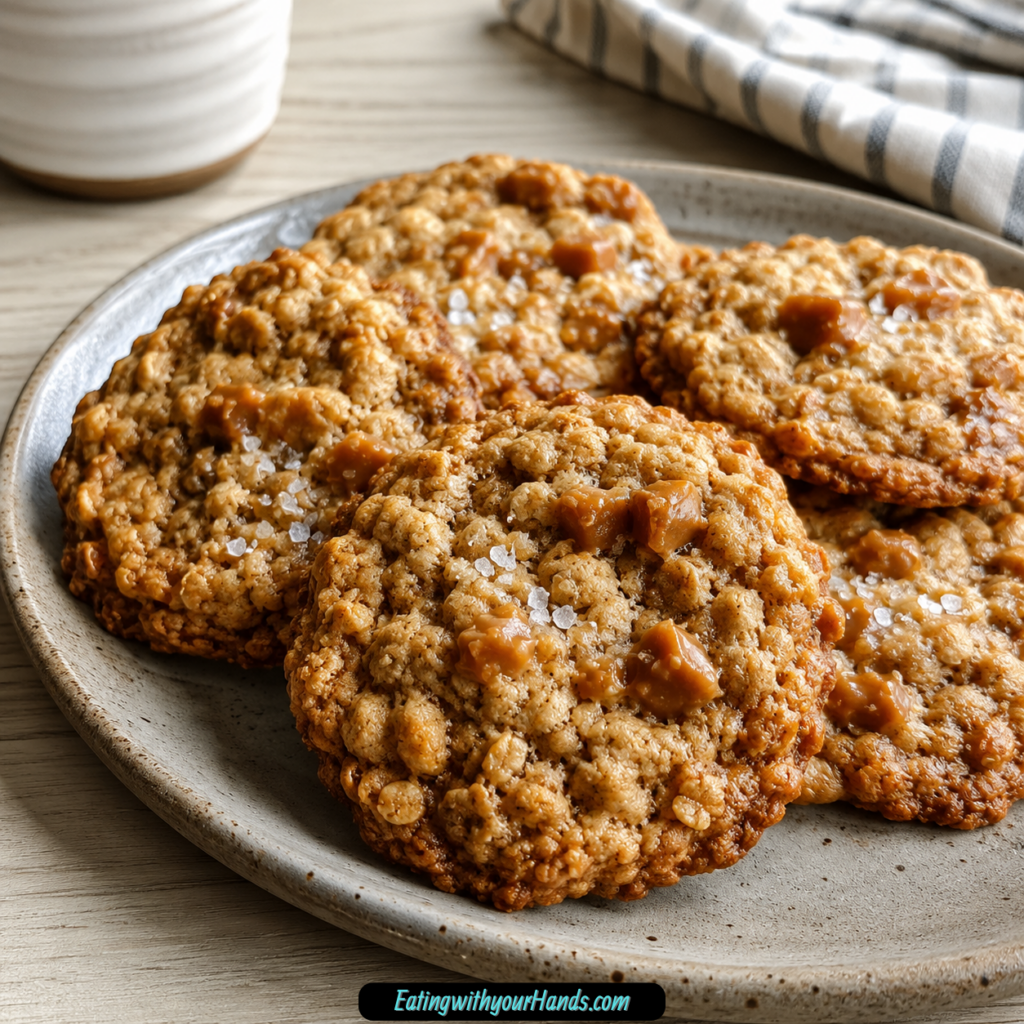
Serve Salted Toffee Oatmeal Cookies warm from the oven with a glass of milk. The toffee is especially lovely when the cookies are still a little soft.
They are also wonderful cooled and packed into lunchboxes. Their sturdy oatmeal texture helps them hold up well.
Add them to cookie jars for a cozy everyday treat. The oatmeal and toffee combination feels comforting enough for any day.
These cookies are excellent for homemade gifts. They pack well and look beautiful with the sea salt sprinkled on top.
Serve them for holidays, potlucks, bake sales, or weekend baking. They are simple enough for a quiet afternoon but special enough to share.
Storage
Store the cookies in an airtight container at room temperature for up to 5 days. Let them cool completely before storing.
Keeping them sealed helps preserve their chewy centers. It also protects the toffee bits from becoming sticky.
For longer storage, freeze the baked cookies in a single layer first. Then transfer them to a bag or container for up to 2 months.
If packing them for gifts, make sure they are fully cooled. This keeps the texture better and prevents condensation.
Reheating
Warm individual cookies in the microwave for 10–15 seconds. This gives them that fresh-baked softness again.
Do not overheat them. A brief warm-up is enough to soften the cookie and bring back the buttery toffee feel.
If the cookies have been frozen and thawed, warming them gently can refresh the texture. Serve soon after warming.
Room temperature cookies are also delicious. The oatmeal chew and salted toffee flavor hold up well after cooling.
Freezing
These cookies freeze wonderfully. You can freeze baked cookies or freeze scooped dough balls.
To freeze baked cookies, arrange them in a single layer first. Once firm, transfer them to a bag or container for up to 2 months.
To freeze dough balls, scoop them onto a baking sheet and freeze until solid. Then transfer the frozen dough balls to a zip-top bag and freeze for up to 3 months.
Bake dough balls directly from frozen. Add 1–2 minutes to the baking time.
Make-Ahead
The dough can be made ahead and chilled for at least 30 minutes before baking. This helps the cookies hold their shape and deepens the flavor.
You can also freeze scooped dough balls for later. Bake them straight from frozen whenever you want warm cookies.
Baked cookies can be made ahead and stored at room temperature for up to 5 days. They are great for lunchboxes, cookie jars, and gifts.
For holiday baking, make a double batch and freeze some dough. Future you will be grateful when fresh cookies are only a few minutes away.
Helpful Notes for Best Results
Use softened butter, not melted butter, for best creaming. The butter should be soft enough to blend but still hold its shape.
Chilling the dough enhances flavor and shape. It is optional but highly recommended.
Old-fashioned oats give the best chewy texture. Avoid quick oats or steel-cut oats.
If using brown butter, let it cool before mixing. Warm butter can make the cookies spread.
If the cookies spread too much, the butter may have been too warm or the flour may have been under-measured. Chilling the dough helps prevent spreading.
If you do not have toffee bits, chop a toffee bar like Heath or Skor. Butterscotch chips can also create a similar vibe.
For variety, add ½ cup chopped nuts or chocolate chips. For gluten-free cookies, use 1:1 gluten-free all-purpose flour and certified gluten-free oats.
Variations
Brown Butter Salted Toffee Oatmeal Cookies
Brown the butter first for extra richness, then let it cool before using. This gives the cookies a deeper, warmer flavor.
Make sure the butter is not hot when added to the sugars. Cool butter helps prevent spreading.
Chocolate Chip Toffee Oatmeal Cookies
Add ½ cup chocolate chips to the dough. This makes the cookies sweeter and more dessert-like.
Chocolate works well with toffee and oats. It creates an even richer cookie.
Nutty Toffee Oatmeal Cookies
Add ½ cup chopped nuts for crunch. The nuts give the cookies more texture.
This variation is great if you like a heartier cookie. The oats, toffee, and nuts make each bite extra satisfying.
Butterscotch Oatmeal Cookies
Use butterscotch chips if you do not have toffee bits. They give a sweet, buttery flavor.
The texture will be different from crunchy toffee bits, but the flavor direction is similar. This is an easy substitute.
Gluten-Free Salted Toffee Oatmeal Cookies
Use a 1:1 gluten-free all-purpose flour and certified gluten-free oats. Keep the rest of the method the same.
The texture may vary slightly. Watch the cookies for golden edges and set centers.
Oatmeal Toffee Cookie Bars
Press the dough into a greased 9×13-inch pan. Bake for 22–25 minutes.
Cool before slicing into bars. This is a simple way to make the recipe for a crowd.
Troubleshooting
Why Did My Cookies Spread Too Much?
The butter may have been too warm, or the flour may have been under-measured. Make sure the butter is soft but not melted.
Chill the dough for at least 30 minutes before baking. This helps the cookies hold their shape.
Why Are My Cookies Dry?
They may have been overbaked. Remove them when the edges are golden and the centers still look slightly soft.
The cookies continue to firm as they cool. Waiting until they look completely dry in the oven can make them less tender.
Why Are My Cookies Tough?
The dough may have been overmixed after adding the flour. Mix just until combined.
Overmixing can affect tenderness. Fold in the oats and toffee gently.
Why Is the Salt Too Strong?
Too much salt may have been sprinkled on top, or table salt may have been used. Use flaky sea salt or a tiny pinch of kosher salt.
Avoid table salt for finishing. It is too fine and can taste too sharp.
Why Is My Dough Too Sticky?
This dough is thick and slightly sticky because of the oats and toffee. Chilling helps make it easier to scoop and shape.
If it feels overly sticky, make sure the butter was not too warm. Also check that the flour was measured correctly.
Frequently Asked Questions
Can I Make These Gluten-Free?
Yes, use a 1:1 gluten-free all-purpose flour. Make sure your oats are certified gluten-free.
The texture may be slightly different, but the cookies will still keep their chewy oatmeal style. Bake until the edges are golden and the centers are set.
What If I Do Not Have Toffee Bits?
Chop up a few toffee candy bars such as Heath or Skor. You can also use butterscotch chips for a similar vibe.
Toffee bars give the closest texture. Butterscotch chips give a softer, sweeter variation.
Do I Have to Chill the Dough?
No, but chilling is highly recommended. It helps the cookies hold their shape and enhances the flavor.
Chill for at least 30 minutes if you have time. This is especially helpful if your kitchen is warm.
Can I Make These Into Cookie Bars?
Yes, press the dough into a greased 9×13-inch pan. Bake for 22–25 minutes.
Cool the bars before slicing. This turns the same flavor into an easy shareable pan dessert.
Why Are My Cookies Spreading Too Much?
Your butter may have been too warm, or the flour may have been under-measured. Chilling the dough helps prevent spreading.
Make sure the butter is softened but not melted. Measure the flour carefully.
Can I Freeze the Dough?
Yes, freeze scooped dough balls on a baking sheet until solid. Then transfer them to a zip-top bag and freeze for up to 3 months.
Bake directly from frozen. Add 1–2 minutes to the baking time.
How Long Do the Cookies Stay Fresh?
The cookies stay fresh in an airtight container at room temperature for up to 5 days. For longer storage, freeze baked cookies for up to 2 months.
Let cookies cool completely before storing. This protects the texture.
Why This Recipe Works So Well
Salted Toffee Oatmeal Cookies work because they take the familiar comfort of oatmeal cookies and add a richer, more modern sweet-salty flavor. The oats keep the cookies chewy, while the toffee bits add buttery caramel crunch.
The butter and sugars create the foundation of the dough. Brown sugar adds moisture and molasses depth, while granulated sugar balances the sweetness.
Eggs give the cookies structure, and vanilla adds warmth. Flour, baking soda, and salt build the dough so it spreads just enough.
Old-fashioned oats are the key to texture. They make the cookies hearty and chewy without turning them dry.
The sea salt finish brings the cookie together. It sharpens the toffee flavor and makes the sweetness feel balanced.
The recipe is also practical because the dough and baked cookies freeze well. That makes it easy to bake now, save some later, and enjoy warm cookies whenever the craving hits.
Final Thoughts
Salted Toffee Oatmeal Cookies are a beautiful mix of cozy and special. They have the comfort of a classic oatmeal cookie, the buttery sweetness of toffee, and the finishing touch of sea salt that makes every bite feel balanced.
I love how they work for so many moments. They can sit in a cookie jar, travel in a lunchbox, fill a gift tin, or become the warm dessert everyone reaches for at a potluck.
Bake them when you want something chewy, golden, sweet, salty, and full of texture. Once the smell of oats, butter, brown sugar, and toffee fills the kitchen, it is hard not to feel like these cookies belong in your regular baking rotation.
Salted Toffee Oatmeal Cookies

These Salted Toffee Oatmeal Cookies are chewy in the center, golden around the edges, and filled with buttery toffee bits and hearty old-fashioned oats. A light sprinkle of sea salt gives them the perfect sweet-salty finish, making them wonderful for holidays, lunchboxes, cookie jars, gifting, or cozy weekend baking.
Recipe Details
- Prep Time: 15 minutes
- Cook Time: 12 minutes
- Total Time: 27 minutes
- Servings: 24 cookies
- Calories: 210 kcal
Ingredients
- Sea salt for sprinkling
- 1 cup toffee bits like Heath Bits o’ Brickle
- 3 cups old-fashioned oats
- 1 ½ cups all-purpose flour
- 1 teaspoon baking soda
- ½ teaspoon salt
- 1 cup unsalted butter softened
- 1 cup brown sugar packed
- ½ cup granulated sugar
- 2 large eggs
- 1 teaspoon vanilla extract
Instructions
Step 1: Prepare the Oven and Baking Sheets
Preheat oven to 350°F (175°C). Line baking sheets with parchment paper so the cookies bake evenly and release easily.
Step 2: Cream the Butter and Sugars
In a large bowl, cream the softened butter, brown sugar, and granulated sugar until light and fluffy. Beat on medium speed for 2-3 minutes to help create a soft cookie texture.
Step 3: Add the Eggs and Vanilla
Beat in the eggs one at a time, scraping the bowl as needed. Stir in the vanilla extract until the mixture is smooth and well combined.
Step 4: Whisk the Dry Ingredients
In a separate bowl, whisk together the all-purpose flour, baking soda, and salt.
Step 5: Combine the Dough
Gradually mix the dry ingredients into the wet ingredients, mixing just until combined. Avoid over-mixing so the cookies stay tender.
Step 6: Fold in the Oats and Toffee
Fold in the old-fashioned oats and toffee bits until evenly distributed. The dough will be thick and slightly sticky.
Step 7: Chill the Dough
Chill the dough for 30 minutes, optional for less spreading. This also helps enhance the flavor and shape of the cookies.
Step 8: Scoop and Shape the Cookies
Scoop tablespoon-sized dough balls onto the prepared baking sheets, spacing them 2 inches apart. Lightly press each dough ball to flatten the top slightly.
Step 9: Add the Sea Salt
Sprinkle each cookie with sea salt before baking so the sweet toffee flavor has a salty finish.
Step 10: Bake Until Golden
Bake for 10-12 minutes, until the edges are golden and the centers are set but still slightly soft. The cookies will continue to firm up as they cool.
Step 11: Cool the Cookies
Let the cookies cool on the baking sheet for 5 minutes, then transfer them to a wire rack to cool completely.
Notes
Use room temperature butter for the best creaming. The butter should be soft, not melted, so the cookies hold their shape.
Chilling the dough enhances flavor and shape, and it also helps prevent spreading.
For extra richness, brown the butter before mixing, then let it cool before using.
Old-fashioned oats give the best chewy texture. Avoid quick oats or steel-cut oats.
If toffee bits are not available, chop up a toffee bar like Heath or Skor.
For variety, add ½ cup of chopped nuts or chocolate chips.
If you do not have flaky sea salt, use a tiny pinch of kosher salt instead. Avoid table salt because it is too fine.
For chewier cookies, make sure the centers are still slightly soft when the cookies come out of the oven.
Frequently Asked Questions
Can I Make These Gluten-Free?
Yes. Use a 1:1 gluten-free all-purpose flour and make sure the oats are certified gluten-free.
What Can I Use Instead of Toffee Bits?
Chop up a few toffee candy bars, or use butterscotch chips for a similar flavor.
Do I Have to Chill the Dough?
No, but chilling the dough helps the cookies hold their shape and enhances the flavor.
Can I Make These Into Cookie Bars?
Yes. Press the dough into a greased 9×13-inch pan and bake for 22-25 minutes. Let cool before slicing.
Why Are My Cookies Spreading Too Much?
The butter may have been too warm, or the flour may have been under-measured. Chilling the dough helps prevent spreading.
Serving Suggestions
- Serve warm from the oven with a glass of milk.
- Pack cooled cookies into lunchboxes or cookie jars.
- Add them to holiday cookie trays with chocolate cookies, sugar cookies, and bars.
- Wrap them in gift bags or boxes for homemade edible gifts.
- Bring them to potlucks, bake sales, or family gatherings.
- Pair with coffee, tea, or hot cocoa for a cozy sweet snack.
Storage
How to Store
Store the cooled cookies in an airtight container at room temperature for up to 5 days.
How to Reheat
Warm individual cookies in the microwave for 10-15 seconds for a fresh-baked softness.
How to Freeze Baked Cookies
For longer storage, freeze the baked cookies in a single layer, then transfer them to a bag or container for up to 2 months.
How to Freeze Dough Balls
Freeze scooped dough balls on a baking sheet. Once solid, transfer them to a zip-top bag and freeze for up to 3 months.
How to Bake From Frozen
Bake the frozen dough balls directly from frozen and add 1-2 minutes to the baking time.
Best Texture Tip
Let the cookies cool on the baking sheet for 5 minutes before moving them to a wire rack so the edges can set while the centers stay soft and chewy.

Fernando is the creator and writer behind the food blog Eating with your Hands. Living and working in cities like Paris, Barcelona, and Berlin, and being married to a Canadian foodie, has given Fernando a passion and interest in food and inspired him to run EWYH.