
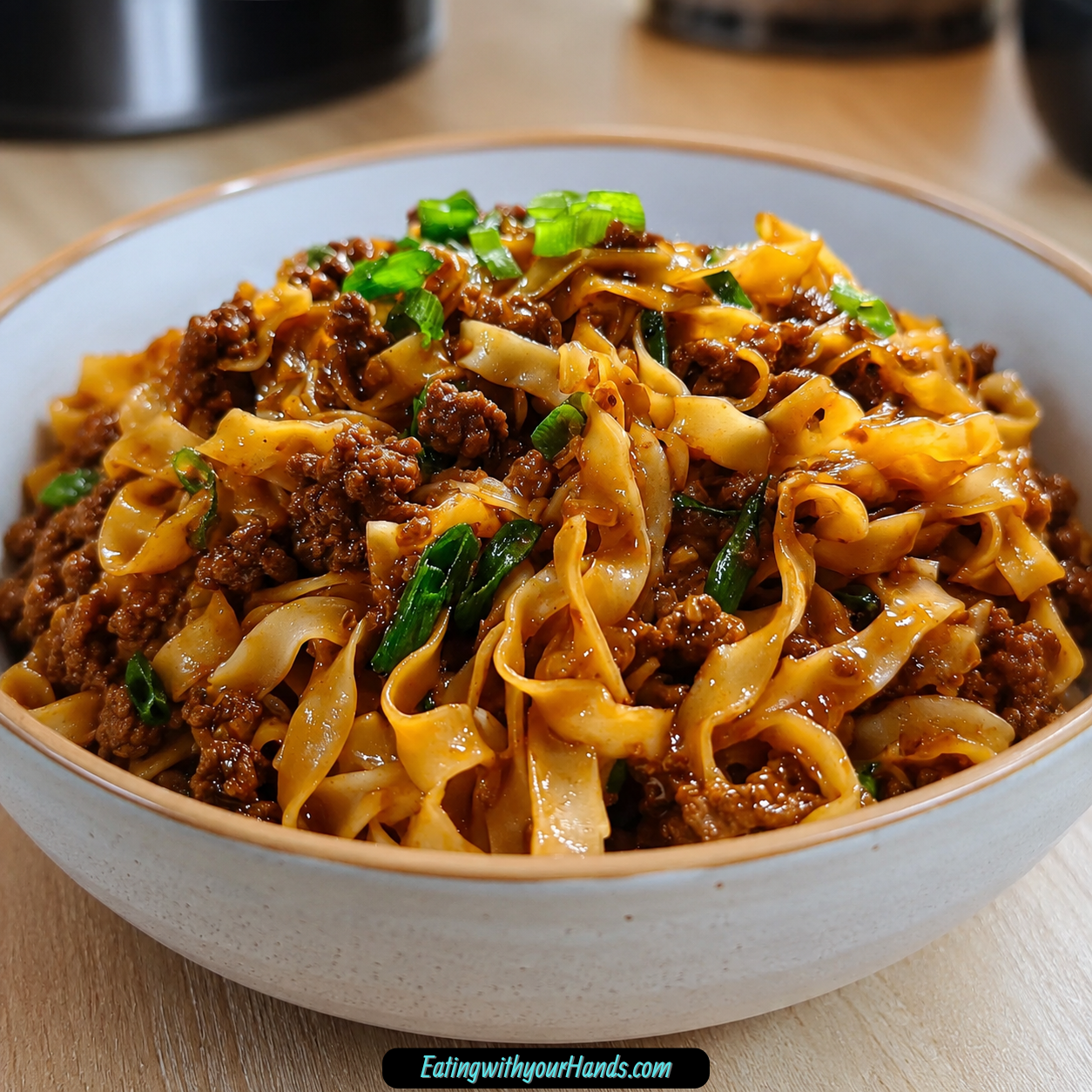
Some weeknight dinners feel like a small rescue mission. The day has been long, everyone is hungry, and the idea of waiting for delivery somehow feels slower than just cooking something yourself.
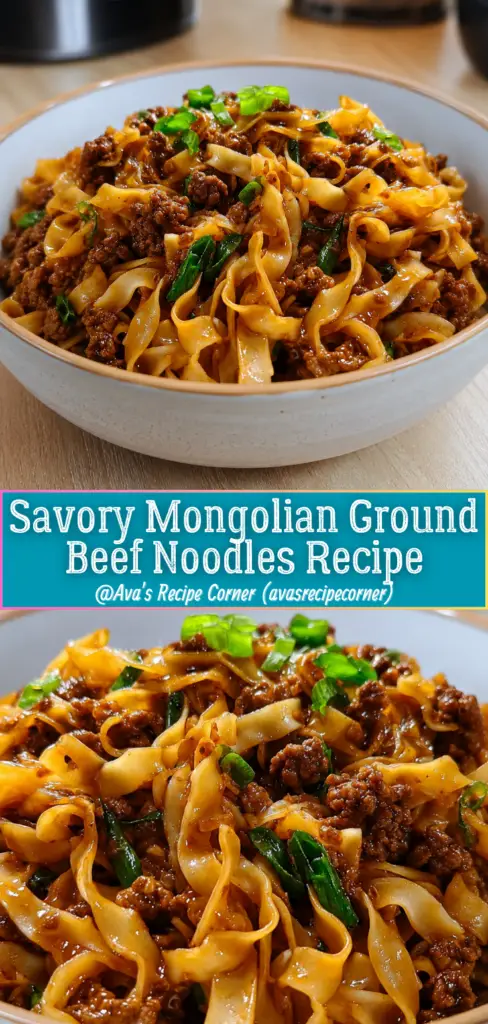
That is exactly the kind of night this Savory Mongolian Ground Beef Noodles recipe was made for. It is fast, comforting, deeply savory, lightly sweet, just a little spicy, and full of the kind of glossy noodle-coated sauce that makes dinner feel exciting without making the kitchen complicated.
This dish brings together tender wide noodles, browned ground beef, garlic, ginger, green onions, soy sauce, brown sugar, hoisin sauce, sriracha or red pepper flakes, cornstarch, water, and a final drizzle of sesame oil. The result is a saucy, satisfying noodle bowl that tastes bold and cozy at the same time.
It has the spirit of a takeout-style dinner, but the process is simple enough for a busy evening. You cook the noodles, brown the beef, stir in the aromatics, whisk a quick sauce, simmer everything until glossy, toss in the noodles, and finish with sesame oil and garnishes.
What makes this recipe especially lovable is how flexible it is. You can keep it classic with ground beef, make it spicier, add vegetables, swap the protein, use different noodles, or prepare the beef sauce ahead and cook fresh noodles later.
Table of Contents
- Why You’ll Love These Mongolian Ground Beef Noodles
- Recipe Details
- Ingredients
- Optional Variations
- The Comfort of a Fast Noodle Dinner
- Choosing the Right Noodles
- Why Ground Beef Makes This Recipe So Easy
- Directions
- Step 1: Prepare the Ingredients Before Cooking
- Step 2: Cook the Noodles
- Step 3: Heat the Skillet or Wok
- Step 4: Brown the Ground Beef
- Step 5: Add the Garlic, Ginger, and Green Onions
- Step 6: Whisk the Sauce
- Step 7: Pour the Sauce Into the Beef
- Step 8: Simmer Until Thick and Glossy
- Step 9: Add the Cooked Noodles
- Step 10: Finish With Sesame Oil
- Step 11: Garnish the Noodles
- Step 12: Serve Hot
- Serving Suggestions
- Storage
- Reheating
- Freezing
- Helpful Notes for Best Results
- Variations
- Troubleshooting
- Frequently Asked Questions
- Why This Recipe Works for Busy Weeknights
- Final Thoughts
- Mongolian Ground Beef Noodles
Why You’ll Love These Mongolian Ground Beef Noodles
This recipe is quick enough for weeknights. It comes together in under 30 minutes, which makes it faster than waiting around for takeout when everyone is already hungry.
The sauce is one of the biggest reasons the dish works so well. It is savory from soy sauce, rich from hoisin, lightly sweet from brown sugar, gently spicy from sriracha or red pepper flakes, and glossy from cornstarch.
The ingredients are pantry-friendly and easy to find. Hoisin sauce may be the most specific ingredient, but it is still a common sauce and brings a deep umami-style richness to the dish.
The recipe is endlessly adaptable. Ground turkey, chicken, or crumbled tofu can replace the beef, and vegetables like bell peppers, shredded carrots, or snap peas can be added for color and crunch.
Leftovers taste even better after the flavors have time to settle. The sauce soaks into the noodles, making the next-day bowl rich and satisfying.
It is also a crowd-pleasing meal. The combination of noodles, beef, sweet-savory sauce, and optional garnishes makes it easy to serve to kids, friends, family, or anyone who loves a cozy noodle dinner.
Recipe Details
- Recipe name: Savory Mongolian Ground Beef Noodles
- Main method: Stovetop skillet or wok
- Total time: Under 30 minutes
- Noodles: 8 oz wide noodles
- Beef: 1 lb ground beef
- Beef cooking time: About 5 to 7 minutes
- Aromatics cooking time: 1 to 2 minutes
- Sauce simmering time: 2 to 3 minutes
- Best finish: 1 teaspoon sesame oil
- Refrigerator storage: 3 to 4 days
- Freezer note: Beef sauce alone freezes well for up to 2 months
- Best served: Hot, freshly tossed with noodles and garnishes
Ingredients
For the Noodles
- 8 oz wide noodles
For the Beef
- 1 lb ground beef
- 1 tablespoon vegetable oil
For the Sauce
- 3 cloves garlic, minced
- 1 tablespoon fresh ginger, grated
- 4 green onions, sliced
- ¼ cup low-sodium soy sauce
- 2 tablespoons brown sugar, packed
- 2 tablespoons hoisin sauce
- ½ teaspoon sriracha or red pepper flakes
- 1 teaspoon cornstarch
- ½ cup water
- 1 teaspoon sesame oil
Optional Garnishes
- Sesame seeds
- Fried shallots
- Lime wedges
- Reserved sliced green onions
Optional Variations
- Ground turkey
- Ground chicken
- Crumbled tofu
- Bell peppers
- Shredded carrots
- Snap peas
- Tamari instead of soy sauce
- Rice noodles
- Zucchini noodles
- Extra sriracha
- Diced jalapeño
- Steamed broccoli
- Simple cucumber salad
- Extra lime juice
The Comfort of a Fast Noodle Dinner
There is something especially comforting about noodles coated in a glossy sauce. They feel warm, filling, and generous, even when the recipe itself is simple.
Mongolian Ground Beef Noodles work because the sauce clings to every strand. The cornstarch thickens the soy, hoisin, brown sugar, sriracha, and water mixture just enough to coat the noodles instead of slipping to the bottom of the pan.
The beef gives the dish richness and makes it feel hearty. Browning the meat properly creates flavor before the sauce ever touches the skillet.
Garlic, ginger, and green onions bring freshness and aroma. They wake up the beef and make the dish smell like something much more involved than it really is.
The sesame oil is added at the end, not at the beginning. That final drizzle gives the noodles a warm, nutty finish and helps the whole dish feel complete.
Choosing the Right Noodles
The recipe calls for 8 oz wide noodles. Lo mein noodles, rice noodles, or even spaghetti can work depending on what you have available.
Lo mein gives the dish a takeout-style feel. Rice noodles are a good option if you want a different texture or are making a gluten-free variation with tamari.
Spaghetti works in a pinch and makes the recipe more pantry-friendly. It may not be traditional, but it still holds the sauce well and gives you a satisfying bowl of noodles.
Whatever noodles you choose, follow the package instructions for cooking time. Drain them well before adding them to the skillet.
If the noodles sit while the beef cooks, toss them with a little oil to prevent sticking. This small step makes it easier to combine everything later.
Why Ground Beef Makes This Recipe So Easy
Ground beef keeps this recipe fast and approachable. There is no slicing steak, marinating meat, or waiting for a tougher cut to become tender.
The recipe uses 1 lb ground beef. An 80/20 or 85/15 blend gives the best flavor, but leaner beef can also work.
If using leaner beef, do not skip the oil. The vegetable oil helps the meat brown and prevents the skillet from becoming too dry.
As the beef cooks, break it into small pieces. Smaller pieces distribute better through the noodles and allow the sauce to coat everything evenly.
Letting the beef sit undisturbed for a minute before stirring can create tasty browned bits. Those little browned edges add depth to the final dish.
Directions
Step 1: Prepare the Ingredients Before Cooking
Before turning on the stove, slice the green onions, mince the garlic, grate the ginger, and measure the sauce ingredients. This recipe moves quickly once the beef starts cooking.
Keep the soy sauce, brown sugar, hoisin sauce, sriracha or red pepper flakes, cornstarch, water, and sesame oil nearby. Having everything ready makes the cooking process smoother.
Reserve a small handful of sliced green onions for garnish. The rest will cook with the aromatics.
Step 2: Cook the Noodles
Bring a pot of water to a boil and cook 8 oz wide noodles according to the package instructions. Use lo mein, rice noodles, or spaghetti depending on what you have.
Once the noodles are cooked, drain them well. Set them aside while you prepare the beef and sauce.
If the noodles are likely to sit for a few minutes, toss them with a little oil. This helps keep them from sticking together before they are added to the skillet.
Step 3: Heat the Skillet or Wok
Place a large skillet or wok over medium-high heat. Add 1 tablespoon vegetable oil.
Let the oil heat until it is ready for the beef. A hot pan helps the ground beef brown instead of steam.
Use a skillet or wok large enough to hold both the beef and the noodles later. You will need room to toss everything together at the end.
Step 4: Brown the Ground Beef
Add 1 lb ground beef to the hot skillet. Break it into small pieces as it cooks.
Cook for about 5 to 7 minutes, or until the beef is browned. Do not rush this step, because even browning gives the dish better flavor.
For extra browned bits, let the beef sit undisturbed for a minute before stirring. Then continue breaking it apart and cooking until no raw spots remain.
Step 5: Add the Garlic, Ginger, and Green Onions
Add 3 cloves minced garlic, 1 tablespoon grated fresh ginger, and most of the sliced green onions to the skillet. Save some green onions for garnish.
Cook for 1 to 2 minutes, stirring often. The aromatics should smell fragrant and blend into the beef.
Be careful not to burn the garlic. Burned garlic can turn bitter quickly, so keep it moving and do not let it sit too long in one hot spot.
Step 6: Whisk the Sauce
In a small bowl, whisk together ¼ cup low-sodium soy sauce, 2 tablespoons packed brown sugar, 2 tablespoons hoisin sauce, ½ teaspoon sriracha or red pepper flakes, 1 teaspoon cornstarch, and ½ cup water.
Whisk until the cornstarch is fully dissolved. This helps prevent lumps when the sauce hits the hot skillet.
The sauce should look smooth and evenly blended. Once added to the beef, it will thicken into a glossy coating.
Step 7: Pour the Sauce Into the Beef
Pour the sauce mixture into the skillet with the browned beef and aromatics. Stir well so the sauce reaches all of the meat.
Scrape along the bottom of the skillet as you stir. This helps lift any browned bits into the sauce.
At first, the sauce may look thin. It will thicken as it simmers and the cornstarch activates.
Step 8: Simmer Until Thick and Glossy
Let the sauce simmer for 2 to 3 minutes. Stir frequently as it thickens.
The sauce should become glossy and coat the beef. It should not look watery when it is ready.
If it becomes too thick, add a splash of water. If it seems too thin, let it simmer a little longer.
Step 9: Add the Cooked Noodles
Add the cooked and drained noodles to the skillet. Use tongs, a large spoon, or a spatula to toss everything together.
Make sure the noodles are evenly coated in the sauce. Lift and turn them gently so the beef is distributed throughout.
This is where the dish comes together. The sauce should cling to the noodles and carry the beef, garlic, ginger, and green onions through every bite.
Step 10: Finish With Sesame Oil
Drizzle 1 teaspoon sesame oil over the noodles. Toss again briefly to distribute the flavor.
Sesame oil is the finishing ingredient, so do not skip it. It adds a warm, nutty aroma that makes the dish taste complete.
Add it at the end rather than cooking it for a long time. This preserves its flavor.
Step 11: Garnish the Noodles
Top the noodles with the reserved sliced green onions. Add sesame seeds if you want a little crunch and visual finish.
Fried shallots can be added for extra crisp texture. Lime wedges can be served on the side for brightness.
A squeeze of lime can cut through the richness of the sauce. This is especially nice if you like a fresher finish.
Step 12: Serve Hot
Serve the noodles immediately while the sauce is glossy and warm. You can pile them into a large bowl for a family-style dinner or plate them individually.
If serving with sides, steamed broccoli or a simple cucumber salad balances the richness. Extra lime juice over the top can also brighten the dish.
This recipe is best right after tossing, but leftovers store well too. The flavors continue to settle into the noodles as they rest.
Serving Suggestions
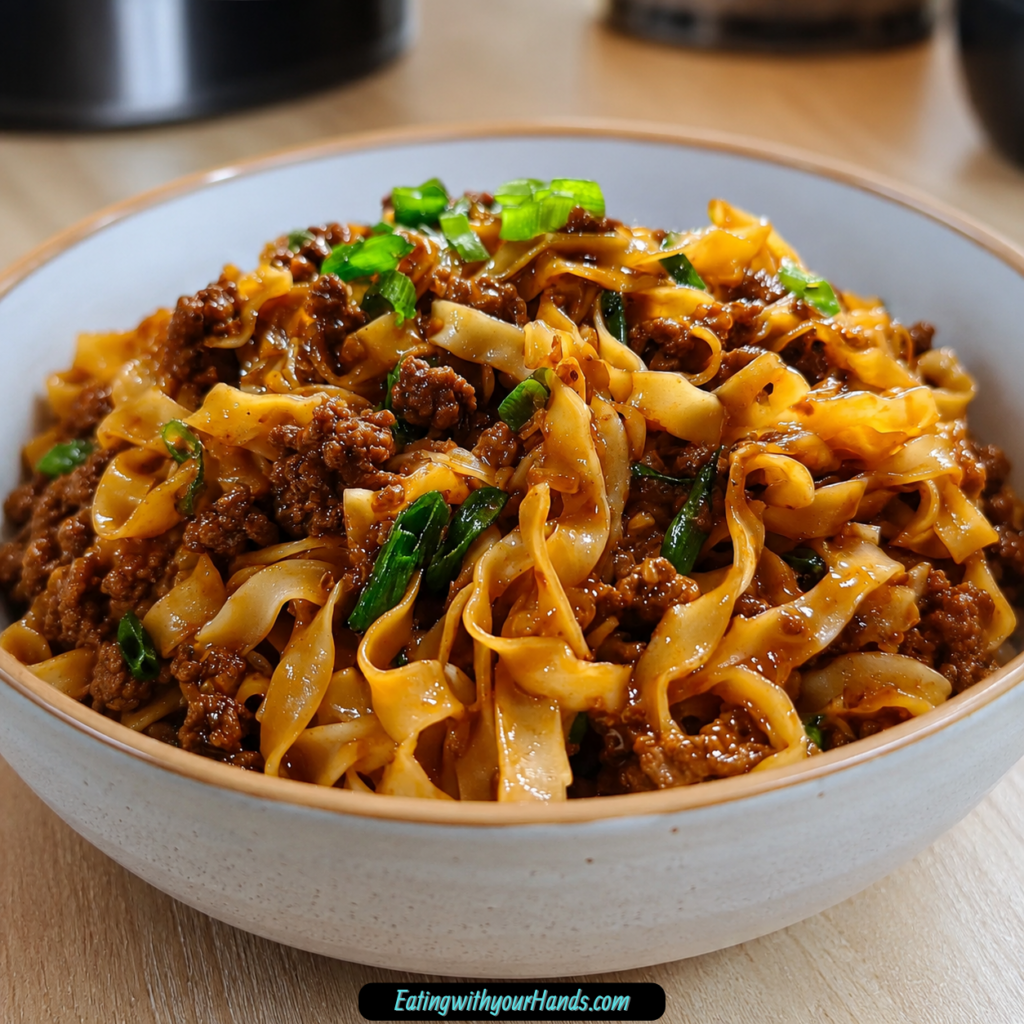
Serve Mongolian Ground Beef Noodles hot with green onions scattered over the top. The fresh green onions add color and a sharper bite that balances the rich sauce.
Sesame seeds make the bowl look finished and add a subtle crunch. Fried shallots are another great garnish if you want extra texture.
Lime wedges are optional, but a squeeze of lime can brighten the sweet-savory sauce. This is especially helpful if you add extra spice.
For a simple side, serve the noodles with steamed broccoli. The broccoli adds color and gives the meal a little freshness.
A cucumber salad also works well because it is cool and crisp. It balances the warm noodles and savory beef sauce nicely.
For casual dinners, serve everything in one big bowl. For a more styled meal, plate individually and add chopsticks for a fun dinner-at-home feel.
Storage
Store leftovers in an airtight container in the refrigerator for 3 to 4 days. Let the noodles cool before sealing them.
The flavor may become even better by the next day as the sauce settles into the noodles. The texture will soften, but the dish remains flavorful.
Keep garnishes separate if you plan to store leftovers. Green onions, sesame seeds, fried shallots, and lime are best added right before eating.
Reheating
Reheat leftovers in the microwave with a splash of water. The water helps loosen the sauce so the noodles do not become dry.
You can also reheat the noodles in a skillet over medium heat. Stir often so the noodles do not stick.
If the sauce seems too thick after chilling, add a small splash of water while reheating. This brings back a saucier texture.
Freezing
The full noodle dish is not the best freezer option because noodles can become mushy. However, the beef sauce alone freezes well.
Freeze the beef sauce for up to 2 months. Thaw overnight when ready to use.
Cook fresh noodles before serving and toss them with the reheated sauce. This gives you a better texture than freezing the finished noodle dish.
Helpful Notes for Best Results
Start with half the sriracha or red pepper flakes if you are sensitive to spice. You can always add more later.
If you do not have cornstarch, mix 1 tablespoon flour with 2 tablespoons cold water as a substitute. It will not be as glossy, but it can still thicken the sauce.
Let the beef sit undisturbed for a minute before stirring. This helps create browned, flavorful bits.
For a lighter version, use ground turkey and reduce the brown sugar by half. The dish will still be flavorful but a little lighter.
Do not skip the sesame oil at the end. It is the flavor finisher that makes the noodles taste complete.
Variations
Ground Turkey or Chicken Noodles
Ground turkey or chicken can replace the ground beef. This creates a lighter version of the dish.
Adjust the cooking time as needed. Turkey may cook faster, so watch it closely.
Crumbled Tofu Version
Crumbled tofu can be used as a meatless protein option. It works well with the same sauce.
Cook it until heated through and slightly browned before adding the aromatics. Then follow the remaining steps as written.
Vegetable-Loaded Version
Add bell peppers, shredded carrots, or snap peas with the beef. These vegetables add crunch, color, and freshness.
Cook them until they are tender but still have some texture. Then continue with the sauce and noodles.
Gluten-Free Version
Use tamari instead of soy sauce. Pair it with rice noodles for a gluten-free noodle option.
Zucchini noodles can also be used. If using zucchini noodles, skip boiling and toss them directly into the skillet.
Extra Spicy Version
Double the sriracha or add a diced jalapeño with the garlic. This gives the noodles a stronger heat.
Serve with extra lime to cool and brighten the dish. Lime helps balance the spice.
Troubleshooting
Why Is My Sauce Too Thick?
The sauce may have simmered too long or the heat may have been too high. Add a splash of water to loosen it.
Stir well after adding water. The sauce should return to a glossy, pourable texture that coats the noodles.
Why Is My Sauce Too Thin?
The sauce may need more simmering time. Let it cook a little longer so the cornstarch can thicken it.
If needed, mix a little more cornstarch with water and stir it in. Simmer briefly until the sauce thickens.
Why Did My Noodles Stick Together?
The noodles may have sat too long after draining. Toss them with a little oil if they need to wait.
When adding them to the skillet, toss gently but thoroughly. The sauce will help separate them once it coats the noodles.
Why Does My Garlic Taste Bitter?
The garlic may have burned. Garlic cooks quickly and can turn bitter if left too long over high heat.
Cook the garlic, ginger, and green onions for only 1 to 2 minutes. Stir often during that step.
Frequently Asked Questions
Can I Use Different Noodles?
Yes, lo mein, rice noodles, or spaghetti all work well. Cook whichever noodles you choose according to the package instructions.
Wide noodles are ideal because they hold the sauce nicely. Spaghetti is a practical option if that is what you have.
Can I Freeze This Dish?
Freezing works best for the beef sauce alone. Store it for up to 2 months.
Cook fresh noodles when ready to serve. This gives the best texture because frozen noodles can become mushy.
What If My Sauce Is Too Thick or Thin?
If the sauce is too thick, add a splash of water. Stir until it loosens.
If the sauce is too thin, let it simmer a bit longer. You can also mix a little more cornstarch with water and stir it in.
Can I Make It Spicier?
Yes, add more sriracha or red pepper flakes. You can also add diced jalapeño with the garlic.
Start small if you are unsure. It is easier to add heat than to remove it.
Can I Add Vegetables?
Yes, bell peppers, shredded carrots, and snap peas are all suggested options. Add them with the beef so they cook into the dish.
Steamed broccoli or cucumber salad can also be served on the side. These make the meal feel more balanced.
Can I Use Regular Soy Sauce?
Yes, regular soy sauce can be used. The original notes suggest going easy on salt later if using regular soy sauce.
Low-sodium soy sauce gives you better control of the final saltiness. Either option works.
Can I Make This Ahead?
You can prepare the beef sauce ahead and store it. For the best texture, cook fresh noodles when ready to serve.
Leftover fully mixed noodles also keep in the refrigerator for 3 to 4 days. Reheat with a splash of water.
Why This Recipe Works for Busy Weeknights
This recipe is built around speed and flavor. Ground beef cooks quickly, the sauce is whisked in a small bowl, and the noodles are tossed in at the end.
There is no long marinating time or complicated prep. The aromatics cook in 1 to 2 minutes, and the sauce thickens in 2 to 3 minutes.
That means dinner can come together quickly while still tasting rich and satisfying. It gives you a takeout-style bowl without waiting for delivery.
It is also flexible enough to handle whatever the kitchen looks like that night. Different noodles, extra vegetables, a lighter protein, or more spice can all work.
That flexibility is what makes it a repeat recipe. It fits into real life, where dinner needs to be fast but still worth sitting down for.
Final Thoughts
Savory Mongolian Ground Beef Noodles are the kind of dinner that turns simple ingredients into something bold, comforting, and memorable. With ground beef, noodles, garlic, ginger, green onions, soy sauce, brown sugar, hoisin sauce, sriracha or red pepper flakes, cornstarch, water, and sesame oil, the recipe creates a glossy sweet-savory sauce that coats every bite.
The method is simple enough for a weeknight. Cook the noodles, brown the beef for 5 to 7 minutes, add the aromatics for 1 to 2 minutes, simmer the sauce for 2 to 3 minutes, then toss everything together and finish with sesame oil.
It is quick, pantry-friendly, customizable, and satisfying. Serve it with sesame seeds, fried shallots, lime wedges, steamed broccoli, or cucumber salad, and you have a meal that feels fresh, cozy, and complete.
Whether you make it for a busy family dinner, a lazy weekend bowl, leftovers for lunch, or a takeout craving at home, this recipe delivers big flavor without a complicated process. It is saucy, savory, slightly sweet, gently spicy, and easy to come back to again and again.
Mongolian Ground Beef Noodles
These Mongolian ground beef noodles combine tender noodles with savory beef and a glossy, flavor-packed sauce. Soy sauce, hoisin, brown sugar, garlic, ginger, and sesame oil create a satisfying balance of salty, sweet, spicy, and aromatic flavors. Ready in just 25 minutes, this quick noodle dish is a practical choice for busy weeknight dinners when you want something comforting and full of flavor.
Recipe Details
- Prep Time: 10 minutes
- Cook Time: 15 minutes
- Total Time: 25 minutes
- Course: Dinner
- Cuisine: Asian
- Servings: 4 servings
Equipment
- Large skillet or wok
- Pot for boiling noodles
- Mixing bowl
Ingredients
For the Noodles
- 8 oz wide noodles (lo mein, rice noodles, or spaghetti)
For the Beef
- 1 lb ground beef (80/20 or 85/15)
- 1 tablespoon vegetable oil for cooking
For the Sauce
- ¼ cup low-sodium soy sauce
- 2 tablespoon brown sugar
- 2 tablespoon hoisin sauce
- ½ teaspoon sriracha or red pepper flakes adjust to taste
- 1 teaspoon cornstarch
- ½ cup water
- 3 cloves garlic minced
- 1 tablespoon fresh ginger grated
- 4 green onions sliced (reserve some for garnish)
- 1 teaspoon sesame oil
Optional Garnishes
- sesame seeds
- fried shallots
- lime wedges
Instructions
Step 1: Cook the Noodles
Prepare the noodles according to the package instructions. Drain them well and set them aside.
Step 2: Brown the Ground Beef
Heat the vegetable oil in a large skillet or wok over medium-high heat.
Add the ground beef and cook until browned, breaking it into small pieces as it cooks.
Step 3: Add the Aromatics
Stir in the minced garlic, grated ginger, and sliced green onions, reserving some of the green onions for garnish.
Cook for 1-2 minutes, or until fragrant.
Step 4: Mix the Mongolian Sauce
In a mixing bowl, whisk together the low-sodium soy sauce, brown sugar, hoisin sauce, sriracha or red pepper flakes, cornstarch, and water.
Continue whisking until the cornstarch is fully incorporated.
Step 5: Thicken the Sauce
Pour the prepared sauce into the skillet with the ground beef.
Stir well and simmer for 2-3 minutes, or until the sauce thickens.
Step 6: Coat the Noodles
Add the cooked noodles to the skillet. Toss until the noodles and beef are evenly coated with the Mongolian sauce.
Step 7: Finish and Garnish
Drizzle the noodles with sesame oil.
Garnish with the reserved green onions and add sesame seeds, fried shallots, or lime wedges, if desired.
Notes
Adjust the level of heat by adding more or less sriracha or red pepper flakes according to your preference.
Serving Suggestions
- Serve with steamed or stir-fried vegetables.
- Pair with a crisp cucumber salad.
- Add a side of egg rolls or spring rolls.
- Serve with lime wedges for a brighter finish.
- Top with sesame seeds and fried shallots for extra texture.
Storage
How to Store
Allow the noodles to cool, then transfer them to an airtight container and refrigerate.
How to Reheat
Reheat the noodles in a skillet or microwave until warmed through. Stir well so the sauce coats the noodles evenly again.
Best Texture Tip
Avoid overcooking the noodles before adding them to the skillet. Slightly firm noodles hold their shape better when tossed with the warm sauce.

Fernando is the creator and writer behind the food blog Eating with your Hands. Living and working in cities like Paris, Barcelona, and Berlin, and being married to a Canadian foodie, has given Fernando a passion and interest in food and inspired him to run EWYH.