
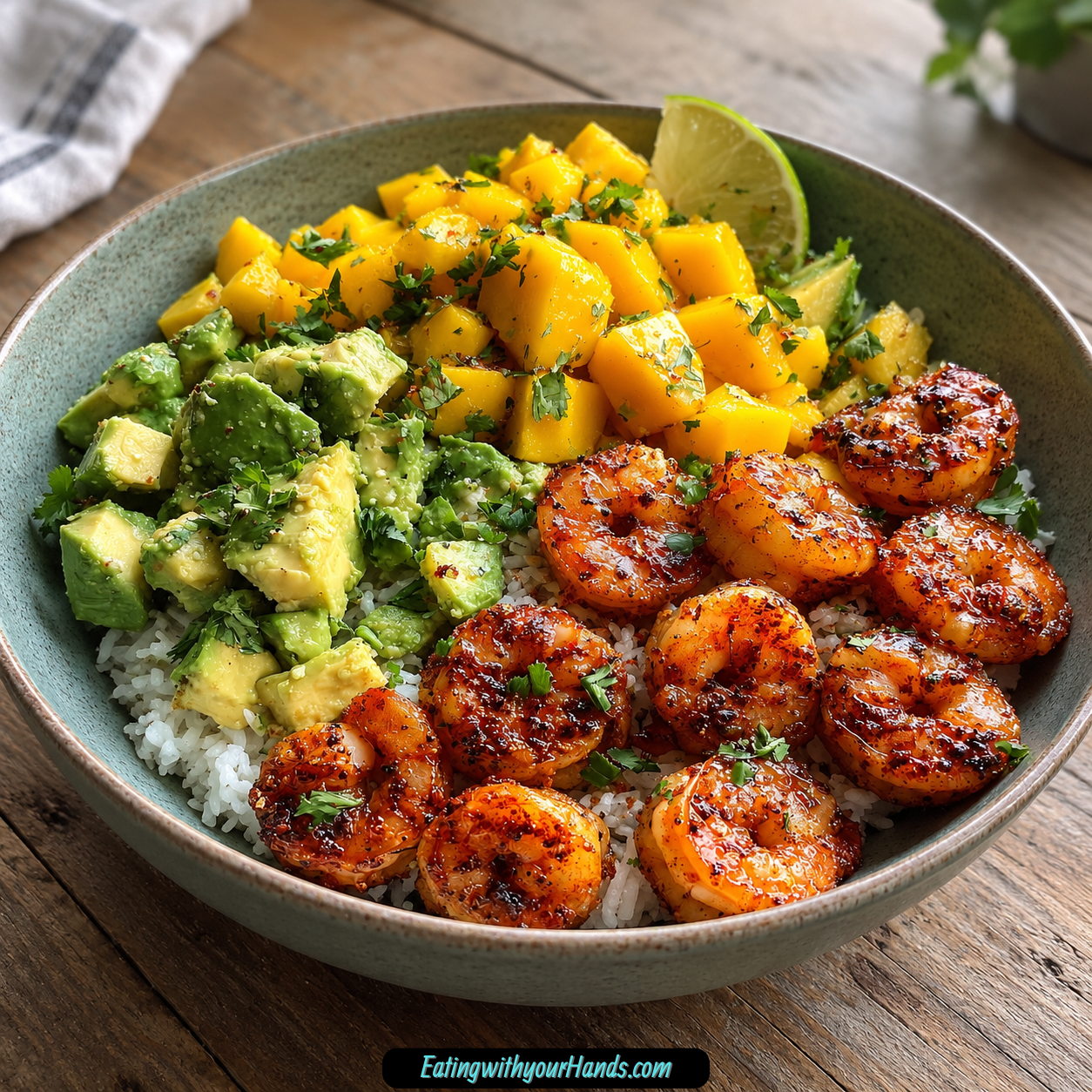

Some meals feel tied to a season before you even take the first bite. For me, these Shrimp Avocado Mango Bowls taste unmistakably like summer: juicy shrimp, creamy avocado, sweet mango, fresh lime, cilantro, and just enough heat from jalapeño to keep every forkful interesting.
I first stumbled into this combination during a beach trip when I was craving something light but still substantial enough to count as a real meal. I wanted freshness, but I also wanted enough protein and texture that I would not be hungry again an hour later.
Shrimp ended up being the answer. Once I paired it with ripe mango and avocado, the whole bowl suddenly made sense.
The shrimp brought savory flavor and a little spice, the mango added sweetness, and the avocado gave every bite a buttery softness. Lime brightened everything so the bowl never felt heavy.
That first version turned into one of my favorite lunches. Now, whenever I want something colorful, fast, and refreshing, this is the kind of meal I reach for.
Another reason I love it is the contrast. Warm shrimp sits beside cool avocado and mango, tender grains or quinoa create the base, red onion gives a sharper bite, and cilantro makes the entire bowl feel fresher.
Nothing about the recipe is complicated, yet the final bowl looks and tastes like something you would happily order while sitting somewhere warm. That is probably why I still think of it as vacation food without needing the airfare.
The recipe is also wonderfully quick. In about 25 minutes, you can go from separate ingredients to a complete bowl filled with color, texture, and plenty of flavor.
Table of Contents
- Why Shrimp Avocado Mango Bowls Work So Well
- Ingredients for Shrimp Avocado Mango Bowls
- Choosing the Shrimp
- Picking the Right Avocados
- Choosing Mangoes
- Preparing the Red Onion
- Cilantro and Jalapeño
- The Rice or Quinoa Base
- How to Make Shrimp Avocado Mango Bowls
- Step 1: Cook the Rice or Quinoa
- Step 2: Prepare the Shrimp
- Step 3: Season the Shrimp
- Step 4: Heat the Skillet
- Step 5: Add the Shrimp Without Crowding
- Step 6: Cook the First Side
- Step 7: Flip and Finish the Shrimp
- Step 8: Let the Shrimp Cool Slightly
- Step 9: Dice the Mangoes
- Step 10: Dice the Avocados
- Step 11: Add the Red Onion
- Step 12: Add Cilantro and Jalapeño
- Step 13: Add Lime Juice
- Step 14: Fold the Avocado-Mango Mixture Gently
- Step 15: Make the Lime Dressing
- Step 16: Adjust the Dressing
- Step 17: Build the Base Layer
- Step 18: Add the Shrimp
- Step 19: Add the Avocado-Mango Mixture
- Step 20: Drizzle With Dressing
- How to Cook Shrimp Without Making Them Rubbery
- Why Pan Crowding Matters
- Keeping the Avocado Mixture Chunky
- Controlling the Jalapeño Heat
- Variations for Shrimp Avocado Mango Bowls
- Serving Suggestions
- Make-Ahead Tips
- Using Frozen Shrimp
- Storage
- Reheating the Shrimp
- What About the Rice?
- Frequently Asked Questions
- Can I use frozen shrimp?
- What can I use if mangoes are unavailable?
- Can I prepare the bowl ahead?
- How do I stop the avocado from browning?
- How spicy are these bowls?
- Can I use quinoa instead of rice?
- How do I know when the shrimp are done?
- Why should I let the shrimp cool before assembling?
- How do I make the dressing sweeter or more tart?
- Nutritional Information
- The Bowl That Still Tastes Like a Beach Trip
- 25-Minute Shrimp Avocado Mango Bowls
Why Shrimp Avocado Mango Bowls Work So Well
The biggest strength of this recipe is balance. Every major ingredient brings something different, which means the bowl never depends on one flavor to carry the meal.
Shrimp gives the dish its savory center. It cooks quickly, takes on the chili powder, cumin, garlic powder, salt, and black pepper easily, and provides a substantial contrast to the fresh fruit.
Mango brings sweetness. That sweetness works particularly well beside lime and jalapeño because the bowl moves back and forth between tropical, tangy, savory, and gently spicy.
Avocado is what makes the texture feel creamy without needing a heavy sauce. The pieces stay soft and rich while the mango remains juicy and the onion provides a firmer bite.
Then there is the lime. It appears in the avocado-mango mixture and in the dressing, connecting the different parts of the bowl with the same bright citrus flavor.
The base gives you flexibility. Use 2–3 cups cooked rice or quinoa according to preference, with jasmine rice being one favorite option.
That means the bowl can feel slightly different depending on the day while keeping the same shrimp, avocado, mango, and lime combination at the center.
Ingredients for Shrimp Avocado Mango Bowls
The fresh ingredients are the heart of the recipe, so choose produce that is ripe but still easy to dice and handle.
- 1 pound shrimp, peeled and deveined
- 2 ripe but firm avocados, diced
- 2 ripe mangoes, diced
- ¼ cup red onion, finely diced
- ¼ cup cilantro, chopped
- Juice of 2–3 limes
- ½ to 1 jalapeño, seeded and minced, optional
- 2–3 cups cooked rice or quinoa
- 1 tablespoon olive oil, for cooking the shrimp
The shrimp are seasoned with:
- Chili powder
- Cumin
- Garlic powder
- Salt
- Black pepper
The dressing contains:
- Olive oil
- Lime juice
- Honey
- Salt
- Pepper
Exact quantities for the shrimp seasonings and dressing ingredients are not specified, so season and balance them according to the flavor you want while preserving the sweet-tart character described here.
Choosing the Shrimp
Use 1 pound peeled and deveined shrimp. Medium-size shrimp are the preferred choice.
If using frozen shrimp, thaw them before cooking. They can be left in the refrigerator overnight or thawed under cold running water.
Once thawed, pat the shrimp very dry. Excess water works against browning and can make the pan steam instead of giving you the light sear you want.
Dry shrimp also hold seasoning more effectively. That helps the chili powder, cumin, garlic powder, salt, and black pepper cling to the surface instead of sliding off with moisture.
Picking the Right Avocados
The recipe calls for 2 avocados that are ripe but still firm.
You want them to give slightly under gentle pressure without feeling soft or mushy. Overripe avocado can fall apart as soon as you combine it with the mango and lime.
That matters because this mixture is meant to stay chunky. The avocado should remain in distinct pieces rather than turning into guacamole.
A firmer ripe avocado also gives the bowl better contrast. You still get that creamy texture, but the pieces hold their shape next to the diced mango and onion.
Choosing Mangoes
Use 2 ripe mangoes.
One simple way to judge ripeness is to smell near the stem end. A sweet aroma is a good sign that the fruit is ready.
The mango should be ripe enough to taste juicy and sweet but firm enough to dice cleanly.
Try to cut the mango into pieces similar in size to the avocado. This makes it easier to get a little of everything in each bite.
Preparing the Red Onion
Use ¼ cup finely diced red onion.
The onion brings a sharper, more savory note that balances both the mango and avocado.
If raw onion tastes too strong for you, soak the diced pieces in cold water before adding them to the bowl.
That simple step can mellow the bite while preserving the crisp texture.
Cilantro and Jalapeño
The recipe uses ¼ cup chopped cilantro.
The stems can be included along with the leaves for additional flavor.
For heat, use ½ to 1 jalapeño, seeded and minced.
The jalapeño is optional. If you are uncertain about the spice level, begin with half and add more only after tasting.
That approach is especially helpful because individual peppers can vary in intensity.
The Rice or Quinoa Base
Use 2–3 cups cooked rice or quinoa.
Jasmine rice is one favorite, but the recipe leaves the final base choice open.
Cook according to the package instructions.
Keep the seasoning relatively light because the shrimp, lime mixture, and dressing provide most of the flavor in the final bowl.
The base should support the other ingredients rather than compete with them.
How to Make Shrimp Avocado Mango Bowls
The easiest way to organize the meal is to start the rice or quinoa first, then cook the shrimp while the base is finishing. The avocado-mango mixture and dressing can be prepared while the shrimp cool slightly.
Step 1: Cook the Rice or Quinoa
Prepare 2–3 cups cooked rice or quinoa according to the package directions.
Start this step first because it may take longer than the shrimp.
Keep the base mildly seasoned. The dressing and seasoned shrimp will bring plenty of flavor later.
Once the rice or quinoa is cooked, keep it ready for assembly.
Step 2: Prepare the Shrimp
Make sure the 1 pound shrimp are peeled and deveined.
If they were frozen, thaw them first and pat them thoroughly dry.
Place the shrimp in a bowl.
A dry surface is important because it helps the seasonings stick and allows the shrimp to sear better in the pan.
Step 3: Season the Shrimp
Add chili powder, cumin, garlic powder, salt, and black pepper to the shrimp.
Toss until the seasoning is distributed over the pieces.
No exact amounts are provided, so the goal is to coat the shrimp evenly without assigning measurements that are not part of the recipe.
Make sure the seasoning reaches all sides rather than collecting in the bottom of the bowl.
Step 4: Heat the Skillet
Place a skillet over medium heat.
Add 1 tablespoon olive oil.
Let the oil heat until it begins to shimmer.
That visual cue tells you the pan is ready for the shrimp.
Avoid adding the shrimp to cold oil because they are more likely to release moisture before they begin cooking properly.
Step 5: Add the Shrimp Without Crowding
Place the seasoned shrimp in the skillet.
Do not pack them tightly together.
If necessary, cook in two batches so each shrimp has enough contact with the hot pan.
The shrimp should sizzle when they touch the oil.
Crowding can lower the pan temperature and encourage steaming rather than browning.
Step 6: Cook the First Side
Let the shrimp cook for about 2–3 minutes on the first side.
Avoid moving them constantly.
Giving them a little uninterrupted time helps the seasoning stay in place and allows the exterior to cook evenly.
Watch the color begin changing from translucent toward opaque.
Step 7: Flip and Finish the Shrimp
Turn the shrimp and cook the other side for another 2–3 minutes.
They should become opaque and curl into a “C” shape.
Watch them closely because shrimp cook very quickly.
The goal is tender shrimp rather than rubbery shrimp, so remove them once they are cooked through.
Step 8: Let the Shrimp Cool Slightly
Transfer the cooked shrimp away from the hot skillet.
Let them cool slightly before building the bowls.
This small pause is useful because very hot shrimp can soften the avocado mixture and change its fresh texture.
You still want the shrimp warm or pleasantly cooled, not piping hot against the avocado.
Step 9: Dice the Mangoes
Peel and dice the 2 ripe mangoes.
Aim for pieces that are easy to pick up with a fork and similar in size to the avocado pieces you will prepare next.
Consistent pieces make the bowl more enjoyable because each bite can include several ingredients at once.
Place the diced mango in a mixing bowl.
Step 10: Dice the Avocados
Cut the 2 ripe-but-firm avocados into chunks.
Try to keep the pieces reasonably close in size to the mango.
Handle them carefully so they remain intact.
Add the avocado to the bowl with the mango.
Step 11: Add the Red Onion
Add ¼ cup finely diced red onion.
If you soaked the onion in cold water to mellow its sharpness, drain it before adding.
Scatter the onion over the mango and avocado rather than dropping it in one concentrated pile.
This helps distribute the flavor with less mixing later.
Step 12: Add Cilantro and Jalapeño
Add ¼ cup chopped cilantro.
Include the stems if you enjoy their stronger fresh flavor.
Add ½ to 1 seeded, minced jalapeño if using.
Start with the smaller amount when you want better control over the heat.
Step 13: Add Lime Juice
Squeeze lime juice over the avocado-mango mixture.
The total recipe uses juice from 2–3 limes across the fresh mixture and dressing.
The lime contributes brightness and also helps slow browning in the avocado.
Roll the limes before cutting them to help release more juice.
Step 14: Fold the Avocado-Mango Mixture Gently
Use a spatula to fold the ingredients together.
Do not stir aggressively.
The purpose is to distribute the mango, avocado, onion, cilantro, jalapeño, and lime while keeping the pieces chunky.
A heavy stirring motion can mash the avocado and change the mixture into something closer to guacamole.
Stop as soon as everything looks evenly distributed.
Step 15: Make the Lime Dressing
In a small bowl, combine olive oil, lime juice, honey, salt, and pepper.
Whisk vigorously.
The goal is to bring the oil and lime together into a more unified dressing.
Taste before using it.
The dressing should feel balanced rather than aggressively sweet or sharply sour.
Step 16: Adjust the Dressing
If the dressing tastes too sharp, add a little more honey.
If it needs more tang, add additional lime.
No exact adjustment amounts are provided, so make changes gradually and taste between them.
The final dressing should support the mango and avocado rather than overpower them.
Step 17: Build the Base Layer
Divide the cooked rice or quinoa between bowls.
Spread it across the bottom rather than creating one tight mound.
This makes it easier to distribute the toppings and dressing later.
The warm or room-temperature grain base gives the bowl its more substantial element.
Step 18: Add the Shrimp
Arrange the cooked shrimp over the rice or quinoa.
You can group them on one side or distribute them across the entire bowl.
Make sure the shrimp have cooled slightly so they do not immediately soften the fresh avocado mixture.
Their chili, cumin, garlic, salt, and pepper seasoning should provide the main savory component.
Step 19: Add the Avocado-Mango Mixture
Spoon the avocado-mango mixture over the bowls.
Try to distribute mango, avocado, onion, cilantro, and jalapeño rather than placing mostly one ingredient in each serving.
This is where the bowl gets its bright color and cool, creamy texture.
Handle the mixture gently even during serving so the avocado pieces stay intact.
Step 20: Drizzle With Dressing
Spoon or drizzle the lime dressing over the assembled bowls.
Add enough to bring the shrimp, base, and fresh ingredients together.
The bowl should taste bright rather than drenched.
Serve immediately for the best avocado texture and freshest flavor.

How to Cook Shrimp Without Making Them Rubbery
Shrimp are fast, which is exactly why they work so well in this recipe.
They need only about 2–3 minutes per side.
The visual signs matter as much as the clock. Look for opaque flesh and a curved “C” shape.
Do not keep cooking simply because you are uncertain. Once shrimp move past tender, they can quickly become firm and rubbery.
Medium heat also helps. The pan should be hot enough to sizzle, but the recipe does not call for extremely high heat.
Why Pan Crowding Matters
A crowded skillet can change the way the shrimp cook.
When too many pieces release moisture in one small space, the pan has a harder time maintaining the conditions needed for a light sear.
Cooking in two batches is completely fine.
It is better to spend a few extra minutes cooking properly spaced shrimp than to rush the entire pound into the pan at once.
Keeping the Avocado Mixture Chunky
The avocado-mango portion should have clearly defined pieces.
That is why the recipe specifically recommends folding with a spatula instead of stirring.
Start with avocados that are ripe but firm.
Then keep the mixing movements broad and gentle.
The lime helps the ingredients come together without needing a lot of physical mixing.
The end result should resemble a fresh chopped topping rather than a mashed avocado salad.
Controlling the Jalapeño Heat
The recipe allows anywhere from ½ to 1 jalapeño.
That range makes the spice level easy to control.
If you prefer a mild bowl, begin with ½.
Taste the mixture before deciding whether more is necessary.
Because the jalapeño is seeded, the heat is already easier to manage than it would be with the entire pepper used unchanged.
Variations for Shrimp Avocado Mango Bowls
This bowl is flexible enough to change according to what you have or what you are craving.
Rice or Quinoa
Use cooked rice for a softer, more familiar grain base.
Jasmine rice is one favorite.
Quinoa works when you prefer a different texture.
Keep the total cooked base within the supplied 2–3 cup range.
Add More Jalapeño
Use closer to the full jalapeño when you want a stronger spicy contrast against the mango.
Start conservatively if serving people with different heat preferences.
It is much easier to add more heat than to remove it.
Double the Shrimp
One serving idea is simply increasing the shrimp when you want the bowl to feel more substantial.
No exact doubled recipe quantities are provided for the remaining ingredients, so treat this as an optional serving preference rather than a new formal recipe ratio.
Peach Instead of Mango
Ripe peaches can replace mango when mangoes are unavailable.
They maintain the sweet fruit contrast the bowl needs.
Choose fruit ripe enough to be juicy but still easy to dice.
Pineapple Instead of Mango
Pineapple is another suggested replacement.
It keeps the tropical direction of the bowl and brings its own sweet-tart flavor.
Use it in the same role as the mango rather than adding it automatically on top of the original fruit.
Serving Suggestions
Crispy tortilla chips are one favorite accompaniment.
They are useful for scooping up the small pieces left at the bottom of the bowl.
Extra lime wedges should also be served alongside when possible.
A final squeeze immediately before eating makes the flavors feel even brighter.
For a more complete spread, add a simple side salad made with mixed greens and a light vinaigrette.
The salad keeps the meal feeling fresh rather than adding another heavy element.
And when you want something especially substantial, adding more shrimp is another easy direction.
Make-Ahead Tips
The dressing is the easiest part to prepare in advance.
It can be mixed up to 3 days ahead.
The flavor can actually improve while it sits.
Store it separately until you are ready to build the bowls.
The avocado should not be chopped far in advance.
Wait until close to serving time so it stays as fresh and green as possible.
The bowls themselves should also be assembled immediately before eating.
Using Frozen Shrimp
Frozen shrimp work well.
Thaw them overnight in the refrigerator when you have time.
For a faster method, thaw under cold running water.
After thawing, pat the shrimp extremely dry before seasoning.
This is the most important part of using frozen shrimp because excess surface water makes browning more difficult.
Then continue with the regular seasoning and cooking steps.
Storage
These bowls are at their best when freshly assembled.
If there are leftovers, keep the separate components apart whenever possible.
Cooked shrimp can be stored in an airtight container in the refrigerator for up to 2 days.
The avocado-mango mixture is best eaten the same day.
Avocado naturally changes color after cutting, even with lime added.
An extra squeeze of lime can help slow the browning, but it does not turn the mixture into a long-storage item.
Reheating the Shrimp
Reheat the shrimp gently in a pan.
The microwave is not recommended because it can make the shrimp rubbery.
Use gentle heat and stop as soon as the shrimp are warmed.
They have already been fully cooked once, so the goal is reheating rather than cooking them again.
The avocado mixture should remain cold.
What About the Rice?
The bowl does not need every component piping hot.
Room-temperature rice works well with the cool avocado-mango mixture.
That contrast can actually be pleasant because the bowl already combines different textures and temperatures.
There is no need to aggressively reheat the entire assembled meal.
Keep the ingredients separate and warm only what benefits from it.
Frequently Asked Questions
Can I use frozen shrimp?
Yes.
Thaw frozen shrimp overnight in the refrigerator or under cold running water.
Pat them thoroughly dry before seasoning.
Wet shrimp do not brown as well in the skillet.
Ripe peaches work well.
Pineapple is another suggested option.
The important thing is keeping a sweet fruit element in the bowl to balance the savory shrimp and lime.
Can I prepare the bowl ahead?
The dressing can be prepared up to 3 days in advance.
Wait to chop the avocado and assemble the bowls until close to eating.
The fresh mixture is best when made shortly before serving.
How do I stop the avocado from browning?
Lime juice helps slow browning.
An additional squeeze can be added before storage if necessary.
Even so, the avocado-mango mixture is best eaten the same day.
How spicy are these bowls?
The heat is adjustable.
Use ½ jalapeño for a milder version or increase toward 1 whole seeded jalapeño when you want more heat.
The jalapeño is optional, so it can also be omitted.
Can I use quinoa instead of rice?
Yes.
The recipe specifically allows either rice or quinoa.
Use 2–3 cups cooked base.
How do I know when the shrimp are done?
Cook for about 2–3 minutes per side over medium heat.
They should become opaque and curl into a “C” shape.
Remove them before they become overcooked and rubbery.
Why should I let the shrimp cool before assembling?
Very hot shrimp can soften the avocado and affect the fresh texture of the mango mixture.
Let them cool slightly first.
They do not need to become refrigerator-cold.
How do I make the dressing sweeter or more tart?
If the dressing tastes too sharp, add more honey.
If it needs more acidity, add additional lime juice.
Make small adjustments and taste as you go because no fixed correction amounts are specified.
Nutritional Information
The nutrition values are estimates for one generous bowl.
Per bowl:
- Calories: about 350
- Protein: 20g
- Carbohydrates: 35g
- Fat: 18g
- Fiber: 8g
The avocado and olive oil contribute much of the fat.
Shrimp provides a large portion of the protein.
Exact values can vary with ingredient sizes, the amount of rice or quinoa used, dressing quantity, and any substitutions.
The Bowl That Still Tastes Like a Beach Trip
Whenever I make these Shrimp Avocado Mango Bowls, I still think about the beach trip where the combination first came together for me. I was simply looking for something fresh and satisfying, but the first bite made the whole meal feel like more than a practical lunch.
It had everything I wanted at that moment. The shrimp made it filling, the mango tasted bright and sweet, the avocado softened each bite, and lime made the bowl feel almost impossibly fresh.
That is still the version I love most. Not complicated, not overloaded, just several strong ingredients doing very different jobs and somehow fitting together naturally.
The colors help too. Pink shrimp, golden mango, green avocado and cilantro, pale rice or quinoa, and little pieces of red onion make the bowl look as sunny as it tastes.
It is the kind of meal that never feels like a compromise between “healthy” and enjoyable. I make it because I genuinely want the combination, not because I am trying to force myself through a bowl of ingredients that are technically good for me.
The recipe also fits real life. Twenty-five minutes is enough time to cook the base, season the shrimp, chop the produce, whisk the dressing, and assemble something that feels much more thoughtful than its cooking time suggests.
Some days I use jasmine rice, other days quinoa. Sometimes I use the full jalapeño, sometimes barely half, and when mango is unavailable, peaches or pineapple can keep the sweet tropical feeling alive.
But the heart of the bowl always comes back to that same contrast I fell for during the beach trip: warm savory shrimp, cool creamy avocado, juicy fruit, lime, and just enough dressing to pull the entire thing into one bright bite.
And whenever the last pieces are gone, I understand why this meal became a regular part of my kitchen so quickly. It is simple enough for lunch, satisfying enough for dinner, and fresh enough that every bowl still feels a little like summer.
25-Minute Shrimp Avocado Mango Bowls

Fresh, colorful, and packed with sweet, savory, and zesty flavor, these Shrimp Avocado Mango Bowls combine spiced shrimp with creamy avocado, juicy mango, cilantro, red onion, and a bright lime dressing. Served over rice or quinoa, they make a vibrant fusion-style main dish that comes together in just 25 minutes.
Recipe Details
- Prep Time: 15 minutes
- Cook Time: 10 minutes
- Total Time: 25 minutes
- Course: Main Dish
- Cuisine: Fusion
- Servings: 4 servings
- Calories: 350 kcal
Ingredients
For the Shrimp
- Shrimp – 1 pound peeled and deveined
- Chili powder – 1 teaspoon
- Cumin – ½ teaspoon
- Garlic powder – ½ teaspoon
- Salt and black pepper – to taste
- Olive oil – 2 tablespoons for cooking and dressing
For the Avocado-Mango Mixture
- Avocados – 2 ripe diced
- Mangoes – 2 ripe diced
- Red onion – ¼ cup finely diced
- Cilantro – ¼ cup chopped
- Jalapeño optional – ½ to 1, seeded and minced
- Lime juice – juice of 2-3 limes
For the Dressing
- Olive oil – 2 tablespoons for dressing
- Lime juice – 1 tablespoon for dressing
- Honey or maple syrup – ½ teaspoon for dressing
- Salt and pepper – to taste for dressing
For the Bowls
- Cooked rice or quinoa – 2-3 cups
Instructions
Step 1: Prepare the Rice or Quinoa
Cook the rice or quinoa according to the package instructions.
Once cooked, set it aside while you prepare the shrimp and fresh avocado-mango mixture.
Step 2: Season the Shrimp
Place the peeled and deveined shrimp in a bowl or on a preparation surface.
Season with chili powder, cumin, garlic powder, salt, and black pepper, making sure the shrimp are evenly coated.
Step 3: Cook the Shrimp
Heat 1 tablespoon olive oil in a pan over medium heat.
Add the seasoned shrimp and cook for 2–3 minutes per side, until pink. Remove the cooked shrimp from the heat and set aside.
Step 4: Make the Avocado-Mango Mixture
In a bowl, combine the diced avocado, diced mango, finely diced red onion, chopped cilantro, and seeded minced jalapeño if using.
Gently mix so the avocado and mango keep their shape.
Step 5: Add the Lime Juice
Drizzle the juice of 2–3 limes over the avocado-mango mixture.
Toss gently until the fruit, onion, cilantro, and optional jalapeño are evenly coated.
Step 6: Prepare the Dressing
Whisk together the olive oil, 1 tablespoon lime juice, honey or maple syrup, salt, and pepper.
Mix until the dressing is well combined.
Step 7: Assemble the Bowls
Divide the cooked rice or quinoa among 4 bowls.
Top each portion with cooked shrimp and the avocado-mango mixture.
Step 8: Finish and Serve
Drizzle the prepared dressing over the assembled bowls.
Serve immediately so the avocado stays fresh and maintains its color and texture.
Notes
- Use ripe but firm avocados for best texture.
- Adjust jalapeño to your spice preference.
- Serve immediately to prevent avocado from browning.
Serving Suggestions
Serve 25-Minute Shrimp Avocado Mango Bowls immediately after assembly. The warm seasoned shrimp pairs with creamy avocado, sweet mango, fresh cilantro, red onion, optional jalapeño, and citrusy dressing for a bright combination of flavors and textures.
This recipe makes 4 servings and can be built over either cooked rice or quinoa. Use 2–3 cups depending on how much base you prefer in each bowl.
For more heat, increase the jalapeño within the listed ½-to-1 range. Use ripe but firm avocados so the pieces stay intact while tossing and assembling the bowls.
Storage
How to Store
The recipe does not provide a specific storage method or storage duration, so no exact storage time is added here.
Because the recipe specifically notes serving immediately to prevent the avocado from browning, assemble the bowls close to serving time.
Shrimp Tip
Use 1 pound peeled and deveined shrimp.
Season with chili powder, cumin, garlic powder, salt, and black pepper before cooking.
Cooking Tip
Heat 1 tablespoon olive oil in a pan over medium heat and cook the shrimp for 2–3 minutes per side, until pink.
Avocado Tip
Use 2 ripe but firm avocados, diced.
Their firmer texture helps the pieces hold together when gently mixed with the mango and lime juice.
Mango Tip
Use 2 ripe mangoes, diced, and combine them with the avocado, red onion, cilantro, and optional jalapeño.
Lime Tip
Use the juice of 2–3 limes for the avocado-mango mixture and a separate 1 tablespoon lime juice for the dressing.
Jalapeño Tip
Use ½ to 1 jalapeño, seeded and minced, if desired.
Adjust the amount within that range according to your preferred spice level.
Dressing Tip
Combine 2 tablespoons olive oil for dressing with 1 tablespoon lime juice, ½ teaspoon honey or maple syrup, and salt and pepper to taste.
Rice or Quinoa Tip
Use 2–3 cups cooked rice or quinoa.
Prepare according to the package instructions before assembling the bowls.

Fernando is the creator and writer behind the food blog Eating with your Hands. Living and working in cities like Paris, Barcelona, and Berlin, and being married to a Canadian foodie, has given Fernando a passion and interest in food and inspired him to run EWYH.