
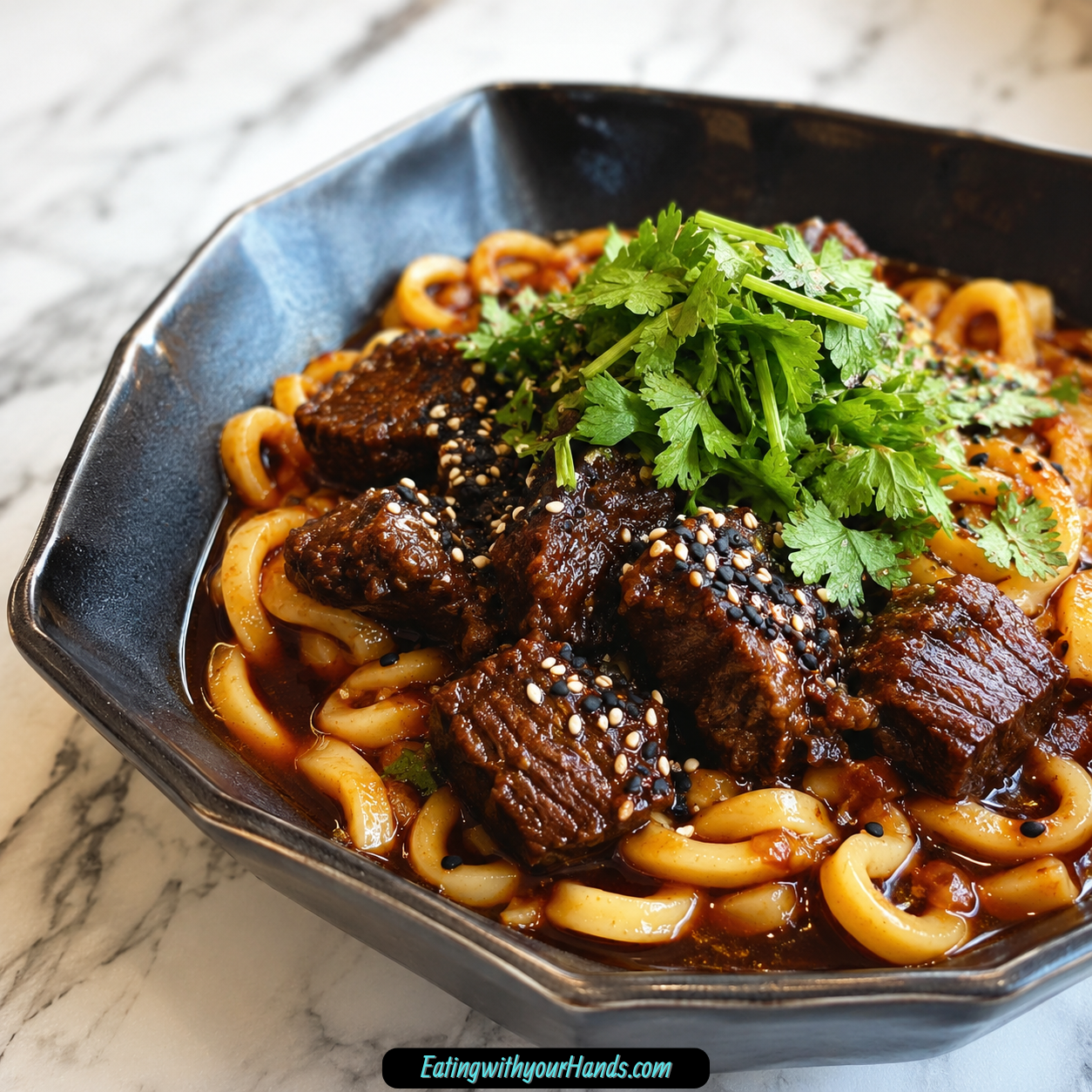
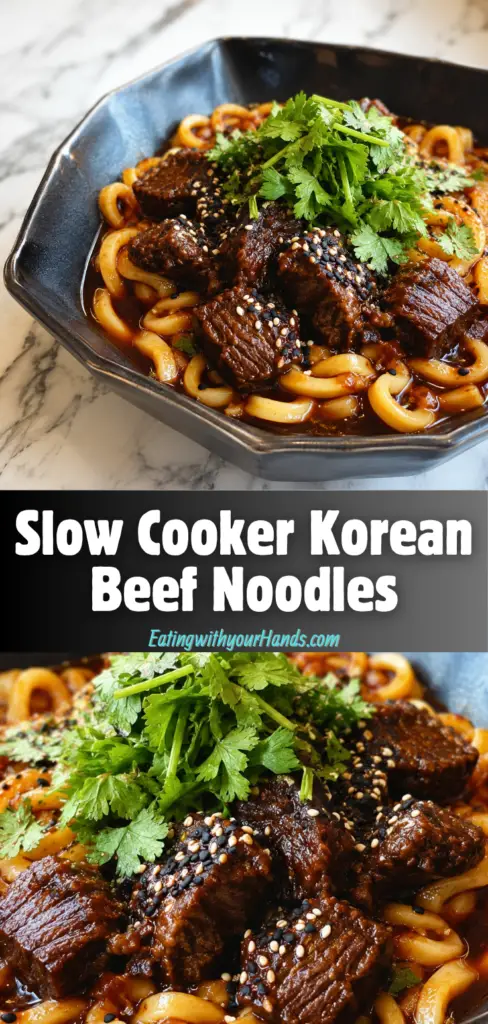
Slow Cooker Korean Beef Noodles is the kind of meal that makes a house feel warm before anyone even reaches the dinner table. The scent begins slowly, almost quietly, as onion, gochujang, soy sauce, rice vinegar, brown sugar, garlic-ginger paste, tomato paste, and beef stock settle around the beef and start turning into something deep, savory, and comforting.
This dish reminds me of the kind of chilly evening when dinner feels like more than food. It feels like a reason to gather, slow down, and let the day soften a little.
The beauty of this recipe is in the slow cooker. You do not have to stand over the stove, stir constantly, or manage several pans at once.
Instead, the beef cooks low and slow until it becomes tender enough to pull apart with a fork. The sauce grows richer as it simmers, wrapping the meat in spicy, tangy, slightly sweet flavor.
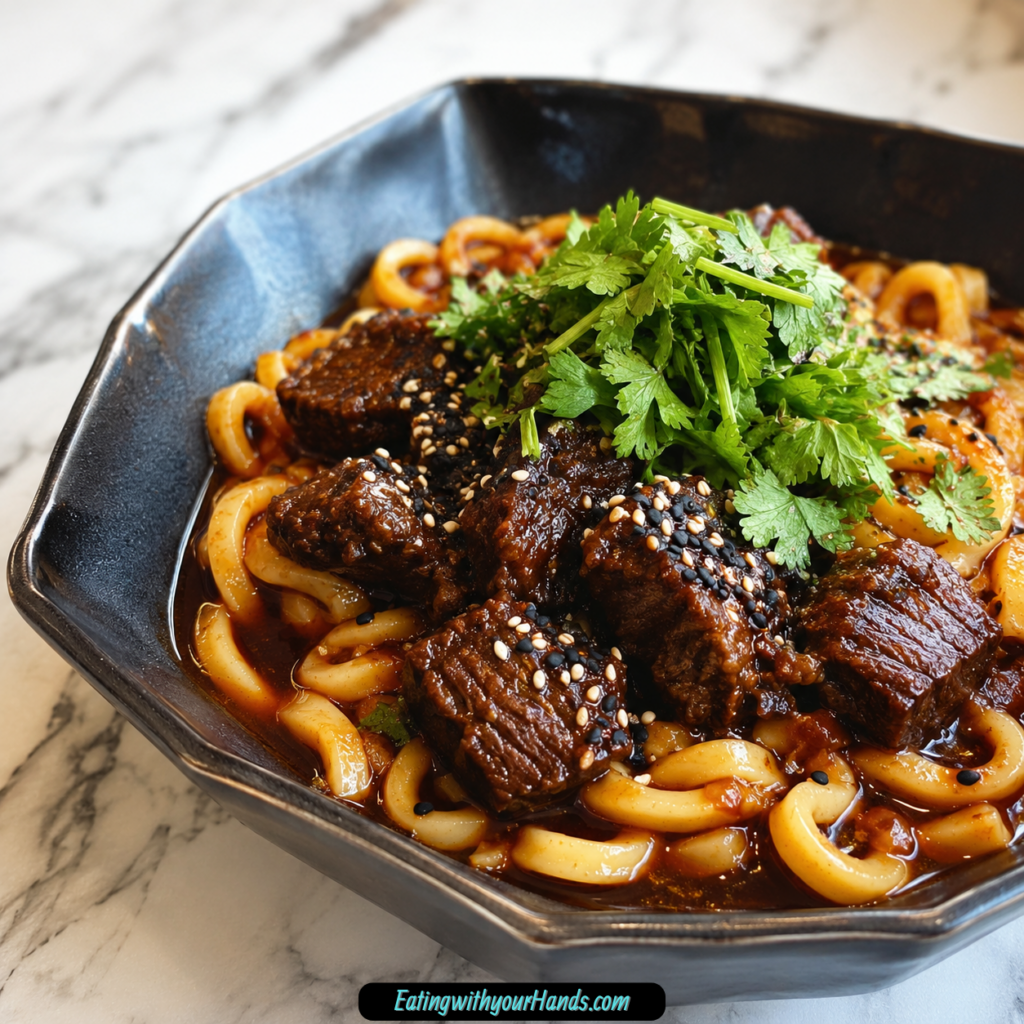
When served over chewy udon noodles, the dish becomes deeply satisfying. The noodles catch the sauce, the beef melts into every bite, and the fresh coriander and black sesame seeds add the perfect finishing touch.
This is a recipe made for busy days, cozy weekends, and family dinners where everyone wants something hearty. It feels special, but it does not ask too much from you.
Table of Contents
- What Is Slow Cooker Korean Beef Noodles?
- Recipe Overview
- Why You’ll Love Slow Cooker Korean Beef Noodles
- Ingredients You’ll Need
- Ingredient Notes
- Ingredient Spotlight: Ox Cheek
- Directions
- Step 1: Prepare Your Slow Cooker
- Step 2: Dice the Onion Finely
- Step 3: Add the Onion to the Slow Cooker
- Step 4: Add the Gochujang
- Step 5: Add the Dark Soy Sauce
- Step 6: Add the Rice Vinegar
- Step 7: Add the Brown Sugar
- Step 8: Add the Garlic-Ginger Paste
- Step 9: Add the Tomato Paste
- Step 10: Pour in the Beef Stock
- Step 11: Stir the Sauce Well
- Step 12: Taste the Aroma Before Cooking
- Step 13: Add the Ox Cheek
- Step 14: Season Lightly
- Step 15: Cover the Slow Cooker
- Step 16: Cook on Low for 8 Hours
- Step 17: Check the Beef for Tenderness
- Step 18: Pull the Beef Apart
- Step 19: Stir the Beef Back Into the Sauce
- Step 20: Adjust the Sauce if Needed
- Step 21: Cook the Udon Noodles
- Step 22: Drain and Rinse the Noodles
- Step 23: Prepare the Garnishes
- Step 24: Build the Bowls
- Step 25: Add the Final Garnish
- Pro Tips for the Best Slow Cooker Korean Beef Noodles
- Variations
- Serving and Storage Tips
- Common Mistakes
- Helpful Notes
- Frequently Asked Questions
- Final Thoughts
- Slow Cooker Korean Beef Noodles
What Is Slow Cooker Korean Beef Noodles?
Slow Cooker Korean Beef Noodles is a comforting noodle dish made with tender slow-cooked beef, a rich Korean-inspired sauce, and ready-to-use udon noodles. The beef cooks for hours in a sauce made with gochujang, dark soy sauce, rice vinegar, brown sugar, garlic-ginger paste, tomato paste, onion, and beef stock.
The result is a savory, spicy, slightly sweet beef dish that tastes rich and layered. Once the beef is tender, it is served over soft, chewy udon noodles and finished with fresh coriander and black sesame seeds.
This recipe is especially wonderful because the slow cooker does most of the work. You build the sauce, add the beef, cover the pot, and let time transform simple ingredients into a cozy, deeply flavorful meal.
It is the kind of dish that works for both weeknights and gatherings. It feels generous enough to share, but simple enough to make without stress.
Recipe Overview
Prep Time: 15 minutes
Cook Time: 8 hours
Total Time: 8 hours 15 minutes
Servings: 4 people
This recipe is mostly hands-off. The preparation takes only 15 minutes, and the slow cooker handles the long cooking process.
The beef cooks on low for 8 hours until tender. About 15 minutes before serving, the udon noodles are prepared separately so they stay soft and chewy instead of becoming mushy.
Why You’ll Love Slow Cooker Korean Beef Noodles
It Is Simple Enough for Beginner Cooks
This recipe does not require advanced cooking skills. You simply mix the sauce in the slow cooker, add the beef, and let everything cook slowly.
Because the slow cooker does the heavy lifting, it is a great recipe for anyone who wants a flavorful homemade meal without complicated steps. Even if you are not confident in the kitchen, this dish is very approachable.
The Slow Cooker Builds Deep Flavor
Slow cooking gives the beef time to absorb the sauce. The onion softens, the gochujang melts into the liquid, and the tomato paste adds a deeper savory note.
Over the hours, the sauce becomes rich and fragrant. It tastes like something that has been carefully tended, even though most of the cooking time is completely hands-off.
It Feels Cozy and Satisfying
The combination of tender beef and chewy udon noodles makes this dish incredibly comforting. Every bowl feels warm, hearty, and full of texture.
The sauce is bold but balanced. It has spice from the gochujang, richness from the beef, sweetness from the brown sugar, and brightness from the rice vinegar.
It Uses a Short List of Flavorful Ingredients
You do not need a long shopping list to make this dish feel special. A few strong ingredients create the entire flavor base.
Gochujang, dark soy sauce, garlic-ginger paste, tomato paste, and beef stock come together beautifully. Each one has a clear role in the final sauce.
It Is Great for Family Dinners
This is the kind of dish that naturally brings people to the table. It is warm, fragrant, saucy, and easy to serve in generous bowls.
The beef and noodles make it filling, while the garnishes keep it fresh and inviting. It is perfect for chilly evenings, relaxed weekends, or cozy gatherings.
It Can Be Made Ahead
The beef and sauce can be prepared ahead and reheated later. This makes it a helpful recipe for busy weeknights.
For the best texture, cook the noodles fresh right before serving. That way, the beef stays rich and tender while the noodles stay chewy and pleasant.
Ingredients You’ll Need
For the Sauce
1 large onion, finely diced
2 tablespoons gochujang
2 tablespoons dark soy sauce
2 tablespoons rice vinegar
1 tablespoon light brown sugar, packed
1 tablespoon garlic-ginger paste
1 tablespoon tomato paste
3.5 oz low-sodium beef stock
For the Beef
14 oz ox cheek
For the Noodles
4 pouches ready-to-use udon noodles
For Garnish
1 to 2 tablespoons fresh coriander, chopped
1 tablespoon black sesame seeds
To Taste
Kosher salt
Black pepper
Ingredient Notes
Onion
The finely diced onion creates the base of the sauce. As it cooks slowly, it softens into the liquid and adds gentle sweetness.
Because it is diced finely, it blends into the sauce instead of standing out in large pieces. This helps the final dish feel smooth and well balanced.
Gochujang
Gochujang is the ingredient that gives the sauce warmth and character. It brings spice, depth, and a rich red color.
Two tablespoons give the dish a noticeable kick without overwhelming the beef. If you want the dish spicier, you can add more gochujang or use extra spice in the variations.
Dark Soy Sauce
Dark soy sauce adds deep color and savory flavor. It helps create the rich, glossy look of the sauce.
Because dark soy sauce has a stronger presence than lighter soy sauce, it gives the dish a more intense, rounded flavor. It works beautifully with the beef and gochujang.
Rice Vinegar
Rice vinegar adds brightness and tang. Without it, the sauce could feel too heavy.
The vinegar balances the sweetness of the brown sugar and the richness of the beef. It keeps each bite lively and flavorful.
Light Brown Sugar
Packed light brown sugar rounds out the sauce. It softens the heat from the gochujang and balances the salty soy sauce.
The sweetness is not meant to overpower the dish. It simply helps the sauce taste fuller and more harmonious.
Garlic-Ginger Paste
Garlic-ginger paste adds aromatic warmth. It brings a little zing and helps the sauce feel more layered.
This ingredient works especially well in slow cooker recipes because the flavor has time to spread through the sauce and into the beef.
Tomato Paste
Tomato paste intensifies the savory side of the dish. It adds body, color, and depth.
A small amount goes a long way. One tablespoon helps the sauce taste richer without making it taste like tomato sauce.
Low-Sodium Beef Stock
Beef stock gives the sauce enough liquid to cook the ox cheek properly. It also adds savory depth.
Using low-sodium stock helps you control the salt level. Since dark soy sauce is already salty, this keeps the final dish balanced.
Ox Cheek
Ox cheek is the star protein of this recipe. It has rich flavor and becomes incredibly tender when cooked slowly.
This cut benefits from long, gentle cooking. After 8 hours on low, it should be soft enough to pull apart with a fork.
If ox cheek is not available, oxtail, short ribs, or chuck roast can be used. These cuts also become tender and flavorful in the slow cooker.
Udon Noodles
Ready-to-use udon noodles make this recipe easier and quicker at serving time. They have a soft, chewy texture that pairs beautifully with the rich beef sauce.
The noodles should be cooked separately near the end. This prevents them from becoming overcooked in the slow cooker.
Fresh Coriander
Fresh coriander brightens the finished dish. It adds color and a fresh herbal note.
Because the sauce is rich, the coriander gives the bowl a lighter finish. Add it right before serving for the best flavor.
Black Sesame Seeds
Black sesame seeds add a little crunch and visual contrast. They make the dish look more complete and inviting.
A small sprinkle is enough. They add texture without distracting from the beef and noodles.
Ingredient Spotlight: Ox Cheek
Ox cheek is what makes this dish feel especially rich and comforting. It is a flavorful cut that becomes beautifully tender when cooked low and slow.
At the beginning, it may seem like a simple piece of beef. After hours in the slow cooker, it transforms into meat that pulls apart easily and absorbs the sauce deeply.
The texture is one of the best parts of the dish. It becomes soft, tender, and full of savory flavor.
Because ox cheek has such a strong relationship with slow cooking, it is ideal for this recipe. It needs time, but the slow cooker gives it exactly what it needs.
If you cannot find ox cheek, there is no need to skip the recipe. Oxtail, short ribs, or chuck roast can create a similarly comforting result.
Each substitute brings its own texture and richness. The key is choosing a cut that becomes tender during long cooking.
Directions
Step 1: Prepare Your Slow Cooker
Place your slow cooker on a stable surface and make sure the insert is clean and dry. This recipe starts directly in the slow cooker, so you do not need a separate saucepan for the sauce.
Have a spoon or spatula ready for mixing. Since the sauce ingredients are thick and flavorful, you want to stir them well before adding the beef.
Step 2: Dice the Onion Finely
Take 1 large onion and dice it finely. Smaller pieces are best because they soften into the sauce as the beef cooks.
The onion forms the base of the dish. It adds sweetness, aroma, and body without overpowering the Korean-inspired sauce.
Step 3: Add the Onion to the Slow Cooker
Place the finely diced onion into the bottom of the slow cooker. Spread it out so it covers the base evenly.
This helps the onion cook directly in the sauce. As the beef sits on top, the onion flavors the liquid from underneath.
Step 4: Add the Gochujang
Spoon 2 tablespoons of gochujang into the slow cooker. Gochujang is thick, so use the back of the spoon to help loosen it into the other ingredients later.
This ingredient gives the sauce warmth, spice, and a bold red color. It is one of the main flavor builders in the recipe.
Step 5: Add the Dark Soy Sauce
Pour in 2 tablespoons of dark soy sauce. This gives the sauce a deep savory flavor and rich color.
Dark soy sauce also helps the beef take on a beautiful glossy look as it cooks. It blends especially well with the gochujang and brown sugar.
Step 6: Add the Rice Vinegar
Add 2 tablespoons of rice vinegar to the slow cooker. This brings a bright, tangy note to the sauce.
The vinegar helps balance the rich beef and the sweetness of the brown sugar. It keeps the dish from feeling too heavy.
Step 7: Add the Brown Sugar
Measure 1 tablespoon of packed light brown sugar and add it to the sauce mixture. The sugar should be packed so the measurement is accurate.
Brown sugar softens the heat of the gochujang and rounds out the salty soy sauce. It gives the sauce a gentle sweetness that works beautifully with beef.
Step 8: Add the Garlic-Ginger Paste
Add 1 tablespoon of garlic-ginger paste. This ingredient brings aromatic flavor and a warm, savory zing.
Garlic and ginger are important because they brighten the sauce while still keeping it cozy. As they slow cook, they blend into the beef stock and season the meat.
Step 9: Add the Tomato Paste
Add 1 tablespoon of tomato paste to the slow cooker. Tomato paste adds depth and makes the sauce taste fuller.
It also helps thicken and enrich the sauce slightly. Even though the amount is small, it gives the finished dish a more rounded savory flavor.
Step 10: Pour in the Beef Stock
Add 3.5 oz of low-sodium beef stock. This gives the sauce enough liquid for slow cooking and helps carry the flavors through the beef.
Low-sodium stock is helpful because dark soy sauce already brings saltiness. You can always adjust with kosher salt at the end.
Step 11: Stir the Sauce Well
Use a spoon or spatula to stir the onion, gochujang, dark soy sauce, rice vinegar, brown sugar, garlic-ginger paste, tomato paste, and beef stock together. The sauce should look rich and cohesive.
Make sure the gochujang and tomato paste are broken up and mixed into the liquid. This helps the flavor distribute evenly during cooking.
Step 12: Taste the Aroma Before Cooking
At this stage, the sauce should already smell savory, spicy, tangy, and slightly sweet. You do not need to taste it yet because it has not cooked with the beef.
The aroma should give you a preview of the finished dish. It should feel bold but balanced.
Step 13: Add the Ox Cheek
Place 14 oz of ox cheek into the slow cooker. Nestle it into the sauce so it is mostly covered.
The beef needs contact with the sauce so it can absorb the flavors as it cooks. If needed, spoon some sauce over the top.
Step 14: Season Lightly
Add a little kosher salt and black pepper to taste. Be careful with salt at the beginning because the sauce already includes dark soy sauce.
You can always adjust the seasoning again after cooking. This helps prevent the final dish from becoming too salty.
Step 15: Cover the Slow Cooker
Place the lid on the slow cooker securely. Keeping the lid closed traps heat and moisture.
Try not to lift the lid often during cooking. Every time the lid is removed, heat escapes and the cooking process slows down.
Step 16: Cook on Low for 8 Hours
Set the slow cooker to low and cook for 8 hours. This long cooking time is what makes the ox cheek tender.
During this time, the beef slowly softens and absorbs the sauce. The onion melts down, and the flavors become deeper and more blended.
Step 17: Check the Beef for Tenderness
After 8 hours, remove the lid carefully. The beef should be tender and easy to pull apart with a fork.
If it still feels firm, it may need a little more time. Ox cheek should become soft and deeply flavorful when properly cooked.
Step 18: Pull the Beef Apart
Use two forks to gently pull the beef into tender pieces. You can do this directly in the slow cooker or transfer the beef to a plate first.
Shredding or pulling the beef helps it absorb even more sauce. The pieces should become coated and glossy.
Step 19: Stir the Beef Back Into the Sauce
If you removed the beef, return it to the slow cooker. Stir it gently through the sauce.
Make sure the beef is evenly coated. This final mixing step helps every bite taste rich and balanced.
Step 20: Adjust the Sauce if Needed
Look at the sauce texture. If you prefer a thicker sauce, you can stir in a mixture of 1 tablespoon cornstarch with water during the last 30 minutes of cooking.
If the sauce seems too thick, add a small splash of beef stock. Adjust slowly so you do not thin it too much.
Step 21: Cook the Udon Noodles
About 15 minutes before serving, prepare the 4 pouches of ready-to-use udon noodles according to the package instructions. This usually takes about 5 to 8 minutes.
Cooking the noodles separately keeps them from becoming mushy. It also gives you better control over their chewy texture.
Step 22: Drain and Rinse the Noodles
Once the udon noodles are cooked, drain them well. Rinse them briefly under cold water to stop the cooking process and prevent sticking.
This step helps the noodles stay separate and pleasant to eat. They will warm again when the hot beef and sauce are spooned over them.
Step 23: Prepare the Garnishes
Chop 1 to 2 tablespoons of fresh coriander. Measure 1 tablespoon of black sesame seeds.
Having the garnishes ready makes serving easy. They add freshness, color, and texture to the finished bowl.
Step 24: Build the Bowls
Place a generous portion of udon noodles into each serving bowl. The noodles should form the base of the dish.
Spoon the tender beef and sauce over the noodles. Let the sauce settle into the noodles so every bite becomes flavorful.
Step 25: Add the Final Garnish
Sprinkle each bowl with chopped fresh coriander and black sesame seeds. Add a little extra kosher salt and black pepper if needed.
Serve the dish warm. The beef should be tender, the noodles soft and chewy, and the sauce rich enough to coat everything beautifully.
Pro Tips for the Best Slow Cooker Korean Beef Noodles
Cook on Low for the Best Tenderness
Cooking on low for 8 hours gives the ox cheek time to soften properly. This is the best method for a melt-in-your-mouth texture.
If you are short on time, you can cook on high for about 4 to 5 hours. However, low heat gives the best tenderness.
Sear the Beef for Extra Flavor
The original method allows you to place the beef directly into the slow cooker. However, the common mistakes section notes that browning the beef first can add more flavor.
If you want a deeper taste, sear the ox cheek for a few minutes before adding it to the sauce. This step is optional but helpful.
Do Not Overcook the Noodles
Udon noodles cook quickly, especially ready-to-use pouches. Follow the package instructions closely.
Rinse them after cooking to stop them from softening further. This keeps the texture pleasant when served with the hot sauce.
Taste Before Serving
The sauce can taste different after slow cooking because the beef releases juices and the flavors deepen. Always taste before serving.
Add kosher salt and black pepper only as needed. A little final seasoning can make the whole dish feel more complete.
Freeze Beef and Sauce Separately From Noodles
If you plan to freeze leftovers, store the beef and sauce separately from the udon noodles. This helps protect the noodle texture.
The beef and sauce freeze better than cooked udon. Cook fresh noodles when you are ready to serve again.
Variations
Extra Spicy Korean Beef Noodles
Add sliced jalapeños or extra gochujang to the sauce. This gives the dish a stronger heat and a bolder finish.
Start with a small amount if you are unsure. You can always add more spice at the end.
Gluten-Free Noodle Option
Swap the udon noodles for rice noodles or zucchini noodles. This creates a lighter or gluten-free-style variation.
If using rice noodles, cook them carefully so they do not become too soft. If using zoodles, add them fresh or lightly warmed.
Vegetable-Loaded Version
Add bok choy or shiitake mushrooms during the last hour of cooking. These vegetables pair beautifully with the sauce.
They add nutrition, texture, and extra depth. Because they are added near the end, they keep more of their shape.
Shredded Beef or Pork Variation
You can try using shredded beef or pork for a different twist. The sauce works well with tender, pull-apart meats.
The key is using a cut that can handle slow cooking. It should become tender enough to absorb the sauce.
Sesame-Rich Version
Add a splash of sesame oil to the sauce for a richer flavor. Sesame oil gives the dish a nutty aroma.
Use only a small splash because sesame oil can be strong. It works best as a background flavor.
Thicker Sauce Version
Mix 1 tablespoon cornstarch with water and stir it into the sauce during the last 30 minutes of cooking. This helps the sauce become thicker.
A thicker sauce clings more heavily to the beef and noodles. This is a great option if you like a glossy, coating-style sauce.
Green Boost Version
Add spinach or kale in the last few minutes of cooking. These greens wilt quickly and add color.
This is a simple way to make the dish feel a little fresher while keeping the same comforting base.
Serving and Storage Tips
Serving
Serve Slow Cooker Korean Beef Noodles by placing the udon noodles in the bowl first. Then spoon the tender beef and sauce generously over the top.
Finish with fresh coriander and black sesame seeds. These garnishes make the bowl look beautiful and add flavor contrast.
For a complete meal, pair the noodles with steamed vegetables or a light salad. The freshness balances the rich beef sauce nicely.
This dish is best served warm. The sauce should be hot enough to coat and warm the noodles as you eat.
Storage
Store leftovers in an airtight container in the refrigerator for up to 3 days. If possible, store the beef and sauce separately from the noodles.
Keeping them separate helps prevent the noodles from soaking up too much sauce and becoming overly soft. If they are already mixed, they can still be stored, but the texture may change slightly.
Freezing
For longer storage, freeze the beef and sauce separately from the noodles for up to 1 month. Use airtight containers to protect the flavor and texture.
Thaw the beef and sauce in the refrigerator overnight before reheating. Cook fresh noodles when you are ready to serve for the best result.
Reheating
Reheat the beef and sauce gently on the stove or in the microwave. Add a splash of beef stock if the sauce has thickened too much.
Warm the noodles separately or add them at the very end. This prevents overcooking and helps them stay chewy.
Common Mistakes
Not Browning the Beef First
The recipe can be made without browning, but browning the beef first can create deeper flavor. Searing adds richness and helps the finished dish taste more developed.
If you have a few extra minutes, brown the ox cheek before adding it to the slow cooker. This step is optional but worthwhile.
Overcooking the Noodles
Udon noodles can become mushy if cooked too long. Follow the package instructions closely.
Cook them near the end of the recipe instead of adding them to the slow cooker early. This keeps their texture soft but still pleasantly chewy.
Skipping the Final Seasoning
The sauce needs to be tasted at the end. Slow cooking changes the flavor as the beef releases juices and the sauce reduces slightly.
Add kosher salt and black pepper to taste before serving. This final adjustment can make the flavors more vivid.
Not Mixing the Sauce Thoroughly
Gochujang and tomato paste are thick ingredients. If they are not mixed well, the sauce may cook unevenly.
Stir the sauce until it looks cohesive before adding the beef. This helps every bite taste balanced.
Freezing the Noodles With the Sauce
The beef and sauce freeze well, but udon noodles can lose their texture. Freezing them together may make the noodles too soft when reheated.
For best results, freeze only the beef and sauce. Prepare fresh noodles when you serve the dish again.
Helpful Notes
For richer flavor, add a small splash of sesame oil to the sauce. It gives the dish a nutty depth that pairs well with beef.
If you prefer a thicker sauce, stir in a cornstarch slurry during the last 30 minutes. Use 1 tablespoon cornstarch mixed with water.
Add spinach or kale near the end of cooking for extra nutrition. These greens wilt quickly and blend into the sauce easily.
For a dairy-free option, make sure your beef stock does not contain any dairy ingredients. The base recipe does not rely on dairy.
If ox cheek is not available, use oxtail, short ribs, or chuck roast. These cuts also become tender with long slow cooking.
If you want a gluten-free-style noodle option, use rice noodles or zoodles instead of udon. Also check sauce ingredients carefully if gluten is a concern.
Frequently Asked Questions
Can Slow Cooker Korean Beef Noodles Be Frozen?
Yes, this recipe can be frozen, but it is best to freeze the beef and sauce separately from the cooked udon noodles. This helps preserve the texture of the noodles.
Store the beef and sauce in airtight containers for up to 1 month. Thaw overnight in the refrigerator before reheating.
Can I Substitute Ox Cheek?
Absolutely. If ox cheek is not available, you can use oxtail, short ribs, or chuck roast.
These cuts work well because they become tender during slow cooking. The flavor and texture may vary slightly, but they will still be delicious.
Can I Substitute Gochujang?
Yes, if you do not have gochujang, you can try sriracha or another chili paste. The flavor will be different, but it can still bring heat and depth.
Gochujang gives the most authentic warmth for this recipe. If using another chili paste, start with less and adjust to taste.
Can I Use Different Noodles?
Yes, udon noodles can be swapped for rice noodles or zucchini noodles. Rice noodles are a good option if you want a lighter noodle texture.
Zoodles create an even lighter base. They should be added fresh or gently warmed so they do not become watery.
How Do I Store Leftovers?
Place leftovers in an airtight container and store them in the refrigerator for up to 3 days. For best texture, keep the noodles separate from the beef and sauce.
If everything is already combined, it can still be stored. Just know the noodles may soften as they sit.
Can This Recipe Be Made Ahead?
Yes, this recipe is perfect for making ahead. You can prepare the beef and sauce in advance and store them in the refrigerator until ready to cook.
You can also cook the beef and sauce ahead, then reheat and prepare the udon noodles fresh before serving. This gives the best texture.
How Can I Make the Sauce Thicker?
Mix 1 tablespoon cornstarch with water, then stir it into the sauce during the last 30 minutes of cooking. This will help the sauce thicken.
Let it cook with the lid on until the sauce becomes glossier and more coating. Stir well before serving.
What Should I Serve With This Dish?
This dish is satisfying on its own with udon noodles, beef, and sauce. For a complete meal, pair it with steamed vegetables or a light salad.
Bok choy, spinach, kale, or shiitake mushrooms can also be added to the dish itself. These options bring color and freshness.
Final Thoughts
Slow Cooker Korean Beef Noodles is the kind of recipe that turns a simple dinner into something memorable. The slow cooker gently transforms ox cheek into tender, flavorful beef, while the sauce becomes rich with gochujang, soy sauce, rice vinegar, brown sugar, garlic-ginger paste, tomato paste, onion, and beef stock.
What I love most about this dish is how comforting it feels without being complicated. You spend a short amount of time preparing the sauce and beef, then the slow cooker quietly does the rest.
By the time dinner is ready, the house smells warm, savory, and inviting. The beef is tender, the sauce is bold and cozy, and the udon noodles make every bowl feel hearty.
This is a wonderful meal for family dinners, chilly evenings, or days when you want something homemade but do not want to stand in the kitchen for hours. It is also a great make-ahead option because the beef and sauce reheat beautifully.
Serve it with fresh coriander and black sesame seeds, and each bowl feels complete. The fresh herbs brighten the richness, while the sesame seeds add just enough texture.
Whether you make it for a busy weeknight or a cozy gathering, this dish brings warmth to the table. It is simple, flavorful, and made for sharing with people you love.
Slow Cooker Korean Beef Noodles
These Slow Cooker Korean Beef Noodles are rich, savory, slightly spicy, and deeply comforting. Tender ox cheek cooks slowly in a flavorful Korean-inspired sauce made with gochujang, soy sauce, rice vinegar, brown sugar, garlic-ginger paste, tomato paste, and beef stock, then gets served over chewy udon noodles.
Recipe Information
- Prep Time: 15 minutes
- Cook Time: 8 hours
- Total Time: 8 hours 15 minutes
- Course: Dinner
- Cuisine: Korean
- Servings: 4 people
- Calories: 500 kcal
Equipment
- Slow cooker
Ingredients
For the Sauce
- 1 tablespoon tomato paste
Intensifies the savory depth of the sauce. - 2 tablespoons rice vinegar
Adds brightness and balances the richness. - 1 large onion, finely diced
Builds the flavor base for the slow-cooked sauce. - 1 tablespoon light brown sugar, packed
Rounds out the spicy, salty, and tangy flavors. - 2 tablespoons dark soy sauce
Adds deep color and bold umami flavor. - 3.5 oz low-sodium beef stock
Adds moisture and infuses the beef with flavor as it cooks. - 1 tablespoon garlic-ginger paste
Brings aromatic warmth and zing to the sauce. - 2 tablespoons gochujang
Adds Korean chili flavor, gentle heat, and savory depth.
For the Beef
- 14 oz ox cheek
The main protein, cooked low and slow until tender.
For the Noodles
- 4 pouches ready-to-use udon noodles
Quick-cooking noodles with a chewy texture.
For Garnish
- 1 tablespoon black sesame seeds
Adds crunch and visual contrast. - 1-2 tablespoons fresh coriander, chopped
Brightens the finished dish with fresh herb flavor.
To Taste
- Kosher salt and black pepper
Used to enhance and balance the final flavor.
Instructions
- Add the finely diced onion, gochujang, dark soy sauce, rice vinegar, packed light brown sugar, garlic-ginger paste, tomato paste, and low-sodium beef stock to the slow cooker.
- Stir until the sauce ingredients are well combined.
- Add the ox cheek to the slow cooker, turning it so it is coated in the sauce.
- Cover and cook on low for 8 hours, or until the beef is tender.
- Before serving, prepare the ready-to-use udon noodles according to the package instructions.
- Place the cooked udon noodles in serving bowls.
- Spoon the tender Korean-style beef and sauce over the noodles.
- Season with kosher salt and black pepper to taste.
- Garnish with chopped fresh coriander and black sesame seeds.
- Serve warm.
Notes
- Ox cheek can be replaced with oxtail, short ribs, or chuck roast.
- Add more gochujang if you prefer a spicier sauce.
- Serve with extra sesame seeds, sliced green onions, or steamed vegetables for a fuller meal.

Fernando is the creator and writer behind the food blog Eating with your Hands. Living and working in cities like Paris, Barcelona, and Berlin, and being married to a Canadian foodie, has given Fernando a passion and interest in food and inspired him to run EWYH.