
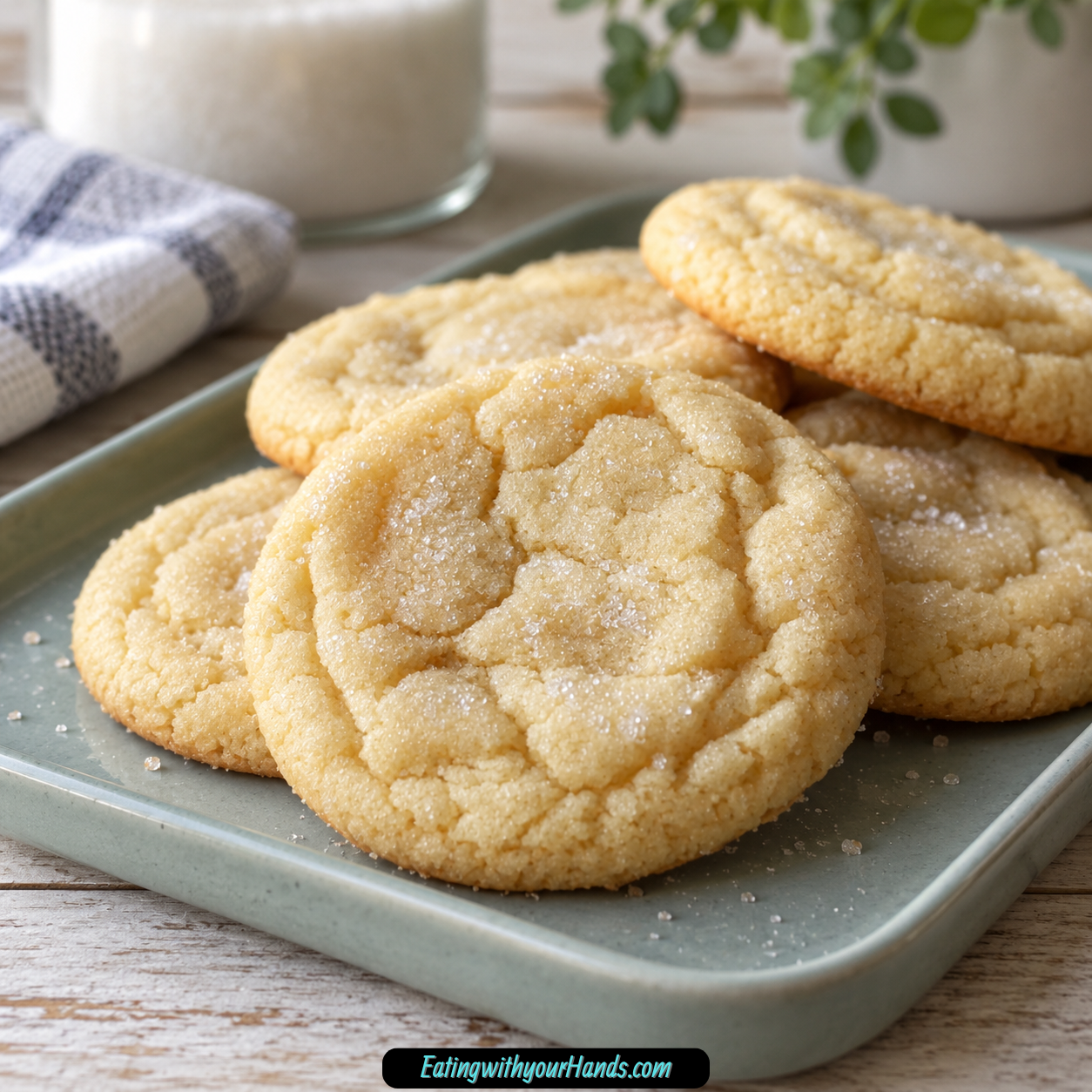

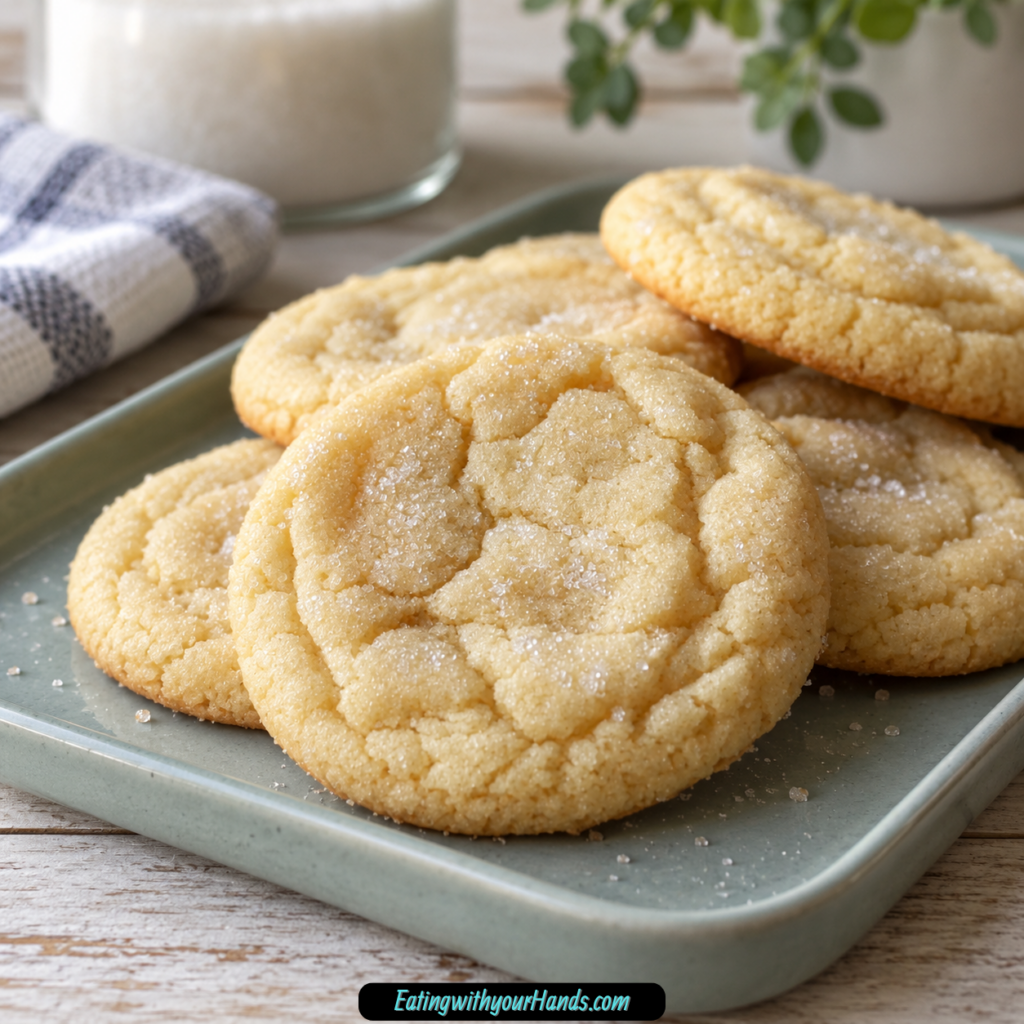
Soft and Chewy Sugar Cookies are the kind of cookie that feels simple, familiar, and deeply comforting. They are buttery, sweet, tender in the center, lightly crisp around the edges, and coated in a little granulated sugar for sparkle and a subtle crunch.
These are not the hard sugar cookies that snap when you bite them. These are the soft, slightly puffed, vanilla-scented cookies that come out of the oven looking almost too tender to touch.
There is something timeless about a sugar cookie made well. The flavor is not loud or complicated, but that is exactly what makes it so dependable.
Butter and vanilla carry the whole cookie. The dough bakes into a soft, chewy center with edges that turn just lightly golden.
This is the kind of recipe that fits almost any occasion. It belongs on holiday trays, school-event platters, weekend baking lists, and quiet afternoons when a cookie craving shows up out of nowhere.
The ingredients are easy pantry staples. Flour, baking soda, baking powder, salt, butter, sugar, egg, vanilla, milk, and extra sugar for rolling come together into a dough that is simple but incredibly satisfying.
The key is not overbaking. The cookies should come out when the edges are lightly golden but the centers still look soft, because they keep setting as they cool on the baking sheet.
You can keep them plain and classic, roll them in cinnamon sugar, add almond extract, stir in sprinkles for funfetti-style cookies, or decorate them later with icing, frosting, or a simple glaze. However you serve them, these Soft and Chewy Sugar Cookies are sweet, nostalgic, and wonderfully reliable.
Table of Contents
- Why You’ll Love These Soft and Chewy Sugar Cookies
- Recipe Details
- Ingredients
- For the Sugar Cookies
- Ingredient Notes
- Optional Swaps, Variations, Add-Ins, and Serving Ideas
- Classic Sugar-Rolled Cookies
- Thicker Sugar Cookies
- Extra Soft Sugar Cookies
- Almond Sugar Cookies
- Cinnamon Sugar Cookies
- Funfetti Sugar Cookies
- Glazed Sugar Cookies
- Frosted Sugar Cookies
- Iced Sugar Cookies
- Milk Pairing
- Coffee Pairing
- Tea Pairing
- Holiday Cookie Tray
- School Event Cookies
- Why This Recipe Works
- Directions
- Step 1: Preheat the Oven
- Step 2: Prepare the Baking Sheets
- Step 3: Mix the Dry Ingredients
- Step 4: Cream the Butter and Sugar
- Step 5: Add the Egg
- Step 6: Mix in Vanilla and Milk
- Step 7: Add the Dry Ingredients Gradually
- Step 8: Check the Dough
- Step 9: Scoop the Dough
- Step 10: Roll Into Balls
- Step 11: Roll in Sugar
- Step 12: Arrange on the Baking Sheet
- Step 13: Bake the Cookies
- Step 14: Cool on the Baking Sheet
- Step 15: Transfer to a Wire Rack
- Step 16: Serve or Decorate
- Step 17: Store the Cookies
- Step 18: Freeze or Save Dough
- Serving Ideas
- Storage
- Freezing
- Make-Ahead
- Helpful Notes for Best Results
- Variations
- Troubleshooting
- Frequently Asked Questions
- Why This Recipe Works So Well
- Final Thoughts
- Soft and Chewy Sugar Cookies
Why You’ll Love These Soft and Chewy Sugar Cookies
These cookies have soft centers with lightly crisp edges. That contrast gives them the perfect tender bite.
They have classic sugar cookie flavor that never goes out of style. Butter, vanilla, and sugar make them familiar and comforting.
They are made with easy pantry ingredients. Nothing fancy is required.
They are perfect for rolling in sugar or decorating later. You can keep them simple or dress them up for special occasions.
They are quick to make and ready in under 30 minutes. This makes them helpful for last-minute baking.
They are family-friendly and loved by kids and adults alike. Their simple sweetness makes them easy to share.
Recipe Details
Soft and Chewy Sugar Cookies bake at 375°F (190°C). The baking time is 8 to 10 minutes.
The baking sheets can be left ungreased. They can also be lined with parchment if preferred.
The cookies are ready when the edges are lightly golden and the centers still look soft. They continue to set as they cool.
After baking, the cookies cool on the baking sheet for 5 minutes. Then they are transferred to a wire rack to cool completely.
The dry ingredients are 2¾ cups all-purpose flour, 1 teaspoon baking soda, ½ teaspoon baking powder, and ¼ teaspoon salt. These are whisked together before being added to the wet ingredients.
The wet mixture starts with 1 cup softened unsalted butter and 1½ cups granulated sugar. These are beaten together until light and fluffy.
The dough also includes 1 large egg, 2 teaspoons vanilla extract, and 3 tablespoons milk. The egg binds, the vanilla adds classic flavor, and the milk keeps the dough soft.
Tablespoon-sized portions of dough are rolled into balls. Each dough ball is rolled in extra granulated sugar until fully coated.
The cookies should be placed about 2 inches apart on the baking sheet. This gives them room for gentle spreading.
For thicker cookies, the dough can be chilled for 30 minutes before baking. This helps control spreading.
Ingredients
For the Sugar Cookies
- 2 ¾ cups all-purpose flour
- 1 teaspoon baking soda
- ½ teaspoon baking powder
- ¼ teaspoon salt
- 1 cup unsalted butter, softened
- 1 ½ cups granulated sugar
- 1 large egg
- 2 teaspoons vanilla extract
- 3 tablespoons milk
- Extra granulated sugar for rolling
Ingredient Notes
All-purpose flour gives these cookies structure while keeping them tender. Too much flour can make cookies hard, so measuring carefully matters.
Baking soda helps the cookies spread just enough for that chewy texture. It works with the rest of the dough to create soft centers.
Baking powder adds a touch of lift. It helps the cookies stay soft instead of dense.
Salt balances the sweetness and enhances flavor. Even a small amount makes the cookies taste more complete.
Unsalted butter brings richness. It should be softened so it creams smoothly with the sugar.
Butter that is too cold will not cream properly. Melted butter can cause the cookies to spread too much.
Granulated sugar sweetens the cookies and helps create lightly crisp edges. It is also used for rolling the dough balls.
The egg binds the dough and adds moisture. It helps bring the cookie dough together.
Vanilla extract gives the cookies their warm, classic sugar cookie aroma. It is one of the most important flavor ingredients.
Milk keeps the dough soft and helps the cookies bake tender. It adds just enough moisture.
Extra granulated sugar for rolling gives the outside sparkle. It also adds a subtle crunch around the soft cookie.
Optional Swaps, Variations, Add-Ins, and Serving Ideas
Classic Sugar-Rolled Cookies
Roll each dough ball in granulated sugar before baking. This gives the cookies sparkle and a delicate outside crunch.
The sugar coating is simple but important. It makes the cookies look finished even without frosting.
Thicker Sugar Cookies
Chill the dough for 30 minutes before baking if you prefer thicker cookies. Chilling helps control spreading.
This is especially useful if your kitchen is warm. The cookies will bake a little puffier and thicker.
Extra Soft Sugar Cookies
Pull the cookies from the oven while the centers still look slightly underdone. They will continue to set on the baking sheet.
This is the best way to protect the soft, chewy texture. Do not wait for the centers to look fully firm.
Almond Sugar Cookies
Add almond extract for a bakery-style twist. This gives the cookies a different aroma and flavor.
Use it as a flavor variation when you want something more special. The cookies still keep their soft sugar cookie texture.
Cinnamon Sugar Cookies
Roll the dough balls in cinnamon sugar instead of plain sugar. This gives them a warmer flavor.
The cinnamon makes them feel cozy and a little more festive. It is a simple variation with a big personality.
Funfetti Sugar Cookies
Stir in sprinkles for funfetti sugar cookies. This makes the dough colorful and kid-friendly.
Sprinkles are great for birthdays, school events, or cheerful cookie trays. Fold them in gently.
Glazed Sugar Cookies
Drizzle the cooled cookies with a simple glaze for special occasions. This adds sweetness and decoration.
Let the cookies cool completely before glazing. A glaze looks best on cooled cookies.
Frosted Sugar Cookies
Top the cookies with frosting if you want a decorated version. Their soft texture makes a great base.
Frosting turns them into a celebration cookie. Use this option for holidays or parties.
Iced Sugar Cookies
Decorate the cookies with icing. They work well as a base for simple decorations.
Let the cookies cool fully before adding icing. This keeps the icing from melting.
Milk Pairing
Serve these cookies with a glass of cold milk. The milk pairs beautifully with the buttery vanilla flavor.
This is a classic serving idea. It works for kids and adults.
Coffee Pairing
Enjoy the cookies with coffee. The warm vanilla sweetness tastes lovely with a hot cup.
This pairing makes the cookies perfect for an afternoon break. Serve them slightly warm or at room temperature.
Tea Pairing
Tea is another gentle pairing. The simple cookie flavor works well beside a warm mug.
This is a lovely option for quiet afternoons. It keeps the serving light and cozy.
Holiday Cookie Tray
Add these cookies to holiday cookie trays. They pair nicely alongside chocolate chip or peanut butter cookies.
You can serve them plain, sugared, glazed, frosted, or decorated. They are endlessly versatile.
School Event Cookies
Bake these cookies for school events. They are simple, familiar, and easy to portion.
Kids and adults both enjoy them. The classic flavor makes them a dependable choice.
Why This Recipe Works
Soft and Chewy Sugar Cookies work because the dough balances structure, moisture, and sweetness. The flour gives the cookies shape, while butter, egg, and milk keep them tender.
Baking soda helps the cookies spread just enough. Baking powder adds a small lift so the cookies stay soft.
Creaming softened butter with granulated sugar creates a light base. This step helps the cookies bake with a better texture.
The egg binds the dough. Vanilla brings that classic sugar cookie aroma.
Milk keeps the dough soft. It helps create the tender texture that makes these cookies so comforting.
Rolling the dough balls in sugar gives the outside a little sparkle and crunch. It also makes the cookies look pretty without decoration.
The short bake time is essential. The cookies should be pulled when the edges are lightly golden and the centers still look soft.
Cooling on the baking sheet finishes the setting process. This protects the chewy center and keeps the cookies from turning hard.
Directions
Step 1: Preheat the Oven
Preheat your oven to 375°F (190°C). Let it heat fully before baking the cookies.
This temperature helps the cookies spread moderately and bake with soft centers. A fully heated oven gives a more even result.
Step 2: Prepare the Baking Sheets
Leave the baking sheets ungreased or line them with parchment if preferred. Either option can work for this recipe.
Set the baking sheets aside while you make the dough. Having them ready makes the shaping step easier.
Step 3: Mix the Dry Ingredients
In a medium bowl, whisk together 2¾ cups all-purpose flour, 1 teaspoon baking soda, ½ teaspoon baking powder, and ¼ teaspoon salt. Whisk until the mixture is evenly combined.
This helps distribute the leavening and salt through the flour. Even mixing supports better texture and flavor.
Step 4: Cream the Butter and Sugar
In a large bowl, beat 1 cup softened unsalted butter with 1½ cups granulated sugar. Beat until the mixture is light and fluffy.
This step is important for soft, chewy cookies. Soft butter creams well, while cold butter or melted butter can change the texture.
Step 5: Add the Egg
Beat in 1 large egg until fully incorporated. The mixture should look smooth and blended.
The egg binds the dough and adds moisture. Make sure it is mixed in before adding the remaining wet ingredients.
Step 6: Mix in Vanilla and Milk
Add 2 teaspoons vanilla extract and 3 tablespoons milk. Mix until smooth.
The vanilla adds the classic sugar cookie flavor. The milk keeps the dough soft and tender.
Step 7: Add the Dry Ingredients Gradually
Gradually add the dry ingredients to the wet mixture. Mix just until combined.
Do not overmix. Overmixing can make the cookies tough.
Step 8: Check the Dough
The dough should be soft and scoopable. It should hold together when shaped.
If you want thicker cookies, chill the dough for 30 minutes before shaping and baking. Chilling helps control spreading.
Step 9: Scoop the Dough
Scoop tablespoon-sized portions of dough. Try to keep the portions even.
Using a cookie scoop helps create uniform cookies. Even sizing helps them bake at the same pace.
Step 10: Roll Into Balls
Roll each scoop of dough into a ball between your palms. The dough balls should be smooth enough to coat in sugar.
Handle the dough gently. Overworking the dough can affect the texture.
Step 11: Roll in Sugar
Roll each dough ball in extra granulated sugar until fully coated. Make sure the sugar covers the outside.
This adds sparkle and a subtle crunch. It also gives the cookies their classic sugar-coated look.
Step 12: Arrange on the Baking Sheet
Place the coated dough balls on the prepared baking sheet. Leave about 2 inches between cookies.
The cookies will spread moderately as they bake. Spacing helps them bake evenly without touching.
Step 13: Bake the Cookies
Bake for 8 to 10 minutes. The edges should be lightly golden, but the centers should still look soft.
Do not overbake. Pulling the cookies while the centers look slightly underdone gives the softest texture.
Step 14: Cool on the Baking Sheet
Let the cookies cool on the baking sheet for 5 minutes. They will continue to set as they cool.
This step helps keep the centers soft and chewy. Moving them too soon can cause them to break.
Step 15: Transfer to a Wire Rack
Transfer the cookies to a wire rack to cool completely. Handle them gently because they are still tender.
Cooling on a rack helps the texture settle. Once cooled, they can be stored or decorated.
Step 16: Serve or Decorate
Serve the cookies slightly warm for extra softness. You can also let them cool fully and decorate with glaze, icing, or frosting.
They are delicious plain, rolled in sugar, or dressed up for special occasions. Serve with milk, coffee, or tea.
Step 17: Store the Cookies
Store cooled cookies in an airtight container at room temperature for up to 5 days. Add a slice of bread to the container to help keep them chewy.
Keep the container sealed between servings. This helps protect the soft texture.
Step 18: Freeze or Save Dough
Freeze baked cookies for up to 3 months and thaw at room temperature. The dough can also be refrigerated for 2 days.
For easy baking later, freeze dough balls. Bake when ready and enjoy fresh cookies with less prep.
Serving Ideas
Soft and Chewy Sugar Cookies are wonderful slightly warm. The centers feel extra tender, and the vanilla-butter flavor tastes especially comforting.
Serve them with a glass of cold milk for a classic pairing. It is simple, nostalgic, and always satisfying.
Coffee also works beautifully with these cookies. The sweetness of the cookie balances well with a warm cup.
Tea is another lovely option. It makes the cookies feel perfect for an afternoon pause.
Add them to cookie trays alongside chocolate chip or peanut butter cookies. Their simple flavor makes them a good partner for richer cookies.
For special occasions, drizzle them with a simple glaze. This gives them a pretty finish without changing their soft texture.
They can also be decorated with icing or frosting. That makes them useful for holidays, school events, birthdays, or any celebration.
Serve them plain when you want comfort. Serve them decorated when you want them to feel festive.
Storage
Store Soft and Chewy Sugar Cookies in an airtight container at room temperature. They will keep for up to 5 days.
Let the cookies cool completely before storing. Warm cookies can create moisture inside the container.
To help keep the cookies chewy, add a slice of bread to the container. This is a helpful softness trick.
Keep the container sealed between servings. This protects the texture and prevents the cookies from drying out.
If the cookies are decorated, store them carefully so the tops stay neat. Plain cookies are easiest to stack.
Freezing
Baked cookies can be frozen for up to 3 months. Let them cool completely before freezing.
Thaw frozen cookies at room temperature. This brings back their soft texture.
Dough balls can also be frozen for easy baking later. Shape and sugar-coat the dough before freezing if desired.
Freezing dough balls is helpful when you want fresh cookies without making a full batch at once. Bake as needed and watch for lightly golden edges.
Make-Ahead
The dough can be refrigerated for 2 days. Keep it covered so it does not dry out.
Chilled dough can also help control spreading. If you prefer thicker cookies, chill for 30 minutes before baking.
Baked cookies store well at room temperature for up to 5 days. Keep them airtight and add a slice of bread to maintain softness.
For longer planning, freeze baked cookies or dough balls. This makes the recipe useful for holidays, school events, and busy weeks.
If decorating, bake and cool the cookies first. Add glaze, icing, or frosting once they are completely cool.
Helpful Notes for Best Results
Room-temperature butter matters. Butter that is too cold will not cream properly, and melted butter can cause spreading.
Use softened butter for the best dough texture. It should be soft enough to beat with sugar but not melted.
Do not overmix after adding the dry ingredients. Mixing too much can make the cookies tough.
Do not overbake the cookies. Pull them while the centers still look slightly underdone for the softest texture.
Let the cookies cool on the baking sheet for 5 minutes. They continue setting as they cool.
Use a cookie scoop for uniform cookies. Even size helps them bake evenly.
Chill the dough for 30 minutes if you want thicker cookies. Chilling also helps control spreading.
Store airtight and add a slice of bread to keep the cookies chewy. This helps them stay soft for days.
Variations
Almond Sugar Cookies
Add almond extract for a bakery-style twist. This gives the cookies a different flavor while keeping the soft texture.
Use this variation when you want the cookies to feel a little more elegant. They are still simple and family-friendly.
Cinnamon Sugar Cookies
Roll the dough balls in cinnamon sugar instead of plain sugar. This adds warmth and spice.
The cookies still bake soft and chewy. The outside gets a cozy cinnamon-sugar coating.
Funfetti Sugar Cookies
Stir in sprinkles for funfetti sugar cookies. This makes the cookies colorful and playful.
They are perfect for kids, parties, and school events. Fold the sprinkles in gently.
Glazed Sugar Cookies
Drizzle cooled cookies with a simple glaze. This gives them a special-occasion finish.
Let the glaze set before serving. The cookies should be completely cool before glazing.
Frosted Sugar Cookies
Top fully cooled cookies with frosting. This makes them feel festive and decorated.
Frosted cookies are great for holidays and celebrations. Store them carefully so the frosting stays neat.
Iced Sugar Cookies
Use icing for decorating. These cookies make a great base for simple designs.
Cool the cookies fully before icing. This keeps the icing from melting or sliding.
Extra Thick Sugar Cookies
Chill the dough for 30 minutes before baking. This helps the cookies spread less.
The result is a thicker cookie with a chewy center. It is a helpful option if your dough feels warm.
Extra Soft Sugar Cookies
Bake just until the edges are lightly golden and the centers still look soft. Let them set on the baking sheet.
This keeps the centers tender. Avoid adding extra baking time unless needed.
Make-Ahead Sugar Cookies
Refrigerate the dough for 2 days before baking. This makes planning easier.
You can also freeze dough balls. Bake them later when you want fresh cookies.
Troubleshooting
The Cookies Turned Out Hard
They were likely overbaked or had too much flour. Pull the cookies while the centers still look soft.
Measure the flour carefully. Too much flour can make the cookies dry or firm.
The Cookies Spread Too Much
The butter may have been too soft or melted. Use softened butter, not melted butter.
Chilling the dough for 30 minutes helps control spreading. It also creates thicker cookies.
The Cookies Did Not Spread Enough
The dough may have been too cold or too much flour may have been used. Make sure the flour is measured carefully.
The cookies should spread moderately. Leave enough space between them.
The Cookies Are Tough
The dough may have been overmixed. Mix just until the dry ingredients are combined.
Overmixing can make cookies less tender. Stop as soon as the dough comes together.
The Cookies Are Too Pale
Bake until the edges are lightly golden. The centers should still look soft.
Do not wait for the whole cookie to brown. Sugar cookies should stay pale in the center.
The Centers Look Underdone
That is expected when removing them from the oven. The cookies continue to set as they cool on the baking sheet.
Let them rest for 5 minutes before moving. This helps the centers firm gently.
The Dough Is Sticky
Chill the dough for 30 minutes if needed. Chilling makes it easier to handle.
A cookie scoop can also help portion sticky dough. Roll gently before coating in sugar.
The Sugar Coating Does Not Stick
Roll the dough balls while they are soft enough for sugar to cling. Coat each ball fully in granulated sugar.
If the dough is too dry on the outside, gently roll it between your palms before coating. This helps the sugar stick.
The Cookies Are Different Sizes
Use a cookie scoop for uniform cookies. Even portions bake at the same pace.
Tablespoon-sized portions are recommended. Try to keep each dough ball similar.
The Cookies Lost Their Softness
Store them in an airtight container. Add a slice of bread to help keep them chewy.
Do not leave cookies uncovered. Air can dry them out.
Frequently Asked Questions
They were likely overbaked or had too much flour. Bake only until the edges are lightly golden and the centers still look soft.
Measure flour carefully and avoid overbaking. The cookies keep setting as they cool.
Can I make these ahead of time?
Yes, both the dough and baked cookies store well. The dough can be refrigerated for 2 days.
Baked cookies can be stored at room temperature for up to 5 days or frozen for up to 3 months. Dough balls can also be frozen for easy baking later.
They spread moderately. Leave about 2 inches between cookies on the baking sheet.
If you want to control spreading, chill the dough for 30 minutes before baking. This helps make thicker cookies.
Yes, these cookies are a great base for icing or frosting. Let them cool completely before decorating.
You can also drizzle them with a simple glaze. They are versatile enough for holidays and special occasions.
How do I keep them soft?
Store them in an airtight container. Add a slice of bread to the container to help keep the cookies chewy.
Also avoid overbaking. Pull the cookies while the centers still look slightly underdone.
Can I roll them in cinnamon sugar?
Yes, you can roll the dough balls in cinnamon sugar instead of plain sugar. This adds warm flavor.
The cookies will still bake soft and chewy. It is an easy flavor variation.
Can I add sprinkles?
Yes, stir in sprinkles for funfetti sugar cookies. This makes the cookies colorful and playful.
Fold the sprinkles in gently. They are great for kids and celebrations.
Can I freeze the dough?
Yes, dough balls can be frozen for easy baking later. Store them properly until ready to bake.
Bake from frozen as needed and watch for lightly golden edges. The centers should remain soft.
Why This Recipe Works So Well
Soft and Chewy Sugar Cookies work so well because the recipe focuses on texture as much as flavor. The goal is a cookie that stays tender in the center with just a lightly crisp edge.
The softened butter is important. It creams with the sugar to create a smooth dough base and rich flavor.
Granulated sugar sweetens the cookies and helps create the outside texture. Rolling the dough in extra sugar adds sparkle and a gentle crunch.
The egg binds the dough and adds moisture. Milk gives the dough extra softness.
Vanilla extract gives the cookies their classic aroma. It is what makes them smell like the sugar cookies people remember.
Flour gives structure, while baking soda helps the cookies spread enough for chewiness. Baking powder adds lift so they do not feel dense.
Salt balances the sweetness. It makes the butter and vanilla taste fuller.
The dough should be mixed only until combined. Overmixing can make the cookies tough.
The cookies bake quickly at 375°F. They should leave the oven when the edges are lightly golden and the centers still look soft.
The 5-minute cooling time on the baking sheet finishes the texture. The cookies set gently without drying out.
The recipe also works because it is flexible. Almond extract, cinnamon sugar, sprinkles, glaze, frosting, icing, chilling, freezing, and make-ahead dough all fit easily.
Most of all, these cookies work because they are dependable. They are simple, soft, chewy, sweet, and exactly the kind of classic cookie that never feels out of place.
Final Thoughts
Soft and Chewy Sugar Cookies are classic homemade cookies made with all-purpose flour, baking soda, baking powder, salt, softened unsalted butter, granulated sugar, egg, vanilla extract, milk, and extra sugar for rolling. The dough is mixed gently, shaped into tablespoon-sized balls, coated in sugar, baked at 375°F for 8 to 10 minutes, cooled on the baking sheet, and transferred to a wire rack.
Serve them slightly warm with milk, coffee, or tea, or decorate them with glaze, icing, or frosting for special occasions. With their soft centers, lightly crisp edges, under-30-minute timing, simple pantry ingredients, make-ahead dough, freezer-friendly storage, and nostalgic vanilla-butter flavor, these sugar cookies are a reliable recipe every home baker can keep close.
Soft and Chewy Sugar Cookies
Buttery, tender, lightly crisp at the edges, and soft through the center, these Soft and Chewy Sugar Cookies are the kind of classic homemade cookie that never feels out of place. Each dough ball gets rolled in granulated sugar before baking, giving the cookies a simple sweet finish and that familiar sugar-cookie sparkle.
Recipe Details
- Prep Time: 15 minutes
- Cook Time: 10 minutes
- Total Time: 25 minutes
- Servings: 24 cookies
- Calories: 180 kcal
Ingredients
For the Sugar Cookies
- Granulated sugar for rolling
- 3 tablespoons milk
- 2 teaspoons vanilla extract
- 1 large egg
- 1 ½ cups granulated sugar
- 1 cup unsalted butter softened
- ¼ teaspoon salt
- ½ teaspoon baking powder
- 1 teaspoon baking soda
- 2 ¾ cups all-purpose flour
Instructions
Step 1: Heat the Oven
Set the oven to 375°F (190°C). Let it fully preheat while you prepare the cookie dough.
Step 2: Blend the Dry Ingredients
In a medium bowl, whisk the all-purpose flour with the baking soda, baking powder, and salt. Keep this mixture nearby so it can be added gradually to the butter mixture.
Step 3: Make the Butter and Sugar Base
In a large bowl, beat the softened unsalted butter with the granulated sugar until the mixture becomes pale, fluffy, and creamy. This step builds the soft base of the cookies.
Step 4: Add the Egg, Vanilla, and Milk
Beat in the egg, vanilla extract, and milk until everything is smoothly combined. The mixture should look even before the dry ingredients go in.
Step 5: Form the Dough
Add the dry mixture a little at a time to the wet mixture. Mix only until the flour disappears into the dough and the ingredients are incorporated.
Step 6: Shape the Cookie Dough
Scoop tablespoon-sized portions of dough. Roll each portion between your hands to form smooth dough balls.
Step 7: Coat with Sugar
Roll each dough ball in granulated sugar. Coat the outside evenly so every cookie has a light sugar crust after baking.
Step 8: Arrange on the Baking Sheet
Place the cookies 2 inches apart on an ungreased baking sheet. Leave enough space so the cookies can spread as they bake.
Step 9: Bake Until Just Set
Bake for 8-10 minutes, until the edges are lightly golden and the centers still look soft. Do not overbake, because the cookies will continue to set as they cool.
Step 10: Cool the Cookies
Let the cookies cool on the baking sheet for 5 minutes. Move them to a wire rack and let them cool completely.
Notes
- Use room-temperature butter to help the dough mix smoothly and bake with the best texture.
- Chill the dough for 30 minutes if you want thicker cookies.
- Avoid baking the cookies too long, since they continue firming up after they leave the oven.
- Store in an airtight container at room temperature for up to 5 days.
- Freeze baked cookies for up to 3 months, or freeze dough balls for fresh baking later.
Serving Suggestions
Serve these Soft and Chewy Sugar Cookies once they have cooled enough to hold their tender centers and lightly crisp edges. Their buttery flavor and simple sugar coating make them easy to enjoy for everyday baking, cookie trays, or special occasions.
For the softest bite, keep an eye on the centers during baking and pull the cookies while they still look tender. The edges should be lightly golden, but the middle should not be dry or overbaked.
These cookies also work well when you want a simple make-ahead treat. Since baked cookies and dough balls can both be frozen, you can enjoy them freshly baked later without changing the basic recipe.
Storage
How to Store
Store the cookies in an airtight container at room temperature for up to 5 days. Let them cool completely before storing so they keep their best texture.
Freezer Tip
Freeze baked cookies for up to 3 months. You can also freeze dough balls for fresh baking later.
Thicker Cookie Tip
Chill the dough for 30 minutes if thicker cookies are preferred. This chill time is optional and is not included in the listed Total Time.
Butter Tip
Use room-temperature butter for the smoothest dough and best texture. Softened butter blends more evenly with the granulated sugar.
Baking Tip
Do not overbake the cookies. They will continue to set as they cool, so remove them when the edges are lightly golden and the centers remain soft.
Cooling Tip
Cool the cookies on the baking sheet for 5 minutes before transferring them to a wire rack. This short rest helps the soft centers finish setting without becoming overbaked.

Fernando is the creator and writer behind the food blog Eating with your Hands. Living and working in cities like Paris, Barcelona, and Berlin, and being married to a Canadian foodie, has given Fernando a passion and interest in food and inspired him to run EWYH.