
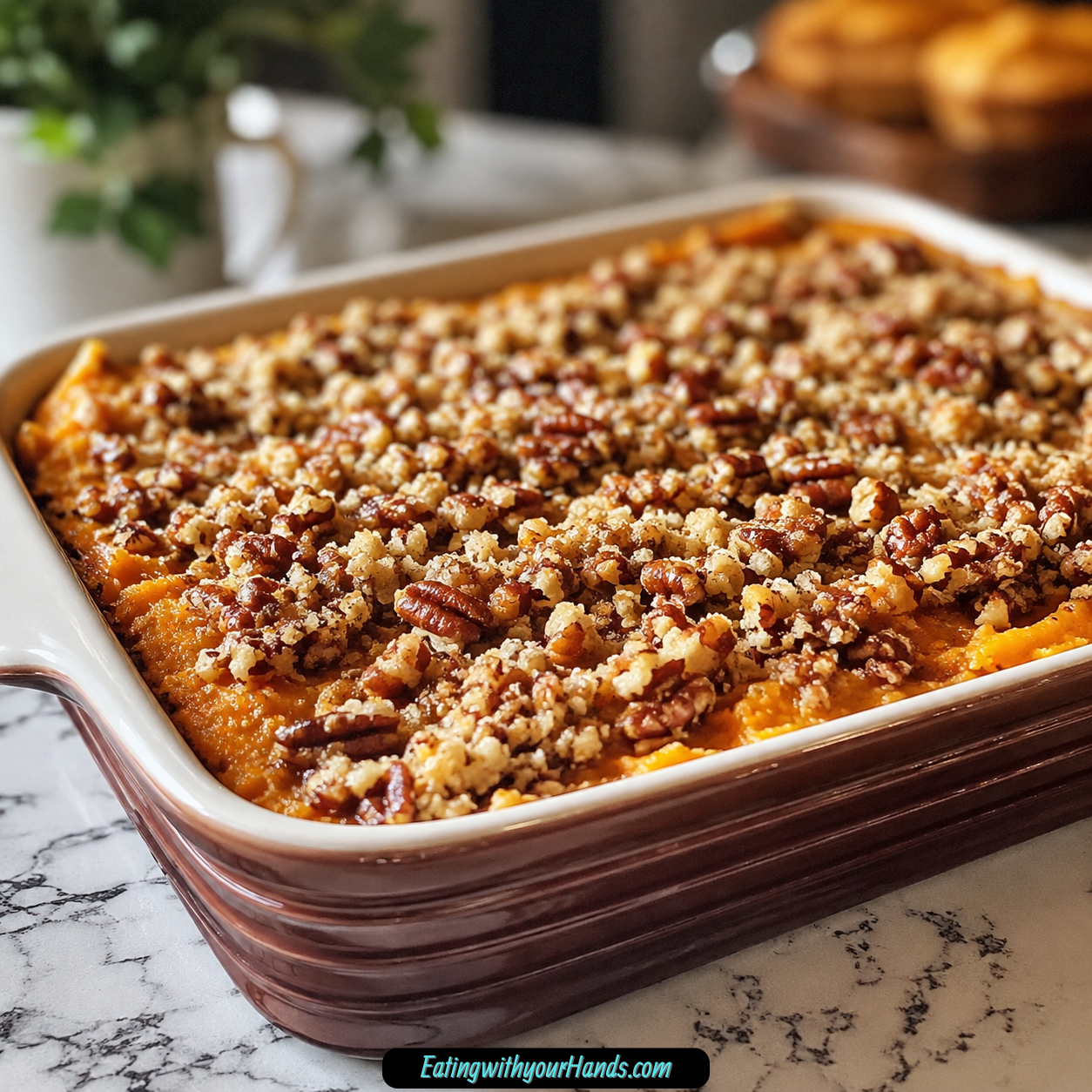
Southern Sweet Potato Casserole has a way of making a holiday table feel warmer before anyone even sits down. There is something about that creamy sweet potato filling tucked under a buttery pecan topping that feels familiar, generous, and a little bit celebratory.
This is the dish that quietly walks the line between side dish and dessert, and that is exactly why people love it so much. It brings sweetness, softness, crunch, and comfort together in one scoop, so it never feels like just another casserole on the table.
The first bite is all about contrast. The sweet potatoes are smooth and tender, the vanilla adds warmth, and the pecan topping bakes into a golden layer with caramel-like brown sugar flavor.
It is the kind of recipe that belongs at Thanksgiving, potlucks, Sunday dinners, and any meal that needs a little Southern comfort. Once it lands on the table, it has a way of becoming the dish people remember and ask about later.
Table of Contents
- Why You’ll Love This Recipe
- Recipe Details
- Ingredients
- Optional Swaps, Variations, Add-Ins, and Serving Ideas
- Why This Southern Sweet Potato Casserole Works
- Directions
- Step 1: Preheat the Oven to 350°F (175°C)
- Step 2: Grease a 9×13-Inch Baking Dish
- Step 3: Prepare the Cooked Sweet Potatoes
- Step 4: Add the Sweet Potatoes to a Big Bowl
- Step 5: Add the Sugar to the Sweet Potatoes
- Step 6: Add the Melted and Slightly Cooled Butter
- Step 7: Add the Beaten Eggs
- Step 8: Add the Vanilla and Milk
- Step 9: Beat the Sweet Potato Filling Until Mostly Smooth
- Step 10: Taste and Balance the Filling if Needed
- Step 11: Spread the Filling Into the Prepared Dish
- Step 12: Start the Pecan Topping in a Separate Bowl
- Step 13: Add the Packed Light Brown Sugar
- Step 14: Add the Flour
- Step 15: Add the Chopped Pecans
- Step 16: Mix the Topping Until It Looks Like Wet Sand
- Step 17: Sprinkle the Topping Over the Sweet Potato Layer
- Step 18: Bake the Casserole for 30 Minutes
- Step 19: Check for a Golden Topping and Bubbly Edges
- Step 20: Let the Casserole Rest for 10 Minutes
- Step 21: Serve Warm
- Serving Ideas
- Storage
- Reheating
- Freezing
- Make-Ahead
- Helpful Notes for Best Results
- Variations
- Troubleshooting
- Frequently Asked Questions
- Can I Use Canned Sweet Potatoes?
- Can I Roast or Boil the Sweet Potatoes Ahead?
- Can I Freeze This Casserole?
- Can I Freeze Individual Portions?
- How Do I Prevent a Soggy Topping?
- Can I Make This Ahead?
- Can I Halve the Recipe?
- Can I Add Marshmallows?
- Can I Make the Topping Nut-Free?
- Can I Make It Dairy-Free?
- What If I Want It Less Sweet?
- How Do I Reheat Leftovers?
- Why This Recipe Works So Well
- Final Thoughts
- Southern Sweet Potato Casserole
Why You’ll Love This Recipe
This Southern Sweet Potato Casserole is rich, cozy, and easy to love because it delivers so many textures in one spoonful. The filling is creamy and sweet, while the topping is buttery, nutty, and crisp.
The flavor is balanced in a comforting way. The sweet potatoes bring natural softness, the sugar and vanilla make the filling feel warm and classic, and the topping adds a caramel-like crunch from light brown sugar and pecans.
It is also a dependable crowd-pleaser. This is the kind of casserole that fits beautifully on a Thanksgiving spread, but it is simple enough to make whenever comfort food sounds right.
The recipe uses familiar ingredients, which keeps the preparation approachable. Cooked sweet potatoes, sugar, butter, eggs, vanilla, milk, brown sugar, flour, and pecans come together without anything fussy or hard to find.
You can also make it ahead, which is a huge help when the oven schedule gets crowded. The casserole can be assembled with the topping up to a day before, covered tightly with foil, and refrigerated until baking time.
The leftovers are just as comforting as the fresh casserole. The flavors settle overnight, and reheated slices make the next day feel like the holiday table came back for one more visit.
It is also flexible for different needs. There are options for canned sweet potatoes, brown sugar in the filling, gluten-free flour blend in the topping, a nut-free oat or granola topping, dairy-free swaps, maple syrup adjustments, marshmallows, caramel, and even chocolate chips.
Most of all, this Southern Sweet Potato Casserole feels homemade in the best way. It is not complicated, but it tastes like someone cared enough to bring something special.
Recipe Details
This Southern Sweet Potato Casserole is baked at 350°F (175°C). It uses a greased 9×13-inch baking dish or something similar.
The casserole base is made with 3 cups cooked sweet potatoes, which is about 3 medium potatoes when using fresh sweet potatoes. The sweet potatoes should be mashed smooth before they are mixed with sugar, melted butter, beaten eggs, vanilla, and milk.
The pecan topping is made separately with melted butter, packed light brown sugar, flour, and chopped pecans. It should look like wet sand with pecan pieces throughout before it is crumbled evenly over the sweet potato layer.
The casserole bakes for 30 minutes. It is ready when the topping is golden brown and the edges are bubbly.
After baking, the casserole should rest for 10 minutes before serving. This helps the filling set so it scoops neatly instead of spilling out too loosely.
Leftovers keep in the refrigerator for 3–4 days. They can be reheated in the microwave in 30-second bursts or warmed in the oven at 350°F until warm.
For freezer storage, individual portions can be wrapped in foil and frozen for up to 2 months. The casserole can also be baked first, cooled completely, wrapped as a whole dish or in portions, and frozen for up to 2 months.
Ingredients
Sweet Potato Filling
3 cups cooked sweet potatoes, mashed smooth (about 3 medium potatoes)
½ cup sugar
½ cup butter, melted and slightly cooled
2 eggs, beaten
1 teaspoon vanilla
⅓ cup milk
Pecan Topping
⅓ cup melted butter
1 cup light brown sugar, packed tight
½ cup flour
1 cup chopped pecans
Ingredient Notes
Fresh sweet potatoes work beautifully in this casserole. If using fresh sweet potatoes, roast or boil them the day before to save time.
Canned sweet potato puree can also be used when you are in a rush. Drain it well so the casserole does not turn soggy.
White granulated sugar keeps the filling classic. Brown sugar can be used if you want extra depth.
Salted or unsalted butter both work in the sweet potato base. Adjust salt to taste if needed.
Room-temperature beaten eggs blend more easily into the filling. Eggs straight from the refrigerator still work in a pinch.
Whole milk makes the filling extra creamy. Any kind of milk can be used.
All-purpose flour works well in the topping. A gluten-free 1:1 blend also works.
Toasting the pecans first can add extra crunch if you have 5 minutes to spare. The pecans are still used chopped in the topping.
Optional Swaps, Variations, Add-Ins, and Serving Ideas
Fresh or Canned Sweet Potatoes
Fresh sweet potatoes can be roasted or boiled the day before to make assembly faster. This is especially helpful during holiday cooking when oven space and timing both matter.
Canned sweet potato puree can also be used if you are short on time. Drain it well before mixing so the filling stays creamy instead of watery.
Brown Sugar in the Filling
White granulated sugar keeps the casserole classic. Brown sugar can be used in the filling if you want extra depth.
This swap keeps the sweet flavor but gives it a warmer, slightly deeper taste. It still belongs naturally with the vanilla, butter, and sweet potatoes.
Gluten-Free Topping Option
All-purpose flour is perfect for the pecan topping. A gluten-free 1:1 blend can also work.
This keeps the topping structure similar while making the casserole easier to adapt. Keep the same amount, using ½ cup flour or a gluten-free 1:1 blend.
Nut-Free Crunch Option
For a nut-free direction, swap the pecans for old-fashioned oats or granola in the topping. This keeps the crave-worthy crunch without using nuts.
A pinch of cinnamon can be tossed in with the oats for a cozy flavor. The casserole still gets a textured topping, even without pecans.
Extra Decadent Toppings
After baking, warm caramel sauce can be drizzled over the top. This adds a sweet, glossy finish that pairs well with the brown sugar topping.
Mini marshmallows can also be sprinkled on after baking. Pop the casserole back under the broiler for 30 seconds to toast them.
For a more indulgent twist, fold a handful of chocolate chips into the sweet potato mix before baking. This gives the casserole a sweeter dessert-style direction.
Lighter Sweetness Option
To lighten the casserole, swap half the sugar for maple syrup. Another option is to reduce the sugar by a quarter cup.
The casserole will still be plenty sweet. These adjustments simply soften the sweetness while keeping the comfort-food feeling.
Dairy-Free Option
For a dairy-free direction, use coconut oil in place of butter. Almond milk blends right into the sweet potato mixture.
These swaps keep the creamy texture and cozy flavor direction. The casserole still follows the same basic mixing, topping, and baking method.
Why This Southern Sweet Potato Casserole Works
This Southern Sweet Potato Casserole works because it builds comfort in layers. The smooth sweet potato base gives the dish its creamy foundation, while the topping brings structure, crunch, and caramel-like sweetness.
The cooked sweet potatoes are mashed smooth, which helps the filling feel soft and luxurious. They carry the sugar, butter, eggs, vanilla, and milk into a mixture that bakes into something tender but scoopable.
The sugar sweetens the filling without needing complicated additions. Vanilla adds warmth and makes the sweet potatoes taste more rounded.
Melted butter makes the filling richer. The beaten eggs help bring the casserole together so it sets instead of staying loose.
Milk softens the texture and keeps the base creamy. Whole milk makes it extra creamy, but any kind of milk can do the job.
The topping is where the casserole gets its signature contrast. Melted butter, packed light brown sugar, flour, and chopped pecans combine into a crumbly layer that bakes golden brown.
The brown sugar gives the topping that caramel-like flavor. Flour helps hold the crumb together, while chopped pecans provide the crunch that makes every bite feel complete.
That contrast is the heart of the dish. Creamy sweet potatoes underneath and buttery pecan crumble on top make it feel like both a holiday side dish and a dessert-style comfort food.
Directions
Step 1: Preheat the Oven to 350°F (175°C)
Set your oven to 350°F (175°C). This is the baking temperature for the casserole, and it gives the sweet potato filling enough heat to warm through and set while the topping becomes golden.
Let the oven preheat fully before the casserole goes in. A steady oven temperature helps the topping bake evenly instead of browning too fast in some spots and staying pale in others.
This is also the time to get your baking dish ready. Because the casserole comes together in layers, having the oven and dish prepared makes the whole process feel calm and organized.
Step 2: Grease a 9×13-Inch Baking Dish
Grease a 9×13-inch baking dish or something similar with butter or nonstick spray. Coat the bottom and sides so the sweet potato filling does not stick after baking.
This matters because the casserole is soft, sweet, and buttery. A greased dish makes serving easier and helps each scoop come out cleanly.
The 9×13-inch size also gives the filling and topping room to spread into an even layer. That even layer helps the casserole bake consistently and gives everyone a good balance of creamy base and crunchy topping.
Step 3: Prepare the Cooked Sweet Potatoes
Measure 3 cups cooked sweet potatoes, mashed smooth. This is about 3 medium potatoes if you are starting with fresh sweet potatoes.
If using fresh sweet potatoes, they can be roasted or boiled the day before to save time. This is a helpful make-ahead step, especially if you are preparing the casserole for a holiday meal.
If using canned sweet potato puree, drain it well before mixing. Extra liquid can make the casserole too loose and can also soften the topping from underneath.
The goal is a smooth, thick sweet potato base. It does not have to be flawless, but the sweet potatoes should be mashed well enough to blend with the sugar, butter, eggs, vanilla, and milk.
Step 4: Add the Sweet Potatoes to a Big Bowl
Place the mashed sweet potatoes into a big mixing bowl. Use a bowl with enough room for mixing so the ingredients can come together without spilling.
A big bowl makes it easier to beat the filling until mostly creamy. It also gives you space to use either a hand mixer or a sturdy spoon.
The sweet potatoes are the center of the casserole, so this step creates the foundation. Once they are in the bowl, the other filling ingredients can be added directly on top.
Step 5: Add the Sugar to the Sweet Potatoes
Add ½ cup sugar to the bowl with the mashed sweet potatoes. White granulated sugar keeps the flavor classic.
If you want extra depth, brown sugar can be used instead. That option gives the filling a warmer sweetness while still matching the casserole’s cozy flavor.
The sugar should be mixed into the sweet potatoes until evenly distributed. This helps every spoonful taste balanced instead of having overly sweet pockets in one area and plain sweet potato in another.
Step 6: Add the Melted and Slightly Cooled Butter
Add ½ cup butter, melted and slightly cooled, to the sweet potato mixture. The butter gives the filling richness and helps create that classic Southern casserole flavor.
The butter should be melted so it blends easily into the mashed sweet potatoes. Letting it cool slightly helps it mix more gently with the other ingredients.
Salted or unsalted butter both work here. If using salted butter, adjust salt to taste later only if the filling needs balance.
Step 7: Add the Beaten Eggs
Add 2 beaten eggs to the bowl. Room-temperature eggs blend more easily, but eggs straight from the refrigerator still work in a pinch.
The eggs help the filling set as it bakes. Without them, the casserole would be softer and less structured.
Because the eggs are beaten first, they can blend more evenly through the sweet potato mixture. This helps the casserole bake into a smooth, scoopable layer.
Step 8: Add the Vanilla and Milk
Add 1 teaspoon vanilla to the bowl. The vanilla gives the filling a warm flavor that works beautifully with sweet potatoes, butter, and sugar.
Pour in ⅓ cup milk. Whole milk makes the casserole extra creamy, but any kind of milk will do.
The milk loosens the filling just enough to make it smooth and tender. It helps the sweet potatoes beat into a creamy mixture instead of staying too stiff.
Step 9: Beat the Sweet Potato Filling Until Mostly Smooth
Use a hand mixer or a sturdy spoon to beat the sweet potatoes, sugar, melted butter, beaten eggs, vanilla, and milk together. Mix until the filling is silky smooth or mostly creamy.
Do not worry if a few tiny lumps remain. A little texture is fine, and the casserole does not need to be perfectly whipped to taste wonderful.
Do not overmix the sweet potato base. Mixing too aggressively for too long can make the filling gluey, so stop once the ingredients are well combined and the texture looks smooth enough.
Step 10: Taste and Balance the Filling if Needed
Taste the sweet potato filling before spreading it into the baking dish. If it needs balance, add a pinch of salt.
This small adjustment is only for balancing the sweetness and butteriness. Do not turn it into a salty dish; the casserole should still taste sweet, creamy, and warm.
Tasting at this stage helps you understand the filling before it goes under the topping. Once the casserole is assembled and baked, the flavor will be harder to adjust.
Step 11: Spread the Filling Into the Prepared Dish
Spoon the sweet potato mixture into the greased 9×13-inch baking dish. Spread it into an even layer from corner to corner.
Use a spatula to smooth the top. This gives the pecan topping a flat, even surface to cling to.
An even base helps the casserole bake properly. It also makes serving easier because every scoop gets a similar amount of sweet potato filling.
Step 12: Start the Pecan Topping in a Separate Bowl
In another bowl, add ⅓ cup melted butter. This butter forms the base of the topping and helps the brown sugar, flour, and pecans come together.
Using a separate bowl keeps the topping crumbly and distinct from the sweet potato filling. The casserole is best when the creamy base and crunchy topping remain separate layers.
The topping should not be mixed directly into the sweet potatoes. It belongs on top, where it can bake into a golden, textured layer.
Step 13: Add the Packed Light Brown Sugar
Add 1 cup light brown sugar, packed tight, to the melted butter. Packing the brown sugar ensures you use the proper amount for the topping.
The brown sugar gives the topping its caramel-like flavor. As it bakes with butter and flour, it helps create that sweet, slightly crisp crumble.
Break up any large clumps as you mix. This helps the topping scatter evenly over the casserole later.
Step 14: Add the Flour
Add ½ cup flour to the topping bowl. All-purpose flour is perfect for this topping.
A gluten-free 1:1 blend also works if you need that option. Keep the same amount so the topping still has structure.
The flour helps turn the butter and brown sugar into a crumble instead of a syrup. It gives the topping enough body to sit over the sweet potatoes and bake into a textured layer.
Step 15: Add the Chopped Pecans
Add 1 cup chopped pecans to the topping bowl. The pecans are what bring the signature crunch to this Southern Sweet Potato Casserole.
If you have 5 extra minutes, the pecans can be toasted first for more crunch. The casserole will still work if the pecans are not toasted.
Stir the pecans into the butter, brown sugar, and flour mixture until they are evenly coated. This helps every bite of topping taste buttery, sweet, and nutty.
Step 16: Mix the Topping Until It Looks Like Wet Sand
Stir the melted butter, packed light brown sugar, flour, and chopped pecans together. The mixture should look like wet sand with pecan pieces throughout.
This texture matters because the topping should crumble over the filling instead of pour like a sauce. It should be moist enough to hold together lightly, but not so wet that it sinks into the sweet potatoes.
If the topping looks too dry, add a teensy bit more melted butter. If it looks too wet, add a sprinkle more flour.
Use the texture cue more than your eyes alone. You want a crumbly mixture that can be scattered evenly over the casserole without being pressed down.
Step 17: Sprinkle the Topping Over the Sweet Potato Layer
Crumble the pecan topping evenly over the sweet potato layer. Work across the whole dish so the topping reaches the corners and edges.
Do not press the topping down. Let it stay fluffy so it can bake with maximum crunch.
Even topping coverage is important because the topping is one of the best parts of this casserole. Each serving should have creamy sweet potatoes underneath and a buttery pecan crumble on top.
Step 18: Bake the Casserole for 30 Minutes
Place the casserole in the preheated 350°F (175°C) oven. Bake for 30 minutes.
As it bakes, the sweet potato filling warms through and the topping begins to turn golden brown. The edges should become bubbly when the casserole is ready.
Try not to cover the casserole while it bakes. Leaving it uncovered helps the pecan topping become golden and crispy.
Step 19: Check for a Golden Topping and Bubbly Edges
The casserole is done when the topping is golden brown and the edges are bubbly. These are the key visual cues to look for at the end of the 30-minute bake.
The golden topping tells you the brown sugar, butter, flour, and pecans have baked into a sweet crumble. The bubbly edges show that the filling is hot and the casserole has cooked through.
If the topping begins browning too fast before the casserole seems ready, tent it with foil. This protects the topping while still allowing the casserole to finish warming.
Step 20: Let the Casserole Rest for 10 Minutes
Remove the casserole from the oven and let it rest for 10 minutes before serving. This wait helps the sweet potato layer set.
If you scoop too soon, the casserole can slide apart and feel too loose. Resting gives it time to become creamy but still scoopable.
The topping also settles during this time. It stays crisp on top while the filling underneath becomes easier to serve neatly.
Step 21: Serve Warm
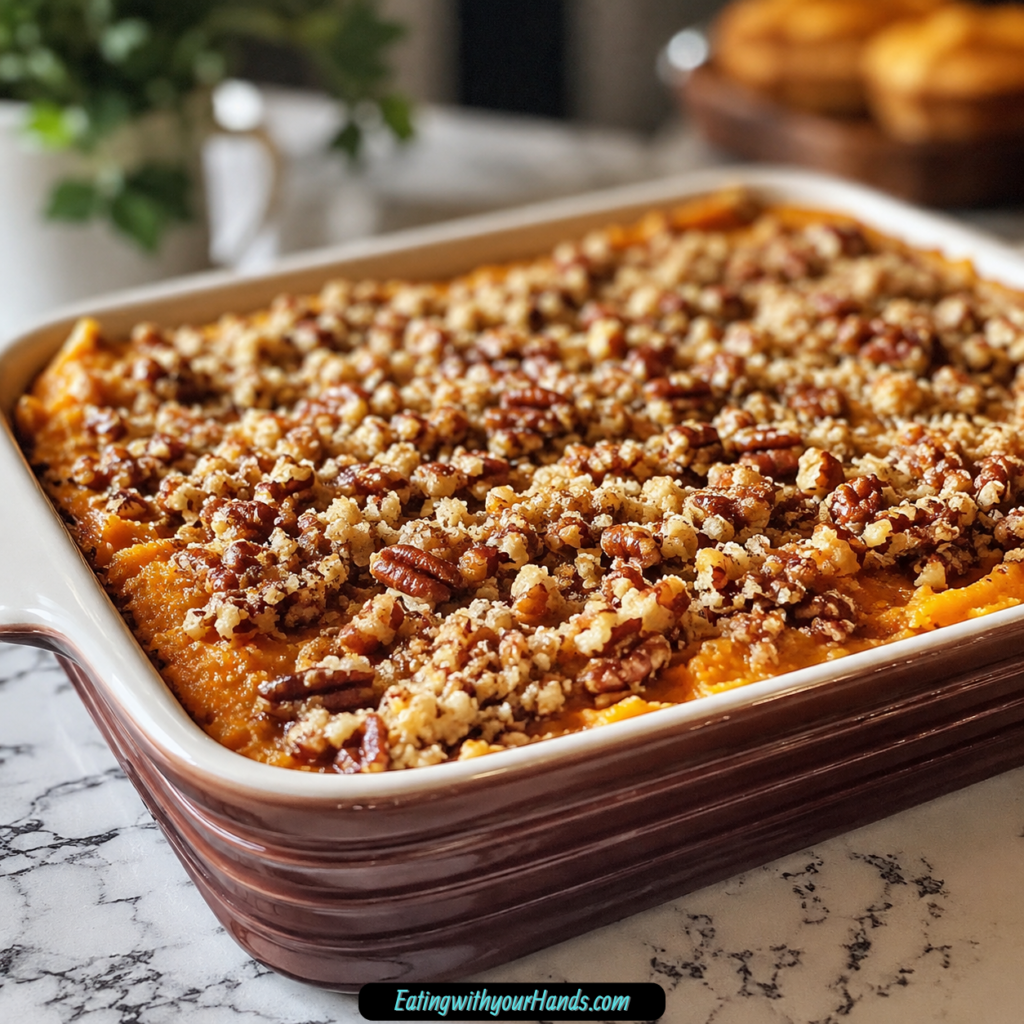
Serve the Southern Sweet Potato Casserole warm. The filling should be creamy, sweet, and smooth, while the topping should be buttery and crunchy.
The corner pieces are especially good because they often have extra crispy topping and caramelized edges. Those bites show off the contrast that makes this dish so memorable.
This casserole belongs naturally with holiday meals, potlucks, and comfort-food dinners. It is rich enough to feel special but familiar enough to make everyone feel at home.
Serving Ideas
Southern Sweet Potato Casserole is a natural fit for Thanksgiving. It brings sweetness and warmth to the table and pairs beautifully with the feeling of a big holiday meal.
It also works for potlucks because it travels well in a 9×13-inch baking dish. The topping makes it look inviting, and the filling stays creamy even after resting.
This casserole can be served as a side dish, but it has a dessert-like quality because of the sweet potatoes, sugar, vanilla, brown sugar, butter, and pecans. That balance is exactly why it is so beloved.
For an extra decadent finish, drizzle warm caramel sauce over the baked casserole. You can also add mini marshmallows and broil for 30 seconds to toast them.
If you want a crunchy nut-free direction, use old-fashioned oats or granola in the topping instead of pecans. A pinch of cinnamon with the oats adds a cozy touch.
The casserole is also good reheated, which makes it helpful for planned meals and leftovers. The flavors get cozy overnight, so the next-day serving can be just as satisfying.
Storage
If you have leftovers, cover the casserole and refrigerate it. Leftovers keep in the fridge for 3–4 days.
You can keep the casserole in the baking dish if it is tightly covered. You can also move portions into an airtight container.
The texture remains creamy after chilling. The flavor may even feel more settled the next day, which makes leftovers especially comforting.
Try not to leave the casserole uncovered in the refrigerator. Covering it protects the topping and keeps the sweet potato base from drying out.
Reheating
Individual slices can be reheated in the microwave in 30-second bursts. This is the easiest way to warm a single serving without heating the whole dish.
For larger portions or the whole dish, place it back in the oven at 350°F until warm. This method is helpful when serving leftovers to more than one person.
If reheating a frozen whole dish, thaw it overnight in the refrigerator first. Then reheat at 350°F until warm, about 20–30 minutes for the whole dish.
For extra-crisp topping after reheating, pop it under the broiler for a minute at the end. Watch it closely so the topping crisps without burning.
Freezing
This casserole can be frozen. One method is to wrap individual portions in foil and freeze them for up to 2 months.
Another method is to bake the casserole first, let it cool completely, then wrap the whole dish or portions in foil. Freeze for up to 2 months.
Thaw frozen casserole overnight in the refrigerator before reheating. This helps it warm more evenly and protects the texture.
After thawing, reheat at 350°F until warm. For a whole dish, that takes about 20–30 minutes.
Make-Ahead
This Southern Sweet Potato Casserole is a great make-ahead dish. Assemble the casserole with the topping up to a day before you plan to bake it.
Cover it tightly with foil and store it in the refrigerator. When you are ready to bake, place it in the oven straight from cold.
Because the casserole is cold from the refrigerator, add 5–10 extra minutes to the cook time. This gives the filling and topping enough time to heat through properly.
This make-ahead option is especially helpful for holiday meals. It removes last-minute stress and lets you focus on the rest of the table.
Helpful Notes for Best Results
Do not overmix the sweet potato base. A few tiny lumps are fine, but too much mixing can make the filling gluey.
Drain sweet potatoes well if using fresh cooked sweet potatoes. If they are very moist, draining helps prevent a watery casserole.
If using canned sweet potatoes, drain them really well. Canned sweet potato puree can work, but excess liquid needs to be removed so the filling does not become soggy.
For an even drier base, fresh mashed sweet potatoes can be patted with a paper towel. This is especially helpful if they seem wet after boiling.
Do not skimp on the butter in the topping. The butter helps hold the topping together and supports the crunchy texture.
Do not cover the casserole while baking. Leaving it uncovered allows the pecan topping to become golden and crispy.
If the topping starts browning too fast, tent it with foil. This protects the top while the casserole finishes baking.
Let the casserole rest for 10 minutes before serving. This helps the filling set and prevents it from scooping like sweet potato soup.
If you want to lighten it up, swap half the sugar for maple syrup. You can also reduce the sugar by a quarter cup, and the casserole will still be plenty sweet.
For a dairy-free direction, use coconut oil instead of butter. Almond milk blends right into the filling.
Variations
Nut-Free Southern Sweet Potato Casserole
Swap the pecans for old-fashioned oats or granola in the topping. This gives the casserole crunch without nuts.
For extra cozy flavor, add a pinch of cinnamon with the oats. The topping will still bring texture and warmth.
Extra Decadent Southern Sweet Potato Casserole
After baking, drizzle the top with warm caramel sauce. This adds a sweet finish that makes the casserole feel even more special.
You can also sprinkle mini marshmallows over the top after baking. Place the casserole back under the broiler for 30 seconds to toast them.
For an even richer twist, fold a handful of chocolate chips into the sweet potato mix before baking. This turns the casserole in a more dessert-like direction.
Brown Sugar Sweet Potato Filling
Use brown sugar instead of white granulated sugar in the filling. This gives the casserole extra depth.
The flavor becomes warmer and slightly more caramel-like. It still works beautifully with vanilla, butter, and sweet potatoes.
Gluten-Free Pecan Topping
Use a gluten-free 1:1 blend instead of all-purpose flour. Keep the amount at ½ cup.
This lets the topping keep its crumbly structure. The pecans, brown sugar, and butter still provide the classic flavor and crunch.
Dairy-Free Sweet Potato Casserole
Use coconut oil in place of butter. Use almond milk in the filling.
This keeps the casserole creamy and comforting while avoiding dairy. The baking method and timing stay the same.
Lighter Sweet Potato Casserole
Swap half the sugar for maple syrup or reduce the sugar by a quarter cup. The casserole will still taste sweet.
This is a helpful option when you want the same cozy casserole with slightly less sweetness. The sweet potatoes, vanilla, and topping still carry plenty of flavor.
Halved Recipe
This recipe can be halved. Use an 8×8 pan.
A smaller pan is helpful when you want the same comfort without making a full 9×13-inch dish. Keep the layers balanced so the filling and topping still bake properly.
Troubleshooting
Why Is My Casserole Soggy?
The sweet potatoes may have had too much moisture. If using fresh sweet potatoes, drain the mashed potatoes well and even pat them with a paper towel if needed.
If using canned sweet potatoes, press out excess liquid. Canned puree needs to be drained really well so the filling stays creamy instead of watery.
Why Is My Topping Not Crunchy?
The topping may have been covered while baking. Let the pecan layer bake uncovered so it can turn golden and crispy.
Another issue may be too little butter in the topping. The butter helps hold the crunch together, so do not skimp on it.
Why Is My Topping Browning Too Fast?
If the topping starts browning too quickly, tent the casserole with foil. This protects the pecan layer while the rest of the dish finishes baking.
Keep the foil loose so it does not press into the topping. The goal is to shield the topping, not flatten it.
Why Did My Sweet Potato Base Turn Gluey?
The filling may have been overmixed. Beat it until mostly smooth, but stop before the texture becomes sticky or heavy.
A few tiny lumps are totally fine. They are much better than a filling that has been worked too much.
Why Does the Casserole Fall Apart When Scooped?
It may not have rested long enough after baking. Let it sit for 10 minutes before serving.
That rest helps the filling set. Without it, the casserole can scoop too loosely and feel more like sweet potato soup.
Why Is My Topping Too Dry Before Baking?
If the topping mixture looks too dry, add a teensy bit more melted butter. The texture should look like wet sand with pecan pieces throughout.
Do not add so much butter that it turns soupy. The topping should still crumble easily over the sweet potato layer.
Why Is My Topping Too Wet Before Baking?
If the topping looks too wet, add a sprinkle more flour. This helps bring it back to a crumbly texture.
The topping should not pour over the casserole. It should scatter evenly and sit lightly on top.
Frequently Asked Questions
Can I Use Canned Sweet Potatoes?
Yes, canned sweet potato puree works if you are in a rush. Drain it well before mixing.
Removing excess liquid is important. Too much moisture can make the casserole soggy and can soften the topping from underneath.
Can I Roast or Boil the Sweet Potatoes Ahead?
Yes, fresh sweet potatoes can be roasted or boiled the day before. This saves time when you are assembling the casserole.
After cooking, mash them smooth and store them until you are ready to mix the filling. Make sure they are not holding excess liquid before using.
Can I Freeze This Casserole?
Yes, this casserole can be frozen. Bake it first, let it cool completely, then wrap the whole dish or portions in foil and freeze for up to 2 months.
Thaw overnight in the refrigerator before reheating. Reheat at 350°F until warm, about 20–30 minutes for the whole dish.
Can I Freeze Individual Portions?
Yes, individual portions can be wrapped in foil and frozen for up to 2 months. This makes it easy to enjoy one serving at a time.
Thaw overnight before reheating. Warm the portion until heated through.
How Do I Prevent a Soggy Topping?
Start with dry sweet potatoes. Drain fresh mashed sweet potatoes well, and pat them with a paper towel if needed.
For canned sweet potatoes, press out excess liquid. Also, do not cover the casserole while baking, and do not skimp on butter in the topping.
Can I Make This Ahead?
Yes, assemble the casserole with the topping up to a day before. Cover it tightly with foil and refrigerate it.
Bake it straight from cold when ready. Add 5–10 extra minutes to the cook time.
Can I Halve the Recipe?
Yes, the recipe can be halved. Use an 8×8 pan.
This is a good option for a smaller meal. Keep the filling and topping evenly layered.
Can I Add Marshmallows?
Yes, marshmallows can be added. Mini marshmallows are delicious on this casserole.
Sprinkle them on after baking, then place the casserole back under the broiler for 30 seconds to toast them. Watch closely because marshmallows can brown quickly.
Can I Make the Topping Nut-Free?
Yes, swap the pecans for old-fashioned oats or granola. This gives you crunch without nuts.
You can also add a pinch of cinnamon with the oats. That gives the topping a cozy flavor.
Can I Make It Dairy-Free?
Yes, coconut oil works in place of butter. Almond milk blends right into the filling.
Use the same general method. Mix the filling, assemble the topping, bake, and rest before serving.
What If I Want It Less Sweet?
Swap half the sugar for maple syrup or reduce the sugar by a quarter cup. The casserole will still be plenty sweet.
This adjustment keeps the dish cozy while making the sweetness a little softer. The sweet potatoes and topping still bring plenty of flavor.
How Do I Reheat Leftovers?
Reheat slices in the microwave in 30-second bursts. For the whole dish, place it back in the oven at 350°F until warm.
If reheating after freezing, thaw overnight first. A whole dish takes about 20–30 minutes at 350°F to warm through.
Why This Recipe Works So Well
Southern Sweet Potato Casserole works so well because it understands balance. The filling is creamy and sweet, while the topping is crunchy, buttery, and rich.
The cooked sweet potatoes provide a naturally soft base. When mashed smooth with sugar, melted butter, eggs, vanilla, and milk, they become a filling that tastes warm and comforting.
The eggs help the casserole set without taking away its creamy texture. The milk keeps the filling soft, and the butter adds the richness that makes each spoonful feel complete.
The pecan topping brings the contrast that makes the dish memorable. Light brown sugar, flour, melted butter, and chopped pecans bake into a golden crumble that sits beautifully over the smooth filling.
The casserole also works because it can be prepared in practical ways. You can make it ahead, refrigerate it, bake it from cold with extra time, store leftovers, freeze portions, and reheat it without losing the heart of the dish.
The variations make it even more useful. Whether you need nut-free crunch, dairy-free swaps, less sugar, marshmallows, caramel, chocolate chips, or a smaller 8×8 pan, the casserole can still stay true to its comforting personality.
Most importantly, this dish brings emotional warmth to the table. It feels nostalgic, familiar, and special without becoming difficult or fussy.
Final Thoughts
Southern Sweet Potato Casserole is one of those recipes that earns its place at the center of a holiday meal. It has the creamy sweetness people expect, the buttery pecan topping people look forward to, and the cozy feeling that makes a table feel complete.
It is simple enough to prepare without stress, especially with make-ahead options. At the same time, it tastes special enough that people will remember it long after the plates are cleared.
The best bites are the ones with a little bit of everything. Smooth sweet potatoes, golden brown topping, chopped pecans, buttery crumbs, and those bubbly edges all come together in one warm spoonful.
Make it for Thanksgiving, bring it to a potluck, or serve it whenever comfort food sounds right. This Southern Sweet Potato Casserole is rich, dependable, and full of the kind of warmth that makes people come back for seconds.
Southern Sweet Potato Casserole
This Southern Sweet Potato Casserole is creamy, sweet, buttery, and finished with a golden pecan topping that adds the perfect crunch. It is a classic comfort-food side dish for holiday dinners, Sunday meals, potlucks, or any table that needs something warm and nostalgic.
Recipe Details
- Prep Time: 20 minutes
- Cook Time: 30 minutes
- Total Time: 50 minutes
- Course: Dinner, Side Dish
- Cuisine: Southern
- Servings: 8 people
Ingredients
Casserole
- 3 cups sweet potatoes
- ⅓ cup milk
- 2 eggs beaten
- 1 teaspoon vanilla
- ½ cup butter
- ½ cup sugar
Topping
- 1 cup chopped pecans
- ½ cup flour
- 1 cup light brown sugar
- ⅓ cup melted butter
Instructions
Step 1: Preheat the Oven
Preheat oven to 350°F (175°C).
Step 2: Make the Sweet Potato Filling
In a large bowl, mix the sweet potatoes, sugar, butter, beaten eggs, vanilla, and milk until the mixture is smooth.
Step 3: Add the Filling to the Dish
Spread the sweet potato mixture into a greased baking dish, smoothing it into an even layer.
Step 4: Prepare the Pecan Topping
In a separate bowl, combine the melted butter, light brown sugar, flour, and chopped pecans until the topping mixture is evenly mixed.
Step 5: Top the Casserole
Sprinkle the pecan topping evenly over the sweet potato mixture.
Step 6: Bake Until Golden
Bake for 30 minutes, or until the topping is golden brown.
Step 7: Rest Before Serving
Let the casserole rest for 10 minutes before serving for the best texture.
Notes
Letting the casserole rest for 10 minutes before serving helps the texture settle, making it easier to scoop and serve.
Serving Suggestions
- Serve alongside roasted turkey, baked ham, or chicken for a classic Southern-style meal.
- Add it to a Thanksgiving, Christmas, or Easter dinner spread.
- Pair with green beans, collard greens, or a crisp salad to balance the sweetness.
- Serve as a warm side dish for potlucks or family gatherings.
- Enjoy with savory mains when you want a sweet, buttery contrast on the plate.
Storage
How to Store
Let the casserole cool completely, then cover it tightly or transfer leftovers to an airtight container. Refrigerate until ready to enjoy again.
How to Reheat
Reheat individual servings gently until warmed through. For a larger portion, warm it in the oven until the filling is hot and the topping is crisp again.
Best Texture Tip
For the best texture, let the casserole rest after baking so the sweet potato filling firms slightly and the pecan topping stays pleasantly crunchy.

Fernando is the creator and writer behind the food blog Eating with your Hands. Living and working in cities like Paris, Barcelona, and Berlin, and being married to a Canadian foodie, has given Fernando a passion and interest in food and inspired him to run EWYH.