
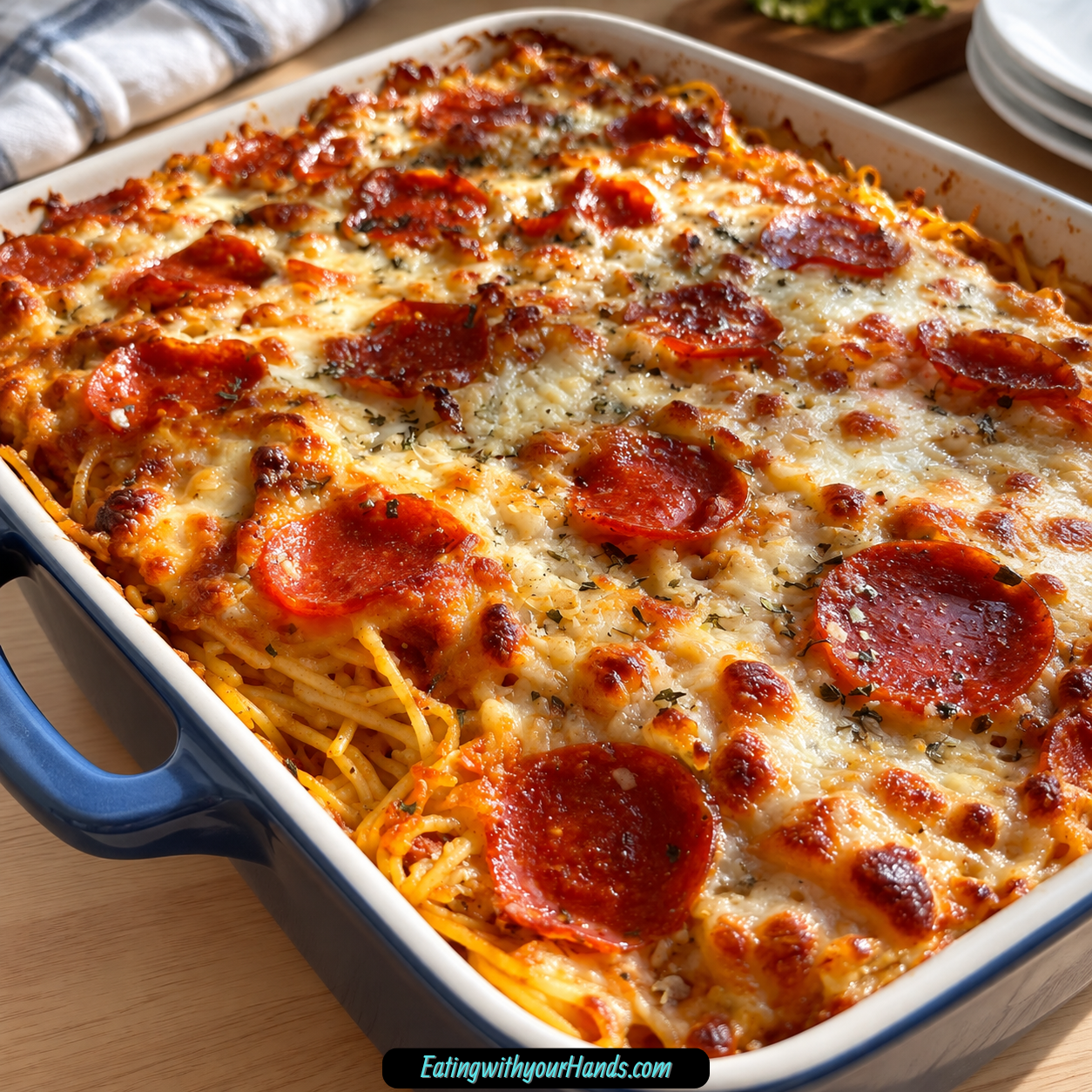
Some of the meals that end up staying in a family dinner rotation begin with a very ordinary question: what would happen if two favorite foods were brought together on one plate? That is exactly where this Spaghetti Pizza Casserole began, during one of those evenings when pizza sounded perfect but the kitchen happened to have spaghetti noodles instead.
A quick refrigerator search turned that limitation into the beginning of something much better than a backup dinner. Tender spaghetti, savory beef, marinara, melted mozzarella, Parmesan, pepperoni, and whatever pizza toppings happen to be on hand come together in one hearty baked dish that delivers the comfort of pasta with the familiar flavors of pizza.
There is something especially satisfying about a dinner that feels playful without requiring a complicated cooking project. Spaghetti Pizza Casserole takes basic ingredients and layers them into a bubbly, cheesy meal that feels generous enough for a family dinner while remaining simple enough for an ordinary night at home.
What makes it especially appealing is the way the casserole handles the familiar “what’s for dinner?” problem. You cook the spaghetti, brown the beef with onion and garlic, bring everything together with marinara, pile on the cheese and pizza toppings, and let the oven turn those separate pieces into one warm, cohesive meal.
The aroma alone is part of the experience. Garlic and onion cook with the beef in the skillet, marinara joins the mixture, and then the finished casserole bakes beneath a layer of mozzarella, Parmesan, pepperoni, and any additional toppings you choose.
Even better, the recipe leaves plenty of room to work with the ingredients already in your refrigerator. Sausage crumbles, bacon bits, olives, bell peppers, mushrooms, or extra pepperoni can all take the casserole in a slightly different direction without losing the basic spaghetti-and-pizza personality that makes it so comforting.
Table of Contents
- Why Spaghetti Pizza Casserole Works So Well
- What Makes This Dinner So Family-Friendly
- Ingredients for Spaghetti Pizza Casserole
- How to Make Spaghetti Pizza Casserole
- Step 1: Preheat the Oven
- Step 2: Break and Boil the Spaghetti
- Step 3: Brown the Beef with Onion and Garlic
- Step 4: Build the Marinara Mixture
- Step 5: Combine the Spaghetti with Part of the Meat Sauce
- Step 6: Add the Remaining Sauce
- Step 7: Add Mozzarella and Parmesan
- Step 8: Arrange the Pepperoni and Other Toppings
- Step 9: Bake Until Bubbling and Golden
- Step 10: Broil for Extra Browning if Desired
- Step 11: Let the Casserole Rest Before Serving
- Tips for the Best Spaghetti Pizza Casserole
- Easy Ways to Change the Casserole
- Making a Meatless Spaghetti Pizza Casserole
- What to Serve with Spaghetti Pizza Casserole
- How to Store Spaghetti Pizza Casserole
- How to Reheat It
- Spaghetti Pizza Casserole FAQs
- Nutritional Information
- A Dinner That Turns an Improvised Idea Into a Favorite
- Spaghetti Pizza Casserole Recipe
Why Spaghetti Pizza Casserole Works So Well
Spaghetti Pizza Casserole feels familiar from the first bite because none of its main flavors are difficult or fussy. Marinara, beef, pasta, mozzarella, Parmesan, and pepperoni already belong to the world of comforting family food, but baking them together gives them a different texture and presentation.
The pasta provides a tender base while the sauce works its way between the pieces of spaghetti. On top, the cheeses melt around the pizza toppings and create the kind of bubbling surface that makes the casserole feel especially inviting when it comes out of the oven.
One of the biggest advantages is how manageable the preparation feels. The active assembly is straightforward, and once the casserole is layered in the baking dish, the oven handles the final transformation.
It is also an easy dish to personalize without rebuilding the entire recipe. You can stay very close to the basic beef-and-pepperoni version, or use some of the suggested toppings such as mushrooms, sausage crumbles, bacon bits, olives, or bell peppers.
That flexibility makes the casserole useful when the refrigerator contains a few odds and ends that need a home. Instead of treating every topping as a requirement, you can think of the base as the foundation and the pizza-style extras as the part that can reflect what your family likes.
The contrast in texture is another reason the dish feels more interesting than plain spaghetti. The noodles stay saucy underneath, while the top develops a melted cheese layer that can become even more golden and crisp with a brief broil at the end.
What Makes This Dinner So Family-Friendly
Pizza flavors have an easy familiarity, and spaghetti is already a comfort-food staple in many kitchens. Bringing the two together makes this casserole approachable for both kids and adults without requiring a long list of unusual ingredients.
The casserole is also hearty enough to feel like a complete centerpiece at the table. A crisp green salad or garlic bread can round it out, but the combination of pasta, beef, sauce, cheese, and toppings already gives the dish plenty of substance on its own.
Another fun serving idea is to cut the finished casserole into squares. Those portions can even be dipped into extra marinara, which leans into the pizza-night feeling while still keeping the meal firmly in casserole territory.
For anyone who enjoys dinners that can shift slightly depending on what is available, this recipe has a lot of personality. One night it might have mushrooms and pepperoni, while another version could include bell peppers, bacon bits, olives, or sausage crumbles.
Ingredients for Spaghetti Pizza Casserole
The ingredient list is simple, but each part contributes something recognizable to the finished casserole. The pasta creates the base, the beef mixture brings savory depth, the marinara ties everything together, and the cheeses and toppings make the top unmistakably pizza-inspired.
Pasta Base
- 8 oz spaghetti, broken into 2-inch pieces
- 1 cup shredded mozzarella, packed
- ¼ cup Parmesan
Breaking the spaghetti into 2-inch pieces may feel like a small detail, but it helps make the finished casserole easier to portion and serve. Instead of wrestling with long strands when cutting into the baked dish, the shorter pieces stay more manageable.
The mozzarella forms the main melted cheese layer, while the Parmesan adds another savory element over the top. Full-fat mozzarella is preferred for maximum meltiness.
Sauce and Beef Mixture
- 1 lb ground beef
- 1 small onion, diced, about ½ cup
- 1 teaspoon minced garlic, or 2 cloves fresh
- 2 cups marinara sauce, divided
- 1 cup mushrooms, sliced, optional
The ground beef cooks together with the onion and garlic before the sauce is added. Mushrooms are optional, but when you use them, they go into the skillet during the beef-cooking stage.
The marinara is divided so that one portion can be stirred into the beef mixture while the remaining sauce is reserved for layering. This keeps sauce distributed through the casserole rather than concentrating it in only one place.
Italian seasoning, oregano, salt, pepper, and red pepper flakes are also used during the sauce step. No specific amounts are assigned, and the red pepper flakes are optional for anyone who wants a little more heat.
Pizza-Style Toppings
- 2 oz pepperoni, about 30 slices
- ⅓ cup each of your favorites: sausage crumbles, bacon bits, olives, bell peppers
This is the part of the casserole where personal preference can show up most clearly. Pepperoni gives it an immediate pizza feel, while the additional toppings can be mixed and matched according to what sounds good.
You can keep the topping layer simple or make it more generous. The basic structure of the dish stays the same either way: saucy spaghetti underneath, cheese across the surface, and pizza toppings finishing everything before baking.
How to Make Spaghetti Pizza Casserole
The method is uncomplicated, but a few details make an important difference. The spaghetti should stay slightly firm before baking, the beef mixture needs time to cook with the aromatics, and the casserole benefits from a short rest before serving.
Step 1: Preheat the Oven
Set the oven to 375°F (190°C) before beginning the main assembly. Starting with a fully heated oven means the casserole can go directly from the baking dish into the oven once the layers are ready.
This is also a good point to grease a 9×13 baking dish so it is ready when the spaghetti and meat mixture are finished. Having the dish prepared keeps the assembly moving smoothly without interrupting the process later.
Step 2: Break and Boil the Spaghetti
Break the 8 oz spaghetti into pieces about 2 inches long before cooking. The shorter pieces make the baked casserole much easier to scoop or cut into neat portions at serving time.
Boil the spaghetti for about 7–8 minutes, aiming for an al dente texture rather than fully soft pasta. The noodles will continue cooking once they are layered with sauce and baked, so keeping them slightly firm now helps prevent the finished casserole from becoming too soft.
When the spaghetti reaches that point, drain it thoroughly and set it aside. Leaving excess cooking water clinging to the noodles could dilute the sauce, so give the pasta a chance to drain well.
Step 3: Brown the Beef with Onion and Garlic
Place the 1 lb ground beef in a skillet with the diced small onion and 1 teaspoon minced garlic, or 2 cloves fresh garlic. Cook the mixture over medium heat, breaking up the beef as it cooks so the pieces are distributed evenly.
If you are using the optional 1 cup sliced mushrooms, add them during this stage as well. Continue cooking until the beef is no longer pink and the onion has softened, which takes about 5–6 minutes.
Once the beef is cooked, drain away any excess grease if desired. The goal is to keep the mixture rich and savory without allowing unnecessary liquid or fat to overwhelm the sauce.
Step 4: Build the Marinara Mixture
Stir 1 cup of the marinara sauce into the cooked beef mixture, reserving the remaining 1 cup for the casserole layers. Add Italian seasoning, oregano, salt, pepper, and red pepper flakes if you want a little extra heat.
Allow the sauce and beef mixture to simmer together for about 5 minutes. This gives the marinara time to mingle with the beef, onion, garlic, and optional mushrooms before everything moves into the baking dish.
Because the seasonings do not have fixed amounts, adjust them according to preference. The casserole is meant to remain flexible, so the seasoning level can reflect whether you want the sauce mild, more garlicky, or slightly spicy.
Step 5: Combine the Spaghetti with Part of the Meat Sauce
Transfer the drained spaghetti into the prepared 9×13 baking dish. Mix it with half of the prepared meat sauce so the noodles are coated rather than sitting beneath a separate heavy layer.
This step helps distribute the savory beef and marinara through the pasta itself. The remaining meat sauce will be used above the spaghetti, giving the casserole another layer of flavor and moisture.
Try to spread the spaghetti into an even layer after mixing. An even base helps the toppings and cheese cover the casserole more consistently and makes later portions easier to serve.
Step 6: Add the Remaining Sauce
Spread the rest of the meat sauce over the spaghetti mixture. This second layer makes sure the surface of the pasta has plenty of sauce before the cheese is added.
If the noodles appear unusually dry during assembly, the FAQ suggests keeping an extra ½ cup marinara available. You can drizzle in more before adding the cheese layer when the pasta seems to need it.
The important idea is to keep the spaghetti well coated without changing the overall casserole structure. The sauce should remain part of every serving rather than collecting only at the bottom of the dish.
Step 7: Add Mozzarella and Parmesan
Sprinkle the 1 cup packed shredded mozzarella over the sauced pasta first. Follow it with the ¼ cup Parmesan so the two cheeses form the top layer beneath the pizza toppings.
As the casserole bakes, the mozzarella melts across the surface while the Parmesan adds another savory layer. Using full-fat cheese is preferred because it provides the meltiness intended for this dish.
Spread the cheese as evenly as practical so each portion gets some of the topping. The cheese also helps visually tie the casserole to the pizza inspiration once the pepperoni is added.
Step 8: Arrange the Pepperoni and Other Toppings
Place the 2 oz pepperoni, about 30 slices, over the cheese. You can scatter the slices casually or arrange them in a pattern if you want the finished casserole to look especially playful.
Add any additional preferred pizza toppings as well, using ⅓ cup each of options such as sausage crumbles, bacon bits, olives, or bell peppers. This is where the casserole can be customized most easily without changing the basic preparation.
There is no need for the topping layer to look perfectly uniform. Part of the appeal is that different bites can contain slightly different combinations of cheese, pepperoni, beef, pasta, and vegetables.
Step 9: Bake Until Bubbling and Golden
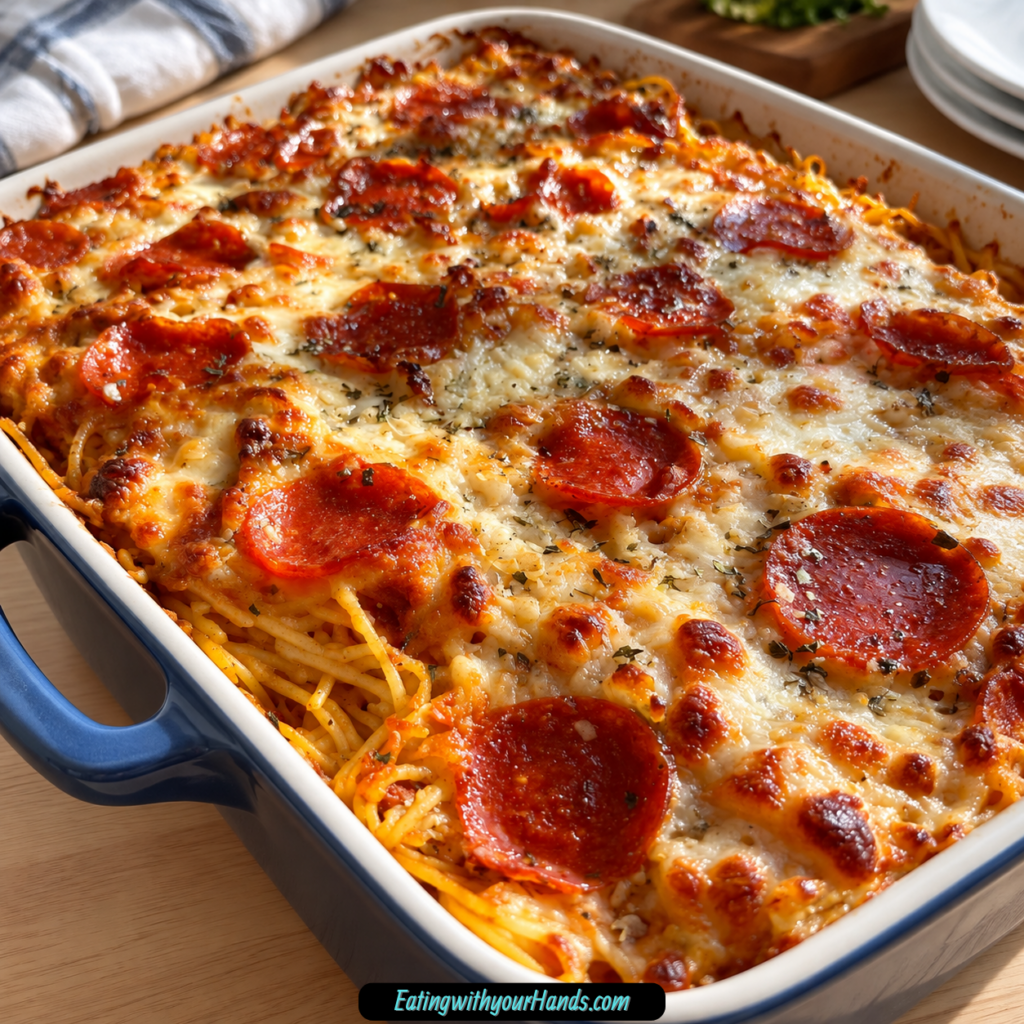
Place the assembled casserole in the 375°F (190°C) oven and bake for 20–25 minutes. It is ready when the cheese is melted, bubbling, and golden across the top.
The baking time also gives the pasta a chance to absorb more of the sauce while the different layers settle together. Since the spaghetti started slightly underdone, it can continue cooking without turning overly soft.
Watch the surface toward the end of baking, especially if your oven browns cheese quickly. You want a lively bubbling top and golden color rather than a dried-out cheese layer.
Step 10: Broil for Extra Browning if Desired
For a more deeply browned cheese topping, broil the casserole for the final 1–2 minutes. Stay close to the oven during this step because the transition from golden cheese to overly dark cheese can happen quickly.
This brief broiling step is optional, but it is especially useful if you enjoy crisp edges and a more pronounced golden surface. It gives the casserole a slightly more pizza-like finish without changing the ingredients underneath.
Do not leave the casserole unattended while broiling. The extra color develops fast, and the goal is a toasted cheese crust rather than burned toppings.
Step 11: Let the Casserole Rest Before Serving
Once the casserole is out of the oven, let it cool for 5 minutes before cutting or scooping. That short resting period allows the layers to settle and helps each serving hold together more cleanly.
It can be tempting to serve immediately while the cheese is still bubbling, but the rest makes the texture easier to manage. The casserole remains warm while becoming much simpler to portion.
Tips for the Best Spaghetti Pizza Casserole
A few small decisions can make the finished casserole more satisfying without adding extra work. Most of them come down to controlling moisture, protecting the pasta texture, and giving the cheese the chance to brown properly.
Keep the Pasta Slightly Firm
Undercooking the spaghetti by 1–2 minutes helps it survive the second cooking stage in the oven. Pasta that is already completely soft before assembly can become too tender once it sits in sauce and bakes for another 20–25 minutes.
The 7–8 minute boiling time is designed around that idea. You want the spaghetti cooked enough to bend and mix easily, but still firm enough to finish in the casserole.
Use Full-Fat Cheese
Full-fat cheese is preferred here for the kind of melting texture the casserole is meant to have. The mozzarella should create a soft, cohesive layer rather than a topping that feels rubbery or reluctant to melt.
Since the cheese forms such a visible part of the finished dish, this choice has a noticeable effect on the overall eating experience. That melted top is part of what gives the casserole its pizza-inspired character.
Let It Rest for 5 Minutes
The 5-minute rest is not merely about cooling the casserole enough to eat. It also gives the pasta, sauce, meat, and cheese a little time to settle after coming out of the oven.
When you cut into the dish immediately, the layers are more likely to slide apart. Waiting those few minutes gives the casserole better structure when it reaches the plate.
Broil Carefully
If you enjoy a crisp, golden cheese top, broiling for the last 1–2 minutes can create that finish. The key is constant attention because melted cheese can darken extremely quickly under direct heat.
Think of this as a final touch rather than another full cooking stage. Once the surface reaches the color you want, remove the casserole promptly.
Easy Ways to Change the Casserole
One reason Spaghetti Pizza Casserole works so well as a practical family dinner is that it can bend around different preferences. The core combination of spaghetti, marinara, cheese, and pizza-style toppings gives you a clear starting point, while several supplied substitutions allow the dish to change direction.
If ground beef is not what you want to use, Italian sausage, ground turkey, or plant-based crumbles can take its place. When using plant-based crumbles, add extra seasoning.
For a gluten-free version, gluten-free pasta can replace the regular pasta at a 1:1 ratio. The rest of the casserole can follow the same general assembly described above.
Vegetables can also become a bigger part of the dish. Zucchini, spinach, and roasted red peppers are all suggested additions, and mushrooms already appear as an optional ingredient in the main version.
The pizza topping layer offers even more flexibility. Extra pepperoni, bell peppers, bacon bits, olives, or sausage crumbles can shift the balance depending on whether your family prefers a meatier casserole, more vegetables, or simply a different combination each time.
Making a Meatless Spaghetti Pizza Casserole
If you want to skip the meat entirely, the casserole can be loaded with vegetables instead. Mushrooms, zucchini, and spinach are specifically suggested for creating a more substantial meatless version.
An extra tablespoon of olive oil can be added to make up for some of the richness normally provided by the beef. Meatless crumbles are another option if you want to keep a heartier texture while leaving out the ground beef.
Because the recipe is designed to be flexible, the meatless variation still keeps the same basic identity. Pasta, marinara, melted cheese, and pizza-style toppings remain at the center of the dish.
What to Serve with Spaghetti Pizza Casserole
This casserole is substantial enough to stand on its own, especially with its combination of pasta, beef, marinara, and cheese. Still, a simple side can make the meal feel a little more complete without competing with the main dish.
Garlic bread is a natural match when you want to fully embrace the comfort-food mood. A crisp green salad gives you a lighter contrast to the rich, cheesy casserole.
For a more playful presentation, cut the casserole into squares and serve extra marinara alongside for dipping. That small change makes the meal feel even closer to pizza night while keeping all the convenience of a baked pasta dish.
How to Store Spaghetti Pizza Casserole
If you have leftovers, allow them to cool before transferring them to an airtight container. Refrigerated portions can be stored for up to 3 days.
For longer storage, wrap individual slices in foil and freeze them. They can be kept frozen for a month, which makes individual portions convenient when you do not need to reheat the entire casserole at once.
Keeping the portions separate also makes it easier to take out only what is needed. That is especially useful for lunches or nights when one person wants a quick serving without turning the rest of the leftovers into another full meal.
How to Reheat It
For the best return of the crisp cheese topping, reheat the casserole in a 350°F oven for 10–15 minutes, or until it is bubbly. The oven gives the cheese a chance to regain some of the texture that makes the freshly baked casserole so appealing.
Microwaving is also an option when speed matters more than recreating the crisp surface. It works in a pinch, although the oven is the better choice when you want the top to feel closer to the original baked texture.
Spaghetti Pizza Casserole FAQs
Can I use fresh pasta instead of dried spaghetti?
Dried spaghetti is the preferred choice for this baked casserole. Fresh pasta can become too soft in baked dishes, while dried spaghetti that is kept slightly undercooked holds up better beneath the sauce and cheese.
That is why the pasta is cooked only to an al dente stage before assembly. It still has another round of cooking ahead of it in the oven, so the firmer starting texture helps the final casserole stay intact.
Can I make it without meat?
Yes. Instead of ground beef, you can build the casserole around vegetables such as mushrooms, zucchini, and spinach.
An extra tablespoon of olive oil can be added when leaving out the beef, or meatless crumbles can be used if you prefer a heartier texture. The cheese, marinara, pasta, and pizza-style topping structure can remain in place.
Why does my casserole seem dry?
If the noodles look dry during assembly, extra sauce can help. Keep an additional ½ cup marinara available and drizzle some in before adding the cheese layer when the spaghetti appears to need more moisture.
This is especially useful because pasta can continue absorbing sauce as it bakes. Making sure the noodles are adequately coated before the cheese goes on helps preserve the saucy texture through the baking process.
Can I customize the toppings?
Absolutely. In addition to the 2 oz pepperoni, you can use ⅓ cup each of preferred toppings such as sausage crumbles, bacon bits, olives, or bell peppers.
Extra pepperoni is also an option, and vegetables such as zucchini, spinach, or roasted red peppers can change the character of the casserole. The flexibility is one of the reasons this dish works so well for using ingredients already in the refrigerator.
How do I get the cheese extra golden?
Bake the casserole normally at 375°F (190°C) for 20–25 minutes, then broil it for the final 1–2 minutes if you want more browning. Watch it continuously while it broils because the cheese can darken very quickly.
That short blast of higher heat is enough to create a more deeply golden surface. There is no need to extend the full baking time simply to get additional color.
Why should the casserole rest before serving?
The 5-minute resting period helps the layers settle after baking. Instead of the hot pasta, sauce, meat, and cheese immediately shifting apart, they have a little time to firm up into a more cohesive serving.
It also makes cutting the casserole into squares much easier. That is especially helpful if you plan to serve the portions with extra marinara for dipping.
Nutritional Information
Nutritional values can vary depending on the exact ingredients and topping choices used. Additional cheese, extra pepperoni, or different topping combinations can all change the final numbers.
Per serving, the casserole provides approximately:
- 450 calories
- 22g fat
- 28g protein
For the most accurate nutritional count, check the specific brands and ingredients used in your own kitchen.
A Dinner That Turns an Improvised Idea Into a Favorite
There is something fitting about a casserole born from a simple kitchen improvisation becoming the kind of meal people actively look forward to. What began as the solution to wanting pizza while having spaghetti on hand turned into a dinner that combines two familiar comforts without making either one feel lost.
The noodles carry the marinara and beef, the mozzarella and Parmesan melt into the top, and the pepperoni immediately brings in that pizza-night personality. Add whichever pizza toppings fit the mood, and the casserole becomes flexible enough to feel a little different every time while still remaining unmistakably Spaghetti Pizza Casserole.
It is also the kind of recipe that understands real weeknight cooking. There is no need for elaborate techniques or a long list of specialty ingredients, just a skillet, a pot of pasta, a baking dish, familiar flavors, and enough oven time for everything to become hot and bubbly.
That combination of simplicity and comfort is what makes this dish so easy to return to. Whether you serve it with garlic bread, balance it with a crisp green salad, cut it into squares for dipping, or customize the top with whatever pizza favorites are waiting in the refrigerator, it keeps dinner relaxed without feeling ordinary.
And perhaps that is the best part of meals that begin with a spontaneous “What if I combined these?” idea. Sometimes the unexpected combination turns out to be exactly the dinner everyone wants again.
Spaghetti Pizza Casserole Recipe
Cheesy, saucy, and packed with classic pizza flavors, this Irresistible Spaghetti Pizza Casserole brings together tender pasta, seasoned ground beef, marinara, pepperoni, mushrooms, mozzarella, Parmesan, and your favorite pizza toppings. It is a hearty Italian-American casserole that combines the comfort of baked spaghetti with the fun flavors of pizza in one family-style dish.
Recipe Details
- Prep Time: 15 minutes
- Cook Time: 25 minutes
- Total Time: 40 minutes
- Course: Casserole
- Cuisine: Italian-American
- Servings: 6 servings
- Calories: 450 kcal
Ingredients
For the Pasta and Cheese Layers
- 2 ounces sliced pepperoni about 30 slices
- ¼ cup Parmesan cheese shredded
- 1 cup mozzarella cheese shredded
- 8 oz spaghetti broken into 2-inch pieces
For the Sauce
- 1 cup mushrooms
- 1 small onion diced
- ¼-½ teaspoon red pepper flakes depending on taste
- ¼ teaspoon black pepper
- 1 teaspoon minced garlic
- ½ teaspoon salt
- ½ teaspoon oregano
- 1 teaspoon Italian seasoning
- 1 pound ground beef
- 2 cups marinara sauce divided
Additional Pizza Toppings
- ⅓ cup ea. favorite pizza toppings; sausage bacon bits, diced ham, sliced olives, bell peppers, pepperoncini
Instructions
Step 1: Preheat the Oven
Preheat the oven to 375°F (190°C).
Have the baking dish ready while you prepare the spaghetti and seasoned beef sauce.
Step 2: Cook the Spaghetti
Cook the spaghetti according to the package instructions.
Drain well once cooked and set aside. The spaghetti should be broken into approximately 2-inch pieces before cooking as listed.
Step 3: Brown the Beef and Vegetables
Place the ground beef, diced onion, minced garlic, and mushrooms in a skillet.
Cook until the beef is browned and the onion and mushrooms have cooked with the meat.
Step 4: Build the Pizza-Style Sauce
Add the marinara sauce, Italian seasoning, oregano, salt, black pepper, and red pepper flakes to the beef mixture.
Stir until everything is well combined, then simmer for 5 minutes so the seasonings blend into the sauce.
Step 5: Start the Casserole
Place the cooked spaghetti in a baking dish.
Mix the pasta with half of the prepared sauce, coating the spaghetti evenly.
Step 6: Add the Remaining Sauce
Spread the remaining sauce over the spaghetti layer.
Distribute it across the casserole so the pasta is covered with the seasoned beef and marinara mixture.
Step 7: Add the Pizza Toppings
Top the casserole with the shredded mozzarella cheese, shredded Parmesan cheese, sliced pepperoni, and the additional favorite pizza toppings.
Use the listed options such as sausage bacon bits, diced ham, sliced olives, bell peppers, or pepperoncini according to preference.
Step 8: Bake Until Bubbling
Bake for 20–25 minutes, until the cheese is bubbly and golden.
The casserole should be heated through and the cheese fully melted before removing it from the oven.
Step 9: Rest Before Serving
Let the casserole cool for 5 minutes before serving.
After the short resting period, divide into 6 servings.
Notes
- Let cool for 5 minutes before serving.
- Store leftovers in an airtight container for up to 3 days.
- Freeze for up to 1 month.
Serving Suggestions
Serve Irresistible Spaghetti Pizza Casserole after it has rested for 5 minutes so the layers can settle slightly before portioning. The combination of spaghetti, beefy marinara sauce, melted mozzarella, Parmesan, pepperoni, mushrooms, and pizza toppings gives each serving plenty of familiar pizza flavor in casserole form.
This recipe makes 6 servings, making it a convenient choice for a family dinner or casual gathering. The red pepper flakes can be adjusted from ¼ to ½ teaspoon depending on how much heat you prefer.
Choose from the listed pizza toppings—sausage bacon bits, diced ham, sliced olives, bell peppers, or pepperoncini—to customize the casserole while keeping the base recipe intact.
Storage
How to Store
Store leftovers in an airtight container for up to 3 days.
Freezer Storage
Freeze the casserole for up to 1 month.
Pasta Tip
Use 8 oz spaghetti broken into 2-inch pieces. Cook according to the package instructions and drain before combining it with half of the sauce.
Sauce Tip
Use 2 cups marinara sauce divided between the spaghetti mixture and the top layer.
Combine the sauce with browned ground beef, onion, garlic, mushrooms, Italian seasoning, oregano, salt, black pepper, and red pepper flakes.
Beef Tip
Use 1 pound ground beef and brown it with the onion, garlic, and mushrooms before adding the marinara and seasonings.
Cheese Tip
Use 1 cup shredded mozzarella cheese and ¼ cup shredded Parmesan cheese over the casserole before baking.
Pepperoni Tip
Use 2 ounces sliced pepperoni, approximately 30 slices.
Pizza Topping Tip
Use ⅓ cup ea. favorite pizza toppings from the listed options: sausage bacon bits, diced ham, sliced olives, bell peppers, or pepperoncini.
Baking Tip
Bake at 375°F (190°C) for 20–25 minutes, until the cheese is bubbly and golden.
Resting Tip
Allow the casserole to cool for 5 minutes before serving.

Fernando is the creator and writer behind the food blog Eating with your Hands. Living and working in cities like Paris, Barcelona, and Berlin, and being married to a Canadian foodie, has given Fernando a passion and interest in food and inspired him to run EWYH.