
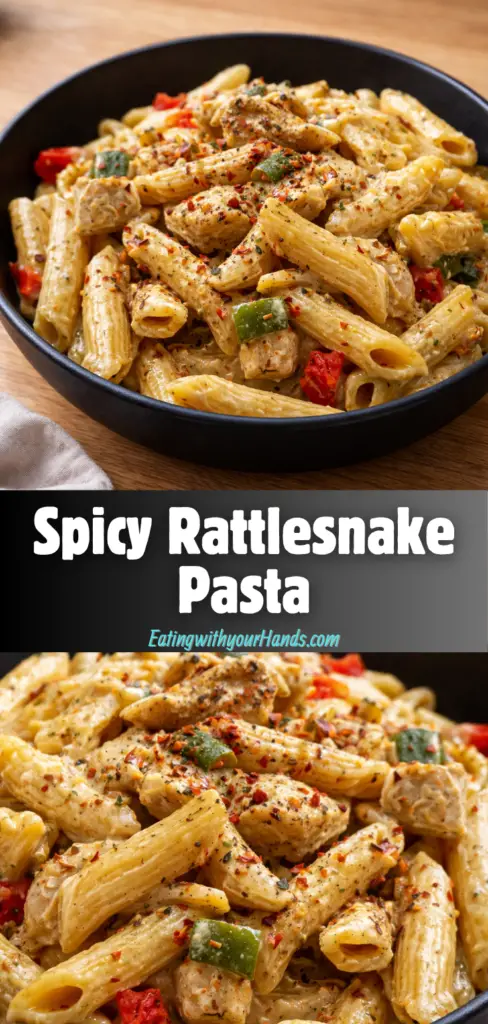
Some dinners do more than fill plates. They create a mood in the kitchen, pull people closer to the stove, and make an ordinary evening feel a little more lively than it did before the first ingredient hit the pan.
Spicy Rattlesnake Pasta has exactly that kind of presence. It is creamy, bold, comforting, and just fiery enough to make every bite feel exciting without losing the softness that makes comfort food so irresistible.
There is something special about a pasta dish that manages to feel rich and lively at the same time. The creamy sauce gives it warmth and fullness, while the Cajun seasoning, red pepper flakes, or jalapeños give it the kind of spark that wakes everything up beautifully.
That balance is what makes this dish so memorable. It is not simply creamy pasta, and it is not simply a spicy dinner either.
It is a combination of both. Tender penne, your choice of protein, colorful bell peppers, and a creamy seasoned sauce come together in a way that feels deeply satisfying and surprisingly easy to pull off.
The name alone carries a little drama, which suits the dish well. It has bold personality, plenty of flavor, and the kind of rich, spicy comfort that makes people go quiet for a moment after the first bite because they are too busy enjoying it.
What I love most about this recipe is how naturally it fits into real life. It is fast enough for a busy weeknight, but flavorful enough to serve when family or friends are gathered around the table and you want something that feels a little more special.
That is part of its magic. It brings a restaurant-style sense of indulgence into an everyday kitchen without asking for complicated techniques or a long list of ingredients.
The aroma is a big part of the experience too. As the protein cooks, the peppers soften, and the Cajun seasoning warms in the pan, the kitchen starts to fill with the kind of scent that makes everyone ask what is for dinner.
Then the cream goes in, softening the heat into something silky and rich. The result is a sauce that feels luxurious and bold all at once, coating each piece of pasta in a way that makes the entire dish feel complete.
Spicy Rattlesnake Pasta is the sort of meal that feels good on a cozy evening, at a family dinner, or whenever you need something quick that still feels comforting and full of flavor. It is rich, colorful, satisfying, and built for those moments when you want dinner to feel like more than just a task.
Table of Contents
- What Is Spicy Rattlesnake Pasta?
- Why You’ll Love Spicy Rattlesnake Pasta
- Ingredients You’ll Need
- Penne Pasta
- Chicken or Shrimp
- Cajun Seasoning
- Cream
- Cheese
- Bell Peppers
- Red Pepper Flakes or Jalapeños
- Step-by-Step Directions for Spicy Rattlesnake Pasta
- Preparing the Ingredients
- Cooking the Pasta and Protein
- Building the Spicy Sauce
- Combining Everything
- Serving the Dish
- Variations to Try
- Serving and Storage Tips
- Common Mistakes to Avoid
- Helpful Notes
- Frequently Asked Questions
- Why This Pasta Feels So Comforting
- Final Thoughts on Spicy Rattlesnake Pasta
- Spicy Rattlesnake Pasta
- Equipment
- Ingredients
- Instructions
- Notes
What Is Spicy Rattlesnake Pasta?
Spicy Rattlesnake Pasta is a creamy pasta dish made with penne, your choice of protein, bell peppers, and a spicy, seasoned cream sauce. It is a bold but comforting meal that combines heat, richness, and texture in one satisfying bowl.
The foundation of the dish is simple. Cooked penne pasta is tossed with a savory mixture of chicken or shrimp, sautéed bell peppers, Cajun seasoning, cream, and optional cheese for extra richness.
That may sound straightforward, but the flavor is anything but plain. The Cajun seasoning brings warmth and spice, the red pepper flakes or jalapeños intensify that heat, and the cream turns everything into a velvety sauce that wraps around the pasta beautifully.
One reason this recipe is so appealing is that it feels versatile without becoming fussy. You can keep it classic, adjust the heat, switch the protein, or even make it vegetarian while preserving the same creamy, spicy spirit.
It is also quick, which makes it especially practical. Prep time is 10 minutes, cook time is 20 minutes, and the total time is just 30 minutes.
The recipe serves 4 people. That makes it a great choice for a family dinner, a small gathering, or leftovers for the next day.
Why You’ll Love Spicy Rattlesnake Pasta
One of the biggest reasons to love this recipe is the speed. In only 30 minutes, you can make a dish that tastes layered, comforting, and far more elaborate than the effort required.
Another reason is the simplicity of the ingredients. The source text keeps the recipe built around pantry-friendly basics, which makes it easy to reach for when you need something satisfying without too much planning.
This recipe is also very approachable for beginners. The method is clear, the steps are manageable, and the whole dish comes together in a way that feels intuitive once the cooking begins.
That simplicity does not take away from the final result. In fact, it is part of what makes the dish so appealing, because it feels bold and indulgent without asking you to spend all evening in the kitchen.
It is also perfect for gatherings. The creamy sauce and spicy flavor make it naturally crowd-pleasing, especially when served hot in big bowls with a little extra garnish on top.
The make-ahead convenience is another strong advantage. The source notes that it can be prepared in advance and reheated, which makes it especially useful for busy schedules.
Most of all, it is comforting. The creamy sauce softens the heat just enough, the pasta makes it hearty, and the overall dish feels like something people genuinely look forward to sitting down and eating.
Ingredients You’ll Need
This recipe uses a short list of ingredients, but each one plays a clear role. Together, they create a dish that feels rich, balanced, spicy, and very satisfying.
Penne Pasta
You will need 8 ounces of penne pasta. The source recommends cooking it until al dente for the best texture.
Penne is a great choice because its shape catches the sauce both inside and out. That helps every bite feel coated and flavorful.
Chicken or Shrimp
You will need 1 pound of chicken or shrimp. The source also suggests mushrooms, zucchini, or tofu for a vegetarian option.
This flexibility is part of what makes the recipe so practical. The dish keeps its identity even when the protein changes, because the sauce and seasoning do so much of the heavy lifting.
Cajun Seasoning
You will need 2 tablespoons of Cajun seasoning. The amount can be adjusted depending on how spicy you want the final dish to be.
Cajun seasoning is one of the defining ingredients here. It gives the pasta its warm, bold flavor and creates the spicy backbone of the whole recipe.
Cream
You will need 1 cup of cream. If you want a vegan or dairy-free option, the source says plant-based cream can be used instead.
The cream is what creates the silky texture that makes the dish so comforting. It softens the spice and turns the seasoned pan ingredients into a cohesive sauce.
Cheese
You may use ½ cup of cheese, though it is optional. The source suggests fresh Parmesan, Monterey Jack, or cheddar.
This ingredient deepens the richness and gives the sauce an extra creamy finish. Since it is optional, you can decide whether you want the sauce lighter or more indulgent.
Bell Peppers
You will need 1 cup of diced bell peppers. Any variety works, and the source encourages using them for color and taste.
Bell peppers add sweetness, color, and a softer vegetable texture that balances the heat. They help make the bowl feel more lively and complete.
Red Pepper Flakes or Jalapeños
You will need 1 teaspoon of red pepper flakes or jalapeños. This ingredient can be adjusted depending on your desired level of heat.
This is the element that gives the dish its extra kick. It helps make the pasta feel energetic and bold without changing the creamy comfort at the center.
Step-by-Step Directions for Spicy Rattlesnake Pasta
The overall method is simple, but small details make a big difference. Paying attention to the pasta texture, the sauce consistency, and the balance of heat will help the final dish feel rich and satisfying without becoming too heavy or too intense.
Preparing the Ingredients
Step 1: Gather Everything Before You Start
Begin by placing all of your ingredients within reach. Set out the penne, protein, Cajun seasoning, cream, cheese if using, bell peppers, and red pepper flakes or jalapeños.
This first step makes the whole cooking process smoother. Since the dish comes together quickly once the pan is hot, having everything ready helps the recipe feel calm and easy.
Step 2: Bring a Pot of Salted Water to a Boil
Fill a large pot with water, season it generously with salt, and bring it to a boil. This is the base for the pasta, and the source text makes it clear that salting the water matters for flavor.
Pasta cooked in properly seasoned water tastes more complete from the start. This small step helps prevent the finished dish from feeling bland underneath the creamy sauce.
Step 3: Prepare the Protein and Vegetables
While the water heats, prepare your chicken or shrimp and dice the bell peppers. If you are using a vegetarian option like mushrooms, zucchini, or tofu, have those ready now as well.
Having the protein and vegetables prepared ahead of time helps everything move more easily once the pasta is cooking. It also makes the pan portion of the recipe feel much more manageable.
Cooking the Pasta and Protein
Step 4: Cook the Penne Until Al Dente
Once the water reaches a boil, add the penne pasta and cook it according to the package directions until al dente, usually about 8 to 10 minutes. The pasta should be tender, but still have a little bite.
The source specifically warns against overcooking the pasta, and that is important here. Since the pasta will be tossed in a hot sauce later, slightly firmer pasta helps the finished dish keep a better texture.
Step 5: Heat the Pan for the Protein
While the pasta cooks, place a large pan over medium heat and add a splash of oil. Allow the oil to warm before adding your chicken or shrimp.
This step creates the base for the rest of the dish. A properly heated pan helps the protein cook evenly and makes it easier to develop good flavor.
Step 6: Cook the Chicken or Shrimp
Add the chicken or shrimp to the pan and cook until fully done, about 5 to 7 minutes. Stir occasionally so the pieces cook evenly and develop a little color.
If you are using shrimp, they should turn opaque and curl slightly when ready. If you are using chicken, make sure it is fully cooked through before moving on.
Step 7: Add the Bell Peppers
Add the diced bell peppers to the pan and sauté them until tender, about 3 to 4 minutes. Their colors will brighten the pan and make the whole dish look even more inviting.
This is where the texture starts becoming more interesting. The peppers soften just enough to feel tender, but still keep enough bite to contrast with the creamy sauce.
Building the Spicy Sauce
Step 8: Add the Cajun Seasoning
Sprinkle the Cajun seasoning into the pan with the protein and peppers. Stir it through well so the spices coat everything evenly.
The source describes this as letting the spices bloom, and that is an important detail. As the seasoning warms in the pan, it releases aroma and deepens the flavor of the whole dish.
Step 9: Add the Cream
Pour in the cream and stir continuously until the mixture is fully combined and heated through, about 2 to 3 minutes. The cream immediately begins softening the intensity of the spice while turning the contents of the pan into a sauce.
This is one of the most satisfying stages of the recipe. The dish starts to transform from sautéed ingredients into something silky, rich, and deeply comforting.
Step 10: Add the Cheese if Using
If you are using cheese, add it now and stir until it melts into the sauce. This gives the sauce extra body and a richer finish.
The source suggests Parmesan, Monterey Jack, or cheddar, and each one brings a slightly different mood. Parmesan makes it more savory, Monterey Jack keeps it creamy and mellow, and cheddar adds a sharper richness.
Step 11: Adjust the Heat Level
Add the red pepper flakes or jalapeños and stir them into the sauce. Taste carefully and decide whether you want to add a little more heat or keep it where it is.
The source reminds readers to adjust the spice level to personal preference, and that is a good rule here. The dish should feel lively and bold, but still enjoyable and balanced.
Combining Everything
Step 12: Reserve a Little Pasta Water Before Draining
Before draining the pasta, scoop out a little pasta water and set it aside. The source includes this as an important step because it can help adjust the sauce later if needed.
This small reserve can be very useful. If the sauce thickens too much once the pasta is added, a splash of pasta water helps loosen it while keeping the texture silky.
Step 13: Drain the Pasta
Drain the cooked penne once it is ready. Do not let it sit too long after draining, because it combines best with the sauce while still warm.
Warm pasta absorbs sauce more naturally. That makes the final dish feel more cohesive and flavorful.
Step 14: Add the Pasta to the Sauce
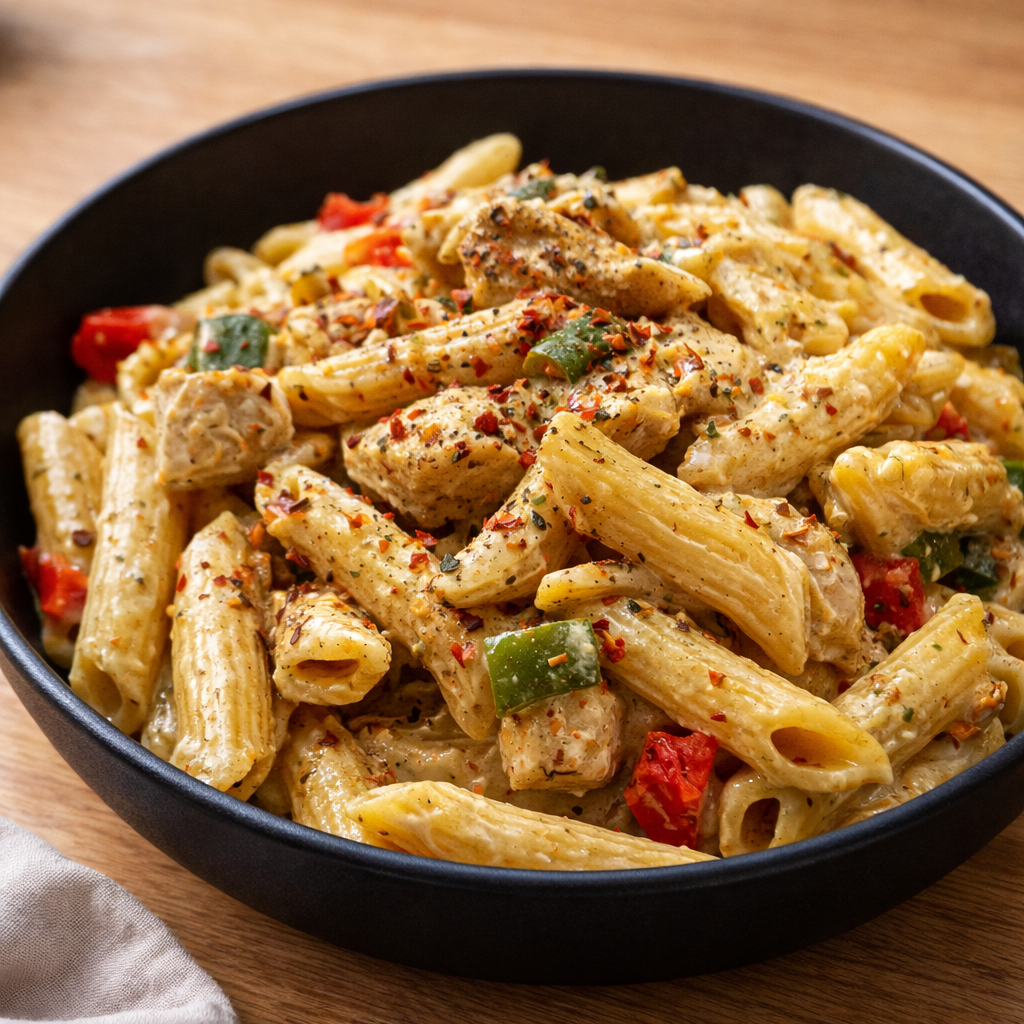
Add the drained pasta directly into the pan with the creamy spicy sauce. Toss everything gently so every piece of penne gets coated.
This is the point where the whole dish comes together. The ridges and hollow centers of the penne catch the sauce beautifully, making each bite feel rich and well-seasoned.
Step 15: Adjust the Consistency if Needed
If the sauce seems too thick, add a splash of the reserved pasta water until it reaches your preferred consistency. This helps keep the sauce smooth and easy to coat through the pasta.
The source mentions this specifically, and it is a very useful finishing step. A creamy pasta sauce should feel silky and clingy, not stiff or heavy.
Serving the Dish
Step 16: Serve the Pasta Hot
Spoon the Spicy Rattlesnake Pasta into bowls or onto plates while it is still hot. This is when the sauce feels at its creamiest and the spice is most beautifully balanced.
Serving it warm helps highlight both the comfort and the boldness of the dish. That contrast is a huge part of its appeal.
Step 17: Garnish for Extra Flavor
Garnish with more red pepper flakes or jalapeños if you want an even spicier finish. The source also suggests fresh herbs like parsley or basil for a fresh contrast.
This finishing touch does more than make the dish look good. It also gives the pasta a final little lift of color and flavor.
Step 18: Pair It With Simple Sides
The source suggests serving the pasta with a simple side salad or garlic bread. Both make sense because they balance the richness of the sauce and help turn the dish into a fuller meal.
A crisp salad offers freshness. Garlic bread adds extra comfort and is perfect for catching any remaining sauce.
Variations to Try
One of the best parts of this recipe is how easy it is to adapt. The creamy spicy base is strong enough to support different vegetables, proteins, and dietary changes without losing the heart of the dish.
Flavor Twist Variation
Add a splash of lemon juice if you want brightness, or smoked paprika if you want a deeper flavor. These are small adjustments, but they can shift the mood of the dish in interesting ways.
Seasonal Vegetable Variation
Use seasonal vegetables such as zucchini in summer or butternut squash in fall. The source suggests both, and they would each bring a different texture and sweetness to the bowl.
Fresh Herb Variation
Top the finished pasta with fresh parsley or basil. This is a simple change, but it gives the dish a fresher, lighter finish.
Gluten-Free and Dairy-Free Variation
Use gluten-free pasta and coconut cream to adapt the dish for gluten-free and dairy-free needs. The source also repeats this in the helpful notes, which makes it a reliable option.
Vegetarian Protein Variation
Swap the chicken or shrimp for mushrooms, zucchini, tofu, or tempeh. This keeps the recipe hearty while shifting it into a vegetarian-friendly version.
Extra Nutrition Variation
Add spinach or kale for more color and nutrition. These greens fold naturally into a creamy pasta and make the bowl feel even more generous.
Serving and Storage Tips
Serve Spicy Rattlesnake Pasta hot for the best texture and flavor. A garnish of extra red pepper flakes or fresh herbs makes the final dish feel especially vibrant.
The source recommends pairing it with a side salad or garlic bread, which is a smart combination. The salad cuts through the richness, and the bread complements the creamy sauce beautifully.
Store leftovers in an airtight container in the refrigerator for up to 3 days. If you need longer storage, the source notes that the pasta can be frozen for up to 2 months.
When reheating, do so gently on the stove or in the microwave. Add a splash of cream or pasta water to help bring back the sauce’s creamy texture.
Common Mistakes to Avoid
One common mistake is overcooking the pasta. The source clearly points out that the penne should stay al dente because it will continue to soften slightly once tossed in the sauce.
Another issue is forgetting to reserve pasta water. That small step can make a big difference when it comes to getting the sauce texture just right.
The source also warns against skipping spice adjustments. Since Cajun seasoning and pepper flakes can vary in intensity, tasting and adjusting helps keep the heat balanced.
Finally, do not skip the garnish. The source notes that garnishing adds flavor and presentation, and that really is true for a dish this bold and creamy.
Helpful Notes
If the sauce becomes too thick, the source suggests adding more cream or pasta water. This is one of the most useful adjustments because creamy pasta dishes can tighten as they sit.
For allergy-friendly needs, gluten-free pasta and dairy-free cream are suggested. This keeps the dish accessible while preserving the same overall feel.
The source also encourages choosing your favorite protein, including tofu or tempeh for a vegetarian option. That flexibility makes the recipe even more useful for different households and preferences.
Frequently Asked Questions
Can Spicy Rattlesnake Pasta Be Frozen?
Yes, the source says this pasta can be frozen. Let it cool completely first, then transfer it to an airtight container.
It will keep in the freezer for up to 2 months. When you are ready to enjoy it again, thaw it in the refrigerator overnight and reheat gently.
Can I Substitute Ingredients?
Absolutely. Chicken or shrimp can be replaced with mushrooms, zucchini, tofu, or other protein options based on your preference.
The cream can also be replaced with a plant-based alternative, which the source specifically mentions. This makes the dish easier to adapt for different dietary needs.
How Should I Store Leftovers?
The source says to store leftovers in an airtight container in the refrigerator for up to 3 days. That helps keep the pasta fresh and makes it easy to reheat later.
When reheating, add a little cream or pasta water. This helps restore the sauce and keeps it from becoming too thick.
Why This Pasta Feels So Comforting
Some dishes are comforting because they are mild and gentle. Others are comforting because they are bold enough to wake up the table and still rich enough to feel cozy.
Spicy Rattlesnake Pasta belongs in that second group. It brings heat, yes, but it wraps that heat in cream, pasta, and familiar ingredients that make it feel satisfying rather than overwhelming.
The creamy sauce is a big part of that feeling. It softens the sharper edges of the spice and turns the whole dish into something silky and soothing.
The pasta adds heartiness, and the protein makes it feel complete. Together, those ingredients create a bowl that feels both exciting and deeply reassuring.
There is also something emotional about dishes with this kind of flavor. They tend to invite conversation, seconds, and the kind of dinner-table happiness that comes from eating something warm and genuinely enjoyable.
That is why this recipe feels like more than just pasta. It is the kind of meal that fills the kitchen with aroma, the table with anticipation, and the evening with a little extra warmth.
Final Thoughts on Spicy Rattlesnake Pasta
Spicy Rattlesnake Pasta is the kind of dish that proves comfort food does not have to be quiet or mild to feel deeply satisfying. It can be bold, creamy, a little fiery, and still bring the same sense of coziness people love in a good pasta dinner.
What makes it so easy to love is how balanced it feels. The heat is lively, the sauce is rich, the pasta is tender, and the whole bowl comes together in a way that feels indulgent without being complicated.
The recipe is quick enough for busy nights, flexible enough for different tastes, and flavorful enough to serve to people you want to impress. That is a rare combination, and it is exactly what makes a recipe worth keeping.
Whether you make it with chicken, shrimp, or a vegetarian alternative, whether you keep it gently spicy or turn up the heat, it still carries the same comforting heart. It is warm, satisfying, and full of flavor in the best possible way.
And maybe that is what makes it memorable. It does not just feed people.
It brings them to the table and gives them something worth lingering over.
Spicy Rattlesnake Pasta
Spicy Rattlesnake Pasta is a bold and satisfying dish made with pasta, your choice of protein, and a rich, spicy cream sauce. It is a flavorful dinner option that comes together quickly and can easily be adjusted to match your preferred heat level.
- Prep Time: 10 minutes
- Cook Time: 20 minutes
- Total Time: 30 minutes
- Course: Dinner
- Cuisine: American
- Servings: 4 people
- Calories: 600 kcal
Equipment
Pot
Pan
Ingredients
For the Veggies
- Bell peppers, 1 cup, any variety
- Red pepper flakes or jalapeños, 1 teaspoon, adjust based on heat preference
For the Sauce
- Cajun seasoning, 2 tablespoons, adjust based on heat preference
- Cream, 1 cup, use plant-based cream for vegan option
- Cheese (optional), ½ cup, fresh Parmesan, Monterey Jack, or cheddar work well
For the Protein
- Chicken or shrimp, 1 pound, substitute with mushrooms, zucchini, or tofu for vegetarian option
For the Pasta
- Penne pasta, 8 ounces, cook until al dente
Instructions
Cook the penne pasta according to the package directions until al dente.
While the pasta cooks, prepare the chicken or shrimp in a pan over medium heat until fully cooked. Add the bell peppers and sauté until they become tender.
Stir in the Cajun seasoning, cream, and cheese, then cook until the sauce is well combined and heated through.
Add the cooked pasta to the pan and toss everything together with the sauce and protein mixture. Serve topped with red pepper flakes or jalapeños.
Notes
You can make this dish milder or spicier by adjusting the amount of Cajun seasoning and red pepper flakes.

Fernando is the creator and writer behind the food blog Eating with your Hands. Living and working in cities like Paris, Barcelona, and Berlin, and being married to a Canadian foodie, has given Fernando a passion and interest in food and inspired him to run EWYH.