
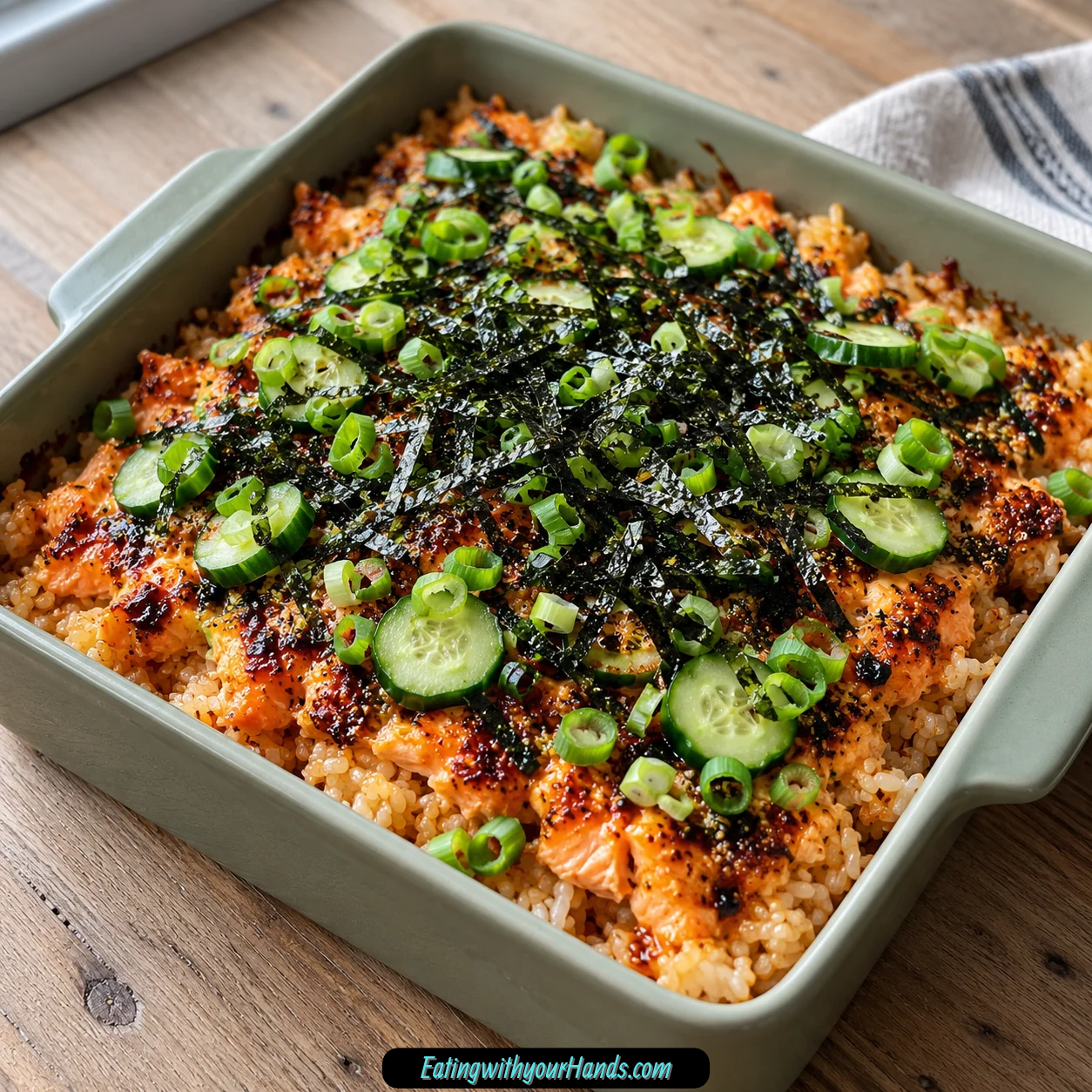

There are days when I want every flavor I love about sushi but have absolutely no interest in rolling individual pieces one by one. That exact craving is what led me to this Spicy Salmon Sushi Bake, a warm, scoopable dish layered with seasoned sushi rice, creamy spicy salmon, cool cucumber, green onion, and strips of nori.
The first version happened on a slow Sunday afternoon when sushi sounded perfect but the work involved did not. I wanted the spicy, creamy, savory combination I was craving without turning the kitchen into a production, and layering everything into one baking dish turned out to be the answer.
What came out of the oven immediately earned a place in my entertaining rotation. Instead of arranging one roll at a time, I could bring an entire dish to the table and let everyone scoop out as much as they wanted.
That simplicity is still one of my favorite things about it. You cook the rice, season it, mix the salmon topping, layer the two, bake, and finish the whole thing with cool fresh toppings.
The warm and cool textures are what make the dish especially memorable. The salmon mixture turns creamy against the seasoned rice, while cucumber, green onion, and nori bring freshness and contrast right before serving.
There is also plenty of room to control the heat. Two tablespoons of sriracha create the standard spicy version, but you can start lower or push it further depending on who is coming to the table.
I have made this for relaxed meals and for groups of friends, and it has the same effect every time. Once the first spoonful is taken, everyone seems to realize that the baking dish is going to empty much faster than expected.
That is the charm of a sushi bake for me. It keeps the flavors bold and satisfying while stripping away the part that requires careful rolling, shaping, and individual assembly.
Table of Contents
- Why You’ll Love This Spicy Salmon Sushi Bake
- Ingredients for Spicy Salmon Sushi Bake
- Why Sushi Rice Is the Foundation
- The Seasoned Vinegar Makes a Difference
- What Makes the Salmon Layer So Creamy
- Why the Fresh Toppings Go On Last
- Equipment You’ll Need
- How to Make Spicy Salmon Sushi Bake
- Step 1: Rinse the Sushi Rice Thoroughly
- Step 2: Cook the Rice
- Step 3: Make the Seasoned Vinegar
- Step 4: Season the Cooked Rice
- Step 5: Build the Rice Layer
- Step 6: Preheat the Oven
- Step 7: Prepare the Salmon
- Step 8: Mix the Spicy Salmon Topping
- Step 9: Layer the Salmon Over the Rice
- Step 10: Bake Until Heated Through
- Step 11: Prepare the Fresh Toppings
- Step 12: Finish the Sushi Bake
- How to Adjust the Spice Level
- Why Texture Matters So Much
- Serving Spicy Salmon Sushi Bake Family-Style
- Serving With Soy Sauce
- Pickled Ginger and Wasabi
- Avocado Topping
- Radish for Extra Crunch
- Tempura Flake Topping
- Sesame Seed Topping
- Crab Variation
- Extra Spicy Mayo Drizzle
- Tropical Mango Variation
- Smoked Salmon Breakfast Variation
- Other Seafood and Vegetarian Ideas
- Make-Ahead Preparation
- Storage
- How to Reheat Spicy Salmon Sushi Bake
- Frequently Asked Questions
- Nutritional Information
- The Sunday Sushi Craving That Became a Party Favorite
- Spicy Salmon Sushi Bake Recipe
Why You’ll Love This Spicy Salmon Sushi Bake
The biggest advantage is how little technique it requires. There is no rolling mat, no need to shape perfect pieces, and no pressure to make every serving look identical.
The flavor still feels layered and complete. Seasoned rice gives you that familiar sweet-tangy base while mayonnaise, sriracha, and sesame oil create a creamy topping with heat and richness.
The recipe also works well for sharing. An 8×8-inch baking dish can go directly to the table so everyone can serve themselves family-style.
Heat is easy to customize too. Start with less sriracha when you want something mild, then increase it when you prefer a stronger kick.
Texture keeps the whole dish interesting from beginning to end. Soft rice and creamy salmon are balanced by crisp cucumber, green onion, nori, and any optional crunchy toppings you decide to serve alongside.
Most of all, it feels like the kind of dish that requires much more effort than it actually does. That makes it especially useful when you want something impressive without spending the afternoon assembling individual sushi rolls.
Ingredients for Spicy Salmon Sushi Bake
The dish begins with seasoned sushi rice and a creamy salmon layer, then finishes with cool toppings added after baking. Soy sauce is served on the side so everyone can add as much as they like.
For the Sushi Rice
- 2 cups sushi rice
- 2 ½ cups water
- ¼ cup rice vinegar
- 2 tablespoons sugar
- 1 teaspoon salt
Short-grain sushi rice is important here because its sticky texture helps the bottom layer hold together. Long-grain rice is not the intended substitute for this dish.
The vinegar, sugar, and salt are mixed separately before being folded into the cooked rice. That seasoning gives the rice its characteristic tang and gentle sweetness.
For the Spicy Salmon Layer
- 1 pound fresh salmon, skinless and boneless
- ¼ cup mayonnaise
- 2 tablespoons sriracha
- 1 teaspoon sesame oil
The salmon is broken into small pieces, with a few larger pieces left for texture. Mayonnaise gives the topping its creamy body, while sriracha brings the heat and sesame oil contributes its distinctive nutty aroma.
Two tablespoons of sriracha are a good starting point for the spicy version. Additional sriracha can be added when you want a hotter result.
For the Fresh Toppings and Serving
- ½ cup green onions, thinly sliced
- ½ cup cucumber, diced small
- ¼ cup nori sheets, cut into strips
- Soy sauce, for serving
The toppings go on after baking rather than before. That keeps the cucumber crisp and allows the green onion and nori to stay distinct from the warm filling.
Why Sushi Rice Is the Foundation
The rice does more than sit underneath the salmon. Its short-grain texture creates the slightly sticky base that makes each scoop feel cohesive.
Rinsing the rice before cooking removes excess starch from the surface. Continue rinsing under cold water until the water runs clear.
Once cooked with 2 ½ cups water, the rice is seasoned while still warm. Folding in the vinegar mixture gently keeps the grains from being crushed.
Spread the finished rice across the baking dish in an even layer. This gives the salmon mixture a stable surface and helps every serving contain both components.
The Seasoned Vinegar Makes a Difference
Combine ¼ cup rice vinegar with 2 tablespoons sugar and 1 teaspoon salt. Stir until the sugar dissolves before adding the mixture to the rice.
The vinegar brings brightness while the sugar softens the acidity. Salt rounds everything out so the rice does not taste flat beneath the rich topping.
Fold rather than stir aggressively. The goal is to distribute the seasoning while keeping the cooked grains intact.
Once seasoned, let the rice cool slightly in the baking dish. That short pause gives you time to prepare the salmon layer.
What Makes the Salmon Layer So Creamy
Mayonnaise is the base of the topping. A quarter cup gives the salmon enough richness to become creamy once mixed without turning it into a loose sauce.
Sriracha adds both heat and flavor. Two tablespoons give the dish its spicy identity, though you can adjust that amount to suit your preference.
One teaspoon sesame oil adds another savory dimension. Its aroma is noticeable even in a small quantity and helps the topping feel more complete.
Once mixed together, the salmon mixture should spread easily across the rice. Push it all the way toward the edges so every scoop gets plenty of topping.
Why the Fresh Toppings Go On Last
Cucumber is at its best here when it stays cool and crisp. Adding it after baking gives you that fresh contrast against the warm rice and creamy salmon.
Green onions provide another layer of freshness. Thin slices distribute more evenly and give each serving small bursts of flavor.
Nori brings the unmistakable seaweed element that ties the dish back to sushi. Cutting the sheets into strips makes them easy to scatter across the surface.
Serve the bake immediately after those toppings are added. The contrast is strongest while the base is warm and the vegetables remain crisp.
Equipment You’ll Need
An 8×8-inch baking dish is ideal. A similar-size oven-safe dish or even a pie plate can also work.
A rice cooker or medium pot is needed for the sushi rice. Use whichever method you normally prefer for cooking rice.
Two mixing bowls make preparation easier. One handles the seasoned vinegar while another holds the spicy salmon mixture.
A wooden spoon or spatula helps fold the rice without smashing it. You will also need a chef’s knife and cutting board for the green onion, cucumber, nori, and salmon preparation.
How to Make Spicy Salmon Sushi Bake
This recipe becomes much easier when the steps are kept in order. Build the rice first, prepare the salmon topping while the rice cools slightly, then bake and finish with the fresh ingredients only after the dish leaves the oven.
Step 1: Rinse the Sushi Rice Thoroughly
Place the 2 cups sushi rice under cold water and rinse repeatedly. Swish the grains gently with your fingers as the water moves through them.
Continue until the water runs clear. This removes excess surface starch and helps prevent the cooked rice from becoming overly gummy.
Handle the rice gently rather than crushing it. Once rinsed, drain away the excess water before cooking.
Step 2: Cook the Rice
Combine the rinsed rice with 2 ½ cups water. Cook it in a rice cooker or use a medium pot on the stovetop.
Allow the rice to cook fully before adding any seasoning. Do not add the vinegar mixture to uncooked rice.
While the rice cooks, move on to preparing the seasoning mixture. This keeps the process efficient without requiring extra waiting.
Step 3: Make the Seasoned Vinegar
In a small bowl, combine ¼ cup rice vinegar, 2 tablespoons sugar, and 1 teaspoon salt. Stir until the sugar dissolves.
Keep the mixture ready beside the cooked rice. Adding it while the rice is still warm helps distribute the seasoning.
Do not alter the proportions when preparing the standard rice layer. The balance of vinegar, sugar, and salt is what gives it the intended flavor.
Step 4: Season the Cooked Rice
As soon as the rice finishes cooking, transfer it as needed and add the seasoned vinegar. Use a wooden spoon or spatula to fold the mixture through the grains.
Work gently rather than stirring in circles. Vigorous mixing can smash the rice and make the texture heavier.
Continue folding until the seasoning is evenly distributed. The rice should taste tangy and lightly seasoned throughout.
Step 5: Build the Rice Layer
Spread the seasoned rice evenly into an 8×8-inch baking dish. Take it all the way into the corners so the base has a consistent thickness.
Use the spatula to level the surface without crushing the rice aggressively. You want a stable layer, not a tightly compressed block.
Let the rice cool slightly while you prepare the topping. This creates a clean base for the creamy salmon mixture.
Step 6: Preheat the Oven
Preheat the oven to 375°F. Give it enough time to reach temperature before the assembled sushi bake goes inside.
Keep the baking dish nearby while the oven heats. Once the topping is mixed, assembly only takes a few moments.
The bake will need about 15–20 minutes in the oven. Having the oven fully heated makes that timing easier to follow.
Step 7: Prepare the Salmon
Take the 1 pound skinless, boneless salmon and separate it into small pieces using your fingers or a fork. Leave a few slightly larger pieces to give the topping more texture.
Keep the pieces reasonably even so they distribute easily across the rice. The goal is a mixture that can be spread rather than a few large sections concentrated in one area.
Place the prepared salmon in a mixing bowl. The mayonnaise, sriracha, and sesame oil will be added directly to it.
Step 8: Mix the Spicy Salmon Topping
Add ¼ cup mayonnaise, 2 tablespoons sriracha, and 1 teaspoon sesame oil to the salmon. Stir until the pieces are evenly coated.
Taste the mixture and adjust the sriracha if you want more heat. Additional spice is optional rather than required.
Keep some texture in the salmon rather than mashing everything completely smooth. The creamy coating should bind the pieces together without erasing them.
Step 9: Layer the Salmon Over the Rice
Spoon the spicy salmon mixture over the seasoned rice. Spread it evenly from edge to edge.
Do not leave large areas of exposed rice. Consistent coverage means every serving gets the intended balance of rice and salmon.
Smooth the surface lightly with a spoon or spatula. There is no need to press the topping firmly into the rice.
Step 10: Bake Until Heated Through
Place the dish in the preheated 375°F oven. Bake for about 15–20 minutes.
The mixture should be heated through and the edges should just begin developing a little golden color. Watch toward the end so the surface does not go beyond the intended stage.
The warm aroma of sesame, spicy sauce, salmon, and seasoned rice will become much more noticeable during baking. Once the edges reach that lightly golden stage, remove the dish from the oven.
Step 11: Prepare the Fresh Toppings
While the dish bakes, thinly slice enough green onion to measure ½ cup. Dice ½ cup cucumber into small pieces so it distributes evenly.
Cut enough nori sheets into strips to make ¼ cup. Keep all three toppings separate until the bake leaves the oven.
These ingredients do not need to cook. Their cool, fresh texture is part of the finished dish.
Step 12: Finish the Sushi Bake
As soon as the baking dish comes out, scatter the sliced green onions across the top. Follow with the diced cucumber and nori strips.
Distribute everything broadly rather than creating one heavily topped section. Each scoop should receive some of the fresh garnish.
Do not return the dish to the oven after adding the toppings. Serve immediately while the rice and salmon are warm and the cucumber remains crisp.

How to Adjust the Spice Level
Two tablespoons of sriracha create the standard spicy filling. If you enjoy stronger heat, add another teaspoon or two and taste as you go.
For a gentler version, begin with 1 tablespoon. More can always be mixed in before the topping goes onto the rice.
An additional tablespoon of mayonnaise can also mellow the heat. This creates a creamier, less fiery filling.
A squeeze of honey is another option for balancing the spice. The sweetness softens the heat without removing the sriracha character completely.
Why Texture Matters So Much
The warm portion of the dish is intentionally soft and creamy. Seasoned rice sits under the mayonnaise-coated salmon, creating a rich base.
That is why cucumber, green onion, and nori are so important. They keep the dish from feeling like one uninterrupted soft texture.
Optional tempura flakes can bring even more crunch. Toasted sesame seeds add another small textural contrast along with their nutty character.
Whatever extras you choose, keep the balance in mind. Creamy, spicy, crunchy, and fresh elements are what make each scoop feel complete.
Serving Spicy Salmon Sushi Bake Family-Style
One of the easiest ways to serve this dish is directly from the baking pan. Put the dish in the center of the table and let everyone scoop their own portion.
Serve soy sauce in small bowls nearby. This allows each person to control how salty they want the finished serving.
Large spoons make serving simple. Chopsticks can still be used at the table for anyone who prefers them.
Grab your own portion before the pan gets passed around. This is the kind of dish that tends to disappear quickly.
Serving With Soy Sauce
Soy sauce is the classic accompaniment here. A small dipping bowl beside each plate lets people add a little at a time.
For a slightly sweeter version, mix in a splash of mirin or a pinch of sugar. That softens the saltiness.
Low-sodium soy sauce can be used when you want less sodium at serving time. The base of the sushi bake itself does not need to change.
Avoid pouring a large amount directly over the entire baking dish. Individual serving allows everyone to season according to preference.
Pickled Ginger and Wasabi
Pickled ginger gives the meal a bright, sharp contrast. Serve it on the side rather than mixing it into the bake.
Wasabi paste can also be offered for anyone who wants another kind of heat. A small amount is enough.
Both additions work especially well when serving the dish family-style. Guests can build each plate according to their own preferences.
Keep the sides separate from the fresh cucumber and nori topping. That preserves the clean layers of the bake itself.
Avocado Topping
Sliced avocado brings another creamy element. Serve it beside the bake or add it to individual portions.
Its mild richness works naturally with spicy salmon. It also gives people another way to soften the heat.
Add avocado close to serving. The dish is best when all the fresh toppings look and taste newly prepared.
Keep the slices distinct rather than mashing them into the salmon layer. That maintains the texture contrast.
Radish for Extra Crunch
Thinly sliced radish can add a peppery crispness. Its fresh texture works especially well against the warm rice.
Arrange the slices in a small bowl at the table. Guests can add as much as they prefer.
Radish changes the flavor more noticeably than cucumber. That makes it best as an optional topping rather than part of the standard layer.
Its crunch is particularly good when you want a fresher, sharper finish. The creamy salmon remains the center of the dish.
Tempura Flake Topping
Tempura flakes are an easy way to increase crunch. Sprinkle them over individual portions or across the top right before serving.
Add them only at the end. Moisture from the warm salmon layer will gradually soften them.
Their crispy texture is especially useful because the baked portion itself is intentionally tender. A little crunch changes each bite dramatically.
Keep the amount balanced. The salmon, rice, cucumber, and nori should still remain easy to taste.
Sesame Seed Topping
Toasted sesame seeds bring nutty flavor and a subtle crunch. Scatter them lightly over the finished dish.
They work particularly well alongside the teaspoon of sesame oil already in the salmon mixture. That repeats the sesame flavor without overwhelming the bake.
Add them with the other finishing toppings. There is no need to bake them into the salmon layer.
They are entirely optional. The dish is already complete without them.
Crab Variation
Lump crab meat can replace the salmon for a milder, luxurious variation. Mix it with the creamy spicy elements in the same general style.
Old Bay seasoning can be added for a Maryland-inspired kick. This gives the variation a very different personality from the salmon version.
Keep the seasoned sushi rice base. The warm rice still provides the structure beneath the seafood topping.
Finish with cucumber, green onion, and nori. Those fresh ingredients remain useful even when the seafood changes.
Extra Spicy Mayo Drizzle
For more creamy heat, make an extra mixture of mayonnaise and sriracha. Add a splash of lime juice.
After the sushi bake comes out of the oven, drizzle the spicy mayo in zigzags over the surface. This creates a more dramatic presentation and another layer of heat.
Add the fresh toppings after or around the drizzle. Keep enough cucumber and green onion visible for texture.
This version is especially good for people who already know they like a fiery sushi bake. Milder eaters may prefer the standard topping.
Tropical Mango Variation
Diced mango can be added to the cucumber topping for a sweeter summer variation. Its fruitiness creates a strong contrast with spicy salmon.
Keep the pieces relatively small. They should scatter through the topping rather than dominate each serving.
Toasted coconut flakes can be sprinkled over the top for an even more tropical direction. This takes the dish farther away from the standard version while preserving the spicy-creamy base.
Serve immediately after adding the fruit. The warm and cool contrast remains part of the appeal.
Smoked Salmon Breakfast Variation
Smoked salmon can replace fresh salmon for a brunch-inspired version. Soft-scrambled eggs are added to the rice layer.
Everything bagel seasoning becomes the finishing flavor. Sliced avocado works especially well alongside this variation.
The result is very different from the original spicy salmon version. It turns the basic sushi-bake format into a breakfast or brunch dish.
Keep the layered presentation. Rice remains the foundation that makes the bake easy to scoop and share.
Other Seafood and Vegetarian Ideas
Tuna and shrimp can be used in variations on the sushi-bake concept. Each changes the flavor while keeping the same general layered presentation.
Roasted mushrooms can create a vegetarian version. Their texture gives the filling more substance without seafood.
Whichever variation you choose, keep some balance between creamy, spicy, crunchy, and fresh. Those contrasts are what make the concept so enjoyable.
Treat these as alternate directions rather than additions you need all at once. The original salmon bake is already complete on its own.
Make-Ahead Preparation
The sushi rice can be cooked and seasoned 1 day ahead. Store it covered in the refrigerator.
Before assembling, let the rice come to room temperature. This makes it easier to spread into the baking dish.
The salmon filling can be mixed separately up to 6 hours ahead. Keep it chilled until you are ready to assemble.
Do not fully assemble and bake the entire dish far in advance. The freshly baked base and newly added toppings give you the best texture.
Storage
Cover leftover sushi bake tightly and refrigerate it. Keep it for up to 2 days.
After that point, the rice begins drying out. The fresh toppings also lose some of their crisp texture during storage.
When possible, store additional cucumber, green onion, and nori separately. Fresh toppings make leftovers feel much closer to the first serving.
Keep the dish properly covered while chilled. Reheat only the portion you plan to eat.
How to Reheat Spicy Salmon Sushi Bake
Preheat the oven to 300°F. Place the leftover bake in the oven and heat gently until warmed through.
The lower reheating temperature helps warm the rice and salmon without aggressively cooking the surface. Watch the dish so it does not dry out.
Add fresh cucumber, green onion, and nori after reheating. Do not warm those toppings with the leftovers.
Serve as soon as everything is warm. Fresh toppings restore much of the contrast that makes the original dish appealing.
Frequently Asked Questions
Can I Use Canned Salmon Instead of Fresh?
Yes, although the texture will be denser than the fresh version. Choose good-quality canned salmon packed in water and drain it thoroughly.
Mix it with the mayonnaise, sriracha, and sesame oil. Expect the finished topping to feel somewhat different from the standard version.
How Can I Make It Less Spicy?
Begin with 1 tablespoon sriracha instead of 2. Taste before adding more.
An extra tablespoon of mayonnaise can mellow the heat further. A squeeze of honey can also add sweetness to balance the spice.
Can I Make the Rice Ahead?
Yes. Cook and season the rice up to 1 day ahead.
Keep it covered in the refrigerator. Let it come to room temperature before assembling the bake.
Can I Prepare the Salmon Mixture Ahead?
Yes. Mix the salmon topping up to 6 hours before baking.
Keep it refrigerated until assembly. Spread it over the rice only when you are getting ready to bake.
Can I Assemble the Whole Dish Ahead?
It is better to keep the components separate until you are ready to bake. The freshly heated rice and salmon are part of what makes the final dish so enjoyable.
Add cucumber, green onions, and nori only after baking. Those toppings should remain fresh and crisp.
Can I Add More Sriracha?
Absolutely. Start with 2 tablespoons and increase it according to your preference.
Adding another teaspoon or two creates a hotter version. Taste the salmon mixture as you adjust.
What Can I Serve With It?
Soy sauce, pickled ginger, and wasabi are easy additions. Sliced avocado, radish, tempura flakes, and toasted sesame seeds can also be served alongside.
Set the toppings around the table for a family-style meal. Everyone can customize their own serving.
Nutritional Information
A serving equal to about ¼ of the recipe contains approximately 350 calories. It also provides around 18g protein, 12g fat, 45g carbohydrates, and about 600mg sodium.
Salmon contributes much of the protein in the dish. The rice accounts for a significant portion of the carbohydrates, while the mayonnaise and salmon contribute to the fat content.
The dish also includes omega-3s from the salmon and some fiber from the vegetables. Specific values can vary according to brands and serving size.
Using low-sodium soy sauce when serving can reduce the sodium contribution from that accompaniment. Additional mayo, avocado, tempura flakes, mango, or other toppings will change the final nutritional profile.
The Sunday Sushi Craving That Became a Party Favorite
I still remember the exact mood that led me to make this dish for the first time. I wanted sushi badly enough to keep thinking about it, but not badly enough to spend the afternoon carefully rolling piece after piece.
The baking dish sitting in my cabinet suddenly seemed like a much better plan. Instead of asking every ingredient to fit inside a roll, I could let the rice become the base and pile all the flavor on top.
That first pan felt almost suspiciously easy. I seasoned the warm rice, mixed the creamy salmon, spread everything into layers, and put it into the oven.
Then the aroma started filling the kitchen. By the time the edges were beginning to turn golden, the whole thing smelled far more elaborate than the work I had put into it.
The fresh toppings were the detail that made the first scoop really click for me. Warm creamy salmon alone would have been rich, but cucumber, green onions, and nori immediately gave it the freshness and texture I had been craving.
Since then, I have served the dish to friends more times than I can count. It works because everyone can scoop it casually instead of waiting for me to assemble individual portions.
I usually put soy sauce around the table and let people add their own extras. One person goes straight for avocado, another wants more sriracha, and someone inevitably piles on every crunchy topping available.
That casual serving style has become part of the recipe’s personality. The baking dish lands in the middle of the table, everyone leans in, and the meal feels more like sharing than formal serving.
Sometimes I experiment with crab, mango, smoked salmon, or another topping combination. Even then, I always come back to the same idea of balancing warm rice and creamy filling with something cool, fresh, and crisp.
The classic spicy salmon version remains the one I make most often. Sushi rice, creamy sriracha salmon, sesame oil, cucumber, green onion, nori, and a little soy sauce already give me exactly what I was looking for on that lazy Sunday.
That is why Spicy Salmon Sushi Bake has become one of my favorite dishes for easy entertaining. It takes the flavors I crave, skips the meticulous rolling, and turns them into one warm, generous pan that invites everyone at the table to reach in for another scoop.
Spicy Salmon Sushi Bake Recipe

Creamy, spicy, savory, and easy to serve, this Spicy Salmon Sushi Bake layers seasoned sushi rice with a rich salmon mixture before finishing with fresh cucumber, green onions, and nori. Baked until heated through and served with soy sauce, it brings familiar sushi-inspired flavors into a simple shareable main course.
Recipe Details
- Prep Time: 20 minutes
- Cook Time: 20 minutes
- Total Time: 40 minutes
- Course: Main Course
- Cuisine: Japanese
- Servings: 4 servings
- Calories: 350 kcal
Ingredients
For the Sushi Rice
- 2 cups sushi rice
- 2 ½ cups water
- ¼ cup rice vinegar
- 2 tablespoons sugar
- 1 teaspoon salt
For the Spicy Salmon
- 1 pound fresh salmon skinless and boneless
- ¼ cup mayonnaise
- 2 tablespoons sriracha sauce
- 1 teaspoon sesame oil
For Topping and Serving
- ½ cup green onions chopped
- ½ cup cucumber diced
- ¼ cup nori sheets cut into strips
- Soy sauce for serving
Instructions
Step 1: Preheat the Oven
Preheat the oven to 375°F (190°C).
Have a baking dish ready for assembling the sushi bake.
Step 2: Rinse the Rice
Rinse the sushi rice thoroughly under cold water.
Continue rinsing until the water runs clear.
Step 3: Cook the Rice
Combine the rinsed sushi rice with the water.
Cook in a rice cooker or pot until the rice is done.
Step 4: Season the Sushi Rice
In a small bowl, combine the rice vinegar, sugar, and salt.
Fold the mixture gently into the cooked rice until evenly distributed.
Step 5: Make the Spicy Salmon Mixture
Flake the fresh salmon into small pieces.
Mix it with the mayonnaise, sriracha sauce, and sesame oil until evenly coated.
Step 6: Assemble the Sushi Bake
Spread the seasoned sushi rice evenly across the bottom of the baking dish.
Spoon the spicy salmon mixture over the rice and distribute it evenly across the surface.
Step 7: Bake
Bake for 15–20 minutes.
Continue until the dish is heated through.
Step 8: Add the Fresh Toppings
Remove the sushi bake from the oven.
Top with chopped green onions, diced cucumber, and nori strips.
Step 9: Serve
Divide into 4 servings and serve immediately.
Offer soy sauce on the side.
Notes
- Adjust sriracha to your preferred spice level.
- Use fresh salmon for the best flavor and texture.
- Serve immediately for the best taste.
Serving Suggestions
Serve Spicy Salmon Sushi Bake immediately after adding the green onions, cucumber, and nori. The warm salmon and seasoned rice contrast nicely with the fresh cucumber and crisp nori topping.
This recipe makes 4 servings and can be brought straight to the table in the baking dish for easy sharing. Soy sauce can be served alongside each portion.
Adjust the sriracha according to your preferred heat level. Fresh salmon gives the dish its best flavor and texture.
Storage
This sushi bake is best served immediately for the freshest flavor and texture.
Rice Tip
Use 2 cups sushi rice with 2 ½ cups water.
Rinse the rice under cold water until the water runs clear before cooking.
Rice Seasoning Tip
Combine ¼ cup rice vinegar with 2 tablespoons sugar and 1 teaspoon salt.
Fold the seasoning into the cooked rice before assembling the bake.
Salmon Tip
Use 1 pound fresh skinless and boneless salmon.
Flake it into small pieces before mixing with the mayonnaise, sriracha, and sesame oil.
Sriracha Tip
Use 2 tablespoons sriracha sauce.
Adjust the amount to suit your preferred spice level.
Topping Tip
Finish the baked dish with ½ cup chopped green onions, ½ cup diced cucumber, and ¼ cup nori strips.
Baking Tip
Bake at 375°F (190°C) for 15–20 minutes, until heated through.
Serving Tip
Serve immediately with soy sauce on the side.

Fernando is the creator and writer behind the food blog Eating with your Hands. Living and working in cities like Paris, Barcelona, and Berlin, and being married to a Canadian foodie, has given Fernando a passion and interest in food and inspired him to run EWYH.