
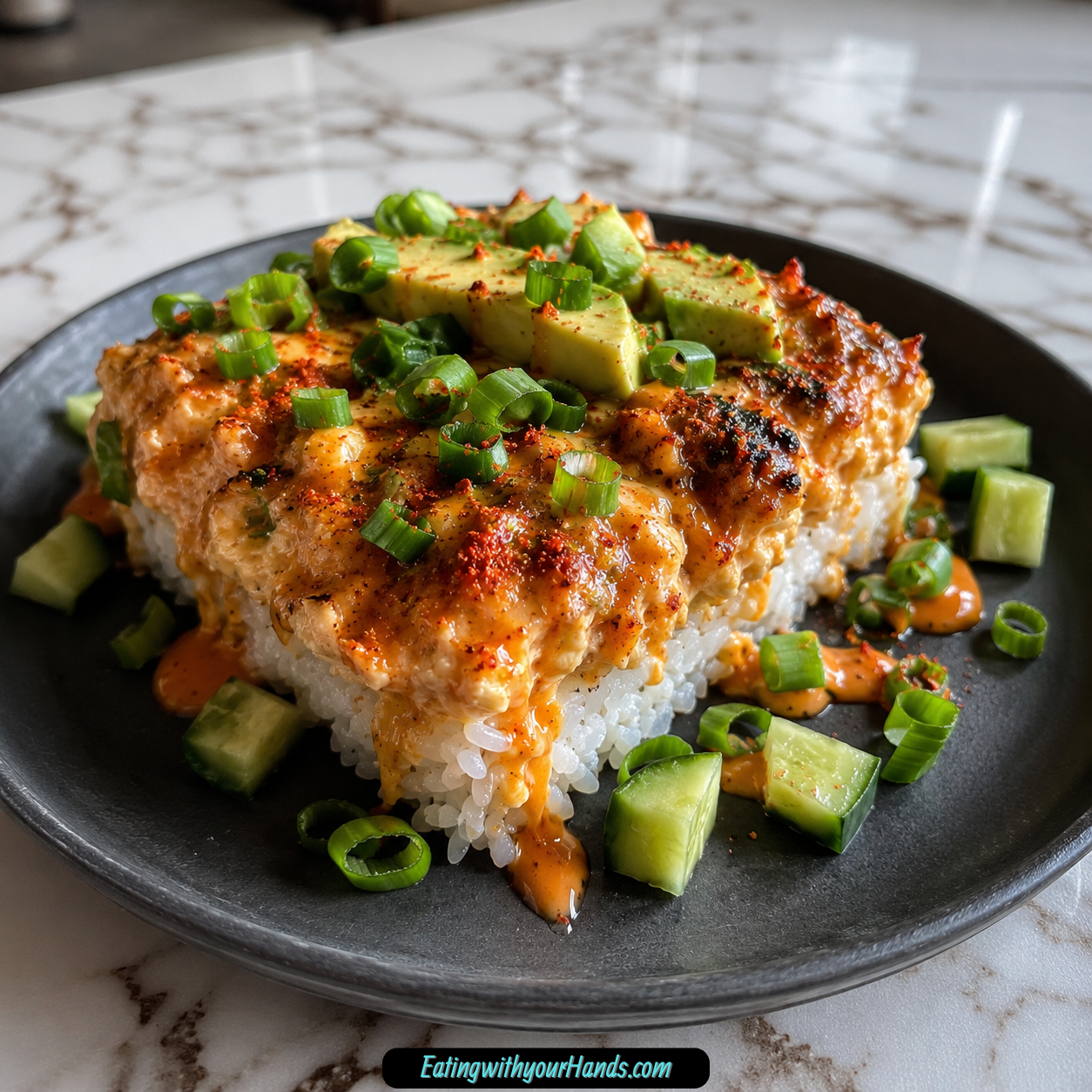
Some dishes feel like they were made for sharing. Spicy Salmon Sushi Bake is one of those warm, comforting recipes that turns the familiar flavors of sushi into a cozy baked dish everyone can scoop, wrap, and enjoy together.
It has the soft sweetness of seasoned sushi rice, the richness of salmon, the creamy heat of sriracha and mayonnaise, and the savory depth of furikake. Once baked, it becomes warm, layered, flavorful, and deeply satisfying.
This is the kind of recipe that makes a table feel lively. You place the dish in the center, set out nori sheets, add avocado, cucumber, green onions, and drizzles of Kewpie mayo or unagi sauce, and everyone builds their own perfect bite.
It is easy enough for a weeknight but fun enough for gatherings, potlucks, or cozy weekends with family. The flavors feel special, but the method is simple and approachable, even if you have never made a sushi bake before.
Table of Contents
- What Is Spicy Salmon Sushi Bake?
- Why This Recipe Feels So Comforting
- Recipe Overview
- Why You’ll Love Spicy Salmon Sushi Bake
- Ingredients You’ll Need
- Ingredient Notes
- Directions
- Step 1: Rinse the Sushi Rice
- Step 2: Cook the Rice
- Step 3: Season the Warm Rice
- Step 4: Let the Rice Rest Briefly
- Step 5: Prepare the Salmon
- Step 6: Soften the Cream Cheese
- Step 7: Combine the Salmon Mixture Ingredients
- Step 8: Mix Gently
- Step 9: Adjust the Spice Level
- Step 10: Preheat the Oven
- Step 11: Prepare the Baking Dish
- Step 12: Add the First Rice Layer
- Step 13: Add the Salmon Mixture
- Step 14: Add the Remaining Rice
- Step 15: Bake the Sushi Bake
- Step 16: Let It Cool Slightly
- Step 17: Prepare the Avocado
- Step 18: Prepare the Cucumber
- Step 19: Add the Green Onions
- Step 20: Add Final Drizzles
- Step 21: Serve With Nori Sheets
- Step 22: Enjoy While Warm
- Pro Tips for the Best Spicy Salmon Sushi Bake
- Variations
- Serving Suggestions
- Storage Tips
- Freezing Instructions
- Make-Ahead Instructions
- Common Mistakes to Avoid
- Helpful Notes
- Frequently Asked Questions
- Final Thoughts
- Spicy Salmon Sushi Bake
What Is Spicy Salmon Sushi Bake?
Spicy Salmon Sushi Bake is a warm, layered dish inspired by sushi flavors. It is made with seasoned sushi rice, salmon, furikake, soy sauce, cream cheese, mayonnaise, sriracha, avocado, cucumber, green onions, and nori sheets for serving.
Instead of rolling individual sushi pieces, everything is layered in a baking dish and baked until warm, creamy, and golden. It gives you the same comforting flavors in a much easier, shareable form.
The rice forms the base and top layer. The salmon mixture goes in the middle, adding richness, spice, and savory flavor.
After baking, the dish is finished with fresh toppings like avocado, cucumber, and green onions. Nori sheets are served on the side so everyone can scoop a little bake onto a sheet and enjoy it like a warm sushi bite.
Why This Recipe Feels So Comforting
There is something beautiful about a dish that invites everyone to eat together from the same pan. Spicy Salmon Sushi Bake feels casual, cozy, and generous.
The sushi rice brings softness and a lightly tangy flavor from rice wine vinegar, sugar, and salt. It creates a warm foundation that holds the layers together.
The salmon mixture is creamy, spicy, and savory. Cream cheese, mayonnaise, sriracha, soy sauce, and furikake coat the salmon and turn it into the heart of the dish.
The toppings add freshness after baking. Avocado brings creaminess, cucumber adds crunch, green onions add a bright bite, and nori gives each scoop that familiar sushi-style finish.
Recipe Overview
Prep Time: 20 minutes
Cook Time: 25 minutes
Total Time: 45 minutes
Servings: 4 people
This recipe takes about 45 minutes from start to finish. The rice is cooked and seasoned, the salmon mixture is prepared, and everything is layered and baked until warm and golden.
It serves 4 people, making it a great choice for a family meal or a small gathering. You can also prepare it ahead and bake just before serving for the best texture.
Why You’ll Love Spicy Salmon Sushi Bake
You will love this recipe because it is easy to prepare. The method is much simpler than rolling sushi, but the flavors still feel fun and satisfying.
The ingredients are easy to find. Sushi rice, salmon, furikake, soy sauce, cream cheese, mayonnaise, sriracha, avocado, cucumber, green onions, and nori come together in a flavorful way.
This dish is beginner-friendly. You do not need special sushi-making skills, rolling mats, or perfect technique.
It is also perfect for gatherings. Everyone can scoop the warm bake onto nori sheets and build their own bites.
The dish can be made ahead of time too. You can assemble it the day before, refrigerate it, and bake it just before serving.
Ingredients You’ll Need
1 cup sushi rice: A perfect base for the dish. Use sushi rice for the best texture.
¼ cup rice wine vinegar: Adds tangy flavor. Apple cider vinegar can be used if needed.
2 teaspoons sugar: Balances the acidity of the vinegar.
1 teaspoon salt: Enhances the flavor of the rice.
½ cup furikake seasoning: A savory mix of seaweed and sesame that elevates the dish.
8 oz salmon fillets: Fresh or sushi-grade salmon works best. Canned salmon can be used in a pinch.
1 tablespoon soy sauce: Use gluten-free tamari for a gluten-free option.
¼ cup cream cheese: Softened for easy mixing and creaminess.
¼ cup mayonnaise: Kewpie mayo is preferred for its rich flavor, but regular mayonnaise works too.
2 tablespoons sriracha sauce: Adjust based on your spice preference. Sambal oelek is a great alternative.
1 avocado: Sliced or cubed for creaminess and freshness.
½ cucumber: Sliced or cubed for crisp texture.
2 green onions: Sliced for a fresh, oniony bite.
Nori seaweed sheets: For serving and wrapping each scoop.
More Kewpie mayo: For drizzling on top for extra flavor.
Unagi sauce: Optional, but adds a delicious sweet finish.
Ingredient Notes
Sushi rice is the best choice for this recipe because it becomes tender and slightly sticky. That texture helps the layers hold together.
Rice wine vinegar seasons the rice with gentle tanginess. Sugar and salt balance the vinegar and give the rice its classic seasoned flavor.
Furikake adds seaweed, sesame, and savory flavor. It makes the dish taste more complete and adds a sushi-inspired finish.
Salmon is the main protein in this bake. Fresh or sushi-grade salmon works best, but canned salmon can be used if needed.
Soy sauce adds salty depth to the salmon mixture. Tamari can be used if you need a gluten-free option.
Cream cheese makes the filling creamy and rich. It should be softened so it mixes smoothly.
Mayonnaise adds moisture and richness. Kewpie mayo is preferred because of its flavor, but regular mayonnaise is also fine.
Sriracha gives the dish its spicy kick. You can use more or less depending on your spice preference.
Avocado adds cool creaminess after baking. Cucumber gives crunch and freshness.
Green onions add a fresh onion flavor. Nori sheets help turn each scoop into a handheld bite.
Extra Kewpie mayo and optional unagi sauce add a final drizzle of richness and sweetness. They make the finished dish feel even more flavorful.
Directions
Step 1: Rinse the Sushi Rice
Place 1 cup of sushi rice in a fine mesh strainer or bowl. Rinse it under cold water until the water runs clear.
This step removes excess starch from the rice. Without rinsing, the rice can become overly sticky and heavy.
Take your time here. Clearer water means the rice will cook with a better texture.
Step 2: Cook the Rice
Cook the rinsed sushi rice according to the package instructions. You can use a rice cooker or stovetop method.
The rice should be tender and slightly sticky when finished. That texture helps the sushi bake hold its shape.
Avoid overcooking the rice until it becomes mushy. You want it soft, but still structured enough to layer.
Step 3: Season the Warm Rice
Transfer the cooked rice to a large bowl while it is still warm. Add ¼ cup rice wine vinegar, 2 teaspoons sugar, and 1 teaspoon salt.
Gently fold the seasoning into the rice. Try not to mash the grains.
The warm rice absorbs the vinegar mixture better. This gives the rice a lightly tangy flavor and a lovely sheen.
Step 4: Let the Rice Rest Briefly
After seasoning, let the rice sit for a few minutes while you prepare the salmon mixture. This helps the flavor settle.
The rice should remain warm but not steaming hot when you layer it. If it is too hot, it may make the filling too soft.
Keep the rice covered lightly if needed so it does not dry out. A soft, seasoned rice layer is important for the final dish.
Step 5: Prepare the Salmon
Make sure the 8 oz salmon fillets are ready to use. Remove any skin if needed.
If using fresh salmon, check carefully for any bones. The salmon should be clean and easy to break apart.
If using canned salmon, drain it well and break it into smaller pieces. This helps maintain a good consistency in the filling.
Step 6: Soften the Cream Cheese
Make sure ¼ cup cream cheese is softened before mixing. Soft cream cheese blends more smoothly with the salmon.
If the cream cheese is too cold, it may stay lumpy. Letting it soften makes the filling creamier.
This small step makes a big difference in texture. The salmon mixture should be creamy but not overly mashed.
Step 7: Combine the Salmon Mixture Ingredients
In a large mixing bowl, add the salmon, ½ cup furikake seasoning, 1 tablespoon soy sauce, softened cream cheese, ¼ cup mayonnaise, and 2 tablespoons sriracha sauce.
These ingredients create the creamy, spicy center of the bake. The furikake adds savory texture, while the sauce ingredients bring richness and heat.
Use Kewpie mayo if you have it. Regular mayonnaise is still a good option if that is what you have available.
Step 8: Mix Gently
Using a fork or spatula, gently mix the salmon mixture until everything is coated. Do not overmix.
You want the filling to be creamy, but you should still keep some texture from the salmon. Overmixing can make the mixture mushy.
Fold slowly and scrape the sides of the bowl as needed. The sriracha, mayo, cream cheese, soy sauce, and furikake should be evenly distributed.
Step 9: Adjust the Spice Level
Taste or visually assess the mixture and decide whether you want more heat. Add more sriracha if you prefer a spicier bake.
If you want a milder version, keep the sriracha at the listed amount or use slightly less. The dish should feel flavorful without overwhelming the salmon.
Sambal oelek can be used as an alternative if desired. It gives a different spicy profile while keeping the dish bold.
Step 10: Preheat the Oven
Preheat your oven to 350°F. Let it fully heat before baking the dish.
A properly preheated oven helps the layers warm evenly. It also helps the top become golden and bubbly.
While the oven heats, prepare your baking dish and toppings. This keeps the process smooth.
Step 11: Prepare the Baking Dish
Choose a baking dish large enough to hold the rice and salmon layers. Lightly smooth the bottom if needed.
The dish should allow the layers to spread evenly. If the dish is too small, the bake may be too thick.
An even layer helps the rice and filling heat through properly. It also makes serving easier.
Step 12: Add the First Rice Layer
Spread half of the prepared sushi rice evenly across the bottom of the baking dish. Use a spatula or spoon to smooth it gently.
Do not press too hard. You want the rice to hold together, but not become dense.
This bottom layer creates the base of the sushi bake. It should cover the dish evenly.
Step 13: Add the Salmon Mixture
Spoon the salmon mixture over the rice layer. Spread it out evenly with a spatula.
Try to cover the entire rice layer so every scoop has salmon filling. This creates a balanced bite.
The filling should be creamy and spreadable. If it is too thick, gently work it outward with the back of the spoon.
Step 14: Add the Remaining Rice
Top the salmon mixture with the remaining sushi rice. Spread it evenly over the filling.
Press down gently to create a solid layer. Do not compact it too tightly.
This top layer helps hold the bake together and gives it a warm, comforting texture after baking.
Step 15: Bake the Sushi Bake
Place the baking dish in the preheated oven. Bake for about 25 minutes.
The bake is ready when the top is golden brown and bubbly. The filling should be warm all the way through.
Keep an eye on the dish near the end. You want a warm, lightly golden top without drying it out.
Step 16: Let It Cool Slightly
Remove the sushi bake from the oven and let it cool for a few minutes. This helps the layers settle.
If you cut or scoop too soon, the layers may fall apart more easily. A short rest makes serving cleaner.
The dish should still be warm when served. That warmth is part of what makes it so comforting.
Step 17: Prepare the Avocado
Slice or cube 1 avocado. Add it after baking so it stays fresh and creamy.
Avocado brings a cool softness that balances the warm, spicy salmon bake. It also adds beautiful color.
Place it gently over the top. Try to distribute it so each serving gets some avocado.
Step 18: Prepare the Cucumber
Slice or cube ½ cucumber. Add it to the top of the warm bake.
Cucumber gives the dish crisp texture and freshness. It contrasts beautifully with the creamy salmon mixture.
Keep the cucumber pieces bite-sized. This makes them easier to scoop with the rice and nori.
Step 19: Add the Green Onions
Slice 2 green onions and sprinkle them over the dish. They add a fresh, oniony bite.
Green onions make the sushi bake taste brighter. They also add a nice finishing color.
Use them generously if you enjoy that fresh sharpness. Use less if you want a milder flavor.
Step 20: Add Final Drizzles
Drizzle more Kewpie mayo over the top if desired. This adds extra richness and flavor.
You can also drizzle unagi sauce for a sweet finish. This step is optional, but it makes the dish taste more layered.
Add the sauces just before serving. This keeps the top fresh and visually appealing.
Step 21: Serve With Nori Sheets
Serve the sushi bake warm with nori seaweed sheets on the side. Let everyone scoop a portion onto a nori sheet.
The nori gives the dish that familiar sushi-style flavor and makes it fun to eat. It also turns each scoop into a little handheld bite.
This serving style is perfect for sharing. It makes dinner interactive and relaxed.
Step 22: Enjoy While Warm
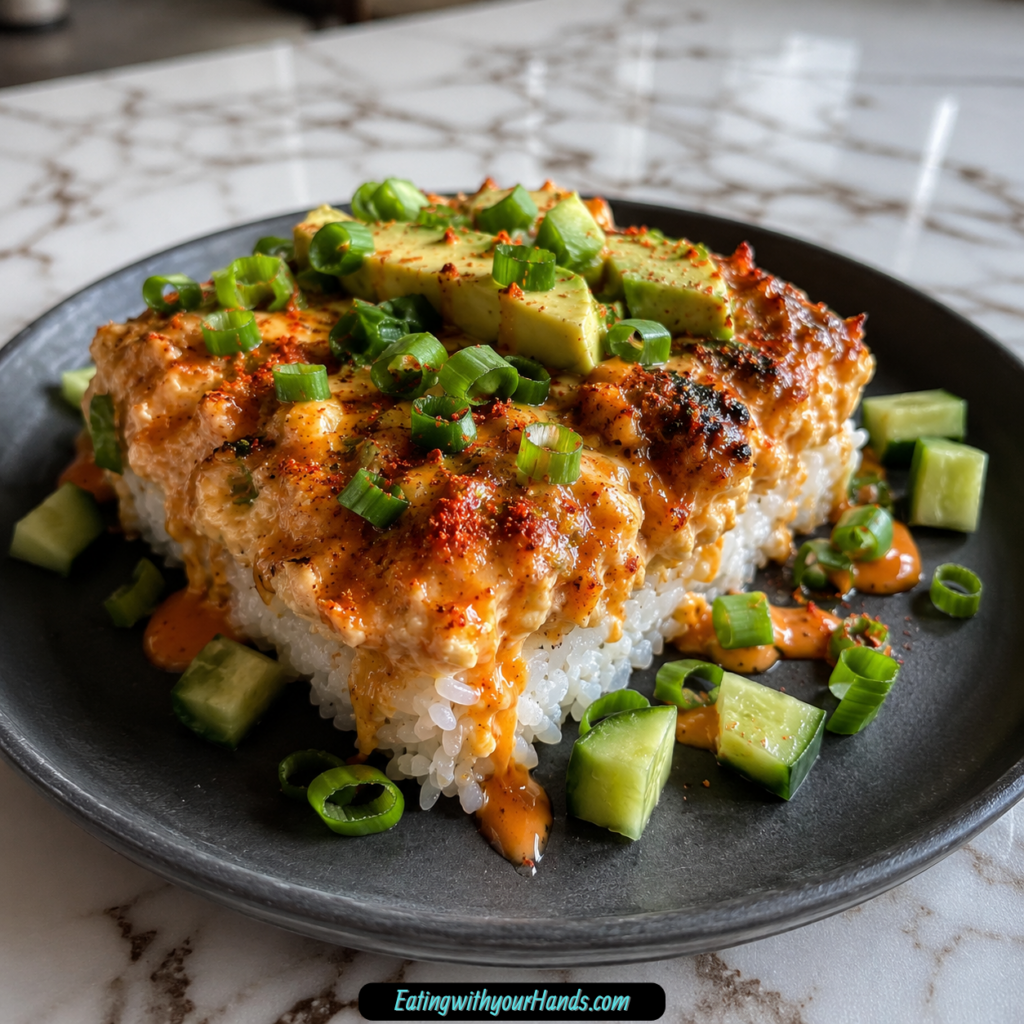
Enjoy the Spicy Salmon Sushi Bake while it is warm. The rice should be soft, the salmon mixture creamy, and the toppings fresh.
Each bite should have warm rice, spicy salmon, cool avocado, crisp cucumber, green onion, and nori. The contrast is what makes the dish special.
Serve it right away for the best texture. It is comforting, flavorful, and made to be shared.
Pro Tips for the Best Spicy Salmon Sushi Bake
Rinse the sushi rice until the water runs clear. This helps prevent overly sticky rice.
Use softened cream cheese so the salmon mixture becomes creamy and smooth. Cold cream cheese can leave lumps.
Do not overmix the salmon. Keeping some texture makes the filling more satisfying.
Let the bake rest briefly after baking. This helps the layers hold together better.
Add avocado, cucumber, green onions, mayo, and unagi sauce after baking. This keeps the toppings fresh.
Variations
Add diced mango or pineapple for a tropical twist. The sweetness pairs nicely with the spicy salmon mixture.
Use different types of fish like tuna or crab for a unique flavor. This changes the personality of the dish while keeping the same bake style.
Incorporate seasonal vegetables like roasted bell peppers or asparagus. They add color and texture.
For a spicy kick, add jalapeños or spicy mayo on top. This makes the bake even bolder.
Make it dairy-free by substituting cream cheese and mayonnaise with avocado or a dairy-free alternative. The texture will change, but it can still be creamy.
For a vegan adaptation, use tofu and vegan mayonnaise instead of salmon and cream cheese. This keeps the layered bake idea while changing the protein.
Serving Suggestions
Serve Spicy Salmon Sushi Bake warm and let everyone scoop their own portion onto nori sheets. This makes the meal interactive and fun.
Pair it with pickled ginger for a refreshing contrast. The sharpness helps balance the creamy and spicy flavors.
A fresh salad is another great side. It adds lightness and crunch.
You can also serve extra cucumber slices, avocado, or green onions on the side. This lets everyone customize their bites.
Extra Kewpie mayo and unagi sauce make great finishing drizzles. They add richness and sweetness to each serving.
Storage Tips
Store leftovers in an airtight container in the refrigerator for up to 3 days. Let the dish cool before sealing.
Keep extra nori sheets separate from the bake. Nori can lose its crisp texture if stored with moist food.
Reheat leftovers gently in the oven or microwave before serving. Add fresh toppings after reheating if possible.
The rice may firm up in the refrigerator. Gentle reheating helps soften it again.
Freezing Instructions
Spicy Salmon Sushi Bake can be frozen in individual portions for up to 1 month. Let it cool completely first.
Place portions in airtight containers or freezer bags. Label them if needed so you know when they were frozen.
Thaw before reheating for the best texture. Reheat gently until warmed through.
Fresh toppings like avocado, cucumber, green onions, mayo drizzle, and nori should be added after reheating, not before freezing.
Make-Ahead Instructions
You can prepare this sushi bake ahead of time. Assemble it the day before and store it covered in the refrigerator.
Bake it just before serving for the best texture. This keeps the rice and filling warm and fresh.
If baking straight from the refrigerator, it may need a few extra minutes in the oven. Make sure the center is heated through.
Wait to add avocado, cucumber, green onions, and sauces until after baking. This keeps the dish fresh and colorful.
Common Mistakes to Avoid
Not rinsing the sushi rice can make it overly sticky. Rinse until the water runs clear.
Overmixing the salmon mixture can make it mushy. Fold gently to keep some texture.
Skipping the resting time after baking can cause the layers to fall apart. Let the bake cool slightly before serving.
Using low-quality ingredients can affect the flavor. Fresh salmon and good seasonings make a difference.
Adding fresh toppings before baking can make them too soft. Add avocado, cucumber, and green onions after the dish comes out of the oven.
Helpful Notes
For a gluten-free option, make sure all sauces are gluten-free. Use tamari instead of soy sauce if needed.
Substitute cream cheese with Greek yogurt for a lighter option. This changes the texture but keeps the filling creamy.
Add chopped cilantro or sesame seeds for extra flavor and texture. These make the finished dish more colorful.
Feel free to adjust the spice level by adding more or less sriracha. This recipe is easy to customize.
If using canned salmon, drain it well before mixing. This helps prevent the filling from becoming too wet.
Frequently Asked Questions
Can Spicy Salmon Sushi Bake Be Frozen?
Yes, Spicy Salmon Sushi Bake can be frozen. Let it cool completely before portioning it into airtight containers or freezer bags.
It will keep well for up to 1 month. Reheat gently before serving, then add fresh toppings afterward.
Can Ingredients Be Substituted?
Yes, several ingredients can be substituted. Salmon can be replaced with canned salmon or cooked shrimp for a different flavor.
For a gluten-free option, use tamari instead of soy sauce. You can also adjust the sriracha based on your spice preference.
How Should I Store Leftovers?
Store leftovers in an airtight container in the refrigerator for up to 3 days. Cover it well to keep it fresh.
Store nori sheets separately. Add fresh toppings after reheating whenever possible.
Can This Recipe Be Made Ahead?
Yes, this recipe can be made ahead. Assemble it the day before and store it covered in the refrigerator.
Bake it just before serving for the best texture. Add avocado, cucumber, green onions, and sauces after baking.
What Can I Use Instead of Salmon?
You can use tuna, crab, canned salmon, cooked shrimp, tofu, or another protein you enjoy. Each option gives the dish a different flavor.
If using canned salmon, drain it well first. If using tofu, pair it with vegan mayonnaise for a vegan adaptation.
How Can I Make It Less Spicy?
Use less sriracha in the salmon mixture. You can also add more mayonnaise to soften the heat.
Serve extra sriracha on the side for anyone who wants more spice. This keeps the main dish milder.
What Do I Serve With Sushi Bake?
Serve it with nori sheets for wrapping. You can also add pickled ginger, a fresh salad, extra cucumber, avocado, or green onions.
Extra Kewpie mayo and optional unagi sauce make great toppings. They add richness and sweetness.
Final Thoughts
Spicy Salmon Sushi Bake is the kind of recipe that turns sushi-inspired flavors into a warm, shareable comfort dish. With seasoned sushi rice, creamy spicy salmon, furikake, fresh avocado, cucumber, green onions, nori sheets, and flavorful drizzles, every scoop feels rich, fresh, and satisfying.
It is easy enough for a weeknight and fun enough for a gathering. The layered bake makes serving simple, while the nori sheets turn every bite into something interactive and memorable.
What makes this recipe special is the contrast. Warm rice, creamy salmon, spicy sriracha, cool avocado, crisp cucumber, fresh green onions, and savory nori all come together beautifully.
Gather your loved ones, place the baking dish in the center of the table, and let everyone build their own bite. This Spicy Salmon Sushi Bake is cozy, flavorful, and made for the kind of meal where good food brings people closer.
Spicy Salmon Sushi Bake

This Spicy Salmon Sushi Bake is a warm, flavorful twist on sushi, made with seasoned sushi rice, creamy spicy salmon, furikake, and fresh toppings. It is baked in layers and finished with avocado, cucumber, green onions, nori, Kewpie mayo, and unagi sauce for a rich, satisfying meal.
Recipe Information
- Prep Time: 20 minutes
- Cook Time: 25 minutes
- Total Time: 45 minutes
- Course: Dinner, Sushi
- Cuisine: Japanese
- Servings: 4 people
- Calories: 400 kcal
Equipment
- Rice cooker
- Baking dish
Ingredients
Sushi Rice
- 2 teaspoons sugar
Adds a light sweetness to balance the vinegar in the rice. - 1 cup sushi rice
Creates the sticky, tender base for the sushi bake. - 1 teaspoon salt
Seasons the rice and helps bring out the flavor. - ¼ cup rice wine vinegar
Gives the rice its classic sushi-style tang.
Salmon Mixture
- ¼ cup mayonnaise, Kewpie or regular mayonnaise
Makes the salmon mixture creamy and rich. - 8 oz salmon fillets, 2 portions
Provides the main seafood layer for the sushi bake. - 2 tablespoons sriracha sauce or sambal oelek
Adds heat and spicy flavor to the salmon mixture. - ½ cup furikake seasoning
Adds savory, seaweed-rich flavor throughout the dish. - ¼ cup cream cheese, softened
Adds creaminess and helps create a smooth, rich texture. - 1 tablespoon soy sauce, gluten free if needed or use tamari
Brings salty, umami flavor to the salmon layer.
Toppings
- More Kewpie mayo
Drizzled over the baked sushi layer for extra creamy flavor. - ½ cucumber, sliced or cubed
Adds freshness and crunch. - Nori seaweed sheets
Served with the sushi bake for scooping or wrapping. - 2 green onions, sliced
Add a fresh onion flavor and color. - Unagi sauce
Adds a sweet, savory finishing drizzle. - 1 avocado, sliced or cubed
Adds creamy texture and freshness.
Instructions
- Cook the sushi rice according to the package instructions.
- Once the rice is cooked, stir in the rice wine vinegar, sugar, and salt until the rice is evenly seasoned.
- In a bowl, combine the furikake seasoning, salmon fillets, soy sauce, softened cream cheese, mayonnaise, and sriracha sauce or sambal oelek.
- Mix until the salmon mixture is well combined and creamy.
- Spread the seasoned sushi rice evenly into a baking dish.
- Add the salmon mixture over the rice, spreading it into an even layer.
- Bake at 350°F for about 25 minutes, or until the salmon layer is cooked through and heated evenly.
- Remove the sushi bake from the oven.
- Top with avocado, cucumber, and sliced green onions.
- Add nori seaweed sheets on the side for serving.
- Drizzle with more Kewpie mayo and unagi sauce before serving.
Notes
- Adjust the spice level by using more or less sriracha sauce or sambal oelek.
- Serve with nori sheets so each bite can be scooped or wrapped.
- Add extra cucumber, avocado, or green onions for a fresher finish.

Fernando is the creator and writer behind the food blog Eating with your Hands. Living and working in cities like Paris, Barcelona, and Berlin, and being married to a Canadian foodie, has given Fernando a passion and interest in food and inspired him to run EWYH.