
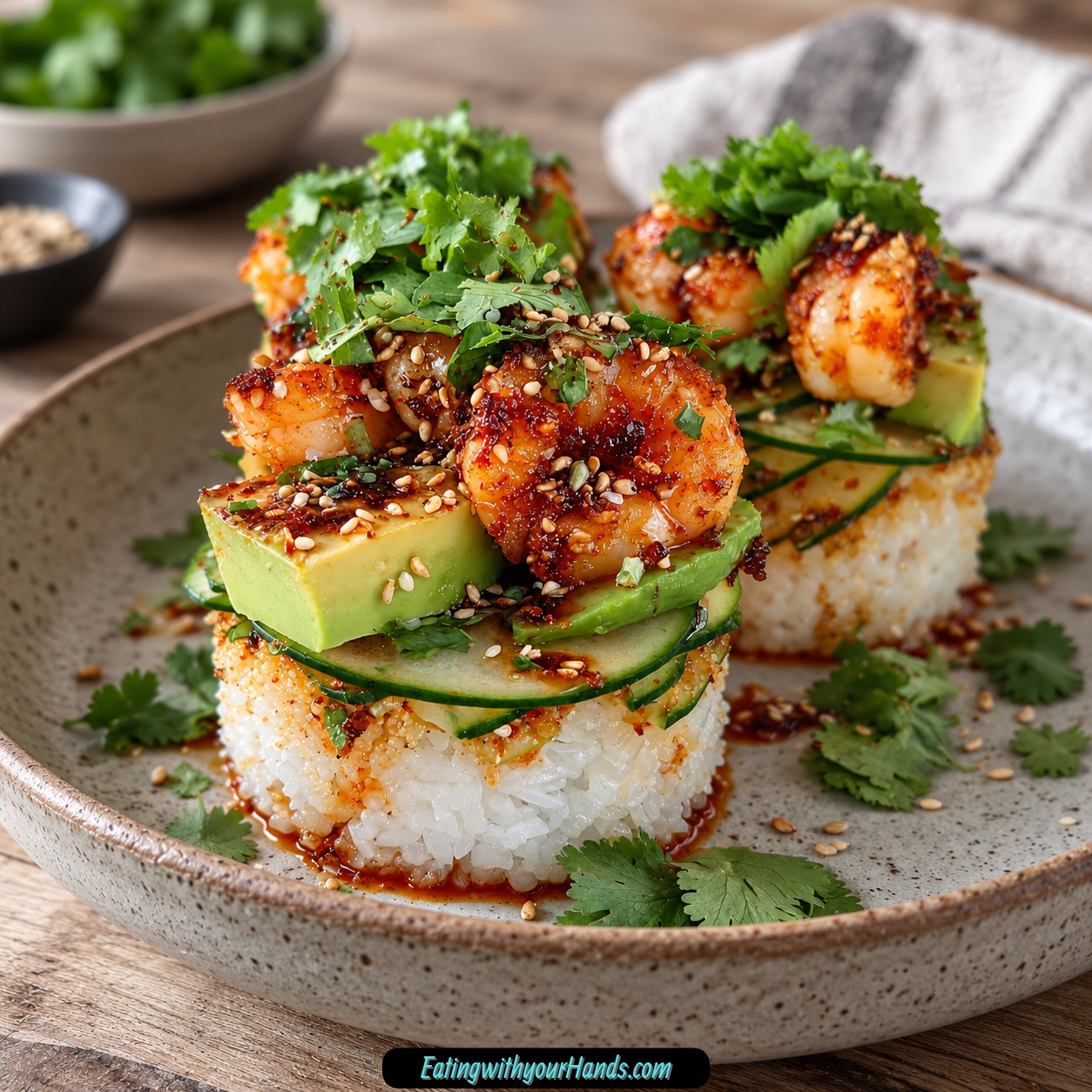

The first time I made Spicy Shrimp Sushi Stacks, I had one of those rare kitchen moments when the easiest solution suddenly seemed like the best one. I wanted the bold flavors and beautiful layers I love in sushi, but I had absolutely no desire to wrestle with a rolling mat or spend my evening trying to make perfect nori-wrapped rolls.
That first stack completely changed the way I approached sushi-inspired dinners at home. Instead of rolling anything, I could press seasoned sushi rice into a mold, add saucy shrimp, avocado, and cucumber, then lift the mold away and reveal a colorful little tower.
The flavor combination immediately won me over too. Warm savory shrimp coated in creamy sriracha sauce meets cool avocado, crisp cucumber, and lightly seasoned rice in every bite.
There is heat, but it does not have to overwhelm the rest of the dish. My husband likes his noticeably spicier, while I sometimes prefer a gentler version with less sriracha and a little squeeze of lime.
That flexibility is part of what has made these stacks such a regular weeknight favorite. They look like something I planned far in advance, but the actual method is much simpler than the finished plate suggests.
There is also something genuinely fun about building them. Pressing the ingredients into layers and lifting away the mold turns dinner into a little moment of anticipation, especially when the stack holds its shape and those contrasting colors appear.
You do not need professional sushi skills to get there. A small bowl, ring mold, or even a cleaned tuna can with both ends removed can help create the same stacked presentation.
And if presentation is not your priority, the components are still delicious together. The spicy shrimp mixture works beautifully over rice on its own, which means even an imperfect stack is never really a failure.
Table of Contents
- Why You’ll Love Spicy Shrimp Sushi Stacks
- Ingredients for Spicy Shrimp Sushi Stacks
- Why Sushi Rice Makes a Difference
- The Spicy Shrimp Sauce
- Preparing the Avocado and Cucumber
- How to Make Spicy Shrimp Sushi Stacks
- Tips for Perfect Spicy Shrimp Sushi Stacks
- How to Adjust the Heat
- Frozen Shrimp Works Too
- Serving Suggestions
- Presentation Ideas
- Spicy Shrimp Sushi Stack Variations
- Preparing the Components Ahead
- Storage
- Should You Reheat Spicy Shrimp Sushi Stacks?
- Frequently Asked Questions
- Nutritional Information
- The Sushi-Inspired Dinner That Made Weeknights More Fun
- Spicy Shrimp Sushi Stacks: Mouthwatering 25-Minute Magic
Why You’ll Love Spicy Shrimp Sushi Stacks
The biggest advantage is that there is no rolling required. You get layers of sushi-inspired flavor without managing sheets of nori or trying to create evenly shaped rolls.
They are also surprisingly quick. The rice cooks while you prepare the shrimp, vegetables, and sauce, making the whole process practical for a weeknight when something special sounds good but hours in the kitchen do not.
The heat is easy to customize. Sriracha can be increased for a stronger kick or reduced dramatically when you want the creamy sauce to stay mild.
Texture is another reason these stacks are so satisfying. Soft seasoned rice, tender shrimp, creamy avocado, and crisp cucumber create a different sensation in nearly every layer.
They are also easy to change according to what you are craving. Crab, mango, quinoa, tofu, tempura flakes, crushed peanuts, and other provided variations can all take the same basic stack in a different direction.
Even leftovers are useful. Keep the components separate, and the spicy shrimp can become a quick rice-bowl topping instead of forcing you to recreate a perfectly shaped stack.
Ingredients for Spicy Shrimp Sushi Stacks
The ingredient list combines a seasoned rice base, spicy shrimp mixture, and fresh vegetable layers. Each part brings a different texture, so having everything measured and prepared before assembly makes the final stage much easier.
- 1 lb large shrimp, peeled and deveined
- 2 tablespoons olive oil
- 2 tablespoons soy sauce
- 1 tablespoon rice vinegar, plus 1 tablespoon more for the rice
- 2 teaspoons sugar
- 1 tablespoon sesame oil
- 2 tablespoons sriracha, or more to taste
- ½ cup mayonnaise
- 1 cup sushi rice, packed
- 1½ cups water
- ½ teaspoon salt
- 1 ripe avocado, thinly sliced
- 1 small cucumber, julienned
- Sesame seeds, optional
- Fresh cilantro, optional
The avocado is best sliced shortly before assembly so it stays as fresh-looking as possible. The cucumber should be cut into thin matchsticks so it fits neatly into the layered stacks without making them difficult to shape.
Why Sushi Rice Makes a Difference
The recipe uses 1 cup sushi rice because its texture helps the stack hold together. After cooking and resting, it becomes sticky enough to press into the mold while still remaining recognizably rice rather than turning into a paste.
Rinsing the grains before cooking is an important first step. Run cold water over the rice until the water becomes clear so excess surface starch is removed.
Once cooked, the rice gets 1 tablespoon rice vinegar folded through it. That small addition gives the base a light tang that balances the creamy shrimp and rich avocado.
Let the rice cool slightly before handling it. Warm rice is much more likely to cling stubbornly to your hands and make the assembly process frustrating.
The Spicy Shrimp Sauce
The shrimp is coated in a mixture of soy sauce, rice vinegar, sugar, sesame oil, sriracha, and mayonnaise. Together those ingredients create a creamy sauce with savory, tangy, sweet, nutty, and spicy notes.
Sriracha controls most of the heat. The standard amount is 2 tablespoons, but you can add more when you want the shrimp noticeably hotter.
For a much milder version, start with only 1 teaspoon sriracha. It is always easier to increase the heat after tasting than to undo a sauce that has become too spicy.
The shrimp should cool a little before being tossed with the mayonnaise mixture. Very hot shrimp can cause the creamy sauce to separate instead of coating the seafood smoothly.
Preparing the Avocado and Cucumber
Use 1 ripe avocado and slice it thinly shortly before assembly. Cutting it at the last minute helps reduce browning and keeps the green layer looking especially fresh.
A quick spritz of lemon juice can also help preserve the color. Keep the amount light so the lemon does not overwhelm the other flavors.
Julienne the small cucumber into narrow matchstick pieces. Thin cuts add crunch without making the stack unstable or difficult to eat.
Keep both vegetables ready but separate until the rice and shrimp are prepared. That organization makes the actual stacking process quick and controlled.
How to Make Spicy Shrimp Sushi Stacks
The easiest way to make these stacks is to let the rice cook first while you prepare everything else. Once the rice has rested and the shrimp is coated, the final assembly takes only a few minutes.
Step 1: Rinse and Cook the Sushi Rice
Place 1 cup sushi rice in a fine strainer or bowl and rinse it repeatedly under cold water. Continue until the water runs clear instead of looking cloudy with starch.
Transfer the rinsed rice to a pot and add 1½ cups water plus ½ teaspoon salt. Bring the mixture to a boil, then reduce the heat to low and cover the pot.
Let the rice simmer for 15 minutes without repeatedly lifting the lid. The enclosed steam is part of the cooking process, so leave the pot undisturbed while the grains absorb the water.
Step 2: Rest and Season the Rice
After the 15-minute simmer, remove the pot from the heat but keep it covered. Let the rice rest for another 10 minutes without peeking so the trapped steam can finish softening the grains.
Once the rest is complete, uncover the pot and gently fold in 1 tablespoon rice vinegar. Avoid aggressively stirring or smashing the rice, because you want it seasoned without breaking down the grains.
Let the rice cool slightly before using it for the stacks. If needed, about 10 minutes in the refrigerator can make it much easier to handle and press.
Step 3: Cook the Shrimp
While the rice is cooking, heat 2 tablespoons olive oil in a pan over medium-high heat. Let the pan become properly hot before adding the 1 lb peeled and deveined shrimp.
Arrange the shrimp in a single layer rather than piling them on top of one another. Crowding the pan traps moisture and encourages steaming instead of giving the shrimp a better sear.
Cook for about 2–3 minutes per side until the shrimp turn pink and opaque. Remove them from the heat once cooked so they do not continue cooking unnecessarily.
Step 4: Mix the Spicy Sauce
In a bowl, combine 2 tablespoons soy sauce, 1 tablespoon rice vinegar, 2 teaspoons sugar, 1 tablespoon sesame oil, 2 tablespoons sriracha, and ½ cup mayonnaise. Whisk until the mixture looks uniform and creamy.
Taste before deciding whether the sauce needs additional sriracha. If you prefer more heat, add it gradually rather than pouring in a large amount all at once.
Allow the cooked shrimp to cool slightly before adding them to the sauce. Once they are no longer piping hot, toss until every piece is evenly coated.
Step 5: Prepare the Fresh Layers and Molds
Slice the ripe avocado thinly and julienne the small cucumber. If desired, give the avocado a light spritz of lemon juice to help limit browning while you finish assembly.
Choose a small bowl, ring mold, or cleaned tuna can with both ends removed for shaping. Lightly wet your fingers before handling the rice so it does not stick as aggressively while you press it.
Set the rice, spicy shrimp, avocado, cucumber, sesame seeds, and cilantro within easy reach. Assembly goes much more smoothly when you are not searching for ingredients between layers.
Step 6: Build the First Layers
Place the mold on the serving plate and pack about ¼ cup rice into the bottom. Press gently with damp fingers so the rice forms a stable layer without becoming overly compressed.
Add a layer of the spicy shrimp over the rice. Spread the pieces evenly so the weight of the upper layers will be supported across the entire stack.
Arrange thin slices of avocado over the shrimp. Keep the layer fairly even so one side does not become significantly taller than the other.
Step 7: Add Cucumber and Release the Stack
Place the julienned cucumber over the avocado for a fresh, crisp top layer. Press very gently if needed so the ingredients sit together without crushing the avocado underneath.
Slowly lift the mold straight upward rather than pulling it to one side. If the ingredients cling to the edge, carefully run a knife around the inside before trying again.
Once released, check the stack for any loose cucumber or shrimp and gently reposition them. Repeat the process with the remaining ingredients until all the desired stacks are assembled.
Step 8: Garnish and Serve
Finish each stack with sesame seeds and fresh cilantro if you are using them. Extra sriracha mayo can also be drizzled over the top when you want a stronger creamy-spicy finish.
Serve the stacks while the ingredients are cool and fresh. They are designed to be enjoyed cold rather than reheated like a hot rice dish.

Tips for Perfect Spicy Shrimp Sushi Stacks
Slightly chilled rice is much easier to work with than hot rice. A brief 10-minute refrigerator rest can reduce sticking and make the layers easier to shape.
Wet your fingers before pressing the rice into the mold. This small trick keeps much of the sticky rice on the stack instead of on your hands.
Add sriracha gradually when adjusting the sauce. You can always increase the heat, but once too much is mixed in, your options become much more limited.
Slice the avocado immediately before building the stacks. That keeps the color fresher and the texture at its best.
Let the shrimp cool slightly before combining them with mayonnaise. This prevents excessive heat from making the sauce look separated or oily.
How to Adjust the Heat
The full 2 tablespoons sriracha creates the intended spicy version. If you already know you prefer significant heat, you can even increase it from there.
For a milder sauce, begin with just 1 teaspoon. Mix, taste, and add more in small increments until the heat level suits you.
Extra mayonnaise can soften the spice further. A drizzle of honey is another option when you want a little sweetness to counter the heat.
A squeeze of lime can also make the sauce taste brighter. It does not erase the sriracha, but it can make the overall flavor feel fresher and more balanced.
Frozen Shrimp Works Too
Frozen shrimp is perfectly usable for these stacks. Thaw it overnight in the refrigerator when you have time.
For faster preparation, place the frozen shrimp in a bowl of cold water for about 10 minutes. Once thawed, drain it thoroughly.
Pat the shrimp dry before cooking. Excess surface water makes it harder to get the quick sear you want in the hot pan.
Keeping pre-peeled shrimp in the freezer can make this dinner especially convenient. Once thawed, most of the remaining preparation happens while the rice is cooking.
Serving Suggestions
These stacks can stand alone as the main attraction because they already combine rice, shrimp, avocado, cucumber, and sauce. A few simple additions can make the meal feel more complete without competing with the layered presentation.
Miso soup and crisp edamame make classic sushi-style companions. Their simple flavors leave the spicy shrimp stacks in the spotlight.
Pickled ginger adds a sharp, tangy contrast to the rich avocado and sriracha mayo. A small amount between bites can make each return to the stack taste especially fresh.
Extra sriracha mayo is perfect for anyone who wants more sauce. Drizzle it over the top or serve a little on the side for dipping.
Black sesame seeds and microgreens can make the stacks look especially polished. The darker sesame seeds stand out nicely against the light rice and bright avocado.
For drinks, chilled sake or jasmine tea can accompany the meal. Both are suggested as ways to balance the spicy character of the shrimp.
Presentation Ideas
Serve the stacks on slate boards or colorful plates when you want the layers to stand out visually. A contrasting background makes the white rice, green avocado, pink shrimp, and cucumber much more noticeable.
Keep the garnish relatively simple. Sesame seeds, cilantro, microgreens, or a small sauce drizzle are enough to finish the presentation.
A clean vertical release from the mold matters more than elaborate decoration. Once those layers are visible, the stack already has plenty of visual interest.
If one stack comes out less than perfect, do not worry. The components taste just as good even when the tower leans a little.
Spicy Shrimp Sushi Stack Variations
The layered format makes this recipe especially easy to customize. You can keep the rice and fresh vegetables while changing the protein, adding fruit, or creating a completely different base.
Crab Variation
Lump crab meat can replace the shrimp. This gives the stack a different seafood flavor while preserving the same layered presentation.
Use the crab as the central protein layer. Keep the avocado, cucumber, rice, and desired garnishes around it.
Mango for Sweet Heat
Add diced mango between the layers for a tropical element. The fruit brings sweetness that naturally contrasts with the spicy sauce.
Keep the mango pieces small enough to fit comfortably within the stack. Large chunks can make the layers more difficult to press and release.
Quinoa Instead of Rice
Quinoa can replace the sushi rice when you want a different base. Cooking it in broth gives it additional flavor.
The texture will not be identical to sushi rice. Press carefully because quinoa does not behave exactly the same way as sticky rice.
Vegetarian Tofu Version
Marinated tofu cubes can replace the shrimp. This creates a meat-free version while still giving the center of the stack a substantial layer.
Cut the tofu small enough that it sits evenly inside the mold. Keep the avocado and cucumber to maintain the creamy-and-crisp contrast.
Add Extra Crunch
Tempura flakes can be scattered into the stacks for a crisp element. Crushed peanuts are another option when you want a stronger nutty crunch.
Add either one shortly before serving so the texture stays noticeable. Moist ingredients can soften crunchy additions if they sit for too long.
Preparing the Components Ahead
The rice and shrimp can both be made ahead. Store them separately in airtight containers in the refrigerator for up to 24 hours.
Keep the vegetables in their own container rather than building the stacks early. Separating the components helps prevent the rice, shrimp, and cucumber from turning into one soft mixture.
Cut the avocado as close to assembly as possible. That gives you the freshest color and texture.
When ready to serve, build the stacks directly on the plates. Fresh assembly gives you the cleanest layers and avoids the soggy texture that can develop during long storage.
Storage
Leftover components keep best when stored separately. Place the rice in one airtight container, the spicy shrimp in another, and the vegetables in their own container.
Refrigerate for up to 24 hours. This short storage period helps preserve the texture of the rice, seafood, and fresh vegetables.
Do not store fully assembled stacks if you can avoid it. The moisture from the shrimp sauce and vegetables can gradually soften the rice and make the tower less appealing.
Use the leftover shrimp as a rice-bowl topping when you do not feel like rebuilding the stacks. The flavor remains just as satisfying in a more casual presentation.
Should You Reheat Spicy Shrimp Sushi Stacks?
These stacks are meant to be enjoyed cold. Microwaving them would heat the avocado, cucumber, mayonnaise-based sauce, and rice together in a way that changes the intended texture.
Keep the components refrigerated until you are ready to assemble. The cool rice and vegetables are part of what makes the spicy shrimp feel balanced.
If you prepared the components ahead, simply assemble them fresh from the refrigerator. There is no reheating step necessary.
That makes this dish particularly convenient for planned lunches or next-day leftovers. Everything can go directly from storage to assembly.
Frequently Asked Questions
Can I Use Frozen Shrimp?
Yes. Thaw frozen shrimp overnight in the refrigerator or place it in cold water for about 10 minutes when you need a faster method.
Pat the thawed shrimp dry before cooking. Removing excess water helps it sear instead of steaming in the pan.
How Can I Make the Sauce Less Spicy?
Start with 1 teaspoon sriracha instead of the full 2 tablespoons. Taste the sauce and increase the heat gradually only if you want more.
Extra mayonnaise can soften the spice. A drizzle of honey is another way to balance the heat with sweetness.
Can I Prepare Everything Ahead?
Yes, but keep the components separate. Rice and cooked spicy shrimp can be refrigerated in airtight containers for up to 24 hours.
Store the vegetables separately and assemble just before serving. This preserves the texture and keeps the finished stacks looking fresh.
Can I Use Crab Instead of Shrimp?
Yes. Lump crab meat is one of the easiest protein substitutions.
Build the stacks in the same layered style. The flavor changes, but the basic rice, avocado, cucumber, and seafood combination still works naturally.
Can I Make a Vegetarian Version?
Yes. Marinated tofu cubes can replace the shrimp.
Keep the remaining layers as desired. The tofu gives the stack substance while the avocado and cucumber maintain the contrast in textures.
Can I Add Mango?
Yes. Diced mango can be added between the layers.
Its sweetness works especially well against the spicy sauce. Keep the pieces small so the stack remains easy to shape.
What Can I Use Instead of Sushi Rice?
Quinoa is one suggested alternative. Cooking it in broth adds additional flavor.
The texture will be different from sticky sushi rice, so press the layers carefully. It can still be used to create a stack-style meal.
Nutritional Information
A typical Spicy Shrimp Sushi Stack contains approximately 320 calories. It also provides about 15g protein, 25g carbohydrates, and 18g fat.
These values are estimates and can vary depending on exact ingredients and portion sizes. The amount of sriracha mayo, avocado, rice, optional toppings, and any substitutions can all change the final numbers.
Variations using crab, tofu, quinoa, mango, peanuts, or tempura flakes will create a different nutritional profile. Extra sauce will also increase the totals compared with a more lightly dressed stack.
The values are best used as a general estimate rather than an exact measurement. The finished nutrition depends on how the individual stacks are portioned.
The Sushi-Inspired Dinner That Made Weeknights More Fun
What I remember most about the first time I made these stacks is how unnecessary all my hesitation turned out to be. I had always associated homemade sushi flavors with careful rolling and more patience than I usually have on a busy weeknight, but stacking everything changed the entire experience.
Suddenly the part that had seemed complicated became playful. Rice went into the mold, shrimp followed, avocado and cucumber added their colors, and a quick lift revealed something that looked much more impressive than the effort behind it.
The flavor was what convinced me to keep making them. Spicy creamy shrimp against cool avocado and crisp cucumber was exactly the contrast I had been craving.
The rice gives every bite enough substance to make the stacks feel like a complete meal. Its light vinegar seasoning also keeps the richer mayonnaise and avocado from feeling too heavy.
I like that everyone can adjust the heat too. My husband can add more sriracha while I keep mine a little gentler, and neither version requires preparing an entirely separate dinner.
There are nights when I make the stacks carefully and finish them with sesame seeds and cilantro. There are also nights when patience runs out and the same ingredients simply land in a bowl, which tastes every bit as good.
That flexibility is one of the reasons this recipe has lasted in my kitchen. It can look polished enough to serve when I want to impress someone, yet it can also become an easy rice bowl when presentation does not matter at all.
I have tried variations with different layers and extra crunch, but I still return to the original combination of shrimp, rice, avocado, and cucumber most often. The creamy sriracha sauce ties everything together without requiring any elaborate sushi technique.
Every time I lift the mold from another stack, I still get a little satisfaction from seeing those layers stand on their own. It feels like a special dinner, even though most of the work happened while a pot of rice quietly cooked beside me.
That is exactly what I want from a weeknight favorite. Spicy Shrimp Sushi Stacks are colorful, creamy, fresh, customizable, and satisfying enough to cure a sushi craving without turning dinner into a complicated project.
Spicy Shrimp Sushi Stacks: Mouthwatering 25-Minute Magic

Fresh, creamy, spicy, and layered with classic sushi-inspired flavors, these Spicy Shrimp Sushi Stacks combine seasoned sushi rice with saucy shrimp, avocado, and crisp cucumber. The stacked presentation makes them a fun Japanese fusion appetizer or quick meal that comes together in just 25 minutes.
Recipe Details
- Prep Time: 15 minutes
- Cook Time: 10 minutes
- Total Time: 25 minutes
- Course: Appetizer
- Cuisine: Japanese Fusion
- Servings: 4 servings
- Calories: 320 kcal
Ingredients
For the Sushi Rice
- 1 cup sushi rice
- 1 ½ cups water
- 1 tablespoon rice vinegar for rice
- ½ teaspoon salt
For the Spicy Shrimp
- 1 lb large shrimp peeled and deveined
- 2 tablespoons olive oil
- 2 tablespoons soy sauce
- 1 tablespoon rice vinegar
- 2 teaspoons sugar
- 1 tablespoon sesame oil
- 2 tablespoons sriracha sauce
- ½ cup mayonnaise
For the Stacks
- 1 avocado sliced
- 1 small cucumber julienned
For Garnish
- 1 tablespoon sesame seeds optional, for garnish
- Fresh cilantro or green onions optional, for garnish
Instructions
Step 1: Cook the Sushi Rice
Combine the sushi rice with the water and salt and cook until the rice is ready.
Once cooked, mix in 1 tablespoon rice vinegar so the seasoning is evenly distributed through the warm rice.
Step 2: Cook the Shrimp
Heat the olive oil in a pan.
Add the peeled and deveined shrimp and cook until they turn pink, then remove them from the heat.
Step 3: Make the Spicy Sauce
In a bowl, combine the soy sauce, 1 tablespoon rice vinegar, sugar, sesame oil, sriracha sauce, and mayonnaise.
Stir until the mixture is smooth and creamy.
Step 4: Coat the Shrimp
Add the cooked shrimp to the spicy sauce.
Toss gently until every piece is evenly coated.
Step 5: Prepare the Fresh Layers
Slice the avocado and julienne the cucumber.
Keep both ready for assembly so the stacks can be built while the rice and shrimp are fresh.
Step 6: Build the Sushi Stacks
Layer the sushi rice, spicy shrimp, sliced avocado, and julienned cucumber into individual stacks.
Divide the ingredients evenly among 4 servings.
Step 7: Garnish
Finish the stacks with sesame seeds if desired.
Add fresh cilantro or green onions for another optional garnish.
Step 8: Serve Immediately
Serve the Spicy Shrimp Sushi Stacks immediately for the best texture.
Enjoy while the cucumber remains crisp and the shrimp is freshly coated in the creamy spicy sauce.
Notes
- Adjust sriracha to your spice preference.
- Use fresh shrimp for best results.
- Serve immediately for the best texture.
Serving Suggestions
Serve Spicy Shrimp Sushi Stacks as soon as they are assembled so the rice, shrimp, avocado, and cucumber keep their distinct textures. The creamy sriracha sauce brings heat and richness, while the cucumber and avocado balance each stack with freshness.
This recipe makes 4 servings and works well as an appetizer or a quick meal. Finish with sesame seeds, cilantro, or green onions if you want an extra layer of texture and freshness.
For a milder or spicier result, adjust the sriracha according to your preference. Fresh shrimp gives the finished stacks the best overall texture.
Storage
These sushi stacks are best enjoyed immediately after assembly.
Keep the rice, spicy shrimp, avocado, and cucumber separate until serving if preparing the components ahead.
Rice Tip
Use 1 cup sushi rice with 1 ½ cups water and ½ teaspoon salt.
Stir in 1 tablespoon rice vinegar after the rice has finished cooking.
Shrimp Tip
Use 1 lb large shrimp, peeled and deveined.
Cook in 2 tablespoons olive oil until pink before tossing with the sauce.
Sauce Tip
Combine soy sauce, rice vinegar, sugar, sesame oil, sriracha, and mayonnaise until smooth.
Adjust the sriracha to match your preferred spice level.
Avocado Tip
Use 1 sliced avocado and add it as one of the fresh layers in each stack.
Cucumber Tip
Julienne 1 small cucumber for a crisp contrast to the creamy shrimp and avocado.
Garnish Tip
Finish with optional sesame seeds, fresh cilantro, or green onions before serving.

Fernando is the creator and writer behind the food blog Eating with your Hands. Living and working in cities like Paris, Barcelona, and Berlin, and being married to a Canadian foodie, has given Fernando a passion and interest in food and inspired him to run EWYH.