
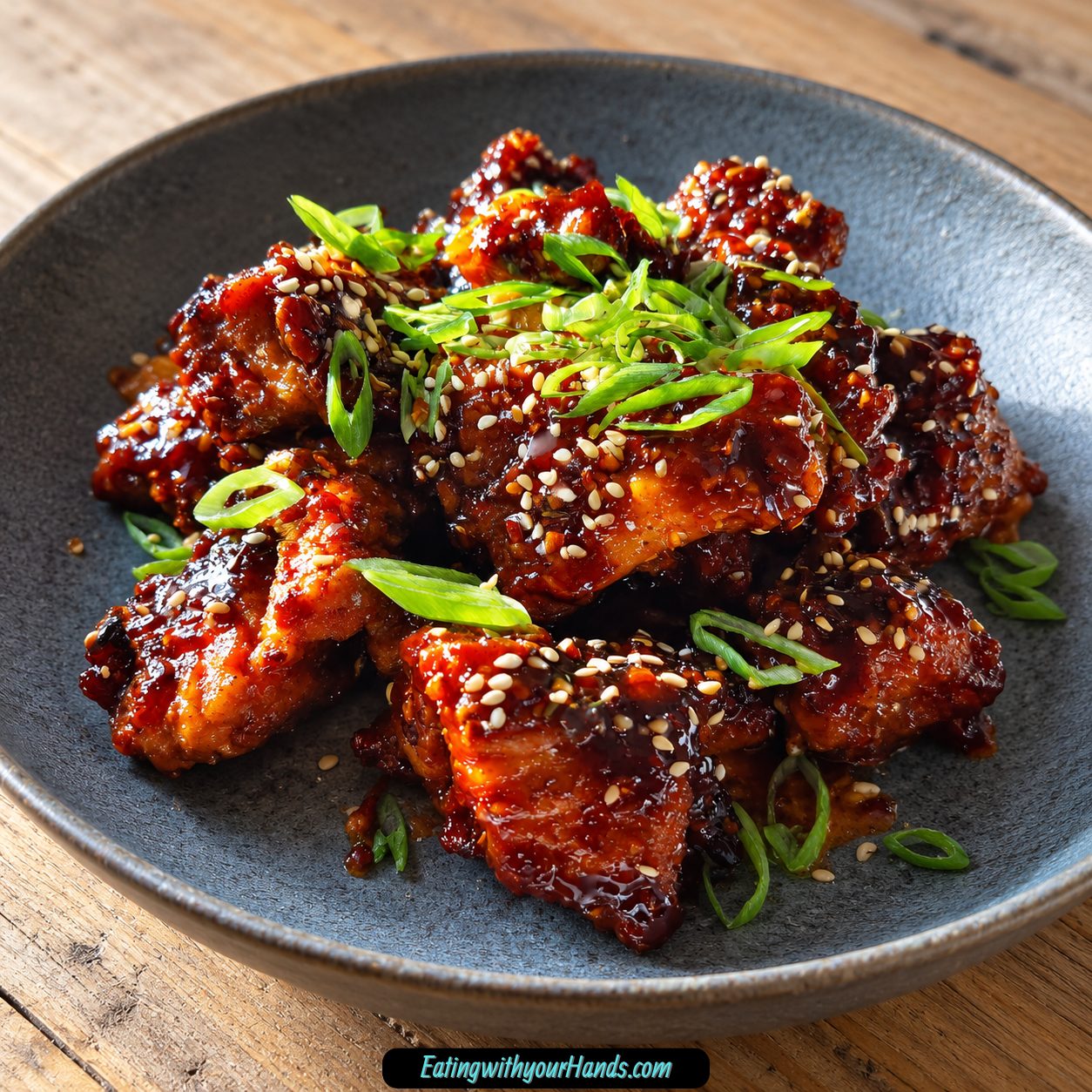
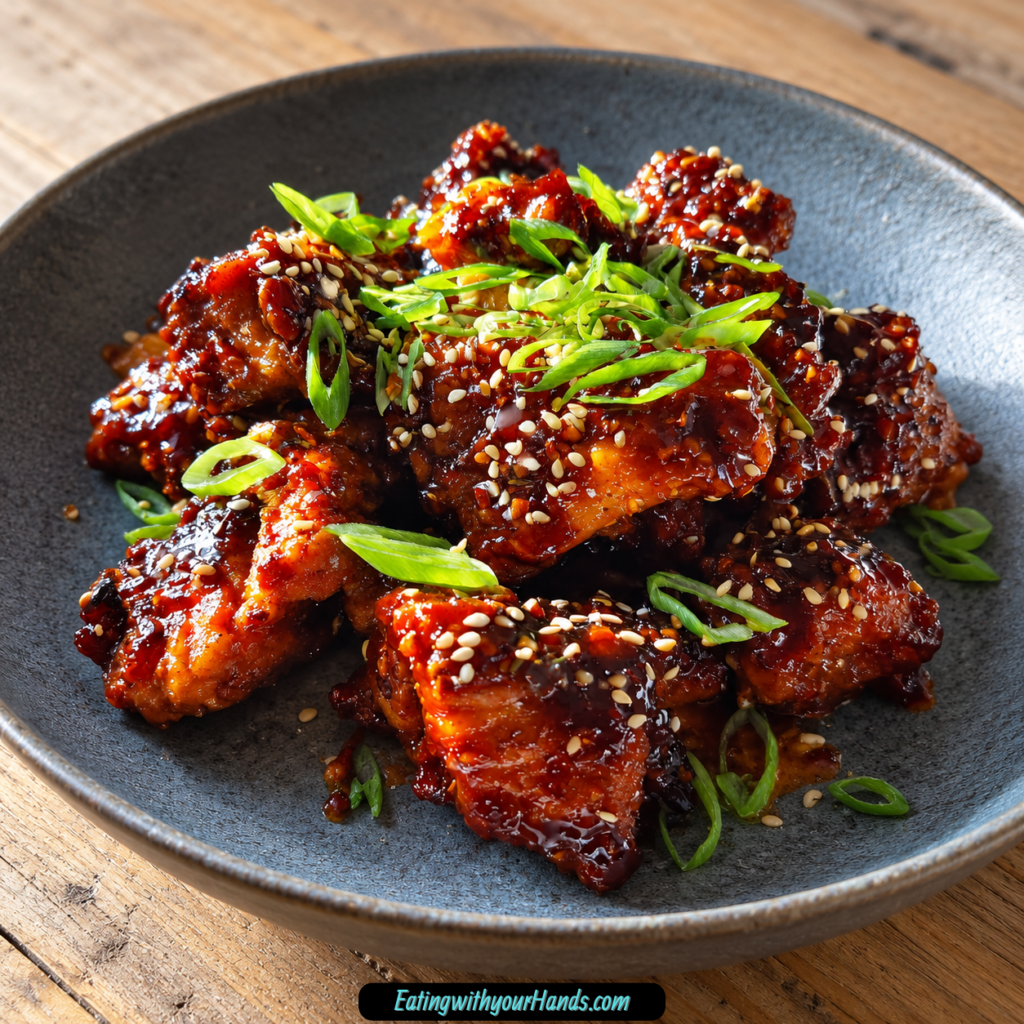
Spicy Sticky Honey Gochujang Chicken is the kind of dinner that makes the whole table go quiet for a moment after the first bite. It is glossy, sweet, spicy, savory, and deeply satisfying, with juicy chicken coated in a red honey-gochujang glaze that clings to every edge.
This dish is built around balance. Gochujang brings heat and deep chili flavor, honey softens that fire with sweetness, soy sauce adds salty savoriness, rice vinegar cuts through the richness, sesame oil gives a nutty finish, and fresh garlic and ginger make the whole glaze feel alive.
The result is bold without being complicated. It tastes like something you might crave after one bite and then keep thinking about until the next time you make it.
The best part is that the process is simple enough for a weeknight. The chicken gets dried, seasoned, seared for flavor, coated in the glaze, and baked until the sauce bubbles into a sticky, shiny finish.
The glaze does double duty. It flavors the chicken while it bakes and turns into a sauce that begs to be spooned over rice.
This recipe works with chicken thighs or drumsticks, and both skin-on and skinless pieces can be used. Skin-on chicken gives more crispiness, while skinless chicken still soaks up the glaze beautifully.
Spicy Sticky Honey Gochujang Chicken is messy in the best way. It is the kind of sweet-spicy chicken that makes steamed rice feel essential, napkins feel necessary, and leftovers feel like a gift.
Table of Contents
- Why You’ll Love This Spicy Sticky Honey Gochujang Chicken
- Recipe Details
- Ingredients
- Equipment You’ll Need
- Ingredient Notes
- Optional Swaps, Variations, and Flavor Ideas
- Why This Recipe Works
- Directions
- Step 1: Preheat the Oven
- Step 2: Dry the Chicken
- Step 3: Season the Chicken
- Step 4: Heat the Skillet
- Step 5: Sear the Chicken
- Step 6: Remove the Chicken Briefly
- Step 7: Mix the Glaze
- Step 8: Taste and Adjust
- Step 9: Add the Slurry if Desired
- Step 10: Return Chicken to the Skillet
- Step 11: Coat With Glaze
- Step 12: Bake the Chicken
- Step 13: Check for Doneness
- Step 14: Broil for Caramelization
- Step 15: Rest the Chicken
- Step 16: Garnish
- Step 17: Serve With Sauce
- Step 18: Store Leftovers
- Serving Suggestions
- Storage
- Reheating
- Make-Ahead
- Helpful Notes for Best Results
- Variations
- Classic Spicy Sticky Honey Gochujang Chicken
- Mild Honey Gochujang Chicken
- Extra-Spicy Sticky Chicken
- Glossy Cornstarch Glaze Chicken
- Thin Sauce Gochujang Chicken
- Skin-On Crispy Gochujang Chicken
- Skinless Sticky Gochujang Chicken
- Orange-Mellowed Sticky Chicken
- Lettuce Wrap Gochujang Chicken
- Lunchbox Honey Gochujang Chicken
- Troubleshooting
- Frequently Asked Questions
- Nutritional Information
- Why This Recipe Works So Well
- Final Thoughts
- Spicy Sticky Honey Gochujang Chicken
Why You’ll Love This Spicy Sticky Honey Gochujang Chicken
The flavor is addictive. Honey and gochujang create a sweet heat that keeps every bite interesting.
It is weeknight-friendly. The active prep is short, and the oven does most of the work.
It uses pantry-style ingredients. Honey, soy sauce, rice vinegar, sesame oil, garlic, ginger, and cornstarch are simple but powerful.
The glaze is glossy and sticky. A cornstarch slurry can make it even shinier if desired.
It works for different chicken pieces. Thighs or drumsticks both fit the recipe.
It tastes great the next day. The flavors deepen as the chicken rests in the sauce.
Recipe Details
This recipe uses 1.5 pounds chicken thighs or drumsticks. Skin-on pieces give extra crispiness, but skinless chicken also works.
Vegetable oil is used if baking and searing the chicken. If grilling, the oil can be skipped.
Salt and freshly ground black pepper season the chicken before the glaze is added. This helps balance the sweetness.
The glaze uses 2 tablespoons gochujang, 3 tablespoons honey, 2 tablespoons soy sauce, 1 tablespoon rice vinegar, 1 teaspoon sesame oil, 3 minced garlic cloves, and 1 teaspoon grated ginger.
A slurry made with 1 teaspoon cornstarch and 2 teaspoons water is optional. It makes the glaze extra glossy and helps it cling.
The chicken is seared for about 3 to 4 minutes per side before baking. This builds flavor and texture.
The oven temperature is 375°F (190°C). The chicken bakes for 25 to 30 minutes, or until it reaches 165°F (74°C).
For extra caramelization, broil for the last 2 to 3 minutes. Watch closely because honey can burn quickly.
Ingredients
For the Chicken
- 1.5 pounds chicken thighs or drumsticks, skin-on or skinless
- 1 tablespoon vegetable oil, only needed if baking
- Salt, to taste
- Freshly ground black pepper, to taste
For the Sticky Honey Gochujang Glaze
- 2 tablespoons gochujang
- 3 tablespoons honey
- 2 tablespoons soy sauce
- 1 tablespoon rice vinegar
- 1 teaspoon sesame oil
- 3 cloves garlic, minced
- 1 teaspoon grated ginger
- 1 teaspoon cornstarch mixed with 2 teaspoons water, optional
For Garnish
- Sesame seeds
- Sliced green onions
Optional Serving Ideas
- Steamed jasmine rice
- Quick-pickled cucumbers
- Quick-pickled radishes
- Crisp lettuce leaves
- Kimchi fried rice
- Roasted Brussels sprouts
- Fresh orange juice for mellowing heat
Equipment You’ll Need
Basic Equipment
- Large oven-safe skillet
- Medium mixing bowl
- Whisk
- Paper towels
- Tongs
- Measuring spoons
- Instant-read thermometer
Equipment Notes
An oven-safe skillet is useful because the chicken can be seared and baked in the same pan. This keeps cleanup easier and lets the glaze catch all the browned flavor.
A medium bowl is needed for mixing the glaze. Whisking everything together before coating the chicken keeps the flavor balanced.
Paper towels are important for drying the chicken. Dry chicken sears better and gives skin-on pieces a better chance at crispness.
Tongs make it easier to turn the chicken during searing. They also help coat the pieces in glaze.
An instant-read thermometer gives the clearest doneness cue. The chicken should reach 165°F (74°C) at the thickest part.
A broiler is optional but helpful for extra caramelization. Watch carefully during the last few minutes.
Ingredient Notes
Chicken thighs or drumsticks are both excellent choices. They stay juicy and work well with sticky glaze.
Skin-on chicken gives the best crisp texture. Skinless chicken works too, but the baking time should be reduced by about 5 minutes.
Vegetable oil helps sear the chicken in the skillet. It is only needed if baking with the searing step, and it can be skipped if grilling.
Salt and pepper matter more than they seem. The glaze is bold and sweet, so the chicken underneath needs seasoning.
Gochujang is the heart of the glaze. It brings chili heat, savory depth, and a red color that makes the chicken look beautiful.
Honey balances the heat. It also helps create the sticky, glossy texture.
Soy sauce brings salt and umami. Regular or low-sodium soy sauce both work.
Rice vinegar adds brightness. It cuts through the richness and keeps the glaze from tasting too heavy.
Sesame oil is strong, so only a teaspoon is needed. It gives the glaze a warm nutty aroma.
Fresh garlic and grated ginger make the sauce taste lively. Powdered versions do not give the same punch.
The cornstarch slurry is optional. Use it when you want the glaze to cling like a shiny lacquer.
Optional Swaps, Variations, and Flavor Ideas
Classic Spicy Sticky Honey Gochujang Chicken
Use chicken thighs or drumsticks, gochujang, honey, soy sauce, rice vinegar, sesame oil, garlic, ginger, salt, pepper, and optional cornstarch slurry. This gives the full sweet-spicy sticky version.
Bake until the glaze bubbles and the chicken reaches 165°F. Rest before serving.
Mild Honey Gochujang Chicken
Use 1 tablespoon gochujang instead of 2 tablespoons. This gives a gentler heat.
You can keep extra glaze on the side for spice lovers. Add more gochujang after tasting if needed.
Extra-Spicy Gochujang Chicken
Use the full 2 tablespoons gochujang and add more if desired. Taste the glaze before baking.
The honey keeps the heat balanced. Add spice slowly so the dish stays enjoyable.
Glossy Lacquered Chicken
Add the cornstarch slurry before baking. This makes the glaze cling more tightly to the chicken.
The finished sauce will look extra shiny. It gives the chicken a restaurant-style finish.
Drizzle-Style Sauce
Wait to add the cornstarch slurry until after baking if you prefer a thinner sauce. This keeps the glaze more spoonable.
Use it when you want extra sauce to drizzle over rice. The texture stays looser.
Skin-On Crispy Chicken
Use skin-on chicken thighs or drumsticks. Sear skin-side down first.
Pat the skin very dry before searing. This helps create a crispier surface under the glaze.
Skinless Honey Gochujang Chicken
Use skinless chicken if preferred. Reduce the baking time by about 5 minutes.
The glaze still coats the meat well. Watch the internal temperature so it does not overcook.
Orange-Mellowed Gochujang Chicken
If the glaze tastes too spicy, add a squeeze of fresh orange juice. It softens the heat.
This is especially helpful if more gochujang was added than intended. Use a little at a time.
Grilled Honey Gochujang Chicken
Use the same glaze and skip the vegetable oil if grilling. The flavor still works beautifully.
Watch the sugars carefully near heat. Honey can caramelize quickly.
Why This Recipe Works
This recipe works because it layers flavor in stages. The chicken is seasoned first, seared for texture, coated in glaze, and then baked until sticky.
Patting the chicken dry helps the surface brown. Moisture blocks searing and can make skin-on chicken less crisp.
Searing for 3 to 4 minutes per side adds flavor before the oven does the rest. The chicken does not need to cook through during this stage.
The glaze combines sweet, salty, tangy, spicy, nutty, and aromatic ingredients. Each one balances the others.
Honey softens the heat from the gochujang. It also helps the glaze thicken and caramelize.
Rice vinegar keeps the sauce lively. Without that tang, the glaze could taste too sweet.
Sesame oil adds aroma with only a small amount. It gives the dish a deeper finish.
The rest after baking matters. Five minutes lets the juices settle so the chicken stays juicy when served.
Directions
Step 1: Preheat the Oven
Preheat the oven to 375°F (190°C). Let it heat fully before baking the chicken.
The oven will finish cooking the chicken after the sear. A steady temperature helps the glaze bubble and set.
Step 2: Dry the Chicken
Pat the chicken thighs or drumsticks dry with paper towels. Remove as much surface moisture as possible.
This step is especially important if using skin-on chicken. Dry skin sears better.
Step 3: Season the Chicken
Season the chicken generously with salt and freshly ground black pepper. Coat all sides.
The glaze is bold, but the chicken still needs its own seasoning. This keeps the flavor balanced.
Step 4: Heat the Skillet
Place a large oven-safe skillet over medium-high heat. Add 1 tablespoon vegetable oil if baking.
Heat until the oil shimmers. The pan should be hot enough for a clear sizzle.
Step 5: Sear the Chicken
Add the chicken to the skillet, skin-side down if using skin-on pieces. Sear for about 3 to 4 minutes per side.
Do not move the chicken too much while it sears. Let it build color and texture.
Step 6: Remove the Chicken Briefly
Transfer the seared chicken to a plate. It does not need to be fully cooked yet.
This short pause gives you space to prepare the glaze. The oven will finish the cooking.
Step 7: Mix the Glaze
In a medium bowl, whisk together 2 tablespoons gochujang, 3 tablespoons honey, 2 tablespoons soy sauce, 1 tablespoon rice vinegar, 1 teaspoon sesame oil, 3 minced garlic cloves, and 1 teaspoon grated ginger.
Whisk until smooth. The glaze should look thick, red, and glossy.
Step 8: Taste and Adjust
Taste a small amount of the glaze carefully. Add more honey if you want it sweeter or more gochujang if you want more heat.
This is your best chance to control the flavor. Balance the glaze before it goes on the chicken.
Step 9: Add the Slurry if Desired
Mix 1 teaspoon cornstarch with 2 teaspoons water. Stir the slurry into the glaze if you want a thicker, glossier finish.
This step is optional. It helps the glaze cling to every piece of chicken.
Step 10: Return Chicken to the Skillet
Place the seared chicken back into the oven-safe skillet. Arrange the pieces in a single layer.
Do not overcrowd the pan. The glaze needs room to bubble.
Step 11: Coat With Glaze
Pour the honey gochujang glaze over the chicken. Turn or spoon glaze over each piece so it is coated evenly.
Make sure the tops are covered. The glaze will thicken as it bakes.
Step 12: Bake the Chicken
Transfer the skillet to the oven. Bake at 375°F for 25 to 30 minutes.
The glaze should bubble and thicken. The chicken should reach 165°F (74°C) at the thickest part.
Step 13: Check for Doneness
Use an instant-read thermometer if possible. The internal temperature should be 165°F.
If you do not have a thermometer, the meat should no longer be pink and the juices should run clear. Bone-in pieces should pull away from the bone easily.
Step 14: Broil for Caramelization
For extra caramelization, broil the chicken for the last 2 to 3 minutes. Watch closely.
The honey can burn if left too long. Stop once the glaze looks deeply glossy and slightly caramelized.
Step 15: Rest the Chicken
Remove the skillet from the oven and let the chicken rest for 5 minutes. This helps the juices redistribute.
Do not skip the rest. It makes the chicken juicier.
Step 16: Garnish
Sprinkle sesame seeds and sliced green onions over the chicken. Add them just before serving.
The sesame seeds add texture, and the green onions add freshness. They also make the dish look finished.
Step 17: Serve With Sauce
Spoon extra glaze from the pan over the chicken. Serve while warm.
The sauce is rich and sticky. It is especially good over rice.
Step 18: Store Leftovers
Let leftovers cool, then store them in an airtight container. Keep rice or vegetables separate if possible.
The chicken keeps in the refrigerator for 3 days. Reheat gently when ready.
Serving Suggestions
Serve this chicken with steamed jasmine rice. The rice soaks up the sticky glaze and makes the meal feel complete.
Add quick-pickled cucumbers for crunch and brightness. Their tangy bite balances the sweet-spicy sauce.
Quick-pickled radishes also work beautifully. They add color and a crisp contrast.
Crisp lettuce leaves can turn the chicken into easy wraps. Add chicken, rice, and a little extra glaze.
Kimchi fried rice makes the meal feel bigger and bolder. It pairs well with the spicy sauce.
Roasted Brussels sprouts add a savory vegetable side. Their roasted flavor works with the glaze.
Keep napkins nearby. This is a sticky, finger-licking kind of chicken.
Serve extra sesame seeds and green onions at the table. They make each plate feel fresh.
Storage
Store leftover chicken in an airtight container. Glass containers are helpful because the red sauce can stain.
The chicken keeps well in the refrigerator for 3 days. The flavor may deepen as it sits.
Store rice and vegetables separately from the chicken if possible. This helps the rice stay fluffy and prevents everything from becoming sticky.
Let the chicken cool before covering. Trapped steam can soften the texture.
Extra glaze can be stored separately if you have it. It is useful for reheating or spooning over rice.
Keep the container tightly sealed. The sauce has a bold aroma.
Refrigerate promptly after serving. Reheat only what you plan to eat.
Reheating
Reheat the chicken in the oven at 350°F (175°C) for 10 to 15 minutes. This brings back the glossy texture.
The glaze should warm and loosen. Spoon sauce over the chicken before serving.
If using the microwave, cover the chicken with a damp paper towel. Heat in 30-second bursts.
The damp paper towel helps keep the chicken from drying out. Stir or turn pieces between bursts if needed.
Do not overheat the chicken. It can become dry if cooked too long.
Reheat rice separately for the best texture. Then add the chicken and sauce on top.
If the glaze is too thick, add a small splash of water. Warm gently until loosened.
Make-Ahead
The glaze can be made up to 3 days ahead. Store it in a jar in the refrigerator.
The glaze may taste even better after resting. The garlic, ginger, honey, gochujang, soy sauce, vinegar, and sesame oil have time to mingle.
When ready to cook, sear and bake the chicken fresh. This gives the best texture.
You can also fully cook the chicken ahead and reheat it later. The glaze helps keep it moist.
If making for a gathering, prepare the glaze early and keep the chicken ready to season and sear. This saves time.
Extra glaze can be frozen in ice cube trays. It becomes a quick sauce starter for future meals.
Thaw glaze cubes before using. Warm and stir until smooth.
Helpful Notes for Best Results
Pat the chicken dry. This is non-negotiable for better searing.
Season the chicken before adding glaze. Salt and pepper help balance the sweet sauce.
Use skin-on chicken for the crispiest texture. Use skinless if you prefer, but reduce baking time by 5 minutes.
Start with 1 tablespoon gochujang if you are sensitive to heat. Add more only after tasting.
Add a squeeze of fresh orange juice if the glaze becomes too spicy. It helps mellow the heat.
Use the cornstarch slurry before baking for a shiny, clingy glaze. Add it after baking only if you want a thinner drizzle style.
Toast sesame seeds for about 30 seconds in a dry pan if desired. This makes the nutty flavor stronger.
Broil carefully. The honey in the glaze can burn quickly.
Variations
Classic Spicy Sticky Honey Gochujang Chicken
Use chicken thighs or drumsticks with the full honey gochujang glaze. This gives the sweet, spicy, sticky version.
Serve with rice and garnish with sesame seeds and green onions. Spoon extra sauce over the top.
Mild Honey Gochujang Chicken
Use 1 tablespoon gochujang instead of 2 tablespoons. This makes the heat softer.
This is a good option for milder eaters. Keep extra glaze nearby for spice lovers.
Extra-Spicy Sticky Chicken
Use extra gochujang if you love heat. Add gradually and taste the glaze.
Honey will balance the spice. Do not increase too quickly.
Glossy Cornstarch Glaze Chicken
Add the cornstarch slurry before baking. This gives the chicken a lacquered finish.
The glaze clings well to the chicken. It looks especially shiny.
Thin Sauce Gochujang Chicken
Leave out the slurry before baking. Add it later only if needed.
This creates more of a drizzle-style sauce. It is great for spooning over rice.
Skin-On Crispy Gochujang Chicken
Use skin-on thighs or drumsticks. Sear skin-side down first.
Pat dry very well. This helps the skin crisp before baking.
Skinless Sticky Gochujang Chicken
Use skinless chicken pieces. Reduce the baking time by about 5 minutes.
Watch the internal temperature. Skinless chicken can cook faster.
Orange-Mellowed Sticky Chicken
Add a squeeze of fresh orange juice if the sauce feels too hot. It softens the spice.
The orange juice also adds brightness. Use only enough to balance.
Lettuce Wrap Gochujang Chicken
Serve the chicken in crisp lettuce leaves. Add rice, sauce, sesame seeds, and green onions.
This makes the meal fresh and hands-on. Keep extra napkins nearby.
Lunchbox Honey Gochujang Chicken
Pack leftover chicken separately from rice and vegetables. Reheat before serving if possible.
This keeps the rice from becoming sticky. The chicken tastes great the next day.
Troubleshooting
The Glaze Is Too Spicy
Add more honey or a squeeze of fresh orange juice. Both help mellow the heat.
Next time, start with 1 tablespoon gochujang. You can always add more.
The Glaze Is Too Sweet
Add a little more rice vinegar or soy sauce. This helps balance the honey.
Taste carefully. Small adjustments are best.
The Glaze Is Too Thin
Use the cornstarch slurry. Mix 1 teaspoon cornstarch with 2 teaspoons water before adding.
Bake until the glaze bubbles and thickens. It should cling to the chicken.
The Glaze Is Too Thick
Add a small splash of water, soy sauce, or rice vinegar. Stir until loosened.
Do not thin too much. The glaze should stay sticky.
The Chicken Skin Is Not Crispy
The chicken may not have been dry enough before searing. Pat it very dry next time.
Make sure the skillet is hot before adding chicken. Do not move it too soon.
The Chicken Is Dry
It may have overcooked. Use a thermometer and stop at 165°F.
Let it rest for 5 minutes before serving. This keeps the juices inside.
The Glaze Burned Under the Broiler
The chicken broiled too long, or it was too close to the heat. Broil only 2 to 3 minutes and watch closely.
Honey burns quickly. Stop as soon as the glaze caramelizes.
The Chicken Did Not Brown
The pan may not have been hot enough. Heat the oil until it shimmers.
Pat the chicken dry and give it 3 to 4 minutes per side. Browning needs time.
The Sauce Tastes Flat
Add a little more soy sauce, rice vinegar, garlic, or ginger. Taste as you adjust.
The sauce needs sweet, salty, tangy, spicy, and aromatic notes. Balance matters.
The Leftovers Seem Dry
Reheat with extra glaze or a tiny splash of water. Cover with a damp paper towel if microwaving.
Short 30-second bursts help prevent overcooking. Heat gently.
Frequently Asked Questions
Can I use chicken breast instead of thighs?
Yes, but thighs are juicier for this recipe. Chicken breasts can dry out more easily.
If using breasts, cut them into thinner cutlets and reduce baking time to about 15 to 20 minutes. Do not skip searing.
Is gochujang very spicy?
Gochujang has medium heat with sweet, savory, and spicy flavor. It is not only about heat.
The honey in this recipe balances it well. Start with less if you are nervous.
How do I know when the chicken is done?
The chicken is done when the internal temperature reaches 165°F (74°C). Check the thickest part.
The glaze should be bubbling, the juices should run clear, and the meat should no longer be pink. Bone-in pieces should pull away from the bone easily.
Can I make this ahead of time?
Yes, the glaze can be made up to 3 days ahead. Store it in a jar in the refrigerator.
You can also fully cook the chicken and reheat it later. The glaze helps keep it moist.
Can I use skinless chicken?
Yes, skinless chicken works. Reduce the baking time by about 5 minutes.
Watch the internal temperature. Skinless pieces may cook faster.
What does the cornstarch slurry do?
The slurry makes the glaze extra glossy and helps it cling to the chicken. It is optional.
Add it before baking for a lacquered finish. Add it after baking if you prefer a thinner sauce.
What should I serve with this chicken?
Steamed jasmine rice is the best simple side because it soaks up the sauce. Quick-pickled cucumbers or radishes add crunch.
Lettuce leaves, kimchi fried rice, and roasted Brussels sprouts also work well. Choose sides that balance the sweet heat.
How long do leftovers last?
Leftovers keep in the refrigerator for 3 days. Store in an airtight container.
Reheat in the oven at 350°F for 10 to 15 minutes or in the microwave in 30-second bursts. Cover with a damp paper towel if microwaving.
Nutritional Information
Nutrition values are estimates and can vary based on chicken cut, skin-on or skinless pieces, glaze amount, soy sauce choice, and garnishes. The estimate is for one serving of about 1 to 2 pieces of chicken with glaze.
Each serving has about 320 calories. The honey, gochujang, and chicken all contribute.
Each serving has about 22g protein. The chicken provides the protein.
Each serving has about 18g carbohydrates. Most of the carbohydrates come from honey and gochujang.
Each serving has about 18g fat. Skin-on chicken will affect the final amount.
Each serving has about 850mg sodium. Soy sauce contributes much of the sodium, and low-sodium soy sauce can change the number.
Sesame seeds, extra glaze, rice, vegetables, or additional sides will change the total meal nutrition. Use your own exact ingredients for precise tracking.
This dish is rich, sticky, and satisfying. It is meant to be enjoyed as a bold sweet-spicy chicken dinner.
Why This Recipe Works So Well
Spicy Sticky Honey Gochujang Chicken works because the glaze has strong contrast. It is sweet from honey, spicy from gochujang, salty from soy sauce, tangy from rice vinegar, nutty from sesame oil, and aromatic from garlic and ginger.
The chicken is seared before baking. That short stovetop step adds color and texture.
The oven finishes the cooking while the glaze thickens around the chicken. This creates the sticky coating.
The optional slurry gives the glaze a shiny finish. It makes the sauce cling more tightly to each piece.
The resting time keeps the chicken juicy. Five minutes is enough to make a difference.
The garnish adds freshness and texture. Green onions brighten the dish, while sesame seeds add a little crunch.
The recipe also works because it is flexible. It can be made milder, spicier, skin-on, skinless, thicker, thinner, baked, or adapted for grilling.
Most of all, it delivers that irresistible sweet-spicy pull. Every bite feels bold, sticky, and deeply comforting.
Final Thoughts
Spicy Sticky Honey Gochujang Chicken is made with chicken thighs or drumsticks, vegetable oil, salt, black pepper, gochujang, honey, soy sauce, rice vinegar, sesame oil, garlic, ginger, optional cornstarch slurry, sesame seeds, and green onions. The chicken is dried, seasoned, seared, coated in glossy glaze, baked until bubbling and 165°F inside, rested, and finished with fresh garnish.
Serve it with steamed jasmine rice, quick-pickled cucumbers, quick-pickled radishes, crisp lettuce leaves, kimchi fried rice, or roasted Brussels sprouts for a sticky, saucy meal that feels bold and satisfying. With its 375°F oven temperature, 3-to-4-minute-per-side sear, 25-to-30-minute bake time, 165°F doneness cue, optional 2-to-3-minute broil, 5-minute rest, 1-tablespoon mild gochujang option, 2-tablespoon full-flavor gochujang amount, orange juice heat-mellowing tip, 3-day glaze prep window, 3-day leftover storage, 350°F 10-to-15-minute oven reheat, 30-second microwave burst option, and variations for skin-on, skinless, glossy, drizzle-style, mild, extra spicy, grilled, and lettuce wrap servings, this chicken is sweet, fiery, sticky, and unforgettable.
Spicy Sticky Honey Gochujang Chicken
Sweet, spicy, sticky, and deeply savory, this Spicy Sticky Honey Gochujang Chicken coats chicken thighs or drumsticks in a glossy Korean Fusion glaze made with gochujang, honey, soy sauce, rice vinegar, sesame oil, garlic, and ginger. The chicken is seared until golden, baked until cooked through, and finished with sesame seeds and sliced green onions.
Recipe Details
- Prep Time: 10 minutes
- Cook Time: 30 minutes
- Total Time: 40 minutes
- Course: Main Dish
- Cuisine: Korean Fusion
- Servings: 4 servings
- Calories: 320 kcal
Ingredients
For the Chicken
- Salt and pepper to taste
- 1 tablespoon vegetable oil optional for baking
- 1.5 lbs chicken thighs or drumsticks skin-on or skinless
For the Honey Gochujang Glaze
- 1 teaspoon cornstarch mixed with 2 teaspoons water optional, for thickening
- 1 teaspoon grated ginger
- 3 cloves garlic minced
- 1 teaspoon sesame oil
- 1 tablespoon rice vinegar
- 2 tablespoons soy sauce
- 3 tablespoons honey
- 2 tablespoons gochujang Korean chili paste
For Garnish
- Sliced green onions
- Sesame seeds
Instructions
Step 1: Prepare the Oven
Preheat the oven to 375°F (190°C). Let it heat while you season and sear the chicken.
This recipe starts on the stovetop for color, then moves to the oven so the chicken can bake with the sticky glaze.
Step 2: Season the Chicken
Season the chicken thighs or drumsticks with salt and pepper. Use skin-on or skinless chicken as listed.
Skin-on chicken gives a crispier texture, as noted. Skinless chicken can also be used if preferred.
Step 3: Sear the Chicken
Heat the vegetable oil in a pan over medium-high heat. Sear the chicken until golden brown.
The oil is optional for baking, but it helps the chicken brown in the pan. Searing adds color before the chicken is coated in glaze and baked.
Step 4: Mix the Glaze
In a bowl, mix the gochujang, honey, soy sauce, rice vinegar, sesame oil, minced garlic, and grated ginger. Stir until the glaze is smooth and evenly combined.
Adjust the gochujang for spiciness. The glaze should taste sweet, spicy, tangy, and savory.
Step 5: Coat and Bake
Coat the seared chicken with the honey gochujang glaze. Bake for 25-30 minutes.
Make sure the chicken is well covered in the glaze before baking. The glaze should become sticky and glossy as the chicken cooks.
Step 6: Thicken the Glaze If Needed
If needed, thicken the glaze with the cornstarch mixture. Use 1 teaspoon cornstarch mixed with 2 teaspoons water as listed.
The cornstarch mixture is optional. Add it only if you want the glaze thicker.
Step 7: Garnish and Serve
Garnish the chicken with sesame seeds and sliced green onions. Serve warm.
This recipe makes 4 servings. Serve with rice or vegetables as noted.
Notes
- Adjust gochujang for spiciness.
- Use skin-on chicken for crispier texture.
- Serve with rice or vegetables.
Serving Suggestions
Serve Spicy Sticky Honey Gochujang Chicken warm with sesame seeds and sliced green onions on top. The chicken thighs or drumsticks, gochujang, honey, soy sauce, rice vinegar, sesame oil, garlic, and ginger create a sticky Korean Fusion main dish with a sweet-spicy glaze.
This recipe makes 4 servings, making it a flavorful dinner option with rice or vegetables. The glaze is bold enough to carry the meal, while the garnish adds a fresh finish.
For more heat, increase the gochujang to taste. For a crispier texture, use skin-on chicken as noted.
Storage
How to Store
The recipe does not provide specific storage instructions or storage duration, so no exact storage time is added here.
Chicken Tip
Use 1.5 lbs chicken thighs or drumsticks. Skin-on or skinless chicken both work, but skin-on gives a crispier texture.
Searing Tip
Sear the chicken in a pan over medium-high heat until golden brown before baking. Use the vegetable oil if needed.
Glaze Tip
Mix gochujang, honey, soy sauce, rice vinegar, sesame oil, garlic, and ginger in a bowl before coating the chicken.
Thickening Tip
Use 1 teaspoon cornstarch mixed with 2 teaspoons water only if the glaze needs thickening. This step is optional.
Spice Tip
Adjust the gochujang for your preferred spiciness.
Baking Tip
Bake at 375°F (190°C) for 25-30 minutes after coating the chicken with the glaze.
Serving Tip
Garnish with sesame seeds and sliced green onions. Serve with rice or vegetables.

Fernando is the creator and writer behind the food blog Eating with your Hands. Living and working in cities like Paris, Barcelona, and Berlin, and being married to a Canadian foodie, has given Fernando a passion and interest in food and inspired him to run EWYH.