
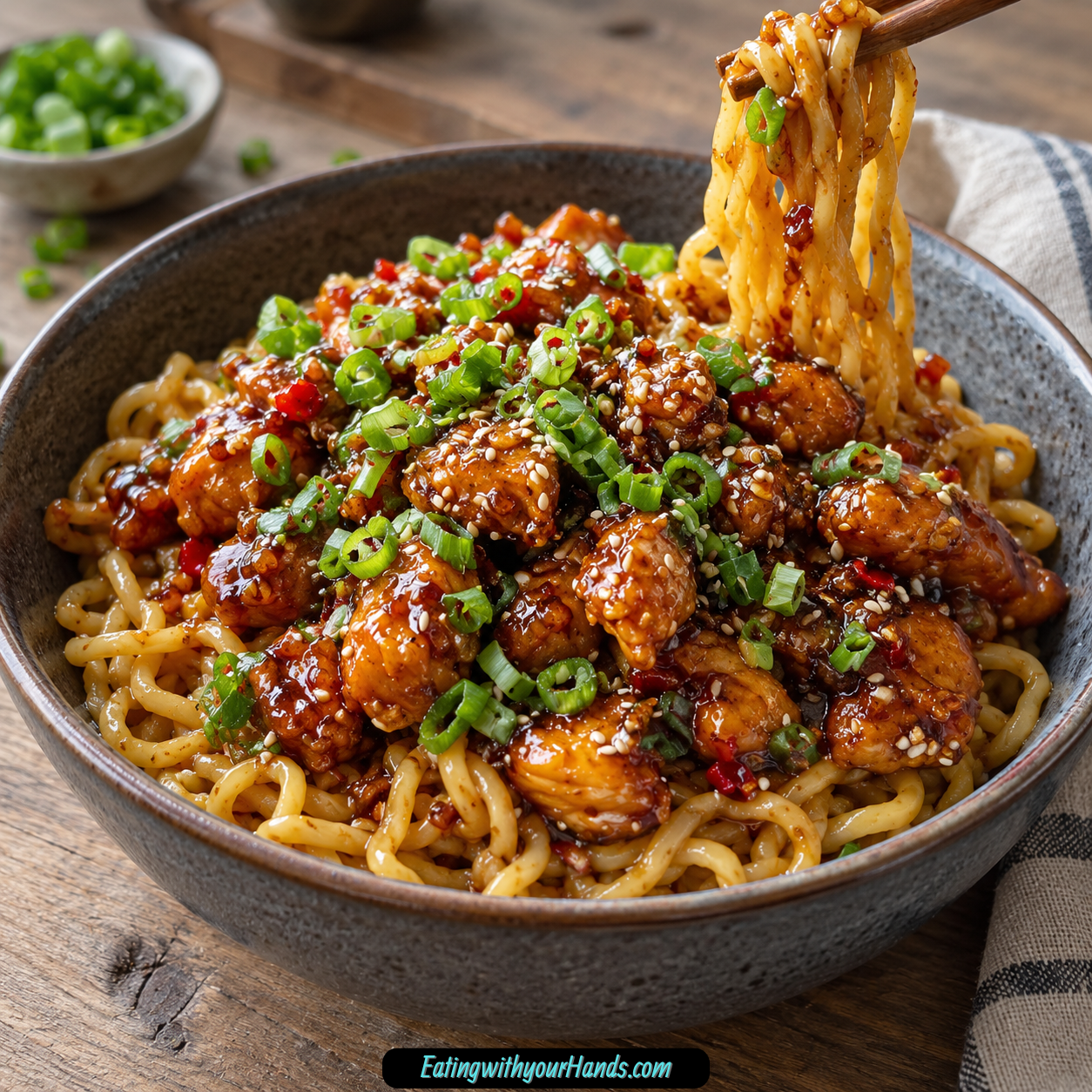
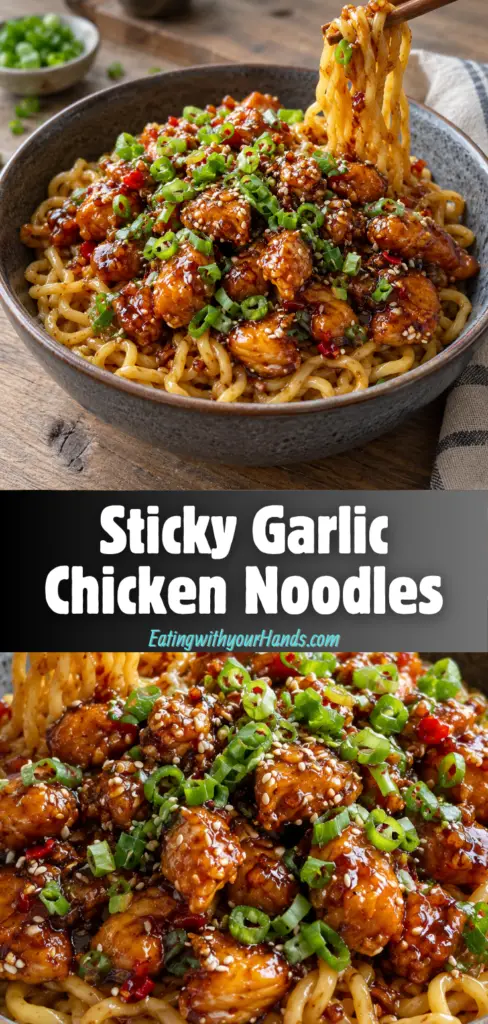
Sticky Garlic Chicken Noodles is the kind of dinner that fills the kitchen with a warm, sweet, savory aroma before anyone even reaches the table. The combination of garlic, honey, soy sauce, ginger, tender chicken, and noodles creates a meal that feels comforting, satisfying, and easy to love.
This dish has that cozy, family-style feeling that makes an ordinary night feel a little more special. It is quick enough for a busy weeknight, but flavorful enough to serve when you want dinner to feel thoughtful without needing hours of work.
The sauce is the heart of the recipe. It is sticky, glossy, garlicky, lightly sweet from honey, savory from soy sauce, and gently warmed by ginger and optional red chili flakes.
The chicken soaks in the marinade before cooking, which gives every bite flavor from the inside out. Chicken breast or chicken thighs both work, so you can choose the texture you enjoy most.
The noodles make the dish filling and comforting. Rice noodles or egg noodles are both great choices, and they carry the sticky garlic sauce beautifully.
What makes this meal especially helpful is how adaptable it is. You can add bell peppers, snow peas, broccoli, cashews, lime juice, cilantro, tofu, shrimp, whole grain noodles, or gluten-free noodles depending on what you want on the table.
It is also practical for leftovers. The noodles reheat well with a splash of water to loosen the sauce, and the whole dish can be stored in the refrigerator for up to 3 days.
Sticky Garlic Chicken Noodles is warm enough for cold weather, but it can also feel light and fresh with the right add-ins. A little green onion, sesame seeds, and lime on the side can make the bowl feel bright and finished.
This is the kind of recipe that brings people into the kitchen before dinner is ready. The smell of garlic and honey simmering together makes the whole room feel inviting.
Table of Contents
- Why You’ll Love These Sticky Garlic Chicken Noodles
- Recipe Details
- Ingredients
- For the Chicken and Marinade
- For the Sauce and Cooking
- For the Noodles and Garnish
- Optional Variations and Add-Ins
- Ingredient Notes
- Optional Swaps, Variations, Add-Ins, and Serving Ideas
- Classic Sticky Garlic Chicken Noodles
- Chicken Breast Noodles
- Chicken Thigh Noodles
- Low-Sodium Sticky Garlic Noodles
- Ground Ginger Version
- Arrowroot Thickened Sauce
- Rice Noodle Version
- Egg Noodle Version
- Whole Grain Noodle Version
- Bell Pepper Chicken Noodles
- Snow Pea Chicken Noodles
- Broccoli Chicken Noodles
- Tofu Sticky Garlic Noodles
- Shrimp Sticky Garlic Noodles
- Lime Garlic Chicken Noodles
- Cilantro Chicken Noodles
- Gluten-Free Sticky Garlic Noodles
- Coconut Aminos Version
- Vegan Maple Noodles
- Cashew Garlic Noodles
- Spicy Sriracha Noodles
- Fresh Chili Chicken Noodles
- Why This Recipe Works
- Directions
- Step 1: Cut the Chicken
- Step 2: Add the Soy Sauce
- Step 3: Add the Honey
- Step 4: Add Garlic, Ginger, and Chili Flakes
- Step 5: Coat the Chicken
- Step 6: Marinate the Chicken
- Step 7: Cook the Noodles
- Step 8: Drain and Rinse the Noodles
- Step 9: Make the Cornstarch Slurry
- Step 10: Start Thickening the Sauce
- Step 11: Simmer Until Sticky
- Step 12: Heat the Skillet
- Step 13: Cook the Chicken
- Step 14: Coat the Chicken With Sauce
- Step 15: Add the Cooked Noodles
- Step 16: Adjust the Texture
- Step 17: Garnish the Noodles
- Step 18: Serve Warm
- Serving Ideas
- Storage
- Freezing
- Make-Ahead
- Helpful Notes for Best Results
- Variations
- Classic Sticky Garlic Chicken Noodles
- Low-Sodium Sticky Garlic Chicken Noodles
- Chicken Thigh Garlic Noodles
- Ground Ginger Garlic Noodles
- Arrowroot Garlic Sauce
- Rice Noodle Chicken Bowl
- Egg Noodle Chicken Bowl
- Whole Grain Noodle Bowl
- Bell Pepper Chicken Noodles
- Snow Pea Chicken Noodles
- Broccoli Chicken Noodles
- Tofu Sticky Garlic Noodles
- Shrimp Sticky Garlic Noodles
- Gluten-Free Sticky Garlic Noodles
- Spicy Sticky Garlic Noodles
- Cashew Garlic Noodles
- Lime Cilantro Noodles
- Troubleshooting
- Frequently Asked Questions
- Why This Recipe Works So Well
- Final Thoughts
- Sticky Garlic Chicken Noodles
Why You’ll Love These Sticky Garlic Chicken Noodles
This recipe is quick and easy to make. It is perfect for busy weeknight dinners when everyone is hungry and time feels short.
It uses minimal ingredients. Chicken, soy sauce, honey, garlic, ginger, chili flakes, cornstarch, oil, noodles, green onions, and sesame seeds create a full meal.
The flavors are family-friendly. The sauce is sweet, savory, garlicky, and sticky, which makes it appealing even for picky eaters.
The leftovers taste delicious. They can be reheated in a skillet or microwave with a splash of water if the sauce thickens.
The dish is versatile. Seasonal vegetables, different proteins, gluten-free ingredients, and fresh toppings can all fit into the recipe.
It works like a one-pan meal once the noodles are cooked. The chicken, sauce, and noodles all come together in the skillet for easier cleanup.
Recipe Details
Sticky Garlic Chicken Noodles starts with 1 lb chicken breast or thighs. The chicken should be cut into bite-sized pieces.
The marinade uses ¼ cup soy sauce, 3 tablespoon honey, 4 cloves minced garlic, 1 teaspoon grated ginger, and optional ½ teaspoon red chili flakes. Low-sodium soy sauce can be used for a healthier option.
The chicken should marinate for at least 15 minutes. If you have more time, 1 hour in the refrigerator gives the flavors more time to develop.
For a richer flavor, the chicken can also be marinated overnight. This makes the garlic, honey, soy sauce, and ginger taste deeper.
The sauce thickens with 2 tablespoon cornstarch mixed with a couple of tablespoons water. Arrowroot powder can be used instead of cornstarch.
The chicken cooks in 2 tablespoon vegetable oil. You can also use your favorite cooking oil.
The noodles are 8 oz noodles. Rice noodles or egg noodles are both great choices.
The garnish includes 2 chopped green onions and optional 1 teaspoon sesame seeds. Green onions add fresh crunch, and sesame seeds add a nutty flavor.
The noodles should be cooked according to package instructions until al dente. After cooking, they are drained and briefly rinsed under cold water to stop the cooking process.
The leftover marinade is simmered with the cornstarch slurry for about 5 minutes. It should thicken into a sticky consistency.
The chicken cooks in a large skillet or wok for about 5 to 7 minutes. It should be golden brown and cooked through.
After the thickened sauce is poured over the chicken, it cooks for another 2 minutes. Then the noodles are tossed in until coated.
Ingredients
For the Chicken and Marinade
- 1 lb chicken breast or thighs, cut into bite-sized pieces
- ¼ cup soy sauce
- 3 tablespoon honey
- 4 cloves garlic, minced
- 1 teaspoon ginger, grated
- ½ teaspoon red chili flakes, optional
For the Sauce and Cooking
- 2 tablespoon cornstarch
- 2 tablespoon vegetable oil
For the Noodles and Garnish
- 8 oz noodles
- 2 green onions, chopped
- 1 teaspoon sesame seeds, optional
Optional Variations and Add-Ins
- Low-sodium soy sauce
- Ground ginger
- Arrowroot powder
- Rice noodles
- Egg noodles
- Bell peppers
- Snow peas
- Broccoli
- Tofu
- Shrimp
- Whole grain noodles
- Lime juice
- Cilantro
- Tamari
- Gluten-free noodles
- Maple syrup
- Cashews
- Gluten-free soy sauce
- Coconut aminos
- Sriracha
- Fresh chili peppers
Ingredient Notes
Chicken breast gives this dish a lean, tender bite when cooked properly. Chicken thighs can be used if you prefer a juicier texture.
Soy sauce brings the savory base of the marinade. Low-sodium soy sauce is a good option if you want to reduce the salt level.
Honey gives the sauce its sticky sweetness. Local honey can add a nice touch if you have it.
Garlic is one of the main flavors in this recipe. Fresh minced garlic gives the strongest aroma, though jarred garlic can work in a pinch.
Ginger adds warmth and depth. Fresh grated ginger works well, but ground ginger can be used if that is what you have.
Red chili flakes are optional. They add a lovely kick without taking over the sauce.
Cornstarch thickens the sauce into a glossy, sticky coating. Arrowroot powder can be used as a substitute.
Vegetable oil helps the chicken cook evenly. You can use your favorite cooking oil if preferred.
Noodles make the dish hearty and satisfying. Rice noodles or egg noodles both work beautifully.
Green onions add freshness and crunch on top. They brighten the sticky, savory noodles.
Sesame seeds are optional but lovely. They add a light nutty flavor and a finished look.
Optional Swaps, Variations, Add-Ins, and Serving Ideas
Classic Sticky Garlic Chicken Noodles
Make the dish with chicken, soy sauce, honey, garlic, ginger, optional red chili flakes, cornstarch, vegetable oil, noodles, green onions, and sesame seeds. This gives the noodles their sweet, savory, sticky garlic flavor.
Serve warm right after tossing everything together. The sauce should coat the chicken and noodles evenly.
Chicken Breast Noodles
Use chicken breast for a leaner bite. Cut it into bite-sized pieces so it cooks quickly and evenly.
Marinate the chicken well so it stays flavorful. Cook just until golden and cooked through.
Chicken Thigh Noodles
Use chicken thighs for a juicier option. Thighs bring a richer texture to the dish.
Cut them into bite-sized pieces before marinating. Cook until golden and fully cooked.
Low-Sodium Sticky Garlic Noodles
Use low-sodium soy sauce. This keeps the dish savory while giving you more control over salt.
The honey, garlic, ginger, and green onions still bring plenty of flavor. Taste and adjust as needed.
Ground Ginger Version
Use ground ginger if fresh grated ginger is not available. The flavor will be a little different, but it still adds warmth.
Use it in place of grated ginger when needed. Stir it well into the marinade.
Arrowroot Thickened Sauce
Use arrowroot powder instead of cornstarch. It helps thicken the sauce in a similar way.
Mix it with water before adding it to the marinade. This helps prevent lumps.
Rice Noodle Version
Use rice noodles for a lighter texture. Cook them according to the package instructions.
Rinse briefly under cold water after draining. This helps stop the cooking process.
Egg Noodle Version
Use egg noodles for a heartier bite. They hold the sticky sauce well.
Cook until al dente. Toss gently with the chicken and sauce.
Whole Grain Noodle Version
Use whole grain noodles for a healthier twist. They give the dish a heartier texture.
Cook according to the package instructions. Make sure they stay al dente before tossing.
Bell Pepper Chicken Noodles
Add bell peppers for color and crunch. Slice or dice them so they cook quickly.
They work well with garlic, honey, soy sauce, and ginger. Add them to the skillet while cooking the chicken or just before combining.
Snow Pea Chicken Noodles
Add snow peas for a fresh crunch. They bring color and a lighter texture.
Snow peas make the dish feel brighter. They pair nicely with green onions.
Broccoli Chicken Noodles
Add broccoli for extra nutrition. Cut it into small pieces so it cooks evenly.
Broccoli catches the sticky sauce beautifully. It also makes the meal feel more complete.
Tofu Sticky Garlic Noodles
Use tofu instead of chicken for a different protein option. The texture will change, but the sticky garlic sauce still works well.
Press and cut the tofu before cooking if needed. Coat it in the sauce and toss with noodles.
Shrimp Sticky Garlic Noodles
Use shrimp instead of chicken. Shrimp cooks quickly and pairs well with garlic and honey.
Watch the cooking time carefully. Shrimp should stay tender.
Lime Garlic Chicken Noodles
Add a splash of lime juice for a fresh flavor boost. Lime brightens the sticky sauce.
Serve with lime wedges on the side if desired. The fresh acidity balances the sweetness.
Cilantro Chicken Noodles
Add cilantro for a fresh finish. Sprinkle it over the noodles before serving.
Cilantro gives the dish a bright, herbal note. It works well with lime if you use it.
Gluten-Free Sticky Garlic Noodles
Use tamari instead of soy sauce and gluten-free noodles. Also check for gluten-free soy sauce if needed.
This makes the dish gluten-free friendly. The same cooking method works.
Coconut Aminos Version
Use coconut aminos instead of soy sauce if desired. Coconut aminos are a bit sweeter and less salty.
This changes the flavor slightly. The honey and garlic still keep the sauce bold.
Vegan Maple Noodles
Use maple syrup instead of honey for a vegan direction. Pair it with tofu instead of chicken if desired.
The sauce will taste a little different. It will still be sweet, sticky, and savory.
Cashew Garlic Noodles
Add cashews for crunch. They give the dish a nutty bite.
Sprinkle them in near the end or over the finished noodles. They add texture beside the tender chicken and noodles.
Spicy Sriracha Noodles
Add a splash of sriracha to the sauce for extra heat. This gives the dish a stronger spicy kick.
Start with a small amount. You can always add more.
Fresh Chili Chicken Noodles
Toss in sliced fresh chili peppers while cooking the chicken. This gives the dish more direct heat.
Use the amount that fits your taste. The honey helps balance the spice.
Why This Recipe Works
Sticky Garlic Chicken Noodles works because the marinade becomes both flavor and sauce. The chicken absorbs the soy sauce, honey, garlic, ginger, and chili flakes before cooking.
The honey creates the sticky sweetness. Soy sauce balances it with savory flavor.
Garlic gives the dish its bold aroma. Ginger adds warmth and depth.
Cornstarch turns the marinade into a glossy sauce. Simmering the marinade with slurry helps it thicken into a coating for the chicken and noodles.
Cooking the chicken in a single layer helps it brown. That golden color gives the dish more flavor.
The cooked noodles are added at the end so they do not overcook. Tossing them gently keeps them from breaking.
Green onions bring freshness. Sesame seeds add a light nutty finish.
A splash of water during reheating helps loosen the sauce. This keeps leftovers from tasting dry.
The dish is flexible because the sauce pairs well with different noodles, vegetables, and proteins. That makes it easy to adjust for seasons, preferences, and what you already have.
Directions
Step 1: Cut the Chicken
Cut 1 lb chicken breast or thighs into bite-sized pieces. Try to keep the pieces similar in size so they cook evenly.
Place the chicken pieces in a bowl. This bowl will also hold the marinade.
Step 2: Add the Soy Sauce
Pour ¼ cup soy sauce over the chicken. Use low-sodium soy sauce if you want a lighter salt level.
The soy sauce gives the chicken its savory base. It also helps build the sticky sauce later.
Step 3: Add the Honey
Add 3 tablespoon honey to the bowl. Stir lightly so it begins to blend with the soy sauce.
The honey gives the sauce sweetness and stickiness. It helps the chicken glaze beautifully once cooked.
Step 4: Add Garlic, Ginger, and Chili Flakes
Add 4 cloves minced garlic and 1 teaspoon grated ginger. Add ½ teaspoon red chili flakes if you want a little heat.
Fresh garlic and ginger give the marinade the best flavor. The chili flakes are optional, so leave them out for a milder dish.
Step 5: Coat the Chicken
Stir the chicken and marinade until every piece is well coated. Make sure the garlic and ginger are spread through the bowl.
The chicken should look glossy and evenly seasoned. This helps every bite taste flavorful.
Step 6: Marinate the Chicken
Let the chicken marinate for at least 15 minutes. If you have more time, refrigerate it for 1 hour.
For a richer flavor, marinate the chicken overnight. Longer marinating gives the garlic, honey, soy sauce, and ginger more time to settle into the meat.
Step 7: Cook the Noodles
While the chicken marinates, bring a large pot of water to a boil. Add 8 oz noodles and cook according to the package instructions until al dente.
Rice noodles or egg noodles both work well. Follow the package timing for the noodle type you choose.
Step 8: Drain and Rinse the Noodles
Once the noodles are cooked, drain them. Rinse them briefly under cold water to stop the cooking process.
Set the noodles aside. They will be added to the skillet after the chicken and sauce are ready.
Step 9: Make the Cornstarch Slurry
In a small bowl, combine 2 tablespoon cornstarch with a couple of tablespoons of water. Stir until smooth.
This slurry will thicken the sauce. Make sure there are no dry lumps of cornstarch.
Step 10: Start Thickening the Sauce
Pour the leftover marinade from the chicken into a saucepan. Add the cornstarch slurry.
Place the saucepan over medium heat. Stir as the mixture begins to warm.
Step 11: Simmer Until Sticky
Let the sauce simmer for about 5 minutes. Stir occasionally so it does not stick.
The sauce should thicken into a sticky consistency. Keep it warm while you cook the chicken.
Step 12: Heat the Skillet
Place a large skillet or wok over medium-high heat. Add 2 tablespoon vegetable oil.
Let the oil warm before adding the chicken. A hot skillet helps the chicken brown.
Step 13: Cook the Chicken
Add the marinated chicken pieces to the skillet in a single layer. Cook for about 5 to 7 minutes, stirring occasionally.
The chicken should become golden brown and cooked through. Avoid crowding the skillet too much if possible.
Step 14: Coat the Chicken With Sauce
Pour the thickened sauce over the cooked chicken. Stir until every piece is coated.
Let the chicken and sauce cook together for another 2 minutes. This helps the flavors meld and makes the glaze cling.
Step 15: Add the Cooked Noodles
Add the cooked noodles to the skillet. Use tongs or a spatula to toss everything together gently.
The noodles should become coated in the sticky garlic sauce. Be gentle so they do not break.
Step 16: Adjust the Texture
If the noodles seem too sticky or tight, add a small splash of water. Toss again until the sauce loosens slightly.
The goal is glossy noodles, not dry noodles. Add only a little water at a time.
Step 17: Garnish the Noodles
Remove the skillet from the heat. Sprinkle 2 chopped green onions over the noodles.
Add 1 teaspoon sesame seeds if using. The green onions add fresh crunch, and the sesame seeds add nutty flavor.
Step 18: Serve Warm
Transfer the noodles to a serving dish or large bowls. Serve warm while the sauce is glossy and the chicken is tender.
Add lime wedges on the side if desired. A little lime can brighten the sticky garlic flavor.
Serving Ideas
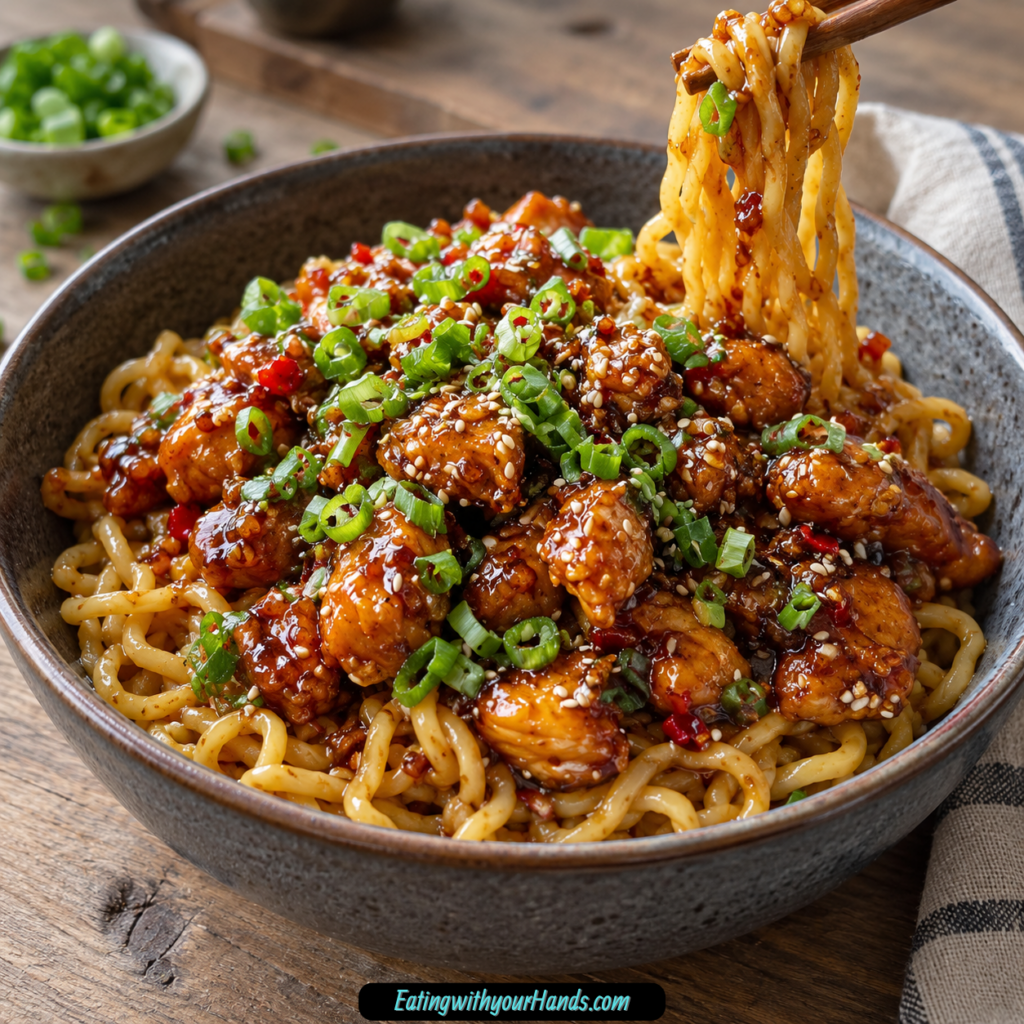
Serve Sticky Garlic Chicken Noodles in large bowls for the best presentation. A deep bowl helps hold the noodles, chicken, and glossy sauce together.
Top each bowl with chopped green onions. They bring freshness and crunch.
A sprinkle of sesame seeds adds a light nutty flavor. It also makes the dish look finished.
Lime wedges on the side can add a fresh touch. A small squeeze of lime brightens the sweet-savory sauce.
These noodles are great for busy weeknights. They are fast, filling, and comforting.
They also work well for family gatherings. The flavors are familiar, and the dish is easy to serve.
For extra color, add bell peppers, snow peas, or broccoli. These vegetables make the bowls look brighter.
For extra crunch, add cashews. They bring a nutty texture that pairs well with the sticky sauce.
Storage
Store leftover Sticky Garlic Chicken Noodles in an airtight container in the refrigerator. They will keep for up to 3 days.
Let the noodles cool before storing. This helps protect the texture.
The sauce may thicken as it sits. This is normal because of the sticky glaze.
Reheat leftovers in a skillet over low heat. Add a splash of water if needed to loosen the sauce.
You can also microwave leftovers in short bursts. Stir frequently so they heat evenly.
Do not overheat the noodles. Warm them just until hot so the chicken stays tender and the sauce stays glossy.
Freezing
Sticky Garlic Chicken Noodles can be frozen for up to 3 months. Let the dish cool completely before transferring it to an airtight container or freezer bag.
Freeze in portions if possible. Smaller portions thaw and reheat more evenly.
When ready to eat, thaw overnight in the refrigerator. This helps the noodles and chicken warm more evenly.
Reheat in a skillet over low heat. Add a splash of water if needed to loosen the sauce.
The noodle texture may change slightly after freezing. Stir gently while reheating.
Serve once hot. Add fresh green onions and sesame seeds after reheating if possible.
Make-Ahead
You can marinate the chicken ahead of time. A minimum of 15 minutes works, but 1 hour in the refrigerator gives better flavor.
For a richer flavor, marinate the chicken overnight. This makes the garlic, honey, soy sauce, and ginger more pronounced.
The sauce ingredients can be prepared before cooking. Have the cornstarch slurry ready, the noodles cooked, and the skillet set before starting the chicken.
You can also cook the noodles ahead and keep them ready. Rinse them briefly under cold water after cooking to stop the cooking process.
For the best texture, combine the noodles, chicken, and sauce close to serving. This keeps the noodles from soaking up too much sauce too early.
Leftovers are also meal-prep friendly. Store in airtight containers and reheat with a splash of water.
Helpful Notes for Best Results
Use bite-sized chicken pieces so the meat cooks quickly. Similar-size pieces cook more evenly.
Marinate the chicken for at least 15 minutes. More time gives deeper flavor.
If using frozen or prepared ingredients, keep the method gentle. The sauce and noodles should stay glossy, not mushy.
Cook the noodles until al dente. They will be tossed with hot sauce later, so do not overcook them.
Rinse the noodles briefly under cold water after cooking. This stops the cooking process.
Make a smooth cornstarch slurry before adding it to the marinade. This helps prevent lumps.
Simmer the sauce until it becomes sticky. Stir occasionally so it does not stick to the saucepan.
Use a large skillet or wok. This gives the chicken space to brown and makes tossing easier.
Variations
Classic Sticky Garlic Chicken Noodles
Use chicken breast or thighs, soy sauce, honey, garlic, ginger, optional red chili flakes, cornstarch, vegetable oil, noodles, green onions, and sesame seeds. This gives the dish its sweet, savory, sticky garlic flavor.
Serve warm with the noodles well coated. Add green onions and sesame seeds on top.
Low-Sodium Sticky Garlic Chicken Noodles
Use low-sodium soy sauce. This keeps the dish savory while reducing the salt level.
The honey, garlic, ginger, and green onions still bring plenty of flavor. Taste and adjust if needed.
Chicken Thigh Garlic Noodles
Use chicken thighs for a juicier texture. Cut them into bite-sized pieces before marinating.
They work beautifully with the sticky sauce. Cook until golden and done.
Ground Ginger Garlic Noodles
Use ground ginger if fresh grated ginger is not available. The flavor will be slightly different.
Stir it into the marinade with the garlic and honey. It still adds warmth.
Arrowroot Garlic Sauce
Use arrowroot powder instead of cornstarch. Mix it with water to make a slurry before adding it to the sauce.
This helps thicken the sauce. Stir until smooth.
Rice Noodle Chicken Bowl
Use rice noodles for a lighter noodle texture. Cook according to package instructions.
Rinse briefly after draining. Toss gently with the chicken and sauce.
Egg Noodle Chicken Bowl
Use egg noodles for a heartier dish. Their texture works well with sticky sauce.
Cook until al dente. Then toss them with the glazed chicken.
Whole Grain Noodle Bowl
Use whole grain noodles for a healthier twist. They bring a heartier texture.
Cook according to package instructions. Toss gently so they stay intact.
Bell Pepper Chicken Noodles
Add bell peppers for extra crunch and color. They make the dish brighter.
Cook them with the chicken or add them shortly after. Let them stay slightly crisp if desired.
Snow Pea Chicken Noodles
Add snow peas for a fresh crunch. They pair well with the sticky sauce.
Snow peas also bring color to the bowl. Add them near the end so they stay bright.
Broccoli Chicken Noodles
Add broccoli for extra nutrients. Cut it small so it cooks evenly.
Broccoli catches the sauce well. It makes the meal feel more complete.
Tofu Sticky Garlic Noodles
Use tofu instead of chicken. This gives the dish a different protein option.
Coat the tofu in the sticky sauce and toss with noodles. Use maple syrup instead of honey for a vegan direction if desired.
Shrimp Sticky Garlic Noodles
Use shrimp instead of chicken. Shrimp cooks quickly and pairs well with garlic.
Watch it carefully so it stays tender. Toss with sauce and noodles once cooked.
Gluten-Free Sticky Garlic Noodles
Use tamari instead of soy sauce and gluten-free noodles. Also check for gluten-free soy sauce if needed.
This keeps the dish gluten-free friendly. The same method works.
Spicy Sticky Garlic Noodles
Add more red chili flakes or a splash of sriracha. This gives the dish more heat.
You can also add sliced fresh chili peppers while cooking the chicken. Adjust the spice level to your taste.
Cashew Garlic Noodles
Add cashews for crunch. They bring a nutty texture to the dish.
Sprinkle them over the finished noodles or stir them in near the end. They pair nicely with sesame seeds.
Lime Cilantro Noodles
Add a splash of lime juice and a sprinkle of cilantro. This gives the dish a fresh flavor boost.
Use lime wedges on the side if desired. This works especially well in warmer seasons.
Troubleshooting
The Sauce Is Too Thin
The cornstarch slurry may need more time to activate. Simmer the sauce for about 5 minutes until sticky.
If you want a thicker sauce, add a bit more cornstarch slurry while cooking. Stir well to avoid lumps.
The Sauce Is Too Thick
Add a small splash of water. Stir until the sauce loosens.
Add only a little at a time. The sauce should still cling to the noodles.
The Chicken Is Dry
The chicken may have cooked too long. Cook bite-sized pieces for about 5 to 7 minutes, just until done.
Chicken thighs can be used for a juicier option. Reheat leftovers gently to avoid drying them out.
The Chicken Did Not Brown
The skillet may not have been hot enough, or the pan may have been crowded. Use medium-high heat and place the chicken in a single layer.
Give the chicken space when possible. Browning adds flavor.
The Noodles Are Mushy
The noodles may have been overcooked. Cook only until al dente according to the package instructions.
Rinse them briefly under cold water after draining. This stops the cooking process.
The Noodles Are Sticking Together
They may have sat too long after draining. Toss gently and add a small splash of water if needed.
Once added to the skillet, coat them with sauce. The sauce helps separate them.
The Sauce Has Lumps
The cornstarch may not have been fully mixed with water before adding. Make a smooth slurry first.
Stir the sauce as it simmers. This helps it thicken evenly.
The Dish Is Too Salty
Use low-sodium soy sauce next time. Coconut aminos are also a bit less salty and slightly sweeter.
Add more noodles or vegetables to balance the flavor. A splash of lime can also brighten the dish.
The Dish Is Not Spicy Enough
Add more red chili flakes. You can also stir in sriracha.
Fresh chili peppers can be cooked with the chicken for extra heat. Add gradually.
The Leftovers Are Too Sticky
The sauce thickens in the refrigerator. Reheat with a splash of water to loosen it.
Warm gently in a skillet or microwave in short bursts. Stir often.
Frequently Asked Questions
Can I freeze Sticky Garlic Chicken Noodles?
Yes, Sticky Garlic Chicken Noodles can be frozen. Let them cool completely, then transfer them to an airtight container or freezer bag.
Freeze for up to 3 months. Thaw overnight in the refrigerator and reheat in a skillet over low heat with a splash of water if needed.
What can I use instead of soy sauce?
Tamari can be used for a gluten-free option. Coconut aminos can also be used and are a bit sweeter and less salty.
Low-sodium soy sauce works well if you want a lower-sodium option. Choose the one that fits your needs.
How can I make it spicier?
Add more red chili flakes or a splash of sriracha to the sauce. You can also cook sliced fresh chili peppers with the chicken.
Start small and adjust to taste. The sauce should still taste balanced.
Can I use chicken thighs?
Yes, chicken thighs work well. They are a juicier option than chicken breast.
Cut them into bite-sized pieces before marinating. Cook until golden and cooked through.
Can I use shrimp instead of chicken?
Yes, shrimp can be used for a different protein option. Shrimp cooks more quickly than chicken.
Watch the cooking time carefully. Toss with the sauce and noodles once cooked.
Can I make this gluten-free?
Yes, use tamari instead of soy sauce and gluten-free noodles. Also check your soy sauce or sauce substitute labels if needed.
The same cooking method works. The flavor stays sticky, garlicky, and savory.
Can I add vegetables?
Yes, bell peppers, snow peas, and broccoli all work well. They add crunch, color, and nutrients.
Add them while cooking the chicken or near the end depending on how tender you want them. Keep the vegetables bright and flavorful.
What should I serve with Sticky Garlic Chicken Noodles?
Serve the noodles in large bowls with green onions and sesame seeds. Add lime wedges on the side for a fresh touch.
You can also add cilantro or cashews. These toppings bring freshness and crunch.
Why This Recipe Works So Well
Sticky Garlic Chicken Noodles works so well because the marinade does double duty. It flavors the chicken first, then becomes a thick, glossy sauce that coats the finished dish.
Soy sauce gives the recipe its savory base. Honey adds sweetness and helps create the sticky texture.
Garlic brings the bold aroma that makes the dish so inviting. Ginger adds warmth and balance.
Red chili flakes are optional, but they give the sauce a gentle kick. They make the sweetness feel more lively.
Cornstarch turns the marinade into a sauce that clings to the chicken and noodles. Simmering it with water creates the sticky consistency.
Vegetable oil helps the chicken brown in the skillet. Browning adds flavor and makes the chicken more satisfying.
Noodles carry the sauce and make the dish filling. Rice noodles and egg noodles both work, depending on the texture you like.
Green onions add freshness on top. Sesame seeds bring a little nutty flavor.
The recipe is flexible enough to fit many needs. Bell peppers, snow peas, broccoli, tofu, shrimp, whole grain noodles, lime, cilantro, tamari, gluten-free noodles, maple syrup, cashews, coconut aminos, sriracha, and fresh chili peppers all give the dish different directions.
Most of all, this recipe works because it is fast, flavorful, and comforting. It brings together sweet, savory, garlicky, sticky, tender, and chewy textures in one bowl.
Final Thoughts
Sticky Garlic Chicken Noodles is a quick, comforting noodle dish made with chicken breast or thighs, soy sauce, honey, garlic, ginger, optional red chili flakes, cornstarch, vegetable oil, noodles, green onions, and optional sesame seeds. The chicken is marinated, the noodles are cooked until al dente, the marinade is thickened into a sticky sauce, the chicken is browned, and everything is tossed together until glossy and coated.
Serve it warm in bowls with green onions, sesame seeds, lime wedges, cilantro, cashews, or seasonal vegetables if desired. With its quick weeknight timing, family-friendly flavor, sticky garlic sauce, flexible noodle choices, easy leftovers, freezer-friendly storage, and simple customization options, this dish is a cozy dinner that brings sweetness, warmth, and comfort to the table.
Sticky Garlic Chicken Noodles
Savory, sweet, garlicky, and lightly spicy if you use the optional chili flakes, these Sticky Garlic Chicken Noodles bring together tender chicken, soy sauce, honey, garlic, ginger, noodles, green onions, and sesame seeds. The chicken is coated with cornstarch, cooked until golden, then tossed with a glossy garlic-honey sauce and served with rice noodles or egg noodles for a simple Asian-style dinner.
Recipe Details
- Course: Dinner
- Cuisine: Asian
- Servings: 4 people
Ingredients
Noodles and Garnish
- 1 teaspoon sesame seeds optional
- 2 green onions, chopped
- 8 oz noodles rice noodles or egg noodles
Chicken and Sauce
- 2 tablespoon vegetable oil
- 2 tablespoon cornstarch
- ½ teaspoon red chili flakes optional
- 1 teaspoon ginger, grated
- 4 cloves garlic, minced
- 3 tablespoon honey
- ¼ cup soy sauce
- 1 lb chicken breast or thighs, cut into bite-sized pieces
Instructions
Step 1: Prepare the Noodles
Cook the noodles according to the package directions for the type you are using. Rice noodles and egg noodles can have different cooking methods, so follow the package guidance and drain them once ready.
Set the cooked noodles aside while the chicken and sauce are prepared. They will be added back once the sticky garlic mixture is ready to coat everything.
Step 2: Coat the Chicken
Place the bite-sized chicken breast or thigh pieces in a bowl. Add the cornstarch and toss until the chicken is lightly coated.
The cornstarch helps the chicken develop a better surface as it cooks. It also helps the sauce cling to the chicken before the noodles are added.
Step 3: Cook the Chicken
Heat the vegetable oil in a skillet or pan. Add the coated chicken pieces and cook until they are browned and cooked through.
Turn the pieces as they cook so they color evenly. Keep the chicken in bite-sized pieces so it mixes easily through the noodles later.
Step 4: Build the Sticky Garlic Sauce
Add the minced garlic and grated ginger to the cooked chicken. Stir until the garlic and ginger become fragrant.
Pour in the soy sauce and honey, then add the optional red chili flakes if using. Stir until the sauce starts coating the chicken in a glossy layer.
Step 5: Toss with the Noodles
Add the cooked noodles to the chicken and sauce. Toss gently until the noodles are coated with the sticky garlic mixture.
Make sure the sauce reaches through the noodles instead of staying only at the bottom of the pan. The chicken, garlic, honey, soy sauce, ginger, and optional chili flakes should be evenly distributed.
Step 6: Garnish and Serve
Finish the noodles with chopped green onions. Add sesame seeds if desired.
Serve warm in 4 portions. Each serving should have noodles, sticky garlic chicken, and a fresh garnish on top.
Serving Suggestions
Serve Sticky Garlic Chicken Noodles warm, right after the noodles have been tossed in the glossy garlic-honey sauce. The soy sauce, honey, garlic, ginger, and optional red chili flakes create a savory-sweet coating that works with either chicken breast or chicken thighs.
Use rice noodles for a lighter noodle texture or egg noodles for a heartier bite, exactly as listed. Finish with chopped green onions and optional sesame seeds right before serving so the top looks fresh.
This dish is written as a dinner for 4 people. Divide the noodles into bowls or plates while hot, making sure each serving gets plenty of chicken and sauce.
Storage
How to Store
The recipe does not provide specific storage instructions or storage duration, so no exact storage time is added here.
Noodle Tip
Use either rice noodles or egg noodles as listed. Since no specific noodle cooking time is provided, cook them according to the package directions.
Chicken Tip
Cut the chicken breast or thighs into bite-sized pieces before cooking. The smaller pieces make it easier for the sticky garlic sauce to coat the chicken evenly.
Sauce Tip
Use ¼ cup soy sauce and 3 tablespoon honey for the main sauce balance. The garlic and ginger add the savory flavor, while the optional red chili flakes bring heat.
Cornstarch Tip
Coat the chicken with 2 tablespoon cornstarch before cooking. This helps create a surface that catches the sauce well.
Garnish Tip
Top the finished noodles with chopped green onions and optional sesame seeds. Add them at the end for the best fresh finish.

Fernando is the creator and writer behind the food blog Eating with your Hands. Living and working in cities like Paris, Barcelona, and Berlin, and being married to a Canadian foodie, has given Fernando a passion and interest in food and inspired him to run EWYH.